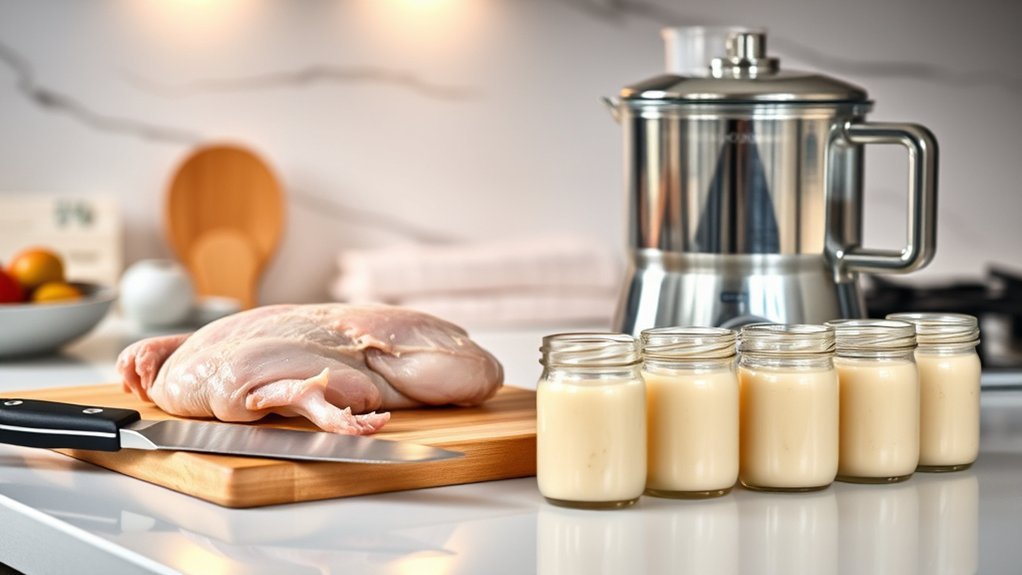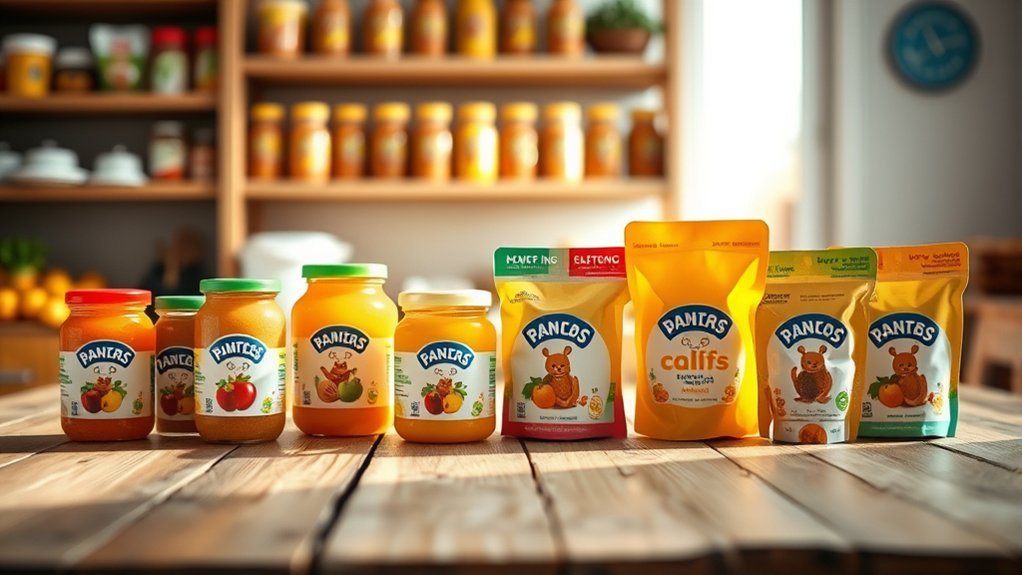
Frozen baby food can be thawed safely without sacrificing convenience. The refrigerator is the best choice when you can plan ahead, while a sealed cold-water bath works for faster thawing. A microwave can also be used for solid baby food when you follow careful stirring, standing, and temperature-testing steps.
Quick Answer
Thaw frozen baby food overnight in the refrigerator whenever possible. For faster thawing, keep the portion sealed and place it in cold water, changing the water every 30 minutes. Solid baby food may also be microwaved in a dish, then stirred, rested, and tested until lukewarm.
Key Takeaways
- The refrigerator is the safest and most reliable thawing method.
- Cold-water thawing is faster, but the container must stay sealed and the food should be used right away.
- Do not thaw baby food on the counter or in hot water.
- Microwaving solid baby food is acceptable when it is transferred to a dish, stirred well, allowed to stand, and tested before serving.
- Use thawed homemade baby food within 24 hours, and discard food that has touched your baby’s spoon or mouth.
At a Glance
| Time Required | Overnight in the refrigerator; about 30–60 minutes in cold water; a few short microwave intervals |
| Difficulty | Easy |
| Tools Needed | Airtight container or sealed freezer bag, refrigerator, bowl of cold water, or microwave-safe dish |
| Cost | No extra cost |
Why Thawing Baby Food Safely Matters
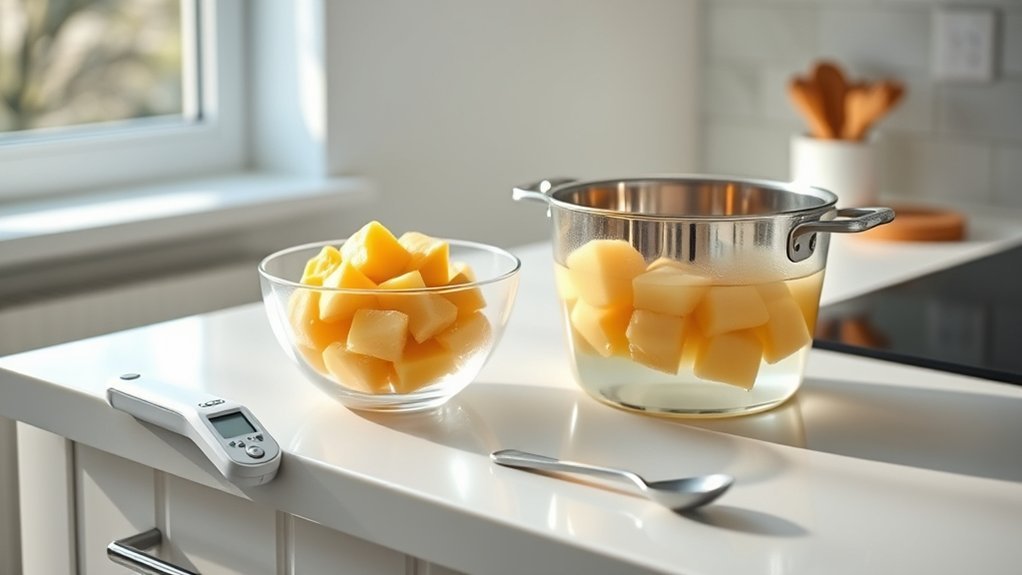
Safe thawing keeps baby food out of temperatures where harmful germs can multiply quickly. FoodSafety.gov advises keeping refrigerators at 40°F (4°C) or below and never thawing perishable food on the counter.
Babies are more vulnerable to foodborne illness than healthy adults, so clean hands, clean utensils, cold storage, and careful portioning matter. Freezing pauses most bacterial growth, but it does not sterilize food.
Warning: Never thaw baby food at room temperature or in hot water. Discard perishable baby food left without refrigeration for more than two hours, or more than one hour when the surrounding temperature is above 90°F (32°C).
Power your essentials anywhere with a 999Wh pure sine wave power station delivering up to 1000W continuous with 2000W surge. It supports fast charging via USB-C PD 60W and USB-A QC 18W, plus simultaneous output for multiple devices through AC, USB, wireless, and car/DC ports. Recharge using AC, car, or solar with a built-in MPPT controller and dual cooling fans, while the upgraded battery management system protects against surges, short circuits, and overheating.

Premium Baby Food Storage Containers: The set has 8 food storage containers, 4 oz each. 8 colors, 1 of each color. There are many colors for easy differentiation of use and a large number to meet the daily needs of baby use. A pen can be used to write the name, date or other information on the lid to remind you what is inside the jar. Perfect for storing homemade baby food, solid baby food, fruit and vegetable purees, jams, etc

Durable Baby Food Storage Containers: The set has 5 food storage containers, 4 oz each. 5 colors, 1 of each color. There are many colors, easy to distinguish and use, large quantities, and durability, which can meet the daily needs of your baby. A pen can be used to write the name, date or other information on the lid to remind you what is inside the jar. Perfect for storing homemade baby food, solid baby food, fruit and vegetable purees, jams, etc
How to Thaw Baby Food in the Refrigerator
Refrigerator thawing is the best method because the food stays cold throughout the process. North Dakota State University Extension specifically recommends thawing frozen homemade baby food in the refrigerator.
- Move only the portions you expect to use from the freezer to a clean, airtight container.
- Place the container on a refrigerator shelf, not in the door, and keep the refrigerator at 40°F (4°C) or below.
- Let small cubes or portions thaw overnight.
- Stir the food after thawing so any separated liquid is mixed back in.
- Serve it cold or warm it safely, depending on your baby’s preference.
For thawed homemade baby food, a conservative rule is to use it within 24 hours and discard anything that has been served directly to your baby.
Pro Tip: Freeze baby food in single-meal portions and label each container with the food and freezing date. Small portions thaw faster and reduce waste.
How to Thaw Baby Food Quickly With Cold Water
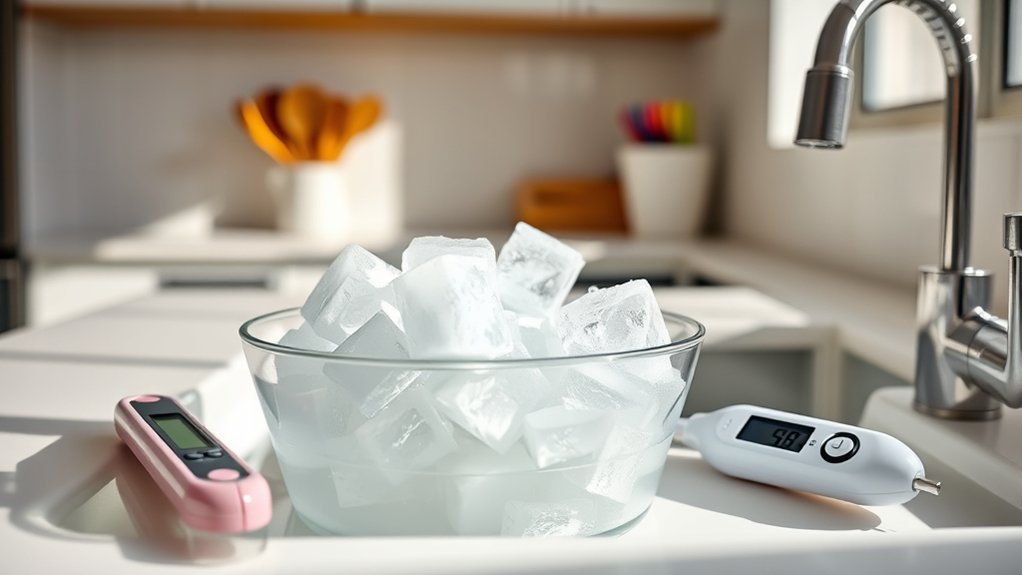
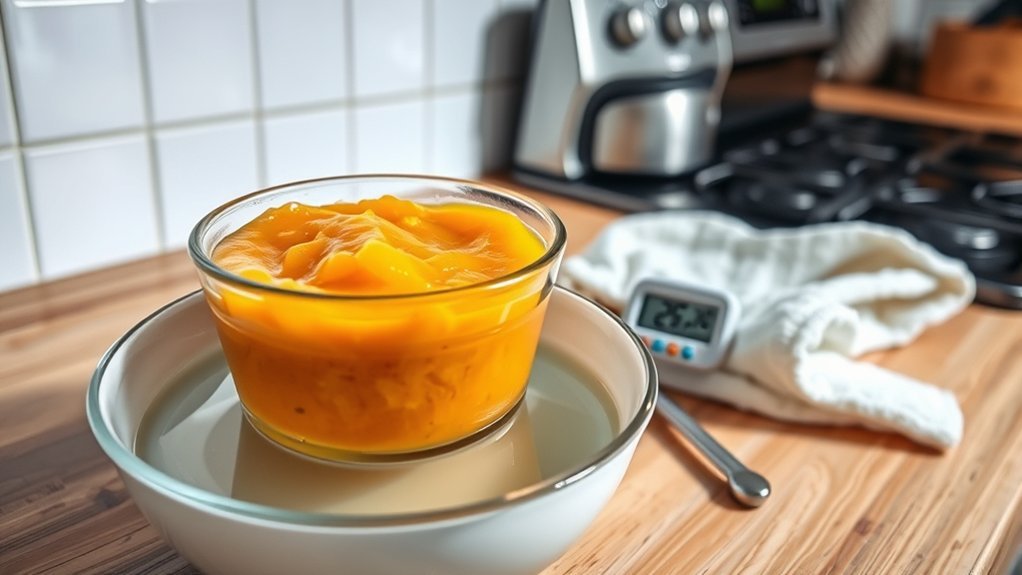
Cold-water thawing is useful when you forgot to move a portion to the refrigerator. The container must be leakproof so water cannot enter and contaminate or dilute the food.
- Place the frozen portion in a tightly sealed container or freezer bag.
- Submerge it in a bowl of cold tap water.
- Change the water every 30 minutes so it stays cold.
- When the food is thawed, remove it from the water, dry the outside of the container, and use the food immediately.
The time varies with portion size and shape, but small baby-food cubes often thaw within 30 to 60 minutes. Do not speed the process with warm or hot water, because the outer layer can warm while the center remains frozen.
Can You Thaw Baby Food in the Microwave?
Yes, you can microwave solid baby food, but you must manage uneven heating. The U.S. Food and Drug Administration advises transferring baby food from the jar to a dish, stirring it thoroughly, letting it stand for 30 seconds, and testing it before feeding.
Use short intervals and the lowest practical power setting. Stir between intervals, including the center and edges. The food should feel lukewarm, not hot, before it reaches your baby.
Does Microwaving Destroy Baby Food Nutrients?
Microwaving does not automatically cause greater nutrient loss than other heating methods. Nutrient retention depends on the food, temperature, heating time, and amount of water used. A review indexed by the National Library of Medicine found no significant overall nutritional difference between microwave and conventional preparation.
To protect quality, heat only the amount needed, use short intervals, and avoid repeated reheating. Thawing slowly in the refrigerator also helps preserve texture.
Uneven Heating Risks
The main microwave concern is hot spots. A spoonful can feel cool at the edge while the center is hot enough to burn your baby’s mouth or throat. Stirring and standing time allow heat to spread more evenly.
Never microwave solid baby food in its storage jar. Also, do not microwave breast milk or infant formula, because liquids can develop dangerous hot spots even when the container feels cool.
Foods That Need Extra Care
The FDA advises heating baby-food meats, meat sticks, and eggs on the stovetop instead of in the microwave because their higher fat content can cause splattering and overheating. Use a small saucepan over low heat, stir often, and cool the food to lukewarm before serving.
How to Retain Nutrients While Thawing Baby Food
Thawing method has less effect on nutrients than prolonged or repeated heating. For the best quality:
- Freeze food soon after it has cooled and divide it into small portions.
- Use airtight, freezer-safe containers to reduce freezer burn.
- Thaw only what your baby will eat within one meal or one day.
- Use the refrigerator when time allows.
- Heat briefly and avoid adding unnecessary water that will later be discarded.
- Do not reheat the same portion more than once.
Note: Separation after freezing is common. Stirring usually restores the texture. Separation alone does not mean the food is spoiled.
Best Practices for Reheating Thawed Baby Food
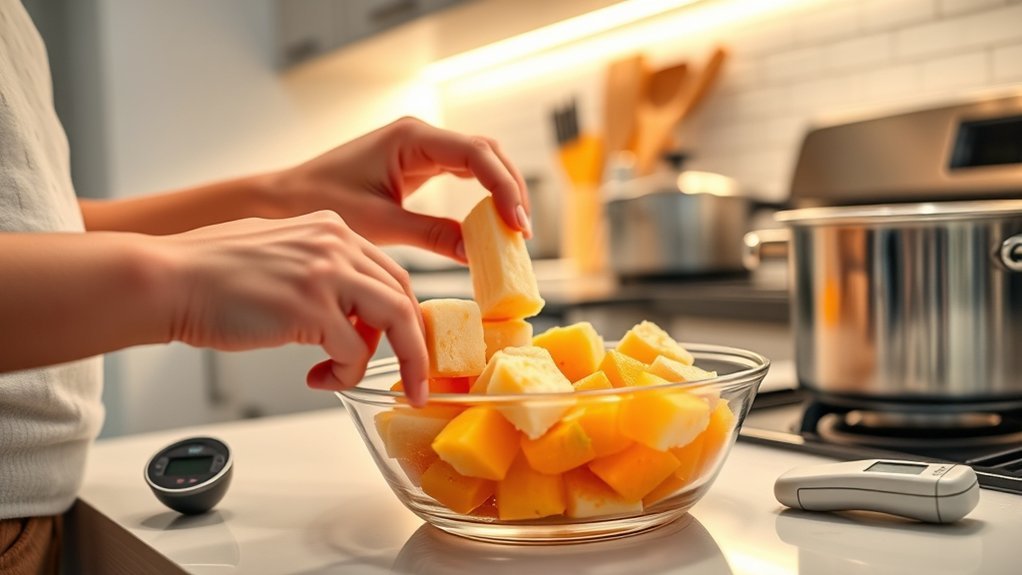
Baby food does not have to be warmed if it was thawed and stored safely. If your baby prefers warm food, heat only one serving.
Microwave Method
- Transfer the portion to a microwave-safe dish.
- Heat in a short interval. The FDA gives about 15 seconds on high for four ounces as an example, but microwave power varies.
- Stir very thoroughly, scraping the center and sides.
- Let the food stand for at least 30 seconds.
- Test a small amount. It should be lukewarm throughout.
Stovetop or Warm-Water Method
- Place the food in a small saucepan over low heat, or set a sealed container in a bowl of warm water.
- Stir frequently until the food is evenly warmed.
- Remove it from the heat and test the temperature before serving.
Do not put a partly eaten serving back into storage. Saliva transferred from the spoon can contaminate the food.
How Long Thawed Baby Food Lasts
Storage time depends on the ingredients and whether the food is homemade, commercially prepared, freshly opened, or previously frozen. The safest approach for thawed homemade baby food is to use it within 24 hours.
| Food | Refrigerator Limit |
| Thawed, previously frozen homemade baby food | Use within 24 hours |
| Freshly made or opened strained fruits and vegetables | 2–3 days |
| Freshly made or opened strained meats and eggs | 1 day |
| Freshly made or opened meat-and-vegetable combinations | 1–2 days |
Follow the package label when it gives a shorter storage limit. Write the thawing date and time on the container so you do not have to guess later.
Safe Serving and Leftover Rules
- Spoon one serving into a clean dish before feeding.
- Keep the main storage container in the refrigerator.
- Discard food left in the serving dish after the meal.
- Do not return a spoon that has been in your baby’s mouth to the storage container.
- Discard food with an off smell, unusual color, mold, a swollen lid, or damaged packaging.
- Do not taste questionable food to decide whether it is safe.
If your baby develops bloody diarrhea, a prolonged high fever, repeated vomiting, or will not take fluids after eating, contact a healthcare professional promptly. This article provides general food-safety guidance and does not replace medical advice.
Troubleshooting Common Thawing Problems
The Center Is Still Frozen
Return the food to the refrigerator, continue the cold-water bath, or use a short microwave interval. Do not leave it on the counter to finish thawing.
The Food Looks Watery or Grainy
Stir it well. Freezing can separate water from purées and change the texture of foods such as potatoes, rice, or dairy-based mixtures. Add a small amount of water, breast milk, or prepared formula only after thawing if a thinner texture is appropriate for your baby.
You Thawed Too Much
Keep untouched food refrigerated and use it within the recommended time. Do not save a portion that has been warmed repeatedly or served directly to your baby.
The Food Was Left Out
Discard it if it has been at room temperature for more than two hours, or more than one hour in temperatures above 90°F (32°C). When the timing is uncertain, throw it away.
Frequently Asked Questions
Can I refreeze baby food after thawing it?
Do not refreeze fully thawed homemade baby food for routine feeding. Freeze small portions so you can thaw only what you need. Food that has been warmed, served, or touched by a used spoon must be discarded rather than refrozen.
How long can thawed baby food stay in the refrigerator?
Use thawed homemade baby food within 24 hours. Opened commercial fruits and vegetables may last longer, while meats, eggs, and combination foods have shorter limits. Follow the package label when it is more restrictive.
What containers are best for freezing baby food?
Use clean, food-grade, freezer-safe containers, silicone trays, or covered ice-cube trays. After the portions freeze, transfer them to a labeled airtight freezer bag or container.
Is it safe to thaw baby food at room temperature?
No. The outside can warm into the temperature danger zone while the center remains frozen. Use the refrigerator, a sealed cold-water bath, or a carefully controlled microwave method instead.
How can I tell whether thawed baby food is spoiled?
Discard food with mold, an off odor, unusual color, a swollen lid, leaking packaging, or an unknown storage history. Do not rely only on smell or taste, because unsafe food may look normal.
Can I microwave frozen baby food?
Yes, for solid baby food. Transfer it to a microwave-safe dish, heat in short intervals, stir thoroughly, let it stand for at least 30 seconds, and test that it is lukewarm. Do not microwave breast milk, formula, or baby-food meats and eggs.
Can a baby eat thawed food cold?
Yes. Solid baby food does not have to be warmed if it was thawed safely, stayed refrigerated, and has an appropriate texture. Some babies simply prefer it warm.
Can I save leftover food from the feeding bowl?
No. A spoon that has touched your baby’s mouth can transfer saliva and bacteria to the food. Discard leftovers from the serving dish and store untouched food separately.
Conclusion
The safest way to thaw frozen baby food is overnight in the refrigerator. A sealed cold-water bath is a practical faster option, and solid food can be microwaved safely when you stir, let it stand, and test the temperature. Small portions, clean utensils, clear date labels, and strict leftover rules make every method safer.
Sources
- U.S. Food and Drug Administration: Once Baby Arrives — baby-food storage, microwaving, serving, and contamination guidance.
- FoodSafety.gov: Four Steps to Food Safety — refrigeration temperatures, room-temperature limits, and safe thawing principles.
- North Dakota State University Extension: Making Homemade Baby Food — refrigerator thawing and storage limits for previously frozen baby food.
- USDA Food Safety and Inspection Service: The Big Thaw — refrigerator, cold-water, and microwave thawing methods.
- National Library of Medicine: The Effect of Microwaves on Nutrient Value of Foods — review of nutrient retention in microwave and conventional preparation.