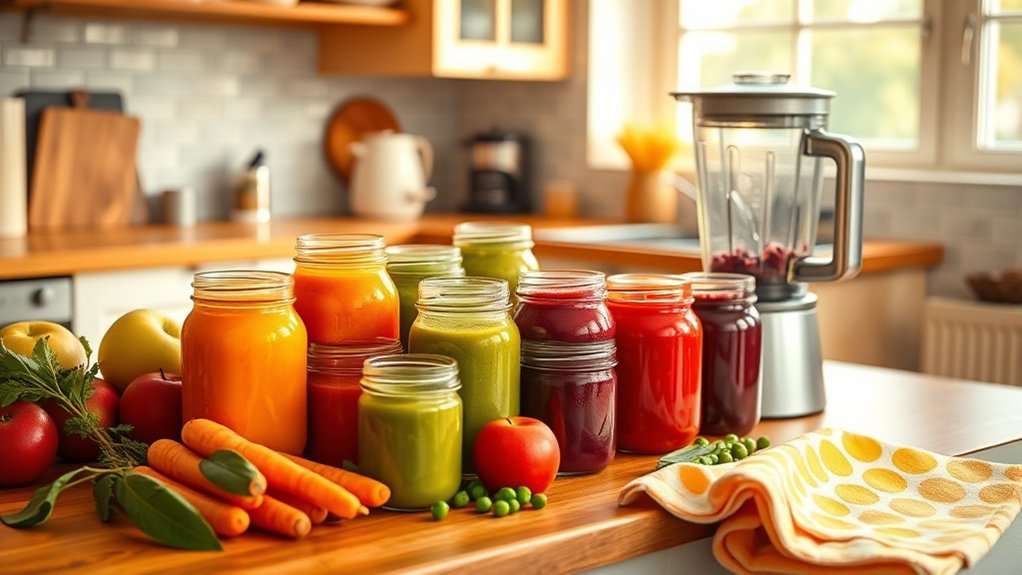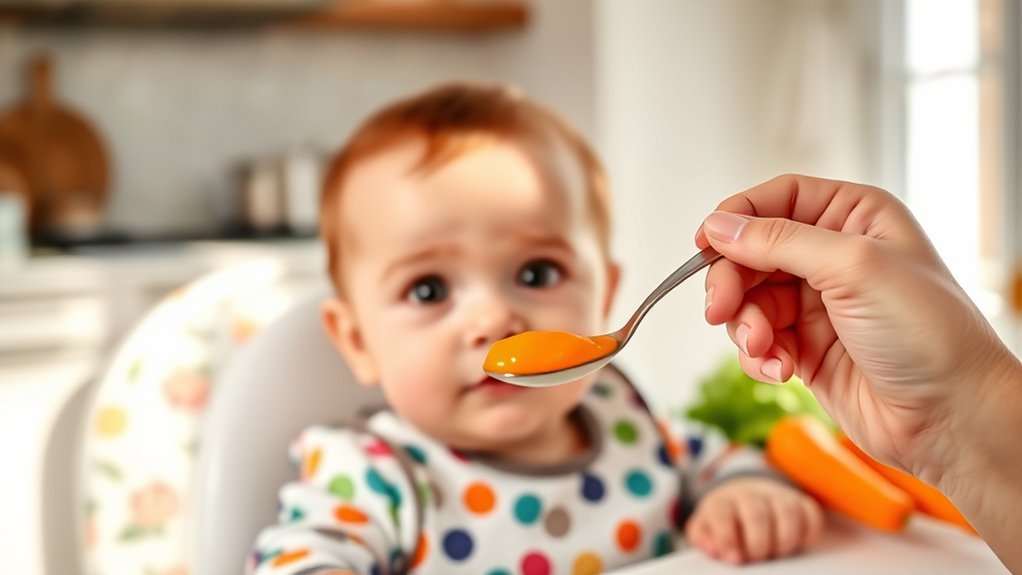
Most babies are ready to begin solid foods at about 6 months, but the calendar is only part of the decision. Your baby also needs enough head, neck, trunk, mouth, and hand control to eat safely. Solid foods should complement breast milk or infant formula, which remains the main source of nutrition through the first year.
Quick Answer
Most babies can start solid foods at about 6 months when they can sit upright with support, control their head and neck, bring objects to their mouth, and swallow food instead of pushing it out. Do not begin before 4 months, and continue breast milk or infant formula throughout the first year.
Key Takeaways
- Most babies are ready for solid foods at about 6 months, but developmental skills matter more than reaching a specific weight.
- Breast milk or iron-fortified infant formula should remain the main source of nutrition until about 12 months.
- Begin with small amounts of soft, nutrient-dense food, including regular sources of iron and zinc.
- Introduce common allergens in safe forms rather than delaying them, unless your baby’s clinician recommends a different plan.
- Seat your baby upright, prepare foods in a developmentally appropriate texture, and supervise every bite to reduce choking risk.
At a Glance
| Time Required | No fixed schedule; begin with one calm feeding opportunity and allow your baby to set the pace. |
| Difficulty | Usually easy, with extra professional guidance for prematurity, poor growth, swallowing problems, severe eczema, or known food allergy. |
| Tools Needed | Upright high chair, bowl, infant spoon, bib, cup, and a fork or blender when food needs mashing or pureeing. |
| Cost | Flexible; many unsalted household foods can be mashed or adapted safely, while commercial baby food is optional. |
Note: This guide provides general feeding information and does not replace advice from your child’s health care professional. Ask for individualized guidance if your baby was born prematurely, has poor weight gain, developmental delays, swallowing problems, severe eczema, or a previous food reaction.
Signs Your Baby Is Ready for Solid Foods

The Centers for Disease Control and Prevention and the current Dietary Guidelines for Americans recommend looking for a group of developmental abilities rather than relying on age or weight alone.
Your baby may be ready when they can:
- Sit upright alone or with support and remain stable during a meal.
- Control their head and neck without repeatedly slumping forward.
- Open their mouth or lean forward when food is offered.
- Bring toys, hands, or other objects to their mouth.
- Reach for or grasp food and other small objects.
- Move food toward the back of the mouth and swallow it.
- Keep at least some food in the mouth instead of automatically pushing it onto the chin with the tongue.
Readiness is based on several developmental skills working together—not a single birthday, body weight, or feeding cue.
Warning: Do not use doubling of birth weight or reaching 13 pounds as the deciding test. Those older rules do not replace current developmental-readiness signs, and starting solely because a baby has reached a certain weight may be unsafe.
How to Know When to Start Introducing Solid Foods?
Most babies begin at about 6 months. Introducing complementary foods before 4 months is not recommended. A baby who is close to 6 months but cannot yet sit upright with support or control their head may need more time and a discussion with their pediatric health professional.
- Confirm the readiness signs. Look for stable upright positioning, head control, interest in food, grasping, and the ability to swallow.
- Choose a calm time. Seat your baby upright in a high chair when they are alert and not extremely hungry, tired, or upset.
- Start small. Offer about 1 or 2 tablespoons of a smooth, mashed, or otherwise developmentally appropriate food.
- Let your baby control the amount. Offer the food without pressure. Stop when your baby closes their mouth, turns away, loses interest, or becomes upset.
- Introduce foods gradually. At first, offer one new single-ingredient food at a time and wait 3 to 5 days before another new food so a possible reaction is easier to identify.
- Continue normal milk feeds. Breast milk or iron-fortified infant formula remains the main source of nutrition from 6 through 12 months while solid food slowly becomes a larger part of the diet.
Pro Tip: A rejected food is not necessarily a disliked food. Offer it again on another day without pressure. Babies often need repeated chances to become comfortable with a new taste or texture.
Best First Foods to Introduce
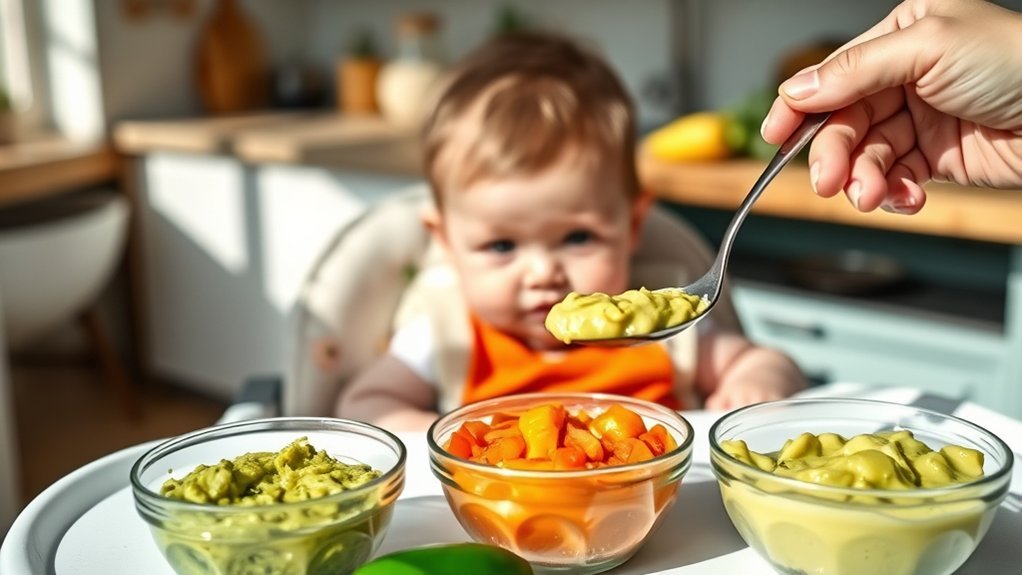
There is no required order for first foods. Aim for variety, nutrient density, and a texture your baby can manage. Foods rich in iron and zinc are especially useful when a baby begins eating solids, particularly for babies receiving human milk.
| Food Group | Examples | Safe Preparation |
|---|---|---|
| Iron- and zinc-rich proteins | Beef, chicken, turkey, beans, lentils, tofu, and well-cooked egg | Cook thoroughly and puree, mash, shred finely, or serve in another soft form appropriate for your baby’s skills. |
| Fortified whole-grain cereals | Iron-fortified oat, barley, or multigrain infant cereal | Mix with breast milk, formula, or water. Vary the grains instead of relying only on rice cereal. |
| Vegetables | Sweet potato, squash, peas, carrots, cauliflower, or broccoli | Cook until soft enough to mash easily. Remove hard skins, strings, seeds, or tough stems when needed. |
| Fruits and healthy fats | Avocado, banana, pear, peach, berries, or applesauce | Mash ripe fruit or cook firm fruit until soft. Remove pits, seeds, stems, and other hard pieces. |
| Pasteurized dairy | Plain full-fat yogurt, ricotta, cottage cheese, or pasteurized mild cheese | Choose products without added sugar and serve cheese shredded, melted, or in soft thin pieces. Do not use cow’s milk as the main drink before 12 months. |
| Low-mercury seafood | Salmon, trout, shrimp, pollock, or tilapia | Cook fully, remove every bone or shell, and flake or mince the food into a soft texture. |
If you use infant cereal, the CDC recommends rotating fortified cereals such as oat, barley, and multigrain rather than serving only rice cereal, which can increase arsenic exposure.
Introducing Common Food Allergens
Potential allergens should generally be introduced with other complementary foods at about 6 months instead of being unnecessarily delayed. Introduce one allergen at a time in a safe texture so you can identify the food if a reaction occurs.
- Egg: Serve fully cooked scrambled egg or mashed hard-cooked egg.
- Peanut or tree nuts: Thin smooth nut butter with warm water, breast milk, formula, yogurt, or cereal. Never offer a thick spoonful or whole nuts.
- Dairy: Offer plain pasteurized yogurt or a soft, safely prepared cheese. Cow’s milk should not replace breast milk or formula as a drink before 12 months.
- Wheat: Try softened wheat cereal, well-cooked pasta, or another soft wheat-containing food.
- Fish and shellfish: Cook thoroughly, remove bones and shells, and serve finely flaked or minced.
The 2025–2030 Dietary Guidelines advise caregivers of babies with severe eczema, egg allergy, or both to ask a health professional about peanut introduction as early as 4 to 6 months. Do not attempt an early high-risk introduction without that individualized guidance.
Warning: Stop feeding the food and seek medical advice if your baby develops hives, swelling, repeated vomiting, coughing, or wheezing. Call 911 immediately for trouble breathing, inability to cry normally, severe facial or tongue swelling, sudden limpness, faintness, or other signs of a severe allergic reaction.
Preparing and Serving Baby Food Safely
Good preparation involves more than making food soft. Clean handling, safe positioning, appropriate texture, and close supervision all help protect your baby.
- Wash your hands, utensils, work surfaces, and produce before preparation.
- Cook meat, poultry, seafood, and eggs thoroughly.
- Use pasteurized milk products and avoid raw milk, raw-milk cheese, and unpasteurized juice.
- Remove bones, shells, pits, hard seeds, tough skins, and gristle.
- Cook firm vegetables and fruits until they can be mashed easily with a fork.
- Keep your baby seated upright in a high chair or another secure feeding seat.
- Keep meals calm and free from toys, screens, running, crawling, or eating in a moving car.
- Watch your baby continuously while they eat.
The CDC choking-hazard guidance recommends avoiding small, hard, sticky, or round foods that are difficult for young children to chew and swallow. Common hazards include whole nuts, popcorn, hard raw carrots or apples, whole grapes, uncut cherry tomatoes, dried fruit, large meat or cheese chunks, hot-dog rounds, candy, and thick spoonfuls of nut butter.
Gagging, coughing, and spitting food out can occur while a baby is learning a new texture. A choking baby may be unable to breathe, cry, or make normal sounds. Review infant choking first aid with a qualified instructor before beginning solids so you know how to respond.
Warning: If your baby cannot breathe, cry, or make noise, treat it as a choking emergency and call 911. Do not perform a blind finger sweep, which can push the object deeper.
For homemade or opened baby food, place only the amount you expect your baby to eat into a separate bowl. Saliva from a used spoon can contaminate the remaining food. According to FDA infant food-safety guidance, homemade baby food should generally be refrigerated promptly and used within 1 to 2 days. Discard uneaten food from the serving dish and do not leave perishable food at room temperature for more than 2 hours.
Foods and Drinks to Avoid or Limit
Some foods are unsafe during the first year, while others can crowd out the nutrient-dense foods your baby needs. Current CDC guidance recommends the following:
- No honey before 12 months, including honey added to food, formula, water, or a pacifier, because of infant botulism risk.
- No cow’s milk as the main drink before 12 months. Plain yogurt and pasteurized cheese can be offered earlier in safe forms.
- No fruit or vegetable juice before 12 months. Whole fruit provides more useful texture and fiber.
- Avoid unpasteurized milk, cheese, yogurt, and juice because they may contain harmful bacteria.
- Avoid foods and drinks with added sugar and limit high-sodium processed foods.
- Avoid caffeinated drinks such as tea, coffee, soda, and energy drinks.
- Avoid high-mercury fish, including shark, swordfish, king mackerel, marlin, orange roughy, Gulf of Mexico tilefish, and bigeye tuna.
- Avoid choking hazards unless they have been changed into a safe texture and shape for your baby’s developmental level.
Transitioning to a Balanced Diet: What to Know
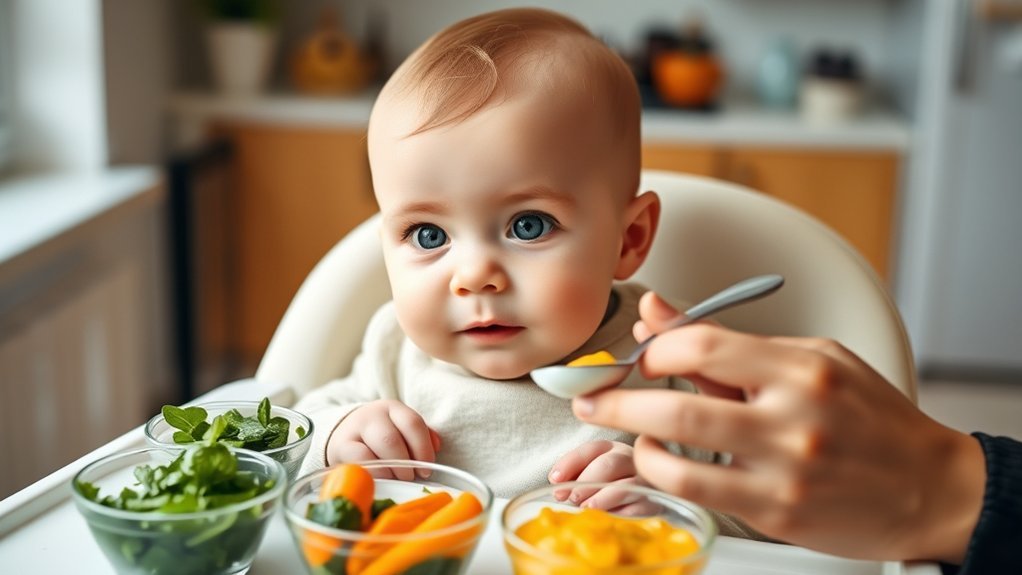
Solid foods begin as practice and gradually provide more nutrition. Breast milk or formula should still supply most of your baby’s nutrition during the early months of complementary feeding.
Begin with about 1 or 2 tablespoons and let your baby show whether they want more. Over time, offer foods from several groups, including iron-rich proteins, whole grains, vegetables, fruits, healthy fats, pasteurized dairy, and low-mercury seafood.
Texture should progress with your baby’s skills. A baby may begin with smooth or mashed foods and then move toward thicker, lumpier, finely chopped, shredded, and soft finger foods. Do not keep every food completely smooth once your baby is ready to handle more texture.
Soft finger foods can be introduced when your baby can sit steadily, grasp food, bring it accurately to the mouth, and manage the texture. This may occur around 8 months for many babies, but readiness varies.
Use responsive feeding throughout the transition:
- Offer food at regular, calm meals without forcing bites.
- Let your baby decide whether to eat and how much.
- Expect the amount eaten to vary from day to day.
- Continue offering unfamiliar foods without pressure.
- Include your baby at family meals when practical.
- Discuss iron, vitamin D, vegan diets, food allergies, poor growth, or other special nutrition concerns with your child’s health professional.
Frequently Asked Questions
Can I start baby food before 6 months?
Most babies should begin at about 6 months when they show the full set of readiness signs. Solid foods should not be introduced before 4 months. In limited situations, such as peanut introduction for a baby with severe eczema or egg allergy, a clinician may recommend an individualized plan between 4 and 6 months.
What if my baby refuses solid foods?
Stay calm and end the feeding without pressure. Try again on another day, change the texture or serving method, and offer the food when your baby is alert. Contact your pediatric health professional if refusal is persistent, feeding appears painful, your baby coughs or chokes repeatedly, or growth is a concern.
How do I know if my baby is allergic to a food?
Possible signs include hives, skin swelling, repeated vomiting, coughing, wheezing, or unusual fussiness after eating. Stop the food and contact your child’s health professional. Call 911 for breathing trouble, severe swelling, faintness, limpness, or other signs of anaphylaxis.
Should I avoid certain foods initially?
Avoid honey, juice, cow’s milk as a beverage, unpasteurized products, added sugars, high-mercury fish, and choking hazards. Common allergens such as egg, peanut, wheat, dairy, fish, and shellfish generally should not be delayed once your baby is ready for solids, but they must be prepared in a safe form.
What are common signs of digestive problems?
A temporary change in stool color, smell, or frequency can occur when solids begin. Contact your baby’s health professional about hard or painful stools, repeated diarrhea or vomiting, blood in the stool, a swollen abdomen, reduced wet diapers, persistent pain, poor feeding, or poor weight gain.
Do I have to use purees?
No. Purees, mashed foods, spoon feeding, and safely prepared finger foods can all be used. The safest approach depends on your baby’s posture, grasp, oral skills, and the food’s shape and texture. Some families combine spoon-fed foods with self-feeding.
How much solid food should I offer at first?
Begin with about 1 or 2 tablespoons during a calm feeding opportunity. Your baby may eat only a small taste at first. Increase the amount and frequency gradually while continuing normal breast milk or formula feeds and following your baby’s hunger and fullness cues.
Conclusion
Most babies can start exploring solid foods at about 6 months when they have the developmental control needed to eat safely. Begin with small amounts of nutrient-dense food, include regular iron and zinc sources, introduce allergens in safe forms, and keep breast milk or formula central through the first year. Calm meals, gradual texture changes, and close supervision will help your baby build eating skills at their own pace.
Sources
- Dietary Guidelines for Americans, 2025–2030 — current federal guidance on readiness, milk feeding, complementary foods, allergens, and added sugar.
- CDC: When, What, and How to Introduce Solid Foods — readiness signs, first foods, allergen introduction, and preparation.
- CDC: Choking Hazards — unsafe food shapes, textures, and feeding practices.
- CDC: Foods and Drinks to Avoid or Limit — honey, milk, juice, unpasteurized products, mercury, sodium, sugar, and caffeine guidance.
- American Academy of Pediatrics: Choking Prevention — choking warning signs and emergency preparation.
- FDA: Food Safety Once Baby Arrives — safe preparation, storage, reheating, and leftover handling.