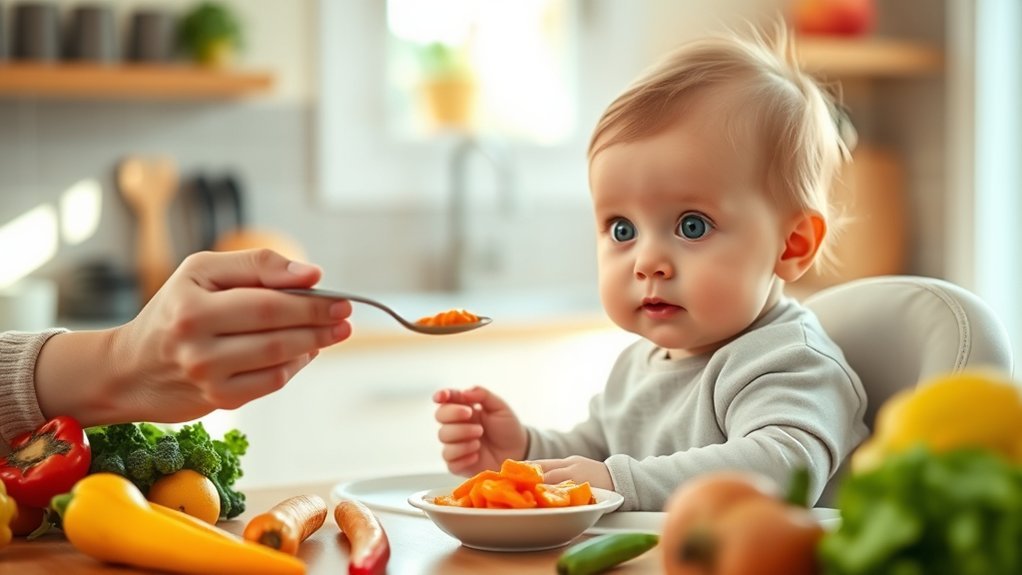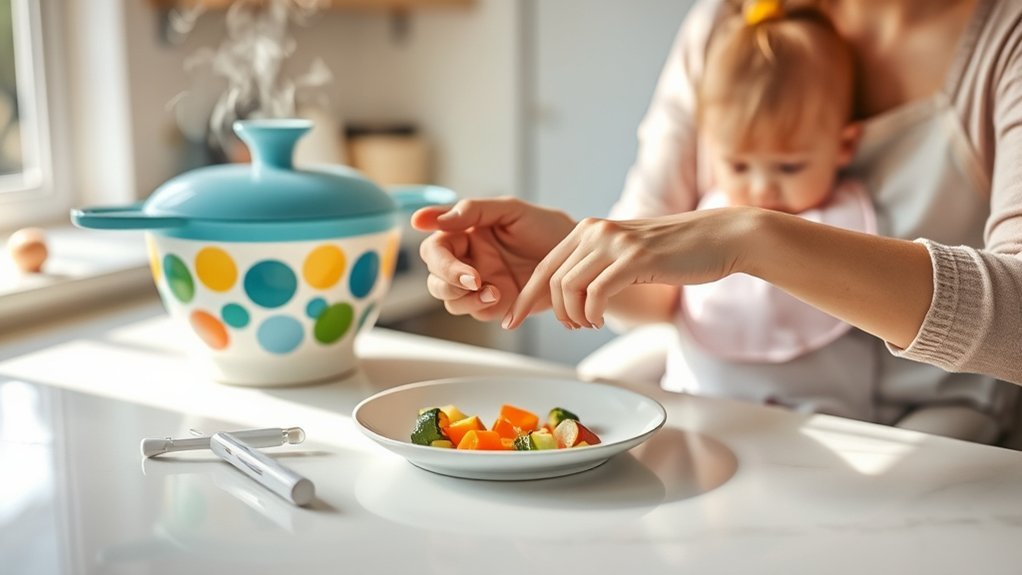
Baby food leftovers can be stored and served safely only when the food was kept separate from your baby’s mouth, spoon, hands, and feeding dish. Before saving anything, identify whether it is an untouched portion or food your baby already ate from. That one distinction determines whether the food belongs in the refrigerator or the trash.
Quick Answer
Refrigerate only baby food that was portioned with a clean utensil and never touched your baby’s mouth or feeding dish. Discard food left in the baby’s bowl or a jar contacted by a used spoon. Reheat cooked leftovers to 165°F, stir well, and let them cool to lukewarm before serving.
Key Takeaways
- Discard food from your baby’s feeding dish and any jar or container contacted by a spoon that has been in your baby’s mouth.
- Refrigerate untouched perishable food within two hours, or within one hour when the temperature is above 90°F (32°C).
- Store the refrigerator at 40°F (4°C) or below and use food-specific storage limits rather than one rule for every type of baby food.
- Warming puréed baby food is optional. When reheating cooked leftovers, heat them to 165°F (74°C), stir, and cool them to lukewarm before serving.
- Call a pediatrician immediately if a baby 3 months or younger has a rectal temperature of 100.4°F (38°C) or higher.
At a Glance
| Time Required | About 5–10 minutes to portion, reheat, stir, cool, and check |
| Difficulty | Easy, with careful handling |
| Tools Needed | Clean dish and spoon, airtight container, food thermometer, and microwave or saucepan if reheating |
| Cost | Usually no additional cost |
Why Serving Leftovers Safely Is Crucial for Babies
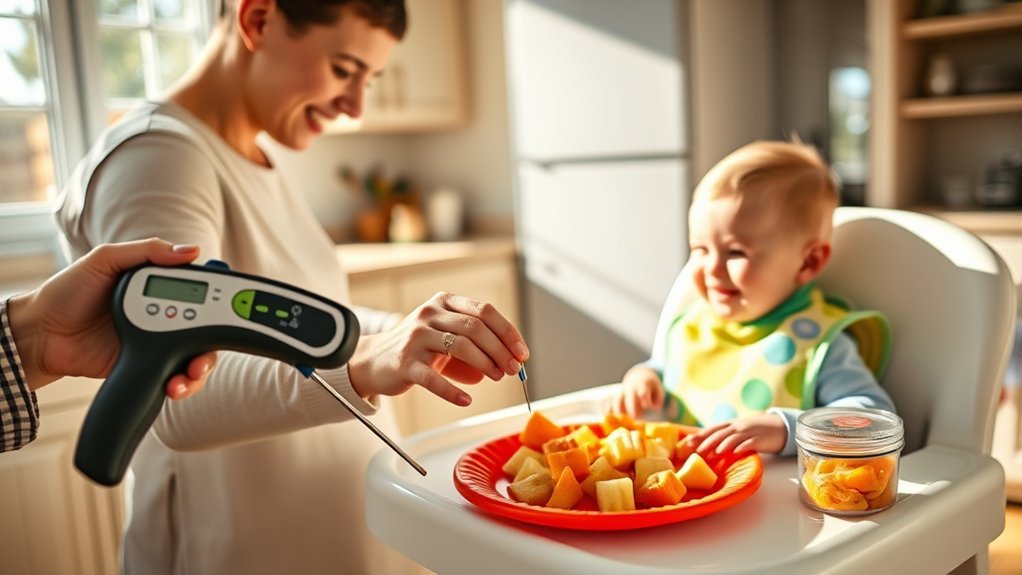
Children younger than 5 have a higher risk of serious problems from food poisoning. Vomiting and diarrhea can cause dehydration quickly, especially in babies who depend on caregivers for all fluids and food.
Food safety begins before the meal. Wash your hands, use clean utensils, and place only the amount your baby is likely to eat in a separate dish. Keep the untouched food in its original container or a clean storage container and return it to the refrigerator promptly.
The safest leftover is a clean portion that was set aside before feeding began—not food scraped back from the baby’s bowl.
The U.S. Food and Drug Administration advises caregivers not to feed directly from a baby-food jar and then refrigerate that jar. Saliva transferred by the spoon can contaminate the remaining food.
Warning: Throw away food left in your baby’s feeding dish. Also discard food from a jar, pouch, or storage container if a spoon that touched your baby’s mouth was placed back into it. Refrigeration does not make saliva-contaminated food safe to save.
Untouched perishable food should be refrigerated within two hours. When food is exposed to temperatures above 90°F (32°C), such as in a hot car or at an outdoor picnic, refrigerate it within one hour. Keep your refrigerator at 40°F (4°C) or below.
Power your essentials anywhere with a 999Wh pure sine wave power station delivering up to 1000W continuous with 2000W surge. It supports fast charging via USB-C PD 60W and USB-A QC 18W, plus simultaneous output for multiple devices through AC, USB, wireless, and car/DC ports. Recharge using AC, car, or solar with a built-in MPPT controller and dual cooling fans, while the upgraded battery management system protects against surges, short circuits, and overheating.
![VITEVER [16 Pack] 4 oz Small Containers with Lids, Reusable Plastic Jars for Snack and Puree, Salad Dressing Container to Go, Deli Containers, Freezer Baby Food Containers, Dishwasher Safe, BPA Free](https://m.media-amazon.com/images/I/41fnLIEevxL._SL500_.jpg)
BPA-FREE; DISHWASHER SAFE; MICROWAVE SAFE; SEALABLE; STACKABLE; REUSABLE.

Premium Baby Food Storage Containers: The set has 20 food storage containers, 4 oz each. 5 colors, 4 of each color. There are many colors for easy differentiation of use and a large number to meet the daily needs of baby use. A pen can be used to write the name, date or other information on the lid to remind you what is inside the jar. Perfect for storing homemade baby food, solid baby food, fruit and vegetable purees, jams, etc
Understanding Safe Reheating Temperatures for Baby Food
Baby food does not always need to be warmed. Commercial purées and safely stored homemade food may be served cold, at room temperature, or warm if your baby accepts that temperature and the food has been handled safely.
When you reheat cooked leftovers, such as vegetables, grains, meat, soup, or a family meal that was set aside before serving, heat the food to an internal temperature of 165°F (74°C). Check more than one area with a clean food thermometer because thick foods may heat unevenly.
The 165°F measurement is the reheating temperature, not the serving temperature. After heating, stir the food thoroughly and let it cool until it is comfortably lukewarm. Test a separate sample with a clean spoon before feeding your baby.
Note: These instructions apply to puréed or solid baby food. Infant formula and breast milk have different preparation, storage, warming, and discard rules. Follow current CDC, FDA, and product-label guidance for those liquids.
Reheat only the amount needed for one feeding. Once that portion has been offered to your baby, discard anything left in the dish instead of cooling and reheating it again.
Step-by-Step Guide to Reheating Baby Food Leftovers
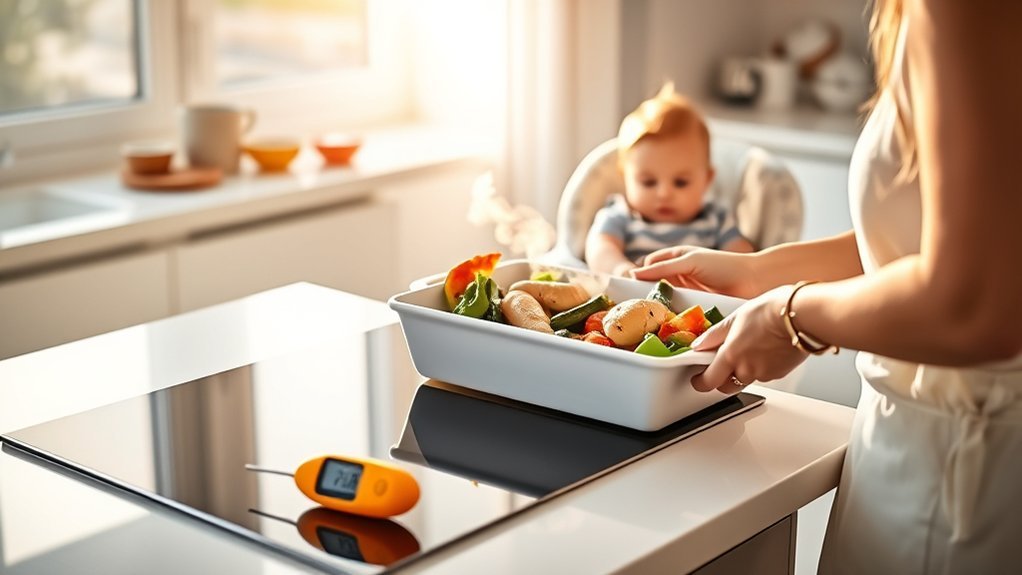
Use the following process only for food that remained uncontaminated and was refrigerated or frozen within its safe storage period.
- Check the food’s history. Confirm that it was portioned with a clean utensil and never served from the baby’s dish. Discard it if you are unsure.
- Check the storage time. Make sure the food is still within the refrigerator or freezer limit for its type.
- Transfer one serving. Place only the amount your baby is likely to eat into a clean microwave-safe dish or small saucepan.
- Heat evenly. Use short microwave intervals or low stovetop heat. Stir often and scrape food from the sides and bottom of the dish.
- Verify the reheating temperature. Cooked leftovers should reach 165°F (74°C) throughout.
- Let the food stand and cool. Wait at least 30 seconds after microwaving, stir again, and allow the food to become lukewarm.
- Serve once and discard the rest. Do not return food from the feeding dish to the refrigerator.
Pro Tip: Freeze homemade baby food in small, single-meal portions. You can thaw only what you need and avoid contaminating or repeatedly reheating a larger batch.
Tips for Preventing Hot Spots When Reheating Baby Food
Microwaves can leave very hot areas next to cooler areas. A container may feel cool while the center of the food is hot enough to burn your baby’s mouth.
Do not microwave baby food in its jar. Transfer it to a separate microwave-safe dish, heat it briefly, stir it from the center outward, and let it stand before checking the temperature.
Even Heating Techniques
| Technique | What to Do | Why It Helps |
|---|---|---|
| Transfer to a dish | Remove food from the jar or pouch before heating. | Allows thorough stirring and more reliable temperature checks. |
| Use short intervals | Heat briefly, then stop and stir. Microwave power varies, so avoid relying on one fixed time. | Reduces overheating around the center or edges. |
| Stir completely | Mix the top, bottom, center, and sides after each interval. | Distributes heat throughout thick food. |
| Let it stand | Wait at least 30 seconds after microwaving, then stir again. | Allows heat to spread from hotter areas to cooler areas. |
| Use the stovetop for certain foods | Heat baby-food meats, meat sticks, and eggs in a small saucepan instead of the microwave. | These higher-fat foods may splatter or overheat in a microwave. |
Stirring and Testing the Temperature
Use a clean spoon to stir the food thoroughly after heating. If the food contains chunks, break them apart and check that their centers are hot.
For reheated cooked leftovers, insert a clean food thermometer into several parts of the serving and confirm that the food reached 165°F (74°C). Then allow it to cool.
Before feeding, place a small sample on a separate clean spoon. The food should feel comfortably lukewarm rather than hot. Do not blow directly on the baby’s food, double-dip a tasting spoon, or return a tasted sample to the serving dish.
Serving Leftovers Safely to Your Baby
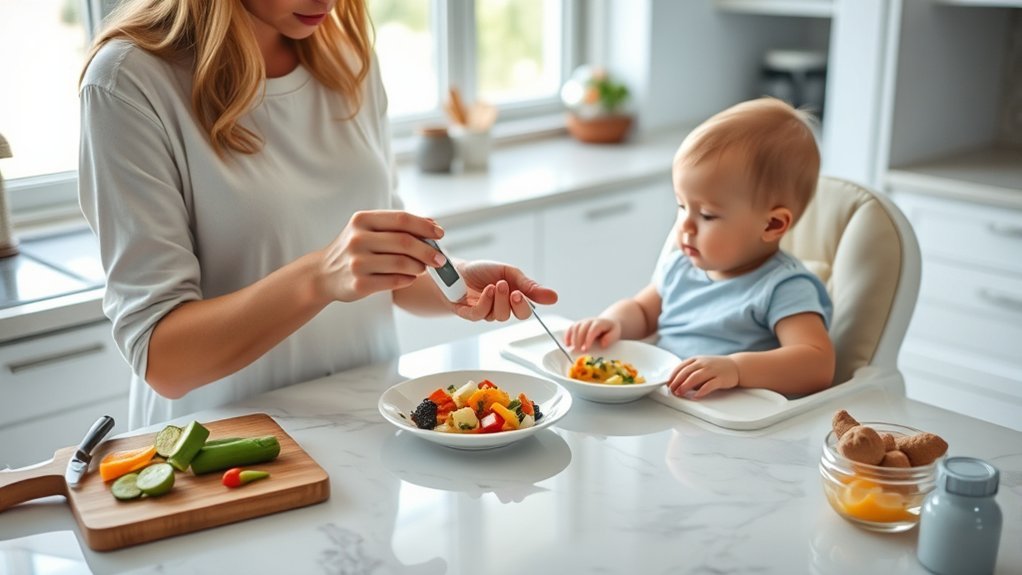
Use this table to decide whether food can be saved or must be discarded.
| Situation | Save or Discard? | Reason |
|---|---|---|
| Food was placed in a separate dish with a clean spoon, and the remaining container was untouched. | Save the untouched remainder. | Refrigerate it promptly and follow the storage limit for that type of food. |
| Food remains in the baby’s feeding dish. | Discard. | The food may contain saliva or germs from hands and utensils. |
| A used spoon was dipped back into the jar, pouch, or storage container. | Discard the contaminated contents. | Saliva may have been transferred to the remaining food. |
| The food sat at room temperature for more than two hours. | Discard. | Bacteria can multiply quickly between 40°F and 140°F. |
| The food sat above 90°F for more than one hour. | Discard. | Warm outdoor or vehicle temperatures shorten the safe holding period. |
| You do not know how long the food was out or whether it was contaminated. | Discard. | Uncertain handling history is not worth the risk for a baby. |
How to Store, Thaw, and Reheat Baby Food Safely
Safe storage depends on the type of food, whether it remained uncontaminated, and how quickly it was chilled. A refrigerator slows bacterial growth but does not reverse contamination or make old food safe again.
Proper Storage Techniques
Use clean, airtight, food-safe containers. Divide homemade food into small portions so it cools quickly and you can remove only what you need. Label each container with the food name and preparation or opening date.
Keep the refrigerator at 40°F (4°C) or below and the freezer at 0°F (-18°C) or below. Store food toward the back of the refrigerator rather than in the door, where temperatures change more often.
The following limits apply only to food that remained untouched and was chilled promptly. Follow a shorter manufacturer limit when one appears on the package.
| Baby Food Type | Refrigerator | Freezer |
|---|---|---|
| Opened strained fruits and vegetables | 2–3 days | 6–8 months for best quality |
| Opened strained meats and eggs | 1 day | 1–2 months |
| Opened meat-and-vegetable combinations | 1–2 days | 1–2 months |
| Homemade baby food | 1–2 days | 1–2 months |
Safe Thawing Methods
Thaw frozen baby food in the refrigerator whenever possible. Place the covered portion in the refrigerator the night before you plan to use it.
You may also reheat a frozen portion directly in a saucepan or microwave-safe dish. Stir frequently and make sure reheated cooked food reaches 165°F (74°C) throughout.
Do not thaw baby food on the counter, in a warm car, or in standing warm water for an extended period. Once thawed in the refrigerator, use the food promptly and do not refreeze it after it has been warmed or offered to your baby.
Safe Reheating Methods
For microwave reheating, place one serving in a shallow microwave-safe dish. Heat in short intervals, stir after each interval, and let the food stand for at least 30 seconds. Do not microwave the original baby-food jar.
For stovetop reheating, use a small saucepan over low heat. Stir continuously to prevent sticking and uneven heating. The stovetop is the preferred method for baby-food meats, meat sticks, and eggs.
According to FoodSafety.gov reheating guidance, cooked leftovers should reach 165°F (74°C). After reaching that temperature, cool the portion to lukewarm before serving.
Monitoring Package Dates and Container Safety
Before opening commercial baby food, inspect the package. Do not use a jar with chipped glass, a rusty lid, leakage, swelling, or a safety button that is already raised. A sealed jar should make a popping sound when opened.
Do not use a pouch that is swollen, leaking, torn, or damaged. Follow manufacturer instructions for refrigeration after opening.
Most “Best if Used By” dates describe expected quality rather than an automatic safety cutoff. However, storage history and package condition still matter. Once baby food is opened, use the shorter refrigerated-storage limits listed above.
Infant formula is different. Its use-by date must be followed because the manufacturer guarantees the formula’s nutrient content and quality only through that date. Never use infant formula after its use-by date.
Signs of Spoiled Baby Food to Watch For
Discard baby food if you see mold, unexpected discoloration, bubbling, separation that does not match the product, leaking liquid, or an unusual texture. Sour, fermented, rancid, or otherwise abnormal odors are also reasons to throw the food away.
When storage time, temperature, or contamination history is unsafe, throw the food away even if it looks and smells normal.
Do not taste questionable food to decide whether it is safe. Harmful bacteria may be present without creating a noticeable smell, flavor, or visible change.
Also discard food when:
- The refrigerator storage period has passed.
- The food was left out beyond the two-hour or one-hour limit.
- A used feeding spoon contacted the storage container.
- The lid did not seal properly or the package is damaged.
- The food was kept above 40°F for an unknown period.
- You cannot confirm how the food was handled.
Best Practices for Preventing Foodborne Illness From Baby Food
Use these habits every time you prepare, serve, or store food for your baby:
- Wash first. Wash your hands with soap and water and clean preparation surfaces, utensils, blenders, and containers.
- Portion before feeding. Spoon a small serving into a separate dish and keep the main container untouched.
- Prevent cross-contamination. Keep raw meat, poultry, seafood, and eggs away from ready-to-eat baby food.
- Cook ingredients safely. Use a food thermometer when preparing meat, poultry, fish, and egg dishes.
- Chill promptly. Refrigerate untouched perishable food within two hours, or one hour above 90°F.
- Label stored portions. Write the preparation or opening date on each container.
- Reheat once. Heat only one serving and discard anything left after the feeding.
- Do not depend on smell. Follow the safe storage period even when the food appears normal.
When to Consult a Doctor About Food Safety Concerns
Food poisoning may cause vomiting, diarrhea, stomach pain, poor feeding, or fever. Symptoms can begin within hours or may take several days, depending on the germ involved.
Medical note: This article provides general food-safety information and does not replace advice from your pediatrician. Babies can become dehydrated or seriously ill quickly. Contact your child’s healthcare professional whenever you are concerned about feeding, vomiting, diarrhea, fever, or a possible allergic reaction.
Recognizing Severe Symptoms
Seek urgent medical advice when your baby has any of the following:
- Blood in the stool, diarrhea, or vomit
- Repeated vomiting or an inability to keep fluids down
- Fewer wet diapers, very dark urine, a dry mouth, no tears when crying, unusual sleepiness, or marked fussiness
- Difficulty breathing, wheezing, swelling of the face, lips, or tongue, widespread hives, or blue or gray skin
- A seizure, extreme weakness, poor responsiveness, or trouble waking
- Severe or worsening abdominal pain
- Symptoms that are rapidly worsening or concern you
Warning: If your baby is 3 months old or younger and has a rectal temperature of 100.4°F (38°C) or higher, call the pediatrician immediately. Do not wait to see whether the fever lasts for several hours.
Timing of Symptoms
Some foodborne illnesses cause symptoms within a few hours, while others may take several days. Timing alone cannot confirm which food caused the illness.
| Symptom or Situation | Recommended Action |
|---|---|
| Baby 3 months or younger with a rectal temperature of 100.4°F or higher | Call the pediatrician immediately. |
| Trouble breathing, facial swelling, blue or gray color, seizure, or poor responsiveness | Seek emergency care immediately. |
| Blood in diarrhea or vomit | Contact a healthcare professional promptly. |
| Frequent vomiting or inability to keep liquids down | Seek prompt medical advice because dehydration can develop quickly. |
| Fewer wet diapers, dry mouth, no tears, or unusual sleepiness | Seek medical advice promptly for possible dehydration. |
When Symptoms Persist
Contact your pediatrician when vomiting, diarrhea, poor feeding, fever, or unusual behavior continues, worsens, or returns after improving. Do not wait for a fixed number of hours when your baby looks ill, is not drinking normally, has fewer wet diapers, or is difficult to wake.
If you suspect a specific food caused the illness, save the product package, lot number, purchase receipt, and any recall information. Do not feed the suspected food again unless your pediatrician advises otherwise.
Storing Baby Food Leftovers Right After Meals
At the end of a meal, do not scrape food from the baby’s bowl back into the jar or storage container. Discard the food from the feeding dish, wash the dish and spoon, and refrigerate only the untouched portion that remained separate.
| Action | Timing | Best Practice |
|---|---|---|
| Discard feeding-dish food | Immediately after the meal | Do not refrigerate or mix it with untouched food. |
| Refrigerate untouched food | Within 2 hours; within 1 hour above 90°F | Use a clean, shallow, airtight container. |
| Label the container | Before refrigeration or freezing | Write the food name and preparation or opening date. |
| Use or discard | Within the category-specific limit | Do not extend the limit because the food still smells normal. |
Frequently Asked Questions
Can I freeze leftover baby food for later use?
Yes, but only freeze an untouched portion that was handled with clean utensils. Do not freeze food from your baby’s feeding dish. Current federal guidance lists 1–2 months for homemade baby food and meat-and-vegetable combinations, while strained fruits and vegetables may retain quality for 6–8 months.
How long can baby food leftovers be stored in the refrigerator?
Untouched strained fruits and vegetables may be refrigerated for 2–3 days. Strained meats and eggs should be used within 1 day. Meat-and-vegetable combinations and homemade baby foods should be used within 1–2 days. Follow a shorter manufacturer limit when provided.
Is it safe to mix different types of leftovers?
You may combine foods only when every ingredient was kept uncontaminated, refrigerated promptly, and remains within its safe storage period. Use the shortest storage limit among the combined foods. Being in the same food group does not make a mixture safe.
What should I do if my baby refuses reheated food?
Warming baby food is optional. Try serving a safely stored portion cold or at room temperature, or adjust the texture with an age-appropriate liquid your pediatrician has approved. Do not repeatedly warm and cool the same portion, and never add honey for a child younger than 12 months.
Can I use baby food beyond the date printed on the package?
Follow the manufacturer’s instructions and discard damaged, leaking, swollen, or unsealed packages. Most “Best if Used By” dates concern quality, but opening the package starts a much shorter refrigerated-storage period. Never use infant formula after its required use-by date.
Can I save food left in my baby’s bowl?
No. Discard food left in the feeding dish because saliva and germs from the spoon, hands, or mouth may have contaminated it. Refrigerate only food that was kept in a separate untouched container.
Does baby food have to be heated before serving?
No. Properly handled baby food may be served cold, at room temperature, or warm. If you reheat cooked leftovers, heat them to 165°F and then cool them to a comfortable lukewarm temperature before feeding.
Can I reheat baby food more than once?
Avoid reheating the same portion more than once. Repeated heating, cooling, and handling increase the chance that the food will spend too much time at unsafe temperatures. Heat one small serving and discard anything your baby does not eat.
Can I refrigerate food from a jar after feeding directly from it?
No. A spoon that returns to the jar after touching your baby’s mouth can transfer saliva to the remaining food. In the future, place a small serving in a separate dish and refrigerate only the untouched food left in the jar.
Conclusion
Baby food leftovers are safe to save only when they were kept separate from your baby’s feeding dish and mouth. Portion food before the meal, refrigerate untouched food promptly, follow the correct storage limit, and heat only one serving at a time.
When handling history is uncertain, discard the food. A small amount of wasted food is safer than risking illness. Contact your pediatrician promptly if your baby develops concerning vomiting, diarrhea, dehydration, fever, breathing problems, or unusual behavior.
Sources
- U.S. Food and Drug Administration — Once Baby Arrives — Saliva contamination, baby-food storage, package checks, and safe microwaving.
- FoodSafety.gov — Children Under Five — Refrigerator and freezer limits for puréed and solid baby foods.
- FoodSafety.gov — Bacteria and Viruses — Reheating cooked leftovers to 165°F and prompt refrigeration.
- USDA FSIS — Food Product Dating — Meaning of use-by and best-if-used-by dates.
- Centers for Disease Control and Prevention — Food Poisoning Symptoms — Severe symptoms, vomiting, bloody diarrhea, and dehydration.
- American Academy of Pediatrics — Fever and Your Baby — Age-specific fever guidance for infants.