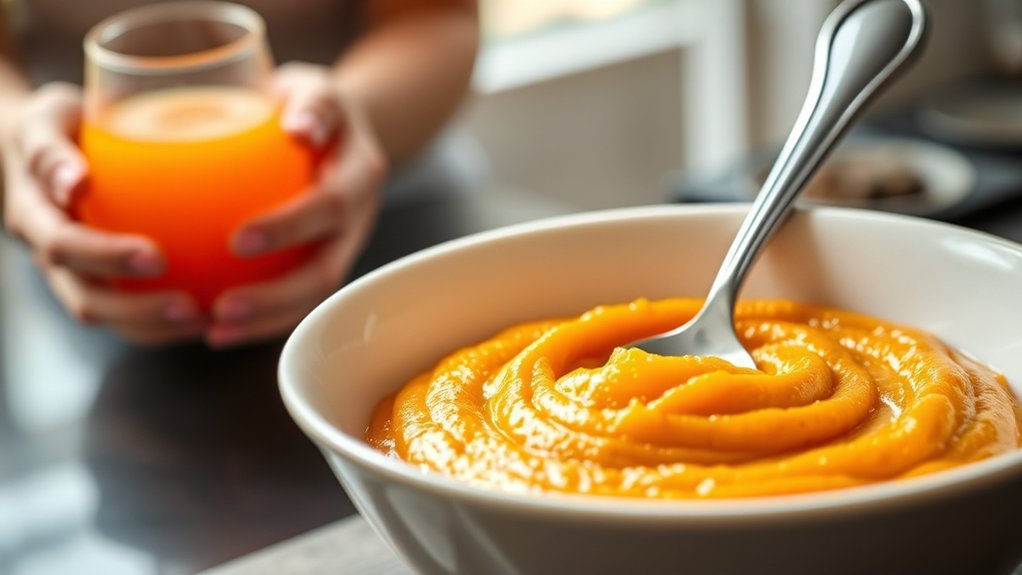
If your baby’s puree is too thick, you can usually fix it in a few minutes by stirring in a small amount of safe liquid. Water, breast milk, or correctly prepared infant formula are the most practical choices. Add the liquid gradually so the puree does not become runny, and always match the texture to your baby’s feeding skills.
Quick Answer
To thin baby puree, place one serving in a clean bowl and stir in water, breast milk, or correctly prepared formula one teaspoon at a time. Mix well after each addition and stop when the puree slides easily from the spoon without becoming watery. Discard any leftovers touched by the feeding spoon.
Key Takeaways
- Thin puree gradually by adding liquid one teaspoon at a time.
- Safe options include potable water, breast milk, or infant formula prepared exactly according to its label.
- Adjust texture according to your baby’s developmental skills rather than following a rigid age chart.
- Thin only the portion you plan to serve whenever possible so the remaining batch stays fresh.
- Discard food left in the feeding dish because saliva from the spoon can introduce bacteria.
At a Glance
| Time Required | 2–5 minutes |
| Difficulty | Easy |
| Tools Needed | Clean bowl, teaspoon, spoon or fork, and an optional blender |
| Cost | Usually no additional cost |
Warning: Never add extra water to a bottle of infant formula or change the formula-to-water ratio. Prepare formula exactly as directed on the container. You may then use a small amount of that correctly prepared formula to thin a serving of puree.
Note: This guidance is for generally healthy babies who are developmentally ready for solid foods. Do not change the thickness of medically prescribed feeds for reflux, swallowing problems, or other conditions unless your child’s healthcare professional approves the change.
Understanding Why Baby Food Might Be Too Thick
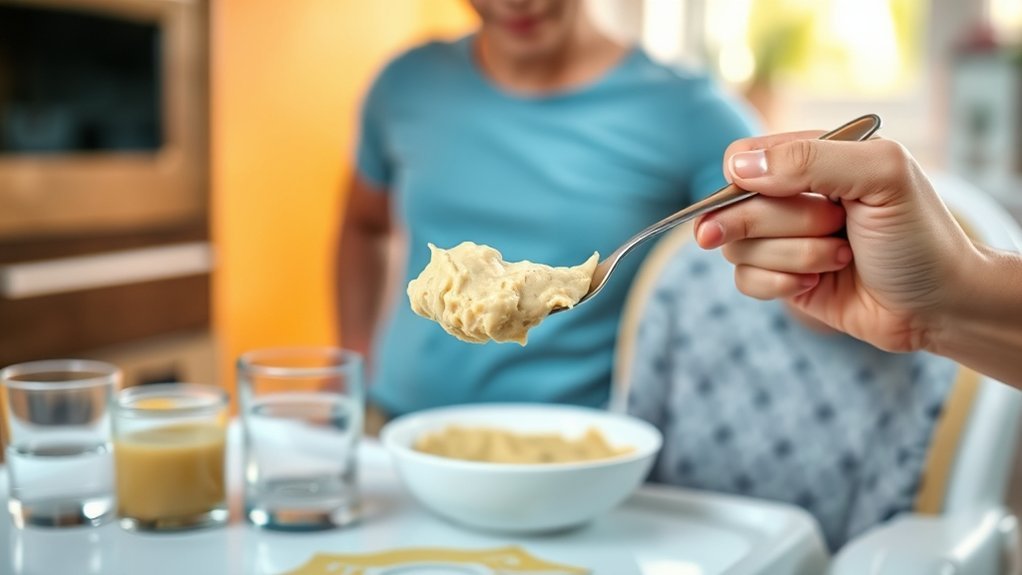
Baby food often becomes thicker than expected because cooked grains, potatoes, beans, meat, bananas, avocados, and other dense foods absorb moisture or set as they cool. A puree may also thicken in the refrigerator after preparation.
Hard fruits and vegetables, including apples and carrots, should be cooked until soft before they are mashed or pureed. The CDC recommends preparing foods so their texture matches the child’s developmental ability and introducing thicker or lumpier foods gradually as eating skills improve.
A puree does not need to be perfectly smooth for every baby. The right consistency is one your baby can manage comfortably while sitting upright and being closely supervised.

Power your essentials anywhere with a 999Wh pure sine wave power station delivering up to 1000W continuous with 2000W surge. It supports fast charging via USB-C PD 60W and USB-A QC 18W, plus simultaneous output for multiple devices through AC, USB, wireless, and car/DC ports. Recharge using AC, car, or solar with a built-in MPPT controller and dual cooling fans, while the upgraded battery management system protects against surges, short circuits, and overheating.

【4-in-1 Baby Food Maker】Multifunctional baby food processor with steamer. You can steam cooks, blends, defrosts and reheats healthy food, which satisfy the needs of daily infant feeding. This baby food steamer is suitable for all vegetable, fish, fruit and meats.The unique steam circulation system locks in nutrients, flavors and vitamins, ensuring your baby benefits from delicious and healthy homemade food.

【4-in-1 Baby Food Maker】Multifunctional baby food processor with steamer. You can steam cooks, blends, defrosts and reheats healthy food, which satisfy the needs of daily infant feeding. This baby food steamer is suitable for all vegetable, fish, fruit and meats.The unique steam circulation system locks in nutrients, flavors and vitamins, ensuring your baby benefits from delicious and healthy homemade food.
Signs Your Baby May Need a Thinner Puree
Your baby’s reaction can provide useful clues, but one refused spoonful does not confirm a lasting texture preference. Babies may turn away because they are full, tired, distracted, unwell, unfamiliar with the flavor, or not yet ready for the texture.
Reactions to Watch During Feeding
Consider making the next spoonful slightly thinner when your baby repeatedly struggles with an otherwise familiar food. Observe the full feeding rather than relying on one reaction.
| What You Notice | What It May Mean |
|---|---|
| Turns away or closes the mouth | May be full, tired, uninterested, or uncomfortable with the texture |
| Pushes the spoon away | May need a pause, smaller spoonful, slower pace, or different consistency |
| Repeatedly spits out a thick puree | May not yet manage that texture or may dislike the food |
| Handles a thinner version calmly | A thinner texture may be easier at that feeding |
| Repeated coughing, choking, wet-sounding breathing, or distress | Stop feeding and discuss the symptoms with a healthcare professional |
Preference for Smoother Purees
Some babies initially manage smooth, loose purees more easily than dense or sticky foods. Offer small spoonfuls, allow time to swallow, and stop when your baby shows fullness or distress.
Continue offering safe opportunities to experience other textures as your baby’s skills develop. The CDC notes that varied textures can help children develop chewing and fine-motor skills. The goal is gradual progress, not forcing a baby to finish a texture they cannot comfortably manage.
How to Thin Baby Puree Step by Step
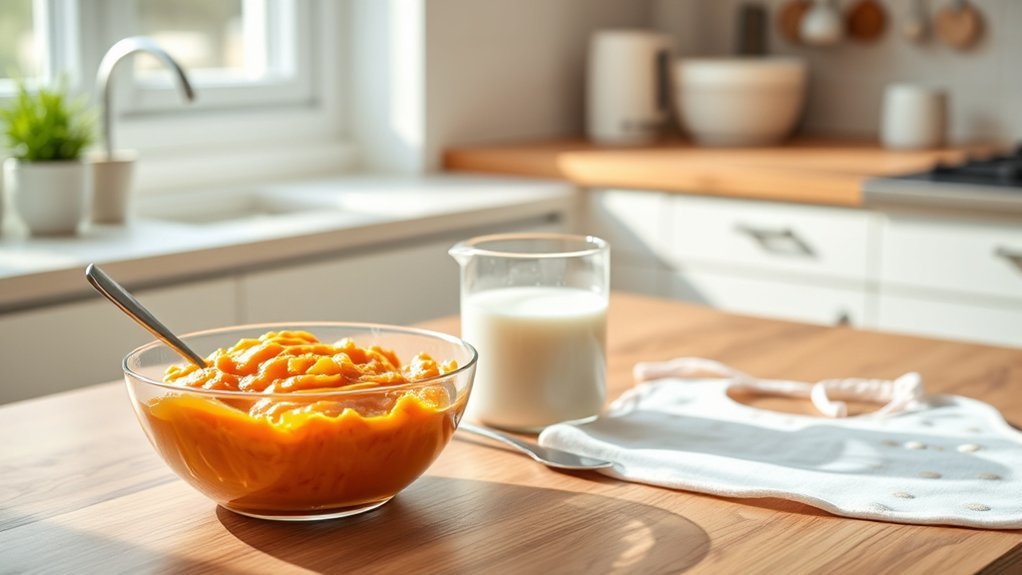
Thick baby food is usually easy to adjust when you add liquid slowly and mix thoroughly.
Start with one teaspoon of liquid. It is easier to add more than to repair a puree that has become watery.
- Portion the food: Put only the amount you expect your baby to eat into a clean bowl.
- Add one teaspoon of liquid: Use potable water, breast milk, or correctly prepared infant formula.
- Mix thoroughly: Stir with a spoon or fork. For a very dense or uneven puree, pulse it briefly in a blender or food processor.
- Check the texture: The puree should hold lightly on the spoon but slide off with a gentle tilt. It should not be gluey, stringy, or watery.
- Repeat if needed: Add another teaspoon, mix, and check again.
- Test the temperature: Make sure warmed food is lukewarm and has no hot spots before serving.
- Discard contaminated leftovers: Throw away food remaining in the feeding dish after the meal.
Pro Tip: Thin each serving immediately before feeding instead of thinning the entire stored batch. This makes it easier to control the texture and keeps untouched food separate from the feeding spoon.
Best Liquids for Thinning Baby Puree
Water
Potable water is simple, neutral, and useful when the puree already contains enough flavor and nutrition. Add only as much as needed to correct the texture.
Breast Milk
Breast milk can provide a familiar taste. Add it to the serving shortly before feeding. Follow current breast-milk storage guidance and do not return food touched by the feeding spoon to the refrigerator.
Correctly Prepared Infant Formula
Prepared formula can also provide a familiar flavor. Follow the formula label exactly before adding any to food. The CDC advises against changing the required water-to-formula ratio and says formula left after a feeding must be discarded.
Unsalted Cooking Liquid or Broth
A small amount of water used to cook the same fruit, vegetable, grain, or meat can help preserve its flavor. Unsalted or no-salt-added broth may be used occasionally after checking the ingredients for allergens and sodium, but it is not required. Avoid salty bouillon cubes and highly seasoned broths.
Liquids to Avoid
- Unpasteurized milk or juice
- Fruit juice as a routine thinner, especially for babies younger than 12 months
- Honey or liquids sweetened with honey for children younger than 12 months
- Tea, coffee, soda, sports drinks, or other caffeinated or sweetened drinks
- Extra water added directly to a formula bottle
How to Customize Baby Food Consistency for Your Child
Homemade baby food lets you adjust texture without following a single formula. Start with the least modification needed and watch how your baby handles the food.
For a thinner texture, add water, breast milk, or correctly prepared formula gradually. For a puree that has become too thin, stir in more of the original puree or a small amount of an age-appropriate, iron-fortified infant cereal your baby has already tolerated.
Do not add dry cereal to a bottle unless a healthcare professional specifically directs you to do so. If your baby has a swallowing disorder, reflux, poor growth, or medically prescribed thickened feeds, follow the child’s individualized feeding plan instead of changing the consistency yourself.
How to Fix Baby Puree That Becomes Too Thin
If you add too much liquid, you usually do not need to throw the food away. Try one of these fixes:
- Stir in more of the original mashed or pureed ingredient.
- Add a small amount of another already-introduced food with a compatible flavor, such as mashed banana with pear or mashed sweet potato with carrot.
- Mix in a small amount of prepared, iron-fortified infant cereal if it is suitable for your baby.
- Let a warm puree cool for a few minutes; some foods naturally become thicker as they cool.
Add thickening ingredients gradually. The repaired puree should remain soft, moist, and appropriate for your baby’s feeding skills.
How to Safely Store Thinner Baby Purees
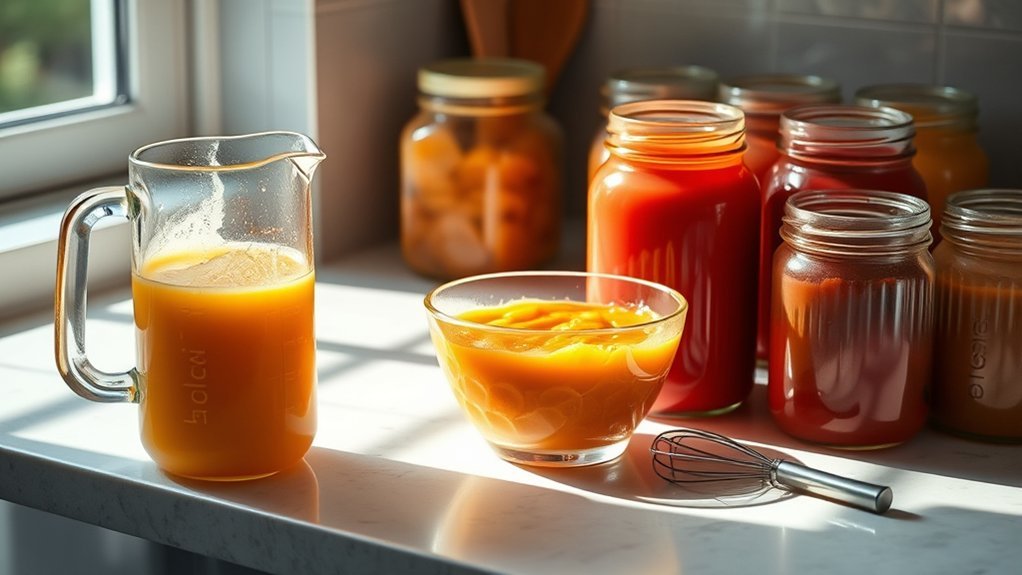
Babies and young children are more vulnerable to foodborne illness, so clean preparation and prompt refrigeration matter. Wash your hands, utensils, blender parts, work surface, and storage containers before preparing food.
- Use clean, airtight containers: Divide food into small portions so you only open what you need.
- Refrigerate promptly: Keep the refrigerator at or below 40°F (4°C). Do not leave perishable puree at room temperature for more than two hours, or more than one hour in temperatures above 90°F (32°C).
- Label the food: Write the ingredient and preparation date on each container.
- Use refrigerated homemade puree quickly: General FDA guidance lists one to two days for homemade baby food. Meat, egg, or combination purees may have shorter recommended limits.
- Freeze extra portions: Freeze untouched puree in covered trays or small freezer-safe containers, then transfer frozen portions to a dated airtight container. Use within about three months for best quality and safety guidance.
- Thaw safely: Thaw in the refrigerator, not on the counter. Stir heated food well and check for hot spots.
- Discard the served portion: Food remaining in a bowl after the feeding spoon has touched your baby’s mouth should not be refrigerated for another meal.
Warning: Never feed directly from a storage jar and then return that jar to the refrigerator. Saliva transferred by the spoon can contaminate the remaining food. Put a separate serving into a clean dish first.
Recognize Your Baby’s Texture Preferences
Texture preference is best judged over several meals. A baby may readily eat a smooth puree one day and refuse the same food the next because of appetite, fatigue, teething, illness, temperature, flavor, or the feeding environment.
Keep mealtimes calm and responsive:
- Seat your baby upright in a stable highchair and use the safety harness.
- Offer small spoonfuls and allow time to swallow.
- Pause when your baby turns away, closes the mouth, or becomes upset.
- Avoid scraping food from the spoon against the baby’s upper lip or forcing the spoon into the mouth.
- Try a manageable texture again on another day unless a healthcare professional advises otherwise.
- Continue offering a variety of safe textures as feeding skills develop.
Responsive feeding helps you notice your baby’s hunger, fullness, comfort, and skill level without labeling every refusal as a permanent dislike.
When to Start Thicker Purees
Most babies begin foods other than breast milk or infant formula at about 6 months, once they show developmental readiness. Introducing solids before 4 months is not recommended. Readiness matters more than reaching an exact birthday.
Signs a Baby Is Ready for Solid Foods
According to the CDC’s developmental-readiness guidance, signs include:
- Sitting upright alone or with support
- Controlling the head and neck
- Opening the mouth when food is offered
- Swallowing food instead of immediately pushing it back out
- Bringing objects to the mouth
- Moving food from the front to the back of the tongue
Chewing motions or interest in food can be useful clues, but they should be considered with the full set of readiness signs.
Why a Gradual Transition Matters
Begin with a texture your baby can manage, then gradually offer thicker, mashed, lumpy, finely chopped, or ground foods as skills develop. Babies may cough, gag, or spit up while learning. Stay calm, use small portions, and always supervise eating.
Do not delay all texture changes simply because a baby occasionally gags. However, repeated coughing, choking, vomiting, distress, or inability to progress deserves professional review.
Development-Based Texture Guidelines
| Developmental Stage | Textures to Explore |
|---|---|
| Beginning solids, usually around 6 months when ready | Smooth mashed, pureed, or strained foods in small amounts |
| Managing smooth food comfortably | Gradually thicker puree and soft mashed food |
| Developing chewing and hand-to-mouth skills | Soft lumps, finely chopped or ground food, and safe graspable pieces |
| Handling varied textures safely | A wider range of soft family foods prepared to reduce choking risk |
These are flexible stages, not deadlines. Premature babies and children with developmental or medical conditions may progress differently.
Gagging, Choking, and When to Get Help
Gagging can happen while a baby learns to manage a new texture. It may involve coughing, noise, watery eyes, or pushing food forward. Stay close, allow the baby to recover, and make the next spoonful smaller or easier to manage.
Choking occurs when the airway is partly or fully blocked. A baby who cannot breathe, cry, or cough effectively needs immediate emergency help. Call 911 and begin age-appropriate choking first aid. Parents and caregivers should consider taking an infant first-aid and CPR course. The American Red Cross provides infant choking guidance and training resources.
Warning: Stop feeding and seek medical advice if your baby repeatedly coughs or chokes during meals, has wet or noisy breathing after swallowing, turns blue or pale, cannot gain weight, frequently vomits, seems unusually tired while eating, or cannot progress beyond one texture.
Ask your pediatrician about a feeding evaluation when texture problems persist. Depending on the concern, the child may be referred to a pediatric dietitian, speech-language pathologist, occupational therapist, gastroenterologist, or another feeding specialist.
Common Mistakes to Avoid When Adjusting Consistency
Small adjustments are safer and easier to control than pouring in a large amount of liquid at once.
Adjust one serving at a time, mix thoroughly, and check the texture after every teaspoon of liquid.
- Adding too much liquid at once: This can create a watery puree that is harder to serve.
- Changing the formula ratio: Never use extra water to dilute prepared formula.
- Assuming every refusal is a texture preference: Consider appetite, fatigue, flavor, temperature, illness, and feeding pace.
- Skipping thorough mixing: Pockets of thick food can remain even when the surface looks smooth.
- Saving food from the feeding dish: Saliva can contaminate leftovers.
- Following a rigid age chart: Texture advancement should reflect developmental ability.
- Forcing progress: Pressure can make meals stressful and does not teach safe swallowing.
- Changing prescribed thickness: Follow the child’s clinical feeding plan when one is in place.
Frequently Asked Questions
Can I use vegetable broth to thin baby puree?
A small amount of unsalted or no-salt-added broth may be used after you check its ingredients for allergens and excess sodium. Water, breast milk, or correctly prepared infant formula are usually simpler choices. Avoid salty bouillon cubes and heavily seasoned broth.
How can I tell if puree is too thin?
Puree may be too thin if it runs off the spoon like a drink and is difficult to offer in a controlled spoonful. Thicken it gradually with more of the original puree or a small amount of an age-appropriate, iron-fortified infant cereal your baby has already tolerated.
Are there any purees that should never be thinned?
Most ordinary fruit, vegetable, grain, meat, and combination purees can be adjusted when necessary. The important exception is a food or drink prescribed at a specific thickness for reflux, dysphagia, aspiration risk, or another medical condition. Do not change prescribed thickness without professional guidance.
What tools are best for thinning baby puree?
A bowl and teaspoon are enough for most purees. Use a fork, small whisk, immersion blender, countertop blender, or food processor when the food is uneven or fibrous. Wash all equipment thoroughly before and after use.
Can I freeze thinned purees for later use?
Yes, if the food has not been served or contaminated by saliva. Freeze small portions in covered trays or freezer-safe containers, label them, and use them within about three months. Thaw in the refrigerator and do not refreeze food that has fully thawed.
How much liquid should I add to baby puree?
Begin with one teaspoon for a small serving. Stir thoroughly, check the texture, and add another teaspoon only if needed. Dense foods may need more liquid, while watery fruits may need little or none.
Can I thin baby puree with formula?
Yes, but prepare the infant formula exactly according to the package instructions first. Add a small amount of the correctly prepared formula to the serving. Never add extra water to a formula bottle or alter the required formula-to-water ratio.
What should I do if my baby keeps refusing thicker food?
Return temporarily to a manageable texture, offer small amounts without pressure, and try gradual changes on another day. Contact your pediatrician if refusal persists or occurs with coughing, choking, vomiting, pain, breathing changes, poor growth, or extreme meal fatigue.
Conclusion
To fix baby puree that is too thick, place one serving in a clean bowl and mix in water, breast milk, or correctly prepared infant formula one teaspoon at a time. Check the texture after each addition, keep your baby upright and supervised, and discard food left in the feeding dish.
Texture progression should follow your baby’s developmental abilities rather than a strict calendar. Occasional hesitation with a new texture can be normal, but repeated coughing, choking, distress, or difficulty swallowing should be discussed with a healthcare professional.
Sources
- CDC — When, What, and How to Introduce Solid Foods — developmental readiness, food preparation, texture progression, and choking prevention
- CDC — Tastes and Textures — smooth, mashed, lumpy, chopped, and ground food progression
- CDC — Infant Formula Preparation and Storage — correct formula preparation and disposal limits
- FDA — Once Baby Arrives — baby-food storage, freezing, hygiene, heating, and saliva-contamination precautions
- American Academy of Pediatrics — Homemade Baby Food Guidance — readiness, nutrition, choking hazards, and freezer storage
- American Academy of Pediatrics — Choking Prevention — supervision and choking-risk reduction