Store-bought baby food is not automatically bad for your baby. It can be a safe, practical part of a varied diet when you choose age-appropriate products, read the ingredient and Nutrition Facts labels, and handle opened containers correctly. The main concerns are uneven nutritional quality, added sugars or excess sodium in some products, choking risks, and unavoidable environmental contaminants such as lead and arsenic.
Quick Answer
Store-bought baby food can be safe and nutritious, but products vary widely. Choose foods with no added sugars, less sodium, age-appropriate textures, iron- or zinc-rich ingredients, and a short ingredient list. Offer a variety of grains and foods, store leftovers safely, and do not rely on pouches or sweet fruit blends for every meal.
Key Takeaways
- Commercial baby food offers convenience, portability, consistent texture, and access to many flavors.
- A 2024 study of 651 infant and toddler products found that nearly 60% did not meet all nutritional criteria in a WHO Europe profile model; this does not mean every product was unsafe.
- Children younger than 2 should avoid added sugars, and caregivers should limit foods high in sodium.
- Heavy metals can occur in both commercial and homemade foods because they are present in soil, water, and air. Dietary variety helps reduce repeated exposure from any one food.
- A mix of store-bought and homemade foods can work well if the overall diet is varied, nutrient-dense, safe, and suited to your baby’s development.
Note: This article provides general feeding and food-safety information. Ask your pediatrician or a registered dietitian for individualized advice, especially if your baby was born prematurely, has poor growth, severe eczema, a diagnosed food allergy, swallowing problems, or other medical needs.
Is Store-Bought Baby Food Safe?
Most commercially packaged baby foods are made under federal food-safety and labeling requirements, but that does not guarantee that every product has the same nutritional quality or that contaminants are completely absent. Safety also depends on the package seal, expiration or use-by information, storage temperature, preparation, and whether the food matches your child’s age and feeding skills.
The U.S. Food and Drug Administration’s Closer to Zero program is working to reduce lead, arsenic, cadmium, and mercury in foods commonly eaten by babies and young children. In January 2025, the FDA finalized lead action levels of 10 parts per billion for many processed baby-food categories and 20 parts per billion for single-ingredient root vegetables and dry infant cereals. These are enforcement guidance levels, not a promise of zero exposure.
Parents should also watch for damaged packaging, broken seals, swelling, leaks, rust, chipped jars, or an unusual odor or appearance. Check the FDA’s recall and safety alert database if you hear about a product concern or notice something unusual.
Warning: Do not feed from a jar or pouch and then save the same container. Saliva transferred from the spoon or spout can contaminate the remaining food. Put one serving in a clean bowl and refrigerate the untouched portion promptly.
What Are the Benefits of Store-Bought Baby Food?
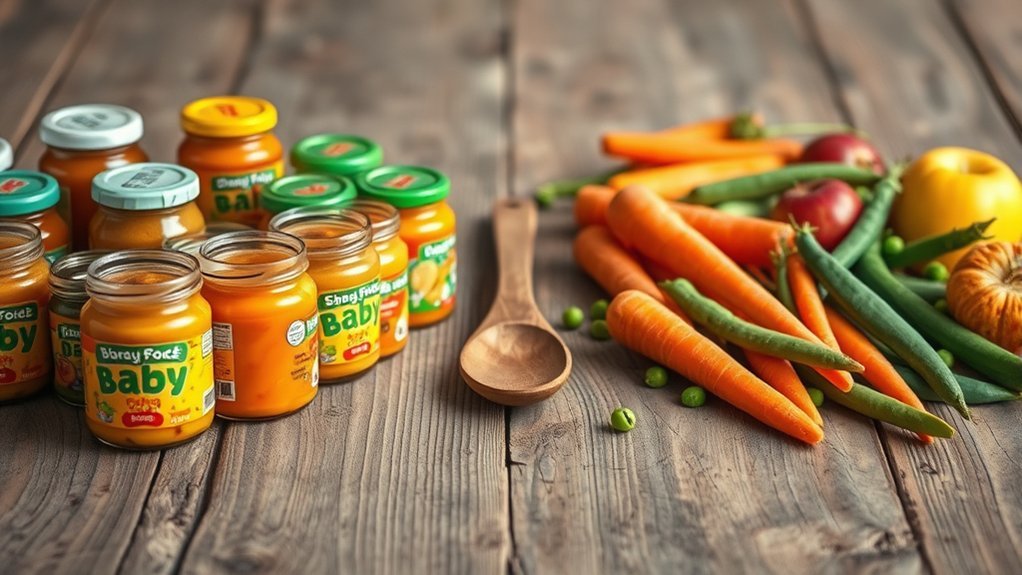
Store-bought baby food can reduce preparation time and make feeding easier during travel, child care, busy workdays, or emergencies. Commercial products also provide predictable textures and clearly labeled ingredients, which can help caregivers introduce new foods in a controlled way.
| Benefit | Why It Helps | What to Check |
|---|---|---|
| Convenience | Ready to serve with little or no preparation | Storage instructions and package condition |
| Portability | Useful for travel, outings, and child care | Whether refrigeration is needed after opening |
| Variety | Offers many fruits, vegetables, grains, and proteins | The first ingredients, because different flavors may use the same base |
| Consistent texture | Can match early spoon-feeding skills | Age guidance and your baby’s actual development |
| Shelf stability | Unopened products may be stored for the period stated by the manufacturer | Use-by date; shelf life varies by product and package |
These benefits make commercial baby food a useful tool rather than an all-or-nothing feeding method. The best choice is the one that supports a balanced diet and fits your family’s time, budget, culture, and access to food.
Is Store-Bought Baby Food Nutritious Enough?
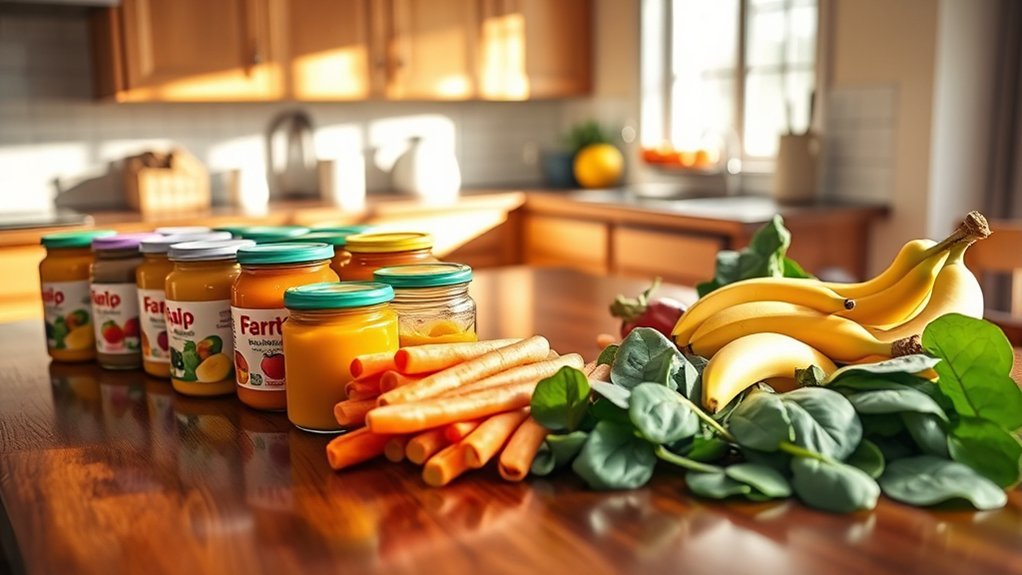
Some store-bought baby foods are nutrient-dense, while others are mostly fruit puree, starch, or snack ingredients. A 2024 study published in Nutrients evaluated 651 foods marketed to children ages 6 to 36 months and found that nearly 60% did not meet all nutritional criteria in the WHO Regional Office for Europe’s nutrient and promotion profile model.
The study found broad room for improvement, but it did not show that 60% of baby foods were contaminated or immediately unsafe. It assessed whether products met a specific nutrition and marketing model.
The study was based on products collected from major U.S. retailers in 2023, so its results should not be treated as a verdict on every jar, tub, pouch, or cereal. Use the label to judge each product. For babies beginning complementary foods, prioritize choices that contribute iron, zinc, protein, healthy fats, vegetables, whole grains, or unsweetened dairy rather than relying mainly on sweet fruit blends and snack foods.
From about 6 to 12 months, breast milk and/or iron-fortified infant formula generally remains the main source of nutrition while solid foods gradually become a larger part of the diet. Store-bought foods should complement that intake, not displace it too quickly.
How to Read a Baby Food Label
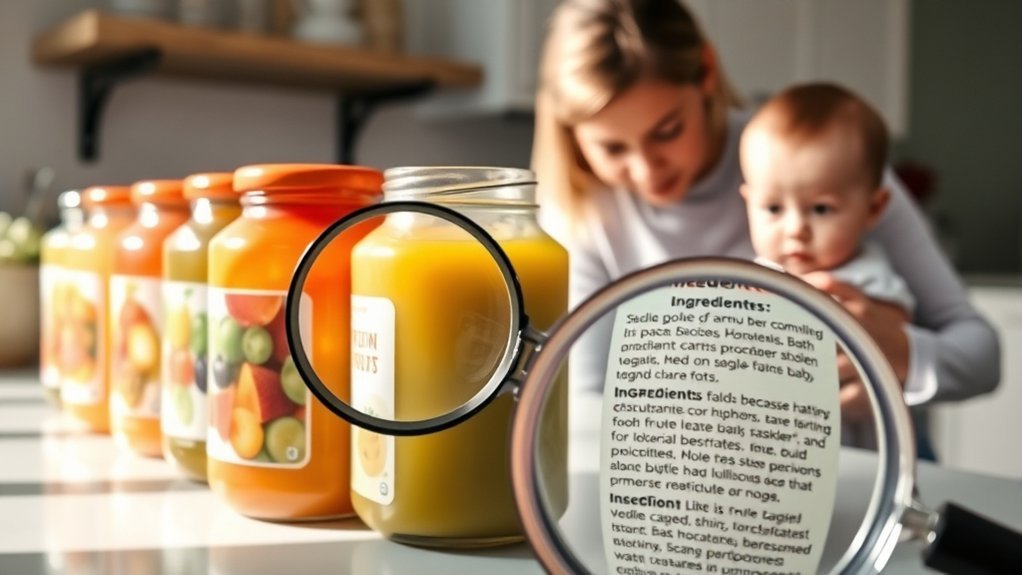
The front of a package is designed to attract attention. The ingredient list and Nutrition Facts panel provide more useful information. Compare products within the same category instead of relying on words such as “natural,” “organic,” “simple,” or “made with vegetables.”
1. Check the Ingredient List
Ingredients appear in descending order by weight. Look for a recognizable food, such as carrots, beans, chicken, oats, or plain yogurt, near the beginning. For mixed products, check whether the name on the front matches the main ingredients. A pouch labeled with spinach or kale may still be mostly apple, pear, or sweet potato.
Choose products without honey for children younger than 12 months. Also review allergen statements for milk, egg, peanut, tree nuts, wheat, soy, sesame, fish, or shellfish when relevant to your child.
2. Avoid Added Sugars
The CDC advises that infants and young children should not have added sugars. On the Nutrition Facts label, look for “Includes 0 g Added Sugars.” Remember that naturally occurring sugar from fruit or milk is listed under total sugars even when no sugar was added.
Fruit puree can be nutritious, but frequent sweet pouches and fruit-based snacks may crowd out foods that supply iron, zinc, protein, fat, and varied savory flavors. Whole or mashed fruit also provides feeding practice and may be more filling as your child’s skills develop.
3. Compare Sodium
Babies and toddlers need very little added salt. Compare similar products and choose the lower-sodium option, especially for soups, meals, sauces, cheese-based foods, and toddler snacks. Avoid using an adult percent Daily Value as a precise infant target; the label’s percent Daily Value is based on a general adult diet.
4. Look for Iron, Zinc, Protein, and Healthy Fat
Iron and zinc become especially important when complementary feeding begins. Helpful choices include iron-fortified infant cereal, beans, lentils, meat, poultry, fish that is low in mercury, eggs, and unsweetened yogurt. A fruit or vegetable puree does not need to contain protein at every serving, but the full day’s diet should include nutrient-rich foods from several groups.
5. Check Serving Size and Texture
A package may contain more than one serving, and a “stage” number is only a guide. Match the food’s texture and portion to your baby’s readiness, chewing and swallowing skills, and hunger or fullness cues. Do not pressure your baby to finish a jar or pouch.
Pro Tip: Compare two products side by side. Choose the one with no added sugars, less sodium, a food you want to serve near the top of the ingredient list, and a texture your baby can manage safely.
Understanding Heavy Metals in Baby Food
Lead, inorganic arsenic, cadmium, and mercury can enter food from soil, water, air, and past or current pollution. Because these elements can be taken up by crops, making food at home does not automatically remove the risk. Organic certification also does not mean a food is free of heavy metals.
| Contaminant | Why It May Appear in Food | Practical Exposure-Reduction Step |
|---|---|---|
| Lead | Environmental contamination of soil, water, or processing inputs | Serve a varied diet and follow recall notices |
| Inorganic arsenic | Rice absorbs more arsenic than many other crops | Rotate oat, barley, multigrain, and other cereals instead of serving only rice cereal |
| Cadmium | Naturally occurring and human-made sources in soil and water | Avoid overreliance on one ingredient or food category |
| Mercury | Can build up in certain fish | Choose fish from FDA/EPA lower-mercury options and avoid high-mercury species |
The American Academy of Pediatrics recommends offering a true variety of foods and grains, reading labels carefully, and not using rice cereal as the first or only infant cereal. These steps reduce repeated exposure while preserving the nutritional benefits of fruits, vegetables, grains, and proteins.
Be cautious with brands that advertise “heavy-metal free” without explaining what was tested, the detection limit, the batch, and the laboratory. A claim of “non-detectable” does not always mean absolute zero.
Age, Texture, and Feeding Safety
The CDC recommends starting foods other than breast milk or infant formula at about 6 months, when a baby is developmentally ready. Introducing solid foods before 4 months is not recommended. Readiness signs include steady head and neck control, sitting alone or with support, opening the mouth for food, and swallowing rather than pushing food back out.
Begin with smooth mashed, pureed, or strained foods, then move toward thicker, lumpier, and soft finger-food textures as skills develop. Staying with thin purees for too long can limit opportunities to practice chewing and self-feeding. Always prepare food in a shape and texture that lowers choking risk.
Warning: Seat your child upright and supervise every bite. Do not let a baby eat while lying down, crawling, walking, riding in a stroller, or sitting unattended in a car. Never give honey before 12 months, and avoid hard, round, sticky, or poorly cut foods that can block the airway.
Potentially allergenic foods can usually be introduced when other complementary foods begin. Offer an age-appropriate form, such as thinned smooth peanut butter rather than a spoonful of thick nut butter. If your baby has severe eczema, an egg allergy, or a previous reaction, ask a clinician how and when to introduce peanut and other allergens.
How to Choose Safer, More Nutritious Baby Food
- Match the product to your baby’s age and skills. Check texture, choking risk, and whether your baby is ready for solids.
- Inspect the package. Skip leaking, swollen, rusty, cracked, chipped, or unsealed containers.
- Read the full ingredient list. Confirm that the highlighted food is actually a main ingredient.
- Choose no added sugar. Look for “Includes 0 g Added Sugars” and avoid honey before age 1.
- Compare sodium. Choose the lower-sodium option within the same food category.
- Include iron- and zinc-rich foods. Rotate fortified cereals, beans, lentils, eggs, meats, poultry, fish, and unsweetened dairy as appropriate.
- Vary foods and grains. Do not serve rice cereal or sweet fruit blends as the only repeated choice.
- Use pouches as one format, not the whole diet. Spoon food into a bowl when possible and give your baby chances to see, smell, touch, and practice eating different textures.
- Follow storage directions. Refrigerate opened food promptly and discard anything contaminated by saliva.
- Check recalls when needed. Search by brand and product name in the FDA recall database.
Is Organic Baby Food Safer?
Organic certification addresses farming and production methods; it does not guarantee that a product contains no pesticides, no heavy metals, less sugar, or more nutrients. Organic and conventional products can both be reasonable choices. Judge the ingredient list, nutrition label, product variety, package condition, and price rather than relying on the organic seal alone.
Jars, Tubs, and Pouches
Jars make it easy to inspect the product and portion food into a bowl. Tubs are lightweight and resealable when the untouched portion is refrigerated according to the label. Pouches are portable, but frequent sucking from a pouch gives less practice with spoons, open cups, food textures, and self-feeding. Pouch caps can also be choking hazards, so keep them away from young children.
Balancing Store-Bought and Homemade Baby Food
A hybrid approach can offer the convenience of packaged food and the flexibility of home preparation. For example, you might use iron-fortified commercial cereal at breakfast, homemade mashed beans or vegetables at dinner, and an unsweetened pouch while traveling.
Homemade food gives you control over ingredients, texture, and family flavors. Store-bought food saves time and can provide useful options when fresh food is unavailable. Neither method is automatically safer or more nutritious. Food variety, nutrient balance, hygiene, age-appropriate texture, and safe storage matter more than choosing one method exclusively.
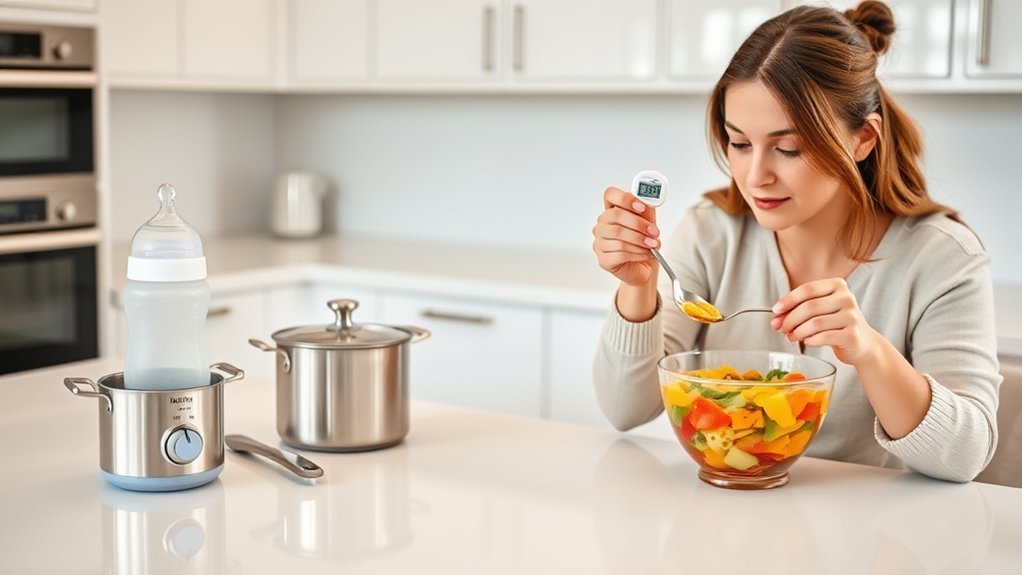
When making baby food at home, wash hands and equipment, cook foods thoroughly, avoid added salt and sugar, use safe water, and refrigerate or freeze portions promptly. Continue offering breast milk and/or iron-fortified formula as appropriate during the first year.
Storing and Serving Baby Food Safely
Follow the manufacturer’s storage directions first. The FDA’s general refrigerator guidance for opened or freshly made baby foods is:
- Strained fruits and vegetables: 2 to 3 days.
- Strained meats and eggs: 1 day.
- Meat-and-vegetable combinations: 1 to 2 days.
- Homemade baby food: 1 to 2 days.
Refrigerate food promptly at 40°F (4°C) or colder. Discard perishable food left at room temperature for more than two hours, or sooner when conditions are hot. Never save food left in the serving bowl or a container your baby ate from.
You can freeze many purees in a freezer-safe container, but texture may change after thawing. Do not freeze food in a container that is not designed for freezing. Label portions with the date, thaw them safely in the refrigerator, and never refreeze food that has been contaminated by feeding.
Frequently Asked Questions
Can store-bought baby food be frozen for later use?
Many purees can be frozen after being portioned into a clean, freezer-safe container, but check the manufacturer’s directions first. Do not freeze a container that is not freezer-safe, and do not freeze food that your baby has eaten from. Thaw it in the refrigerator and use it promptly.
How long can opened baby food be stored in the refrigerator?
It depends on the food. FDA guidance lists 2 to 3 days for strained fruits and vegetables, 1 day for strained meats and eggs, and 1 to 2 days for meat-and-vegetable combinations. Follow a shorter manufacturer limit when the package gives one.
Are there age restrictions for specific baby food products?
Yes. Labels may recommend an age or feeding stage, but development matters too. Most babies begin complementary foods at about 6 months when they can control their head, sit with support, and swallow food. Avoid honey before 12 months and whole cow’s milk as a drink before 12 months.
How can I tell if baby food has gone bad?
Discard food with a broken seal, swollen or leaking package, rusty lid, chipped jar, mold, unusual odor, unexpected color change, or spurting liquid. Also discard food kept too long, left out too long, or contaminated by a used spoon or pouch spout.
Does organic baby food contain fewer heavy metals?
Not necessarily. Heavy metals can occur naturally or through environmental contamination and may be absorbed by both organic and conventional crops. Organic certification does not mean heavy-metal free. Dietary variety is a more practical way to reduce repeated exposure from one food.
Are baby food pouches bad?
Pouches are convenient, but they should not replace all spoon-fed foods, family foods, or texture practice. Choose unsweetened options, supervise use, keep the cap away from the child, and pour the food into a bowl if you plan to save an untouched portion.
Can my baby eat store-bought baby food every day?
It can be part of the daily diet, but avoid relying on the same sweet puree, pouch, cereal, or snack repeatedly. Rotate vegetables, fruits, grains, proteins, and textures, and include iron- and zinc-rich foods. Ask your pediatrician if you are concerned about growth or nutrient intake.
What are the environmental impacts of baby food packaging?
Jars, plastic tubs, multilayer pouches, caps, shipping, and refrigeration all use materials and energy. Recycling options vary by location, and many pouches are not accepted in curbside programs. Reduce waste by buying suitable portion sizes, avoiding food waste, reusing glass jars only for non-food purposes when appropriate, and following local recycling rules.
Conclusion
Store-bought baby food can be a safe and useful part of feeding your child, but convenience should not replace careful selection. Read the ingredient and nutrition labels, avoid added sugars, compare sodium, include iron- and zinc-rich foods, rotate grains and ingredients, and match textures to your baby’s development. A flexible mix of commercial and homemade food can provide nutrition, variety, and practicality without treating either option as perfect.
Sources
- U.S. Food and Drug Administration: Action Levels for Lead in Processed Food Intended for Babies and Young Children — current lead guidance and category-specific action levels.
- U.S. Food and Drug Administration: Closer to Zero — how environmental contaminants enter food and how FDA is reducing exposure.
- Centers for Disease Control and Prevention: When, What, and How to Introduce Solid Foods — readiness, timing, allergens, grains, and textures.
- Centers for Disease Control and Prevention: Foods and Drinks to Avoid or Limit — added sugars, sodium, honey, juice, and unsafe foods.
- American Academy of Pediatrics: Heavy Metals in Baby Food — practical ways to reduce exposure through variety and grain rotation.
- U.S. Food and Drug Administration: Food Safety for Infants and Toddlers — safe serving, refrigeration, freezing, and storage times.