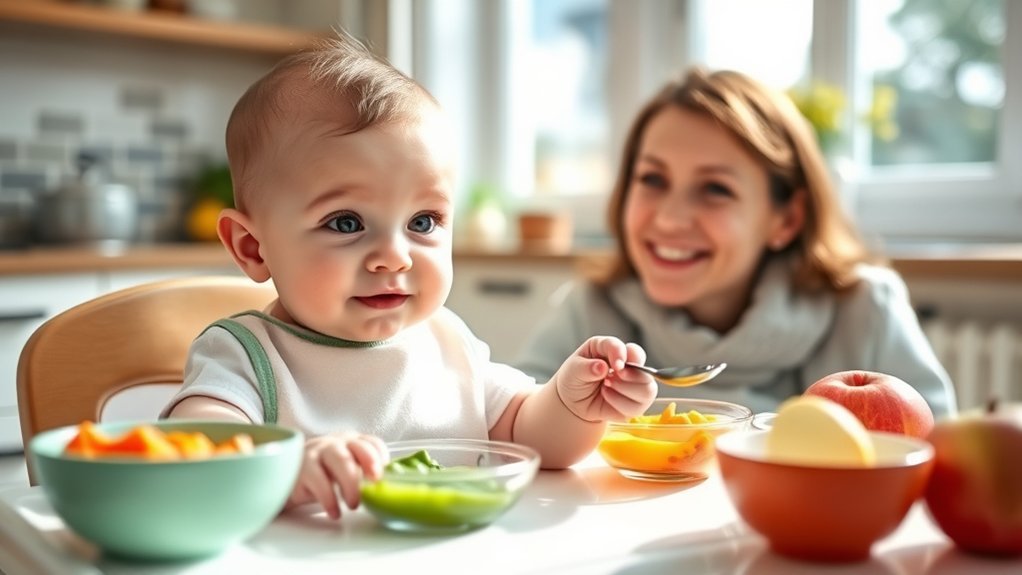
Most babies can start solid foods at about 6 months, once they have the head, neck, and swallowing control needed to eat safely. Solid foods complement breast milk or infant formula rather than replacing them. Begin with small amounts of soft, nutrient-rich food, follow your baby’s hunger and fullness cues, and increase variety and texture as their skills develop.
Quick Answer
Babies can usually start solid foods at about 6 months when they can sit upright with support, control their head and neck, open their mouth for food, and swallow instead of pushing food out. Do not begin before 4 months. Breast milk or infant formula should remain their main nutrition through the first year.
Key Takeaways
- Most babies are ready for complementary foods at about 6 months, but developmental signs matter more than a specific weight.
- Start with soft, nutrient-dense foods, especially iron- and zinc-rich choices such as meat, beans, eggs, tofu, and iron-fortified infant cereal.
- Introduce common allergens in safe forms when your baby begins solids unless their clinician recommends a different plan.
- Move from smooth foods to mashed, lumpy, ground, and soft finger foods as eating skills improve.
- Prevent choking by seating your baby upright, supervising every bite, and modifying round, firm, sticky, or tough foods.
- Continue breast milk or infant formula as the main nutrition source until about 12 months.
At a Glance
| Time Required | About 10–20 minutes for an early meal, plus preparation time |
| Difficulty | Easy to moderate; expect practice and some mess |
| Tools Needed | Upright high chair, infant spoon, bowl, bib, cup, fork, or blender |
| Cost | Usually low when using soft portions of ordinary family foods |
Note: This guide provides general feeding information and does not replace advice from your child’s pediatrician. Babies born prematurely and babies with poor growth, swallowing problems, severe eczema, known food allergies, or other medical needs may need an individualized plan.
When to Start Introducing Solid Foods to Your Baby
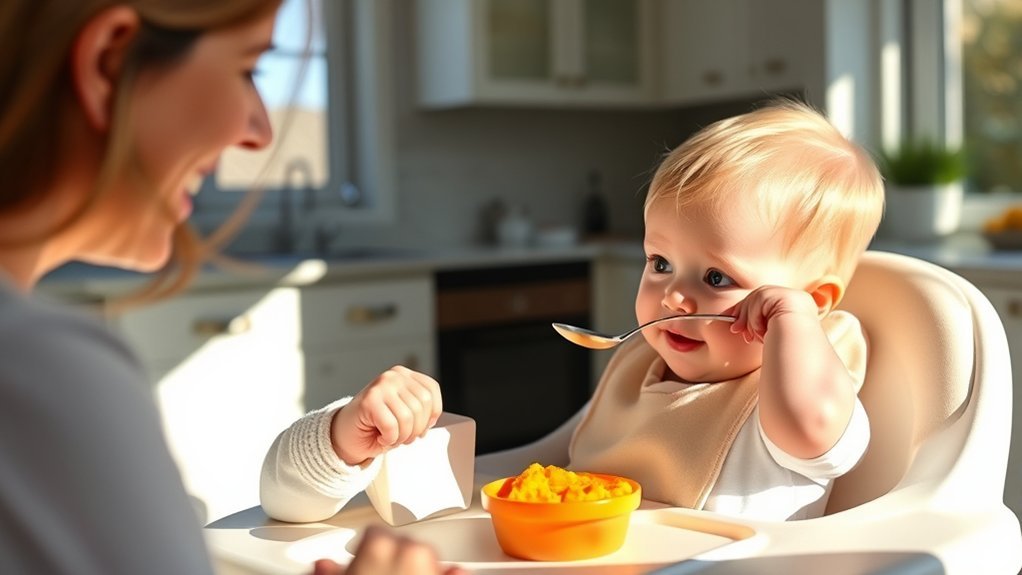
The Centers for Disease Control and Prevention recommends introducing foods other than breast milk or infant formula at about 6 months. Starting before 4 months is not recommended because younger babies generally do not have the motor and swallowing skills needed to handle food safely.
The age on the calendar is only one part of the decision. Your baby should also show several developmental signs of readiness. Some babies are ready shortly before or after the six-month point, so compare their skills rather than their size with those of other babies.
Complementary foods add nutrients, flavors, and eating practice while breast milk or infant formula continues. From 6 to 12 months, milk feeds remain the main source of nutrition even as meals slowly become more substantial.

Power your essentials anywhere with a 999Wh pure sine wave power station delivering up to 1000W continuous with 2000W surge. It supports fast charging via USB-C PD 60W and USB-A QC 18W, plus simultaneous output for multiple devices through AC, USB, wireless, and car/DC ports. Recharge using AC, car, or solar with a built-in MPPT controller and dual cooling fans, while the upgraded battery management system protects against surges, short circuits, and overheating.

Feeder helps reduce the risk of choking— only small pieces of digestible food get through

【Baby Feeding Supplies】- Baby smock for eating babies and toddlers with crumb catcher, smock pocket apron helps contain spills, back tie closure, waterproof fabric is durable and stands up to messes, lightweight and comfortable.
Signs Your Baby Is Ready for Solid Foods
Your baby may be ready to begin when most of the following signs appear together:
- They can sit upright alone or with support and do not repeatedly slump forward or sideways.
- They have steady control of their head and neck.
- They open their mouth or lean toward food when it is offered.
- They close their lips around a spoon.
- They swallow food instead of automatically pushing it back out with their tongue.
- They bring toys and other objects to their mouth.
- They reach for food or try to grasp small objects.
- They show interest when other people eat.
Readiness is based on sitting, head control, reaching, and swallowing skills—not on reaching a particular weight.
Waking more often, chewing on hands, or wanting extra milk does not prove that a baby is ready for solids. These behaviors can also happen during growth spurts or teething.
Talk with your pediatrician before beginning if your baby was born prematurely, cannot hold their head steady, regularly coughs or chokes during milk feeds, has poor weight gain, or has a medical condition that affects feeding.
Best First Solid Foods for Babies
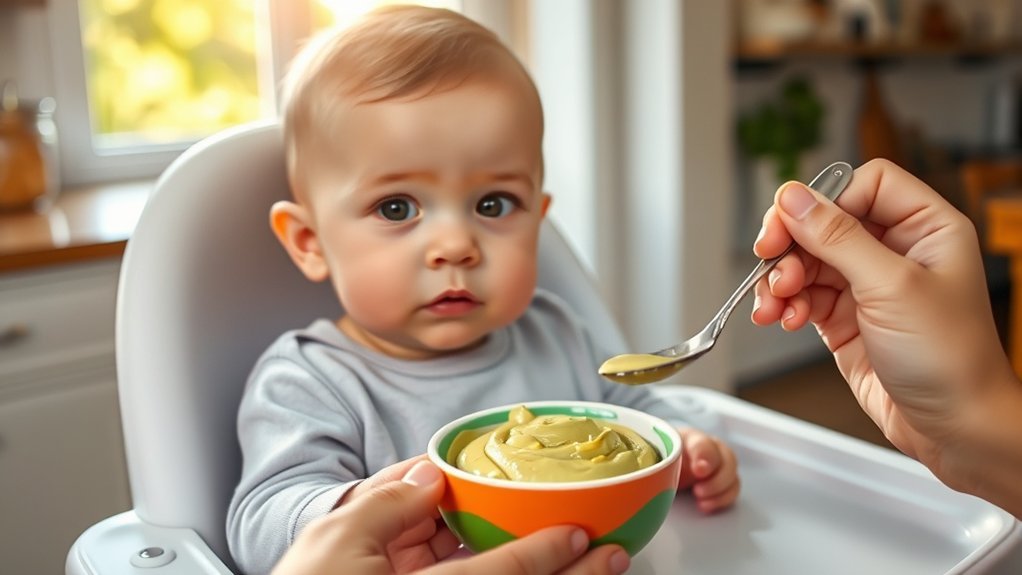
There is no required order for introducing food. A baby does not have to eat cereal before vegetables or fruit. The best first foods are soft, easy to swallow, and rich in nutrients that support rapid growth.
Prioritize Iron- and Zinc-Rich Foods
Iron-rich foods are especially useful around six months, when a baby’s stored iron may begin to decline. Good choices include:
- Finely shredded, minced, mashed, or pureed beef, chicken, turkey, lamb, or pork
- Well-cooked egg
- Mashed beans, lentils, chickpeas, or tofu
- Iron-fortified oat, barley, multigrain, or other infant cereal
- Low-mercury fish that is fully cooked, deboned, and mashed
If you use infant cereal, vary the grain rather than serving only rice cereal. Oat, barley, and multigrain infant cereals can provide iron while reducing repeated exposure to the arsenic that rice absorbs more readily than many other crops.
Add Fruits, Vegetables, and Healthy Fats
Offer different flavors instead of relying only on sweet fruit. Suitable options include mashed avocado, banana, pear, peas, carrots, squash, broccoli, sweet potato, unsweetened pasteurized yogurt, and soft whole grains.
A varied first plate could include mashed lentils for iron, soft broccoli for flavor and texture, and avocado for energy and healthy fat. Each serving can be small; the goal at first is learning rather than finishing a bowl.
| Food | Baby-Safe Preparation | Main Benefit |
|---|---|---|
| Meat or poultry | Cook fully; puree, mince finely, or offer very soft shreds | Iron, zinc, and protein |
| Beans or lentils | Cook until very soft, then mash with water, milk, or unsalted broth | Iron, protein, and fiber |
| Infant cereal | Mix iron-fortified cereal with breast milk, formula, or water | Iron and texture practice |
| Vegetables | Steam or roast without excess salt until easily mashed | Flavor variety, fiber, and vitamins |
| Fruit | Mash ripe fruit or cook firm fruit until soft | Fiber, vitamins, and natural sweetness |
How Much and How Often to Feed Solid Foods
Begin with a small amount, such as 1 or 2 teaspoons, once a day when your baby is alert and not overly hungry or tired. Increase toward 1 or 2 tablespoons as your baby becomes comfortable. Some babies eat more, while others need many practice meals before swallowing much.
A common progression is:
- At the beginning: one small eating opportunity each day
- As interest and skill grow: two meals each day
- Later in infancy: two or three meals, followed by regular meals and snacks as the child approaches toddlerhood
These are flexible patterns, not targets that your baby must meet. Continue offering normal breast or formula feeds. Do not reduce milk feeds sharply just because solids have started.
Follow Hunger and Fullness Cues
Offer food without forcing it. Signs of hunger may include leaning forward, reaching, opening the mouth, or becoming excited when food appears. Fullness cues include turning away, closing the mouth, pushing food aside, slowing down, or losing interest.
Pro Tip: Let your baby decide whether to eat and how much. Your job is to choose a safe food, time, and place; your baby’s job is to respond to hunger and fullness.
How to Progress From Purees to Textured Foods
Purees are optional, not a required first stage. At about six months, babies may eat smooth purees, mashed food, or appropriately prepared soft finger foods. The best method is the one that suits your baby’s skills and allows safe, supervised practice.
Progress gradually through textures such as:
- Smooth or mashed: soft cereal, mashed avocado, yogurt, or pureed meat
- Thicker and lumpier: fork-mashed beans, potato, banana, egg, or vegetables
- Finely chopped or ground: minced meat, soft pasta, flaked fish, or chopped cooked vegetables
- Soft finger foods: pieces that are easy to hold and soft enough to mash between two fingers
Do not wait for teeth. Babies can mash many soft foods with their gums. Increase texture as your baby learns to move food around the mouth, bite, chew, and swallow.
Some gagging can occur while a baby learns. Gagging is usually noisy and may involve coughing, retching, or pushing the tongue forward. Choking may be quiet because the airway is blocked. A choking baby may be unable to cough, cry, or breathe and may become pale, blue, limp, or unresponsive.
How to Introduce Food Allergens Safely
Current guidance does not recommend delaying common allergenic foods once a baby is developmentally ready for solids. Introduce each allergen in an age-appropriate form while keeping the rest of the meal familiar.
Common food allergens include:
- Peanut
- Tree nuts
- Egg
- Cow’s milk
- Wheat
- Soy
- Sesame
- Fish
- Shellfish
Safe forms include smooth peanut or nut butter thinned with warm water, breast milk, formula, yogurt, or puree; fully cooked egg mashed until soft; plain pasteurized yogurt; soft tofu; finely flaked fish with every bone removed; and cooked wheat cereal.
Never give whole nuts, chopped nuts, or a thick spoonful of nut butter to a baby. These are choking hazards.
Offer a small amount first. If there is no reaction, gradually offer the rest of the serving. Once an allergenic food is tolerated, keep it in the family’s regular meal rotation in a safe form rather than offering it once and then avoiding it for months.
Warning: Ask your baby’s clinician how and when to introduce peanut if your baby has severe eczema, an egg allergy, or a previous immediate food reaction. The NIAID peanut-allergy prevention guidelines advise that some high-risk infants may benefit from clinician-guided peanut introduction as early as 4 to 6 months.
Signs of an Allergic Reaction
Food-allergy symptoms may begin within minutes or develop later. Stop serving the suspected food and contact your pediatrician if your baby develops symptoms such as:
- Hives, an itchy rash, or swelling
- Vomiting or diarrhea
- Coughing, congestion, or unusual fussiness soon after eating
- Redness or swelling around the mouth that does not quickly settle
Emergency: Call 911 immediately for trouble breathing, wheezing, throat or tongue swelling, repeated vomiting with other symptoms, widespread hives with breathing or circulation symptoms, sudden limpness, or loss of consciousness. Use prescribed epinephrine immediately when your child has an allergy action plan that directs you to do so.
Keep a simple food log when introducing allergens or when a reaction is suspected. Record the food, preparation, amount, time eaten, and symptoms. Do not deliberately retry a food that caused an immediate reaction until a clinician has advised you.
How to Reduce Choking Risk
Always place your baby upright in a stable high chair. Stay within arm’s reach, watch the entire meal, and remove distractions. A baby should never eat while lying down, crawling, walking, riding in a car, or playing.
According to the American Academy of Pediatrics’ choking-prevention guidance, foods that need to be avoided or carefully modified include:
- Whole nuts and seeds
- Whole grapes, cherries, berries, and cherry tomatoes
- Hot-dog or sausage rounds
- Raw carrot pieces and hard raw apple chunks
- Popcorn, chips, pretzels, and hard crackers
- Hard or sticky candy, marshmallows, and chewing gum
- Thick spoonfuls or chunks of nut butter
- Large or tough pieces of meat
- Chunks of cheese and string cheese
- Fish or meat containing bones
Cook firm foods until soft. Cut grapes and small tomatoes lengthwise into quarters. Shred tender meat across the grain. Spread nut butter thinly or dilute it. Remove pits, seeds, skin, tough membranes, and bones.
Note: Consider taking an infant CPR and first-aid course before starting solids. Do not rely on an article or video as a substitute for hands-on emergency training.
How to Prepare Baby Food That Is Safe and Tasty
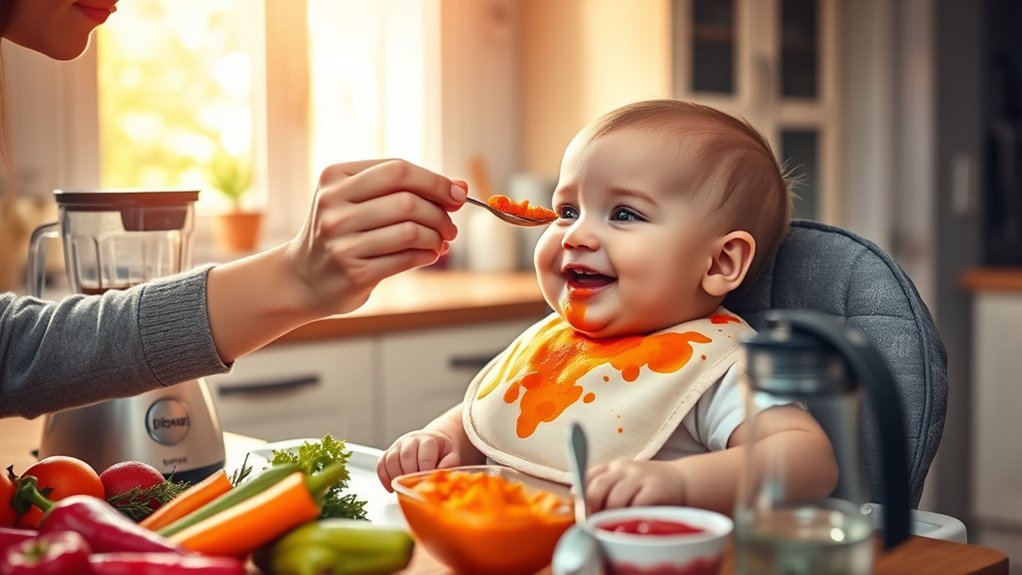
Baby food does not need to be bland, but it should be soft, safely prepared, and free from honey, excess salt, and added sugar. You can prepare separate baby food or adapt part of the family meal before adding salty sauces or hard garnishes.
- Wash first: Wash your hands, preparation surfaces, produce, utensils, blender, and storage containers.
- Cook thoroughly: Fully cook meat, poultry, fish, seafood, and eggs. Cook firm fruit and vegetables until easily mashed with a fork.
- Remove hazards: Take out bones, pits, seeds, tough skin, gristle, and shells.
- Adjust the texture: Mash, mince, puree, shred, or cut the food to suit your baby’s current eating skills.
- Thin when needed: Mix food with water, breast milk, correctly prepared formula, or another familiar soft food.
- Serve a small portion: Put only the amount needed for that meal into a clean bowl.
- Check the temperature: Stir warm food well and test it before serving.
- Store promptly: Refrigerate or freeze unused food in a clean, dated container.
| Food Type | Preparation Method | Storage Tips |
|---|---|---|
| Fruits | Mash ripe soft fruit or cook firm fruit until tender | Refrigerate homemade portions promptly and use within 1–2 days |
| Vegetables | Steam, boil, or roast until easily mashed | Freeze clean, untouched portions in small dated containers |
| Cereals | Mix iron-fortified infant cereal with breast milk, formula, or water | Prepare a fresh serving and discard food left in the feeding bowl |
| Meat, fish, or egg | Cook fully; remove bones and tough parts; puree, mince, or shred | Refrigerate promptly and use within 1 day for the most cautious storage |
Foods and Drinks to Avoid or Limit
The CDC’s infant and toddler feeding guidance recommends avoiding or limiting several foods and drinks during the first year.
- Honey before 12 months: Honey can contain spores that cause infant botulism. This includes honey in cooked foods, water, formula, baked goods, or on a pacifier.
- Cow’s milk as a drink before 12 months: Continue breast milk or infant formula instead. Pasteurized plain yogurt and cheese can be introduced as foods.
- Juice before 12 months: Whole fruit is the better option. Babies do not need fruit or vegetable juice.
- Unpasteurized food or drinks: Avoid raw milk, unpasteurized cheese, unpasteurized yogurt, and untreated juice.
- Raw or undercooked animal foods: Fully cook eggs, meat, poultry, seafood, and fish.
- Added sugar: Avoid sweetened drinks, candy, desserts, and sweetened yogurt.
- High-sodium foods: Limit processed meats, salty packaged snacks, instant meals, and heavily salted family foods.
- High-mercury fish: Avoid king mackerel, marlin, orange roughy, shark, swordfish, Gulf of Mexico tilefish, and bigeye tuna.
- Homemade infant formula: Never make infant formula from ordinary milk, plant drinks, or online recipes. Use a regulated infant formula exactly as directed when formula is needed.
How to Store Homemade Baby Food
The U.S. Food and Drug Administration recommends clean preparation, prompt refrigeration, and avoiding saliva contamination.
- Refrigerate freshly made baby food at 40°F (4°C) or below.
- Use homemade refrigerated baby food within 1–2 days.
- Freeze clean portions in covered trays or airtight containers and label them with the preparation date.
- For a simple conservative rule, use frozen homemade baby food within 3 months.
- Thaw food in the refrigerator or by using a safe reheating method—not on the counter.
- Do not return food from the baby’s bowl to the refrigerator.
- Do not feed directly from a storage jar if you plan to save the remainder. Saliva transferred by the spoon can contaminate it.
- Discard perishable food that has been at room temperature for more than 2 hours, or 1 hour in temperatures above 90°F.
- Discard any serving that smells unusual, has visible mold, has an unsealed lid, or may not have remained cold.
When to Contact Your Pediatrician
Seek professional feeding advice if your baby:
- Does not show readiness signs around the expected time
- Was born prematurely and you are unsure whether to use chronological or corrected age
- Frequently coughs, chokes, arches, or becomes distressed during feeds
- Has poor weight gain or fewer wet diapers
- Repeatedly vomits after eating
- Has severe eczema, egg allergy, or a previous immediate food reaction
- Cannot move beyond very smooth textures
- Regularly refuses food and appears upset or in pain
A pediatrician may recommend evaluation by a registered dietitian, allergist, gastroenterologist, speech-language pathologist, or occupational therapist with pediatric feeding experience.
Frequently Asked Questions
Can I mix baby food with breast milk or formula?
Yes. Breast milk or correctly prepared infant formula can thin cereal, mashed food, or puree and add a familiar flavor. Mix only the amount needed for the meal, and discard leftovers from the baby’s bowl. Do not change the water-to-powder ratio when preparing formula.
How should I store homemade baby food?
Place freshly made food in clean, airtight containers and refrigerate it promptly. Use refrigerated homemade baby food within 1–2 days or freeze untouched portions for up to about 3 months. Label every container and discard food that has contacted a used spoon.
What are common signs of food allergies in babies?
Possible signs include hives, swelling, vomiting, diarrhea, coughing, wheezing, or sudden unusual fussiness after eating. Call 911 for trouble breathing, throat or tongue swelling, limpness, loss of consciousness, or symptoms involving more than one body system.
How often should I feed my baby solid foods?
Start with one small eating opportunity a day. Gradually build toward two and then two or three meals as your baby’s interest, appetite, and skill increase. Continue normal breast or formula feeds and follow hunger and fullness cues rather than forcing a set amount.
When can I introduce textured foods to my baby?
Texture progression can begin around 6 months. Babies may start with smooth, mashed, or soft foods and move toward thicker, lumpier, finely chopped, ground, and soft finger foods as their eating skills develop. There is no need to wait until 8–10 months to offer all texture.
Can my baby drink water with meals?
A small amount of water may be offered in an open or straw cup after solids begin, but it should not replace breast milk or infant formula. Babies younger than 12 months do not need juice, cow’s milk as a drink, sweetened drinks, or caffeinated drinks.
Is baby-led feeding safer than spoon feeding?
Neither method is automatically safer. Spoon feeding, self-feeding, or a combination can work when the baby is developmentally ready, seated upright, actively supervised, and offered properly prepared food. Choking prevention depends more on food shape, softness, seating, and supervision than on the feeding label.
Conclusion
Most babies can begin solid foods at about 6 months when they can sit upright with support, control their head, reach for food, and swallow safely. Start with small portions of soft, nutrient-rich food while continuing breast milk or infant formula as the main nutrition source.
Offer iron-rich foods, varied flavors, safe allergens, and gradually changing textures. Responsive feeding, close supervision, careful food preparation, and specific choking precautions are more important than following a rigid menu or schedule. Contact your pediatrician when your baby has medical risks, feeding difficulty, poor growth, or a suspected allergic reaction.
Sources
- CDC: When, What, and How to Introduce Solid Foods — timing, readiness signs, first foods, allergen introduction, and preparation
- CDC: Foods and Drinks to Avoid or Limit — honey, milk, juice, sodium, added sugar, unpasteurized products, and mercury
- American Academy of Pediatrics: Choking Prevention — choking signs, hazardous foods, supervision, and food modification
- American Academy of Pediatrics: Introducing Common Food Allergens — timing and safe allergen introduction
- NIAID: Peanut Allergy Prevention Guidelines — peanut introduction for infants with eczema or egg allergy
- FDA: Once Baby Arrives—Food Safety — preparation, contamination prevention, refrigeration, and freezing