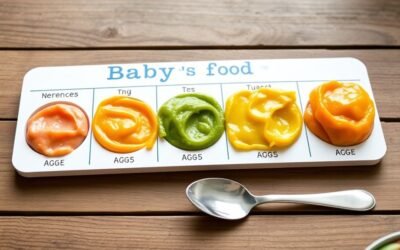


Helping a baby or toddler try new foods is less about finding one perfect recipe and more about creating safe, low-pressure chances to learn. Offer unfamiliar flavors beside foods your child already accepts, match every texture to their feeding skills, and expect progress to happen over many meals rather than in one sitting.
Quick Answer
To introduce new flavors to a picky baby or toddler, serve one small taste beside a familiar food, avoid pressure, and repeat the experience regularly. Use soft, age-appropriate textures, let your child decide whether and how much to eat, and seek pediatric advice for choking, pain, poor growth, or severe distress.
Key Takeaways
- Offer new foods beside a familiar food instead of replacing the whole meal.
- Eight to ten low-pressure tastes can improve acceptance of some fruits and vegetables, but some children need more.
- Progress from smooth to mashed, lumpy, finely chopped, or soft finger foods as feeding skills develop.
- Do not routinely delay eggs, peanuts, dairy foods, wheat, or other allergens once your baby is ready for complementary foods.
- Use safe seating, close supervision, and developmentally appropriate food shapes at every meal.
- Contact your child’s pediatrician if eating causes coughing, choking, pain, vomiting, weight loss, poor growth, or intense ongoing distress.
At a Glance
| Time Required | About 10–15 minutes per meal, repeated over several days or weeks |
| Difficulty | Moderate; consistency matters more than cooking skill |
| Tools Needed | Supportive high chair, age-appropriate spoon or plate, fork or blender for preparation, and soft foods |
| Cost | Usually no extra cost beyond normal groceries |
Warning: Always seat your child upright and supervise every bite. Avoid whole nuts, spoonfuls of nut butter, popcorn, hard raw produce, uncut grapes or berries, large cheese chunks, sausages cut into round coins, and food served on skewers. This article provides general education and does not replace care from your child’s pediatrician.
Understanding Picky Eating in Babies

Food refusal does not always mean that a baby is a true picky eater. During the first months of complementary feeding, babies are still learning how to move food through their mouths, manage new textures, and understand unfamiliar smells and tastes. A surprised face, gag, or rejected spoon can be part of that learning process.
More persistent selective eating often becomes noticeable later. The American Academy of Pediatrics notes that choosy eating is especially common between ages 2 and 4. Toddlers may also enter a phase of food neophobia, which means they become cautious about unfamiliar foods.
The goal is not to make your child like every food. Instead, offer a balanced range of foods, keep the experience calm, and give your child repeated chances to taste foods without force.
A USDA evidence review found that 8–10 or more tastes can increase acceptance of an exposed fruit or vegetable in many infants and toddlers, although individual responses vary.

Power your essentials anywhere with a 999Wh pure sine wave power station delivering up to 1000W continuous with 2000W surge. It supports fast charging via USB-C PD 60W and USB-A QC 18W, plus simultaneous output for multiple devices through AC, USB, wireless, and car/DC ports. Recharge using AC, car, or solar with a built-in MPPT controller and dual cooling fans, while the upgraded battery management system protects against surges, short circuits, and overheating.

WHIP HAPPINESS INTO YOUR KITCHEN – Create sauces, dips, purees, protein shakes and smoothies in a flash with this powerful immersion blender featuring a 300-watt motor. It effortlessly blends ingredients together, making it perfect for preparing delicious and healthy smoothies, pureed soups, marinades, juices and much more in no time. Ideal for busy mornings or when you need a quick, nutritious meal or snack.

Make fresh, delicious food with wholesome ingredients. You control exactly what goes in - no hidden stabilizers, preservatives, or flavor enhancers necessary.
Recognizing the Signs of Picky Eating in Babies
A baby or toddler may show a strong preference for a few foods, reject an unfamiliar color or texture, or eat a food one day and refuse it the next. These temporary “food jags” can last for days or weeks and do not automatically mean that something is wrong.
Common signs of ordinary selective eating include:
- Eating different amounts from one day to the next
- Needing several tastes before accepting a food
- Preferring familiar foods while still tolerating a new food on the plate
- Rejecting a food without coughing, choking, pain, or vomiting
- Continuing to grow and develop as expected
More concerning patterns include losing previously accepted foods, eating an extremely narrow range, becoming distressed at the sight or smell of food, or struggling with chewing and swallowing. Those signs deserve a closer look from a pediatric professional.
Start New Foods Safely
Check Developmental Readiness
The CDC recommends beginning complementary foods at about 6 months. Starting before 4 months is not recommended. A baby should be able to sit alone or with support, control the head and neck, open for food, and swallow food rather than consistently push it back out.
Introduce Allergens Appropriately
Do not routinely delay eggs, peanut, wheat, fish, shellfish, or pasteurized dairy foods such as plain yogurt. Potential allergens can be introduced when other complementary foods are introduced, using a form that matches your baby’s feeding skills.
Whole nuts and thick spoonfuls of nut butter are choking hazards. Peanut butter can be thinned with warm water, breast milk, formula, or a tolerated purée. If your baby has severe eczema, an egg allergy, or a previous food reaction, ask your pediatrician when and how to introduce peanut.
When first introducing foods, offering one new ingredient at a time and waiting three to five days can make a possible reaction easier to identify. After each ingredient has been tolerated, you can combine it with other familiar foods.
Prepare Food to Reduce Choking Risk
Match the shape, size, and texture to your child’s current skills. Cook hard fruits and vegetables until they mash easily with a fork. Remove pits, seeds, bones, tough skins, and gristle. Cut round foods into small pieces rather than round coins, and never let a baby or young toddler eat while walking, lying down, riding in a car, or playing.
Creative Baby Food Ideas for Picky Eaters
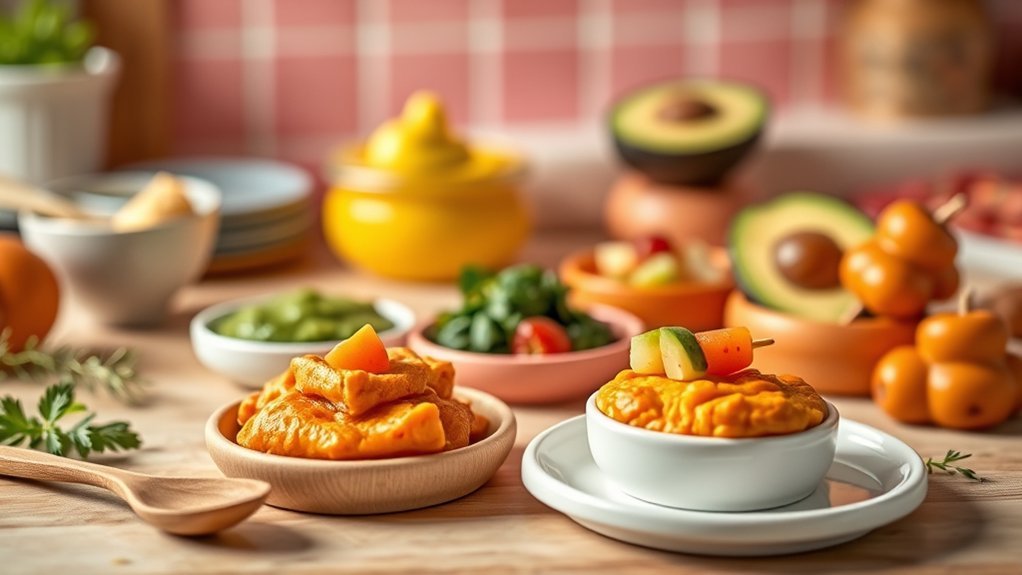
Creative combinations can help a child approach unfamiliar foods, but the goal should be pairing rather than permanently hiding the new ingredient. Once each ingredient has been introduced safely, begin with more of the familiar food and a small amount of the new one. Over time, adjust the balance so your child can recognize the new flavor.
Flavorful Puree Combinations
Try simple combinations that include different colors, nutrients, and flavor profiles:
- Pumpkin and apple: Mild, smooth, and easy to adjust from thin to thick.
- Zucchini and pear: A gentle way to pair a less familiar vegetable with a familiar fruit.
- Sweet potato and lentil: Soft, filling, and a source of iron and protein.
- Pea and avocado: Creamy without added sugar.
- Plain yogurt and mashed berry: Suitable after dairy and the fruit have each been tolerated.
- Chicken and vegetable mash: A savory option that introduces iron-rich food.
Steam or cook ingredients until soft, then mash or blend them to the texture your child can manage. You can leave the mixture thicker as oral skills improve. Serve food comfortably warm, room temperature, or cool, but always check that it is not hot.
Fun Finger Food Ideas
Finger foods can encourage independence and sensory exploration when your child is ready to grasp food and bring it to the mouth. Suitable options may include:
- Soft-cooked sweet potato wedges or small pieces
- Very soft broccoli or cauliflower florets
- Ripe avocado slices
- Soft strips of omelet
- Shredded tender chicken
- Soft toast strips with a thin spread of mashed avocado or thinned nut butter
- Soft pear, banana, or strawberry pieces cut to an appropriate size
Instead of fruit kebabs, arrange soft fruit pieces on a plate without a skewer. For an older toddler who can safely manage mixed foods, use cookie cutters on soft bread or make a small “pizza face” on soft flatbread, then cut it into manageable pieces.
Encouraging Food Exploration in Picky Eaters
Food exploration can begin before your child takes a bite. Looking at, touching, smelling, licking, or placing a food in the mouth and removing it are all steps toward familiarity.
Diverse Flavor Experiences
Offer vegetables, fruits, grains, proteins, and healthy fats with different mild, savory, sour, and naturally bitter flavors. You do not need to make every food sweet. Babies can also try modest amounts of herbs and mild spices once the individual ingredients are appropriate and tolerated.
Repeat an unfamiliar food regularly without turning each serving into a test. Research supports at least 8–10 tastes as a useful starting point for fruits and vegetables, while some children may need 15–20 tries or more. A child may still decide not to like a particular food.
Pair New Foods With Familiar Foods
Place a tiny portion of the new food beside one or two familiar foods. For example, serve soft broccoli with a tolerated egg strip, or offer a spoonful of zucchini purée beside a familiar pumpkin purée.
Keep the new food visible and name it in a neutral way. Saying “This is zucchini; it is soft and green” teaches more than calling it “yummy” or hiding it without explanation.
Positive Mealtime Environment
Use a safe, distraction-free eating space. Sit together when possible, put phones and television away, and model eating the foods you serve. Avoid bargaining, pleading, or commenting on every bite.
Let your child participate at an age-appropriate level. A baby can touch and smear food. A toddler can choose between two vegetables, rinse produce, stir a soft mixture, or place food on a plate.
Pro Tip: Serve a very small portion of the new food—sometimes less than a teaspoon. A small serving feels manageable, reduces waste, and makes it easy to offer the food again without pressure.
Foods and Serving Methods to Avoid or Limit
Food safety matters more than making a meal look entertaining. Avoid or modify foods that are hard, sticky, round, or difficult to chew.
- Do not give honey before 12 months because of the risk of infant botulism.
- Do not serve unpasteurized milk, cheese, yogurt, or juice.
- Do not use cow’s milk as the main drink before 12 months, although pasteurized yogurt and cheese can be introduced earlier.
- Avoid juice before 12 months and limit foods and drinks with added sugars in children younger than 2.
- Avoid whole nuts, popcorn, hard candy, raw carrot coins, uncut grapes, large cheese chunks, thick spoonfuls of nut butter, and food on skewers.
- Do not let a child eat while walking, crawling, lying down, riding in a vehicle, or watching a distracting screen.
Common Mistakes to Avoid With Picky Eaters
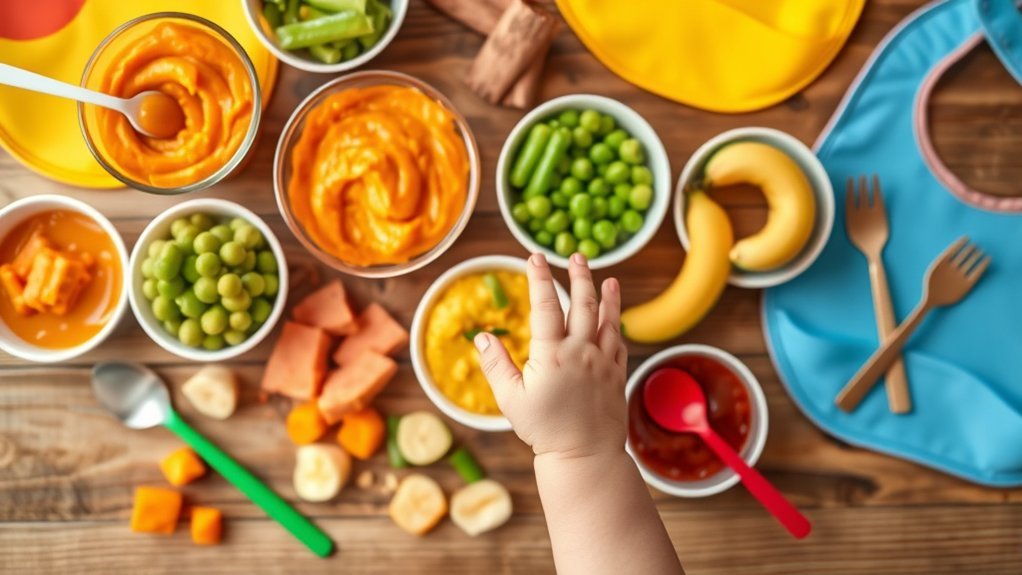
Pressure can turn an ordinary preference into an ongoing mealtime struggle. Use the alternatives below to keep the focus on learning rather than winning.
| Common Mistake | Better Approach |
|---|---|
| Forcing “one more bite” | Let your child decide whether and how much to eat. |
| Giving up after two or three refusals | Reoffer a small taste at later meals without pressure. |
| Using dessert as a reward | Serve balanced foods without making one food the prize for eating another. |
| Cooking a second meal after every refusal | Include at least one accepted food in the planned meal. |
| Secretly hiding every vegetable | Pair foods openly so your child learns their names, tastes, and textures. |
| Serving unsafe novelty foods | Prioritize safe shapes and textures over skewers, hard decorations, or large chunks. |
How Texture Influences Baby Food Acceptance
Texture is part of learning to eat. According to the CDC’s guidance on tastes and textures, children can move from smooth purées to mashed or lumpy food and then to finely chopped or ground food as their skills develop.
Do not keep a child on completely smooth purées only because they initially refuse lumps. Instead, make small, gradual changes. You might mash a familiar banana less thoroughly, add a tiny amount of soft texture to a tolerated purée, or offer a soft finger food beside a smooth food.
Some coughing, gagging, or spitting can occur while a baby learns new textures. However, repeated coughing or choking, breathing changes, color changes, congestion during meals, or difficulty recovering from a feeding episode requires prompt medical advice.
Texture should advance with feeding skills—not according to a rigid calendar and not solely according to which texture creates the least mess.
Creating a Positive Mealtime Environment for Picky Eaters
A simple routine helps children know what to expect. The caregiver is responsible for choosing what food is offered, when it is served, and where the meal happens. The child decides whether to eat and how much.
- Use safe seating. Strap your child into a supportive high chair or booster seat and keep them upright.
- Limit distractions. Turn off television and put away phones, toys, and tablets.
- Serve one accepted food. This keeps the meal familiar without creating a completely separate menu.
- Add a tiny learning portion. Place the new food on the plate without requiring a bite.
- Model eating. Let your child see family members eating and enjoying a range of foods.
- Use neutral language. Describe color, smell, shape, or texture rather than praising or criticizing intake.
- End calmly. A meal may last about 10–15 minutes or as long as your child can comfortably pay attention.
Respect signs of fullness such as closing the mouth, turning away, slowing down, pushing food away, or losing interest. Children may eat different amounts on different days, which can be normal.
Knowing When to Get Help for Picky Eating
Contact your child’s pediatrician when food refusal affects safety, nutrition, growth, development, or family life. Do not assume that every feeding problem is behavioral.
| Sign | Why It Needs Attention |
|---|---|
| Coughing, choking, wet breathing, or congestion during meals | May indicate a feeding or swallowing problem. |
| Meals regularly take a very long time | The child may be tiring, struggling with oral skills, or experiencing discomfort. |
| Vomiting, pain, arching, or crying while eating | A medical or gastrointestinal issue may be contributing. |
| Poor growth, weight loss, dehydration, or low energy | Intake may not be meeting nutritional or fluid needs. |
| Loss of foods or textures previously eaten | Regression can require medical, developmental, or feeding evaluation. |
| Extreme fear, distress, or withdrawal around food | The issue may be more serious than ordinary preference. |
| A very restricted diet that keeps shrinking | Nutrient gaps and entrenched feeding difficulties can develop. |
Your pediatrician may recommend evaluation by a registered dietitian, speech-language pathologist, occupational therapist, allergist, gastroenterologist, or multidisciplinary feeding team, depending on the symptoms.
Note: A child can have a feeding or swallowing problem even when current weight appears normal. Safety symptoms and loss of feeding skills still deserve attention.
Effective Strategies for Introducing New Flavors to Picky Eaters
Use this repeatable process whenever you introduce a new flavor:
- Choose one target food. Start with a soft vegetable, fruit, protein, grain, or pasteurized dairy food that suits your child’s age and skills.
- Prepare it safely. Mash, purée, shred, finely chop, or soften it as needed.
- Serve a tiny amount. Place it beside at least one accepted food.
- Describe it neutrally. Talk about its color, smell, temperature, or texture.
- Allow exploration. Touching or smelling is still useful exposure.
- Avoid pressure. Do not require one bite, offer a reward, or show disappointment.
- Repeat later. Reoffer the food in the same form and in slightly different safe forms.
- Track patterns, not single meals. Notice whether your child tolerates the food on the plate, touches it, tastes it, or eats more over time.
A Simple One-Week Flavor Practice Plan
This plan uses zucchini as an example. It is not a deadline for acceptance. Replace zucchini with any developmentally appropriate food your child can safely eat.
| Day | Low-Pressure Exposure |
|---|---|
| 1 | Place a small spoonful of plain soft zucchini on the plate. |
| 2 | Offer zucchini beside a familiar food without mixing them. |
| 3 | Let your child touch or help mash the cooked zucchini. |
| 4 | Mix a small amount into a tolerated apple or pear purée after both ingredients are known to be safe. |
| 5 | Offer a thicker mash or a soft piece if your child has the skills for that texture. |
| 6 | Let your child watch you eat zucchini during a family meal. |
| 7 | Pause or reoffer the most comfortable version. Continue on later days if needed. |
Frequently Asked Questions
What age should I start introducing new foods to my baby?
Most babies can begin complementary foods at about 6 months when they show developmental readiness, including head control, supported sitting, opening for food, and swallowing rather than pushing food out. Starting before 4 months is not recommended.
How can I tell if my baby is truly picky or just exploring?
Temporary refusal, surprised expressions, touching without eating, and changing preferences can be normal while a baby learns. Seek advice when refusal is paired with coughing, choking, pain, vomiting, poor growth, loss of accepted foods, or extreme distress.
Should I avoid peanuts, dairy, eggs, or other allergens?
Do not routinely delay allergenic foods once your baby is ready for complementary foods. Introduce them in safe, age-appropriate forms. Ask your pediatrician about peanut introduction if your baby has severe eczema, an egg allergy, or a previous food reaction.
How often should I offer a rejected food?
Reoffer a very small portion regularly as part of normal meals. Eight to ten tastes are a useful starting point for fruits and vegetables, but some children need 15–20 tries or more. Stop pressuring, not offering.
Can I use store-bought baby food for a picky eater?
Yes. Choose products with developmentally appropriate textures and without unnecessary added sugars. Rotate flavors and textures rather than relying on one pouch or smooth purée. Once ingredients are tolerated, combine store-bought food with soft family foods when appropriate.
Should I hide vegetables in other foods?
Mixing a small amount with a familiar food can help your child approach the flavor, but keep offering the vegetable in a recognizable form too. This allows your child to learn what it looks, smells, and tastes like.
What should I do if my baby gags on a new texture?
Stay calm, keep your child upright, and watch closely. Some gagging can occur while babies learn textures. Repeated coughing, choking, breathing changes, color changes, congestion during meals, or difficulty recovering requires prompt medical attention.
Conclusion
Picky eating rarely changes because of one clever recipe or one successful meal. Progress comes from safe preparation, repeated low-pressure exposure, suitable textures, family modeling, and respect for hunger and fullness cues. Keep portions small, include a familiar food, and measure progress by growing comfort—not by whether every bite is eaten.
If your child struggles to chew or swallow, loses foods they once accepted, shows pain or intense fear, or is not growing as expected, contact their pediatrician. Early support can protect nutrition, feeding skills, and the family’s mealtime experience.
Sources
- CDC: When, What, and How to Introduce Solid Foods — developmental readiness, initial food introduction, allergens, and food preparation
- CDC: Choking Hazards — safe seating, supervision, food shapes, and foods that require modification
- CDC: Tastes and Textures — progression from smooth to mashed, lumpy, chopped, and ground foods
- CDC: Tips for Mealtime Routines — distraction-free meals, safe seating, family modeling, and hunger and fullness cues
- American Academy of Pediatrics: Helping Picky Eaters Try More Foods — low-pressure meals, repeated exposure, and age-related picky eating
- American Academy of Pediatrics: Feeding Issues — symptoms of feeding and swallowing difficulties and referral considerations