You cannot guarantee that a baby will never become a picky eater, but the way you introduce solid foods can build familiarity, confidence, and a healthier relationship with eating. Start when your baby is developmentally ready, offer many nutritious flavors and safe textures, follow hunger and fullness cues, and keep meals calm rather than pressuring your baby to eat.
Quick Answer
To reduce the chance of picky eating, start complementary foods at about 6 months when your baby shows developmental readiness. Offer iron-rich foods, varied flavors, and safe textures without pressure. Repeat rejected foods, encourage safe self-feeding, follow hunger and fullness cues, and introduce common allergens in baby-safe forms.
Key Takeaways
- Most babies are ready to begin solids at about 6 months, but developmental skills matter more than a specific birthday.
- Offer iron-rich foods, vegetables, fruits, proteins, grains, healthy fats, and unsweetened dairy in age-appropriate forms.
- Progress from smooth or mashed foods to thicker, lumpy, and soft finger foods as your baby’s skills improve.
- Introduce common allergens without unnecessary delay, but use safe forms and seek medical guidance for high-risk babies.
- Repeated, pressure-free exposure works better than forcing bites, using dessert as a reward, or preparing a replacement meal immediately.
- Always supervise eating and modify foods to reduce choking risk.
At a Glance
| Time Required | A few minutes of preparation plus calm, supervised practice each day |
| Difficulty | Moderate; skills and appetite change quickly during infancy |
| Tools Needed | Upright high chair, infant spoon, open or training cup, bib, clean preparation tools, and safe food-storage containers |
| Cost | Usually low when suitable portions of unsalted family foods are adapted for the baby |
Note: This article provides general education, not individualized medical advice. Ask your baby’s pediatrician about starting solids if your baby was born prematurely, has poor growth, severe eczema, an egg allergy, swallowing problems, or another medical condition.
What Picky-Eating Prevention Can and Cannot Do
Early feeding experiences can help your baby become familiar with different tastes, smells, temperatures, and textures. They can also teach your baby that meals are predictable and that caregivers will respect signs of hunger and fullness.
However, no method can promise a completely non-picky eater. Appetite varies from day to day, and many toddlers become cautious about unfamiliar foods as they grow. The goal is not to make your baby eat everything. It is to create repeated, low-pressure opportunities to learn about food.
Your job is to offer safe, nutritious food in a calm setting. Your baby’s job is to decide whether and how much to eat.

Power your essentials anywhere with a 999Wh pure sine wave power station delivering up to 1000W continuous with 2000W surge. It supports fast charging via USB-C PD 60W and USB-A QC 18W, plus simultaneous output for multiple devices through AC, USB, wireless, and car/DC ports. Recharge using AC, car, or solar with a built-in MPPT controller and dual cooling fans, while the upgraded battery management system protects against surges, short circuits, and overheating.
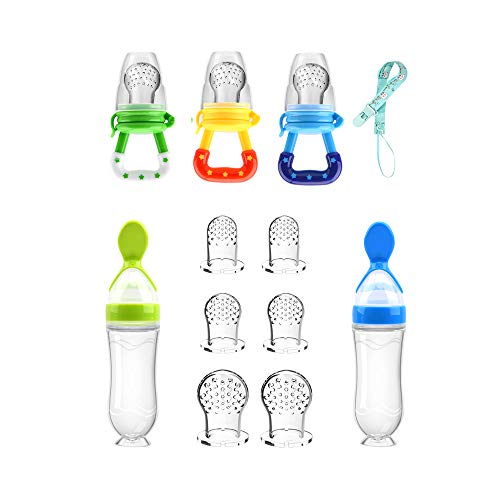
FEED SAFE&CONVENIENT--The baby food feeder and squeeze spoon feeder are made of food grade silicone, safe and non-toxic. These Silicone nipples more convenient for parents to feed babies, who can chew their food such as fresh and frozen fruits, yoghurt, ice, and breast milk, and absorb nutrients.

【100% Silicone SAFE NON-TOXIC 】 Our baby spoons & forks are BPA-free, BPS-free, PVC-free, phthalate-free, cadmium-free and lead-free
How to Start Introducing Solids at the Right Time
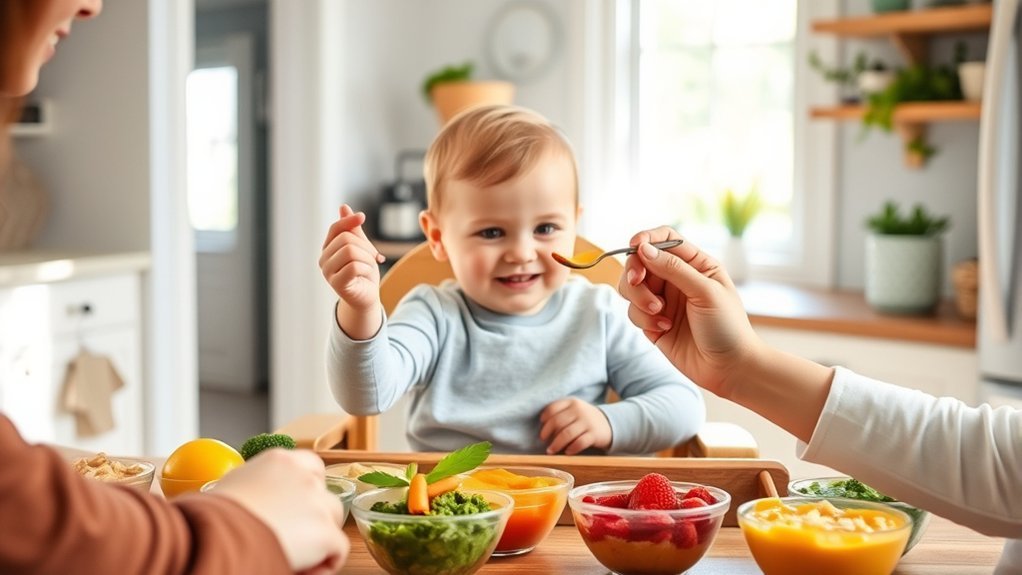
The CDC recommends beginning foods other than breast milk or infant formula at about 6 months. Introducing solids before 4 months is not recommended. A baby should also show several developmental-readiness signs rather than starting only because a date appears on the calendar.
Signs Your Baby May Be Ready
- Sits upright alone or with support and can maintain a stable position for eating.
- Controls the head and neck.
- Opens the mouth or leans toward food when it is offered.
- Swallows food instead of consistently pushing it out with the tongue.
- Brings toys and other objects to the mouth.
- Reaches for or grasps objects and food.
- Shows interest in what other people are eating.
Start with one or two spoonfuls when your baby is alert and not overly hungry or tired. These first meals are practice. Breast milk or iron-fortified infant formula remains the main source of nutrition from 6 through 12 months while solid foods gradually become a larger part of the diet.
The American Academy of Pediatrics supports exclusive breastfeeding for about the first 6 months when possible, followed by continued breastfeeding alongside complementary foods. Infant formula is also an appropriate source of infant nutrition. Families should use the feeding method that safely meets their baby’s nutritional and medical needs.
Choose Nutrient-Rich First Foods
There is no required order for introducing most foods. Instead of offering only fruit and vegetable purees, include foods that provide iron, zinc, protein, healthy fats, and other nutrients needed during rapid growth.
Practical First-Food Options
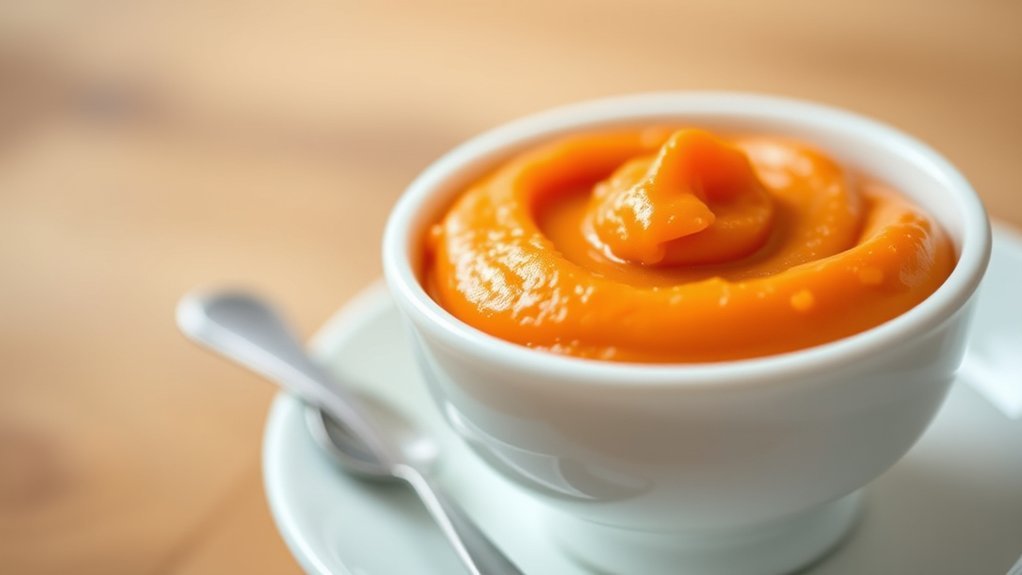
- Iron-rich foods: iron-fortified infant cereal, finely shredded tender meat, mashed beans, lentils, tofu, or well-cooked egg.
- Vegetables: mashed sweet potato, avocado, peas, squash, broccoli, carrots, or well-cooked leafy greens.
- Fruits: mashed banana, pear, peach, mango, berries, melon, or unsweetened applesauce.
- Unsweetened dairy: plain pasteurized yogurt or soft pasteurized cheese when developmentally appropriate.
- Whole grains: oatmeal, soft whole-grain pasta, barley cereal, or other iron-fortified infant cereals.
- Healthy fats: avocado, olive oil mixed into food, smooth seed butter, or safely thinned nut butter after allergen precautions are considered.
If you use infant cereal, rotate oat, barley, multigrain, and rice cereals instead of serving only rice cereal. This provides more variety and can reduce reliance on a single grain.
At first, offering one new single-ingredient food at a time can make reactions easier to identify. The CDC suggests waiting three to five days between new foods during this early monitoring stage. Once your baby tolerates several foods, you can combine familiar ingredients and continue expanding the menu.
Pro Tip: Adapt part of the family meal before adding salt, sugar, honey, or a spicy sauce. For example, mash unsalted beans, shred tender chicken, or set aside soft-cooked vegetables for the baby.
Introduce Different Textures and Flavors Early
Introducing varied textures and flavors helps your baby practice chewing, moving food around the mouth, and swallowing. Purees can be useful, but they are not the only safe starting option.
Depending on your baby’s skills, early foods may be smooth, mashed, minced, or soft enough to flatten easily between two fingers. Gradually make foods thicker and lumpier, then add soft finger foods as your baby gains head control, grasping ability, and chewing skills.
A Flexible Texture Progression
- Beginning stage: smooth or mashed foods on a spoon, or large soft pieces that an adult can easily squash between the fingers.
- Developing stage: thicker mashed foods, soft lumps, finely minced meat, tender flakes of fish, and preloaded spoons.
- Finger-food stage: soft pieces your baby can grasp and bring to the mouth, such as ripe pear, soft-cooked vegetable strips, small pasta, shredded meat, or pieces of omelet.
- Advancing stage: chopped versions of nutritious family foods as chewing, swallowing, and utensil skills improve.
Do not wait for a particular birthday to change textures. Follow your baby’s skills and continue offering manageable challenges. If your baby regularly coughs, chokes, vomits, appears distressed, or cannot move beyond smooth purees, contact the pediatrician. A feeding or swallowing evaluation may be needed.
Offer Many Flavors Without Hiding Them
Include naturally sweet, savory, sour, and mildly bitter foods. Broccoli, plain yogurt, lentils, fish, avocado, berries, herbs, and unsweetened oatmeal all provide different sensory experiences. Pairing a new food with a familiar food is fine, but keep the new food recognizable rather than hiding it completely.
A baby may touch, smell, lick, mouth, or spit out a new food before eating it. These actions are part of learning and do not automatically mean the food is disliked.
Introduce Common Allergens Safely
Once your baby is ready for solids, there is generally no benefit to delaying common allergens such as egg, peanut, milk products, sesame, wheat, soy, fish, or shellfish. The American Academy of Pediatrics advises introducing allergenic foods in developmentally appropriate forms rather than postponing them without a medical reason.
Introduce one allergen at a time, during the daytime, when your baby is healthy and an adult can observe for a reaction. Begin with a small amount. If it is tolerated, continue offering it as a regular part of the diet.
Baby-Safe Allergen Examples
- Peanut: smooth peanut butter thinned with warm water, breast milk, formula, or a familiar puree. Never give whole peanuts or a thick spoonful of peanut butter.
- Egg: fully cooked egg mashed with water or cut into soft strips.
- Milk: plain pasteurized yogurt or soft cheese. Cow’s milk should not replace breast milk or formula as a drink before 12 months.
- Sesame: tahini thinned into yogurt, cereal, or puree.
- Wheat: soft wheat cereal, well-cooked pasta, or soft bread prepared to reduce choking risk.
- Fish or shellfish: thoroughly cooked, carefully deboned, and finely flaked or minced.
- Soy: soft tofu or unsweetened soy yogurt with an appropriate texture.
Warning: Ask your pediatrician or allergist how to introduce peanut if your baby has severe eczema, an egg allergy, or a previous food reaction. Call 911 for breathing trouble, wheezing, swelling of the tongue or throat, blue or pale coloring, sudden limpness, collapse, or symptoms affecting more than one body system.
Milder symptoms can include hives, facial redness, swelling, coughing, repetitive vomiting, diarrhea, or unusual fussiness. Stop serving the suspected food and contact your child’s healthcare professional for instructions. Do not diagnose an allergy or permanently remove major food groups without medical guidance.
Prevent Choking During Every Meal
Self-feeding can support independence, but it must be paired with close supervision and safe food preparation. The CDC recommends modifying the size, shape, and texture of foods to reduce choking risk.
- Seat your baby upright in a stable high chair.
- Stay within arm’s reach and watch continuously while your baby eats.
- Cook hard foods until soft and remove bones, pits, tough peels, and seeds.
- Cut round foods lengthwise into narrow pieces rather than coin-shaped rounds.
- Shred or finely mince tough meats.
- Spread nut or seed butter thinly or mix it into another food.
- Keep toys and other distractions away from the eating area.
- Do not allow eating while crawling, walking, riding in a vehicle, or lying down.
Avoid whole nuts, popcorn, hard candy, gum, whole grapes, raw carrot chunks, hot-dog rounds, large meat chunks, hard raw apple pieces, spoonfuls of nut butter, and other hard, round, sticky, or difficult-to-chew foods.
Note: Gagging is usually noisy and may involve coughing, retching, or pushing the tongue forward. Choking may be silent and can prevent a child from breathing, crying, or coughing effectively. Treat suspected choking as an emergency and call 911.
Make Mealtime Fun and Enjoyable
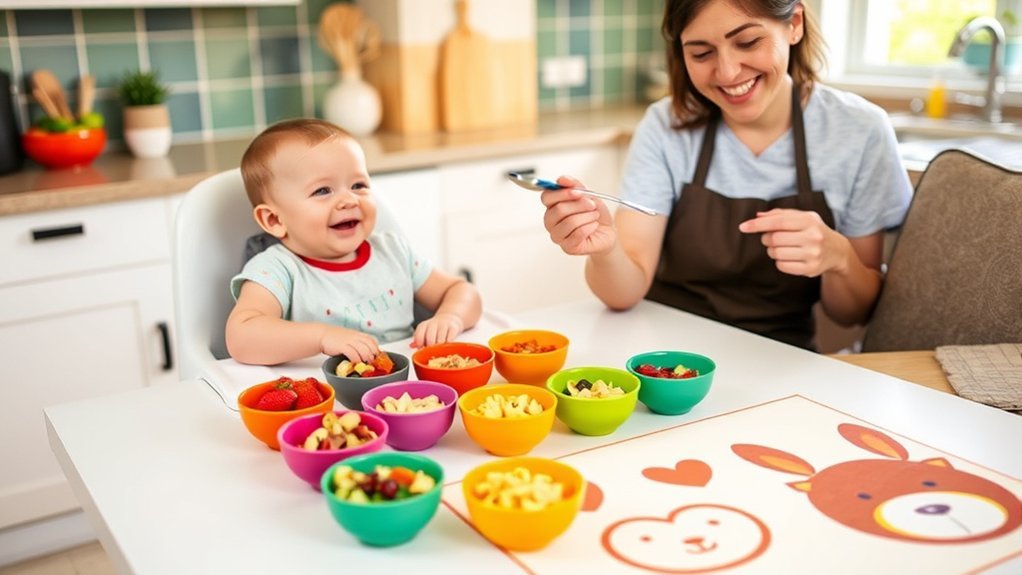
A pleasant meal does not require elaborate themed dishes. For a baby starting solids, the safest and most useful form of fun is relaxed interaction, colorful whole foods, and permission to explore.
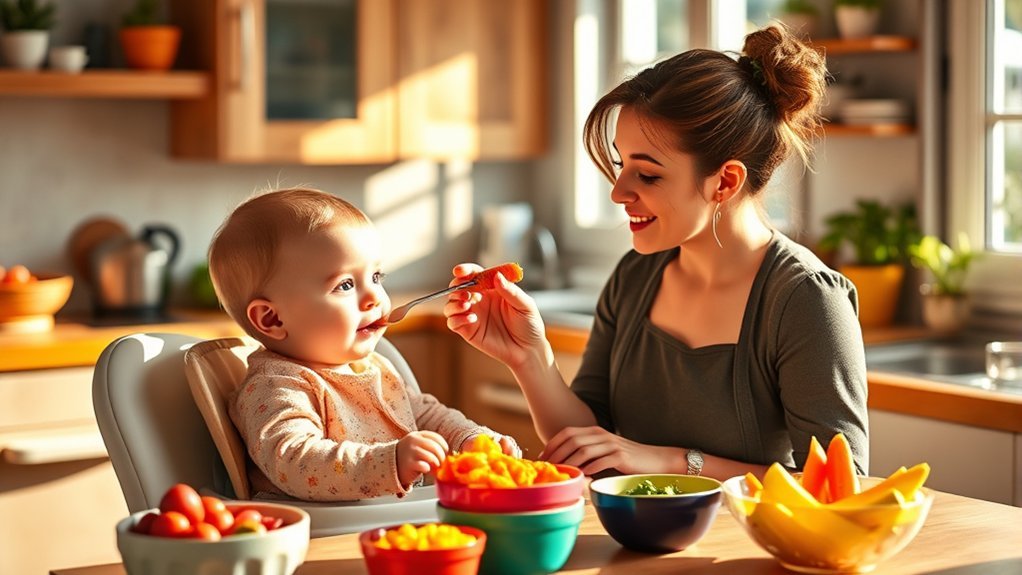
Talk about the food’s color, smell, temperature, and texture. Let your baby touch and smell it. Eat some of the same food so your baby can watch you chew and enjoy it. A colorful plate, child-sized spoon, or preloaded spoon can make the meal inviting without turning eating into a performance.
For an older baby or toddler, simple shapes and arrangements may add interest, but every piece must still be prepared for the child’s chewing skills. Avoid decorations that create hard, round, sticky, or oversized pieces.
Use Neutral, Pressure-Free Language
Instead of saying, “Just one more bite,” try:
- “You can taste it when you are ready.”
- “The broccoli is soft and warm.”
- “You do not have to eat it, but it can stay on your plate.”
- “Are you showing me that you are finished?”
Avoid using dessert as payment for eating vegetables, forcing bites, distracting your baby into opening the mouth, or praising the amount eaten. These tactics can make the meal feel stressful and teach a child to ignore internal hunger and fullness signals.
Encourage Self-Feeding and Exploration
Self-feeding helps babies practice hand-eye coordination, grasping, chewing, and deciding how quickly to eat. It can be combined with spoon-feeding; families do not need to choose one method exclusively.
Offer foods that are soft enough to mash between your fingers. Depending on your baby’s grasp, suitable choices may include soft-cooked vegetable strips, ripe avocado, banana, omelet strips, tender shredded meat, small cooked noodles, or pieces of soft fruit without hard skin or pits.
You can also load a spoon with oatmeal, mashed beans, yogurt, or another thick food and hand it to your baby. Expect spills and dropped food. Messiness is a normal part of learning, but food should remain on a stable eating surface rather than becoming an unsupervised toy.
As skills improve, offer smaller soft pieces that your baby can pick up between the thumb and forefinger. Continue checking each food’s shape and firmness instead of assuming that a small piece is automatically safe.
Follow Hunger and Fullness Cues
Your baby may show hunger by leaning toward food, opening the mouth, reaching, or becoming excited when food appears. Fullness signs can include slowing down, turning the head away, closing the mouth, pushing food aside, or becoming distracted.
Respect these signals. Offer the food, but do not force your baby to finish a portion. Appetite changes with growth, sleep, illness, teething, and activity, so the amount eaten will not be identical at every meal.
Build a Simple and Predictable Routine
Begin with small tastes once a day when your baby is rested. Gradually add eating opportunities as skills, interest, and appetite grow. Regular meals help a child arrive hungry enough to engage with food without becoming overly hungry or tired.
Breast milk or formula should continue on the baby’s usual schedule. Do not put cereal, puree, or other solid food in a bottle unless a healthcare professional has given a specific medical instruction.
As your baby becomes an older infant and toddler, move toward predictable meals and snacks rather than allowing continuous grazing. At each meal, include at least one familiar food alongside one or more foods the family is learning to accept.
Be Patient When Introducing New Solids
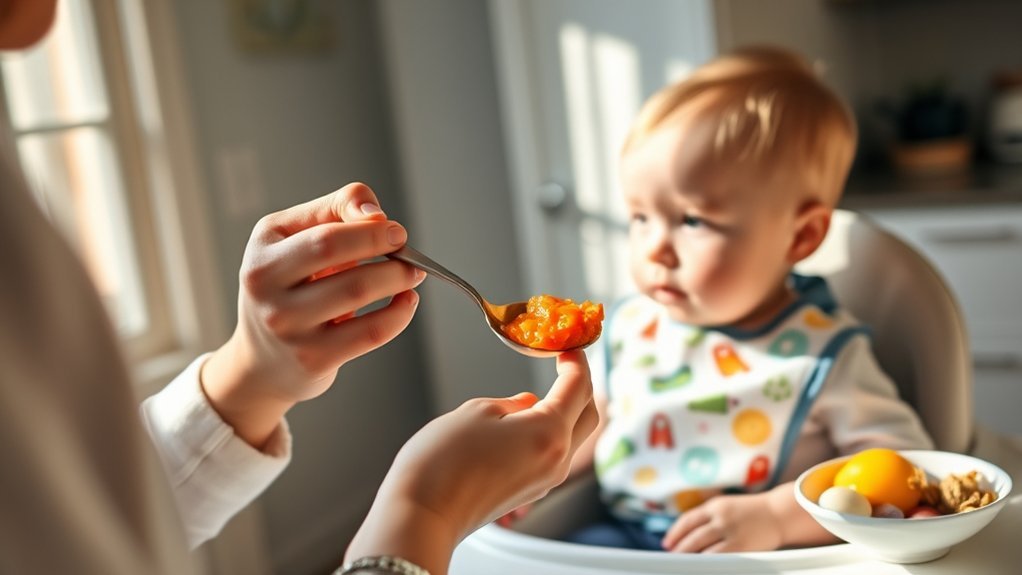
Introducing new solids involves a learning curve for both the baby and caregiver. A refusal on the first, fifth, or even tenth offer does not prove that your baby will never accept the food.
The 2025 Dietary Guidelines Advisory Committee’s scientific review found that repeated tasting is likely to improve acceptance of fruits and vegetables. The number of offers needed varies, so focus on calm repetition rather than counting toward a deadline.
A Pressure-Free Repeated-Exposure Plan
- Offer a very small portion so waste does not create pressure.
- Serve the new food beside something familiar.
- Let your baby look, touch, smell, lick, or taste it.
- End the meal calmly when your baby shows fullness.
- Offer the food again on another day without mentioning the previous refusal.
- Change the preparation occasionally—for example, mashed broccoli one day and a soft broccoli floret another day.
Avoid preparing an entirely different meal the moment your child refuses one item. Instead, plan at least one familiar food into the meal from the beginning. This keeps the meal supportive without teaching that refusal always produces a preferred replacement.
Foods and Drinks to Avoid or Limit
Some foods are unsafe during infancy, while others can crowd out the nutrient-rich foods your baby needs. The CDC identifies several foods and drinks that should be avoided or limited.
- Honey before 12 months: Honey can cause infant botulism. Do not add it to food, water, formula, or a pacifier.
- Cow’s milk as a drink before 12 months: It should not replace breast milk or infant formula. Pasteurized yogurt and cheese can be offered earlier in suitable forms.
- Juice before 12 months: Whole fruit is the better option. Juice is not needed during infancy.
- Added sugars: Avoid sweetened yogurt, cookies, candy, sugary cereal, sweet drinks, and similar products for children younger than 2.
- Unpasteurized products: Avoid raw milk, unpasteurized juice, and foods made with unpasteurized milk.
- Raw or undercooked animal foods: Cook eggs, meat, poultry, fish, and shellfish thoroughly.
- Highly salty foods: Limit processed meats, salty snacks, instant noodles, and heavily salted family foods.
- Caffeinated or sugary drinks: Babies and toddlers do not need soda, sweet tea, sports drinks, energy drinks, or flavored sugary water.
Prepare and Store Homemade Baby Food Safely
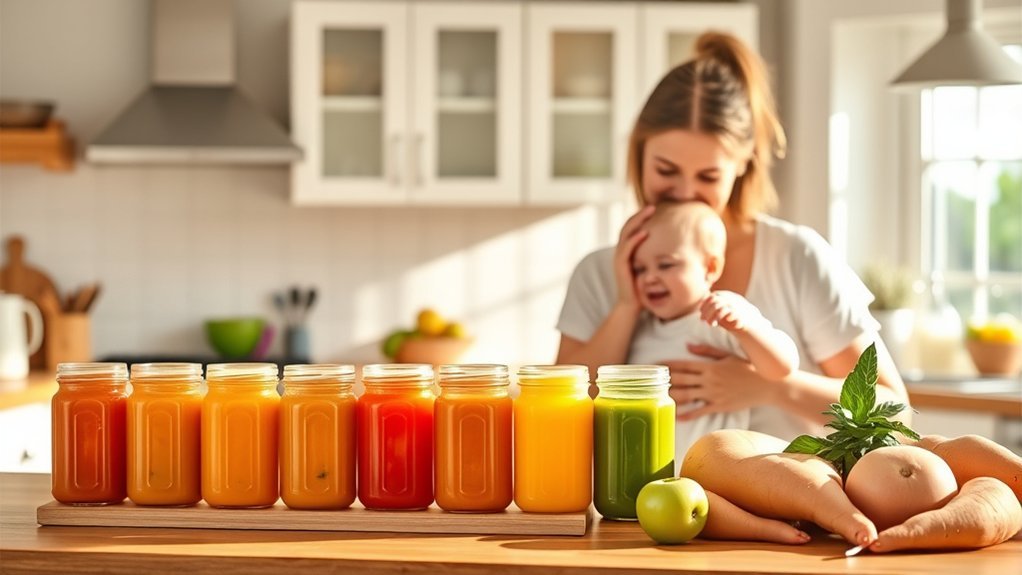
Homemade baby food can be nutritious and affordable, but babies are more vulnerable to foodborne illness than healthy adults. Wash your hands, utensils, preparation surfaces, fruits, and vegetables before you begin. Keep raw meat and eggs away from ready-to-eat foods, and cook animal foods thoroughly.
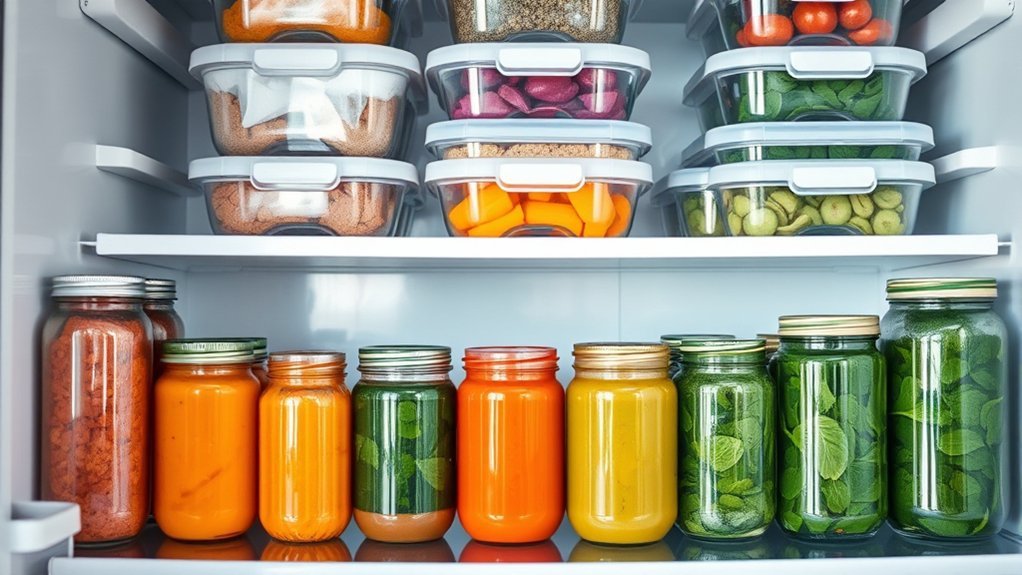
According to FoodSafety.gov’s storage guidance for children under five, homemade baby food should generally be refrigerated for no more than one to two days or frozen for one to two months.
- Cool cooked food promptly and divide it into small portions.
- Use clean, food-safe containers and label each portion with its preparation date.
- Thaw frozen food in the refrigerator, not on the counter.
- Transfer the portion you plan to serve into a separate bowl.
- Discard food left in the feeding bowl after the meal because saliva can introduce bacteria.
- When microwaving, use a microwave-safe dish, stir well, allow the food to stand, and test the temperature before serving.
- Never microwave food in a sealed baby-food jar.
When to Ask for Professional Help
Contact your pediatrician if your baby is not showing readiness near the expected time, is losing weight, is not growing as expected, or consistently eats very little. Also seek help for repeated coughing or choking, a wet or gurgly sound during meals, pain, persistent vomiting, extreme distress around food, or an inability to progress beyond one texture.
A pediatrician may refer your family to a registered dietitian, allergist, occupational therapist, speech-language pathologist, or multidisciplinary feeding team. Early support can identify nutritional, oral-motor, sensory, gastrointestinal, or allergy-related problems that ordinary repeated exposure will not solve.
Frequently Asked Questions
What are the signs my baby is ready for solid foods?
Most babies are ready at about 6 months when they can sit upright with support, control their head and neck, open their mouth for food, bring objects to their mouth, grasp items, and swallow food instead of consistently pushing it out. Age and interest alone are not enough.
How can I safely prepare homemade baby food?
Wash your hands, tools, produce, and preparation surfaces. Keep raw foods separate, cook meat and eggs thoroughly, and modify the texture for your baby’s skills. Refrigerate homemade baby food for no more than one to two days or freeze it for one to two months. Label each portion and discard leftovers from the feeding bowl.
What common allergens should I introduce first?
No allergen must be first. Once your baby is ready for solids, introduce foods such as well-cooked egg, thinned smooth peanut butter, plain yogurt, wheat, sesame, soy, fish, and shellfish one at a time in baby-safe forms. Ask a doctor before peanut introduction if your baby has severe eczema, egg allergy, or a previous reaction.
How do I handle my baby’s food allergies or sensitivities?
Stop serving a food if you suspect a reaction and contact your child’s healthcare professional. Call 911 for breathing trouble, throat or tongue swelling, blue or pale coloring, collapse, sudden limpness, or symptoms affecting more than one body system. Use prescribed epinephrine immediately for anaphylaxis and then obtain emergency care.
When should I stop pureeing food for my baby?
There is no single deadline. Begin progressing to thicker mashed foods, soft lumps, and safe finger foods as your baby develops stable sitting, chewing, grasping, and swallowing skills. Do not remain with only smooth purees when your baby is ready for more texture. Ask the pediatrician about repeated coughing, choking, vomiting, or distress.
What is the difference between gagging and choking?
Gagging is often noisy and may include coughing, retching, or pushing the tongue forward. A choking child may be silent and unable to breathe, cry, or cough effectively. Stay beside your baby during every meal, learn age-appropriate choking first aid, and call 911 immediately when choking is suspected.
What should I do when my baby refuses a new food?
Stay neutral, remove pressure, and offer a small portion again on another day. Pair it with a familiar food and allow your baby to touch, smell, lick, or taste it. Acceptance may take many calm exposures. A refusal at one meal does not mean you need to remove the food permanently.
Is baby-led weaning better than spoon-feeding?
Neither method is best for every family. Safe finger foods can support self-feeding, while spoon-fed mashed foods can help deliver iron-rich foods and allergens in manageable forms. Many families combine both approaches. The priorities are developmental readiness, nutrition, safe preparation, upright seating, and constant supervision.
Conclusion
Reducing picky-eating risk is less about creating perfect meals and more about building steady habits. Begin solids when your baby is ready, serve many nutritious flavors and textures, introduce allergens safely, and let your baby decide how much to eat. Some meals will be messy, and some foods will be rejected. Keep offering calm opportunities without pressure. Over time, those ordinary family meals can build confidence, eating skills, and a more flexible relationship with food.
Sources
- CDC: When, What, and How to Introduce Solid Foods — starting age, readiness signs, first foods, cereal variety, and initial food introduction.
- CDC: Choking Hazards — safe food preparation, supervision, and common choking risks.
- CDC: Foods and Drinks to Avoid or Limit — honey, milk, juice, added sugars, caffeine, and unpasteurized products.
- American Academy of Pediatrics: Introducing Common Food Allergens — allergen timing and high-risk infant considerations.
- FoodSafety.gov: Children Under Five — preparation, refrigerator and freezer storage, and safe reheating.
- 2025 Dietary Guidelines Advisory Committee Scientific Report — repeated exposure, food acceptance, and responsive feeding evidence.