Keeping baby food warm while traveling is safe only when you control its temperature from the time it is prepared until the time it is served. Use a preheated vacuum-insulated food jar for hot food, or carry the meal cold with ice packs and reheat it properly at your destination. Always cool the serving portion until it is lukewarm before feeding your baby.
Quick Answer
Reheat cooked baby food to 165°F (74°C), transfer it immediately to a preheated vacuum-insulated food jar, and keep the jar closed. The food should remain at 140°F (60°C) or above while stored. Before feeding, place one serving in a clean bowl, stir it, and let it cool until lukewarm.
Key Takeaways
- Use a clean vacuum-insulated food jar with a wide mouth, secure lid, intact gasket, and enough capacity for one meal.
- Preheat the jar with boiling water, but empty it completely before adding food.
- Reheat previously cooked food to 165°F (74°C) and keep it at 140°F (60°C) or above during transport.
- Use a clean instant-read food thermometer rather than relying on touch, steam, smell, or a color-changing spoon.
- Transfer one portion to a separate bowl and cool it until lukewarm before feeding.
- When hot holding is impractical, carry the food at 40°F (4°C) or below and reheat it once at the destination.
At a Glance
| Time Required | About 10–15 minutes for reheating, preheating, packing, and checking |
| Difficulty | Easy, with careful temperature checks |
| Tools Needed | Vacuum-insulated food jar, boiling water, clean instant-read food thermometer, clean bowl, and feeding spoon |
| Cost | No added cost if you already own the equipment; otherwise, cost varies by food jar and thermometer |
Warning: Hot-holding temperature and serving temperature are not the same. Food stored at 140°F (60°C) or above can burn a baby. Always move one serving to a separate bowl, stir it thoroughly, and cool it until lukewarm before feeding.
Why Keeping Baby Food Warm Matters
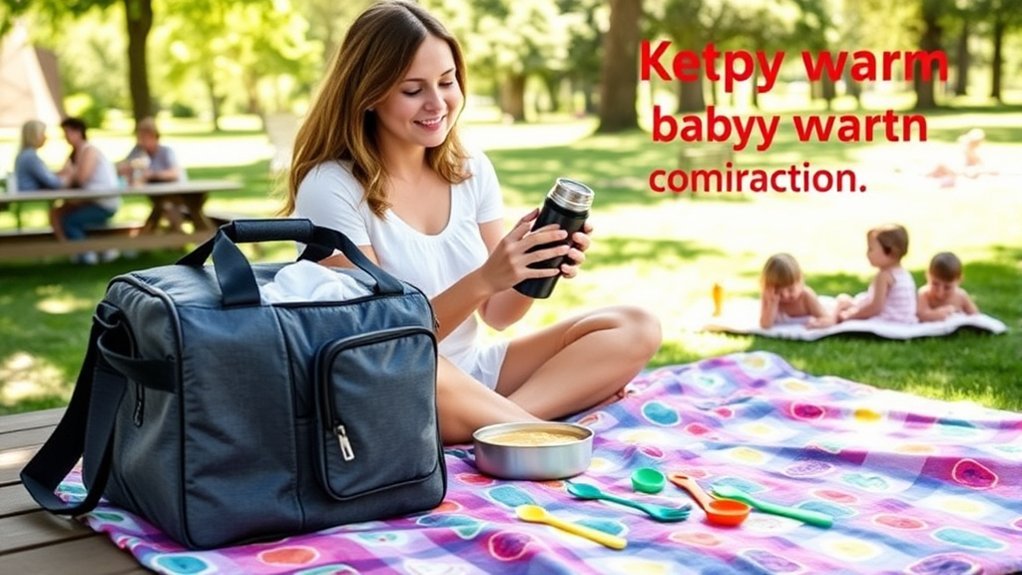
Baby food does not have to be hot for a baby to enjoy it. Some babies accept cold or room-temperature food without a problem. The important issue is keeping perishable food out of unsafe temperature conditions during storage and travel.
The U.S. Department of Agriculture identifies 40°F to 140°F (4°C to 60°C) as the food-safety “danger zone,” where bacteria can multiply quickly. Hot food should remain at 140°F (60°C) or above, while cold food should remain at 40°F (4°C) or below. See the USDA’s temperature danger-zone guidance.
The goal is not merely to keep baby food feeling warm. The goal is to keep it safely hot or safely cold until you are ready to serve it.
An insulated food jar can slow heat loss, but it does not sterilize food, cook cold food, or guarantee safety for a fixed number of hours. Its performance depends on the model, how full it is, the starting temperature, the type of food, the surrounding temperature, and how often the lid is opened.
Keeping food at a controlled temperature also helps protect its texture, taste, and overall quality. However, the main reason to control the temperature is to reduce the risk of foodborne illness.
Power your essentials anywhere with a 999Wh pure sine wave power station delivering up to 1000W continuous with 2000W surge. It supports fast charging via USB-C PD 60W and USB-A QC 18W, plus simultaneous output for multiple devices through AC, USB, wireless, and car/DC ports. Recharge using AC, car, or solar with a built-in MPPT controller and dual cooling fans, while the upgraded battery management system protects against surges, short circuits, and overheating.

Stays hot or cold: THERMOS stainless steel food containers keep contents hot up to 5 hours and cold up to 7 hours with our vacuum insulation technology; toss our insulated food jar into your kids’ lunch box with their favorite soup or cold snack

12oz Insulated Food Jar - Uses double-wall vacuum insulation technology to isolate food from outside air to keep food fresh, keeping food hot for 6 hours and cold for 8 hours. Suitable for pasta, hot soups, milkshakes, salads, and other foods.
Choosing the Right Thermos for Baby Food
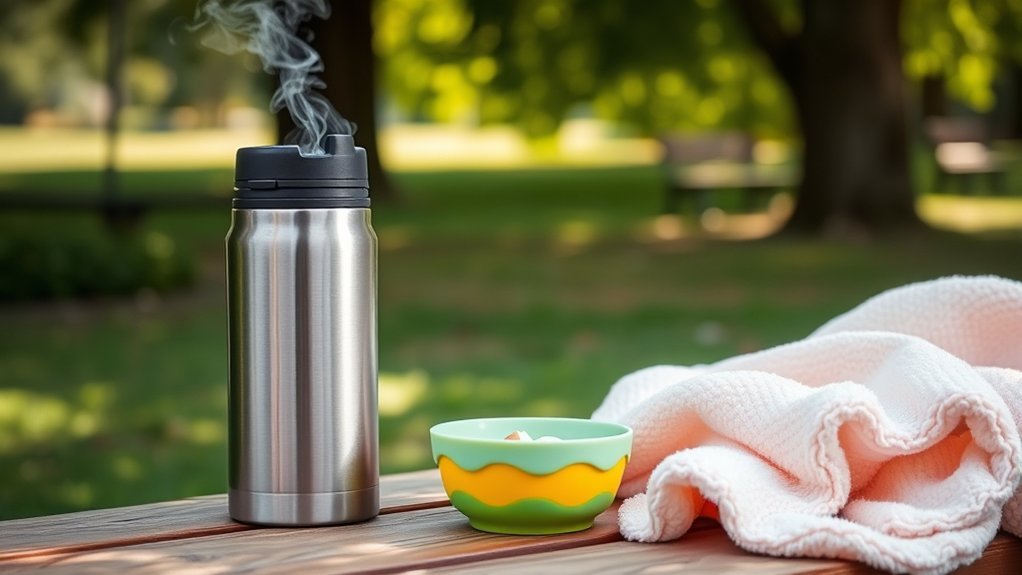
Choose a vacuum-insulated food jar designed for hot food rather than an ordinary storage container. A suitable jar should have:
- Vacuum-insulated stainless-steel walls: These slow heat transfer more effectively than a basic plastic container.
- A wide opening: A wide mouth makes the jar easier to fill, empty, and clean.
- A leak-resistant lid: The lid and gasket should close evenly without visible cracks, warping, or trapped food.
- An appropriate capacity: A jar holding one meal is easier to fill completely and avoids carrying unnecessary leftovers.
- Food-safe materials: Follow the manufacturer’s food-contact, washing, and temperature instructions.
- A published heat-retention rating: Use the maker’s tested rating as a planning guide, not as a replacement for checking the actual food temperature.
Pro Tip: Test the food jar at home before relying on it during a long outing. Preheat and fill it as you normally would, then measure the food after the expected travel time. Replace the jar or shorten the holding period if it cannot keep food at 140°F (60°C) or above.
Do not use a damaged jar. A dented rim, loose lid, cracked inner surface, worn seal, or missing gasket can reduce temperature retention or allow leaks.
Step-by-Step Guide to Preparing Baby Food for Travel
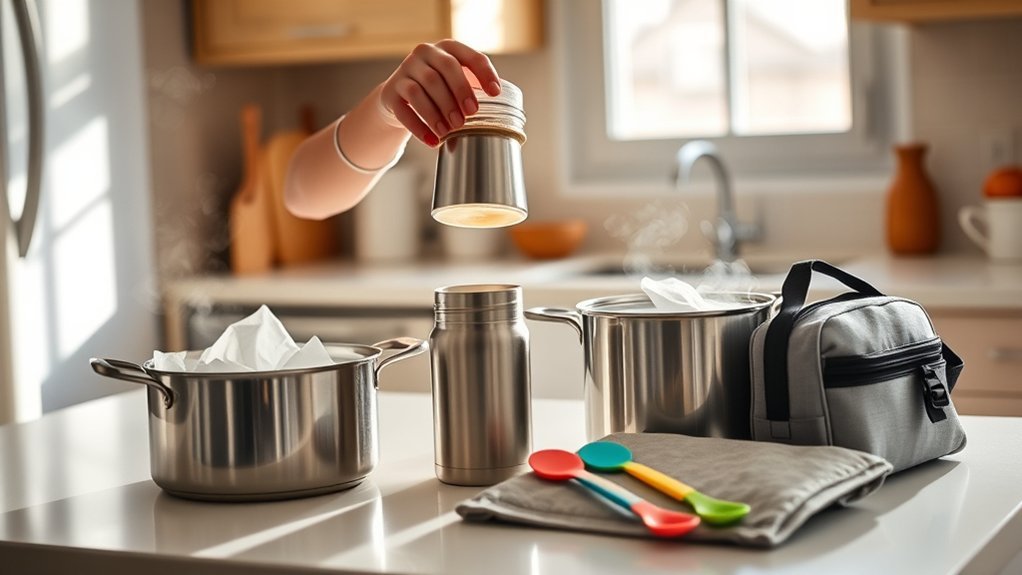
You have two safe approaches: pack the food hot and keep it hot, or pack it cold and keep it cold. Avoid packing it merely warm because warm food can enter the temperature danger zone during the trip.
Meal Prep Strategies
- Wash your hands and equipment. Start with clean hands, preparation surfaces, utensils, lids, jars, bowls, and thermometer probes.
- Prepare an age-appropriate meal. Cook ingredients thoroughly and adjust the shape and texture for your baby’s stage of development.
- Refrigerate advance-prepared food promptly. Store it at 40°F (4°C) or below until it is time to reheat and pack.
- Reheat only the amount needed. Heat previously cooked food until it reaches 165°F (74°C) throughout. The CDC recommends using a food thermometer to confirm that reheated food reaches 165°F.
- Stir thick food. Purees, oatmeal, mashed vegetables, pasta, and stews can heat unevenly. Stir from the center and edges before measuring.
- Pack immediately. Transfer the reheated food directly into the emptied, preheated jar and close the lid tightly.
When reheating in a microwave, use a microwave-safe dish rather than heating baby food in its original jar. Stir it, allow a short standing time, and check several areas because microwaves can create hot and cold spots. The FDA provides additional baby-food heating precautions.
Effective Food Storage
Choose one of the following temperature-control methods for the entire trip:
- Hot route: Reheat the meal to 165°F (74°C), place it in a preheated insulated food jar, and keep it at 140°F (60°C) or above until serving.
- Cold route: Place chilled food in a sealed container inside an insulated bag with sufficient frozen gel packs. Keep the food at 40°F (4°C) or below and reheat it once at the destination.
The USDA recommends using an insulated container for hot foods, preheating it with boiling water, adding piping-hot food, and keeping it closed until the meal. Its instructions are available in Keeping Bag Lunches Safe.
Note: These instructions are for solid baby foods. Breast milk and infant formula have separate preparation, storage, warming, and disposal rules. Do not carry formula or breast milk in a food jar using this method.
Best Practices for Preheating Your Thermos for Baby Food
Preheating reduces the amount of heat the jar absorbs from the meal. It improves temperature retention, but it does not replace fully reheating the food before packing.
Choose a Suitable Insulated Food Jar
Before each use, inspect the jar, lid, threads, and gasket. Wash and dry the container according to the manufacturer’s instructions. Food residue around a gasket can prevent a complete seal and support bacterial growth.
Use a container close to the meal’s volume. Leaving a large air space can speed heat loss. Do not overfill past the manufacturer’s fill line, because hot food may spill when the lid is tightened or opened.
Preheat With Boiling Water
- Place the clean food jar on a stable, heat-resistant surface.
- Fill it carefully with boiling water.
- Attach or rest the lid as directed by the manufacturer.
- Let the water stand for about five minutes.
- Pour out all the water immediately before adding the reheated food.
- Fill the jar promptly and close it tightly.
Warning: Keep the jar and boiling water away from your baby and from the edge of the counter. Use dry hands, pour slowly, and never allow a child to handle or open a jar containing hot food.
Maintain a Safe Holding Temperature
Do not rely on a universal claim that every food jar keeps food safe for 8, 10, or 12 hours. Check the manufacturer’s tested heat-retention period and plan to serve the meal well within that period.
Keep the lid closed until mealtime. Every opening releases heat and can introduce contamination. When you open the jar, insert a clean instant-read food thermometer into the center of the food. For thick food, stir with a clean utensil and check more than one spot.
If the food is at least 140°F (60°C), it is still within the standard hot-holding range. It is not ready to feed at that temperature, so remove one portion and cool it separately.
How to Effectively Heat Baby Food on the Go
The safest plan is usually to heat the food fully before leaving or to keep it cold until you reach a place with a reliable reheating method. An insulated food jar is designed to retain heat; it should not be used to cook food or slowly warm refrigerated food.
When electricity is available, a portable food warmer may be useful. Confirm that the device is intended to reheat food rather than merely make it feel warm. Follow its instructions and use a food thermometer to verify that previously cooked food reaches 165°F (74°C).
For a hot-water bath:
- Place the baby food in a sealed, heat-safe container.
- Set the container in hot water without allowing water to enter the food.
- Stir the food frequently so it heats evenly.
- Continue heating until reheated food reaches 165°F (74°C).
- Remove one serving, stir, and cool it until lukewarm.
Do not place an insulated stainless-steel food jar in a microwave. Do not microwave food in a container unless the manufacturer specifically identifies it as microwave-safe.
If you carry food cold, use an insulated bag with frozen cold sources. Keep the food at 40°F (4°C) or below until reheating. Do not place warm food into a cold bag and assume the ice packs will cool it safely.
How to Safely Check Baby Food Temperature
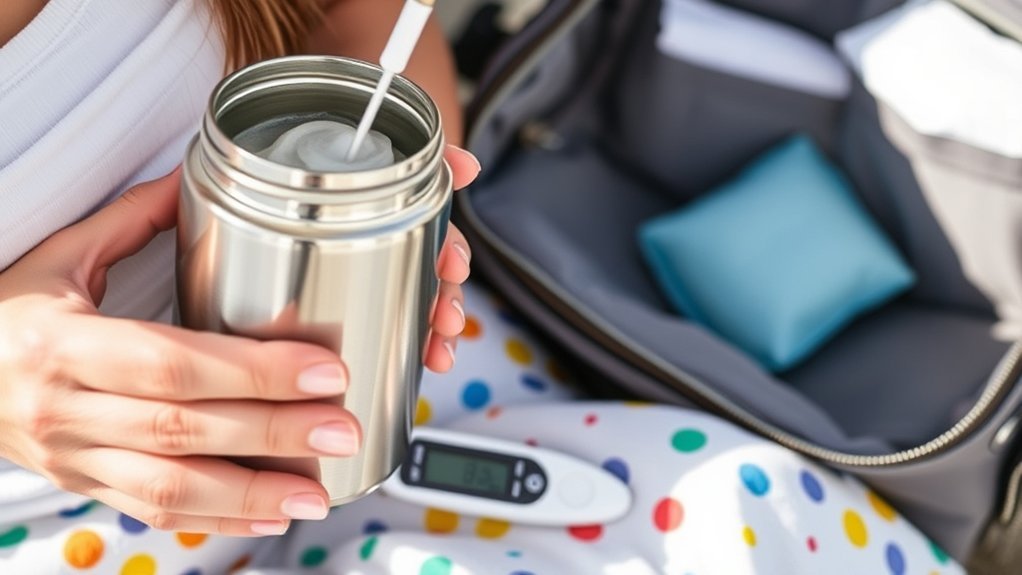
Use a clean instant-read food thermometer with a thin probe. A temperature-sensitive spoon may help warn that food feels hot, but it should not replace a thermometer when you need to confirm reheating or hot-holding temperatures.
- Clean the probe. Wash it with hot, soapy water before and after use, following the thermometer manufacturer’s instructions.
- Stir the food. Mix the center, sides, top, and bottom to distribute heat.
- Check the thickest area. Place the probe in the center without touching the container.
- Check more than one spot. This is especially important after microwave heating.
- Confirm the storage temperature. Hot-held food should be at least 140°F (60°C).
- Cool one serving. Place a small amount in a clean bowl, stir it, and wait until it is lukewarm.
- Test before feeding. Use a separate clean spoon to check the temperature. Do not feed directly from the hot storage jar.
The food does not have to remain at 165°F after it has been safely reheated. That is the reheating target. The hot-holding target is 140°F (60°C) or above, and the food offered to your baby should be comfortably lukewarm.
Always stir before testing. A cool surface can hide a dangerously hot center, especially in thick purees and microwaved food.
Tips for Maintaining Food Quality While Traveling
- Pack one meal at a time. Smaller portions reduce waste and eliminate the need to return leftovers to storage.
- Choose moist foods. Purees, mashed vegetables, thick soups, stews, oatmeal, and saucy pasta generally retain heat better than dry finger foods.
- Avoid food that becomes gluey or hard. Some rice, pasta, and cereal dishes thicken as they stand. Add an appropriate liquid before heating if needed.
- Keep the lid closed. Repeated opening reduces heat retention.
- Carry separate utensils. Pack a clean serving spoon, feeding spoon, bowl, and thermometer.
- Protect the jar from extreme weather. Do not leave it in direct sunlight, a freezing vehicle, or a hot parked car.
- Label special meals. Mark foods containing allergens or ingredients that another caregiver needs to know about.
- Use age-appropriate textures. Mash, soften, or cut food according to your baby’s feeding skills.
Do not return a spoon that has been in your baby’s mouth to the main food jar. Saliva introduces bacteria to the remaining food. Place only the amount needed for that feeding into a separate bowl, and discard food left in the feeding bowl.
What to Do If Baby Food Cools Below 140°F
If hot food measures below 140°F (60°C), consider how long it may have been below that temperature:
- Less than two hours and the time is known: Reheat it promptly to 165°F (74°C) using a reliable appliance, then cool one serving until lukewarm.
- More than two hours: Discard it.
- More than one hour in ambient temperatures above 90°F (32°C): Discard it.
- The time is unknown: Discard it rather than taking a chance with an infant.
Never use appearance, smell, or taste to decide whether temperature-abused food is safe. Harmful bacteria may be present without changing the food’s odor or appearance.
Warning: Do not repeatedly cool and reheat baby food. Reheat cooked baby food only once, warm only the amount required, and discard food that has been contaminated by a used feeding spoon.
Feeding Your Baby Safely While Traveling
Temperature control is only one part of a safe travel meal. Stop in a safe place before feeding. Seat your baby upright and provide direct supervision throughout the meal.
Do not feed a baby while a vehicle is moving or while the baby is reclined in a car seat or stroller. The CDC advises caregivers to avoid letting young children eat in a car or stroller because movement and limited access can make choking harder to prevent or respond to. Review the CDC’s choking-hazard guidance.
Offer a texture your baby already manages safely. Do not introduce a new allergen or an unfamiliar high-risk texture for the first time when you are far from home or medical care.
Cleaning the Food Jar After Use
- Empty the jar as soon as practical.
- Separate the lid, gasket, spoon, and other removable parts according to the manufacturer’s instructions.
- Wash every food-contact surface with hot, soapy water.
- Use a soft bottle brush to reach the bottom and lid threads.
- Rinse thoroughly.
- Allow all parts to air-dry completely before reassembly or storage.
For lingering odors, follow the manufacturer’s cleaning directions. A baking-soda soak may be suitable for some stainless-steel jars, but do not use bleach, abrasive cleaners, or dishwasher cycles unless the manufacturer permits them.
Inspect the gasket regularly. Replace it if it is cracked, stretched, permanently stained, moldy, or no longer seals correctly.
Frequently Asked Questions
Can I use a regular container instead of an insulated food jar?
A regular container does not reliably keep food hot. Use it only when serving the meal immediately or when carrying the food cold in an insulated bag with enough frozen cold sources to keep it at 40°F (4°C) or below.
How long can baby food stay hot in an insulated food jar?
There is no universal safe duration. Follow the food jar manufacturer’s tested heat-retention rating, keep the jar closed, and confirm that the food is still at least 140°F (60°C) when opened. Test your jar at home before using it for a long trip.
Is it safe to reheat baby food more than once?
Reheat cooked baby food only once. Warm the amount needed for the meal and leave the rest refrigerated. Discard food left in the feeding bowl or touched by a spoon that has been in your baby’s mouth.
What types of baby food travel well?
Thick purees, mashed vegetables, oatmeal, soft pasta with sauce, and age-appropriate soups or stews usually retain heat well. Choose foods your baby already eats safely, and avoid textures that become dry, sticky, rubbery, or difficult to stir.
How do I clean the insulated food jar after use?
Wash the jar, lid, gasket, and removable parts with hot, soapy water. Scrub lid threads and crevices, rinse thoroughly, and air-dry every part before reassembly. Follow the manufacturer’s instructions for dishwasher use and odor removal.
What should I do if the food is below 140°F when I open the jar?
If you know it has been below 140°F for less than two hours, reheat it promptly to 165°F using reliable equipment. Discard it after two hours, after one hour in temperatures above 90°F, or whenever the time is unknown.
Can I carry breast milk or formula in the same food jar?
Do not apply these solid-food instructions to breast milk or formula. Use the storage, cooling, warming, and disposal guidance specific to the type of milk or formula, and follow the product label and your child’s health-care provider when special preparation is required.
Conclusion
Keeping baby food warm on the go requires more than placing warm food in a container. Reheat the meal thoroughly, use a preheated vacuum-insulated food jar, keep the food at 140°F (60°C) or above, and verify the temperature with a clean food thermometer.
At mealtime, transfer one portion to a clean bowl and cool it until lukewarm. When safe hot holding is not practical, transport the meal at 40°F (4°C) or below and reheat it once at your destination. Discard food whenever its time in the temperature danger zone is too long or unknown.
Sources
- USDA Food Safety and Inspection Service — Danger Zone — supports hot-holding, cold-storage, and time-limit guidance.
- USDA — Use an Insulated Lunch Bag to Keep Meals Safe — supports preheating insulated containers and reheating food to 165°F.
- U.S. Food and Drug Administration — Once Baby Arrives — supports stirring, standing, testing, and cooling heated baby food until lukewarm.
- Centers for Disease Control and Prevention — Preventing Food Poisoning — supports thermometer use, reheating to 165°F, and prompt refrigeration.
- Centers for Disease Control and Prevention — Choking Hazards — supports upright, supervised feeding and avoiding meals in cars or strollers.
- NHS — Storing and Reheating Baby Food — supports thorough reheating, cooling before feeding, and limiting repeated reheating.