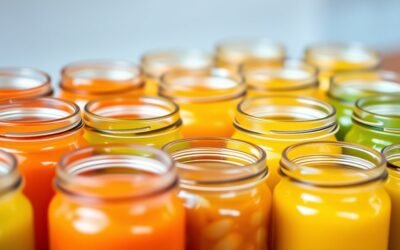
Building a balanced baby food meal does not require a perfect plate or a complicated recipe. Once your baby is developmentally ready for solids, choose an iron-rich food, add an energy-rich food, include a fruit or vegetable, and serve everything in a texture your baby can safely manage. Breast milk or iron-fortified formula should remain your baby’s main milk source through the first year.
Quick Answer
Build a balanced baby food meal with four parts: an iron-rich food, an energy-rich food, a fruit or vegetable, and a safe texture. Start with 1–2 tablespoons, follow your baby’s hunger and fullness cues, and continue breast milk or iron-fortified formula as the main milk drink until 12 months.
Key Takeaways
- Offer an iron-rich food regularly, such as meat, beans, lentils, tofu, egg, fish, or iron-fortified infant cereal.
- Add an energy-rich food such as avocado, plain full-fat yogurt, smooth seed or nut butter, olive oil, egg, or mashed beans.
- Include fruits or vegetables for flavor, variety, and nutrients; vitamin C-rich produce can also support absorption of plant-based iron.
- Match the texture, size, and shape of every food to your baby’s current eating skills.
- Begin with small servings and let your baby decide whether and how much to eat without pressure.
At a Glance
| Time Required | About 5–15 minutes with prepared ingredients |
| Difficulty | Easy, once you understand safe textures |
| Tools Needed | Bowl, baby spoon, fork or masher, clean cutting board, and age-appropriate cup or plate |
| Cost | Varies; small portions of suitable family foods can keep costs low |
Note: This guide provides general feeding information for healthy infants. Ask your pediatrician or a pediatric dietitian for individual advice if your baby was born prematurely, has poor growth, anemia risk, severe eczema, a diagnosed food allergy, swallowing difficulty, or another medical condition. Do not give an iron supplement unless your baby’s clinician recommends it.
Why a Balanced Baby Food Meal Matters

A balanced meal helps your baby receive a wider range of nutrients while learning about new tastes and textures. It does not need to contain every food group at every sitting. Look at the pattern across several meals and days rather than trying to make each spoonful perfect.
Iron deserves special attention during the second half of infancy. The National Institutes of Health lists 11 mg of iron per day for infants ages 7–12 months. Regularly serving iron-rich complementary foods helps your baby work toward that amount, but food intake and absorption vary from child to child.
Offering different colors, flavors, and gradually advancing textures can also help your baby build feeding skills. Repeated exposure matters: a baby may need to see, smell, touch, or taste a food many times before accepting it.

Power your essentials anywhere with a 999Wh pure sine wave power station delivering up to 1000W continuous with 2000W surge. It supports fast charging via USB-C PD 60W and USB-A QC 18W, plus simultaneous output for multiple devices through AC, USB, wireless, and car/DC ports. Recharge using AC, car, or solar with a built-in MPPT controller and dual cooling fans, while the upgraded battery management system protects against surges, short circuits, and overheating.

INFANT NUTRITION: This organic whole grain cereal is fortified with iron to offer nutritional support as your baby transitions to eating solid foods

place holder
Before Building a Balanced Baby Meal
Most babies can begin solid foods at about 6 months, but readiness matters more than a specific birthday. The CDC does not recommend introducing solids before 4 months.
Common readiness signs include:
- Your baby can sit upright with support and hold their head steady.
- Your baby opens their mouth or leans toward food.
- Your baby can close their lips around a spoon.
- Your baby swallows food instead of pushing all of it back out.
- Your baby can bring objects toward their mouth with improving control.
Breast milk or iron-fortified infant formula should continue while solid foods are introduced. During the first year, solids gradually become more important, but they should not abruptly replace normal milk feeds.
Essential Components of a Balanced Baby Meal
A practical balanced baby meal has four parts. You do not need a separate food for every part because one ingredient may fill more than one role.
Key Nutritional Components
| Meal Part | Suitable Examples | Why It Helps |
|---|---|---|
| Iron and protein | Meat, poultry, egg, low-mercury fish, beans, lentils, tofu, or iron-fortified infant cereal | Supports growth and helps meet increasing iron needs |
| Energy-rich food | Avocado, plain full-fat yogurt, smooth thinned nut or seed butter, olive oil, egg, or mashed beans | Adds energy and fat to a small serving |
| Fruit or vegetable | Berries, kiwi, pear, banana, broccoli, peas, tomato, squash, or sweet potato | Adds variety, flavor, vitamins, minerals, and fiber |
| Safe texture | Smooth puree, mashed food, soft lumps, shredded food, or soft finger-sized pieces | Matches the baby’s oral-motor and self-feeding skills |
Iron-Rich Food Sources
Iron in meat, poultry, and fish is generally absorbed more readily than iron in plant foods. Plant-based options are still valuable and can be served with vitamin C-rich produce to support absorption.
Useful iron-rich choices include:
- Finely minced, shredded, mashed, or pureed beef, lamb, chicken, or turkey
- Well-cooked egg prepared in a safe texture
- Fully cooked, low-mercury fish with every bone removed
- Mashed lentils, beans, or chickpeas
- Soft tofu
- Iron-fortified infant cereal mixed according to package directions
Pair plant-based iron foods with strawberries, kiwi, tomato, broccoli, sweet potato, mango, or another vitamin C-containing fruit or vegetable. Avocado is better used as an energy-rich addition than as the main vitamin C pairing.
Balanced Baby Meal Examples
These combinations are starting points. Mash, puree, shred, or cut each ingredient to match your baby’s current eating skills.
| Meal | Iron/Protein | Energy and Produce |
|---|---|---|
| Beef and sweet potato | Finely minced or pureed beef | Mashed sweet potato with a small amount of olive oil |
| Lentil and avocado bowl | Soft mashed lentils | Mashed avocado and soft tomato |
| Egg, yogurt, and berries | Well-cooked egg | Plain full-fat yogurt and mashed berries |
| Tofu and broccoli | Soft tofu | Very soft broccoli and avocado |
| Fortified cereal and fruit | Iron-fortified infant cereal | Mashed pear or berries with smooth thinned seed butter |
| Salmon, peas, and potato | Fully cooked, carefully deboned low-mercury salmon | Mashed peas and potato |
Pro Tip: Freeze small portions of cooked ingredients separately. You can then combine one iron-rich cube, one vegetable or fruit cube, and an energy-rich addition without preparing a new recipe for every meal.
How Can I Ensure My Baby Gets Enough Iron?

Offer iron-rich foods regularly rather than relying on one large serving. A baby may eat only a few spoonfuls at one meal and more at another, so consistency across the week matters.
Helpful strategies include:
- Serve meat, beans, lentils, tofu, egg, fish, or fortified cereal at meals when practical.
- Pair beans, lentils, tofu, or fortified cereal with vitamin C-containing produce.
- Check the label on infant cereal because iron content varies by product and serving size.
- Continue breast milk or iron-fortified formula while complementary foods are introduced.
- Discuss iron testing or supplementation with your baby’s clinician if your baby was premature, has limited iron intake, drinks little iron-fortified formula, or has another risk factor.
Pale skin, low energy, poor feeding, and slow growth can have many causes. Do not diagnose iron deficiency from symptoms alone; contact your pediatrician if you are concerned.
High-Calorie Foods for Baby Growth
Babies have small stomachs, so nutrient-dense foods can provide energy and essential nutrients in modest portions. The goal is not to force extra calories or persuade your baby to finish a serving. Offer suitable foods and follow your baby’s cues.
Energy-rich options include:
- Avocado
- Plain, pasteurized full-fat yogurt without added sugar
- Well-cooked egg
- Mashed beans or lentils
- Smooth nut or seed butter thinned into cereal, yogurt, or puree
- A small amount of olive or avocado oil mixed into vegetables or grains
- Fully cooked low-mercury fish served in a safe texture
Plain yogurt may be introduced before 12 months when your baby is ready for solids. However, cow’s milk should not replace breast milk or formula as a drink before your baby’s first birthday.
Nutritional Benefits of Fruits and Veggies

Fruits and vegetables add flavor, color, vitamins, minerals, and fiber. Rotate choices rather than relying only on naturally sweet fruits. Vegetables, beans, grains, dairy foods, eggs, meat, and fish all contribute to dietary variety.
Essential Vitamins and Minerals
Orange and dark-green vegetables can provide vitamin A-related nutrients. Berries, kiwi, broccoli, tomato, and other produce contain vitamin C. Beans, peas, and leafy vegetables provide several minerals and plant compounds, although they should not replace more concentrated iron sources in every meal.
No single fruit or vegetable provides everything your baby needs. Offering different choices over time is more useful than trying to identify one “best” produce item.
Fiber for Healthy Digestion
Fruits, vegetables, beans, lentils, and suitable whole-grain foods can help support normal digestion. There is no need to count out a five-gram daily fiber target for an infant.
Introduce higher-fiber foods gradually. Pureed prunes or pears, mashed peas, beans, soft-cooked vegetables, oatmeal, and other age-appropriate foods can contribute fiber. Sudden large increases may cause gas or discomfort.
If constipation is persistent, painful, accompanied by vomiting or blood, or begins in a very young infant, contact your pediatrician rather than treating it only by changing food.
Flavor Development and Preference
Babies learn about food through repeated experience. A rejected food can be offered again on another day without pressure. Let your baby see, smell, touch, and taste a variety of foods while keeping the meal calm.
Natural flavors are enough. Avoid adding sugar, honey, low-calorie sweeteners, or salt substitutes. Mild herbs and spices such as cinnamon, dill, basil, garlic, cumin, or paprika can add variety when used without excessive heat or salt.
Age-Appropriate Textures and Finger Foods
Texture should advance with your baby’s skills. Ages are approximate; some babies progress sooner or later, especially if they were born prematurely or have developmental or oral-motor differences.
| Approximate Stage | Suitable Textures | Examples |
|---|---|---|
| Beginning solids | Smooth or softly mashed food that is easy to swallow | Iron-fortified cereal, mashed avocado, pureed meat, mashed lentils |
| Improving mouth control | Thicker mash, soft lumps, finely minced or shredded food | Mashed beans, soft scrambled egg, finely shredded chicken, lumpy oatmeal |
| Ready for self-feeding | Soft finger-sized strips or small soft pieces, depending on grasping ability | Very soft broccoli, ripe pear, omelet strips, shredded tender meat, soft toast strips |
A food should be soft enough to mash easily between your thumb and forefinger. The ability to sit upright and control the head is essential; having teeth is not required for many soft foods.
Allergen and Choking Safety
Introducing Common Allergens
Once your baby is developmentally ready for solids, common allergenic foods such as well-cooked egg, peanut, dairy, wheat, soy, sesame, and fish do not need to be delayed without a medical reason.
Introduce a new allergen in a small amount, in an age-appropriate form, when your baby is healthy and you can watch them afterward. Do not offer whole nuts or a thick spoonful of nut butter. Thin smooth nut butter with warm water, breast milk, formula, yogurt, or puree until it is easy to swallow.
The NIAID peanut-allergy prevention guidelines recommend medical guidance before peanut introduction for infants with severe eczema, egg allergy, or both.
Warning: Stop feeding the food and seek medical advice if your baby develops hives, swelling, repeated vomiting, or another possible allergic reaction. Call 911 immediately for trouble breathing, wheezing, swelling of the tongue or throat, sudden limpness, faintness, bluish coloring, or rapidly worsening symptoms. If your child has a prescribed allergy action plan, follow it at once.
Reducing Choking Risk
The CDC advises changing the shape, size, and texture of food to reduce choking risk.
- Seat your baby upright and supervise the entire meal.
- Keep eating separate from crawling, walking, riding in a vehicle, or playing.
- Remove pits, seeds, tough skin, gristle, and fish bones.
- Quarter grapes and small round fruits lengthwise.
- Shred or finely cut meat instead of serving firm chunks.
- Cook hard vegetables until soft.
- Spread nut butter thinly or mix it into another food.
- Avoid whole nuts, popcorn, hard candy, raw hard vegetables, firm apple chunks, coin-shaped sausage, and other hard or round foods.
Gagging can be noisy and is part of learning to manage food. Choking may be silent because the airway is blocked. Caregivers should learn infant choking first aid and CPR from a qualified instructor.
How to Prep Baby Food Safely and Healthily
- Wash first: Clean your hands, work surface, cutting board, utensils, and produce.
- Prevent cross-contamination: Keep raw meat, poultry, seafood, and eggs away from ready-to-eat foods.
- Cook animal foods fully: Do not serve raw or undercooked egg, meat, poultry, seafood, or unpasteurized dairy products.
- Soften when needed: Cook firm fruits and vegetables until they can be mashed easily. Ripe avocado, banana, and other naturally soft foods may not need cooking.
- Adjust the texture: Puree, mash, mince, shred, or cut food according to your baby’s skills.
- Cool before serving: Stir warmed food thoroughly and test the temperature to prevent hot spots.
- Store promptly: Refrigerate or freeze unused food in clean, covered, shallow containers.
Prepare food for the baby’s current skills, not only their age: safe texture and shape are as important as the ingredients.
FoodSafety.gov recommends using homemade baby food within 1–2 days when refrigerated or 1–2 months when frozen. Label containers with the preparation date and thaw frozen food in the refrigerator rather than on the counter.
Place a small serving in your baby’s bowl before the meal. Do not return food to storage after a spoon that has been in your baby’s mouth touches it, because saliva can introduce bacteria.
Warning: Never give honey to a baby younger than 12 months, including honey baked or mixed into another food, because of the risk of infant botulism. Avoid raw milk and unpasteurized dairy products. Do not use cow’s milk as the main drink before 12 months.
Serving Sizes and Portion Control for Your Baby
Start with about 1–2 tablespoons of food or one or two safe pieces. Offer more when your baby remains interested. Appetite may change from one meal to the next because of growth, teething, sleep, illness, milk intake, or the unfamiliarity of a food.
Your role is to choose what food is offered, prepare it safely, and provide a calm place to eat. Your baby decides whether to eat and when they have had enough.
Possible Hunger Cues
- Leaning toward the food
- Opening the mouth for the spoon
- Reaching for food
- Becoming excited when food appears
Possible Fullness Cues
- Closing the mouth
- Turning the head away
- Pushing the spoon or food away
- Dropping food repeatedly after eating
- Losing interest or becoming upset
Do not pressure, distract, bribe, or force your baby to finish. Stop when fullness cues continue, even if food remains.
Fun Ways to Serve Baby Meals
A simple presentation can make exploration easier, but safety should come before decorative shapes. Offer two or three foods with different colors or textures, provide a baby-safe spoon, and allow supervised self-feeding when your baby is ready.
| Food Type | Presentation Idea | Practical Benefit |
|---|---|---|
| Vegetables | Two soft vegetables with contrasting colors | Encourages visual and sensory exploration |
| Fruits | Mashed fruit beside a soft finger-food piece | Lets the baby practice more than one feeding skill |
| Purees and mashes | Serve separate flavors before mixing them | Helps the baby experience each flavor |
| Finger foods | Place a few safe pieces on the tray at a time | Reduces clutter and supports self-feeding practice |
Frequently Asked Questions
When can I introduce finger foods to my baby?
Many babies can try soft finger foods at about 6 months when they can sit upright with good head control, reach for food, and bring it to their mouth. Readiness matters more than a fixed age. Begin with foods that mash easily between your fingers and supervise every bite.
How can I tell if my baby is allergic to a food?
Possible symptoms include hives, facial swelling, coughing, vomiting, diarrhea, or sudden discomfort. Stop feeding the food and contact your baby’s clinician. Call 911 for trouble breathing, wheezing, tongue or throat swelling, faintness, limpness, bluish coloring, or rapidly worsening symptoms.
Should I limit sugar and salt in baby food?
Yes. Choose foods without added sugar and avoid adding salt or salt substitutes. Fruit does not need an additional sweetener. You can add flavor with mild herbs, spices, garlic, onion, or lemon where suitable. Never use honey before 12 months.
How often should I introduce new foods to my baby?
You may introduce one new food at a time and watch for a reaction before adding another new allergen. Waiting several days can make it easier to identify which food caused a reaction, but spacing foods does not prevent allergies. Continue offering tolerated foods as part of the regular diet.
Can I use store-bought baby food instead of homemade?
Yes. Store-bought and homemade foods can both fit a balanced diet. Check the ingredient list, choose products without added sugar or unnecessary sodium, inspect the seal and expiration date, and select textures that match your baby’s skills. Do not feed directly from a container you plan to refrigerate for later.
Can my baby have yogurt or cow’s milk?
Plain, pasteurized, unsweetened yogurt can be introduced when your baby is ready for solids. Cow’s milk should not replace breast milk or infant formula as a drink before 12 months. Small amounts of cow’s milk may be used in cooking, provided dairy has been introduced safely.
Does my baby need an iron supplement?
Some babies need supplemental iron, but the correct dose depends on factors such as prematurity, feeding method, health history, and dietary intake. Do not begin an iron supplement on your own. Ask your pediatrician whether your baby needs supplementation or screening.
Conclusion
A balanced baby food meal can be simple: choose an iron-rich food, add an energy-rich food, include produce, and adjust the texture for safe eating. Begin with small servings, continue normal breast-milk or formula feeds, and follow your baby’s hunger and fullness cues. Variety matters over time, while supervision, choking prevention, allergen awareness, and clean food preparation matter at every meal.
Sources
- CDC: When, What, and How to Introduce Solid Foods — readiness, timing, dairy, and allergen introduction.
- NIH Office of Dietary Supplements: Iron Fact Sheet — infant iron requirements and food sources.
- CDC: Choking Hazards — safe preparation, food shapes, and supervision.
- CDC: Foods and Drinks to Avoid or Limit — honey, added sugar, sodium, and cow’s milk restrictions.
- FoodSafety.gov: Children Under Five — safe preparation, heating, refrigeration, and freezing guidance.
- NIAID: Peanut Allergy Prevention Guidelines — peanut introduction for infants at different allergy-risk levels.