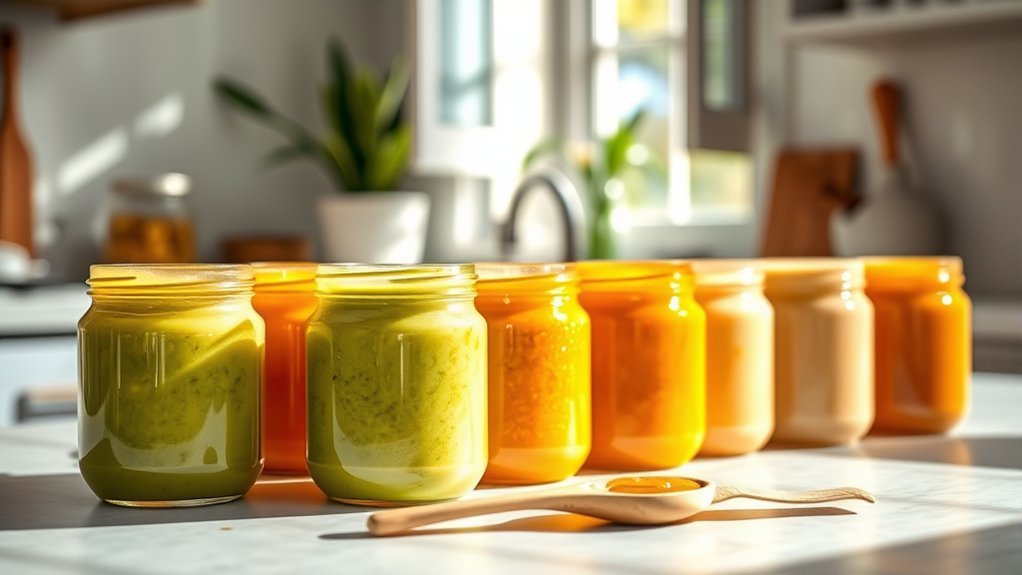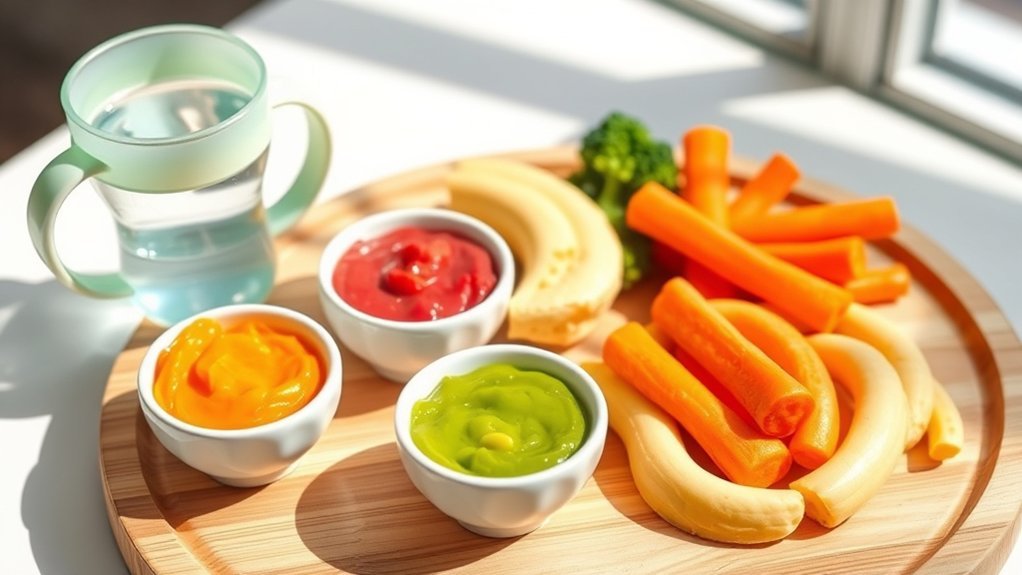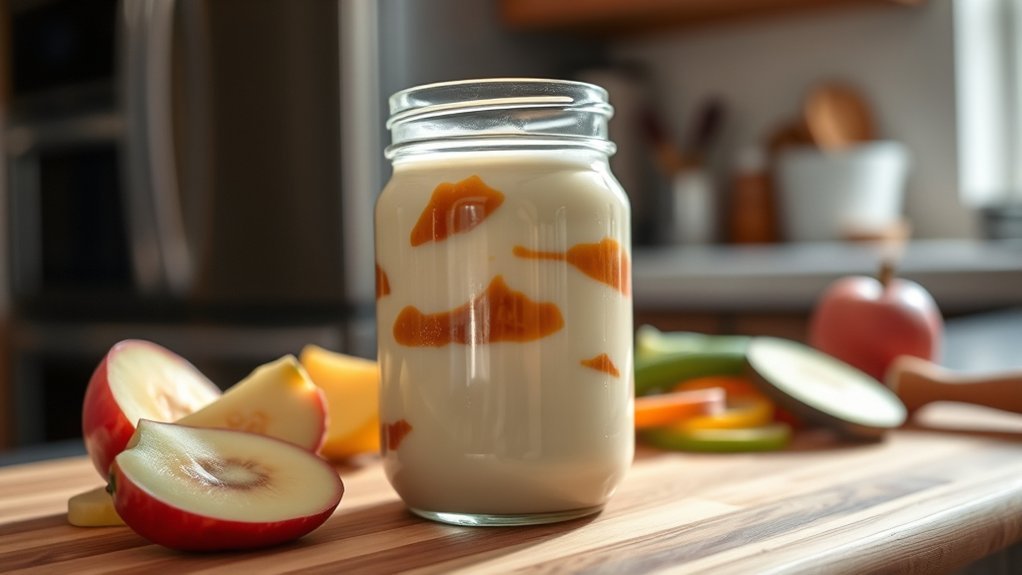
Homemade baby food often turns brown after fruit or vegetables are cut, mashed, or blended. In many cases, this is a normal color change caused by enzymes reacting with oxygen. However, brown color alone cannot tell you whether a puree is safe. Safe handling, refrigeration, storage time, and protection from saliva contamination matter more.
Quick Answer
Homemade baby food usually turns brown because damaged fruit or vegetable cells release enzymes that react with oxygen. This color change is often harmless, but it does not prove the food is safe. Check how long the puree has been stored, whether it stayed cold, and whether a used spoon touched it.
Key Takeaways
- Banana, apple, avocado, pear, potato, and similar foods can brown when their cut cells are exposed to oxygen.
- Browning by itself is usually a quality change, but color and smell cannot confirm that a puree is microbiologically safe.
- Refrigerate homemade baby food promptly and use it within one to two days, or freeze portions for later use.
- Discard food that has been left without refrigeration for more than two hours or has been touched by a spoon that was in the baby’s mouth.
- Soft, ripe raw fruit may be mashed or pureed from around 6 months when a baby is developmentally ready; hard raw pieces remain a choking hazard.
At a Glance
| Time Required | About 5 to 10 minutes for preparation and portioning |
| Difficulty | Easy |
| Tools Needed | Clean blender or masher, clean spoon, airtight container, labels, and optional freezer tray |
| Cost | Usually no extra cost beyond normal containers or freezer bags |
What Causes Browning in Homemade Baby Food?
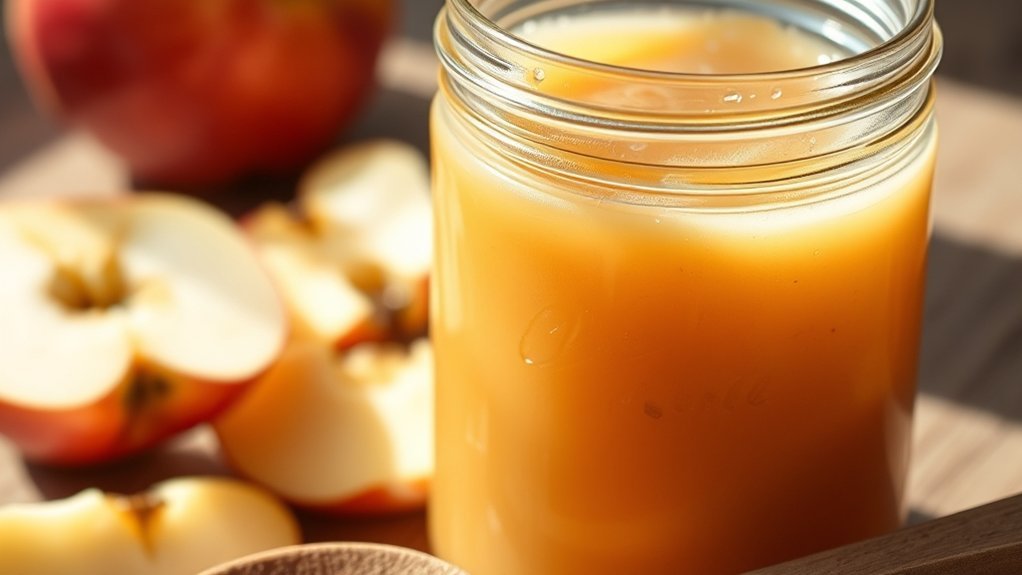
The most common cause is enzymatic browning. Fruits and vegetables contain natural enzymes, including polyphenol oxidase, or PPO. These enzymes are normally separated from other plant compounds inside intact cells.
Cutting, crushing, or blending breaks the cells open. PPO, oxygen, and naturally occurring phenolic compounds can then interact. This reaction creates darker compounds that eventually form brown pigments. A peer-reviewed review available through the National Library of Medicine describes this process as a series of reactions following the oxidation of plant phenolics.
Bananas, apples, pears, avocados, peaches, potatoes, eggplant, and mushrooms can show obvious browning. The speed and intensity vary with the food’s variety, ripeness, temperature, acidity, preparation method, and the amount of air mixed into the puree.
Browning is a visible chemical change. It is not a dependable food-safety test.
How Enzymes Contribute to Browning in Fruit Purees
Polyphenol oxidase helps speed up reactions between oxygen and phenolic compounds in damaged plant tissue. The resulting compounds join together and form brown pigments, sometimes called melanin-like pigments.
Blending can make browning appear faster than simple slicing because it damages more cells and mixes more air through the food. A smooth banana or avocado puree may therefore darken quickly, especially if it is spread in a wide container with a large exposed surface.
Several conditions affect PPO activity:
- Oxygen exposure: More contact with air generally means faster browning.
- Acidity: A lower pH can slow the enzyme’s activity.
- Temperature: Cool storage slows reactions, although refrigeration does not stop them completely.
- Heat: Cooking or blanching can inactivate many browning enzymes.
- Ripeness: Very ripe fruit is softer and may brown more rapidly after blending.
Enzymatic browning is common in both fruits and vegetables. It is inaccurate to treat fruit browning as “oxidation” and vegetable browning as a separate enzymatic process. Enzymatic browning itself is an oxidation process.
Tips to Prevent Browning in Homemade Baby Food
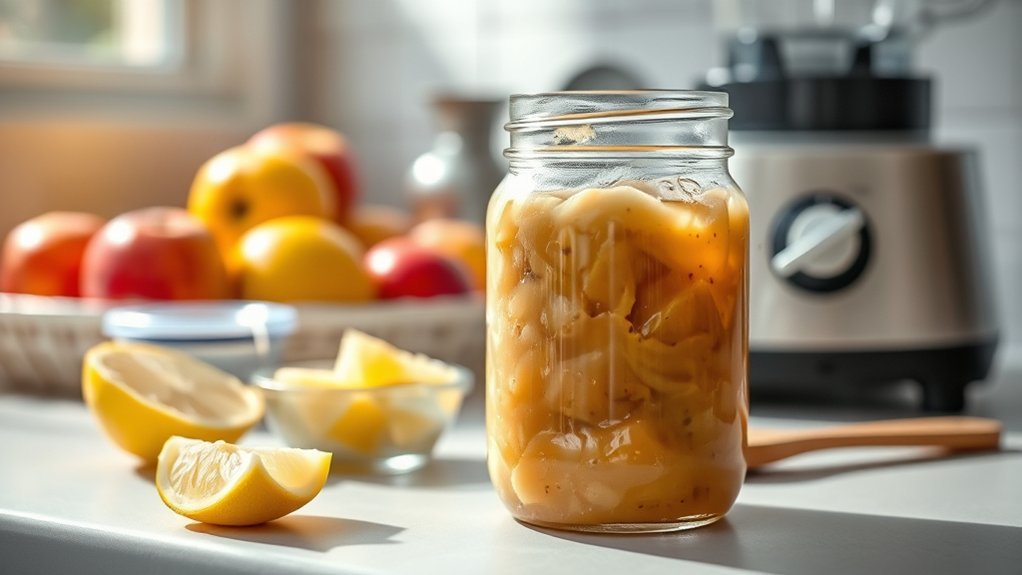
You may not be able to prevent every color change, but you can slow it by limiting air exposure and storing the puree promptly.
- Wash first. Wash your hands, produce, blender parts, containers, and utensils before preparing the food.
- Prepare only what you need. Smaller batches spend less time in storage and reduce repeated container opening.
- Blend for the shortest practical time. Excessive blending can mix more air into the puree.
- Transfer the puree immediately. Use a clean container with a tight-fitting lid instead of leaving food in the blender.
- Reduce empty space. Choose a container close to the portion size so less air remains above the food.
- Refrigerate or freeze promptly. Do not leave the finished puree sitting at room temperature.
- Label every batch. Add the food name and preparation date before refrigerating or freezing.
Pro Tip: Freeze the puree in single-meal portions. Remove only what you need, rather than thawing and handling a large container repeatedly.
Can Citrus Juice Slow Browning?
Food-preservation guidance from the University of Minnesota Extension explains that ascorbic acid and citric acid can help preserve fruit color. Lemon and orange juice contain these acids, so a small amount may slow browning.
However, acid changes appearance rather than making unsafe food safe. It can also alter the flavor of a baby’s meal. The CDC advises that children younger than 12 months should not drink fruit or vegetable juice. There is no nutritional need to add juice solely for color.
Note: If you choose to use a few drops of lemon juice as a recipe ingredient, use pasteurized juice and keep the amount small. Do not use unpasteurized fresh-squeezed juice for an infant.
Does Yogurt Prevent Browning?
Mixing banana with yogurt may make browning less noticeable by diluting the puree and reducing some surface contact with air, but yogurt is not a dependable preservation treatment. Use it as a food combination rather than an anti-browning method.
Plain, pasteurized yogurt without added sugar may be introduced before 12 months when a baby is ready for complementary foods. Because dairy is a potential allergen, introduce it in an age-appropriate way and follow your pediatrician’s guidance if your baby has severe eczema, a known food allergy, or another medical concern.
Is Vacuum Sealing Necessary?
A vacuum sealer can reduce the amount of air around food, but it does not sterilize the puree or remove every trace of oxygen. For most small batches, clean airtight containers and prompt refrigeration or freezing are simpler and sufficient. Vacuum-sealed baby food must still follow the same storage limits.
Are Browned Purees Safe for Babies?
A browned banana or apple puree may still be suitable to serve if it was prepared hygienically, refrigerated promptly, stored within the recommended time, and never contaminated by a used spoon. Browning alone is not a reason to discard it.
However, it is equally important not to assume that every brown puree is safe. Harmful bacteria may grow without producing a noticeable smell, color, or taste.
Warning: Discard homemade baby food that has been left without refrigeration for more than two hours. Also discard any portion touched by a spoon that has been in your baby’s mouth. Do not return that food to the storage container.
Nutritional Value Retention
Browning does not suddenly remove the puree’s calories, fiber, minerals, or all of its vitamins. The food does not become nutritionally empty simply because its color changes.
Still, the original claim that browning causes no nutritional change is too broad. Oxidation may reduce some vitamin C and phenolic compounds over time. Flavor, aroma, and visual quality can also decline. Prompt preparation and storage help preserve both color and quality.
| Aspect | What Browning Means |
|---|---|
| Calories, fiber, and minerals | Generally remain present |
| Vitamin C and phenolic compounds | Some loss may occur through oxidation and storage |
| Appearance | May become less appealing |
| Microbial safety | Cannot be determined from color alone |
Signs of Spoilage
Discard the puree when any of the following applies:
- It has visible mold.
- It has an unusual fermented, rotten, or sharply unpleasant odor.
- It is unexpectedly slimy, foamy, or actively bubbling.
- The container is swollen, leaking, or damaged.
- It was stored longer than the recommended limit.
- It remained unrefrigerated for more than two hours.
- A used feeding spoon was returned to the container.
- You do not know how long it has been stored or whether it remained cold.
Some water separation is normal in refrigerated or thawed fruit and vegetable purees. Stirring may restore the texture. Separation alone does not prove spoilage, just as a normal smell does not prove safety.
How Does Oxidation Change the Color of Baby Food?
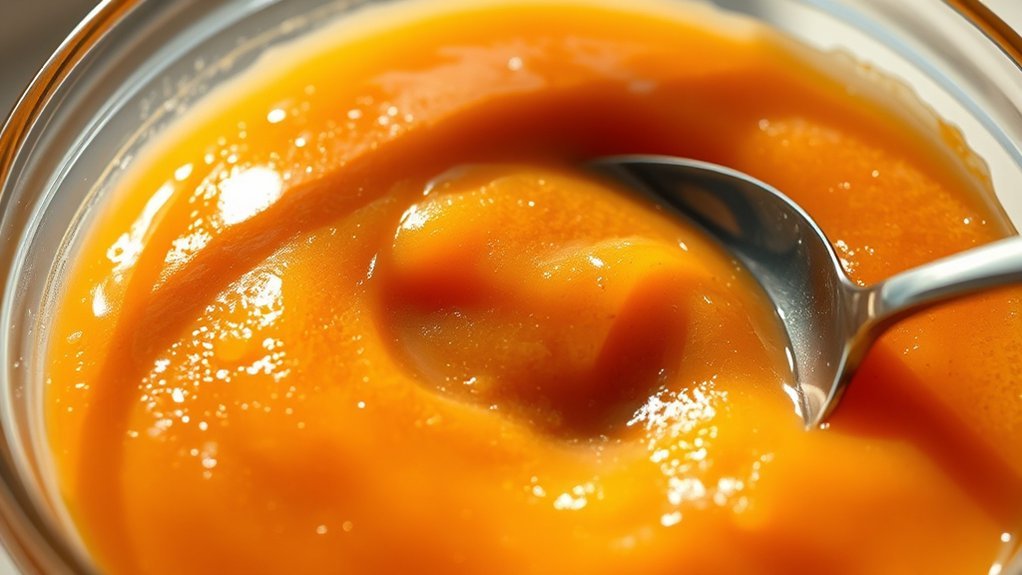
Oxidation changes the structure of naturally occurring plant compounds. As PPO acts on phenolic compounds in the presence of oxygen, the first reaction products continue reacting and form larger, darker pigments.
The color may begin at the exposed surface and then spread through the puree. A puree containing many air bubbles can darken throughout because oxygen was mixed into the food during blending.
Factors That Speed Up Oxidation
- A wide, shallow storage container
- Long blending times
- Very ripe or bruised produce
- Warm storage temperatures
- Repeated opening and stirring
- Long storage periods
- A large amount of empty space above the puree
Cold storage slows these reactions but does not stop them completely. Freezing slows changes much further, although the food may still appear darker after thawing.
Visual Changes in Puree
Fresh banana, apple, pear, or avocado puree may start with a pale cream, green, or yellow color and gradually become tan, gray-green, or brown. The exact shade depends on the food and preparation method.
Other color changes have different causes. Green vegetables can become dull after prolonged cooking, berries may shift color with changes in acidity, and mixed purees can take on the dominant color of one ingredient. Not every color change is PPO browning.
Prevention Methods for Discoloration
| Method | How It Helps | Important Limitation |
|---|---|---|
| Prompt airtight storage | Reduces continued contact with air | Does not make old or contaminated food safe |
| Immediate freezing | Greatly slows enzyme activity and bacterial growth | Freezing does not kill most bacteria or guarantee unchanged color |
| Cooking or blanching | Heat can inactivate browning enzymes | May change flavor, texture, and some heat-sensitive nutrients |
| A small amount of acid | Lower pH can slow PPO activity | Optional, changes flavor, and does not improve microbial safety |
| Quick serving | Reduces the time available for browning | Prepare only a small portion to reduce waste |
| Plain pasteurized yogurt | May dilute the visible brown color in a mixed puree | Not a reliable preservation method and introduces a dairy allergen |
Best Storage Practices for Fresh Purees
The FDA’s infant food-safety guidance recommends careful cleaning, prompt cold storage, portioning, and protection from saliva contamination.
- Cool cooked food promptly. Do not leave a large hot batch sitting on the counter for an extended period.
- Use clean, food-safe containers. Choose small containers with tight lids.
- Refrigerate at 40°F (4°C) or below. Keep food toward the back of the refrigerator rather than in the warmer door area.
- Use refrigerated homemade baby food within one to two days. When uncertain, use the shorter limit.
- Freeze extra portions promptly. Covered freezer trays can be used for initial portioning. Transfer frozen cubes to a labeled airtight freezer container or bag.
- Use frozen portions within about three months for conservative quality and safety management.
- Thaw only the amount needed. Thaw in the refrigerator or use a safe reheating method rather than leaving food on the counter.
- Stir and check temperature after heating. Microwaves can create hot spots, so transfer food to a dish, stir thoroughly, allow it to stand, and test it before feeding.
- Serve from a separate bowl. Keep the main storage container untouched by the feeding spoon.
- Discard feeding leftovers. Do not refrigerate or freeze food that has been in contact with the baby’s saliva.
Note: Freezing stops most bacterial growth but does not kill most bacteria. Clean preparation and safe handling are still necessary before and after freezing.
Alternatives to Raw Fruit Purees for Babies
Cooking fruit can soften hard textures and reduce browning-enzyme activity. Steamed or gently cooked apples, pears, peaches, and plums can be mashed or pureed to the texture your baby can safely manage.
Other options that may show less noticeable browning than banana or avocado include mango, berries, melon, and some cooked fruit combinations. No fruit puree is guaranteed to keep its original color indefinitely.
You can combine fruit with other foods your baby has already tolerated, such as:
- Plain, pasteurized yogurt without added sugar
- Iron-fortified infant cereal
- Mashed cooked oats
- Previously introduced nut butter thinned smoothly and safely
- Soft cooked vegetables
When introducing a new potential allergen, use a small, age-appropriate amount and avoid introducing several new allergens in the same mixed meal. Seek medical guidance for a baby with severe eczema, a known allergy, swallowing problems, premature birth, or another condition affecting feeding.
When to Introduce Raw Foods to Your Baby’s Diet
There is no universal recommendation to wait until 12 months before offering all raw fruit. According to the CDC, complementary foods can generally begin at about 6 months when a child shows developmental readiness.
Readiness signs include sitting with support, controlling the head and neck, bringing objects to the mouth, opening for food, and swallowing food rather than pushing it back out.
For an early eater, soft ripe banana, avocado, peach, pear, mango, or melon can be mashed or pureed without cooking. The food must be washed, peeled or pitted as needed, and prepared to a texture the baby can manage.
Hard raw fruits and vegetables are different. The CDC lists pieces of hard raw apple and similar foods as choking hazards. Cook hard fruit until soft enough to mash, or prepare it in another developmentally appropriate form.
Warning: Always seat your child upright and supervise the entire meal. Do not offer hard chunks, whole grapes or berries, round melon balls, fruit with pits, or food pieces that do not match your child’s chewing and swallowing ability.
Frequently Asked Questions
Can I freeze banana puree to prevent browning?
Freezing banana puree promptly can greatly slow browning, but it may not preserve the original color completely. Portion the puree into clean covered trays or small containers, freeze it promptly, transfer frozen portions to an airtight labeled container, and use them within about three months.
Does browning affect the nutritional content of baby food?
Browning does not remove all of the food’s nutritional value. Calories, fiber, minerals, and many nutrients remain. However, oxidation and storage can reduce some vitamin C and phenolic compounds, so prompt preparation and storage are still helpful.
How long does it take for banana puree to turn brown?
Banana puree may begin darkening within minutes, but there is no dependable five- or ten-minute rule. Ripeness, temperature, blending time, acidity, container size, and air exposure all affect the speed.
Is browning different in fruits and vegetables?
Both fruits and vegetables can undergo enzymatic browning. Apples, bananas, avocado, potatoes, eggplant, and mushrooms may all darken after their cells are damaged and PPO reacts with oxygen and plant phenolics.
Which fruits are less likely to show obvious browning?
Mango, many berries, melon, and some cooked peaches or pears often show less obvious browning than banana, avocado, or raw apple. They can still change color during storage, so the same food-safety limits apply.
How long can homemade baby food stay in the refrigerator?
FDA guidance lists homemade baby food for one to two days in a refrigerator kept at 40°F (4°C) or below. Label the preparation date and discard the food when you cannot confirm its age or storage history.
Can I refrigerate puree left in my baby’s bowl?
No. Once a spoon has been in your baby’s mouth and returned to the bowl, saliva can introduce bacteria. Discard the remaining served portion. To avoid waste, place a small amount in a separate bowl and keep the untouched food refrigerated.
Sources
- U.S. Food and Drug Administration: Once Baby Arrives — safe preparation, refrigeration, freezing, room-temperature limits, feeding-spoon contamination, and reheating guidance.
- CDC: When, What, and How to Introduce Solid Foods — readiness, complementary-food timing, textures, allergens, yogurt, and preparation.
- CDC: Choking Hazards — safe food shapes, textures, preparation, seating, and supervision.
- CDC: Foods and Drinks to Avoid or Limit — juice, unpasteurized foods, added sugar, and honey guidance.
- University of Minnesota Extension: How to Freeze Fruit Safely — browning, ascorbic acid, citric acid, blanching, containers, and fruit-puree freezing.
- National Library of Medicine: Enzymatic Browning and Polyphenol Oxidase — scientific mechanism behind PPO-driven oxidation and pigment formation.
Conclusion
Homemade baby food usually turns brown because cutting and blending expose natural plant enzymes to oxygen. That color change is often harmless, but it should never replace basic food-safety checks.
Prepare food with clean equipment, refrigerate it promptly, use refrigerated portions within one to two days, freeze extra portions, and discard anything left unrefrigerated for more than two hours or touched by a used spoon. When introducing fruit, focus on developmental readiness and a safe texture rather than waiting until a fixed age for every raw food.
When storage history is uncertain, discard the puree. A fresh portion is a safer choice than relying on its color, smell, or appearance.