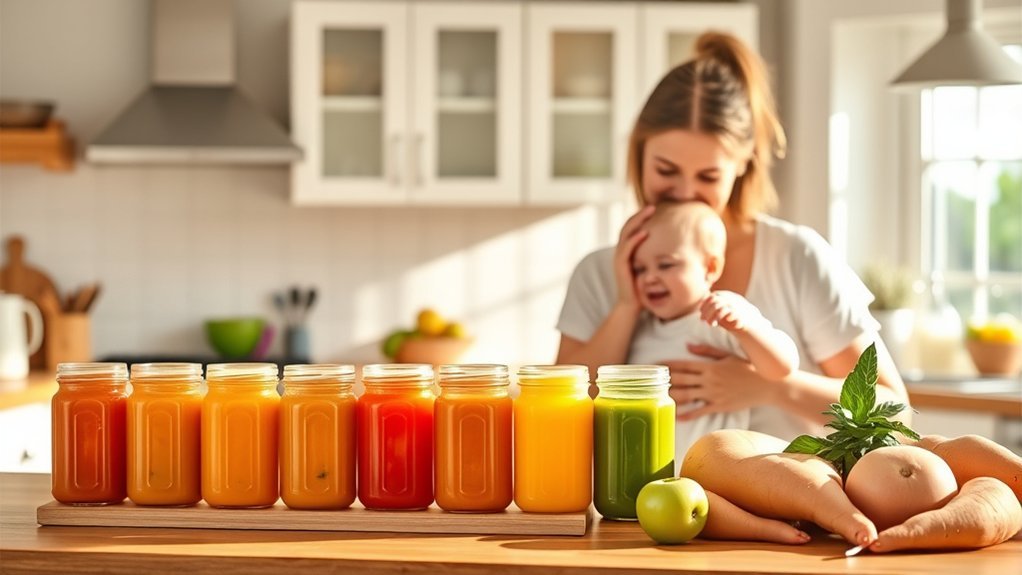
Choosing baby food is not about finding a brand that promises zero heavy metals. Arsenic, lead, cadmium, and mercury occur naturally in the environment and can enter both homemade and commercial foods. The practical goal is to reduce repeated exposure while still giving your baby a varied, nutritious, and age-appropriate diet.
Quick Answer
The safest baby-food choice is a current product with easy-to-find lot or batch test results, age-appropriate texture, useful nutrients, no unnecessary added sugar, and no active recall. Rotate grains and produce instead of relying on rice or one ingredient every day. No organic label or brand name guarantees zero heavy metals.
Key Takeaways
- The FDA’s Closer to Zero program is a government initiative, not a certification or membership that baby-food brands can earn.
- Compare individual products and lots rather than assuming every food from one brand has the same test results.
- Rotate rice with oats, barley, quinoa, wheat, corn, and other grains to reduce repeated exposure to inorganic arsenic.
- Organic certification covers farming and processing practices; it does not guarantee that a food is free of arsenic, lead, cadmium, or mercury.
- Ask your pediatrician about a blood lead test or other evaluation after a known exposure, a relevant recall, or another specific concern.
What You Need to Know About Heavy Metals in Baby Food
Arsenic, lead, cadmium, and mercury are often called heavy metals or toxic elements. They can enter crops through soil, water, and air. Additional contamination may occur during farming, processing, storage, or manufacturing. This means trace amounts may be found in commercial baby food, ordinary groceries, and ingredients used for homemade food.
Babies and young children deserve extra protection because their bodies and brains are still developing and they eat more food in relation to their body weight than adults. Reducing repeated exposure is important, but parents should not remove nutritious food groups or sharply restrict a baby’s diet without professional advice.
FDA’s finalized lead action levels for covered processed baby foods are 10 or 20 parts per billion, depending on the food category.
How Toxic Elements Enter Food
Plants can absorb elements from the ground and irrigation water. Rice tends to take up more inorganic arsenic than many other grains, while root vegetables grow in direct contact with soil. These foods can still provide important nutrients, so the safer response is variety—not a blanket ban.
The amount in a finished product may change with the growing region, crop variety, supplier, recipe, processing method, and production lot. For that reason, a current batch result is more useful than a general claim that an entire brand is always the safest.
What Current FDA Action Levels Cover
The FDA’s Closer to Zero initiative aims to lower dietary exposure over time. It is not a seal, certification, or list of approved brands.
In January 2025, FDA finalized the following lead action levels for covered processed foods intended for children under two:
- 10 parts per billion: fruits, most vegetables, mixtures, yogurts, custards, puddings, and single-ingredient meats.
- 20 parts per billion: single-ingredient root vegetables.
- 20 parts per billion: dry infant cereals.
The guidance does not cover every food a baby may eat. It excludes infant formula, beverages, and snack products such as puffs and teething biscuits. FDA also has a final 100-parts-per-billion action level for inorganic arsenic in infant rice cereal. Broader action levels for arsenic, cadmium, and mercury are still being developed.
Warning: Do not stop offering an entire nutritious food group because one test detects a trace element. Detection does not automatically mean the food presents an immediate danger. Consider the measured amount, the applicable action level, how often the food is eaten, and advice from your child’s healthcare professional.
How to Identify Safe Baby Food Brands
No single logo proves that a baby food is free of toxic elements. A stronger buying decision combines current test information, a simple ingredient list, useful nutrition, safe texture, and recall status.
Check Test Results, Certifications, and Labels
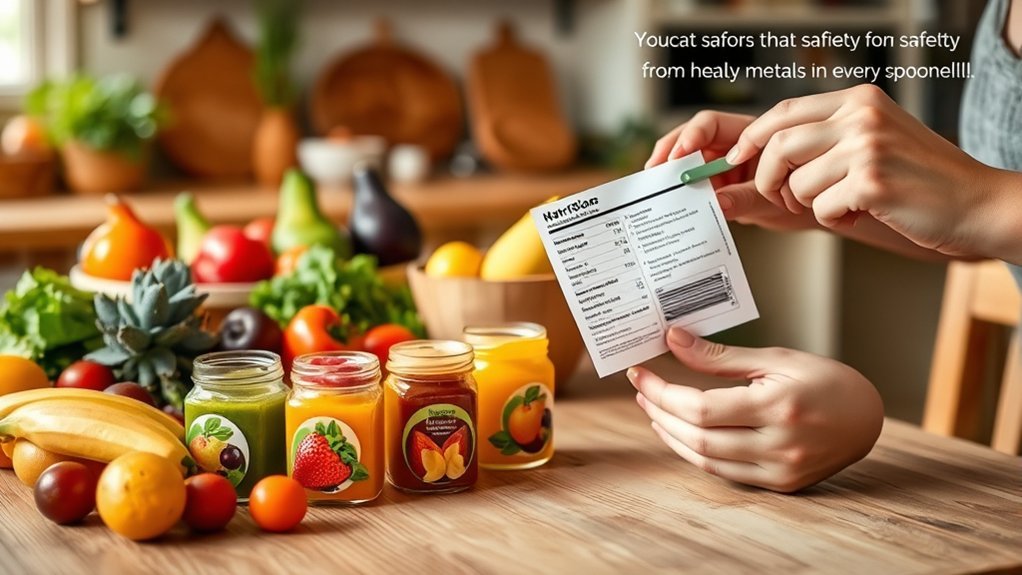
Start with the manufacturer’s toxic-element testing page. Look for results for arsenic, lead, cadmium, and mercury. The page should make it clear which product was tested and provide enough information to identify the lot, batch, UPC, or best-by date.
California’s AB 899 baby-food disclosure requirements apply to covered products sold in the state. Manufacturers must test representative final-product samples at least monthly and publish results online. Labels may include a QR code that leads to the company’s testing information.
This disclosure can help shoppers outside California too, because the results are posted on manufacturer websites. However, the law requires testing and disclosure; it does not create maximum limits for all four elements.
A USDA organic label can help families choose foods produced under organic standards, but it does not replace toxic-element testing. Organic and conventional crops can both absorb elements already present in soil and water.
Research Brand Testing Practices
A useful testing program should answer these questions:
- Is the final product tested? Ingredient testing alone may not represent the food in the package.
- Are all four toxic elements reported? Look for arsenic, lead, cadmium, and mercury rather than one selected result.
- Can you identify the product and lot? A result without a batch, date, UPC, or other identifier may be difficult to use.
- Are the units clear? Results are often listed in parts per billion, abbreviated as ppb.
- Is the reporting current? Old company-wide averages do not tell you what is in a product manufactured this month.
- Does the company explain “not detected”? That phrase should include the laboratory’s reporting or detection limit.
Be cautious with broad terms such as “clean,” “pure,” “safe,” or “tested.” These claims are less useful than an actual result tied to the product you are considering.
Examine Ingredient Transparency and Nutrition
After reviewing test results, read the ingredient and Nutrition Facts panels. Choose foods that provide a clear nutritional benefit rather than relying on sweet fruit blends for every meal.
- Rotate grain-based foods instead of serving rice cereal, rice rusks, and rice snacks throughout the day.
- Include iron-rich choices such as iron-fortified cereal, meat, beans, lentils, eggs, tofu, or other foods your baby can safely eat.
- Choose plain products without unnecessary added sugars or high sodium.
- For babies under 12 months, offer whole, mashed, or puréed fruit rather than fruit juice.
- Match the food’s texture and piece size to your baby’s current chewing and swallowing skills.
Check Recalls and Product Codes
Before using an unfamiliar product—or when you hear about a possible contamination event—check the FDA recall and safety-alert database. Compare the brand, product name, package size, lot code, UPC, and best-by date with the notice.
If your product matches a recall, stop serving it and follow the disposal or return instructions. Keep the package or photograph the identifying codes in case your pediatrician or a public-health agency needs them.
Do Organic Baby Foods Reduce Heavy Metals?
Organic baby food is not automatically lower in arsenic, lead, cadmium, or mercury. Organic certification focuses on approved farming, handling, and production practices. It does not certify that a finished product contains zero toxic elements.
An organic product may still be a good choice for other reasons, but compare it with conventional food using the same standards:
- Current final-product test results
- A clearly identified batch or lot
- Ingredient and grain variety
- Age-appropriate nutrition and texture
- No active recall affecting the package
Rice-based organic products still contain rice, and rice can absorb inorganic arsenic from the environment. Brown rice may retain more arsenic in its outer layers than polished white rice. Instead of assuming organic rice is safer, rotate among several grains.
Note: “Detected” does not mean the same thing as “above an FDA action level.” Check the number, units, food category, and applicable guidance before drawing a conclusion from a test result.
Essential Tips for Reducing Heavy Metal Exposure in Your Baby’s Diet
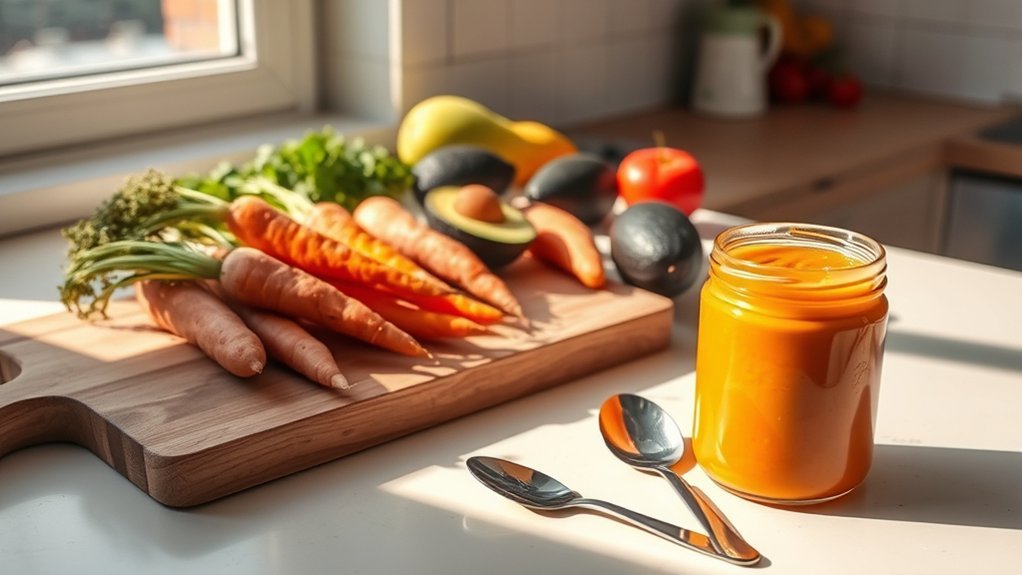
The most useful household strategy is to avoid serving the same higher-exposure ingredient several times each day. A varied diet also gives your baby a wider range of nutrients, flavors, and textures.
Prioritize a Varied Diet
Offer foods from several groups as your baby becomes developmentally ready:
- Grains: oats, barley, wheat, quinoa, corn, couscous, multigrain cereal, and rice in rotation
- Vegetables: peas, beans, broccoli, squash, cooked spinach, carrots, beets, and sweet potatoes
- Fruits: banana, pear, apple, berries, melon, avocado, peach, and orange in a safe texture
- Protein foods: meat, poultry, fish, eggs, beans, lentils, tofu, and smooth nut or seed products when safely introduced
- Dairy foods: plain pasteurized yogurt and cheese when appropriate, without replacing breast milk or infant formula during the first year
Root vegetables do not need to be banned. Wash them, peel when appropriate, cook them safely, and serve them as part of a rotation rather than making one root vegetable the base of most meals.
Limit Repeated Rice Exposure
Rice cereal does not have to be your baby’s first cereal or only grain. Iron-fortified oat, barley, wheat, or multigrain infant cereals can provide alternatives. Also check snacks, puffs, rusks, and mixed foods for rice flour, rice syrup, or rice starch.
Cooking ordinary rice in six to ten parts water and draining the excess can reduce some inorganic arsenic. The FDA reports reductions of roughly 40% to 60%, depending on the rice. However, draining can also remove nutrients from enriched rice, so this method should not replace grain variety.
Pro Tip: Review the whole day, not just one jar. A rice cereal breakfast, rice-based pouch, and rice puffs at snack time can create repeated exposure even when each product is from a different brand.
Use Water and Homemade Food Safely
Homemade baby food can contain toxic elements because the ingredients and water come from the same environment as commercial food ingredients. Making food at home gives you control over the recipe, texture, and storage, but it cannot guarantee zero heavy metals.
Wash produce under running water, use clean equipment, cook foods thoroughly when needed, refrigerate portions promptly, and discard food that has been in contact with your baby’s spoon and saliva. If you use a private well or have concerns about old plumbing or local water contamination, ask your health department or pediatrician which water tests are appropriate.
Consult Your Pediatrician When Needed
Routine well-child care is the best place to discuss your baby’s growth, iron intake, food allergies, feeding development, and possible environmental exposures. Bring the product package, lot code, test result, or recall notice when you have a specific concern.
Do not rely on symptoms alone. Chronic low-level lead exposure may cause no obvious immediate signs. A healthcare professional can decide whether a blood lead test or another evaluation is appropriate.
Best Healthy Baby Food Brands: What “Best” Should Mean
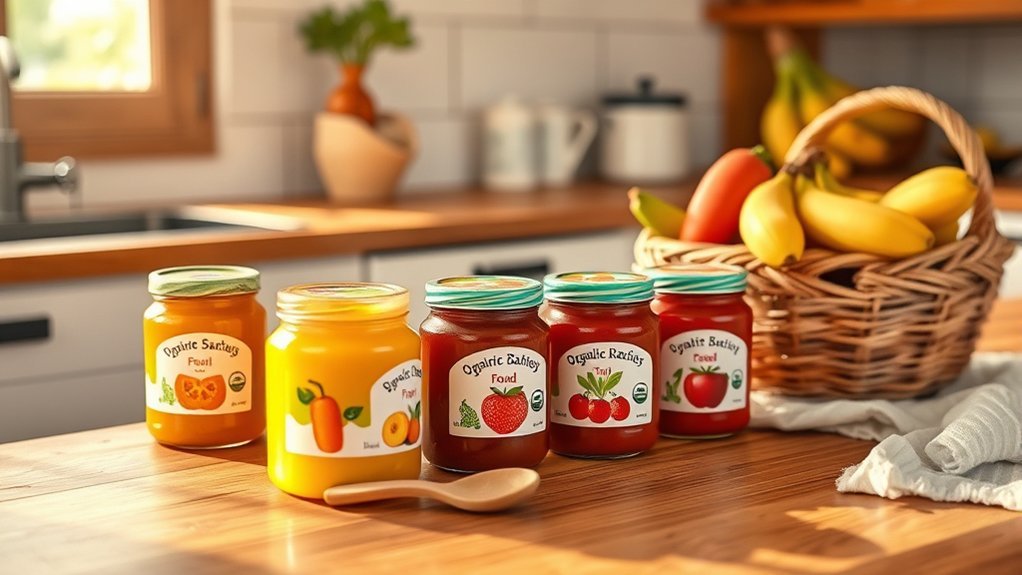
There is no permanent FDA-approved list of the safest baby food brands. Products and test results change, and one company may sell both lower- and higher-exposure recipes. The best current choice is the individual product that performs well across the factors below.
| What to Check | What a Strong Product Shows |
| Testing | Recent final-product results for arsenic, lead, cadmium, and mercury, tied to a batch or lot |
| Ingredients | A short, clear ingredient list that does not make rice or sweet fruit concentrates the base of every meal |
| Nutrition | Iron, protein, healthy fat, fiber, or another clear nutritional benefit without unnecessary added sugar |
| Feeding Safety | Texture and serving instructions that match your baby’s developmental skills |
| Recall Status | No current recall matching the product name, package, UPC, and lot code |
A company that makes results easy to find deserves credit for transparency, but disclosure alone does not prove that every product is equally low in toxic elements. Compare the actual numbers and identifiers for the package you plan to buy.
Expert Baby Feeding Recommendations
Most babies can begin solid foods at about six months when they can sit with support, control their head and neck, bring objects to their mouth, and swallow food instead of pushing it back out. Introducing solids before four months is not recommended.
- Keep milk feeds central: Breast milk or iron-fortified infant formula remains a main source of nutrition throughout the first year.
- Offer iron-rich foods: At about six months, babies need an outside source of iron. Use suitable meats, beans, lentils, eggs, tofu, or iron-fortified cereals.
- Introduce foods gradually: Start with one single-ingredient food at a time so reactions are easier to identify.
- Do not delay common allergens without a reason: Eggs, dairy foods, wheat, sesame, fish, and safely prepared peanut products can be introduced with other foods. Ask your pediatrician first if your baby has severe eczema, an egg allergy, or another high-risk condition.
- Avoid choking hazards: Do not give whole nuts, spoonfuls of thick nut butter, hard raw vegetables, whole grapes, popcorn, or other hard and round foods.
- Skip juice during the first year: Babies under 12 months should not drink fruit or vegetable juice.
- Avoid honey before 12 months: Honey can cause infant botulism.
- Use responsive feeding: Offer food when your baby is alert and hungry, stop when they show fullness, and do not force a set portion.
Medical note: This article provides general education and cannot diagnose exposure, poisoning, food allergy, or a feeding disorder. Contact your child’s healthcare professional after a known exposure, matching recall, allergic reaction, swallowing problem, or concern about growth and development.
Frequently Asked Questions
Can homemade baby food contain heavy metals?
Yes. Produce, grains, spices, meat, and water can contain naturally occurring or environmental contaminants before they enter your kitchen. Homemade food gives you control over ingredients and preparation, but it does not guarantee zero arsenic, lead, cadmium, or mercury. Use varied ingredients, safe water, clean equipment, and proper storage.
What are signs of heavy-metal exposure in infants?
There may be no obvious immediate signs, especially with chronic low-level lead exposure. Symptoms such as vomiting, poor feeding, tiredness, irritability, abdominal pain, or developmental concerns are not specific to one contaminant. After a known exposure or recall, contact your pediatrician rather than waiting for symptoms. A blood test is the standard way to assess lead exposure.
How often should I introduce a new baby food?
When solids first begin, offer one new single-ingredient food at a time and watch for a reaction before adding another. CDC guidance suggests waiting three to five days at first. Once several foods are tolerated, continue building variety. Keep tolerated allergenic foods in the diet regularly in a safe form unless your pediatrician advises otherwise.
Are there fruits or vegetables babies should avoid because of heavy metals?
Most fruits and vegetables do not need to be avoided. Cooked spinach, carrots, beets, and sweet potatoes can be part of a healthy diet when served in a safe texture. Rotate produce instead of offering one root vegetable or fruit blend every day. Babies under 12 months should receive whole, mashed, or puréed fruit rather than juice.
Can I test baby food for contaminants at home?
You cannot identify arsenic, lead, cadmium, or mercury by checking a food’s color, taste, smell, or texture. Reliable measurement requires validated laboratory equipment and methods. Use manufacturer batch disclosures, government test data, and recall notices. Ask a qualified laboratory or public-health agency for guidance if independent testing is necessary.
What should I do if my baby ate a recalled product?
Stop using the product and follow the recall instructions. Save the package or photograph the product name, UPC, lot number, and best-by date. Contact your pediatrician with the amount eaten, timing, recall reason, and any symptoms. Seek urgent medical care for severe vomiting, unusual weakness, breathing trouble, seizures, loss of consciousness, or another medical emergency.
Conclusion
Choosing safer baby food requires more than trusting an organic seal or a familiar brand name. Review current product and lot test results, compare the numbers with applicable FDA guidance, rotate grains and produce, check recalls, and keep nutrition and feeding safety in view. The goal is not a fear-driven diet or an impossible promise of zero exposure. It is a varied diet that reduces repeated exposure while supporting your baby’s growth and development.
Sources
- U.S. Food and Drug Administration — Closer to Zero — explains the federal initiative for reducing arsenic, lead, cadmium, and mercury exposure.
- FDA — Action Levels for Lead in Processed Food Intended for Babies and Young Children — provides the finalized 10-ppb and 20-ppb action levels and their scope.
- FDA — Inorganic Arsenic in Infant Rice Cereal — provides the 100-ppb action level.
- California Department of Public Health — AB 899 Frequently Asked Questions — explains monthly testing, online disclosure, and product-identification requirements.
- American Academy of Pediatrics — Heavy Metals in Baby Food — supports grain variety and practical exposure-reduction steps.
- Centers for Disease Control and Prevention — Introducing Solid Foods — supports readiness, gradual introduction, and allergen guidance.