Starting baby food is less about hitting an exact number of tablespoons and more about beginning at the right developmental stage, offering small portions, and following your baby’s hunger and fullness cues. Most babies can start solid foods at about 6 months while continuing breast milk or infant formula as their main source of nutrition through the first year.
Quick Answer
Most babies start solids at about 6 months with roughly 1 to 2 tablespoons of food at a time. Increase the amount and number of meals gradually as your baby becomes more skilled and interested. Breast milk or infant formula should remain the main source of nutrition from 6 to 12 months.
Key Takeaways
- Introduce solid foods at about 6 months when your baby shows developmental readiness; starting before 4 months is not recommended.
- Begin with about 1 to 2 tablespoons and let your baby’s hunger and fullness cues guide how much more you offer.
- Breast milk or iron-fortified infant formula remains the main source of nutrition through 12 months while solids gradually become more important.
- Prioritize nutrient-dense foods, including foods rich in iron and zinc, rather than relying only on fruit or infant cereal.
- Progress textures as your baby’s skills improve and always prepare food to reduce choking risk.
- Introduce common allergens in safe forms when solids begin unless your baby’s healthcare professional recommends a different plan.
Note: This guide provides general feeding information for healthy infants. Babies who were born prematurely, have growth concerns, swallowing problems, severe eczema, known food allergies, or other medical conditions may need an individualized feeding plan from their pediatrician or registered dietitian.
When Should I Start Feeding My Baby Solids?

Most babies are ready to begin solid foods at about 6 months. The CDC recommends introducing foods other than breast milk or infant formula at about 6 months and states that introduction before 4 months is not recommended.
Age is only part of the decision. Your baby should also show several signs of developmental readiness:
- They can sit upright alone or with support.
- They have good head and neck control.
- They open their mouth when food is offered.
- They can move food toward the back of the mouth and swallow rather than immediately pushing it out.
- They bring objects to their mouth and show interest in food.
Continue breastfeeding or offering infant formula after solids begin. From 6 to 12 months, solid foods complement milk feeds rather than immediately replacing them.
For the first months of complementary feeding, think “practice plus nutrition,” not “finish the bowl.” Start small and let your baby show you when they want more.

Power your essentials anywhere with a 999Wh pure sine wave power station delivering up to 1000W continuous with 2000W surge. It supports fast charging via USB-C PD 60W and USB-A QC 18W, plus simultaneous output for multiple devices through AC, USB, wireless, and car/DC ports. Recharge using AC, car, or solar with a built-in MPPT controller and dual cooling fans, while the upgraded battery management system protects against surges, short circuits, and overheating.

Precise Single-Serving Design — Makes 1 oz (4.35g of formula) or 2 oz (8.7g of formula) servings with accuracy, reducing wasted formula and making feeding simpler.

Package Include: you will get 6 pieces different colors of portion control serving spoons, yellow, red, beige, green, black, dark blue, including 2 slotted spoons(1oz, 3oz) and 4 unslotted spoons(2oz, 4oz, 6oz, 8oz-1/4 Cup, 1/2 Cup, 3/4 Cup, 1 Cup), which is sufficient to meet your daily replacement needs
What Are the Recommended Portion Sizes for Baby Food?
There is no single number of tablespoons that every baby should eat at a specific age. Appetite, milk intake, growth and feeding skills vary from baby to baby.
The CDC recommends starting with 1 to 2 tablespoons of food and watching for signs that your baby wants more or has had enough.
When Your Baby Is Just Starting Solids
At about 6 months, offer approximately 1 to 2 tablespoons of one or more soft foods during a feeding opportunity. Your baby may initially eat only a taste or a few spoonfuls. That is normal.
You can gradually offer more when your baby:
- Leans toward or reaches for the food.
- Opens their mouth for another spoonful.
- Finishes the initial serving and remains interested.
- Handles the texture comfortably.
Pro Tip: Put a small amount on the plate or in the bowl first. You can always serve more. Small first servings reduce waste and make it easier to follow your baby’s appetite instead of encouraging them to finish a predetermined portion.
As Your Baby Becomes an Established Eater
During the second half of the first year, portions often become larger and meals become more varied. The American Academy of Pediatrics provides examples for 8- to 12-month-olds that commonly use roughly 2 to 4 ounces of individual foods, depending on the food and meal. These are examples, not required amounts.
A baby’s intake can vary considerably from one meal or day to the next. Continue offering balanced choices without pressuring your baby to empty the bowl or plate.
How to Balance Baby Food With Breastfeeding or Bottle-Feeding?

From about 6 through 12 months, breast milk or infant formula continues to provide most of your baby’s nutrition, while solid foods gradually supply a larger share of calories and important nutrients.
You do not need to force every feeding into a rigid milk-versus-solids formula. Follow your baby’s normal milk-feeding pattern while creating regular opportunities to practice eating solid foods.
Timing of Feeding Solids
When you first introduce solids, one feeding opportunity a day may be enough. As your baby’s interest and skills grow, you can move toward two meals and eventually a more regular meal-and-snack pattern.
Choose a time when your baby is:
- Awake and alert.
- Sitting safely upright.
- Interested in food.
- Not extremely hungry, tired or upset.
There is no rule that solids must always come before or after a milk feed. However, if your baby begins losing interest in breastfeeding because of solids, the CDC suggests trying the breastfeed before offering other foods.
Portion Sizes for Balance
Rather than trying to hit a fixed daily ounce target for every baby, use milk feeds and solid foods together:
- Breastfed babies: Continue breastfeeding according to hunger cues. Because you usually cannot measure breast milk directly, feeding frequency, growth and your baby’s behavior are more useful than trying to assign an ounce target.
- Formula-fed babies: Continue offering infant formula according to hunger cues and your pediatrician’s guidance. As solid intake increases later in infancy, formula intake often decreases gradually.
- Combination-fed babies: Continue the breast milk/formula pattern that supports your baby’s growth while increasing solids gradually.
Do not replace breast milk or infant formula with cow’s milk as a drink before 12 months.
Observing Baby’s Cues
Your baby is the best guide to how much they need at a particular meal. Offer an appropriate amount, then watch what happens.
If your baby reaches for food, opens their mouth or becomes excited when food appears, they may still be hungry. If they close their mouth, turn away or push food away, stop offering more.
Responsive feeding helps your baby learn to recognize hunger and fullness without pressure to finish a specific serving.
What Is a Sample Feeding Schedule for New Parents?
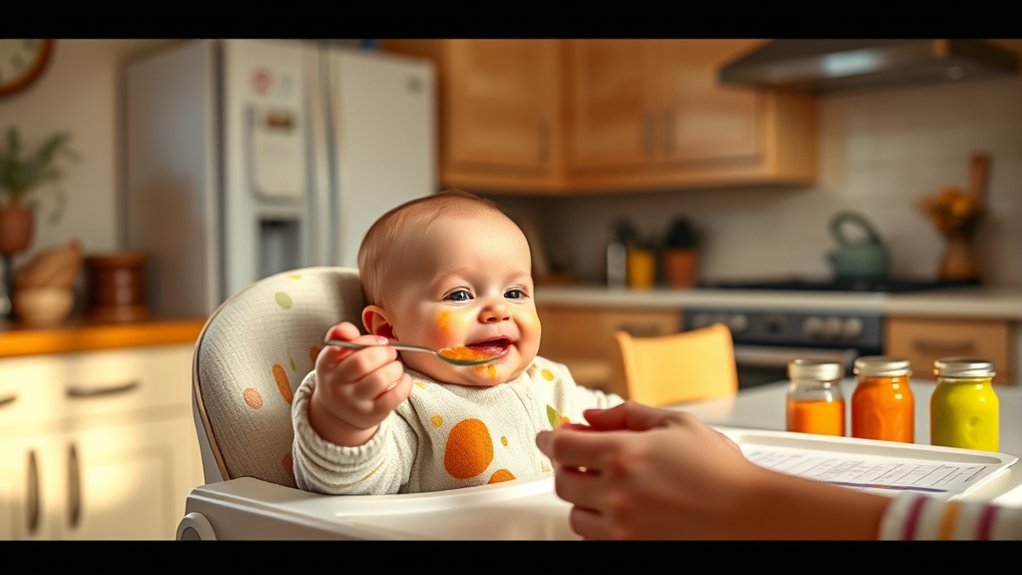
A feeding schedule should provide structure without ignoring your baby’s appetite. The exact number and timing of milk feeds will differ for breastfed, formula-fed and combination-fed babies.
Example Schedule When Solids Are New
- Morning: Breast milk or infant formula.
- Later morning or lunchtime: Milk feed plus a small solid-food opportunity, starting with about 1 to 2 tablespoons.
- Afternoon: Breast milk or infant formula according to hunger cues.
- Evening: Breast milk or infant formula.
- Additional feeds: Continue according to your baby’s usual hunger cues.
This stage is mainly about building eating skills, experiencing flavors and textures, and introducing nutrient-dense foods.
Example Schedule for an Established 8- to 12-Month Eater
- Breakfast: Breast milk or formula plus an iron-rich food and fruit or vegetable.
- Morning snack: Milk and/or a developmentally appropriate solid snack, depending on appetite.
- Lunch: Protein-rich food, vegetable or fruit, and another suitable food from the family meal.
- Afternoon: Breast milk or formula and, when needed, a snack.
- Dinner: A varied meal with a protein source, vegetable or fruit, and a suitable grain or starchy food.
- Before bed: Breast milk or formula according to your baby’s normal routine.
The goal is not to force your baby onto an adult schedule. Gradually build predictable meals while continuing to respond to hunger and fullness.
How to Recognize My Baby’s Hunger and Fullness Cues?
Responsive feeding means deciding what and when to offer while allowing your baby to communicate whether they want to eat and how much.
The CDC recommends watching your child’s hunger and fullness signals rather than requiring a particular amount at every meal.
Signs Of Hunger
Once babies are eating solids, hunger signs may include:
- Reaching or pointing toward food: Your baby shows active interest in what is being served.
- Opening their mouth: They willingly open for a spoon or piece of food.
- Getting excited when food appears: Movement, sounds or facial expressions may show interest.
- Asking for more through gestures or sounds: Older babies may make their desire for another bite very clear.
For milk feeds, younger babies may put their hands to their mouth, turn toward the breast or bottle, or smack their lips. Crying is often a later hunger signal.
Signs Of Fullness
Stop or pause feeding when your baby:
- Turns their head away.
- Closes their mouth when food is offered.
- Pushes the spoon or food away.
- Loses interest in the meal.
- Uses sounds or gestures indicating they are finished.
A baby’s appetite can vary from day to day. A smaller meal does not automatically mean something is wrong if your baby is otherwise feeding normally and growing well.
Responsive Feeding Techniques
- Offer without pressure: Place suitable food in front of your baby or offer it by spoon.
- Wait for a response: Give your baby time to open their mouth, reach or otherwise show interest.
- Pause when they turn away: Do not repeatedly chase their mouth with the spoon.
- Offer more when requested: Small first portions make this easy.
- End the meal when they are finished: Babies do not need to clean the plate.
What Foods Should I Introduce First to My Baby?
There is no required order for first foods. Once your baby is developmentally ready, choose soft, nutrient-dense foods that are easy to swallow.
Foods rich in iron and zinc are especially useful during the second half of infancy. Good options include:
- Iron-fortified infant cereal.
- Soft or pureed meat and poultry.
- Well-cooked eggs.
- Mashed beans and lentils.
- Soft, low-mercury fish with all bones carefully removed.
- Plain pasteurized yogurt.
- Tofu.
- Soft cooked vegetables.
- Mashed avocado.
- Soft fruits such as banana, pear or peach.
Infant cereal can be useful, but rice cereal does not have to be your baby’s first cereal or the only cereal you use. The FDA recommends varying grains; oat, barley and multigrain infant cereals can help avoid relying exclusively on rice, which tends to contain more inorganic arsenic than many other grains.
When you are first introducing foods, the CDC recommends trying one single-ingredient food at a time and waiting about 3 to 5 days before another new food. This can make it easier to recognize a reaction.
How to Introduce Allergenic Foods Safely
Common allergens such as peanut, egg, dairy, wheat, soy, sesame, fish and shellfish generally do not need to be delayed once your baby is ready for complementary foods.
Use developmentally safe forms. For example:
- Thin smooth peanut butter with warm water, breast milk, prepared formula or puree rather than offering a spoonful of thick peanut butter.
- Offer egg fully cooked and mashed or in another soft form.
- Choose plain pasteurized yogurt rather than cow’s milk as a beverage.
- Cook fish thoroughly, remove bones and prepare it in a soft texture.
The American Academy of Pediatrics advises special planning for babies at high risk of peanut allergy, particularly those with severe eczema or egg allergy. Their pediatrician may recommend evaluation and an earlier peanut-introduction plan.
Warning: Stop feeding a suspected allergen and seek medical advice if your baby develops hives, facial swelling, vomiting or another concerning reaction. Trouble breathing, wheezing, sudden difficulty swallowing or another severe reaction is a medical emergency; call 911.
After an allergenic food is introduced and tolerated, continue including it in your baby’s diet in appropriate forms rather than introducing it once and then avoiding it for months.
How to Progress Textures and Reduce Choking Risk
Babies need opportunities to learn how to handle different textures. The CDC recommends beginning with textures that match your baby’s eating skills and gradually progressing as those skills improve.
- Starting solids: Smooth mashed, pureed or strained foods may be easiest.
- As skills improve: Move toward thicker mashed and lumpy foods.
- Later in infancy: Offer finely chopped, ground and soft finger foods when developmentally appropriate.
Coughing, gagging or spitting food out can occur while babies are learning to manage new textures. Choking is different and can block the airway.
To reduce choking risk, follow the CDC’s choking-prevention guidance:
- Seat your baby upright in a high chair or another safe feeding seat.
- Supervise eating continuously.
- Keep meals calm and avoid feeding while your child is crawling, walking, riding in a stroller or sitting in a moving car.
- Cook hard fruits and vegetables until soft.
- Cut round foods into safer shapes and sizes.
- Remove bones, pits, seeds, tough skin and other hard pieces.
- Avoid whole nuts and seeds.
- Do not offer thick spoonfuls or chunks of nut butter.
- Avoid popcorn, hard candy, whole grapes and other hard, round or sticky foods that can obstruct the airway.
Parents and regular caregivers should know age-appropriate choking first aid. If your baby is choking and cannot breathe normally, treat it as an emergency.
What Foods and Drinks Should Babies Avoid?
Several foods and drinks need special attention during the first year.
Honey Before 12 Months
Do not give honey to a baby younger than 12 months, including honey mixed into food or drinks. Honey can contain spores that cause infant botulism.
Cow’s Milk as a Beverage Before 12 Months
Do not replace breast milk or infant formula with cow’s milk as a drink before your baby’s first birthday. Pasteurized dairy foods such as plain yogurt and cheese can be introduced earlier in developmentally appropriate forms.
Juice Before 12 Months
The CDC recommends no fruit or vegetable juice before 12 months. Whole fruit offers more nutritional value for most babies.
Unpasteurized Foods and Drinks
Avoid raw or unpasteurized milk, yogurt, cheese and juice because they can contain harmful bacteria.
Added Sugars and Very Salty Foods
Babies have small appetites and high nutrient needs, so use those eating opportunities for nutrient-dense foods rather than foods with added sugars or large amounts of sodium.
What About Water?
Once complementary foods begin, babies between 6 and 12 months can be offered small amounts of plain water. CDC guidance allows roughly 4 to 8 ounces of water per day during this stage. Breast milk or formula should remain the primary drink.
How to Encourage My Baby to Develop Healthy Eating Habits?
Your baby’s early meals are a chance to learn eating skills and become familiar with many flavors, textures and family foods.
- Sit Together: Include your baby in family meals when possible. Watching other people eat helps model mealtime behavior.
- Offer Variety: Rotate vegetables, fruits, proteins, grains and other nutrient-dense foods rather than relying on a small set of sweet purees.
- Use Responsive Feeding: Decide what suitable foods to offer, then let your baby’s hunger and fullness cues determine how much they eat.
- Progress Textures: Move beyond perfectly smooth purees as your baby’s oral skills develop.
- Encourage Self-Feeding: When developmentally ready, offer safe finger foods and allow your baby to practice holding a spoon or cup.
- Avoid Food Pressure: Do not force another bite or use food as a reward for finishing something else.
What Should I Do If My Baby Refuses Solid Foods?
Food refusal is common when babies are learning new tastes and textures. One rejection does not mean your baby permanently dislikes the food.
The CDC notes that some young children may need 8 to 10 exposures before they are willing to try a new food.
If your baby refuses something:
- Stay calm and end the attempt if they clearly signal that they are finished.
- Offer the food again on another day.
- Serve a small amount alongside something familiar.
- Experiment with a different safe texture or preparation.
- Eat the food yourself so your baby can watch you.
- Avoid forcing food into your baby’s mouth.
Timing can also matter. A baby who is exhausted or extremely hungry may be less interested in practicing a new eating skill. Try again when they are calm and alert.
When to Talk With Your Pediatrician
Contact your baby’s healthcare professional if feeding problems are persistent or you notice concerns such as:
- Repeated coughing or choking during meals.
- Difficulty swallowing.
- Frequent vomiting associated with eating.
- Consistent refusal of appropriate solids well after they have been introduced.
- Very limited progress with textures.
- Concerns about weight gain or growth.
- Possible food-allergy symptoms.
Feeding difficulties can have many causes, so persistent problems deserve individualized assessment rather than simply increasing portion size.
Frequently Asked Questions
Can I Mix Baby Food With Breast Milk or Formula?
Yes. Breast milk or correctly prepared infant formula can be mixed with infant cereal, mashed foods or purees to create a thinner, familiar texture. Follow the formula manufacturer’s mixing directions before using prepared formula in food. Do not put infant cereal or other solid foods into a bottle unless your baby’s healthcare professional has specifically instructed you to do so, because doing so can increase choking risk.
How Do I Store Leftover Baby Food Safely?
According to FoodSafety.gov, homemade baby food generally keeps for 1 to 2 days in the refrigerator and about 1 to 2 months in the freezer. Opened strained fruits and vegetables may keep 2 to 3 days refrigerated, while strained meats and eggs should generally be used within 1 day. Refrigerate perishable food promptly and discard anything that smells, looks or has been stored unsafely.
When Can I Introduce Allergenic Foods to My Baby?
For most babies, common allergens can be introduced in developmentally safe forms when complementary foods begin at about 6 months. Babies with severe eczema, egg allergy or another reason for increased peanut-allergy risk should have an individualized plan from their pediatrician before peanut introduction.
What Signs Indicate My Baby Is Ready for More Meals?
Your baby may be ready for additional solid-food opportunities when they consistently show interest in food, handle their current textures comfortably, open their mouth for food, reach for more and remain hungry after the small portions you initially offer. Increase meal frequency gradually while continuing breast milk or formula.
Should I Use Organic Baby Food, or Is Regular Fine?
Both conventional and USDA-certified organic foods can fit into a healthy infant diet. “Organic” describes how agricultural products are produced and certified; it does not mean a food is automatically more nutritious or completely pesticide-free. Prioritize variety, nutrient density, safe preparation and foods that fit your family’s budget. Wash fresh fruits and vegetables thoroughly under running water.
How Much Water Can a 6- to 12-Month-Old Drink?
Once solids begin, the CDC says babies from 6 to 12 months can be offered about 4 to 8 ounces of plain water per day. Breast milk or infant formula should still be the main drink during the first year.
Is It Normal for a Baby to Gag on New Textures?
Some coughing, gagging or spitting food out can happen while a baby learns to manage new textures. Slow down and make sure the texture matches your baby’s feeding skills. Choking is different because food blocks the airway. Always supervise meals and learn infant choking first aid.
Conclusion
Feeding baby food does not require perfect portion calculations. Start solids at about 6 months when your baby is developmentally ready, begin with small servings, and let hunger and fullness cues determine how much they eat. Continue breast milk or infant formula as the main nutrition source through the first year while gradually increasing the variety, texture and frequency of solid foods.
Focus on nutrient-dense choices, especially foods rich in iron and zinc, introduce allergens safely, vary grains, and prepare every food with choking prevention in mind. Some days your baby will eat more and other days less. That variation is normal. What matters most is steady development, safe feeding and a responsive approach that helps your baby learn to enjoy a wide range of foods.
Sources
- Dietary Guidelines for Americans, 2025–2030 — HHS/USDA — current federal nutrition guidance.
- CDC: When, What, and How to Introduce Solid Foods — starting age, readiness, allergens and food preparation.
- CDC: How Much and How Often to Feed — starting portions, feeding frequency and responsive feeding.
- CDC: Choking Hazards — safe food preparation, positioning, supervision and choking hazards.
- American Academy of Pediatrics: Introducing Common Food Allergens — allergen timing, peanut guidance and safe introduction.
- FoodSafety.gov: Children Under Five — baby-food storage, preparation and food-safety guidance.