
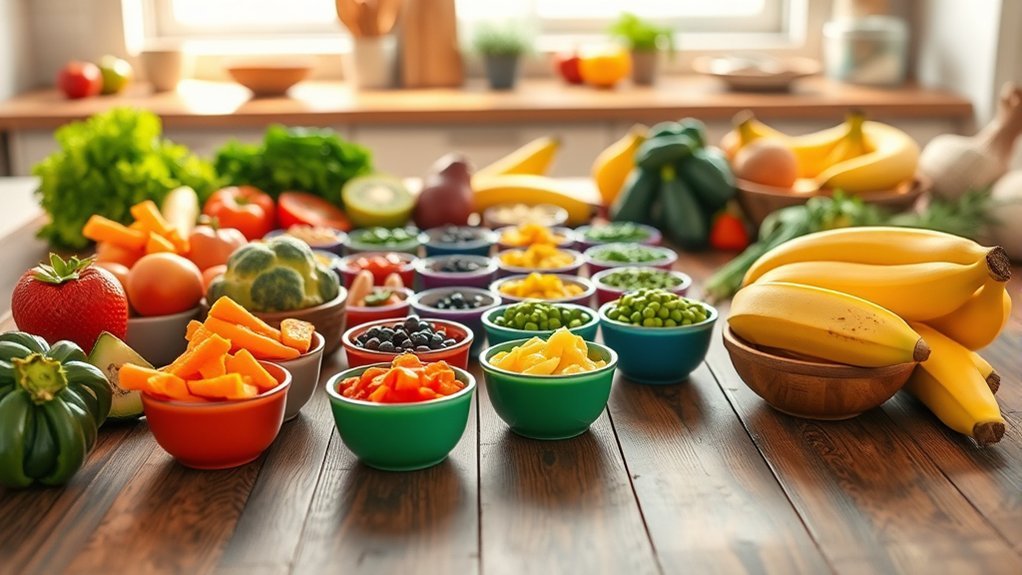
Starting solids is a gradual process, not a race to replace breast milk or infant formula. Most babies are ready at about 6 months when they can sit upright with support, control their head and neck, bring objects to their mouth, and swallow food instead of pushing it out. Begin with small amounts, safe textures, and plenty of patience.
Quick Answer
Most babies can start solid foods at about 6 months when they show clear developmental readiness. Offer one or two small spoonfuls or a few soft finger-food pieces, include iron-rich foods, continue breast milk or infant formula, introduce allergens in safe forms, and increase texture based on the baby’s skills rather than age alone.
Key Takeaways
- Begin solids at about 6 months when your baby can sit upright with support, control their head, reach for objects, and swallow food.
- There is no required first food or feeding method. Purees, mashed foods, and safely prepared soft finger foods can all work.
- Offer an iron-rich food regularly, such as iron-fortified infant cereal, finely prepared meat, beans, lentils, or tofu.
- Introduce common allergens at about 6 months in age-safe forms unless your baby’s clinician recommends a different plan.
- Always seat your baby upright, supervise every bite, and avoid hard, round, sticky, or poorly cut foods.
- Breast milk or iron-fortified infant formula remains the main source of nutrition through the first year while solid-food skills develop.
At a Glance
| Time Required | About 10–20 minutes for an early meal, following your baby’s cues |
| Difficulty | Moderate; preparation and close supervision are essential |
| Tools Needed | Upright high chair, bib, infant spoon or safe finger foods, open or straw cup, and clean preparation tools |
| Cost | Varies; many soft family foods can be adapted without buying special baby food |
Medical note: This guide provides general education and does not replace care from your pediatrician or feeding specialist. Ask for individualized guidance if your baby was born prematurely, has poor growth, severe eczema, a known food allergy, low muscle tone, developmental delays, or trouble chewing or swallowing.
Understanding When to Start Solids: Key Signs of Readiness
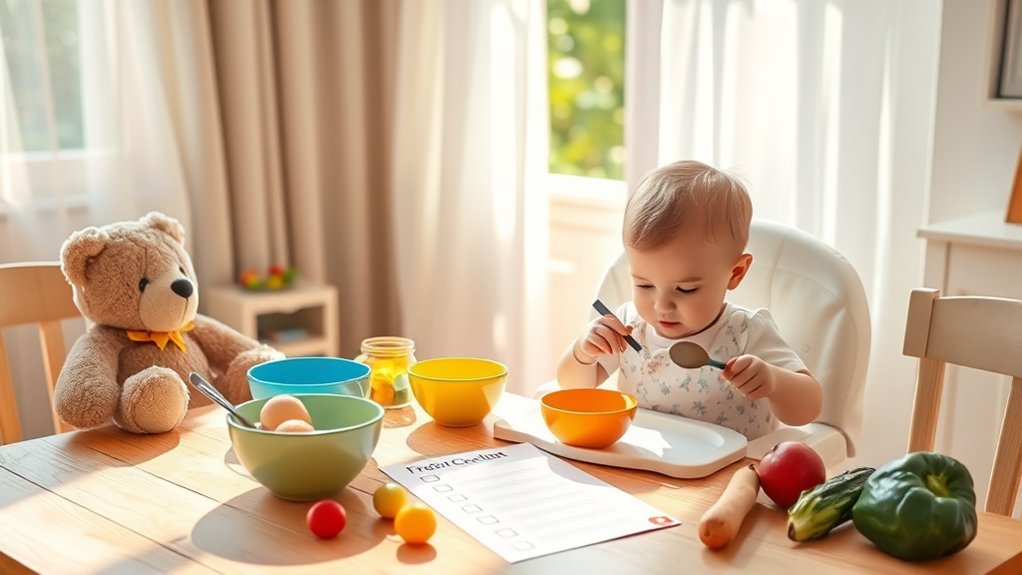
The Centers for Disease Control and Prevention recommends beginning foods other than breast milk or infant formula at about 6 months. Introducing solids before 4 months is not recommended.
Age is only one part of the decision. Look for several readiness signs together:
- Your baby can sit upright alone or with support and remain stable in a high chair.
- Your baby has steady head and neck control.
- Your baby opens their mouth when food is offered.
- Your baby brings toys, hands, or other objects to their mouth.
- Your baby tries to grasp small objects or food.
- Your baby can move food toward the back of the mouth and swallow it.
- Your baby no longer pushes nearly every spoonful back out with their tongue.
Watching adults eat or reaching toward a plate can show interest, but interest alone does not prove that a baby has the motor skills needed to eat safely.
Pro Tip: Choose a time when your baby is awake, calm, and not extremely hungry. A baby who is tired or desperate for milk may have little patience for learning a new skill.

Power your essentials anywhere with a 999Wh pure sine wave power station delivering up to 1000W continuous with 2000W surge. It supports fast charging via USB-C PD 60W and USB-A QC 18W, plus simultaneous output for multiple devices through AC, USB, wireless, and car/DC ports. Recharge using AC, car, or solar with a built-in MPPT controller and dual cooling fans, while the upgraded battery management system protects against surges, short circuits, and overheating.

4 Versatile Modes for Growing Needs: This multi-functional high chair seamlessly converts into a full-size high chair, a comfortable toddler chair, a kid-sized table, and a supportive booster seat—ideal for babies starting solids (6 months+) up to active toddlers
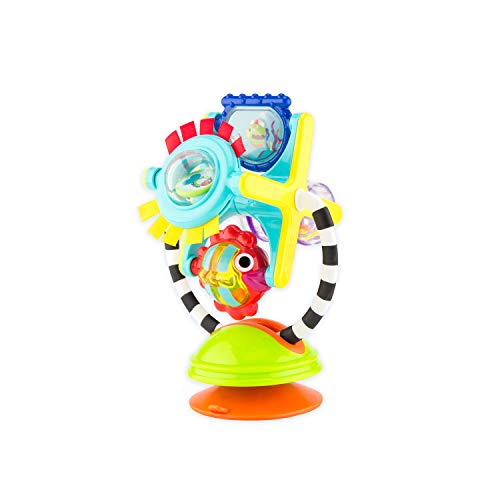
2-in-1 toy; use suctioned to a table or high chair tray, or remove base for floor play
Age-Specific Guidelines for Introducing Solid Foods
Feeding development follows a broad sequence, but babies do not all progress on the same date. Adjust food texture to your baby’s sitting stability, hand control, chewing movements, and ability to move food safely through the mouth.
| Approximate Stage | Feeding Focus | Examples |
|---|---|---|
| Around 6 months | Learning to sit, reach, close the lips around food, and swallow | Smooth or mashed food, preloaded spoon, or large soft pieces that can be grasped safely |
| About 7–8 months | Expanding food groups and moving beyond only smooth textures | Mashed beans, minced meat, lumpy vegetables, soft fruit, yogurt, egg, oatmeal, and tofu |
| About 9–12 months | Pincer grasp, self-feeding, cup practice, and soft family foods | Finely chopped pasta, shredded chicken, ripe fruit pieces, cooked vegetables, soft toast strips, and beans |
| 12 months and older | Joining regular family meals with safe modifications | Chopped family foods, spoon and fork practice, and whole milk when medically appropriate |
Breast milk or iron-fortified infant formula should remain the main source of nutrition through 12 months. There is no single milk-volume target that fits every breastfed, formula-fed, or combination-fed baby. Follow your baby’s hunger and fullness cues and review growth or intake concerns with their clinician.
How to Start Solid Foods Step by Step
- Confirm readiness. Make sure your baby is about 6 months old and shows several developmental signs.
- Use an upright seat. Secure your baby in a stable high chair with the head centered and the body upright.
- Choose one simple food. Start with a soft, nutrient-dense food that is easy to identify if a reaction occurs.
- Offer a small amount. Begin with a few small spoonfuls, about 1–2 tablespoons, or a few safely prepared finger-food pieces. Eating very little at first is normal.
- Let your baby participate. Allow them to touch the food, hold a preloaded spoon, or bring soft food to their mouth.
- Watch feeding cues. Pause or stop if your baby turns away, closes their mouth, arches, cries, pushes food away, or loses interest.
- Keep milk feeds in place. Solids complement breast milk or formula; they do not replace it suddenly.
- Build variety gradually. Add foods from different groups and increase texture as your baby gains skill.
Note: Never put infant cereal or other solid food in a bottle unless your baby’s clinician has prescribed that method for a specific medical reason.
Recommended First Foods and Textures for Each Age
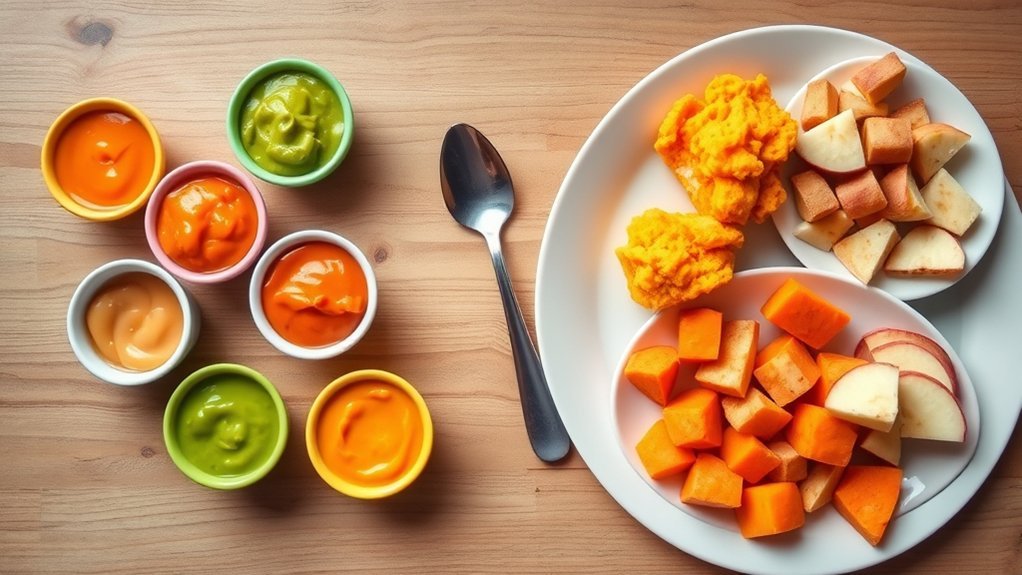
There is no required order for first foods. Fruit does not need to come before vegetables, and infant cereal does not have to be the first meal. Aim for variety and include iron- and zinc-rich choices from the beginning.
Iron-Rich First Foods
- Iron-fortified oat, barley, or multigrain infant cereal
- Finely pureed, mashed, minced, or shredded meat and poultry
- Mashed beans, peas, chickpeas, and lentils
- Mashed or soft tofu
- Well-cooked egg
- Low-mercury fish prepared without bones
If you serve infant cereal, rotate oat, barley, and multigrain varieties rather than relying only on rice cereal. The CDC notes that feeding only rice cereal can increase arsenic exposure.
Fruit, Vegetable, Grain, and Dairy Options
- Mashed avocado, banana, pear, peach, or cooked apple
- Soft sweet potato, squash, broccoli, carrots, peas, or green beans
- Plain full-fat yogurt without added sugar
- Soft pasteurized cheese in a safe shape and texture
- Oatmeal, quinoa, soft pasta, or well-cooked grains
Yogurt and cheese can be introduced before 12 months, but cow’s milk should not replace breast milk or formula as the main drink before the first birthday.
Progressing Textures and Flavors: Tips for Success
Babies can begin with smooth food, mashed food, or appropriately prepared finger foods. A puree-only stage is not required. The goal is to increase texture gradually while keeping food soft enough for the baby’s current skills.
| Age Range | Texture Type | Example Foods |
|---|---|---|
| Around 6–8 months | Smooth, mashed, lumpy, or very soft graspable pieces | Mashed banana, oatmeal, soft broccoli florets, mashed lentils, yogurt |
| About 8–9 months | Thicker mash, minced food, and soft chunks | Minced chicken, mashed beans, soft carrot, ripe pear, scrambled egg |
| About 9–12 months | Soft bite-sized foods and chopped family meals | Avocado pieces, finely chopped pasta, shredded meat, soft toast, tofu |
| 12 months and older | Modified family foods | Chopped pasta, soft casseroles, scrambled eggs, tender vegetables |
Use the “squish test” for many early finger foods: the food should flatten easily between your thumb and forefinger. This test is helpful but does not replace correct shape, size, seating, and supervision.
Repeated, pressure-free exposure can help babies become familiar with new foods. A baby may touch, smell, lick, mouth, or reject a food several times before eating it comfortably. Avoid forcing bites or using dessert as a reward.
Learning to eat includes touching, dropping, gagging, spitting out, and trying again. Progress is measured by growing skill and comfort, not by finishing a set portion.
Understanding Iron Needs and Nutritional Requirements for Each Age
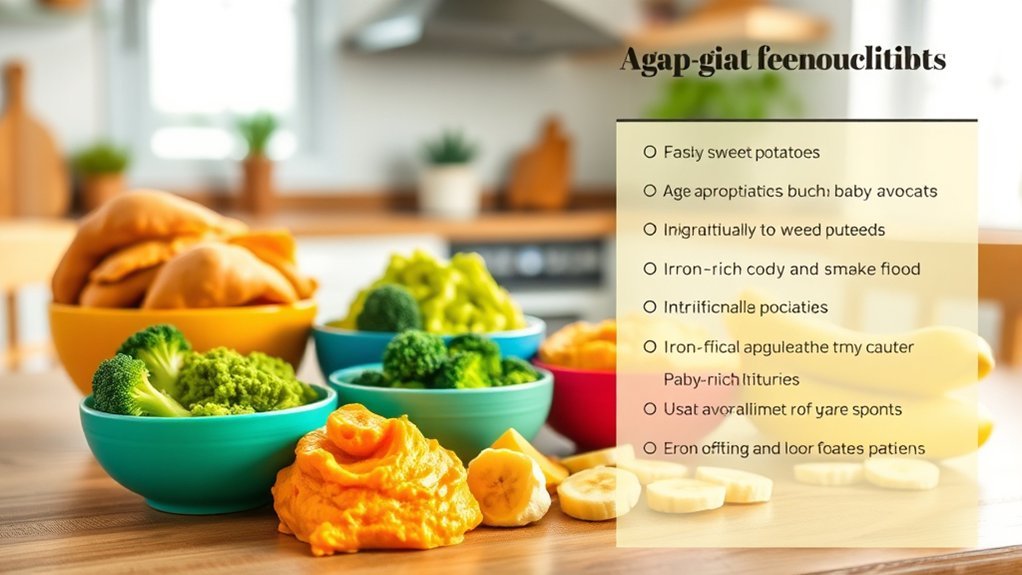
Full-term babies generally begin life with stored iron, but those stores decline during the first several months. Once complementary feeding begins, iron-rich foods become a major priority, especially for babies who receive mostly breast milk.
Iron Requirements by Age
The National Institutes of Health Office of Dietary Supplements lists an Adequate Intake of 0.27 mg per day from birth through 6 months and an iron Recommended Dietary Allowance of 11 mg per day for infants ages 7–12 months.
That number is a total daily reference amount from breast milk, formula, food, and any professionally recommended supplement. Parents do not need to calculate each bite or force a baby to consume 11 mg at one sitting.
Warning: Do not start or increase iron drops without guidance from your baby’s health care professional. Supplement needs differ for full-term, premature, low-birthweight, breastfed, formula-fed, and medically complex infants, and accidental iron overdose can be dangerous.
Nutritional Sources for Infants
Offer an iron-rich option regularly. Useful choices include:
- Iron-fortified infant cereal
- Finely prepared beef, lamb, poultry, or low-mercury fish
- Beans, lentils, chickpeas, and peas
- Tofu and other soft soy foods
- Well-cooked egg
Plant foods contain nonheme iron, which is not absorbed as readily as the heme iron in meat and seafood. Pair beans, lentils, tofu, or fortified cereal with a vitamin C-rich food such as strawberries, broccoli, tomato, mango, or sweet potato.
Complementing Breast Milk and Formula
Breast milk and infant formula continue to provide energy, fat, protein, and many vitamins and minerals while a baby learns to eat. Iron-fortified formula generally provides substantial iron. Babies who receive mostly breast milk, were born early, had a low birth weight, or eat few iron-rich foods may need an individualized supplement plan.
Solid foods should expand the diet rather than cause a sudden drop in milk feeds. Offer meals at predictable times, but continue to respond to hunger and fullness cues.
How to Introduce Allergenic Foods When Starting Solids
The Dietary Guidelines for Americans, 2025–2030 recommends introducing potentially allergenic foods with other complementary foods at about 6 months in safe, developmentally appropriate forms.
Common allergenic foods include peanut, tree nuts, egg, cow’s-milk products, wheat, soy, sesame, fish, and shellfish.
Safe Allergen Introduction Steps
- Introduce the allergen when your baby is healthy and an adult can observe them.
- Use one new allergen at a time so a reaction is easier to identify.
- Begin with a small taste and increase the amount gradually if no reaction occurs.
- Use an infant-safe form. Cook egg fully, debone fish, and make all food soft.
- Once the food is tolerated, keep it in the diet regularly in age-appropriate portions rather than offering it once and then avoiding it.
To introduce peanut, thin a small amount of smooth peanut butter with warm water, breast milk, or prepared formula, or mix it into a tolerated puree, cereal, or yogurt. Never offer whole nuts, chopped nuts, or a thick spoonful of nut butter.
Note: If your baby has severe eczema, an existing egg allergy, or a previous immediate food reaction, speak with their clinician before peanut introduction. Some high-risk babies may be advised to try peanut between 4 and 6 months in a medically guided plan.
Signs of a Food Allergy
Possible symptoms include hives, swelling, repeated vomiting, coughing, wheezing, sudden lethargy, or difficulty breathing. Stop feeding the food if a reaction occurs.
Warning: Call 911 immediately if your baby has trouble breathing, swelling of the tongue or throat, becomes pale or limp, or develops a rapidly worsening reaction affecting more than one part of the body. Do not wait for symptoms to pass on their own.
Choosing Between Baby-Led Weaning and Traditional Purees
Baby-led weaning and spoon-feeding are not all-or-nothing choices. Many families use both. The safest method is the one that matches the baby’s skills, provides enough iron and energy, respects feeding cues, and can be supervised consistently.
Advantages of Baby-Led Weaning
Baby-led weaning lets a developmentally ready baby grasp soft food and feed themselves. Possible advantages include:
- Practice with reaching, grasping, hand-eye coordination, and chewing movements
- Early exposure to different safe textures
- Participation in family meals
- Opportunities to respond to hunger and fullness cues
- Growing independence with food
However, the American Academy of Pediatrics notes that research on baby-led weaning’s health advantages remains limited. A poorly planned baby-led diet may be low in iron, other micronutrients, calories, or protein.
Benefits of Traditional Purees
Purees and mashed foods can help a new eater practice accepting food from a spoon and moving it through the mouth. They also make it easy to offer iron-fortified cereal, meat, beans, yogurt, and mixed textures.
| Approach | Potential Strength | Watch For |
|---|---|---|
| Baby-led self-feeding | Texture practice, motor skills, and family-meal participation | Choking hazards, low iron intake, and insufficient calorie intake |
| Responsive spoon-feeding | Easy delivery of nutrient-dense foods and gradual texture changes | Staying on smooth textures too long or feeding past fullness cues |
| Combination approach | Flexibility and access to both spoon and self-feeding skills | Keeping every food soft, correctly shaped, and closely supervised |
Do not scrape food from a spoon against your baby’s upper lip or pressure them to take another bite. Hold the spoon near the mouth and allow the baby to lean forward and close their lips around it.
Safety First: Tips for Starting Solids
Choking prevention depends on the food’s shape, size, texture, and preparation as well as the baby’s position and supervision.
- Seat your baby upright in a stable high chair and use the harness.
- Stay within arm’s reach and watch your baby throughout the meal.
- Keep meals calm and free from toys, screens, rushing, and movement.
- Do not let a baby eat while lying down, crawling, walking, riding in a stroller, or traveling in a moving car.
- Cook hard fruit and vegetables until soft.
- Remove pits, seeds, skin that is difficult to manage, bones, and tough meat.
- Cut grapes, cherry tomatoes, berries, and similar round foods into small developmentally appropriate pieces.
- Cut cylindrical foods lengthwise into thin strips rather than round coins.
Common Choking Hazards
The CDC choking-hazard guidance advises avoiding small, hard, sticky, round, or difficult-to-chew foods, including:
- Whole or chopped nuts and seeds
- Thick spoonfuls or chunks of nut butter
- Popcorn, chips, pretzels, and hard crackers
- Hard raw apple or carrot pieces
- Uncut grapes, cherries, berries, or cherry tomatoes
- Hot-dog coins, sausage rounds, and meat sticks
- Large chunks of meat or cheese
- Hard candy, gummy candy, chewing gum, and marshmallows
Gagging Versus Choking
Gagging is a protective reflex and is common while babies learn to manage texture. A gagging baby can usually breathe and may cough, make noise, push the tongue forward, or spit out food.
Choking occurs when food blocks the airway. A choking baby may be unable to breathe, cry, or cough effectively and may make little or no sound. This is an emergency.
Warning: Learn infant choking first aid and CPR from a qualified instructor before or soon after starting solids. If your baby cannot breathe, cry, or cough, begin the appropriate infant choking response and call 911.
Foods and Drinks to Avoid or Limit
According to the CDC’s infant and toddler nutrition guidance, caregivers should avoid or limit the following:
- Honey before 12 months: Honey can cause infant botulism, including honey added to food, water, formula, or a pacifier.
- Cow’s milk as the main drink before 12 months: Yogurt and pasteurized cheese may be introduced earlier, but breast milk or infant formula should remain the primary milk source.
- Juice before 12 months: Whole fruit provides fiber and is a better choice. Juice remains unnecessary after the first birthday.
- Added sugars: Choose plain yogurt, unsweetened foods, and nutrient-dense snacks.
- High-sodium foods: Limit processed meats, salty snacks, and heavily salted family foods.
- Unpasteurized milk, cheese, yogurt, or juice: These products may contain harmful bacteria.
- Raw or undercooked eggs, meat, poultry, fish, and shellfish: Cook animal foods thoroughly.
- Fish high in mercury: Avoid shark, swordfish, king mackerel, marlin, orange roughy, Gulf of Mexico tilefish, and bigeye tuna.
- Caffeinated and sugar-sweetened drinks: These have no role in an infant’s diet.
Small sips of water can be offered in an open, straw, or training cup once solids begin. Water should support cup practice rather than replace breast milk or formula.
How to Monitor for Allergies When Starting Solids
Introduce one identifiable new food at a time during the earliest stage of feeding. The CDC advises waiting 3–5 days between new single-ingredient foods at first so potential reactions are easier to connect to a food. Your baby’s clinician may recommend a different schedule, especially when planning allergen introduction.
Keep a simple food log that records:
- The food and ingredients offered
- The date and approximate time
- The amount eaten
- Any skin, breathing, digestive, or behavior changes
- Whether the food was offered again and tolerated
A mild rash around the mouth can sometimes result from skin contact with an acidic food rather than a true allergy. Even so, stop the food and contact your child’s clinician if you are unsure, especially when hives, vomiting, swelling, coughing, wheezing, or widespread symptoms occur.
Creating a Diverse Diet: Expanding Food Options Over Time
By about 7–8 months, many babies can eat foods from several groups, including vegetables, fruit, meat or other protein, dairy foods without added sugar, and whole grains. Variety helps provide iron, zinc, protein, fat, and other nutrients while building familiarity with different tastes and textures.
A practical meal can include:
- One iron-rich food: Meat, lentils, beans, tofu, egg, fish, or fortified infant cereal
- One fruit or vegetable: Broccoli, sweet potato, avocado, pear, berries, or mango
- One energy-rich food: Full-fat yogurt, avocado, olive oil mixed into food, or a safely prepared seed or nut butter
- Breast milk or formula: Offered according to the baby’s usual feeding pattern
Foods do not need to be bland. Mild herbs and spices can be used without adding excess salt or sugar. Avoid very salty sauces, packaged seasoning mixes, and hot peppers that may irritate the mouth.
Responsive Feeding: Hunger and Fullness Cues
Responsive feeding means the caregiver chooses what safe foods to offer and when to offer them, while the baby decides whether and how much to eat.
Possible Hunger Cues
- Leaning toward food
- Opening the mouth when food approaches
- Reaching for food or a spoon
- Showing excitement when placed in the high chair
Possible Fullness Cues
- Turning the head away
- Closing the mouth
- Pushing food or the spoon away
- Slowing down or becoming distracted
- Dropping food repeatedly after eating
- Becoming upset or arching away
Stop when fullness cues appear. Pressuring, distracting, or repeatedly sneaking in bites can make meals stressful and teach a baby to ignore their own signals.
Troubleshooting Common Starting-Solids Problems
Baby Refuses Food
Keep the meal short and calm. Offer the food without pressure, let your baby touch it, and try again another day. Check that the baby is alert, comfortably seated, and not overly hungry or tired.
Baby Only Accepts Smooth Food
Increase texture in small steps. Move from smooth puree to thicker puree, then fork-mashed food with soft lumps. Allow supervised play with soft finger foods even if the baby does not eat much at first.
Baby Gags Frequently
Occasional gagging can be part of learning. Frequent gagging, coughing during most meals, wet or noisy breathing after swallowing, repeated vomiting, or food coming through the nose should be discussed with a clinician or feeding specialist.
When to Seek Professional Help
Contact your baby’s clinician if your child:
- Cannot sit with adequate support or maintain head control near 6 months
- Regularly coughs, chokes, or struggles to breathe while eating
- Has repeated vomiting, ongoing diarrhea, blood in the stool, or poor weight gain
- Shows signs of dehydration or takes much less breast milk or formula
- Consistently refuses nearly all solids after several weeks of calm practice
- Cannot progress beyond smooth textures
- Has a suspected allergic reaction
Cleaning and Sanitizing Feeding Utensils
Wash feeding items after each use in a dishwasher or with hot, soapy water. Use clean hands, rinse thoroughly, and allow items to air-dry completely in a protected area.
The CDC’s cleaning guidance for infant feeding items states that a separate sanitizing step is generally unnecessary when dishwasher-safe items are washed with hot water and a heated drying or sanitizing cycle.
Daily sanitizing may be appropriate when a baby is younger than 2 months, was born prematurely, or has a weakened immune system. Follow the item manufacturer’s instructions and your health care professional’s advice when choosing boiling, steaming, dishwasher sanitizing, or a correctly prepared sanitizing solution.
Frequently Asked Questions
Can I start solids before six months if my baby is eager?
Interest in your food is only one readiness sign. Most babies should begin at about 6 months when they also have head control, can sit upright with support, reach for objects, and swallow food. Do not start before 4 months. Ask your clinician about earlier allergen introduction only when there is a specific medical reason or risk-based plan.
What should I do if my baby refuses to eat solids?
End the meal calmly and try again later. Offer very small amounts when your baby is alert and comfortable, allow touching and self-feeding, and avoid pressure. Contact your clinician if refusal continues, your baby cannot progress with texture, or milk intake and growth decline.
How can I tell if food is too advanced for my baby?
Food may be too difficult if it is hard, round, sticky, tough, poorly cut, or cannot be flattened easily when softness is required. Step back in texture if your baby repeatedly coughs, cannot move food through the mouth, becomes distressed, or has frequent choking episodes. Persistent problems need professional assessment.
Is it normal for my baby to gag while learning to eat?
Occasional gagging is common because it helps move food away from the airway. A gagging baby can generally breathe and make noise. Choking may be silent and prevents effective breathing, coughing, or crying. Learn infant choking first aid and seek help for frequent gagging, coughing, or swallowing difficulty.
How do I clean and sanitize baby feeding utensils properly?
Use a dishwasher or wash the items thoroughly with hot, soapy water, rinse them, and let them air-dry. Daily sanitizing is not usually needed for an older, healthy baby when items are cleaned carefully. Extra sanitizing is recommended for some young, premature, or immunocompromised infants.
Do I have to use purees before offering finger foods?
No. A developmentally ready baby may begin with smooth or mashed foods, safely prepared finger foods, or a combination. Food must be soft and shaped for the baby’s skills, and every meal requires upright seating and close supervision.
How often should I offer solid food at first?
Begin with one short feeding opportunity each day if that suits your baby and family. Gradually add meals as interest, skill, and appetite grow. Breast milk or formula remains the main nutrition source, so early solid meals do not need to replace regular milk feeds.
Conclusion
Starting solids works best when you follow your baby’s development rather than a rigid calendar. Begin at about 6 months with safe, nutrient-dense foods, prioritize iron, introduce allergens thoughtfully, and increase texture as skills grow. Keep breast milk or formula in place, respect hunger and fullness cues, and make safety the center of every meal. Progress may be messy and uneven, but calm practice helps your baby build lasting eating skills.
Sources
- Dietary Guidelines for Americans, 2025–2030 — timing of complementary foods, milk feeding, allergen introduction, dietary variety, and added-sugar guidance
- CDC: When, What, and How to Introduce Solid Foods — readiness signs, first foods, grain variety, textures, and new-food timing
- CDC: Choking Hazards — food preparation, seating, supervision, and common choking risks
- CDC: Foods and Drinks to Avoid or Limit — honey, juice, added sugar, sodium, unpasteurized foods, and high-mercury fish
- NIH Office of Dietary Supplements: Iron Fact Sheet — infant iron requirements, food sources, and supplement considerations
- CDC: Clean, Sanitize, and Store Infant Feeding Items — safe washing, drying, storage, and sanitizing guidance