Babies younger than 12 months should not eat honey or foods made with honey. Honey can contain Clostridium botulinum spores, which may grow in an infant’s intestines and cause infant botulism. This restriction applies to raw, pasteurized, cooked, baked, and powdered honey. Once a child reaches 12 months, honey is no longer considered a botulism risk, although it should still be used sparingly because it is an added sugar.
Quick Answer
Do not put honey in baby food before your child is 12 months old. Avoid every type of honey, including honey in baked foods, drinks, medicines, powders, and pacifiers. After the first birthday, honey is considered safe from infant botulism, but it should remain an occasional sweetener.
Key Takeaways
- No honey before 12 months: Do not give an infant raw, pasteurized, cooked, baked, or powdered honey.
- Check every source: Honey may be present in cereals, yogurt, baked goods, sauces, snack foods, cough products, and honey-filled pacifiers.
- Know the warning signs: Constipation, poor feeding, a weak cry, drooping eyelids, loss of head control, floppiness, and breathing trouble need prompt medical attention.
- An accidental taste is not a diagnosis: Do not panic, but stop further exposure and watch closely for symptoms during the following weeks.
- After the first birthday: Honey is considered safe from botulism, but it still counts as added sugar and is not nutritionally necessary.
Warning: Seek immediate medical care if an infant develops poor feeding, a weak suck or cry, unusual floppiness, drooping eyelids, difficulty swallowing, or loss of head control. Call 911 for breathing difficulty, blue or gray lips, severe weakness, or unresponsiveness. Do not wait for several symptoms to appear.
Medical note: This article provides general safety information and does not replace advice from your child’s pediatrician or emergency care for a sick infant.
Why Is Honey Unsafe for Babies Under 12 Months?
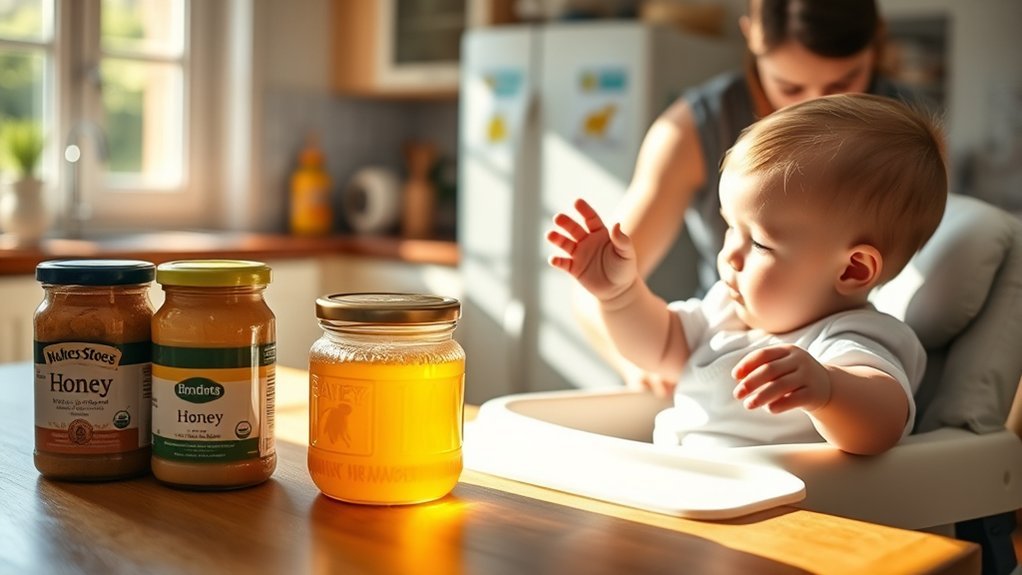
Honey can contain spores from Clostridium botulinum or related bacteria. Older children and adults can usually pass these spores without becoming ill. An infant’s intestinal environment is different, however, and may allow the spores to grow and produce botulinum neurotoxin.
This toxin interferes with the nerves that control muscles. The resulting illness, called infant botulism, can weaken the muscles used for feeding, swallowing, movement, and breathing.
The Centers for Disease Control and Prevention advises caregivers not to give honey before 12 months or add it to a baby’s food, water, infant formula, or pacifier.
The safety rule is based on age, not the type or quality of the honey: no honey in any form before 12 months.
Does Heating or Baking Make Honey Safe for a Baby?
No. Do not rely on cooking, baking, pasteurization, microwaving, or another home preparation method to make honey safe for an infant. Babies under 12 months should not receive foods or products made with honey, even when the honey has been heated.
This includes:
- Honey baked into bread, muffins, crackers, or cereal
- Pasteurized or commercially processed honey
- Raw, local, organic, or manuka honey
- Honey powder, dried honey, honey syrup, or honey solids
- Honey in sauces, yogurt, drinks, medicines, or supplements
- Pacifiers filled with or dipped in honey
What Is Infant Botulism and How Does Honey Contribute?
Infant botulism is an intestinal illness. After spores are swallowed, they may temporarily colonize an infant’s large intestine and produce a toxin. The toxin can cause progressive muscle weakness and, in severe cases, breathing failure.
Honey is one known dietary source of botulinum spores, but it is not the only possible source. Spores also exist in soil and dust, and the source in many infant botulism cases is never identified. Avoiding honey is still important because it is the one established food exposure caregivers can readily prevent.
According to the CDC’s clinical overview of infant botulism, possible symptoms include:
- Constipation
- Poor feeding or a weak suck
- A weak or altered cry
- Drooping eyelids
- Sluggish pupils
- A flattened or less expressive face
- A reduced gag reflex or difficulty swallowing
- Loss of head control or unusual floppiness
- Breathing difficulty
Symptoms may begin within days or may take several weeks to become noticeable. They usually involve weakness rather than the vomiting, diarrhea, or fever commonly associated with other foodborne illnesses.
What If My Baby Accidentally Ate Honey?
If your baby had a small accidental taste of honey, do not panic. Not every container of honey contains botulinum spores, and a single exposure does not mean your baby will develop infant botulism. However, you should stop giving the honey product and watch your child closely.
The California Infant Botulism Treatment and Prevention Program explains that a single feeding is not considered high risk. Contact your pediatrician for individualized advice, particularly if your baby swallowed more than a taste, is premature, has feeding problems, or has another medical condition.
What Should You Watch For?
During the next several weeks, watch for:
- New or unusual constipation
- Taking longer to finish feeds
- A weak suck or difficulty latching
- Increased drooling or trouble swallowing
- A weaker or different-sounding cry
- Drooping eyelids or reduced facial expression
- Loss of head control
- Floppy arms, legs, or body
- Unusual sleepiness or difficulty waking
- Shallow, slow, or labored breathing
Call your child’s doctor immediately if any of these symptoms develop. Call 911 if your baby has difficulty breathing, turns blue or gray, cannot swallow, becomes unresponsive, or appears severely weak.
Pro Tip: Save the product package or take a photo of its ingredient list. If you need medical advice, this helps the clinician identify the product and estimate the amount your baby may have consumed.
When Can You Safely Introduce Honey to Your Baby?
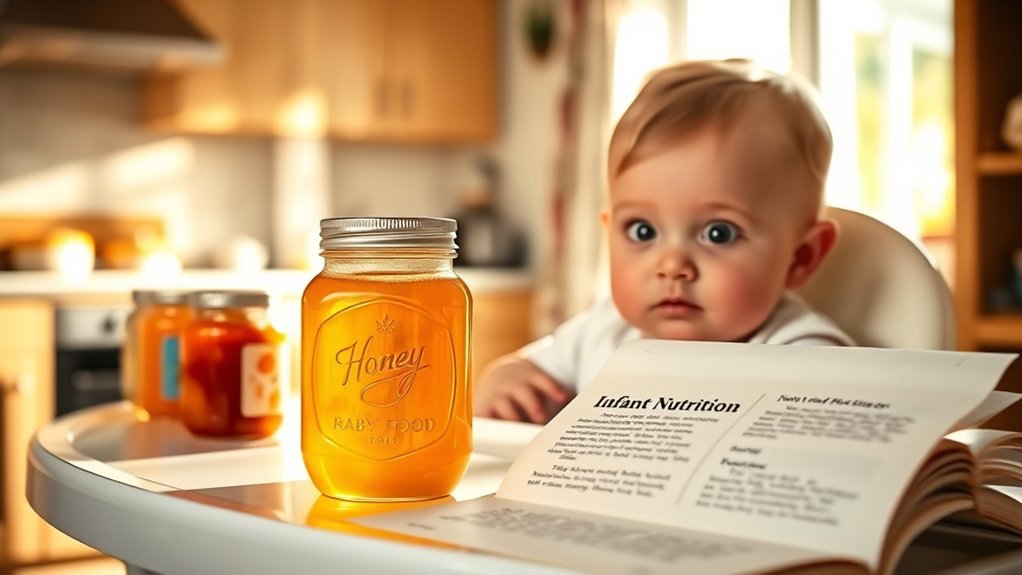
Honey is considered safe from infant botulism once a child is 12 months old. The American Academy of Pediatrics recommends avoiding honey before 12 months and states that it is safe for children age one and older.
You do not need to introduce honey on your child’s first birthday, and there is no nutritional reason to rush. Children between 12 and 23 months need nutrient-dense foods and should have little or no added sugar. Whole fruit, unsweetened yogurt, oatmeal, vegetables, eggs, beans, meat, fish, and other nourishing foods are better everyday choices.
When you choose to offer honey, start with a small amount in a food your child already eats safely. A small taste mixed into plain yogurt or oatmeal is easier to manage than a spoonful of sticky honey.
Can a Breastfeeding Parent Eat Honey?
Yes. A breastfeeding parent may eat honey. Botulinum spores are not passed to the baby through breast milk in the way required to cause infant botulism. The restriction applies to feeding honey directly to a baby younger than 12 months.
How to Safely Serve Honey to Toddlers
After 12 months, serve honey as an occasional flavoring rather than a routine sweetener. It is mostly sugar and does not provide a meaningful nutritional advantage over other added sweeteners.
Safer serving ideas include:
- Stirring a small amount into plain yogurt or oatmeal
- Using a thin layer on soft toast
- Adding a small amount to a family recipe
- Serving it while the child is seated upright and supervised
Avoid handing a young child a honey container, allowing them to eat while walking or riding in a car, or serving a thick spoonful that may be difficult to manage.
For children younger than two, current nutrition guidance recommends avoiding added sugars as much as possible. For children age two and older, the AAP advises keeping total added sugar below 25 grams per day. That amount includes sugar from every food and drink; it is not a recommended daily honey allowance.
Is Honey a Choking Hazard for Young Children?
Honey is not among the most common stand-alone choking hazards, but it is thick and sticky. Products made with honey may also contain hard, chewy, round, or sticky ingredients that are unsafe for young children.
Potential hazards include:
- Hard honey candies and cough drops
- Chewy granola bars
- Sticky clusters of cereal or nuts
- Large spoonfuls of thick spreads
- Hard crackers or baked foods that break into difficult pieces
Follow the CDC’s choking-prevention guidance: prepare food in a shape and texture appropriate for your child’s development, seat the child upright, keep meals calm, and watch them throughout eating.
Botulism and choking are different emergencies. Botulism causes progressive muscle weakness after spores grow in the intestine. Choking happens when food or another object blocks the airway during eating.
Nutritional Considerations for Honey and Infants
Honey should never be given to an infant under 12 months, regardless of its nutritional content. After 12 months, its sugar content—not botulism—is the main dietary consideration.
Honey’s Nutritional Value
Honey contains sugar, calories, water, and small amounts of other compounds. Although some honey contains trace antioxidants, vitamins, or minerals, the quantities are too small to make it a nutrient-dense food for a baby or toddler.
Labels such as “raw,” “organic,” “local,” or “manuka” do not change the under-12-month restriction. No honey variety is recommended for infants.
Sugar Content Considerations
Honey is an added sugar when it is mixed into food or drinks. The CDC advises avoiding added sugars for infants and young children, especially before age two, because young children have limited room in their diets for foods that do not provide essential nutrients.
For everyday sweetness, offer naturally sweet, nutrient-dense foods such as:
- Mashed banana
- Unsweetened applesauce
- Soft ripe pear
- Mashed berries
- Roasted sweet potato
- Plain yogurt mixed with fruit
These foods provide fiber, vitamins, minerals, or protein in addition to sweetness.
What Can You Use Instead of Honey for Coughs?
Do not use honey to treat a cough in a baby younger than 12 months. Do not substitute another syrup or give an OTC cough and cold product unless your child’s healthcare professional specifically recommends it.
| Option | Who It May Help | Safe Use |
|---|---|---|
| Saline nose drops or spray | Infants and children with nasal congestion | Use according to the product directions or your clinician’s advice. |
| Gentle nasal suction | Especially useful for babies younger than one | Use a bulb syringe or infant nasal aspirator, often after saline. |
| Cool-mist humidifier | Children with dry air or congestion | Use cool mist, clean the unit as directed, and keep it out of reach. |
| Usual breast milk or formula | Infants who need hydration | Offer normal feeds more frequently if tolerated. Contact a clinician if intake or wet diapers decrease. |
| Warm liquids or broth | Older children who can safely drink them | Serve warm, not hot, and choose a low-sodium option. |
| Medication | Only when appropriate for the child’s age and symptoms | Ask a pediatrician or pharmacist. Do not use adult medicine or combine products with the same active ingredient. |
The FDA does not recommend OTC cough and cold medicines for children younger than two. Manufacturers commonly label these products not to be used in children younger than four.
Call a clinician: Get medical advice for an infant with a cough who is breathing rapidly, pulling in around the ribs, wheezing, feeding poorly, producing fewer wet diapers, unusually sleepy, or developing a fever. Call 911 for blue lips, severe breathing difficulty, pauses in breathing, or unresponsiveness.
How to Identify Foods With Hidden Honey Ingredients
Read the full ingredient list before giving a packaged food to a baby under 12 months. The Nutrition Facts panel’s “Added Sugars” line can tell you that a sweetener is present, but it does not identify whether that sweetener is honey.
Common Processed Foods Containing Honey
Honey may appear in products that do not look like plain honey. Examples include:
- Graham crackers and other baked crackers
- Granola, granola bars, and cereal clusters
- Flavored yogurt
- Bread, muffins, cookies, and snack bars
- Breakfast cereals and oatmeal packets
- Barbecue sauce, glazes, and salad dressing
- Honey-flavored snack puffs
- Herbal syrups, lozenges, and cough products
- Honey-filled or honey-dipped pacifiers
A product marketed as natural, organic, or wholesome may still contain honey. The front label is not enough; always check the ingredient list.
Ingredient Labels to Check
| Ingredient Term | What It Means |
|---|---|
| Honey | The product directly contains honey. |
| Honey syrup | A liquid sweetener made with honey. |
| Honey powder or dried honey | A dried honey ingredient that is still not suitable before 12 months. |
| Honey solids or granulated honey | Processed forms of honey that should also be avoided. |
| Added sugars | Confirms added sweetener but does not identify which sweetener; check the ingredient list. |
Do not assume the phrase “natural flavors” means honey is present. If the ingredient list is unclear and the product is intended for a baby under 12 months, contact the manufacturer or choose a product with a clearer label.
Alternatives to Honey
For babies already developmentally ready for complementary foods, choose foods without added sweeteners. Suitable options may include:
- Mashed fruit: Banana, pear, peach, mango, or berries can add natural sweetness.
- Unsweetened applesauce: Choose a product with no added sugar.
- Vegetable purees: Sweet potato, squash, carrots, and peas provide flavor and nutrients.
- Plain yogurt with fruit: Use pasteurized yogurt appropriate for your child and mix in mashed fruit.
- Unsweetened oatmeal: Add fruit or an age-appropriate spice such as a small amount of cinnamon rather than honey.
Maple syrup, agave syrup, date syrup, and corn syrup do not contain honey, but they are still added sugars and are not needed in an infant’s diet.
How to Recognize Symptoms of Botulism in Infants
Infant botulism often begins with subtle feeding or muscle-control changes. Constipation may be an early sign, but not every baby develops it.
| Possible Symptom | What You May Notice |
|---|---|
| Constipation | A new or unusual reduction in bowel movements, especially with weakness or feeding changes |
| Poor feeding | Weak sucking, trouble latching, long feeds, reduced intake, or difficulty swallowing |
| Weak cry | A quieter, hoarse, or different-sounding cry |
| Facial weakness | Drooping eyelids, sluggish pupils, or fewer facial expressions |
| Floppiness | Loss of head control, limp arms or legs, or reduced movement |
| Breathing difficulty | Shallow breathing, pauses, labored breathing, or color changes around the lips |
Do not try to diagnose botulism at home. If your baby has possible symptoms, seek medical care immediately and tell the clinician about any honey exposure. Treatment decisions are based on the child’s symptoms and should not be delayed while waiting for laboratory confirmation.
Debunking Myths About Honey in Baby Food
Myth: Raw or Local Honey Is Safer
Fact: Raw, local, organic, pasteurized, and specialty honey are all off-limits before 12 months. Quality labels do not guarantee that honey is free of botulinum spores.
Myth: Baking Honey Kills the Risk
Fact: Do not give an infant baked goods or processed foods containing honey. Normal cooking or baking is not a home safety method for infant feeding.
Myth: One Taste Means the Baby Will Become Sick
Fact: A single accidental taste is considered low risk, but caregivers should stop further exposure and watch for symptoms. Contact a pediatrician if you are concerned.
Myth: Breastfeeding Parents Must Avoid Honey
Fact: Breastfeeding parents may eat honey. The baby must directly ingest the spores for honey to pose this particular risk.
Myth: Honey Is the Only Source of Infant Botulism
Fact: Spores may also come from soil or dust, and the source of many cases is unknown. Honey is emphasized because avoiding it is a practical prevention step.
Myth: Honey Is Healthy Enough to Use Freely After Age One
Fact: Honey is safe from infant botulism after 12 months, but it remains an added sugar. It should not replace fruit or other nutrient-dense foods.
Frequently Asked Questions
Can I use honey in homemade baby food?
Not before your baby is 12 months old. Do not add raw, cooked, baked, pasteurized, or powdered honey to homemade baby food. Use mashed fruit or naturally sweet vegetables instead.
What should I do if my baby accidentally ate honey?
Do not panic. Stop further exposure, note the product and approximate amount, and watch for constipation, poor feeding, weak cry, drooping eyelids, floppiness, swallowing trouble, or breathing problems. Contact your pediatrician for advice and seek emergency care for serious symptoms.
Is honey safe when it is baked into food?
Not for a baby under 12 months. Avoid bread, cereal, crackers, muffins, sauces, and other products made with honey even when they have been cooked or commercially processed.
Is raw or pasteurized honey safer for babies?
Neither is safe before 12 months. Raw, pasteurized, organic, local, and specialty honey must all be avoided during the first year.
Can a breastfeeding parent eat honey?
Yes. A breastfeeding parent may eat honey. The restriction concerns feeding honey directly to a child younger than 12 months.
What are the signs of an allergic reaction to honey?
After honey is introduced at 12 months or later, possible allergy symptoms include hives, facial swelling, vomiting, coughing, wheezing, or trouble breathing. Stop serving the food and contact a clinician. Call 911 for breathing difficulty, severe swelling, collapse, or other signs of anaphylaxis. An allergy is different from infant botulism.
Are there nutritional benefits of honey for toddlers?
Honey may contain trace antioxidants and minerals, but it is mainly sugar and is not a necessary part of a toddler’s diet. Fruit and other whole foods provide more meaningful nutrition.
Can honey be used in baked goods or drinks for toddlers?
Yes, after the child reaches 12 months, honey may be used in small amounts in foods or drinks. Keep portions modest, prepare the food in an age-appropriate texture, and remember that honey counts as added sugar.
Conclusion
Keep honey and every product made with honey away from babies younger than 12 months. This simple rule reduces a preventable source of infant botulism. Check ingredient labels, avoid honey in baked foods and cough remedies, and know the warning signs of muscle weakness or feeding difficulty.
After the first birthday, honey is considered safe from infant botulism. Even then, use it only occasionally because it is an added sugar and does not offer the nutritional value of whole fruit or other nutrient-dense foods.
Sources
- CDC: Foods and Drinks to Avoid or Limit — honey restrictions and added-sugar guidance for infants and young children.
- CDC: Clinical Overview of Infant Botulism — disease mechanism, symptoms, diagnosis, and treatment urgency.
- CDC: Botulism Prevention — prevention guidance for honey and honey products.
- American Academy of Pediatrics: Botulism — age guidance, spore sources, and breastfeeding information.
- California Infant Botulism Treatment and Prevention Program: Parent FAQs — accidental exposure and infant botulism guidance.
- FDA: Cough and Cold Medicines for Children — medication cautions and non-drug symptom-relief options.