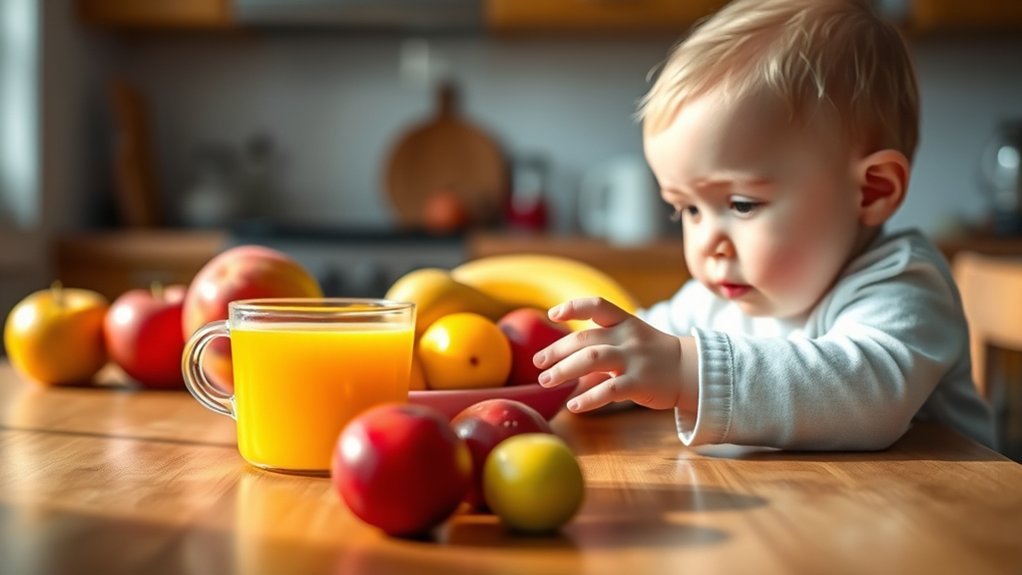
Babies should not drink fruit or vegetable juice before 12 months unless a pediatrician recommends it for a specific medical reason. After the first birthday, juice is optional—not required—and whole fruit is usually the better choice. When you do serve juice, choose pasteurized 100% juice, measure the portion, and offer it in an open or straw cup with a meal.
Quick Answer
Do not give juice to a baby younger than 12 months unless a pediatrician specifically advises it. From ages 1 to 3, limit pasteurized 100% fruit juice to 4 ounces per day. Serve it with a meal in a cup, not a bottle, and choose whole fruit and water most often.
Key Takeaways
- Babies younger than 12 months should not routinely drink fruit or vegetable juice.
- For children ages 1 to 3, the limit is 4 ounces of 100% juice per day; juice is optional and does not need to be served daily.
- Whole fruit is preferred because it provides fiber and is less easy to overconsume.
- Choose pasteurized juice and avoid unpasteurized, raw, or fresh-squeezed juice for young children.
- Serve juice with a meal in an open or straw cup. Avoid bottles, bedtime juice, and sipping throughout the day.
- Do not use juice to treat dehydration or diarrhea. Ask a pediatrician before using it for constipation.
Medical note: This article provides general feeding guidance, not individualized medical advice. Ask your child’s pediatrician about juice if your child is premature, has poor growth, chronic diarrhea, dental problems, food allergies, a restricted diet, or takes medicine that may interact with grapefruit or other juices.
When Can Babies Safely Start Drinking Juice?
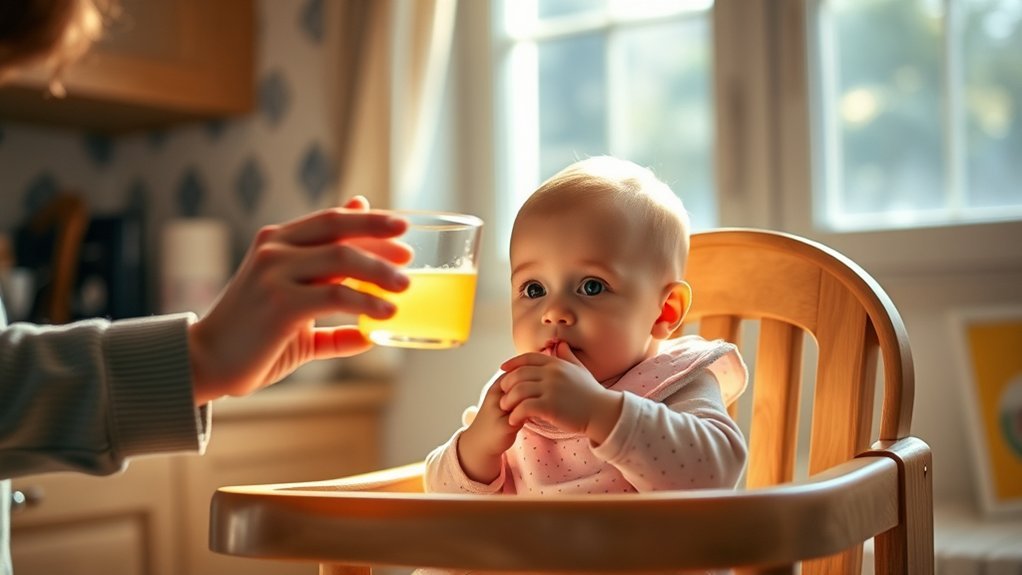
According to the Centers for Disease Control and Prevention, children younger than 12 months should not drink fruit or vegetable juice. Before the first birthday, breast milk or infant formula remains the main drink. Small amounts of plain water may be introduced with solid foods as your pediatrician recommends, but juice is unnecessary.
After 12 months, you may offer a small amount of pasteurized 100% fruit juice. For children ages 1 to 3, the American Academy of Pediatrics limit is no more than 4 ounces (120 milliliters) per day. That is a maximum, not a daily target.
Whole fruit is the better everyday choice because it provides fiber and requires chewing. Plain water should be the main drink for thirst. Age-appropriate milk or continued breastfeeding can also remain part of a balanced diet.
Juice is optional after age one. It does not provide a nutritional advantage over whole fruit, and children do not need it every day.

Power your essentials anywhere with a 999Wh pure sine wave power station delivering up to 1000W continuous with 2000W surge. It supports fast charging via USB-C PD 60W and USB-A QC 18W, plus simultaneous output for multiple devices through AC, USB, wireless, and car/DC ports. Recharge using AC, car, or solar with a built-in MPPT controller and dual cooling fans, while the upgraded battery management system protects against surges, short circuits, and overheating.

Forty 6 fl oz pouches of Capri Sun 100% Juice Naturally Flavored Fruit Punch Juice Blend

Enjoy Honest Kids Super Fruit Punch, a delicious organic fruit punch made to keep your kids soaring all day.
How Much Juice Can Toddlers and Children Have?
The safe amount depends on age. The limits below apply to 100% fruit juice, not fruit drinks, cocktails, ades, punches, or flavored beverages.
| Age | Daily 100% Juice Limit | Best Practice |
|---|---|---|
| Under 12 months | None routinely | Only use juice if a pediatrician recommends it for a specific reason. |
| 1–3 years | Up to 4 ounces (120 ml) | Serve with a meal in a cup; choose whole fruit most often. |
| 4–6 years | 4–6 ounces (120–180 ml) | Keep juice to one measured serving rather than allowing all-day sipping. |
| 7–18 years | Up to 8 ounces (240 ml) | Whole fruit should still supply most fruit servings. |
These age limits come from the American Academy of Pediatrics policy on fruit juice. A child does not need to reach the maximum amount, and skipping juice is perfectly healthy.
What Are the Risks of Juice for Babies and Toddlers?
Even 100% fruit juice contains concentrated natural sugars and little or no fiber. The main concern is not an occasional measured serving after age one; it is frequent, oversized, or poorly timed intake.
Too Much Sugar and Too Little Fiber
Children can drink juice much faster than they can eat whole fruit. That makes it easy to take in extra calories without feeling as full. Too much juice can also crowd out foods that supply protein, fat, iron, fiber, and other nutrients needed for growth.
- It may reduce appetite for balanced meals and snacks.
- It can encourage a preference for sweet drinks over plain water.
- Large amounts may contribute to excessive or inadequate weight gain, depending on what juice replaces.
- Juice does not provide the fiber found in whole fruit.
Digestive Problems and Diarrhea
Large amounts of juice can cause loose stools, gas, or stomach cramps. Some juices contain fructose or sorbitol that may not be fully absorbed, especially when a child drinks more than the recommended portion.
Warning: Do not use fruit juice to rehydrate a child with vomiting or diarrhea. Juice can worsen diarrhea and does not replace electrolytes correctly. Use an oral rehydration solution and follow your pediatrician’s advice.
Nutritional Balance Concerns
Juice cannot replace breast milk, infant formula, milk, water, whole fruit, vegetables, or balanced meals. It has little protein and usually no meaningful fiber. When juice displaces nutrient-dense foods, a child may miss nutrients needed for healthy growth.
How to Introduce Juice After 12 Months
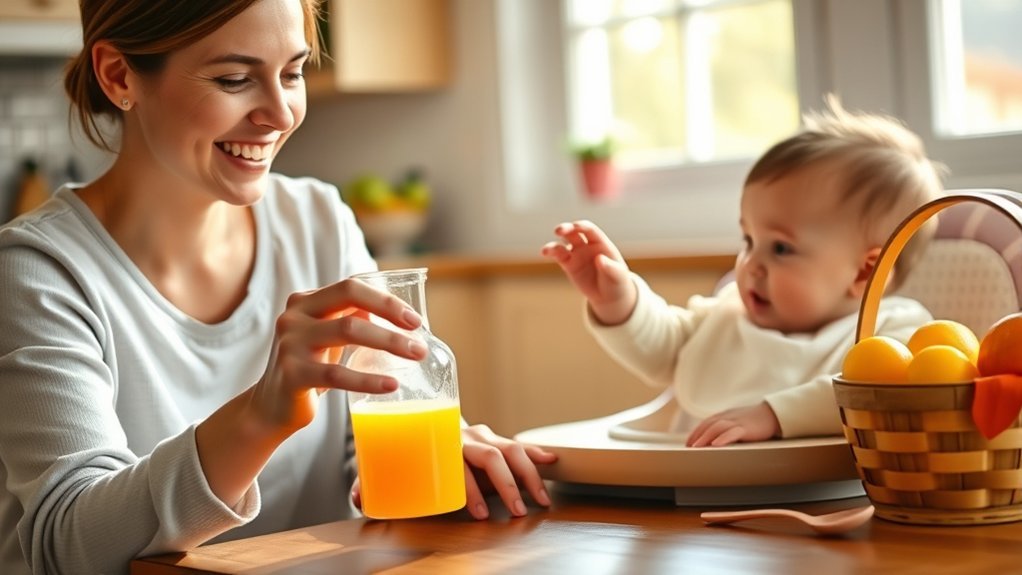
You do not need to introduce juice at all. If you choose to serve it after your child turns one, use these steps:
- Check the age. Wait until at least 12 months unless your pediatrician has given different medical instructions.
- Read the label. Choose a product labeled “100% juice,” with no added sugar.
- Confirm it is pasteurized. Avoid raw, unpasteurized, cold-pressed, or fresh-squeezed juice unless the product has been treated to destroy harmful bacteria.
- Measure the juice. For ages 1 to 3, pour no more than 4 ounces of actual juice for the entire day.
- Use an open or straw cup. Do not put juice in a bottle or a spill-proof cup that your child carries all day.
- Serve it with a meal or snack. Avoid bedtime juice and frequent sipping between meals.
- Watch for digestive symptoms. Stop serving it and speak with your pediatrician if repeated diarrhea, stomach pain, vomiting, hives, swelling, or other concerning symptoms occur.
Pro Tip: Start with water as the default drink. If your toddler has never had juice, there is no nutritional reason to create a daily juice habit.
Best Juice Options for Toddlers and Young Children
The best choice is a small serving of pasteurized 100% fruit juice. No single juice is required for health. Apple, pear, orange, grape, and mixed-fruit juices can all fit within the same age-based limit.
How to Read a Juice Label
- Choose: “100% fruit juice” or “100% vegetable juice.”
- Avoid: “juice drink,” “fruit beverage,” “cocktail,” “punch,” “ade,” or “flavored drink.” These may contain added sugars and only a small percentage of juice.
- Check pasteurization: Look for pasteurized products. The U.S. Food and Drug Administration advises against unpasteurized fruit or vegetable juice for infants and young children.
- Check serving size: Many juice boxes hold more than a toddler’s daily limit.
- For vegetable juice: Choose a low-sodium product when available.
Are Smoothies Better Than Juice?
A smoothie made with whole fruit may retain more fiber than strained juice, but it can still become a large, sweet drink that is easy to overconsume. Keep portions child-sized, avoid added sugar, and serve smoothies as part of a meal or snack rather than as an all-day beverage.
What Does a Toddler Juice Portion Look Like?
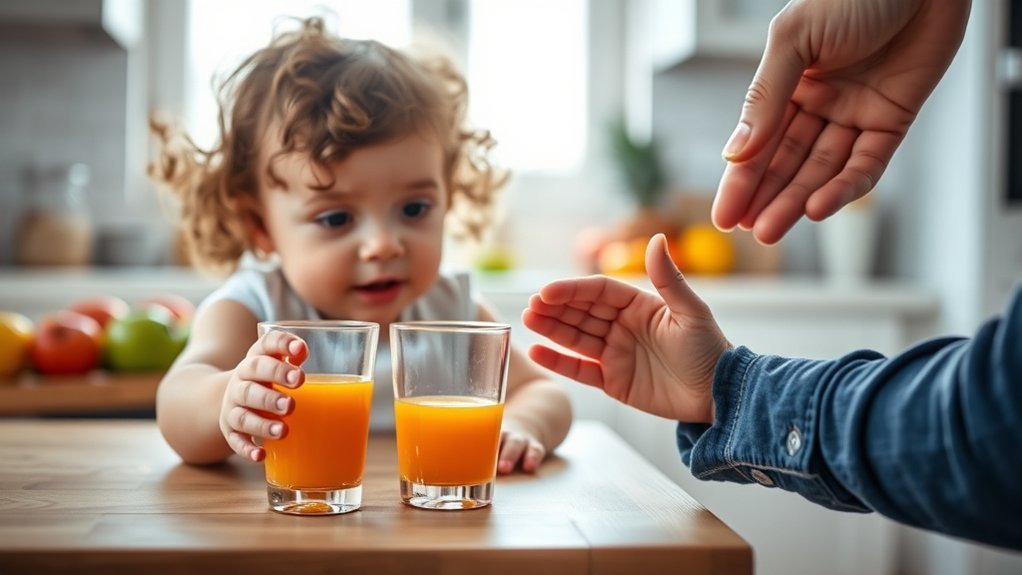
Four ounces is only one-half cup. A standard juice box may contain 6 to 8 ounces, so check the package instead of assuming one box equals one serving.
- Measure juice with a liquid measuring cup until you recognize the portion.
- Count all juice served during the day, including juice added to smoothies or mixed with water.
- Do not refill the cup automatically.
- Offer water if your child is still thirsty.
Should You Dilute Juice With Water?
Diluting juice is optional. It can make the drink less sweet and may help a child transition toward plain water, but it is not an official requirement and does not make unlimited juice safe. The amount of actual juice still counts toward the daily limit.
Possible Benefits of Diluting Juice
- It lowers the sugar and calorie concentration in each sip.
- It can make the flavor less intensely sweet.
- It increases the total drink volume without increasing the amount of juice.
However, dilution does not remove all sugar or acid. A child should still drink the mixture with a meal rather than carry it around and sip for hours.
How to Count Diluted Juice
There is no required juice-to-water ratio. A 1:1 mix is a simple option, but measure the juice first. The table below shows how much juice is actually in the drink.
| Juice | Water | Total Drink | Amount Counted as Juice |
|---|---|---|---|
| 2 oz | 2 oz | 4 oz | 2 oz |
| 3 oz | 3 oz | 6 oz | 3 oz |
| 4 oz | 4 oz | 8 oz | 4 oz—the full daily maximum for ages 1–3 |
Can Juice Contribute to Dental Issues in Children?
Yes. Juice contains sugars that mouth bacteria can use to produce acids, and many juices are naturally acidic. The risk increases when teeth are exposed repeatedly throughout the day.
The American Academy of Pediatric Dentistry recommends limiting 100% juice to 4 ounces per day for children ages 1 to 3 and avoiding frequent exposure to sugar-containing liquids.
- Do not put juice in a bedtime or nap bottle.
- Do not let a child carry juice in a bottle or spill-proof cup all day.
- Serve juice with a meal, then offer water.
- Do not dip pacifiers in juice or other sweet liquids.
How to Protect Your Child’s Teeth
Good timing and oral care matter as much as the portion.
- Use an open cup or straw cup instead of a bottle.
- Keep juice to a planned meal or snack rather than frequent sipping.
- Offer plain water between meals and after juice.
- Brush twice daily with a smear of fluoride toothpaste once the first tooth appears, unless your dentist gives different instructions.
- Schedule a dental visit when the first tooth appears and no later than the first birthday.
Can Toddlers Drink Vegetable Juice?
After age one, a toddler can have a small amount of pasteurized 100% vegetable juice, but it is not necessary. Whole or safely prepared vegetables provide texture and fiber and help children learn to accept different foods.
Some vegetable juices contain a great deal of sodium. Compare Nutrition Facts labels and choose a low-sodium option when possible. Serve it with a meal, keep the portion small, and do not use it as the main drink or as a replacement for vegetables.
Healthy Alternatives to Juice
If your child refuses juice, no action is needed. Juice is not required. Better everyday options include:
- Plain water for thirst
- Breast milk, age-appropriate milk, or an appropriate fortified alternative as advised
- Soft, mashed, sliced, or chopped whole fruit prepared safely for your child’s age
- Whole-fruit purées or unsweetened applesauce eaten with a spoon
- Water flavored briefly with fruit slices for aroma, without added sugar
When Should You Consult a Pediatrician About Juice?
Speak with your child’s pediatrician before giving juice to a baby younger than 12 months. A clinician may sometimes recommend a small, specific amount of apple, pear, or prune juice for constipation, but the type and amount depend on the child’s age and symptoms.
Get medical advice if your child has:
- Repeated diarrhea, vomiting, stomach pain, or poor appetite after juice
- Poor growth, rapid weight gain, or a very limited diet
- Ongoing constipation
- Dental pain, visible spots on teeth, or known cavities
- Hives, swelling, wheezing, breathing trouble, or another possible allergic reaction
- A medicine that may interact with grapefruit or another juice
Emergency: Call emergency services immediately for trouble breathing, swelling of the tongue or throat, blue or gray lips, severe weakness, or unresponsiveness.
Frequently Asked Questions
Can juice replace breast milk or formula in a baby’s diet?
No. Juice does not provide the protein, fat, vitamins, minerals, and overall nutrition found in breast milk or infant formula. Babies younger than 12 months should not routinely drink juice.
What are signs that juice is upsetting my child’s stomach?
Loose stools, gas, cramps, or bloating can occur after too much juice. Stop serving it and contact your pediatrician if symptoms are repeated, severe, accompanied by vomiting or dehydration, or occur after only a small amount.
Is homemade or fresh-squeezed juice safe for young children?
It is safer to avoid it unless you know it has been pasteurized or otherwise treated to kill harmful bacteria. Homemade and fresh-squeezed juice is usually unpasteurized, and young children are more vulnerable to foodborne illness.
Can juice cause diarrhea in toddlers?
Yes. Large amounts can cause or worsen diarrhea because some juice sugars are poorly absorbed. Do not use juice for rehydration; use an appropriate oral rehydration solution and seek medical advice when needed.
What should I do if my child refuses juice?
Nothing special is required. Juice is optional. Continue offering plain water and age-appropriate milk, and serve whole fruit in safe textures.
Can I give juice for constipation?
Ask your pediatrician first, especially for a baby under 12 months. A clinician may recommend a small amount of a specific juice for some children, but juice is not the right treatment for every cause of constipation.
Is diluted juice better for toddlers?
Dilution can make juice less sweet and reduce sugar per sip, but it is optional. Count the actual ounces of juice toward the daily limit, and do not allow all-day sipping.
Are fruit drinks the same as 100% fruit juice?
No. Fruit drinks, punches, cocktails, and flavored beverages may contain added sugar and only a small amount of juice. Check the label for the words “100% juice.”
Conclusion
Babies do not need juice, and they should not routinely receive it before 12 months. After age one, a measured serving of pasteurized 100% juice can fit into a balanced diet, but whole fruit and water are better everyday choices. Keep portions within the age limit, serve juice with a meal in a cup, avoid bedtime and all-day sipping, and ask your pediatrician about medical concerns such as constipation, diarrhea, poor growth, or possible reactions.
Sources
- Centers for Disease Control and Prevention: Foods and Drinks to Avoid or Limit — no juice before 12 months, 100% juice limits, and preference for whole fruit.
- American Academy of Pediatrics: Fruit Juice in Infants, Children, and Adolescents — age-based portions, serving practices, nutrition, diarrhea, and dental concerns.
- U.S. Food and Drug Administration: Once Baby Arrives — risks of unpasteurized fruit and vegetable juice for young children.
- American Academy of Pediatric Dentistry: Early Childhood Caries Prevention — juice limits, frequent sugar exposure, and the age-one dental home.
- U.S. Department of Health and Human Services: Dietary Guidelines for Americans, 2025–2030 — current federal emphasis on whole, nutrient-dense foods.