Most babies can begin drinking small amounts of plain water at about 6 months, when they start eating solid foods. Before then, breast milk or correctly prepared infant formula normally provides all the fluid they need. Introducing water safely means using an age-appropriate amount, choosing a safe water source, and never diluting formula.
Quick Answer
Babies can usually start drinking water at about 6 months, alongside solid foods. From 6–12 months, offer roughly 4–8 ounces (½–1 cup) per day in an open or straw cup. Breast milk or formula should remain the main drink until the first birthday.
Key Takeaways
- Do not routinely give plain water to a baby younger than 6 months unless a pediatric clinician specifically recommends it.
- For babies 6–12 months old, the usual range is about 4–8 ounces of water per day.
- Offer water with meals in an open or straw cup, but do not force your baby to finish it.
- Never add extra water to formula or dilute ready-to-feed formula.
- Use a safe water source and follow local advisories, especially if your home uses a private well.
- Seek medical help for a major drop in wet diapers, unusual sleepiness, a sunken soft spot, seizures, or other serious symptoms.
Medical note: This article provides general information, not individual medical advice. Premature babies and children with kidney, heart, feeding, growth, or metabolic conditions may need a different plan from their pediatric clinician.
Why Water Is Not Suitable for Infants Under 6 Months
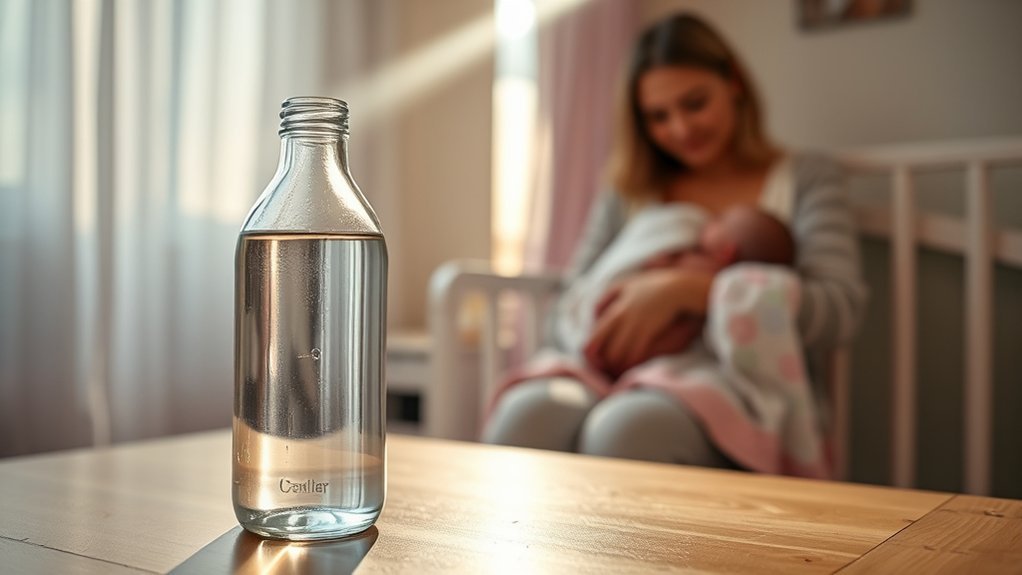
Babies younger than 6 months have small stomachs and developing kidneys. Breast milk or correctly prepared formula normally provides the fluid and nutrition they need, even during warm weather.
The World Health Organization advises that exclusively breastfed babies under 6 months do not need additional water, including on hot days. Parents can usually offer breast milk more often if the baby seems thirsty. Formula-fed babies should continue receiving formula mixed exactly as directed.
Plain water can fill a baby’s stomach without providing calories, protein, fat, vitamins, or minerals. If it replaces breast milk or formula, the baby may take in too little nutrition.
Giving a young baby too much water can also lower the sodium concentration in the blood. This condition, called water intoxication or dilutional hyponatremia, can become a medical emergency.
Warning: Do not give a baby under 6 months bottles or cups of plain water unless a pediatric clinician specifically instructs you to do so. Seek urgent medical help if a baby develops a seizure, becomes difficult to wake, has trouble breathing, or appears blue or gray.
When Can Babies Start Drinking Water?
Most babies can start having small sips of water at about 6 months old, when they are developmentally ready for solid foods. Water at this age supports cup practice and helps wash down food, but it does not replace milk feeds.
The American Academy of Pediatrics recommends approximately 4–8 ounces (118–237 milliliters), or ½–1 cup, per day for babies 6–12 months old.
From 6–12 months, babies generally need only 4–8 ounces of plain water per day because breast milk or formula still supplies most of their fluid.
Guidelines for Water Introduction
Begin with a few sips at a meal. Your baby may initially drink very little, and that is usually fine. Continue offering breast milk or formula on the baby’s normal schedule.
- Offer plain water in an open cup or straw cup.
- Keep your baby seated upright and supervised.
- Start with a small amount rather than filling a large cup.
- Offer water mainly with meals and snacks.
- Do not pressure your baby to finish the cup.
- Avoid sweetened, flavored, caffeinated, or carbonated drinks.
Pro Tip: A small open cup may be easier to control when it contains only one or two ounces. Hold the cup with your baby at first, then gradually allow more independent practice.
Risks of Early Water
Offering plain water too early or in excessive quantities can create several problems:
- Low blood sodium: Excess water can dilute sodium in the bloodstream and cause hyponatremia.
- Reduced milk intake: Water may fill a small stomach and displace breast milk or formula.
- Inadequate nutrition: Plain water supplies no calories or nutrients needed for rapid infant growth.
- Delayed medical treatment: Water should not be used as a home substitute for appropriate treatment when a baby has vomiting, diarrhea, or another illness.
Possible symptoms of water intoxication include unusual irritability, excessive sleepiness, swelling or puffiness, a low body temperature, vomiting, or seizures. Contact a medical professional or poison-control service promptly if you believe your baby drank a large amount of water. Call emergency services for a seizure, breathing difficulty, unresponsiveness, or blue or gray skin.
Age-Specific Water Needs
| Age | Plain-Water Guidance | Main Drinks |
|---|---|---|
| Birth to about 6 months | No routine plain water unless a pediatric clinician gives specific instructions. | Breast milk or correctly prepared infant formula. |
| 6–12 months | About 4–8 ounces (½–1 cup) per day, usually offered with meals. | Breast milk or formula remains primary. |
| 12–24 months | Water can be offered throughout the day. The amount varies with diet, activity, and weather. | Plain water and recommended milk. Children ages 1–3 generally need about four cups of total fluid per day, including water and milk. |
How Much Water Is Safe for Babies?
For most healthy babies between 6 and 12 months, 4–8 ounces of plain water per day is an appropriate range. A baby does not need to drink the full amount immediately after turning 6 months. Start with a few sips and allow cup skills to develop gradually.
Breast milk or formula should remain the main source of fluid and nutrition through the first birthday. Avoid giving large cups of water that may replace normal milk feeds.
Recommended Daily Water Intake
- 0–6 months: Do not routinely offer plain water. Give breast milk or formula according to the baby’s feeding plan.
- 6–12 months: Offer approximately 4–8 ounces of plain water per day, commonly divided among meals.
- 12 months and older: Offer water regularly, while considering all fluid from water, milk, food, and other appropriate drinks.
These are general ranges, not mandatory targets. A child’s clinician may recommend something different based on growth, feeding pattern, medical history, climate, or illness.
Signs of Dehydration
A change from your baby’s normal urine output and behavior is often more meaningful than one fixed diaper number. According to the American Academy of Pediatrics’ dehydration guidance, fewer than about six wet diapers in a day can be a warning sign for many infants.
Other possible signs include:
- A dry mouth or tongue
- Few or no tears while crying
- A sunken soft spot on the head
- Sunken-looking eyes
- Unusual fussiness or sleepiness
- Cool or discolored hands and feet
- Much less urine than usual or no urine for eight hours
Call your baby’s clinician promptly if you notice signs of dehydration, especially during fever, vomiting, diarrhea, or poor feeding. Seek urgent care if the baby is difficult to wake, will not drink, has trouble breathing, or appears seriously ill.
Monitoring Hydration Status
Use several clues together rather than relying on urine color or diaper count alone:
- Compare with the normal pattern: Note any clear decrease in wet diapers or feeds.
- Observe behavior: A normally alert, active baby is more reassuring than a baby who is unusually sleepy or weak.
- Check the mouth and tears: A very dry mouth or absent tears may signal fluid loss.
- Watch feeding: Repeated refusal of breast milk or formula deserves medical advice.
Do not try to correct suspected dehydration in a young baby by giving large amounts of plain water.
How to Safely Offer Water to Your Baby
Once your baby is about 6 months old and beginning solid foods, follow these steps:
- Place your baby upright in a high chair or other secure feeding seat.
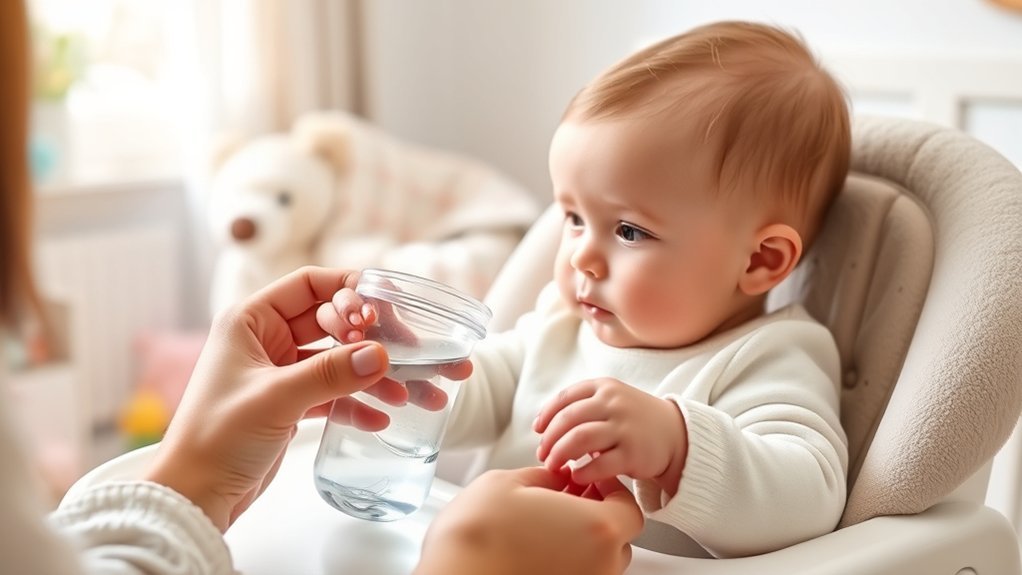
- Pour one or two ounces of plain water into a small open or straw cup.
- Help guide the cup or straw while your baby learns.
- Allow a few sips during the meal.
- Stop when your baby turns away, closes the mouth, or loses interest.
- Continue regular breast-milk or formula feeds.
Avoid putting juice, flavored water, drink mixes, sweeteners, or caffeinated products in the cup. Plain water helps your child learn to accept an unsweetened drink.
What Types of Water Are Safe for Babies?
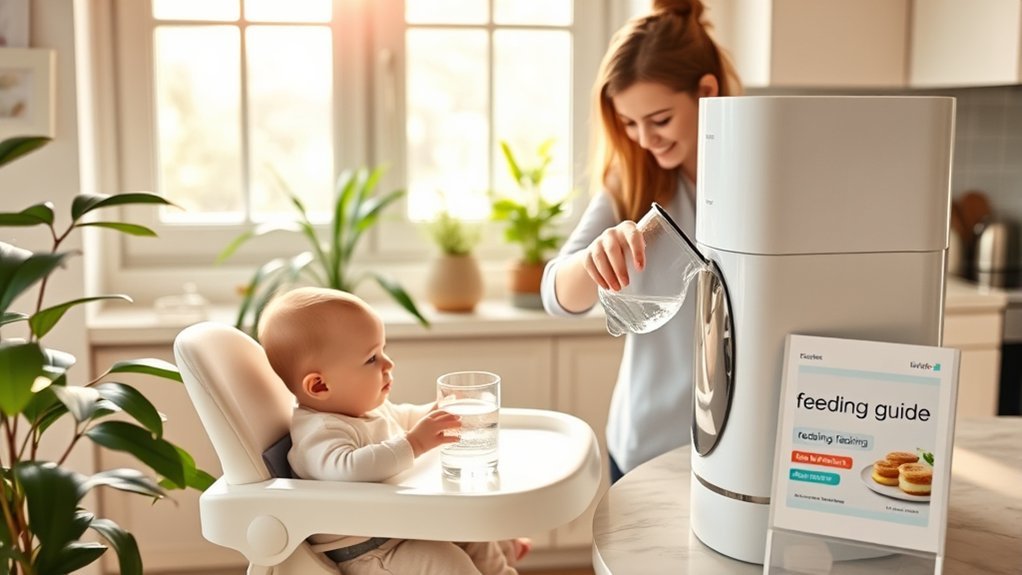
The safest choice depends on your local water supply. Water that looks, smells, or tastes normal can still contain contaminants, so follow information from your public-water provider or local health department.
Municipal Tap Water
Municipal tap water is generally appropriate when the local water authority says it is safe to drink. Healthy babies over 6 months do not routinely need their drinking water boiled solely because they are under 12 months old.
Use cold water from the tap for drinking or formula preparation, and follow any local lead, contamination, or boil-water advisory. Boiling kills many germs but does not remove nitrate, lead, or every chemical contaminant.
Bottled and Purified Water
Bottled water can be useful during a water advisory or when a clinician recommends a particular source, but it is not necessarily sterile or safer than regulated tap water. Mineral content and fluoride levels vary among brands.
Special “baby water” is not normally required. If bottled water is your child’s main long-term water source, ask a pediatrician or pediatric dentist whether its fluoride level is suitable.
Private-Well Water
Private wells are not regulated in the same way as public water systems. Have the well tested according to local health-department guidance, especially before using the water for infant formula or food.
The U.S. Environmental Protection Agency advises against using well water containing more than 10 milligrams per liter of nitrate in infant formula or food. Boiling does not remove nitrate and may concentrate it as water evaporates.
Boil-Water Advisories
During an advisory, follow the instructions issued by the local water utility or health department. Depending on the contaminant, the instructions may call for boiled water, commercially bottled water, or another approved source.
Do not assume that boiling makes every contaminated water source safe. Chemical, lead, and nitrate problems require different precautions.
Formula and Water Safety
Water used to prepare formula is different from offering a baby a separate drink of plain water. Powdered and concentrated liquid formulas require water, but only in the amount printed on the label.
- Powdered formula: Measure the required water first, then add the exact number of level scoops listed on the container.
- Concentrated liquid formula: Mix only with the exact amount of water listed by the manufacturer.
- Ready-to-feed formula: Do not add any water.
Warning: Never stretch formula by adding extra water. Over-diluted formula provides too few calories and nutrients and can lower a baby’s blood sodium to a dangerous level.
Use a safe water source and follow the current CDC formula-preparation and storage instructions. Ask your baby’s clinician about extra precautions if the baby was born prematurely, is younger than 2 months, or has a weakened immune system.
Signs of Proper Hydration in Your Baby
No single sign proves that a baby is hydrated. Look at feeding, urine output, alertness, mouth moisture, tears, and overall behavior together.
| Status | Possible Signs | What to Do |
|---|---|---|
| Usual hydration | Normal feeding and wet-diaper pattern, moist mouth, tears when crying, and usual alertness. | Continue normal breast-milk or formula feeds and age-appropriate water. |
| Possible dehydration | Fewer wet diapers than usual, dry mouth, fewer tears, fussiness, or reduced feeding. | Contact the baby’s clinician for advice, particularly during illness. |
| Urgent warning signs | No urine for about eight hours, very dry mouth, sunken soft spot, excessive sleepiness, weakness, breathing trouble, or inability to drink. | Seek urgent medical care. |
Encouraging Your Baby to Drink Water
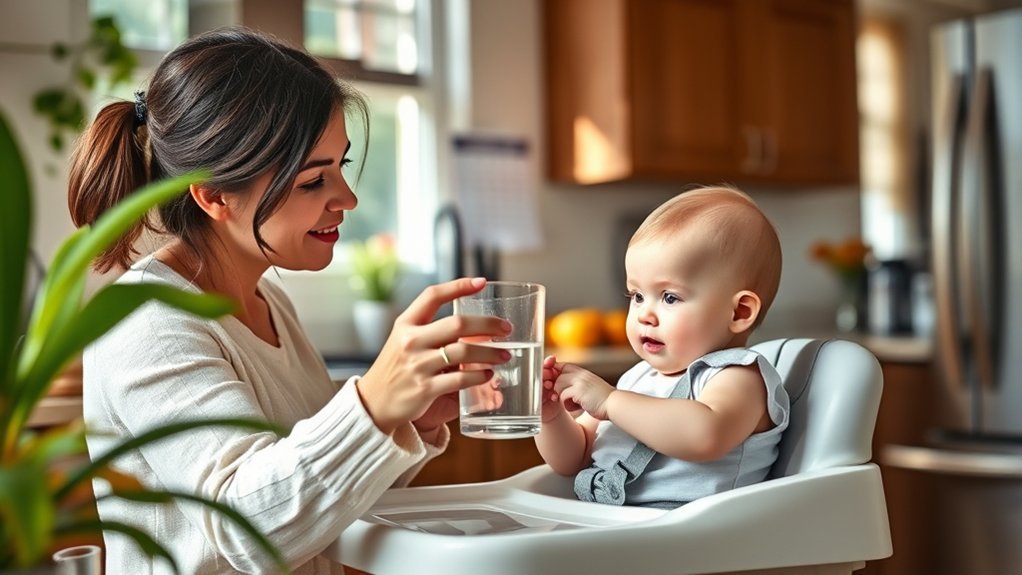
Learning to drink from a cup is a skill. Some babies accept water immediately, while others need repeated, low-pressure practice.
Use these strategies:
- Offer small amounts: One or two ounces is enough for practice.
- Use an open or straw cup: Try different safe cup shapes if one style is frustrating.
- Offer water with food: A few sips at meals creates a predictable routine.
- Model the behavior: Let your baby see family members drinking plain water.
- Keep the response neutral: Praise effort without pressuring the baby to drink.
- Practice supervised pouring: Outside the meal itself, supervised water play can help an older baby become familiar with cups without turning drinking into a struggle.
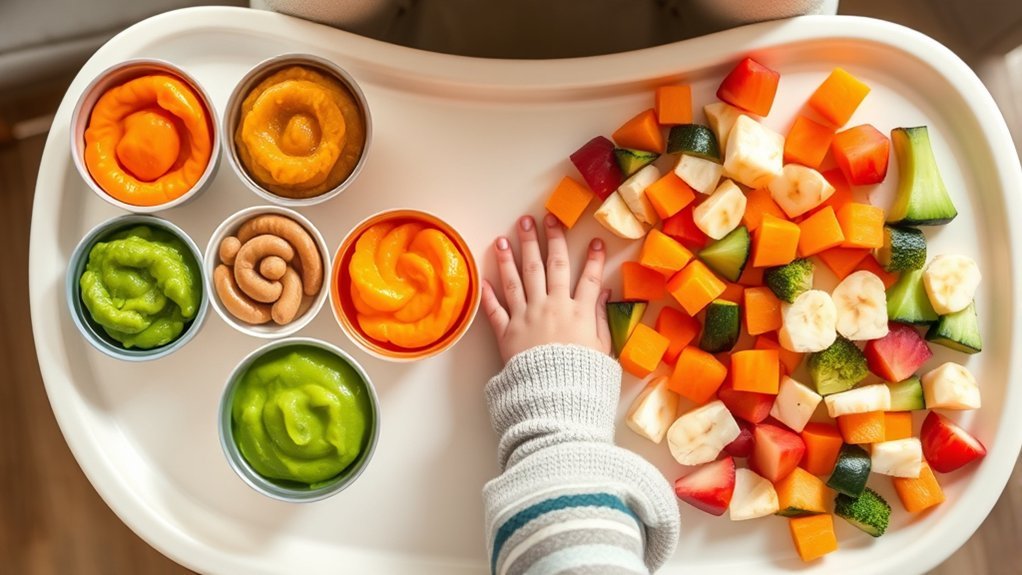
Soft fruits and vegetables also contain water, but they do not replace breast milk, formula, or an appropriate hydration plan during illness.
What to Do If Your Baby Doesn’t Want Water
A healthy 6–12-month-old who is taking normal breast-milk or formula feeds may drink only a small amount of water at first. Do not sweeten the water or replace milk feeds to make the baby thirsty.
| Strategy | Example | Why It Helps |
|---|---|---|
| Change the cup | Try a small open cup or soft straw cup. | The baby may find one drinking method easier than another. |
| Pair it with meals | Offer a few sips after bites of solid food. | The routine gives water a clear and consistent place. |
| Reduce pressure | Remove the cup when the baby turns away. | Respecting fullness and refusal cues can prevent a feeding struggle. |
| Model drinking | Drink plain water from your own cup at the table. | Babies often learn by watching familiar adults. |
Contact your baby’s clinician if refusal is accompanied by poor milk intake, repeated vomiting, diarrhea, fever, unusual sleepiness, mouth pain, or fewer wet diapers than usual.
Water During Hot Weather or Illness
Hot Weather
Babies younger than 6 months should not routinely receive plain water during hot weather. Offer breast milk more frequently, or continue formula feeds prepared exactly as directed. Keep the baby in a cool environment and watch for overheating or reduced urine output.
Babies older than 6 months may be offered their normal age-appropriate amount of water, but breast milk or formula remains important through 12 months.
Vomiting or Diarrhea
Plain water does not replace the salts and glucose lost through significant vomiting or diarrhea. Do not give large amounts of water or dilute formula in an attempt to treat dehydration.
Call your baby’s clinician for a treatment plan. The clinician may recommend a commercially prepared oral rehydration solution in specific amounts while continuing breast milk or other appropriate feeds.
Seek urgent care if your baby cannot keep fluids down, has blood in vomit or stool, has no urine for about eight hours, is difficult to wake, has a sunken soft spot, or appears seriously ill.
Frequently Asked Questions
Can a baby under 6 months ever have water?
Plain water is not routinely recommended before about 6 months. A pediatric clinician may occasionally prescribe a specific amount for an individual medical reason. Follow those instructions exactly rather than giving water on your own.
Can babies drink flavored water or juice instead?
No. Plain water is the best water choice after about 6 months. Flavored waters may contain sugar, sweeteners, acids, caffeine, or unnecessary additives. Juice is not recommended for babies under 12 months unless a clinician uses it for a specific medical reason.
What are the signs of dehydration in infants?
Possible signs include fewer wet diapers than usual, a dry mouth, few tears, a sunken soft spot, poor feeding, unusual fussiness, or excessive sleepiness. Contact a clinician promptly, especially if the baby has vomiting, diarrhea, or fever.
Is sparkling water safe for a baby?
Plain still water is the better choice. Carbonation can cause fullness, burping, or discomfort, and flavored sparkling products may contain sweeteners, acids, caffeine, or sodium that babies do not need.
Does hot weather change how much water a baby needs?
Babies under 6 months generally need more frequent breast-milk or normal formula feeds rather than plain water. Babies over 6 months can have their usual small servings of water. Contact a clinician if urine output drops or the baby shows signs of overheating or dehydration.
Can I mix water with baby formula?
Add water only when the formula label requires it. Measure the exact amount of safe water first, then add the stated amount of powdered or concentrated formula. Never add extra water, and never dilute ready-to-feed formula.
Is tap water or bottled water better for babies?
Safe municipal tap water is usually appropriate and may provide fluoride. Bottled water is not necessarily sterile or safer. Follow local advisories, test private-well water, and ask a clinician about the best source if contamination, immune problems, or other special circumstances apply.
What should I do if my baby drinks too much water?
Stop giving additional water and contact the baby’s clinician or poison-control service for prompt guidance. Call emergency services if the baby has a seizure, becomes difficult to wake, has breathing trouble, or appears blue or gray.
Conclusion
Most babies can begin drinking small amounts of plain water at about 6 months, when solid foods are introduced. Offer roughly 4–8 ounces per day in an open or straw cup, while continuing breast milk or formula as the main drink through 12 months.
Use a safe water source, follow local advisories, and have private-well water tested. Never dilute formula or add water to ready-to-feed products. Contact a medical professional if your baby has poor feeding, fewer wet diapers, unusual sleepiness, or other signs of dehydration or water intoxication.
Sources
- American Academy of Pediatrics: Recommended Drinks for Young Children — supports the 4–8-ounce daily range for babies 6–12 months.
- CDC: Foods and Drinks to Encourage — confirms appropriate drinks during the 6–12-month period.
- CDC: Infant Formula Preparation and Storage — provides safe formula-mixing and storage instructions.
- World Health Organization: Breastfeeding Questions and Answers — explains why breastfed babies under 6 months do not need additional water.
- U.S. Environmental Protection Agency: Private Wells and Infant Safety — supports private-well testing and nitrate precautions.
- American Academy of Pediatrics: Signs of Dehydration — supports the dehydration symptoms and urgent warning signs.