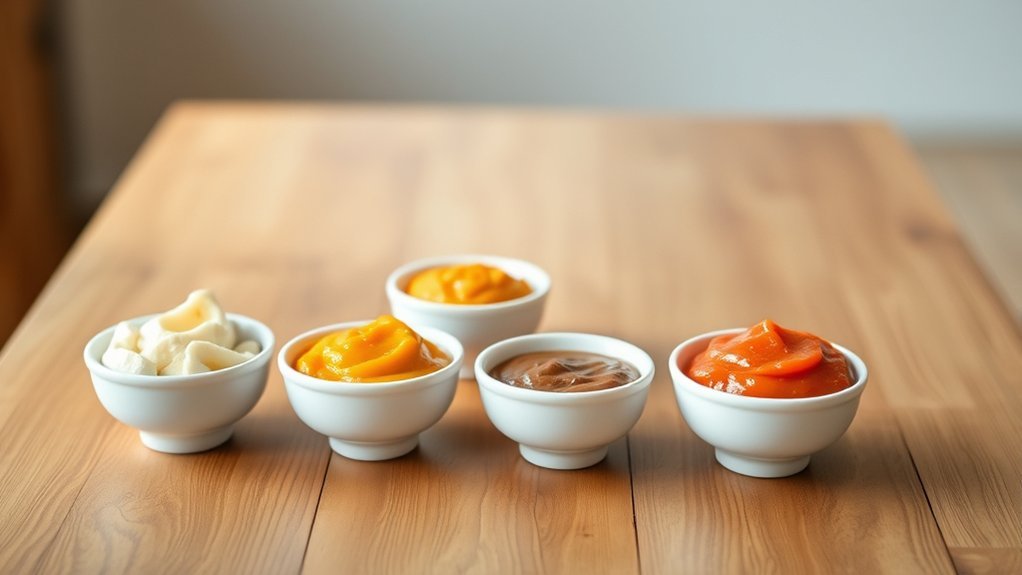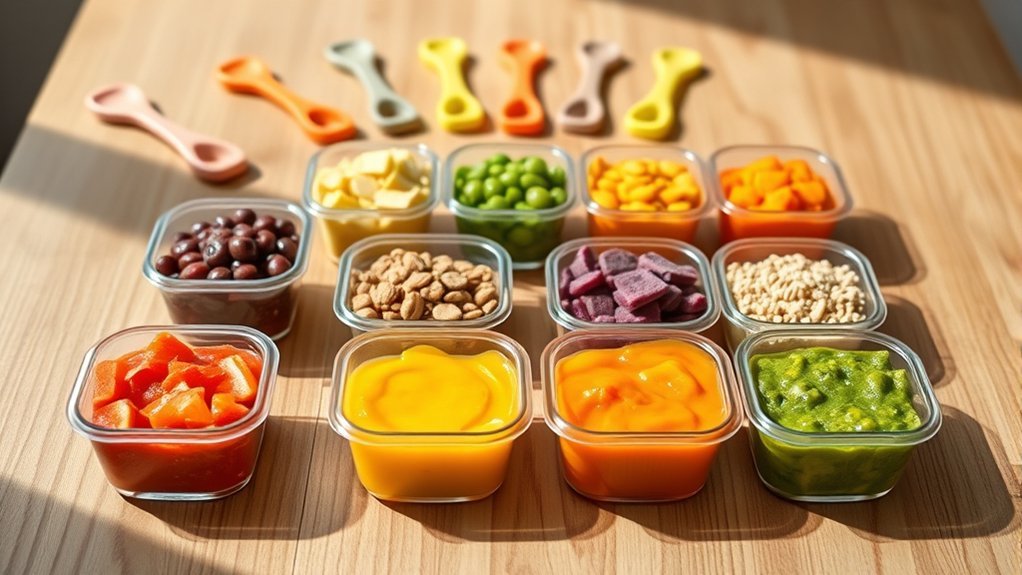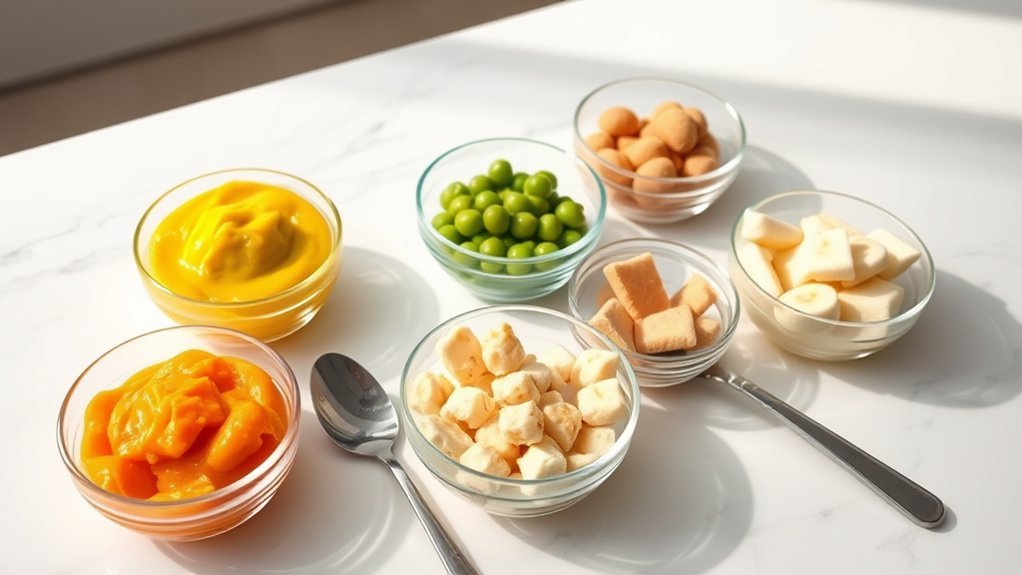
If your baby refuses textured foods, prefers smooth purees, or gags when a meal feels different, you are not alone. Learning to manage food in the mouth takes practice. The safest approach is to follow your baby’s developmental skills, offer small steps without pressure, and know which signs need help from a pediatrician or feeding specialist.
Quick Answer
Help a baby accept textured foods by starting when they show readiness, offering one safe texture step beyond what they already manage, and keeping practice calm and pressure-free. Use soft foods, let them touch and self-feed, repeat exposures, and stop when they show fullness. Seek help for coughing, choking, poor growth, pain, or persistent refusal.
Key Takeaways
- Most babies begin solid foods at about 6 months, but readiness skills matter more than the calendar alone.
- Move gradually from smooth foods to thicker, mashed, lumpy, finely chopped, ground, and soft finger foods as your baby’s skills improve.
- Choose food shape, size, and softness for your baby’s grasping and eating abilities rather than following one universal measurement.
- Occasional gagging can happen during learning, but choking, repeated coughing, breathing changes, pain, vomiting, or poor growth need prompt attention.
- Calm repetition, self-feeding opportunities, and respect for hunger and fullness cues work better than pressure or force.
At a Glance
| Time Required | About 10–15 minutes for a low-pressure practice meal, or as long as your baby remains comfortable and attentive |
| Difficulty | Easy to moderate; persistent feeding or swallowing problems require professional guidance |
| Tools Needed | Secure highchair with harness, baby-safe spoon, soft foods, bib, clean tray, and washcloth |
| Cost | Low; many family foods can be mashed, shredded, cooked, or cut into a safer form |
Note: This article provides general education and cannot evaluate your baby’s swallowing safety, nutrition, growth, allergies, reflux, or development. Ask your pediatrician for individualized advice, especially if your baby was born prematurely or has a medical or developmental condition.
Understanding Your Baby’s Disinterest in Food and Texture Sensitivity
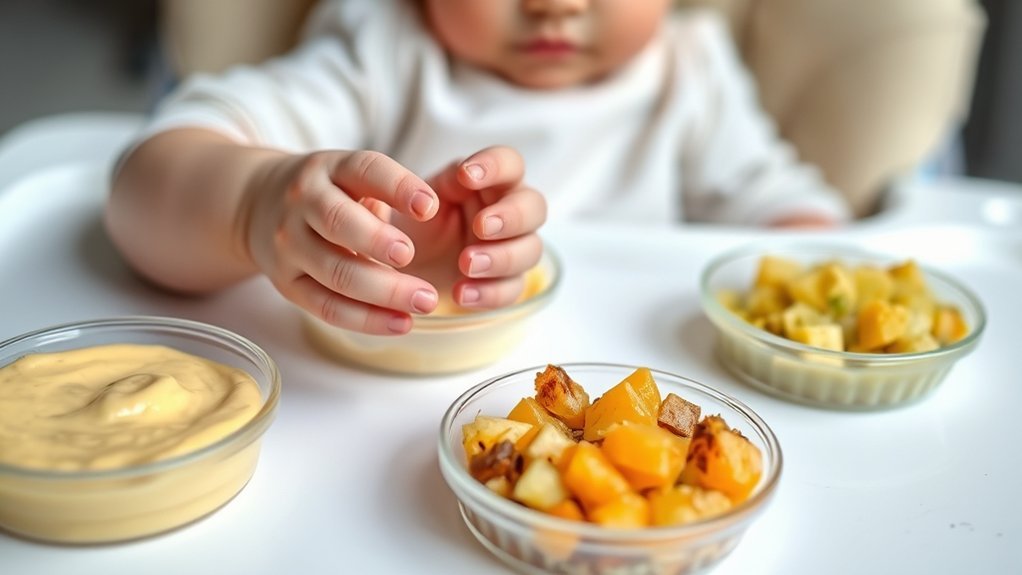
A baby may reject textured food for several reasons. Some are part of normal learning, while others may point to discomfort or a feeding problem.
- Limited experience: A new texture may feel surprising even when the flavor is familiar.
- Developing oral skills: Babies must learn to move food with their tongue, close their lips, manage saliva, mash food with their gums, and swallow.
- Fatigue, hunger, or overstimulation: A tired or very hungry baby may have less patience for practice.
- Teething or illness: A sore mouth, congestion, or temporary loss of appetite can affect eating.
- Previous distress: Choking, force-feeding, repeated vomiting, or painful reflux may make a baby wary of food.
- Sensory sensitivity: Some babies react strongly to a food’s feel, smell, temperature, color, or mixed consistency.
- Feeding or swallowing difficulty: Repeated coughing, choking, breathing changes, pocketing food, vomiting, or poor growth needs professional evaluation.
The CDC recommends beginning foods other than breast milk or formula at about 6 months and not before 4 months. Readiness signs include sitting upright alone or with support, controlling the head and neck, opening for food, bringing objects to the mouth, and swallowing food instead of automatically pushing it out.
A rejected texture is not necessarily a failed meal. Looking, touching, smelling, licking, or taking one small taste can all be useful practice.

Power your essentials anywhere with a 999Wh pure sine wave power station delivering up to 1000W continuous with 2000W surge. It supports fast charging via USB-C PD 60W and USB-A QC 18W, plus simultaneous output for multiple devices through AC, USB, wireless, and car/DC ports. Recharge using AC, car, or solar with a built-in MPPT controller and dual cooling fans, while the upgraded battery management system protects against surges, short circuits, and overheating.

𝗦𝘁𝗲𝗮𝗺𝗶𝗻𝗴 𝗮𝗻𝗱 𝗕𝗹𝗲𝗻𝗱𝗶𝗻𝗴 𝗶𝗻 𝗢𝗻𝗲: The height of the blender container is 4.13 inches, and the outer diameter is 4.17 inches.This GROWNSY baby food maker thoughtfully designed for babies 6 months+ during the weaning stage.It seamlessly combines steaming and blending in a single device, simplifying meal prep and eliminating the need for extra kitchen tools. The built-in sterilizer mode saves time and effort, giving you more precious moments with your baby.

ON THE GO BABY FOOD: Gerber Stage 1 Baby Food Puree Tubs are designed for ease and convenience. These tubs are the perfect on the go baby food, made in a portable and easy-to-store format for busy parents
Typical Texture Learning Versus Warning Signs
| Often Part of Learning | Contact the Pediatrician |
|---|---|
| Making a face at a new food | Pain, crying, or arching during most meals |
| Touching or squishing food without eating it | Repeated coughing, choking, wheezing, or breathing trouble |
| Spitting out a piece that is hard to manage | A wet, gurgly, hoarse, or breathy voice during or after eating |
| Occasional gagging while learning | Frequent gagging, retching, vomiting, or meals that regularly cause distress |
| Eating different amounts from day to day | Poor weight gain, weight loss, dehydration, low energy, or a shrinking range of accepted foods |
Strategies for Encouraging Exploration of Textures
Start with a texture your baby already handles and change only one feature at a time. For example, make a familiar puree slightly thicker before adding soft lumps. This gives your baby a manageable challenge instead of a completely unfamiliar meal.
Use a Gradual Texture Ladder
The CDC describes a progression that may include smooth, mashed or lumpy, and finely chopped or ground foods. The pace should follow your baby’s skills rather than a strict schedule.
- Smooth and thick: Make a familiar puree less runny so it stays on the spoon.
- Fork-mashed: Leave tiny, soft irregularities in banana, avocado, beans, potato, or cooked vegetables.
- Soft lumps: Add a small amount of finely mashed food to a familiar smooth base.
- Finely chopped, ground, or shredded: Try soft pasta, ground meat with sauce, flaky fish with all bones removed, tender vegetables, or soft fruit.
- Soft self-feeding foods: Offer foods your baby can pick up and easily squash with the gums or between your fingers.
Pro Tip: Use a “bridge food.” Mix a small amount of the new texture into a food your baby already accepts, or place the new food beside a familiar favorite without hiding it.
Continue to offer previously rejected textures without pressure. Acceptance often takes repeated experiences. A baby does not have to swallow a full serving for the exposure to count.
Use Fun, Edible Sensory Play
Food exploration can begin before the first bite. Put a small amount of yogurt, mashed fruit, soft pasta, oatmeal, or fork-mashed vegetables on a clean tray and let your baby touch, smear, pick up, and smell it.
Finger painting with an edible puree or making simple patterns in yogurt can help a cautious baby become familiar with a texture. Keep the activity short, seated, and directly supervised. Avoid loose dry sensory bins during feeding practice; edible food on the tray is easier to monitor and connects the sensory experience to eating.
Messy play also supports hand skills as babies learn to grasp, release, scoop, and bring food toward their mouth. Do not place food in your baby’s mouth while they are turning away, crying, or resisting.
Create a Positive Mealtime Environment
A calm atmosphere can make texture practice easier. Seat your baby securely, reduce distractions, and eat with them when possible. Smile, describe the food in simple words, and model taking a bite without demanding that your baby copy you.
| Strategy | How It Helps |
|---|---|
| Make eye contact and talk calmly | Builds connection and helps you notice your baby’s cues |
| Allow self-feeding | Lets your baby control the pace and amount entering the mouth |
| Use a simple routine | Makes meals more predictable |
| Limit screens, toys, and rushing | Helps the baby and caregiver focus on eating safely |
| Stop at fullness cues | Supports trust and reduces mealtime conflict |
Gradually Transitioning From Purees to Textured Foods
Most babies begin exploring solid foods at about 6 months when they show readiness. They do not need teeth to manage every soft food; gums can mash many ripe, cooked, shredded, or tender foods.
Try progressing a familiar food in small steps:
- Banana: smooth puree → fork-mashed banana → soft banana pieces appropriate for your baby’s grasp.
- Sweet potato: thin puree → thick puree → fork-mashed potato → very soft cooked pieces.
- Oatmeal: smooth cereal → thicker cereal → cereal with a small amount of soft mashed fruit.
- Vegetables: smooth puree → mashed vegetable → finely chopped or soft graspable pieces.
- Protein foods: smooth bean puree → mashed beans with skins broken down → finely shredded tender meat, flaky boneless fish, soft egg, yogurt, or ground meat in sauce.
Offer only one small texture challenge at a time. If your baby becomes overwhelmed, return to a texture they manage and try a smaller step during a later meal. Moving back temporarily is not failure.
Breast milk or infant formula remains an important source of nutrition during the first year. Texture practice should also include nourishing choices rather than only fruit and vegetables. Offer age-appropriate sources of iron, protein, fat, and energy as part of the variety.
Choosing Safe Food Size, Shape, and Texture
There is no single food measurement that fits every baby and every feeding stage. Preparation should match your baby’s grasping skill, oral skill, and ability to sit upright and control the head and neck.
For an Early Palmar Grasp
A baby who grabs food with the whole fist may handle a soft, finger-shaped piece that extends beyond the fist. The food should be tender enough to mash with the gums and easy for an adult to compress between two fingers. Examples may include very soft cooked vegetable strips, ripe avocado, soft banana, tender broccoli florets with a handle, or omelet strips.
For a Developing Pincer Grasp
Once your baby can reliably pick up small objects between the thumb and fingertip, you can offer small, soft pieces of cooked vegetables, ripe fruit, tender pasta, shredded meat, flaky boneless fish, or other manageable foods.
Regardless of grasp, avoid round coin-shaped pieces. Cut grapes, cherry tomatoes, berries, sausages, and similar cylindrical or round foods into small, non-round pieces appropriate for the child. Cook firm produce until tender, remove pits and bones, spread nut butter thinly instead of serving a thick spoonful, and break up sticky clumps.
Safety Tips for Keeping Mealtime Safe With New Textures

Supervise During Mealtime
Stay close enough to see your baby’s face and respond immediately. Your baby should sit upright in a secure highchair or another safe feeding seat with the harness fastened. Do not feed a baby who is lying down, crawling, walking, riding in a moving car, or distracted by play.
Keep meals calm and unhurried. Never leave a baby eating alone, even with foods they have managed before. Choking can occur quietly.
Avoid Common Choking Hazards
The CDC advises avoiding or modifying foods that are small, sticky, firm, round, or difficult to chew and swallow. Common hazards include:
- Whole grapes, cherries, berries, cherry tomatoes, or melon balls
- Hot dogs, sausages, meat sticks, or round coin-shaped slices
- Whole or chopped nuts and seeds
- Thick spoonfuls or clumps of nut or seed butter
- Raw hard apple, carrot, or other firm produce pieces
- Popcorn, chips, pretzels, hard crackers, and granola bars
- Hard, gummy, chewy, or sticky candy and marshmallows
- Large chunks of meat or cheese
- Fish or meat containing bones
- Whole beans or firm grain kernels that have not been mashed or prepared safely
Warning: If your baby cannot breathe, cry, cough effectively, or make noise; becomes blue around the lips, gums, or nails; appears limp; or loses consciousness, treat it as choking. Call 911 and begin age-appropriate infant choking first aid if you know how. Do not perform a blind finger sweep. Parents and caregivers should take an infant CPR and choking-response course.
Managing Gagging and Spitting During Mealtime

Gagging and choking are not the same. Gagging is a protective reflex that may occur while a baby learns how much food can be moved and swallowed. Choking means the airway is partly or fully blocked and requires immediate action.
| Gagging | Choking |
|---|---|
| Usually noisy, with coughing, retching, or gagging sounds | May be quiet because air cannot move |
| Baby may push the tongue or food forward | Baby may be unable to cough effectively, cry, breathe, or make sound |
| Baby continues moving air and may look red | Lips, gums, nail beds, or skin may appear blue, gray, or unusually pale |
| Often resolves as the baby brings food forward or spits it out | Requires immediate choking first aid and emergency help |
If your baby is gagging but breathing and making sound, stay calm and watch closely. Avoid putting your fingers into the mouth, which may push food farther back. Let the baby work the food forward unless a healthcare professional has given you different instructions.
Reduce repeated gagging by offering softer food, smaller amounts at one time, or a less challenging texture. Encourage self-feeding so your baby controls when food enters the mouth. Persistent gagging, coughing, vomiting, or distress should not simply be treated as a phase.
The Importance of a Positive Mealtime Environment
Your job is to offer safe, nourishing food and a supportive setting. Your baby decides whether to eat and how much. This responsive approach helps protect trust at mealtime.
| Helpful Practice | What to Avoid |
|---|---|
| Offer one familiar food with a small amount of the new texture | Replacing the whole meal with unfamiliar foods |
| Let the baby touch, smell, lick, or spit out food | Holding the hands down or repeatedly replacing rejected food in the mouth |
| Model eating and describe the food simply | Begging, bribing, distracting, or showing alarm |
| End the meal when your baby consistently turns away, closes the mouth, pushes food away, or loses interest | Requiring the baby to finish a serving |
| Keep practice short and repeat it later | Extending a stressful meal in an effort to get one more bite |
When to Seek Professional Help for Feeding Issues
Contact your pediatrician if you are worried about feeding progress or safety. Do not wait for a specific birthday when symptoms are already persistent.
The feeding and swallowing guidance supported by the American Speech-Language-Hearing Association lists warning signs such as coughing or gagging during meals, breathing trouble, frequent vomiting, very long meals, limited textures, and poor growth.
Ask for an evaluation when your baby:
- Repeatedly coughs, chokes, wheezes, or struggles to breathe while eating or drinking
- Has a wet, gurgly, hoarse, or breathy sound during or after meals
- Frequently gags, retches, or vomits with textures
- Cries, stiffens, arches, or appears to be in pain during feeding
- Regularly holds food in the cheeks or has trouble moving, chewing, or swallowing it
- Accepts only a very narrow range of textures and is not making progress
- Takes unusually long to finish meals or becomes exhausted while eating
- Has poor weight gain, weight loss, dehydration, reduced energy, or fewer wet diapers
- Loses feeding skills that were previously present
- Has recurring chest infections or suspected food or liquid aspiration
A pediatrician may refer your baby to a feeding-trained speech-language pathologist, occupational therapist, registered dietitian, gastroenterologist, allergist, or another specialist depending on the symptoms. A feeding evaluation may examine posture, breathing, oral movements, chewing, swallowing, food variety, nutrition, sensory responses, and mealtime behavior.
Note: Before an appointment, record which foods and textures cause difficulty, whether coughing or vomiting occurs, how long meals last, what the baby drinks, and whether symptoms change with position, temperature, or fatigue. A short video may also help the clinician if it can be taken without distracting you from supervision.
Community Support and Resources for Parents
Feeding challenges can be stressful, and support from other parents may reduce isolation. Online groups, local parenting programs, and baby-led weaning communities can offer meal ideas and encouragement.
Social media creators such as mothercould may provide playful sensory ideas, but influencer content should not replace medical or choking-safety guidance. Check feeding claims against pediatric sources and discuss concerns with your child’s healthcare team.
For individualized help, look for professionals with pediatric feeding and swallowing experience. An occupational therapist may focus on sensory and motor participation, a speech-language pathologist may assess feeding and swallowing skills, and a registered dietitian can review growth, nutrients, and meal balance.
Baby-Led Weaning: Building a Diverse and Healthy Diet
Baby-led weaning allows a baby to self-feed suitable family foods rather than relying only on spoon-fed purees. It can provide practice with different flavors, textures, grasping, chewing, and stopping at fullness. It is not the only healthy feeding method, and families may combine self-feeding with responsive spoon-feeding.
The American Academy of Pediatrics notes that research on baby-led weaning’s advantages remains limited. Claims that it prevents picky eating or obesity should not be treated as guarantees.
To use baby-led weaning more safely:
- Wait until your baby shows solid-food readiness and can remain upright with good head and neck control.
- Use a stable highchair and buckle the harness.
- Offer soft foods prepared for the baby’s current grasp and eating skills.
- Avoid round, firm, sticky, or hard choking hazards.
- Include iron- and energy-rich foods rather than offering mainly fruit and vegetables.
- Continue breast milk or infant formula during the first year as advised by your pediatrician.
- Let your baby decide how much to eat without requiring a clean plate.
- Discuss the plan with the pediatrician if your baby was premature, has poor growth, or struggles to sit, chew, or swallow.
Frequently Asked Questions
What are common signs of texture intolerance in babies?
A baby may turn away, close the mouth, cry, spit food out, gag, or accept only smooth foods. These behaviors do not confirm a medical intolerance by themselves. Persistent coughing, choking, vomiting, pain, breathing changes, poor growth, or a shrinking range of accepted foods should be discussed with the pediatrician.
How can I make mealtime more enjoyable for my child?
Use a predictable routine, seat your baby securely, remove screens and toys, eat together, and offer one familiar food beside a small amount of the new texture. Let your baby touch and explore the food, and stop when they show clear fullness or distress.
What textures should I introduce first to my baby?
Begin when your baby shows readiness. Smooth, mashed, or strained foods may be easiest at first. Progress to thicker purees, fork-mashed foods, soft lumps, finely chopped or ground foods, and soft self-feeding pieces as your baby’s abilities develop.
How often should I offer new textures to my baby?
Offer low-pressure texture practice regularly when your baby is alert and comfortable. You can repeat a familiar texture and a slightly more challenging one during the same meal. There is no need to force progress every day; return to an easier texture when your baby is tired, ill, or overwhelmed.
Can my baby’s texture preferences change over time?
Yes. Preferences often change with experience, oral-motor development, teething, illness, and repeated exposure. Continue offering safe variety without pressure. Seek help when refusal remains severe, progress stops, or feeding causes distress.
How can I tell whether my baby is gagging or choking?
Gagging is usually noisy and may involve coughing, retching, tongue movement, and bringing food forward. Choking may be quiet. A baby who cannot breathe, cry, cough effectively, or make noise needs immediate choking first aid and emergency help.
When should texture refusal be evaluated by a professional?
Contact the pediatrician when refusal is persistent or accompanied by coughing, choking, breathing trouble, pain, frequent vomiting, very long meals, poor growth, low energy, loss of feeding skills, or acceptance of only a very narrow range of textures.
Conclusion
Helping a baby move beyond smooth purees often takes patience, repetition, and careful preparation. Start with readiness, change textures in small steps, and let your baby explore without pressure. Keep every meal upright and supervised, and choose foods that match current grasping and eating skills. Most importantly, trust your concern when feeding looks painful, exhausting, unsafe, or stalled. Early guidance from your pediatrician or a feeding specialist can protect nutrition, safety, and a more comfortable relationship with food.
Sources
- CDC: When, What, and How to Introduce Solid Foods — readiness signs, timing, food preparation, and texture progression
- CDC: Tastes and Textures — smooth, mashed, lumpy, chopped, and ground texture guidance
- CDC: Choking Hazards — supervision, safe positioning, food preparation, and common choking hazards
- CDC: Tips for Mealtime Routines — secure seating, supervision, distractions, family meals, and hunger/fullness cues
- American Academy of Pediatrics: Baby-Led Weaning Safety — balanced benefits, nutrient concerns, readiness, and safer self-feeding
- Communication Health Support Association and ASHA: Feeding and Swallowing Disorders in Children — warning signs, evaluation, and feeding-team roles