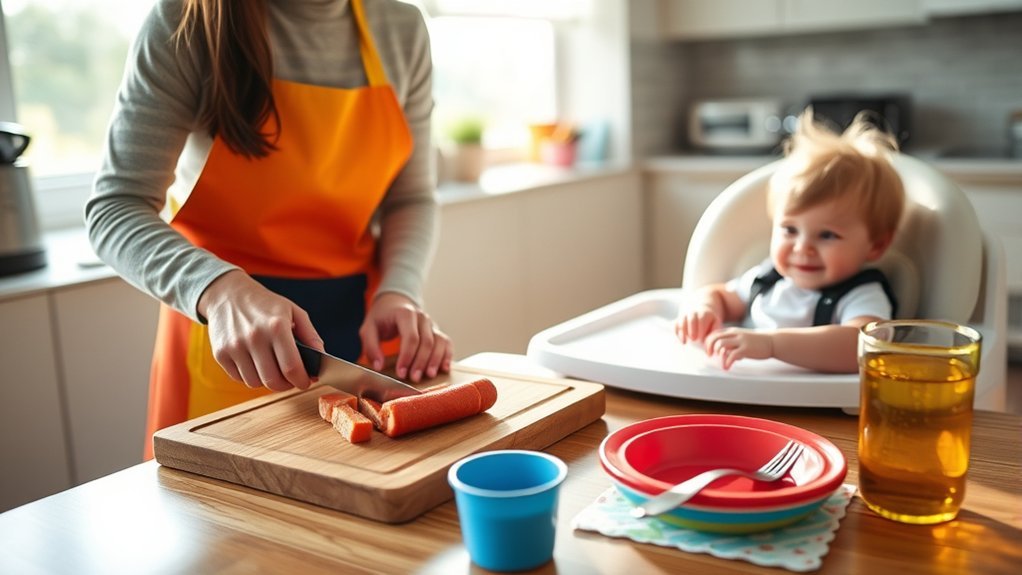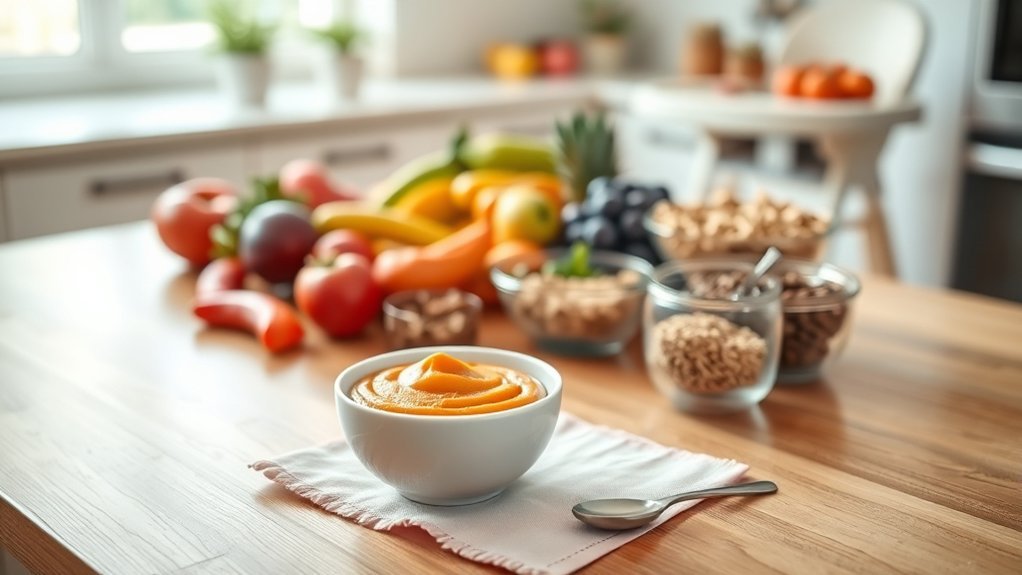
At 12 months, your child can begin eating a wider range of family foods prepared in soft, safe textures. A useful daily pattern is three meals and two or three snacks, with foods from several groups offered across the day. Your job is to provide balanced choices on a regular schedule; your toddler can decide whether to eat and how much.
Quick Answer
A one-year-old should eat soft, safely prepared foods from all major food groups, with special attention to iron, protein, healthy fats, calcium, and vitamin D. Offer three meals and two or three snacks, begin with small portions, provide water and appropriate milk, and follow your child’s hunger and fullness cues.
Key Takeaways
- Offer food about every two to three hours, usually as three meals and two or three planned snacks.
- Include iron-rich foods every day, such as meat, beans, lentils, eggs, tofu, or iron-fortified cereal.
- At 12 months, most children may begin drinking pasteurized, unsweetened whole milk from a cup. Avoid exceeding 24 ounces of milk per day unless a clinician recommends otherwise.
- Start with small portions and offer more when your child remains hungry. Do not pressure your child to clean the plate.
- Prevent choking by keeping your child seated and supervised and by cutting round, firm, sticky, or hard foods into safer shapes and textures.
- Honey is unsafe before 12 months but may be offered after the first birthday. It should still be limited because it is an added sugar.
At a Glance
| Daily Pattern | Three meals and two or three planned snacks |
| Main Drinks | Water, breast milk if continuing, and pasteurized unsweetened whole milk or an appropriate fortified alternative |
| Starting Portions | Small toddler portions, often 1–2 tablespoons of several foods, with more offered on request |
| Main Safety Priority | Safe textures, upright seated eating, and continuous adult supervision |
Note: This guide provides general information for healthy children around 12 months old. Ask your child’s pediatrician or a pediatric dietitian for individualized advice if your child was born prematurely, has poor growth, anemia, food allergies, swallowing difficulty, a medical condition, or a highly restricted diet.
How to Meet Your Baby’s Nutritional Needs at One Year
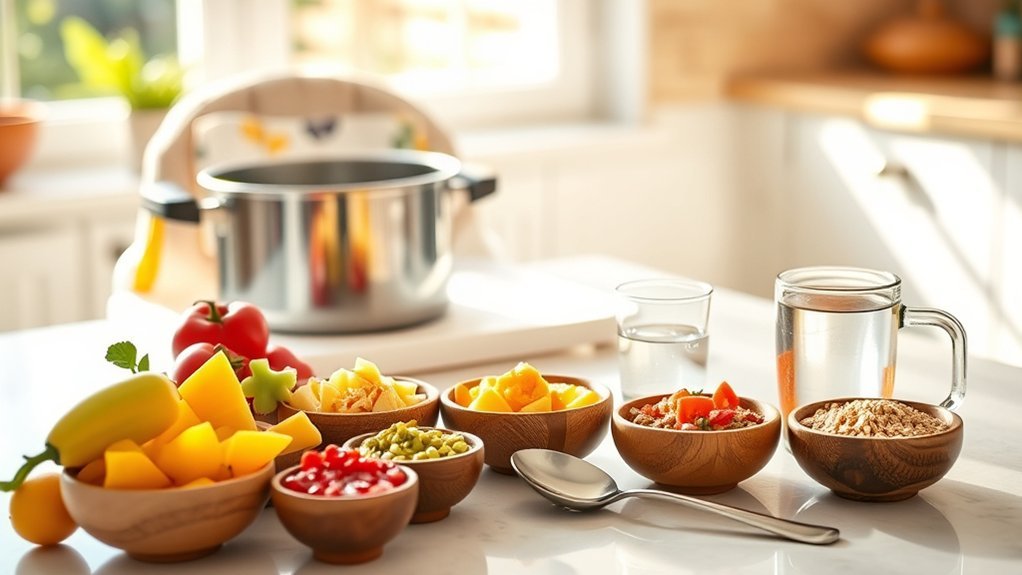
Your child’s growth usually slows after the first birthday, so appetite may become less predictable. A toddler may eat a large breakfast, barely touch lunch, and eat normally again the next day. Look at the overall pattern across several days instead of judging nutrition by a single meal.
The Centers for Disease Control and Prevention recommends offering something to eat or drink every two to three hours. This commonly works out to three meals and two or three snacks per day. Avoid all-day grazing because it can reduce hunger at meals and expose teeth to food or drinks for long periods.
Offer the food, timing, and eating place. Let your child decide whether to eat and how much.
Important Nutrients for a One-Year-Old
A varied diet matters more than making every meal perfect. Try to include an iron-rich food each day and rotate fruits, vegetables, grains, proteins, dairy foods, and healthy fats throughout the week.
| Nutrient | Toddler-Friendly Sources | Why It Matters |
|---|---|---|
| Iron | Finely chopped meat, poultry, beans, lentils, tofu, eggs, and iron-fortified cereal | Supports healthy blood and development |
| Protein | Eggs, fish, meat, yogurt, cheese, beans, lentils, tofu, and safely prepared nut or seed butters | Supports growth and tissue repair |
| Calcium and vitamin D | Whole milk, full-fat yogurt, cheese, and appropriately fortified alternatives | Supports developing bones and teeth |
| Healthy fats | Avocado, olive oil, eggs, full-fat dairy, low-mercury fish, and thinned nut or seed butter | Provides energy and supports development |
| Fiber | Soft fruits, cooked vegetables, beans, oats, and other whole grains | Supports digestion and dietary variety |
Children ages 12–24 months need 600 IU of vitamin D each day. Food and fortified milk may provide some or all of it, but intake varies. Ask your child’s clinician whether a supplement is needed, especially if your child drinks little fortified milk or follows a restricted diet. See the CDC’s vitamin D guidance for more information.
Pro Tip: Pair plant-based iron foods such as beans, lentils, or fortified cereal with a vitamin C food such as berries, tomato, broccoli, or soft-cooked bell pepper.
Essential Food Groups for a Balanced Diet
Do not worry if every food group does not appear at every meal. Aim for variety across the day and week, and continue offering familiar foods alongside foods your child is still learning to enjoy.
Vegetables and Fruits
Serve fruits and vegetables in soft, manageable forms. Good choices include ripe banana, avocado, soft pear, mashed berries, steamed broccoli, roasted sweet potato, cooked carrots, peas, and squash.
- Cook firm vegetables until they can be mashed easily with a fork.
- Cut soft foods into pieces your child can grasp and manage.
- Quarter grapes and cherry tomatoes lengthwise.
- Smash round blueberries or quarter larger berries.
- Choose fruit canned in water or its own juice rather than syrup.
- Use frozen vegetables without heavy sauces or excess sodium.
Repeated exposure helps toddlers learn new flavors. The Dietary Guidelines for Americans, 2025–2030 notes that a child may need about 8–10 exposures before being willing to try a new food, and some children need longer. Seeing, touching, or licking a new food can still be part of learning.
Protein Sources Selection
Offer both animal and plant proteins. Prepare meat and fish until fully cooked, remove all bones, and serve them shredded, ground, mashed, or finely chopped.
| Protein Source | Safer Preparation |
|---|---|
| Meat or poultry | Cook thoroughly; shred, mince, or finely chop and moisten if dry |
| Fish | Choose low-mercury fish, cook fully, remove every bone, and flake finely |
| Eggs | Cook the white and yolk fully; serve scrambled, sliced, or in a soft omelet |
| Beans and lentils | Cook until soft; mash or flatten firm beans |
| Tofu | Serve soft strips, small pieces, or crumbled into another food |
| Nut or seed butter | Thin into yogurt, oatmeal, or water, or spread very thinly on soft toast |
Fish can provide useful nutrients, but select varieties lower in mercury. The FDA advises children ages 1–3 to eat about two 1-ounce servings per week from its “Best Choices” list. Examples include salmon, shrimp, pollock, tilapia, trout, sardines, and canned light tuna.
Grains, Dairy, and Healthy Fats
Choose soft whole-grain foods such as oatmeal, quinoa, brown rice, whole-grain pasta, or soft toast. Full-fat yogurt, cheese, whole milk, avocado, olive oil, egg, and low-mercury fish provide energy and nutrients useful during early childhood.
Avoid making meals extremely low in fat unless your child’s clinician has recommended a specific plan. Young toddlers have high energy needs but small stomachs.
How to Introduce Whole Milk Into Your Baby’s Diet
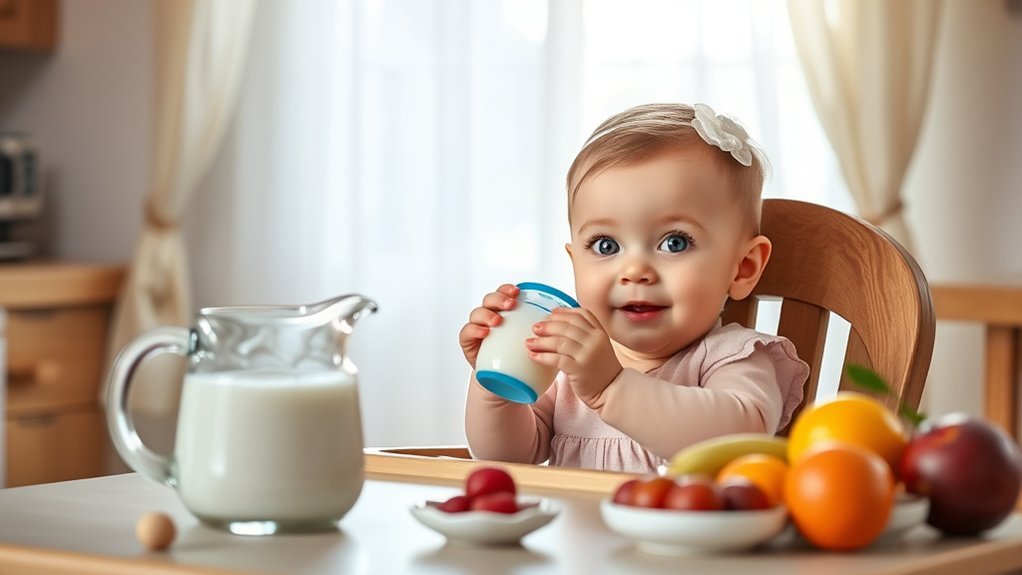
Once your child reaches 12 months, you may offer pasteurized, plain, unsweetened whole cow’s milk. Serve it in an open cup or straw cup rather than relying on a bottle throughout the day.
Many toddlers do well with about 16 ounces of milk per day. The American Academy of Pediatrics recommends not exceeding 16–24 ounces after the first birthday because milk can fill a child quickly and crowd out iron-rich food. Yogurt and cheese also contribute to dairy intake, so a child who eats those foods may need less fluid milk.
- Offer milk with meals rather than allowing constant sipping.
- Offer plain water between meals and snacks.
- Do not use milk as a replacement for solid food.
- Choose unflavored milk without added sugar.
- Speak with your pediatrician before using reduced-fat milk at this age unless it has been specifically recommended.
You do not need to stop breastfeeding at the first birthday. Breastfeeding may continue for two years or beyond when mutually desired. A child who continues to breastfeed may drink less cow’s milk, depending on the rest of the diet.
Most healthy children can stop standard infant formula at 12 months. Children born prematurely or those with growth, digestive, metabolic, or other medical needs may require a different plan from their clinician.
Choosing a Milk Alternative
If cow’s milk is unsuitable, choose an unsweetened beverage fortified with calcium and vitamin D and compare its protein, fat, and calorie content. Fortified soy beverage is often nutritionally closer to cow’s milk than almond, rice, coconut, or oat beverages, but products vary considerably.
Ask your child’s pediatrician or dietitian to review the label, especially if the beverage will be a major source of calories or protein. The CDC recommends discussing milk alternatives with a child’s doctor or nurse.
Warning: Do not give a toddler raw or unpasteurized milk, yogurt, cheese, or juice. These products can contain bacteria capable of causing severe illness.
Tips for Encouraging Self-Feeding
Self-feeding helps your toddler practice hand-eye coordination, chewing, cup use, and decision-making. Expect spills and uneven progress. Your child may use fingers at one meal and show interest in a spoon at the next.
Offer Safe Finger Foods
Offer foods that are soft enough to mash between your fingers and are cut into a shape your child can manage. Examples include:
- Soft-cooked vegetable strips or small pieces
- Ripe banana, avocado, peach, pear, or mango
- Soft pasta shapes
- Shredded meat or flaked fish with all bones removed
- Scrambled egg pieces
- Soft toast strips with a very thin spread of nut or seed butter
- Soft beans that have been mashed or flattened
Avoid placing too much food on the tray at once. Two or three choices in small amounts can feel more manageable and reduce waste.
Encourage Utensil Practice
Use a short, child-sized spoon and a blunt toddler fork. Foods that stick to a spoon, such as oatmeal, yogurt, mashed beans, or mashed vegetables, are easier for a beginner than thin liquids.
You can preload the spoon and place it on the tray. Let your child pick it up and bring it to the mouth. Help only as much as needed, and avoid correcting every movement.
Allow Food Exploration
Touching, smelling, squishing, licking, and tasting are normal parts of learning to eat. A child does not need to swallow a new food for the exposure to be useful.
Keep the atmosphere calm and neutral. Describe the food without pressure: “The pear is soft,” or “The broccoli has little bumps.” Avoid begging, bribing, or forcing bites.
Choking Prevention for One-Year-Olds
One-year-olds can chew many soft foods, but their chewing skills are still developing. Choking risk depends on a food’s size, shape, firmness, and stickiness—not only on whether a child has teeth.
A gagging child may cough, make noise, or push food forward. A choking child may be unable to cough, cry, or breathe and may become silent or change color. Learn age-appropriate choking first aid and CPR from a qualified course so you know how to respond.
Warning: Keep your child upright and seated while eating. Do not allow eating while walking, running, lying down, riding in a moving car, or playing. Stay within arm’s reach and watch continuously.
| Food | Why It Is Risky | Safer Preparation |
|---|---|---|
| Grapes and cherry tomatoes | Round and airway-sized | Quarter lengthwise |
| Hot dogs and sausages | Firm, round, and difficult to dislodge | Prefer another protein; if served, quarter lengthwise and cut into small pieces |
| Raw carrots and other hard vegetables | Too firm to chew safely | Cook until very soft, then cut appropriately |
| Whole nuts and seeds | Small, hard, and easy to inhale | Use finely ground forms or smooth butter thinned or spread very thinly |
| Nut or seed butter by the spoonful | Thick and sticky | Thin into another food or spread a very thin layer |
| Popcorn, hard candy, gum, and marshmallows | Hard, sticky, or difficult to control | Do not serve to a one-year-old |
| Large meat or cheese chunks | Dense and difficult to break down | Shred, grate, crumble, or finely chop |
Review the CDC choking-hazard guidance for additional examples and preparation advice.
Effective Strategies for Managing Picky Eating in Toddlers
Selective eating often becomes more noticeable after the first birthday. Growth slows, appetite varies, and toddlers begin to express stronger preferences. A refusal does not mean a food must disappear from the menu.
- Serve one familiar food with one or two other choices.
- Offer new foods repeatedly without requiring a bite.
- Keep meals and snacks on a predictable schedule.
- Eat together when possible and model the foods you offer.
- Avoid using dessert or sweets as a reward.
- Keep mealtimes calm and reasonably brief.
- Allow your child to stop eating when full.
Do not prepare a completely separate meal after every refusal. You can include at least one food your child usually accepts, then let your child choose from what is served.
Pro Tip: Serve a tiny amount of a new food—sometimes one piece is enough. A large pile can feel overwhelming and create unnecessary waste.
How Many Portions Should You Serve Your One-Year-Old?
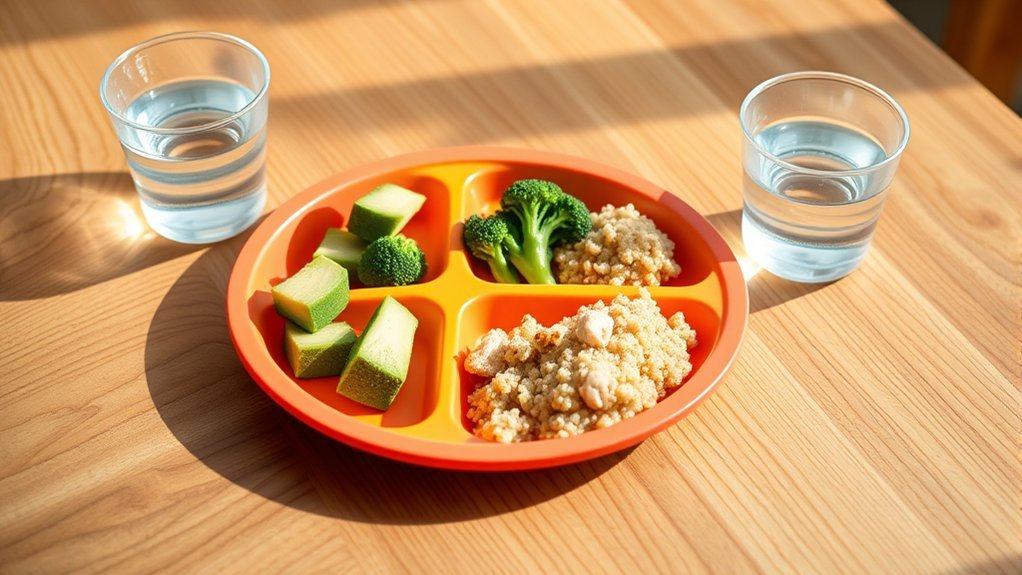
Toddler portions are much smaller than adult portions. Begin with a small amount, then offer seconds if your child remains interested. A child may eat different amounts from one meal or day to the next.
Flexible Starting Portions
The following amounts are examples rather than requirements. Your child may want less or more depending on growth, activity, breastfeeding, illness, teething, and the rest of the day’s intake.
| Food Group | Example Starting Amount |
|---|---|
| Cooked vegetables | 1–2 tablespoons |
| Soft fruit | 1–2 tablespoons or several small pieces |
| Cooked grain | 1–2 tablespoons, or about one-quarter slice of bread |
| Meat, poultry, fish, or tofu | About 1 ounce or a smaller starter portion |
| Beans or lentils | 2–3 tablespoons |
| Yogurt | About one-third cup |
| Milk | About one-half cup with a meal |
Balancing Food Groups
A simple meal can contain three parts:
- An iron-rich or protein food
- A fruit or vegetable
- A grain, dairy food, or healthy fat
Examples include scrambled egg with avocado and toast, beans with rice and soft-cooked peppers, or salmon with sweet potato and peas.
Monitoring Hunger and Fullness Cues
Offer food when your child is alert and reasonably hungry. Signs of hunger may include reaching for food, opening the mouth, becoming excited when food appears, or using words or gestures for more.
Signs of fullness may include:
- Turning the head away
- Closing the mouth
- Pushing food away
- Dropping food repeatedly after eating
- Losing interest or asking to get down
Respect these signals. The CDC advises allowing children to decide how much they want to eat.
Sample One-Day Menu for a One-Year-Old
This sample shows how foods can fit together. Adjust the amounts and textures to your child’s ability and appetite. Offer more when your child remains hungry and stop when your child shows fullness.
| Time | Meal or Snack Example |
|---|---|
| Breakfast | Scrambled egg, oatmeal, soft banana pieces, and whole milk or breast milk |
| Morning snack | Plain full-fat yogurt with mashed berries and water |
| Lunch | Mashed beans, soft rice, avocado, cooked carrot pieces, and water |
| Afternoon snack | Soft whole-grain toast with a very thin layer of peanut butter, if already tolerated, plus ripe pear |
| Dinner | Flaked low-mercury fish or shredded chicken, mashed sweet potato, soft peas, and milk or water |
Breast milk may be offered according to your family’s routine. Avoid filling the hours between planned meals and snacks with milk, juice, crackers, or other foods, because constant grazing can reduce appetite.
Healthy Snack Ideas
A snack can be small. Combining two food groups often makes it more satisfying without turning it into another full meal.
- Plain full-fat yogurt with mashed fruit
- Ripe avocado on soft toast
- Soft banana with thinned peanut or seed butter, if tolerated
- Scrambled egg with soft fruit
- Mashed beans or hummus spread thinly on soft pita or toast
- Cottage cheese with soft peach pieces
- Cooked sweet potato with shredded cheese
- Oatmeal with mashed berries
- Soft-cooked broccoli with a small piece of cheese
- Soft pear with plain yogurt
Choose lower-sodium products when practical. Many packaged toddler snacks, crackers, processed meats, and cheese snacks contain more sodium than parents expect.
Foods and Drinks to Avoid or Limit
A one-year-old can eat many family foods, but several products remain unsafe or should be limited.
| Food or Drink | Guidance |
|---|---|
| Honey | Never give before 12 months because of infant botulism risk. After the first birthday, it may be used sparingly but counts as added sugar. |
| Raw or unpasteurized foods and drinks | Avoid raw milk and products made from it, as well as unpasteurized juice. |
| High-mercury fish | Do not serve shark, swordfish, king mackerel, marlin, orange roughy, bigeye tuna, or Gulf of Mexico tilefish. |
| Added sugars | Avoid or minimize candy, cookies, sweetened yogurt, flavored milk, juice drinks, and sugary cereals. |
| High-sodium foods | Limit processed meats, salty snacks, instant meals, and heavily salted foods. |
| Juice | Juice is unnecessary. If served, use only 100% juice and limit it to no more than 4 ounces per day for ages 1–3. Whole fruit is preferable. |
| Caffeinated drinks | Avoid coffee, tea, soda, energy drinks, and other caffeinated beverages. |
| Undercooked animal foods | Cook eggs, meat, poultry, seafood, and fish thoroughly, and avoid cross-contamination during preparation. |
See the CDC list of foods and drinks to avoid or limit for additional details.
How to Structure Meals for Your One-Year-Old
A predictable routine supports hunger awareness and makes feeding easier for the whole family.
- Choose regular times: Space meals and snacks about two to three hours apart.
- Seat your child safely: Use an upright high chair or secure booster seat.
- Offer several foods: Include at least one familiar choice without making a separate backup meal.
- Serve small amounts: Offer seconds rather than starting with a crowded plate.
- Limit distractions: Put away toys and screens and keep the meal calm.
- End without pressure: When your child consistently shows fullness, clear the food without praise, punishment, or negotiation.
Family meals are useful when the family food is adapted for texture, choking safety, and sodium. Before seasoning heavily, set aside a toddler portion that can be shredded, mashed, or cut appropriately.
Monitoring Allergies and Food Reactions in Toddlers
Common allergens include peanut, tree nuts, egg, milk, wheat, soy, sesame, fish, and shellfish. There is no benefit to delaying these foods once a child is developmentally ready, unless a clinician has advised otherwise.
When introducing a common allergen:
- Choose a day when your child is healthy.
- Offer one allergenic food in a small amount and in a safe texture.
- Serve it earlier in the day when you can watch your child.
- Do not introduce several new allergens in the same meal.
- If tolerated, continue including the food regularly as part of the diet.
A three-day delay is not required after every ordinary new food. You may still find it useful to separate the first introductions of major allergens so that a reaction is easier to identify.
Children with severe eczema, an existing food allergy, or a previous immediate reaction should be evaluated by their pediatrician or allergist before further introduction. The American Academy of Pediatrics provides additional allergen-introduction guidance.
Possible Allergy Symptoms
Symptoms may include hives, facial swelling, repeated vomiting, coughing, wheezing, hoarseness, trouble breathing, unusual sleepiness, or collapse.
Warning: Trouble breathing, swelling of the tongue or throat, wheezing, collapse, or symptoms affecting more than one body system may indicate anaphylaxis. Use prescribed epinephrine immediately when available and call 911. Do not wait to see whether a severe reaction improves on its own.
For a mild or uncertain reaction, stop serving the suspected food and contact your child’s healthcare professional for instructions. Do not conduct a home re-challenge after a suspected immediate allergy without medical advice.
When to Seek Professional Feeding Help
Contact your child’s pediatrician if you notice any of the following:
- Poor weight gain, weight loss, or a drop in the child’s growth pattern
- Frequent coughing, choking, gagging, or a wet-sounding voice during meals
- Difficulty moving from purées to soft lumps or finger foods
- Meals that regularly last longer than about 30 minutes because eating is difficult
- A diet limited to very few foods or the loss of foods previously accepted
- Persistent vomiting, diarrhea, constipation, pain, or blood in the stool
- Pale skin, unusual tiredness, or concern about iron deficiency
- Regular milk intake above 24 ounces with little interest in solid foods
- Hives, swelling, breathing symptoms, or repeated vomiting after food
- Stress so severe that family meals have become consistently unmanageable
A pediatric dietitian can help with nutrition and restricted diets. An allergist can assess suspected food allergies, and a speech-language pathologist or occupational therapist with pediatric feeding experience can evaluate chewing and swallowing concerns.
Frequently Asked Questions
Can I give my one-year-old honey?
Yes, once your child has reached 12 months. Honey must never be given before the first birthday because it can cause infant botulism. After 12 months, it may be used in small amounts, but it is still an added sugar and is not nutritionally necessary.
How do I know if my toddler is full?
Fullness signs include turning away, closing the mouth, pushing food aside, slowing down, losing interest, or asking to leave the table. Respect these cues rather than requiring your child to finish a set amount.
What are good foods for a one-year-old?
Good choices include eggs, beans, lentils, shredded meat, low-mercury fish, tofu, yogurt, cheese, oatmeal, soft whole grains, avocado, ripe fruit, and vegetables cooked until soft. Rotate foods and prepare each item in a safe texture.
Can my one-year-old have peanut butter?
Yes, if there is no medical reason to avoid it. Mix smooth peanut butter into yogurt or oatmeal, thin it with water, or spread it very thinly on soft toast. Never serve a spoonful or thick clump because it is a choking hazard. Ask a pediatrician before introduction if your child has severe eczema or a previous food reaction.
How much milk should a one-year-old drink?
About 16 ounces per day works well for many toddlers. Avoid exceeding 24 ounces unless your child’s clinician advises otherwise. Yogurt and cheese also count toward dairy intake, and a child who continues breastfeeding may need less cow’s milk.
Can almond, oat, or soy milk replace cow’s milk?
Sometimes, but products differ greatly. Choose an unsweetened beverage fortified with calcium and vitamin D and compare protein, calories, and fat. Fortified soy beverage is often the closest match, while many almond, rice, coconut, and oat beverages contain less protein. Review the choice with your child’s pediatrician or dietitian.
Can I continue breastfeeding after my child turns one?
Yes. Breastfeeding may continue for two years or beyond when it works for parent and child. Continue offering a varied diet of solid foods, and discuss iron and vitamin D intake with your child’s clinician.
What should I do if I suspect a food allergy?
Stop serving the suspected food and contact your child’s healthcare professional. Call 911 for trouble breathing, wheezing, tongue or throat swelling, collapse, or a rapidly worsening reaction. Use prescribed epinephrine immediately when available. Do not substitute another potential allergen or retry the food at home without guidance.
Conclusion
Feeding a one-year-old is less about creating a perfect plate and more about building a safe, varied routine. Offer three meals and two or three snacks, include iron-rich foods daily, serve developmentally appropriate textures, and let your child respond to hunger and fullness. Use pasteurized whole milk or an appropriate fortified alternative without allowing it to replace meals, and continue breastfeeding if desired. With repeated exposure, calm supervision, and small portions, your toddler can gradually develop the skills and confidence needed for family meals.
Sources
- Dietary Guidelines for Americans, 2025–2030 — nutrient-dense eating, early-childhood dairy, allergen introduction, added sugars, and repeated food exposure
- CDC: Cow’s Milk and Milk Alternatives — milk timing, dairy intake, pasteurization, and fortified alternatives
- CDC: Choking Hazards — safe food preparation, seating, and supervision
- CDC: Foods and Drinks to Avoid or Limit — honey, added sugar, sodium, juice, caffeine, mercury, and unpasteurized foods
- American Academy of Pediatrics: Introducing Common Food Allergens — allergen timing and safe peanut preparation
- FDA: Advice About Eating Fish — lower-mercury choices and child-sized fish servings