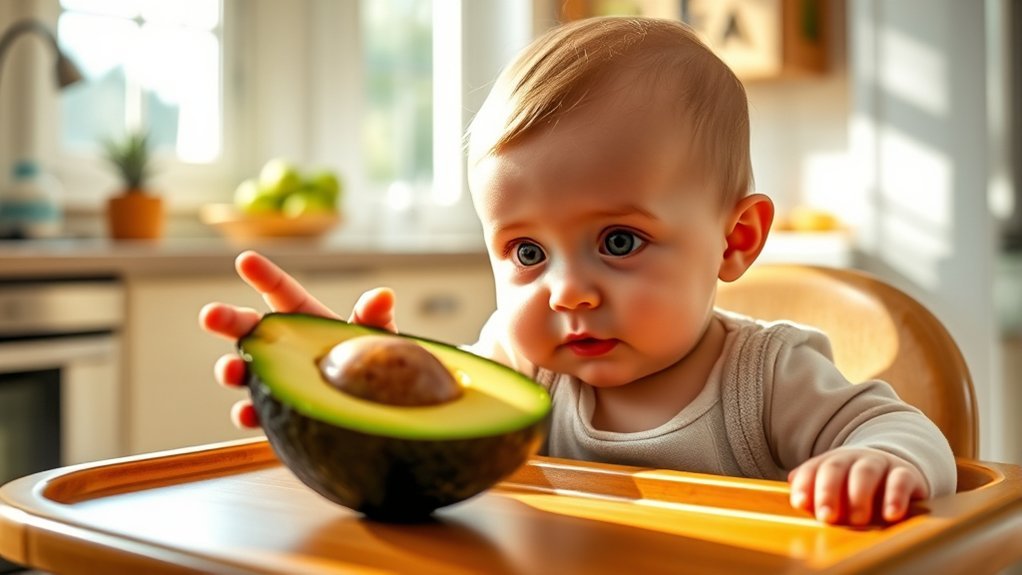
Babies can usually eat ripe avocado at about 6 months, once they show the developmental signs that they are ready for solid foods. Its soft texture makes it easy to mash or shape for self-feeding, and it provides unsaturated fat, fiber, folate, vitamin E, vitamin K, and potassium. The key is to use a very ripe avocado, match its shape and texture to your baby’s current skills, and supervise every bite.
Quick Answer
Most babies can try ripe avocado at about 6 months, when they can sit with support, control their head and neck, and swallow food instead of pushing it out. Serve smooth mash on a spoon or a thick, soft wedge. Move to small pieces only as grasping and chewing skills develop.
Key Takeaways
- Introduce avocado at about 6 months only after your baby shows readiness for solid foods.
- Use avocado that is soft enough to mash easily with a fork or between your fingers.
- Offer smooth mash or thick, finger-length wedges at first, then progress to small soft pieces as eating skills improve.
- Avocado is generally a lower-risk food for choking when properly prepared, but any food can cause choking.
- Avocado supplies energy, unsaturated fat, fiber, and several micronutrients, but it should be served alongside varied foods, including iron-rich choices.
- Introduce it in a small amount, watch for allergy symptoms, and discard any portion contaminated by your baby’s saliva.
At a Glance
| Time Required | About 5 minutes |
| Difficulty | Easy |
| Tools Needed | Clean knife, cutting board, fork or spoon, and an optional small bowl |
| Cost | Low; one ripe avocado can provide several small servings |
When Can Babies Eat Avocado?
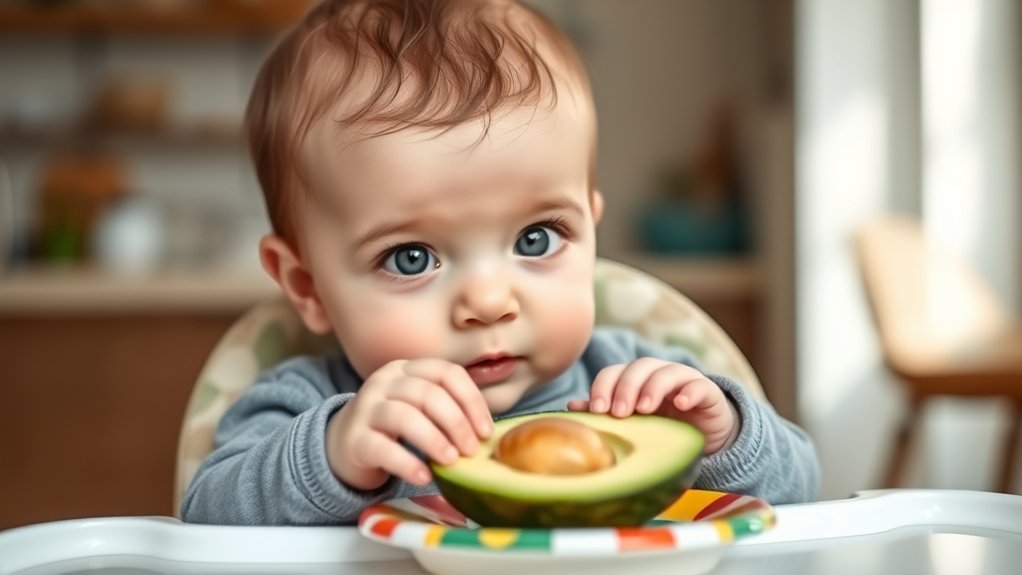
Most babies can begin eating avocado at about 6 months, but the exact day is less important than developmental readiness. The CDC recommends introducing solid foods at about 6 months and advises against starting before 4 months.
Your baby may be ready when they can:
- Sit upright alone or with support.
- Control their head and neck steadily.
- Open their mouth when food is offered.
- Bring objects toward their mouth.
- Swallow food instead of automatically pushing it back out with the tongue.
Start with a small taste of plain avocado. When introducing early foods, offering one single-ingredient food at a time and waiting 3 to 5 days before another new food can make it easier to identify a reaction.
Note: Ask your pediatrician or feeding specialist before starting avocado if your baby was born prematurely or has poor head control, swallowing difficulties, oral-motor delays, poor growth, severe eczema, or a diagnosed food allergy. This article provides general education and does not replace individualized medical advice.
Breast milk or iron-fortified infant formula should continue to provide most of a baby’s nutrition from 6 to 12 months. Avocado and other complementary foods gradually add new tastes, textures, energy, and nutrients.
How to Prepare Avocado for Babies by Age
Avocado does not need to be cooked, but it must be ripe enough for your baby to manage. A suitable avocado should yield to gentle pressure and mash easily with a fork. Avoid hard, underripe flesh, fibrous brown areas, loose pit fragments, and pieces of skin.
Prepare the Avocado Safely
- Wash your hands, knife, cutting board, and the avocado’s outer skin.
- Cut the avocado lengthwise around the pit.
- Twist the halves apart and remove the pit carefully.
- Scoop out the flesh and check it for skin, pit fragments, or spoiled areas.
- Mash it until smooth or cut it into a shape that matches your baby’s current eating skills.
- Test the texture before serving. It should flatten easily between your fingers or under light fork pressure.
Pro Tip: Avocado can be slippery. For a beginning self-feeder, offer a thick wedge, place mashed avocado on a preloaded spoon, or lightly coat a wedge with finely ground oat cereal that your baby has already tolerated.
| Age or Skill Stage | Preparation | Serving Suggestions |
|---|---|---|
| Around 6 months | Smooth mash, puree, or a thick finger-length wedge | Offer from a spoon, on a preloaded spoon, or as a very soft wedge that extends beyond the baby’s fist. |
| Around 9 months or when the pincer grasp develops | Small, soft pieces, mashed avocado, or a soft spear | Let your baby pick up soft pieces while keeping mashed avocado available if pieces remain difficult to manage. |
| Around 12 months and older | Soft bite-sized pieces, mashed avocado, or a thin spread | Serve alone, mix into meals, or spread a thin layer on a lightly toasted strip that is not hard or sharp. |
These ages are guides, not deadlines. Continue using an easier texture if your baby cannot yet pick up, chew, or swallow the next form comfortably. Never force a larger piece or a lumpier texture solely because your baby has reached a certain birthday.
Nutritional Benefits of Avocado for Babies
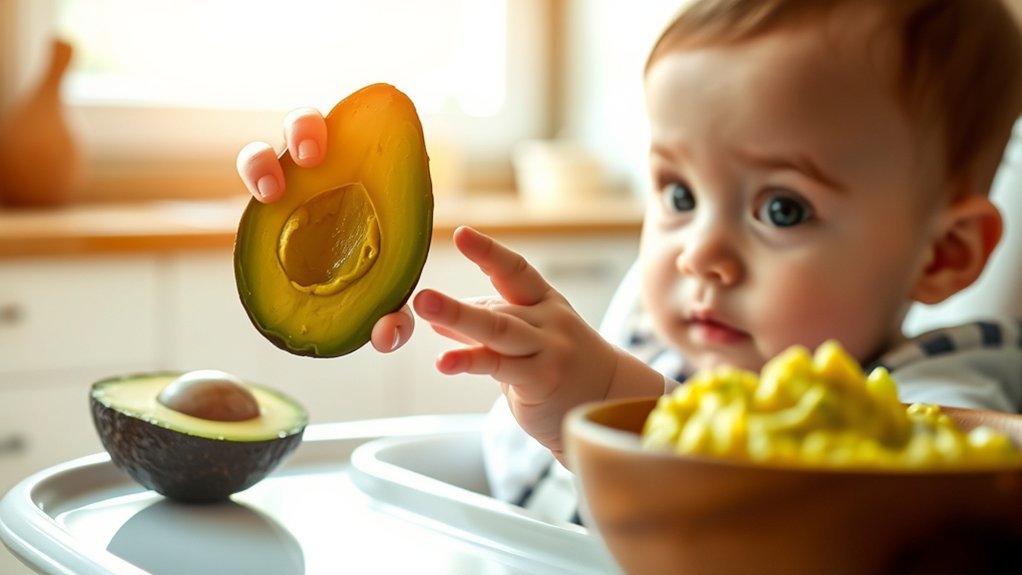
According to USDA FoodData Central, avocado provides mostly unsaturated fat along with fiber, folate, potassium, vitamin E, vitamin K, and other nutrients. Its energy density and creamy texture can be useful for babies who are learning to eat small amounts of food.
Avocado is a useful source of energy and unsaturated fat, but it works best as one part of a varied diet rather than as a stand-alone “brain food” or complete meal.
- Unsaturated fat and energy: Dietary fat is important during infancy, and avocado is one whole-food source of unsaturated fat.
- Fiber: Avocado contributes fiber that may support regular bowel movements as part of an overall balanced diet.
- Micronutrients: It supplies folate, vitamin E, vitamin K, potassium, and smaller amounts of other vitamins and minerals.
- Low added-sugar exposure: Plain avocado contains no added sugar or sodium.
- Easy texture: A ripe avocado can be mashed smoothly or shaped into a soft finger food without cooking.
Avocado is not a major source of iron or protein, which become important considerations after about 6 months. Pair it with suitable iron-rich foods such as iron-fortified infant cereal, beans, lentils, egg, meat, or fish, depending on your baby’s age, feeding skills, dietary needs, and foods already introduced.
The fat in avocado may also help the body absorb fat-soluble nutrients from other foods in a mixed meal. However, it should not replace breast milk, infant formula, or the variety of foods needed for balanced nutrition.
Is Avocado a Choking Hazard for Babies?
Very ripe avocado is generally a lower-risk food because it is soft and easy to mash. However, a baby can choke on any food. The CDC recommends matching each food’s shape, size, and texture to the child’s development.
To reduce choking risk:
- Use only avocado that mashes easily with a fork or between your fingers.
- Keep your baby seated upright in a high chair or another secure feeding seat.
- Stay within arm’s reach and watch continuously.
- Do not let your baby eat while lying down, crawling, walking, riding in a stroller, or traveling in a car.
- Keep meals calm and free from toys, screens, and rushing.
- Remove the skin and pit completely.
- Avoid hard avocado, large slippery chunks, and food packed tightly into the mouth.
Gagging Versus Choking
| Gagging | Choking |
|---|---|
| Usually noisy; the baby may cough, retch, push the tongue forward, become red, or have watery eyes. | Often quiet; the baby may be unable to breathe, cough effectively, cry, or make normal sounds. |
| A common protective reflex while learning to handle new textures. | An airway emergency that requires immediate action. |
| The baby continues moving air and making noise. | The lips, gums, nail beds, or skin may become blue, gray, very pale, or dusky. |
The NHS explains that gagging is normally loud, while true choking is often quiet.
Warning: If your baby cannot breathe, cough, cry, or make sound, treat it as choking. Remove the baby from the high chair, begin age-appropriate choking first aid, and have someone call 911. Do not blindly sweep a finger inside the mouth. Caregivers should learn infant choking first aid and CPR from a qualified instructor before beginning solid foods.
Can Babies Be Allergic to Avocado?
Any food can cause an allergic reaction, including avocado. When offering it for the first time, serve a small amount of plain avocado rather than combining it with several new ingredients. Offer it when you can watch your baby for a few hours.
The FDA lists possible food-allergy symptoms such as:
- Hives, flushed skin, or a spreading rash.
- Itching or tingling in the mouth.
- Swelling of the lips, face, tongue, or throat.
- Vomiting, diarrhea, or abdominal discomfort.
- Coughing, wheezing, hoarseness, or difficulty breathing.
- Dizziness, unusual limpness, extreme sleepiness, or loss of consciousness.
Stop serving avocado and contact your pediatrician if a mild reaction occurs. Keep a record of what your baby ate, how much was eaten, when symptoms began, and what the symptoms looked like.
A mild first reaction does not guarantee that every future reaction will remain mild. A clinician should evaluate suspected food allergy before the food is offered again.
Warning: Call 911 immediately for trouble breathing or swallowing, throat or tongue swelling, collapse, blue or gray coloring, severe wheezing, or symptoms affecting more than one body system. If your child has prescribed epinephrine, use it according to their emergency plan and then call 911.
Avocado is also associated with latex-fruit cross-reactivity. Tell your pediatrician or allergist before serving avocado if your baby has a diagnosed natural-rubber latex allergy or has previously reacted to banana, kiwi, or chestnut. A reaction to one of these foods does not automatically prove an avocado allergy, but it deserves individualized medical guidance.
How Much Avocado Can a Baby Eat?
Begin with a small taste or a few spoonfuls and let your baby decide whether to continue. Avoid pressuring them to finish a portion. The amount eaten can vary widely from one meal or day to the next.
The CDC recommends starting with small portions and following hunger and fullness cues. Signs that a baby may be finished include turning away, closing the mouth, pushing food away, slowing down, or becoming distracted.
There is no required avocado schedule. A few servings per week can fit easily into a varied diet, and some babies may eat it more often. Rotate it with other fruits, vegetables, grains, protein foods, and iron-rich choices so avocado does not crowd out nutritional variety.
Easy Avocado Pairings for Babies
Once each ingredient has been introduced and tolerated separately, mashed avocado can be paired with:
- Iron-fortified oat or multigrain infant cereal.
- Mashed beans, chickpeas, or lentils.
- Mashed sweet potato, squash, peas, or broccoli.
- Plain whole-milk yogurt.
- Well-cooked egg.
- Finely shredded or pureed meat or fish.
- Banana, pear, peach, or mango.
- A small amount of breast milk, infant formula, or water to thin the texture.
Avoid adding salt, sugar, honey, or hard pieces of nuts. Honey should not be given before 12 months because of the risk of infant botulism.
How to Store Leftover Avocado
Only store avocado that has not touched your baby’s mouth, used spoon, or hands. Place it promptly in a clean airtight container and refrigerate it. The NHS recommends using refrigerated prepared baby food within two days.
- Discard avocado left in a bowl after your baby has eaten from it.
- Do not save food from a half-eaten plate or a saliva-contaminated spoon.
- A few drops of lemon or lime juice may slow browning if citrus has already been introduced and tolerated, but citrus is optional and does not extend safe storage.
- Discard avocado that develops an unpleasant smell, slimy texture, mold, or other signs of spoilage.
Frequently Asked Questions
Can avocado cause digestive issues in babies?
Some babies may experience gas, a change in stool texture, or looser stools when they begin eating more fiber or fat. Start with a small amount. Contact your pediatrician if symptoms are persistent, severe, accompanied by blood, or occur with hives, swelling, repeated vomiting, unusual sleepiness, or breathing problems.
How should I store leftover avocado for my baby?
Refrigerate untouched avocado promptly in a clean airtight container and use it within two days. Discard any portion that has contacted your baby’s mouth, hands, used spoon, or eating tray. Lemon or lime juice may reduce browning but does not make the avocado safer or extend its storage time.
Can I mix avocado with other foods for my baby?
Yes. After the individual ingredients have been introduced and tolerated, avocado can be mixed with fortified infant cereal, beans, lentils, vegetables, fruit, yogurt, egg, meat, or fish. Pairing it with an iron-rich food creates a more balanced meal.
Are there signs of avocado intolerance or allergy in babies?
Digestive intolerance may cause gas, discomfort, or stool changes without hives or breathing symptoms. An allergy may cause hives, swelling, vomiting, coughing, wheezing, or difficulty breathing. Stop serving avocado and contact your pediatrician about suspected reactions. Call 911 for severe or rapidly worsening symptoms.
How often can I give avocado to my baby?
Avocado can be offered several times a week or more often as part of a varied diet. There is no required frequency. Rotate it with iron-rich foods, protein foods, grains, fruits, and vegetables, and follow your baby’s hunger and fullness cues.
Does avocado need to be cooked for a baby?
No. Ripe avocado can be served raw because its flesh is naturally soft. Wash the outside before cutting, remove the skin and pit completely, and make sure the flesh mashes easily before serving.
Is avocado a good first food for a baby?
Avocado can be a suitable first food because ripe flesh is soft, easy to mash, and supplies energy and unsaturated fat. It does not need to be the first food, however. Babies benefit from gradually eating foods from every food group, including iron-rich choices.
Conclusion
Most babies can begin eating ripe avocado at about 6 months when they show readiness for solid foods. Start with smooth mash, a preloaded spoon, or a thick soft wedge, then progress to small pieces as your baby’s grasping and eating skills improve. Keep your baby upright and supervised, learn the difference between gagging and choking, and watch for allergy symptoms. Avocado can be a nutritious part of the diet, but it should be offered alongside breast milk or formula and a growing variety of iron-rich, protein-rich, and nutrient-dense foods.
Sources
- CDC: When, What, and How to Introduce Solid Foods — readiness signs, introduction age, single-ingredient foods, and texture guidance.
- CDC: Choking Hazards — food preparation, upright seating, supervision, and choking prevention.
- FDA: Food Allergies—What You Need to Know — food-allergy symptoms and severe-reaction precautions.
- NHS: Choking and Gagging on Food — differences between normal gagging and airway obstruction.
- NHS: Storing and Reheating Baby Food — refrigeration and leftover-disposal guidance.
- USDA FoodData Central: Avocado — avocado nutrient-composition data.