Quick Answer
Cool freshly cooked baby food quickly, freeze it in measured portions, and transfer the frozen portions to labeled, airtight, freezer-safe containers. Keep the freezer at 0°F (-18°C) or below. Thaw in the refrigerator or microwave, use thawed food within 24 hours, reheat only once, stir well, and serve lukewarm.
Key Takeaways
- Keep the freezer at 0°F (-18°C) or below, and store portions toward the back rather than in the door.
- For a simple, conservative rule, use general homemade baby food within 1 to 2 months; some food-specific official storage times differ.
- Use clean, food-grade, freezer-safe trays, bags, plastic containers, or freezer-safe glass with room for expansion.
- Thaw food in the refrigerator or with a microwave defrost setting, then use it within 24 hours.
- Discard food left in the serving dish or touched by a used spoon, and do not reheat cooked baby food more than once.
At a Glance
| Time Required | 15–30 minutes of active portioning, plus several hours for freezing |
| Difficulty | Easy |
| Tools Needed | Clean tray or portion containers, airtight freezer bags or containers, labels, marker, and an appliance thermometer |
| Cost | Usually no added cost if suitable containers are already available; otherwise the cost depends on the trays, containers, and thermometer chosen |
The Importance of Proper Baby Food Storage
Babies and young children are more vulnerable to foodborne illness because their immune systems are still developing. Clean preparation, prompt chilling, and safe storage help limit the growth and spread of germs. The FoodSafety.gov guidance for children under five recommends the same core steps used throughout food safety: clean, separate, cook, and chill.
A safe freezer stash starts before the food reaches the freezer: wash hands and equipment, cook ingredients safely, cool food promptly, and package it before it sits at room temperature too long.
Freezing pauses bacterial growth, but it does not make poorly handled food safe. Store baby food in tight, moisture-resistant packaging to reduce air exposure, prevent odor transfer, and limit freezer burn. Label every portion so you can use the oldest safe batch first.
Warning: Do not save food from a bowl, plate, jar, or pouch after a used spoon has returned to it. Saliva can contaminate the remaining food. Spoon out a separate serving first, then refrigerate or freeze only the untouched portion.
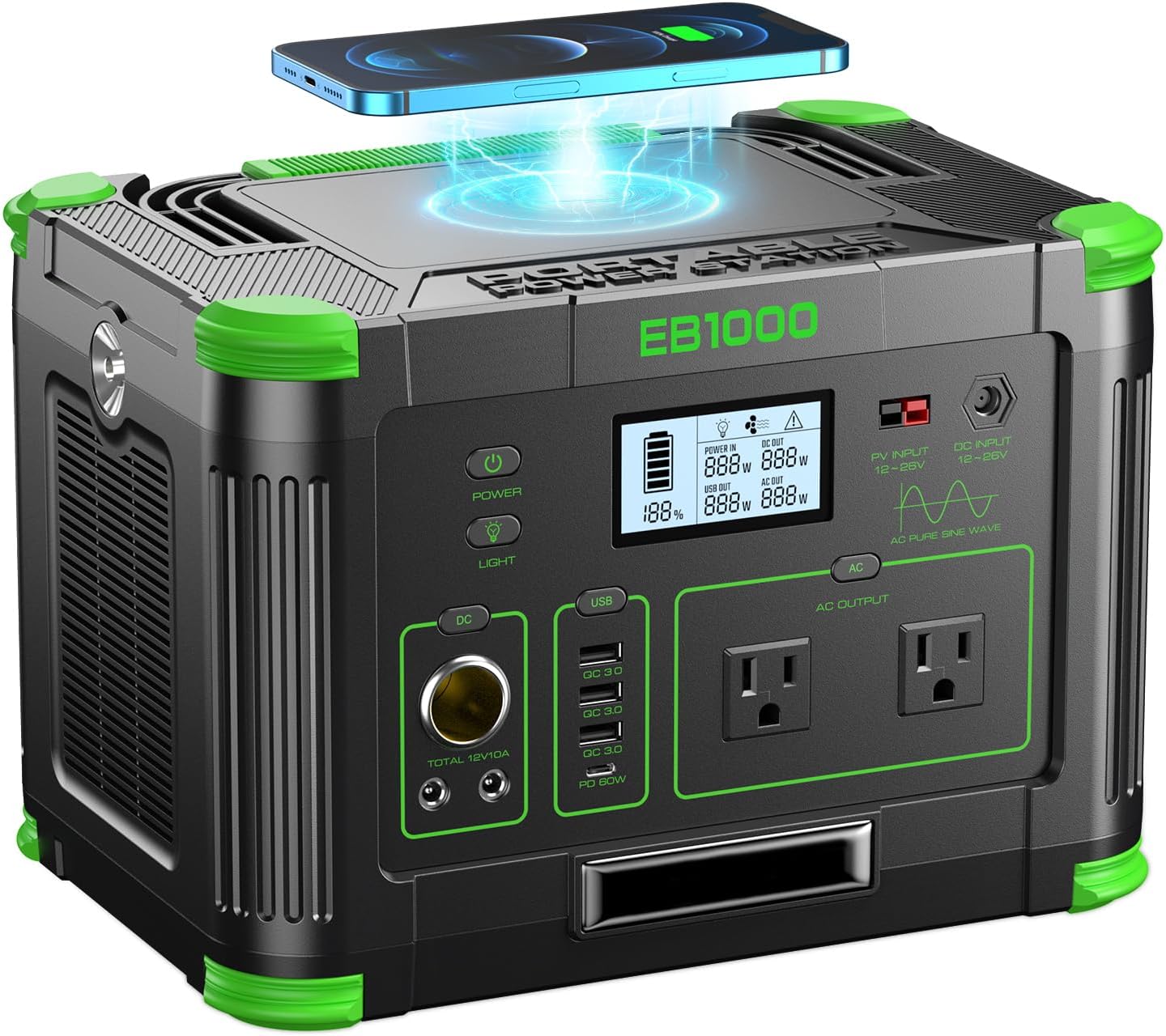
Power your essentials anywhere with a 999Wh pure sine wave power station delivering up to 1000W continuous with 2000W surge. It supports fast charging via USB-C PD 60W and USB-A QC 18W, plus simultaneous output for multiple devices through AC, USB, wireless, and car/DC ports. Recharge using AC, car, or solar with a built-in MPPT controller and dual cooling fans, while the upgraded battery management system protects against surges, short circuits, and overheating.

Effortless Meal Preparation: Streamline your baby's nutrition with our 3 Pack Silicone Freezer Tray. Batch prepare baby food, purees, breastmilk, and more for efficient and convenient meal planning.

Effortless Meal Preparation: Streamline your baby's nutrition with our 3 Pack Silicone Freezer Tray. Batch prepare baby food, purees, breastmilk, and more for efficient and convenient meal planning.
How Long Baby Food Lasts in the Refrigerator and Freezer
Storage time depends on the ingredients. The current FoodSafety.gov storage table, reviewed in May 2025, gives the following limits for opened or freshly made purées and solids:
| Baby Food Type | Refrigerator | Freezer |
|---|---|---|
| Strained fruits and vegetables | 2–3 days | 6–8 months |
| Strained meats and eggs | 1 day | 1–2 months |
| Meat and vegetable combinations | 1–2 days | 1–2 months |
| General homemade baby food | 1–2 days | 1–2 months |
Note: An older FDA page still describes an ice-cube method with storage for up to three months. Because the newer FoodSafety.gov page lists one to two months for general homemade baby food, one to two months is the simpler conservative rule for a mixed freezer stash. Follow a shorter limit when the ingredients or product label require it.
Prepare and Cool Baby Food Before Freezing
Wash your hands, utensils, blender or food processor, trays, and work surfaces before preparation. Rinse produce under running water, keep raw meat and eggs away from ready-to-eat ingredients, and cook animal foods to a safe internal temperature before puréeing.
After cooking, divide the food into shallow portions so it cools quickly. Refrigerate or freeze perishable food within two hours of preparation, or within one hour when the surrounding temperature is above 90°F (32°C). Do not leave a pot of purée on the counter to cool for several hours.
Best Practices for Portioning Baby Food for Freezing
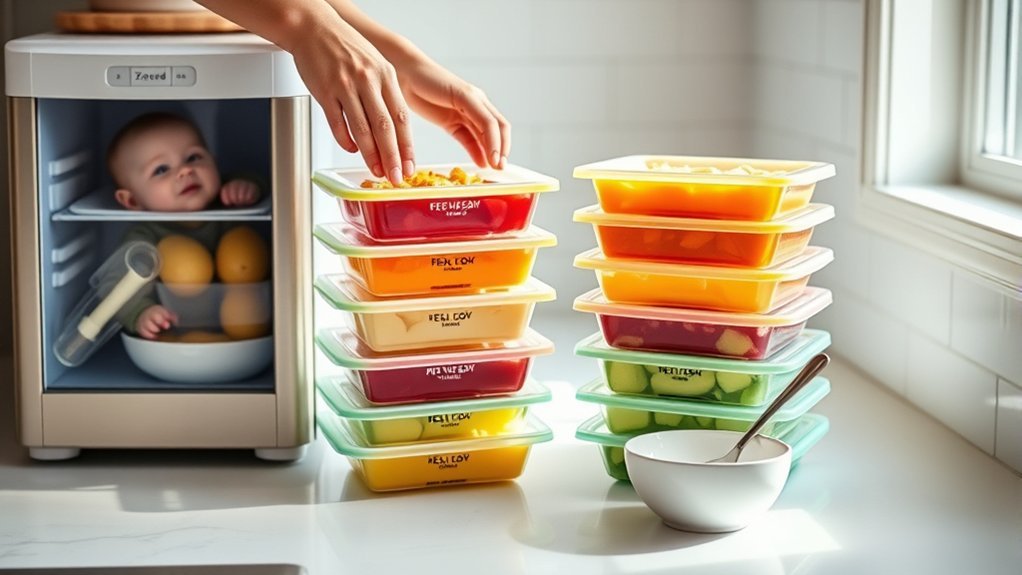
Portioning food before freezing makes meal preparation faster and reduces waste. Ice cube trays, covered silicone trays, small freezer containers, and silicone muffin cups can all work when they are food-grade and labeled freezer-safe.
A one-ounce portion is convenient for many families, but tray cavities are not all the same size, and one ounce is not a required serving for every baby. Measure how much water one cavity holds, record that amount, and thaw only what your baby is likely to eat. You can always offer another untouched portion if your baby is still hungry.
Cover the tray with its fitted lid or tightly with freezer-safe wrap. Once the portions are solid, transfer them to labeled freezer bags or airtight containers. Press excess air from bags without crushing the food, then return the portions to the freezer promptly.
How to Freeze Baby Food Properly for Maximum Freshness
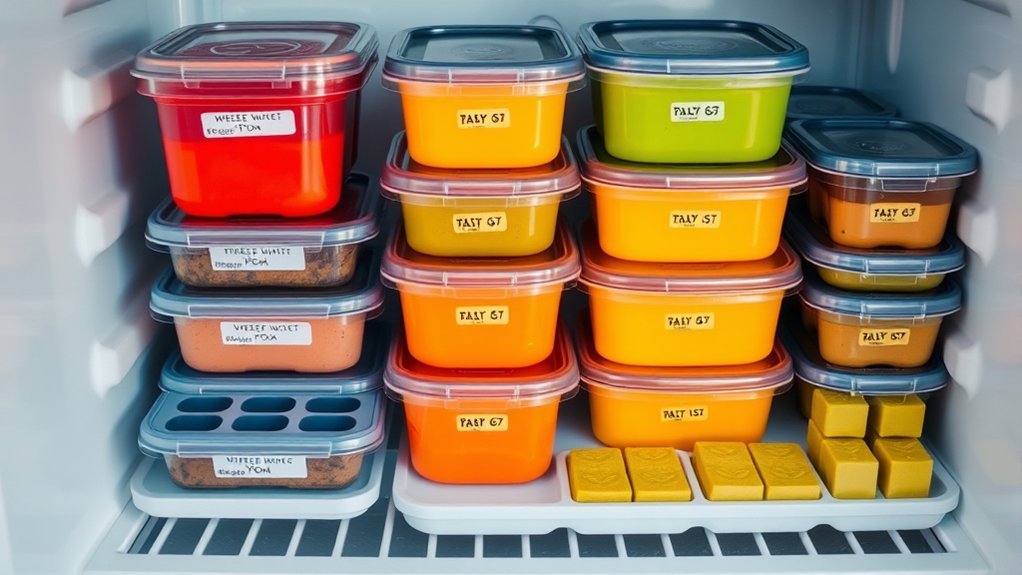
- Clean the equipment. Wash hands, trays, lids, containers, utensils, and the work surface with hot, soapy water; rinse and dry them well.
- Cool the food promptly. Divide warm purée into shallow portions instead of placing a large hot batch directly in the freezer.
- Measure each portion. Fill clean tray cavities or small containers, leaving enough space to close the lid without spilling.
- Cover and freeze. Use a fitted lid or tight freezer-safe wrap and place the tray on a level shelf.
- Transfer the frozen portions. Move solid cubes or portions to an airtight freezer bag or container and remove excess air.
- Label and date. Write the food name, preparation date, portion size, and any major allergen it contains.
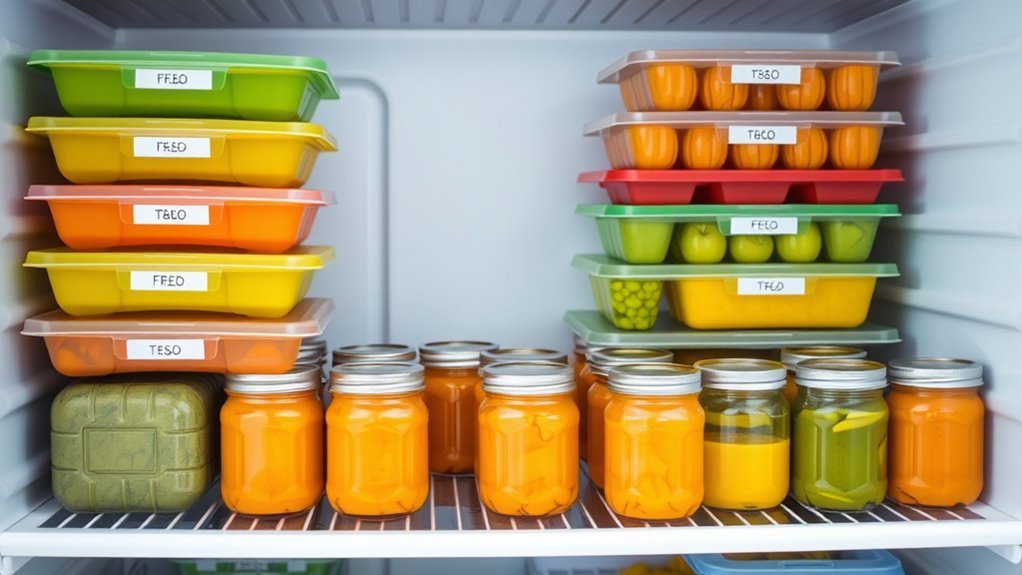
- Store at a steady temperature. Keep the freezer at 0°F (-18°C) or below and place the stash toward the back, where the temperature changes less than it does in the door.
Pro Tip: Freeze a small test portion before packaging a full batch. Foods such as potatoes, bananas, dairy-based mixtures, and some grain purées may separate or change texture after thawing, even when they remain safe.
Choosing the Right Containers for Freezing Baby Food
Choose containers by freezer safety, seal quality, portion size, and ease of cleaning. “BPA-free” can be useful product information, but it does not by itself mean a container is suitable for freezing. Look for food-grade products that the manufacturer identifies as freezer-safe.
| Container Type | Best Use | Important Caution |
|---|---|---|
| Silicone trays | Measured portions that release easily | Use a fitted lid or tight cover and confirm the tray is food-grade and freezer-safe |
| Freezer-safe glass | Reusable individual portions | Use only glass rated for freezing, leave about 1/2 inch of headspace, and avoid sudden temperature changes |
| Rigid freezer-safe plastic | Stackable portions and transport | Replace cracked, warped, or deeply scratched containers |
| Resealable freezer bags | Space-efficient storage after portions are frozen solid | Use freezer bags rather than thin sandwich bags and press out excess air |
| Ice cube trays | Small portions | Measure the cavity volume because not every cube equals one ounce |
The FDA allows small freezer-suitable jars for homemade baby food when about 1/2 inch of headspace is left for expansion. Do not use chipped jars, ordinary glass that is not rated for freezing, or a frozen glass container that must be moved directly into hot water.
Thawing and Reheating Baby Food Safely
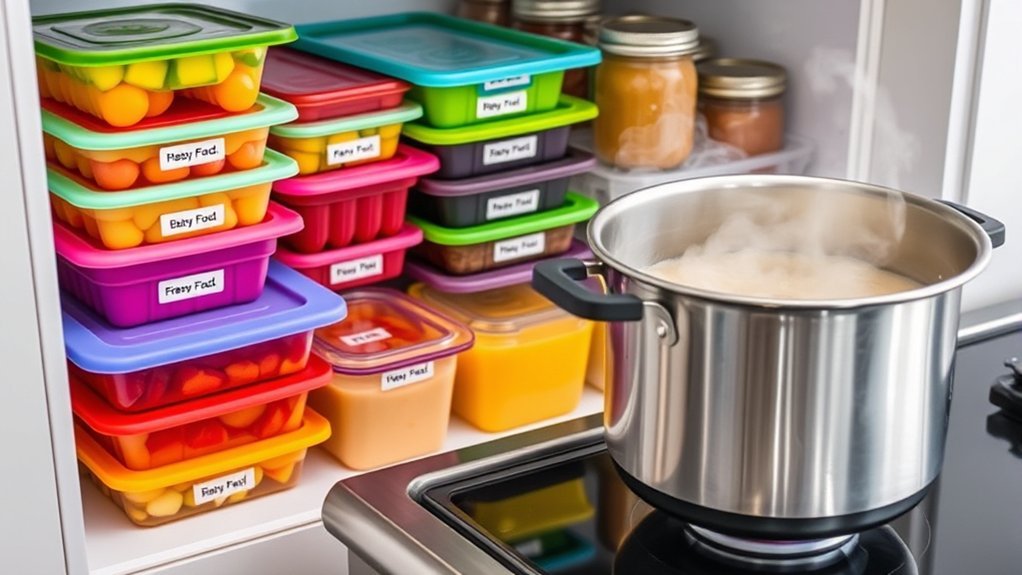
The safest routine is to move the amount needed for the next day from the freezer to the refrigerator and let it thaw in a covered container. Do not thaw baby food on the counter. The NHS baby-food guidance recommends using fully defrosted food within 24 hours.
If you need food sooner, use the microwave’s defrost setting in a microwave-safe dish and continue heating or serving it immediately. Do not microwave food in a glass baby-food jar. Always transfer the portion to a dish so it can be stirred and checked.
Safe Reheating Steps
- Reheat only the amount your baby is likely to eat.
- Heat previously cooked food until it is steaming hot throughout, then let it cool before serving.
- When using a microwave, pause and stir thoroughly so the center and edges reach an even temperature.
- Let the food stand for about 30 seconds, stir again, and test it before feeding. It should feel lukewarm, not hot.
- Use the stovetop instead of a microwave for baby-food meats, meat sticks, or eggs because they can splatter and overheat.
- Reheat cooked baby food only once and discard anything left in the serving dish.
Warning: A fixed “50% power” rule does not guarantee even or safe heating. Microwave wattage, food amount, container shape, and starting temperature all matter. Stirring, standing time, and a final temperature check are essential.
Effective Labeling Techniques for Your Baby Food Inventory
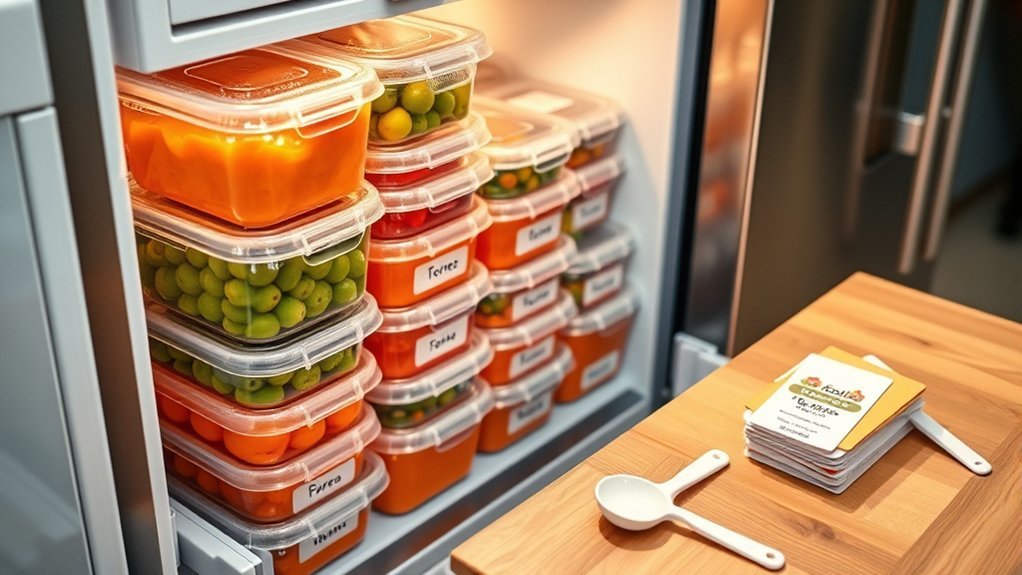
Clear labels help you track freshness, identify ingredients, and thaw the right amount. Use a freezer-safe label or permanent marker that remains readable when cold and damp.
Date of Preparation
Write the preparation date on every tray, bag, or container. Arrange the stash so the oldest safe portions are easiest to reach, and use a first-in, first-out system. A small inventory list on the freezer door can help, but the label on each package remains the most important record.
Food Type Identification
List the main ingredients rather than using a vague label such as “dinner.” Clearly mark meat, egg, dairy, wheat, peanut, tree nut, sesame, soy, fish, or shellfish when present. Color-coded labels can help organize fruits, vegetables, grains, and mixed meals, but written ingredient names are safer than color alone.
Portion Size Notes
Record the actual portion size, such as “1 ounce,” “2 tablespoons,” or “one measured tray cavity.” This makes it easier to thaw only what is needed. Serving size should follow your baby’s appetite and feeding plan rather than a rigid one-ounce rule.
Watch Out for These Mistakes When Storing Baby Food
- Using vague dates: “Made recently” is not useful. Write the exact preparation date and food name.
- Leaving food out too long: Refrigerate or freeze perishable food within two hours, or within one hour above 90°F (32°C).
- Saving spoon-contaminated food: Discard food that has been offered to the baby or touched by a used spoon.
- Assuming every tray cube is one ounce: Measure the cavity before using it for portion control.
- Using non-freezer-safe glass: Ordinary jars can crack. Use freezer-rated glass, leave headspace, and avoid thermal shock.
- Leaving air in the package: Extra air speeds drying and freezer burn. Use tight containers and press excess air from freezer bags.
- Thawing on the counter: Use the refrigerator or microwave defrost setting instead.
- Reheating repeatedly: Reheat cooked baby food once, then discard leftovers from the serving dish.
- Freezing commercial food without checking: Follow the product label or manufacturer. Some commercial baby foods separate after freezing, and some tubs are not designed for freezer storage.
- Relying on smell alone: Harmful bacteria may not change a food’s smell or appearance. Discard food when safe time or temperature limits have been exceeded.
What to Do During a Freezer Power Outage
Keep the freezer door closed as much as possible. According to FDA freezer guidance, food that still contains ice crystals or remains at 40°F (4°C) or below can generally be refrozen or used, although its texture may decline. Discard baby food that has been above 40°F for more than two hours or when you cannot verify that it remained cold enough.
Note: Freezer burn is a quality problem, not proof that food is unsafe. It appears as dry, grayish-brown, or leathery areas caused by air exposure. Discard the food if the package leaked, the food thawed unsafely, or there are other signs of spoilage.
Frequently Asked Questions
How long can homemade baby food be stored in the freezer?
For a general homemade baby food stash, use the current FoodSafety.gov limit of one to two months. Food-specific guidance may allow longer for strained fruits and vegetables, while meat, egg, and mixed dishes have shorter limits. Label every package and follow the shortest limit that applies.
Can I freeze store-bought baby food?
Only when the label or manufacturer says the food and package are suitable for freezing. Some manufacturers advise against freezing because the food may separate and the packaging may not tolerate freezer temperatures. Never freeze food in a package that is damaged, overfilled, or not freezer-safe.
What are signs of freezer burn in baby food?
Freezer burn may appear as dry, pale, grayish-brown, or leathery patches. It affects taste and texture but does not automatically make food unsafe. Check the package, storage time, and temperature history before deciding whether to use or discard it.
Is it safe to mix different baby food flavors before freezing?
Yes, when every ingredient was prepared safely and is suitable for your baby. Label all ingredients and major allergens. When introducing a food that your baby has not eaten before, a single-ingredient portion can make it easier to identify the cause of any reaction.
Can I use glass containers for freezing baby food?
Yes. Use only glass specifically rated for freezing, inspect it for chips or cracks, and leave about 1/2 inch of headspace because food expands as it freezes. Avoid moving frozen glass directly into hot water or a hot appliance.
Can thawed baby food be refrozen?
As a routine practice, do not refreeze fully thawed baby food; use it within 24 hours and discard leftovers. During a power outage, food that still has ice crystals or remains at 40°F (4°C) or below can generally be refrozen, although the texture may worsen.
Does baby food need to be warmed before serving?
No. Baby food can be served safely chilled, at room temperature, or warm when it has been stored and handled correctly. If you warm it, stir thoroughly, let it stand, and test it before feeding. It should feel lukewarm rather than hot.
Conclusion
A dependable baby food freezer stash is built with clean tools, quick cooling, measured portions, airtight freezer-safe containers, clear labels, and a freezer kept at 0°F (-18°C) or below. Use the oldest safe portions first, thaw them in the refrigerator or microwave, use thawed food within 24 hours, and discard anything touched by a used spoon. These habits make feeding easier while protecting your baby from avoidable food-safety risks.
Sources
- FoodSafety.gov: Children Under Five — current baby-food storage limits, safe microwaving, and food-safety guidance.
- U.S. Food and Drug Administration: Once Baby Arrives — freezing portions, glass-container headspace, saliva contamination, and safe heating.
- U.S. Food and Drug Administration: Are You Storing Food Safely? — refrigerator and freezer temperatures, freezer burn, and power-outage decisions.
- NHS: Storing and Reheating Baby Food — quick cooling, refrigerator thawing, 24-hour use after defrosting, and one-time reheating.
- Centers for Disease Control and Prevention: Safer Food Choices for Children Under Five — why young children face higher foodborne-illness risk and safer ingredient handling.
- Gerber Frequently Asked Questions — manufacturer guidance showing that some commercial baby foods and packages should not be frozen.