Traveling with baby food is easier when you plan around temperature, time, and clean handling. Pack individual servings in leak-resistant containers, place perishable food in an insulated cooler with frozen packs, and use a thermometer to confirm that the food stays at or below 40°F (4°C). Shelf-stable pouches and jars can provide a useful backup when refrigeration is uncertain.
Quick Answer
Pack baby food in single servings inside leak-resistant containers, then place them in an insulated cooler with enough frozen packs to hold 40°F (4°C) or below. Use a thermometer instead of guessing. Discard perishable food left unrefrigerated for more than two hours—or one hour when the temperature is above 90°F (32°C).
Key Takeaways
- Keep homemade, opened, or otherwise perishable baby food at or below 40°F (4°C).
- Pack one serving per container so a used spoon never contaminates the remaining food.
- Use enough frozen packs to surround the food and check the cooler with an appliance thermometer.
- For U.S. flights, declare baby food and cooling accessories and remove them for separate TSA screening.
- When safe storage time or temperature is uncertain, discard the food rather than tasting it.
At a Glance
| Time Required | About 15–30 minutes to portion, label, and load the cooler |
| Difficulty | Easy with advance preparation |
| Tools Needed | Insulated cooler, frozen packs, leak-resistant containers, appliance thermometer, labels, clean utensils, and wipes |
| Cost | Often no added cost if you already own a cooler and reusable containers |
Note: This guide provides general food-safety information. Ask your pediatrician for individualized advice if your baby was born prematurely, has a weakened immune system, has food allergies, follows a medical diet, or has a diagnosed feeding or swallowing condition.
Essential Packing Tips for Baby Food on the Go
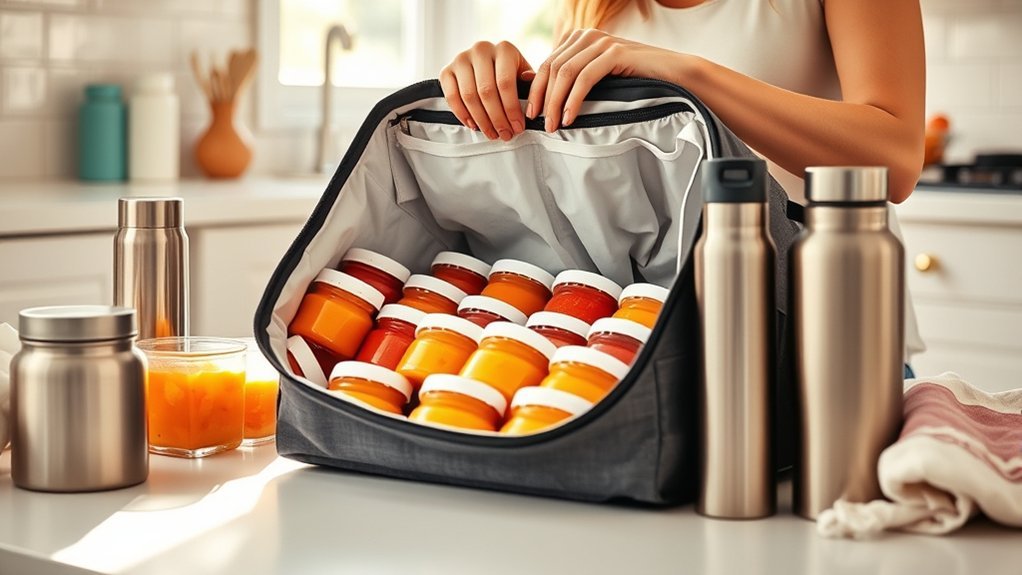
Pack only the amount your baby is likely to eat during the trip, plus one or two backup servings. Keeping portions small reduces waste and prevents the entire supply from being exposed each time the cooler is opened.
- Chill food before packing. Place refrigerated food in the cooler immediately before leaving. Frozen puree cubes can also act as an additional cold source while they thaw.
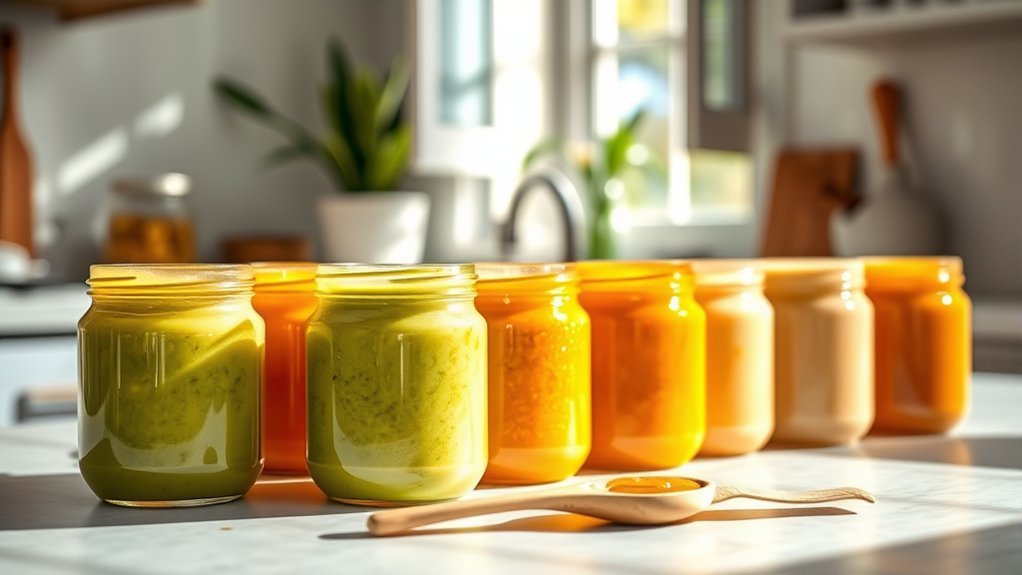
- Use individual portions. Divide homemade food into clean, leak-resistant containers or reusable pouches. Leave enough room for frozen food to expand.
- Label every serving. Add the food name and preparation or freezing date. Include allergen information when another caregiver may serve the meal.
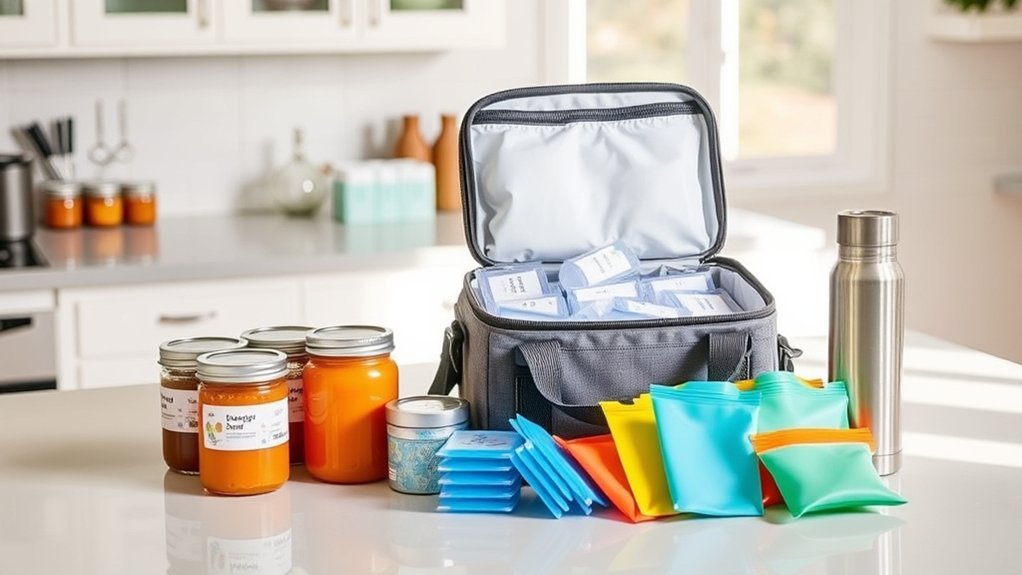
- Pack enough cold sources. Place frozen packs below, beside, and above the containers instead of setting one pack on top of a loosely filled bag.
- Add a thermometer. A PackIt freezable cooler, insulated diaper bag, or conventional cooler can work, but the brand does not determine safety. The thermometer should remain at or below 40°F (4°C).
- Keep food separate from diapers. Store diapers, changing pads, soiled clothing, and waste bags in another compartment to reduce cross-contamination.
- Bring clean serving supplies. Pack a clean bowl, one or more spoons, bibs, hand wipes, paper towels, and sealable waste bags.
- Carry a shelf-stable backup. Unopened commercial jars, pouches, or dry foods can help when delays make refrigeration difficult. Follow the package directions after opening.
Keep perishable food at 40°F (4°C) or below. Without a reliable cold source, the usual limit is two hours—or one hour in temperatures above 90°F (32°C).
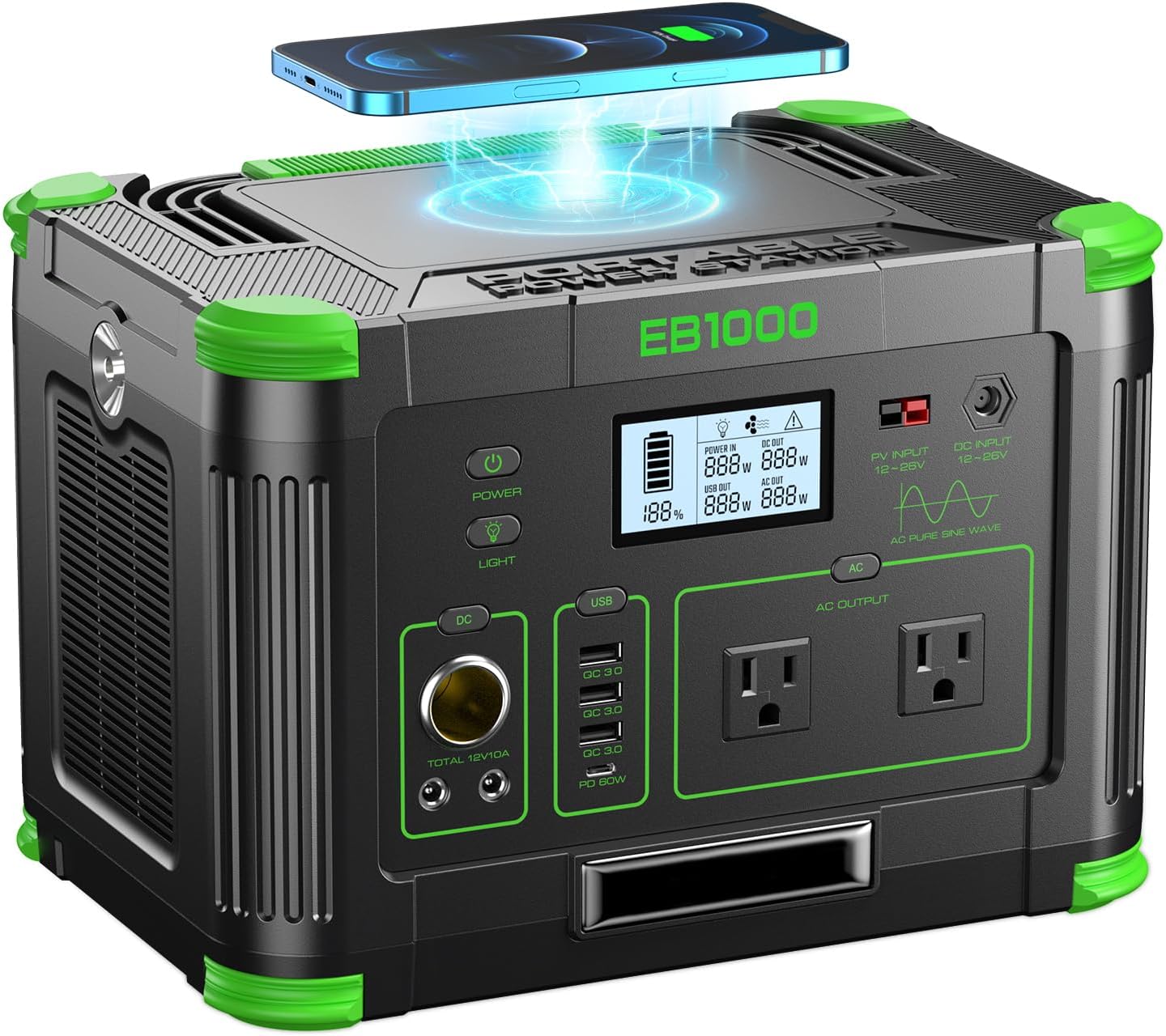
Power your essentials anywhere with a 999Wh pure sine wave power station delivering up to 1000W continuous with 2000W surge. It supports fast charging via USB-C PD 60W and USB-A QC 18W, plus simultaneous output for multiple devices through AC, USB, wireless, and car/DC ports. Recharge using AC, car, or solar with a built-in MPPT controller and dual cooling fans, while the upgraded battery management system protects against surges, short circuits, and overheating.

LARGE CAPACITY:14" x 7.5" x 18.5" (LxWxH).This diaper bag backpack is roomy enough to fit everything you need.With 1x large main compartment, 2x insulated pockets that can fit two 8 oz bottles in each, 1x baby wipes pocket, 5x easy access pockets, 1x side storage pocket, and 1x back pocket for your phone and wallet, you'll have plenty of space to organize your baby's essentials.

Insulated Lunch Compartment & Leakproof: TOPEAST multi-functional tote features a discrete Independent Insulated Lunch Compartment with triple-layer thermal insulation to keep meal preps fresh or warm for hours. Includes a Wet Pocket to strictly isolate damp items—ensuring your electronics and important documents remain pristine and dry. It's a perfect work tote bag, effortlessly handling both the office and everyday errands.
How to Choose the Right Containers for Baby Food
The best travel containers are easy to seal, clean, label, and open without touching the food. Choose a size that holds one meal or snack rather than packing several feedings in one large container.
- Leak-resistant closure: Check that lids lock securely and remain sealed when the container is turned upside down.
- Food-safe material: Use containers intended for food storage. If choosing plastic, look for products labeled BPA-free and follow the manufacturer’s heating and dishwasher directions.
- Single-serving size: Small portions prevent saliva from a used spoon from contaminating food intended for a later meal.
- Translucent sides: Clear or translucent containers make the contents easier to identify and may simplify airport screening.
- Freezer-safe construction: Use freezer-rated silicone trays, pouches, or containers when freezing homemade food.
- Easy-to-clean shape: Wide openings and minimal seams make thorough washing easier.
Reusable food pouches are convenient, but they can be harder to inspect and clean than rigid containers. Confirm that every corner and spout can be washed completely. Do not let a baby suck directly from a reusable pouch if you plan to refrigerate the remaining food.
Pro Tip: Test every container with water before the trip. Place it on its side in a sealable bag for several hours so you can find a weak lid before it leaks into the cooler.
How to Keep Baby Food Cold During Travel
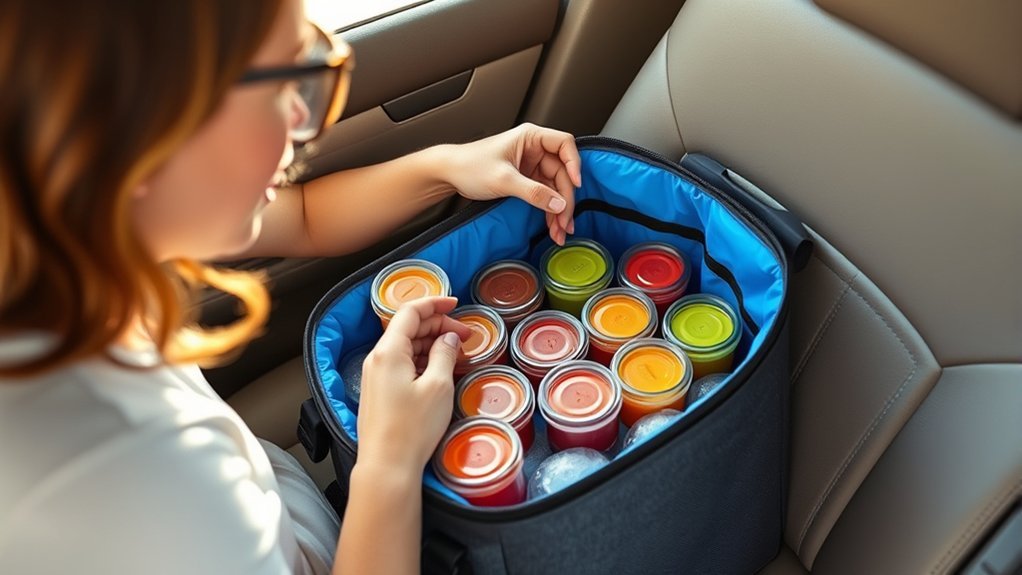
Cold food must stay at or below 40°F (4°C). Do not judge safety by touching the container or checking whether the food still feels cool. Use an appliance thermometer and track how long the food has been outside safe refrigeration.
Load the Cooler Correctly
- Pre-chill the cooler when possible.
- Add a frozen pack to the bottom.
- Arrange cold or frozen food in the center.
- Fill empty space with additional frozen packs or frozen water bottles.
- Place another frozen pack on top.
- Position the thermometer where you can read it without unpacking the cooler.
- Close the cooler firmly and open it only when needed.
A full cooler generally holds its temperature better than a half-empty one. Keep it out of direct sunlight and away from hot vehicle surfaces. A separate drink cooler is helpful because frequent opening allows warm air into the food cooler.
Using a Portable Mini-Fridge
A portable refrigerator may help on a long road trip or in a hotel, but use it only if an appliance thermometer confirms that it maintains 40°F (4°C) or below. Do not assume that a small appliance is safe because its interior feels cool.
After arriving at a hotel, check the room refrigerator before transferring the food. If the refrigerator is warmer than 40°F, keep the food in the insulated cooler and replace the ice or frozen packs. A refrigerator that cannot hold a safe temperature should not be used for perishable baby food.
Warning: If the food has been above 40°F for more than two hours—or more than one hour in temperatures above 90°F—discard it. When the elapsed time or temperature is unknown, the safest choice is to throw it away.
Step-by-Step: Preparing Baby Food for Your Travels
A simple preparation routine helps you avoid packing too much food, opening containers repeatedly, or keeping homemade food longer than recommended.
Meal Planning Essentials
- Count the expected feedings. Include travel time, airport delays, transfers, and the first meal after arrival.
- Pack familiar foods. Travel is usually not the best time to introduce a completely new food or allergen unless your pediatrician has advised otherwise.
- Match the texture to your baby. Puree, mash, mince, shred, or cut food according to the child’s development and usual eating skills.
- Add one or two backup servings. Unopened shelf-stable food is useful if a cooler becomes too warm or the trip is delayed.
- Keep the menu simple. A family may use a fat, fiber, protein, and produce checklist—sometimes called FFP+P—for older babies or toddlers, but it is not an official infant-feeding rule and does not replace age-appropriate nutrition advice.
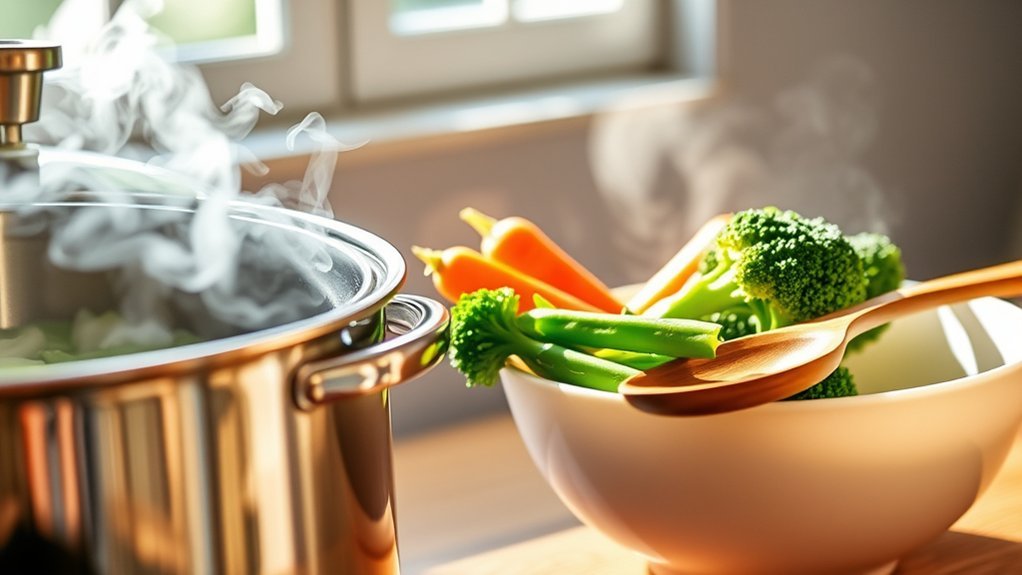
If you use a Baby Brezza One Step Food Maker Deluxe or a similar steam-and-blend appliance, follow the manufacturer’s directions and verify that the ingredients are fully cooked. Preparation time varies by food type, quantity, and appliance.
Hard-boiled egg and soft cooked pasta may be suitable for some babies or toddlers when prepared in a developmentally appropriate size and texture. Both are perishable and must remain cold. Keep your child seated and supervised while eating.
Safe Storage Techniques
Place freshly prepared food in shallow, airtight containers and refrigerate it promptly. According to the FDA’s infant food-safety guidance, homemade baby food should generally be refrigerated for only one to two days. Strained meat or egg food has a shorter refrigerator limit of one day.
- Homemade fruits, vegetables, and combination foods: Use within one to two refrigerated days.
- Homemade or opened meat and egg foods: Use within one refrigerated day.
- Unopened commercial food: Store according to the package instructions and use-by date.
- Opened commercial food: Refrigerate promptly and follow the manufacturer’s storage limit.
- Food placed in the serving bowl: Discard after the feeding if the spoon or baby’s mouth contacted it.
Do not feed directly from a jar and then return the jar to the refrigerator. Spoon one portion into a clean bowl, close the original container, and return it to safe refrigeration immediately.
Freezing and Thawing Methods
Freezing individual portions can simplify travel preparation:
- Spoon freshly prepared puree into a clean freezer-safe cube tray or small container.
- Cover the tray and freeze it promptly.
- Transfer frozen cubes to an airtight freezer bag or container.
- Label the package with the food name and freezing date.
- For best planning, use homemade frozen baby food within three months.
- Pack only the portions needed for the trip.
Thaw food in the refrigerator whenever possible. You may also thaw a sealed, leak-resistant container in cold water. Change the water as needed to keep it cold. When using a microwave to thaw food, continue preparing or heating it immediately because parts of the food may become warm.
Do not thaw perishable baby food on a countertop, in hot water, or in a parked vehicle. The USDA’s safe-thawing guidance recommends refrigerator, cold-water, or microwave methods rather than room-temperature thawing.
How to Handle Baby Food at Security Checks
For travel through a U.S. airport, the Transportation Security Administration allows baby and toddler food, including puree pouches, in reasonable quantities. Containers larger than 3.4 ounces or 100 milliliters do not need to fit inside the standard quart-sized liquids bag.
- Tell the officer at the start of screening. State that you are carrying baby food and cooling accessories.
- Remove the items from your carry-on. Place them where they can be screened separately.
- Expect possible additional testing. Officers may inspect or test containers for prohibited materials.
- Use clear containers when practical. Clear or translucent bottles and containers can be easier to screen. Pouches or opaque bags may require alternate screening.
- Keep cooling accessories accessible. Ice packs, freezer packs, and gel packs used to cool baby food are allowed. Partially frozen or slushy packs may receive the same additional screening as the food.
You may tell the officer if you do not want the food opened or X-rayed. TSA may then use alternate procedures and conduct additional screening of you or your property. The final screening decision rests with the TSA officer.
Note: Airline, destination, and international customs rules are separate from TSA screening. When entering the United States, declare all food and agricultural products. Rules may vary based on the ingredients and country of origin.
Safe Reheating and Serving Tips for Baby Food on Arrival
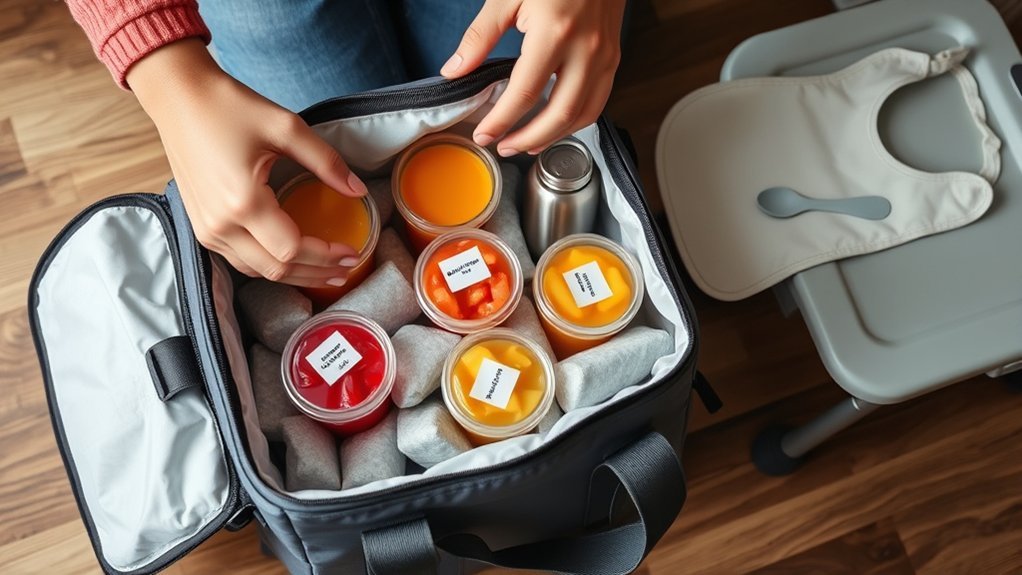
Baby food does not always need to be heated. Many commercial foods can be served at room temperature, and safely chilled food may be served cold if your baby accepts it. Follow the package directions and your child’s usual feeding routine.
How to Warm Baby Food Safely
- Transfer one serving to a clean, microwave-safe dish or small pan.
- Warm it gently in a hot-water bath, on the stovetop, or in a microwave.
- When microwaving, stir the food thoroughly to remove hot spots.
- Let it stand for at least 30 seconds.
- Check several parts of the food before serving.
- Serve it lukewarm, not hot.
Do not microwave food inside a sealed pouch or directly in a baby-food jar unless the manufacturer specifically says the package is designed for that use. Transferring the food to a dish makes thorough stirring easier.
If the food is a previously cooked leftover, the USDA recommends reheating leftovers to 165°F (74°C). After reaching that temperature, stir the food and allow it to cool to a safe, lukewarm serving temperature.
Breast milk and infant formula follow separate handling rules. Do not microwave a bottle because uneven heating can create hot spots. Warm it in hot water and test the temperature before feeding.
Warning: Never save food left in the feeding dish or pouch after the baby has eaten from it. Saliva transferred by the spoon or mouth can introduce bacteria that continue to grow during refrigeration.
Troubleshooting Common Baby Food Issues While Traveling
| Challenge | Safe Response |
|---|---|
| Food is above 40°F | Check how long it has been warm. Discard it after two hours, or after one hour when the surrounding temperature is above 90°F. |
| The temperature history is unknown | Discard the food. Smell, appearance, and taste cannot confirm that it is safe. |
| A container leaks | Discard food if dirty cooler water or another contaminant entered the container. Clean the cooler and place replacement containers in separate sealable bags. |
| Food is still partly frozen | Thaw it in a refrigerator, in a sealed container under cold water, or by microwave immediately before serving. Do not use a countertop or hot water. |
| The cooler is losing its chill | Add fresh ice or frozen packs, move the cooler into shade, reduce opening, and use shelf-stable food until a safe temperature is restored. |
| The hotel refrigerator is too warm | Keep food in the iced cooler, request another refrigerator, or use unopened shelf-stable food. |
| The baby refuses the meal | Offer a familiar food without forcing the feeding. Keep the child seated and calm, and discard food that has been touched by the used spoon. |
| Clean utensils are unavailable | Use a sealed disposable utensil or unopened food designed for direct serving. Do not reuse a visibly dirty spoon. |
Frequently Asked Questions
Can I freeze baby food before traveling?
Yes. Freeze homemade puree in clean, single-serving containers or covered cube trays, transfer the frozen portions to an airtight container, and label them with the food and date. Pack only the amount needed and keep it frozen or at 40°F (4°C) or below during the trip.
What types of ice packs are safest for baby food?
Use sealed, reusable freezer or gel packs intended for coolers. Check each pack for cracks or leaks before use. Place food containers in separate sealable bags so a damaged pack cannot contact the food. For flights, keep the packs accessible for TSA screening.
How long can baby food stay out of the refrigerator?
Perishable baby food should not remain without refrigeration or another reliable cold source for more than two hours. The limit is one hour when the temperature is above 90°F (32°C), including in a hot vehicle. Food touched by a used feeding spoon should be discarded after the meal.
Are store-bought baby food pouches travel-friendly?
Unopened shelf-stable pouches are convenient because they do not require refrigeration before opening. Inspect the package for swelling, leaks, punctures, or a broken seal. After opening, follow the label’s storage instructions and discard food that the baby has eaten directly from.
What if my baby refuses food during travel?
Offer a familiar food and keep the feeding calm without forcing your baby to eat. Travel, fatigue, noise, and a different routine can affect appetite. Keep the child upright and supervised. Discard food that has been in the serving bowl or touched by a used spoon.
Can I take baby food larger than 3.4 ounces through TSA?
Yes. TSA allows baby and toddler food, including puree pouches, in reasonable quantities larger than 3.4 ounces or 100 milliliters. Tell the officer about the food at the beginning of screening and remove it from your carry-on for separate inspection.
How do I know whether a hotel mini-fridge is cold enough?
Place an appliance thermometer inside and wait for a stable reading before transferring the food. The refrigerator must remain at or below 40°F (4°C). If it is warmer, use an iced cooler, request another refrigerator, or switch to unopened shelf-stable food.
Can I refrigerate baby food left after a feeding?
Do not refrigerate food left in the serving bowl, jar, or pouch after the baby’s mouth or used spoon has contacted it. Saliva can introduce bacteria. Before feeding, transfer one serving to a clean bowl and keep the untouched supply refrigerated.
Conclusion
Safe travel with baby food depends on three checks: keep perishable food at or below 40°F (4°C), track how long it has been outside refrigeration, and prevent a used spoon from contaminating later servings. Portion food before leaving, pack enough frozen cold sources, verify temperatures with a thermometer, and carry an unopened shelf-stable backup. When the temperature or storage history is uncertain, discard the food and use a fresh serving.
Sources
- U.S. Food and Drug Administration: Once Baby Arrives — baby-food storage, contamination, freezing, travel, and warming guidance
- FoodSafety.gov: Keep Food Cool for the Summer — cooler packing, 40°F storage, and one-hour and two-hour limits
- Transportation Security Administration: What Can I Bring? — baby-food, puree-pouch, ice-pack, and screening rules
- USDA Food Safety and Inspection Service: Safe Defrosting Methods — refrigerator, cold-water, and microwave thawing
- U.S. Customs and Border Protection: Items Travelers Must Declare — declaration requirements for food and agricultural products