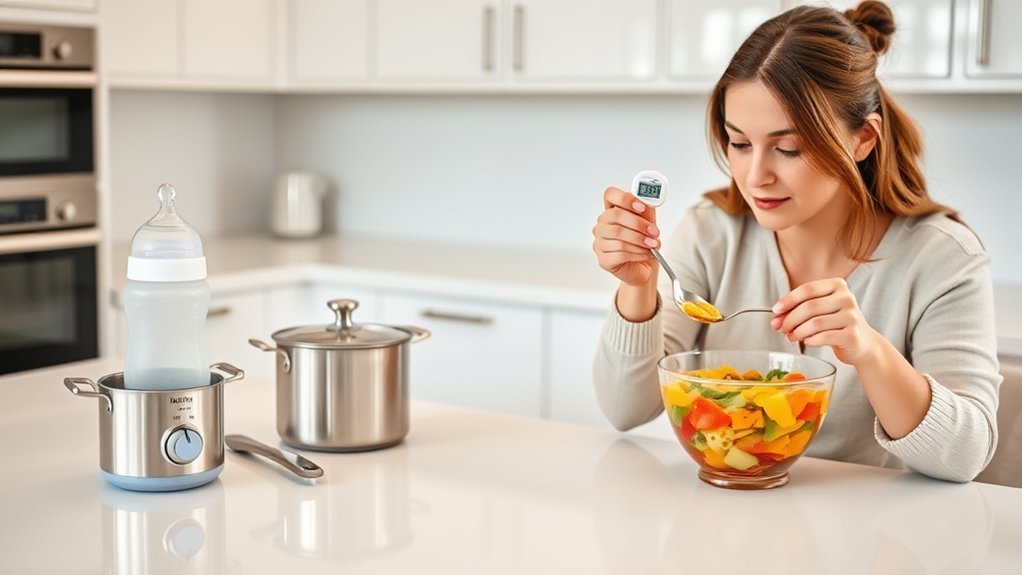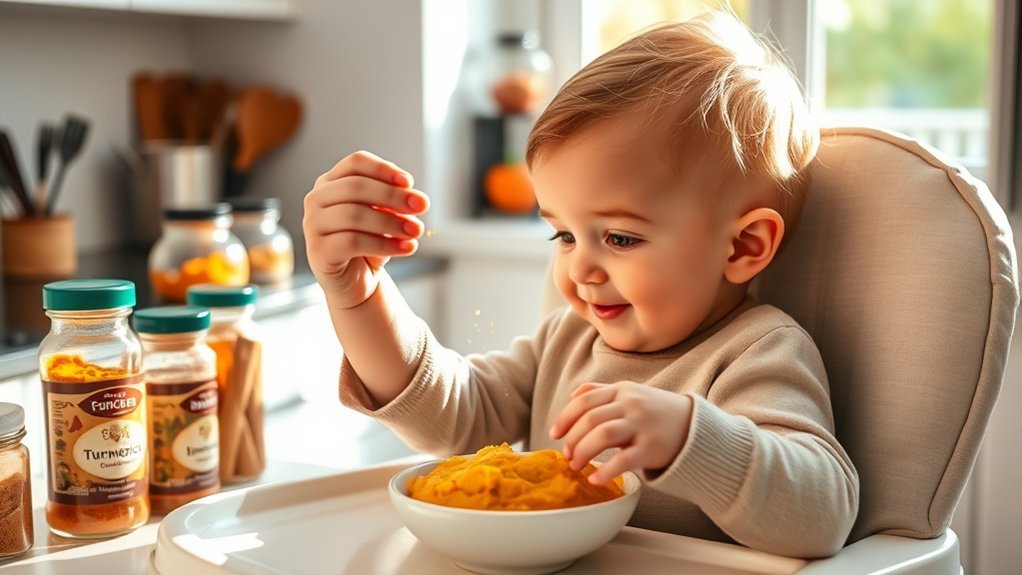
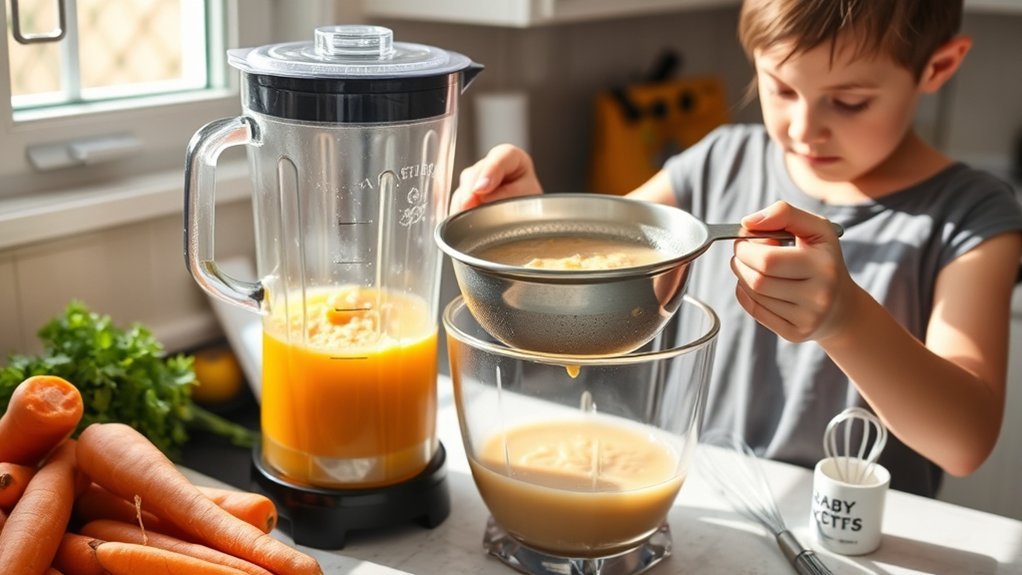
If your baby’s puree is too watery, you can usually correct it in a few minutes without starting over. The safest method is to add more of the original cooked ingredient or stir in a small amount of an age-appropriate thickener. This guidance is for babies who are already developmentally ready for complementary foods, usually at about 6 months.
Quick Answer
To thicken watery baby puree, stir in more of the same cooked food, mashed banana, avocado, sweet potato, or a small amount of iron-fortified infant oatmeal. Add the thickener gradually, blend or mash, and check the texture after each addition. Let heated puree cool to lukewarm before feeding.
Key Takeaways
- Add more of the original cooked ingredient first so the puree keeps the same flavor.
- Iron-fortified infant oatmeal or multigrain cereal can thicken puree quickly; do not put cereal in a bottle unless your baby’s clinician specifically directs you to do so.
- Add breast milk, prepared formula, or water a teaspoon at a time only when puree needs thinning.
- Choose a texture that matches your baby’s current feeding skills and supervise every meal.
- Refrigerate homemade baby food for one to two days or freeze it for one to two months.
At a Glance
| Time Required | 2–10 minutes |
| Difficulty | Easy |
| Tools Needed | Clean spoon, fork, masher, food processor, or blender |
| Cost | No added cost when using more puree; usually under $2 for an optional thickener |
Warning: Always seat your baby upright and watch them throughout the meal. Stop feeding and seek urgent help if your baby cannot breathe, cry, or cough. Contact your pediatrician for repeated coughing or choking, breathing changes, persistent trouble swallowing, frequent vomiting, or concerns about growth.
How to Thicken Watery Baby Puree Safely
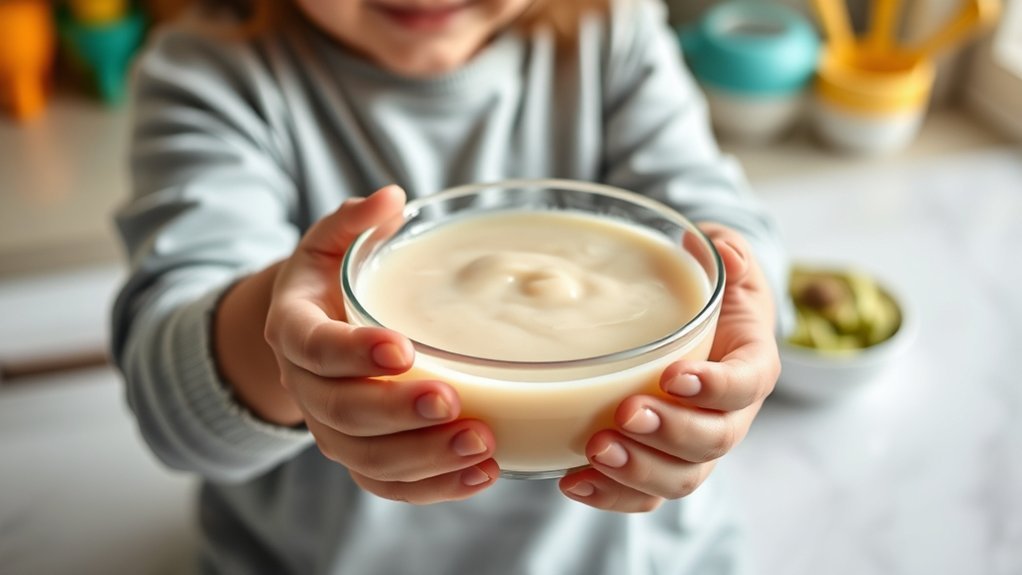
A puree is usually too watery when it runs off the spoon like a drink, separates into liquid and solids, or spreads immediately across a flat plate. A suitable early puree should be smooth and moist but thick enough to remain on a spoon when you tilt it slightly.
The ideal texture depends on your baby’s feeding skills. According to the Centers for Disease Control and Prevention, babies generally begin with smooth mashed or pureed foods and move toward thicker, lumpier textures as their abilities develop.

Power your essentials anywhere with a 999Wh pure sine wave power station delivering up to 1000W continuous with 2000W surge. It supports fast charging via USB-C PD 60W and USB-A QC 18W, plus simultaneous output for multiple devices through AC, USB, wireless, and car/DC ports. Recharge using AC, car, or solar with a built-in MPPT controller and dual cooling fans, while the upgraded battery management system protects against surges, short circuits, and overheating.
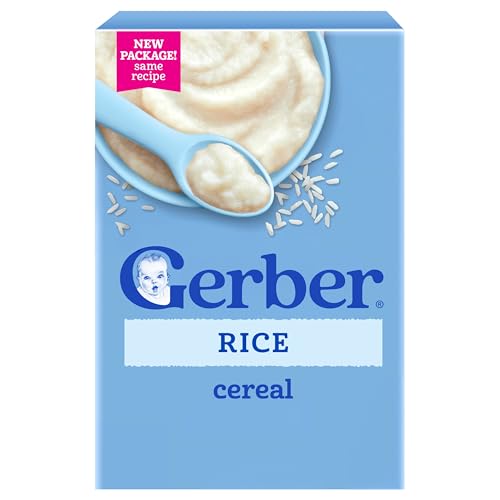
WHOLESOME, HIGH-QUALITY INGREDIENTS Gerber baby rice cereal gives busy parents a convenient, reliable way to provide their little one with high-quality ingredients. Our rice cereal for baby is made with 60% of the daily value of iron to support brain development SNAP and EBT item in eligible states

HEAVY METAL TESTED: A cleaner alternative to traditional baby rice cereal. Every batch independently third-party tested for arsenic, lead, cadmium, and mercury. Clean from the very first bite
1. Add More of the Original Food
The simplest fix is to add more of the same cooked ingredient. For example, add more cooked carrot to watery carrot puree or more cooked pear to watery pear puree. This preserves the original flavor and avoids introducing another food unexpectedly.
- Cook or set aside a small amount of the original ingredient.
- Mash or blend it separately.
- Stir one spoonful into the watery puree.
- Repeat until the puree stays on the spoon.
2. Use Infant Oatmeal or Multigrain Cereal
Iron-fortified infant oatmeal, barley, or multigrain cereal can thicken puree without additional cooking. Sprinkle in a small amount, stir thoroughly, and wait about one minute because cereal continues to absorb moisture.
The CDC recommends offering a variety of fortified infant cereals rather than relying only on rice cereal. The U.S. Food and Drug Administration has established an action level for inorganic arsenic in infant rice cereal, so cereal variety is a sensible precaution.
Warning: Mix cereal only into spoon-fed food. Do not put cereal in a bottle unless your baby’s pediatrician or feeding specialist has prescribed that approach for a medical reason.
3. Add a Thick Fruit or Vegetable
Mashed banana, avocado, sweet potato, squash, potato, peas, or well-cooked beans can make a thin puree thicker. Use a food your baby has already tolerated when possible so you can identify the cause if a reaction occurs.
Start with one teaspoon of the thicker food for every two tablespoons of watery puree. Stir or blend, check the texture, and add more only if needed.
4. Reduce Extra Water Gently
If the puree is watery because too much cooking liquid was added, place it in a small saucepan and warm it gently while stirring. A few minutes of low heat can allow excess water to evaporate.
Let the puree cool before blending or serving. Follow your appliance manufacturer’s instructions when processing warm or hot foods because some sealed blender cups are not designed for hot ingredients.
5. Strain Only When Necessary
A fine-mesh sieve can remove separated liquid from an extremely watery puree. Straining works quickly, but adding more of the original ingredient is usually better because it preserves more of the food and its natural texture.
Pro Tip: Before adding a thickener, let the puree rest for one or two minutes. Infant cereal, oatmeal, potato, and other starches may continue absorbing liquid after mixing.
Best Ingredients to Thicken Baby Food
The best thickener depends on the puree’s flavor, your baby’s age and feeding skills, and which foods your baby has already tried.
| Ingredient | Best Use | How to Add It | Important Caution |
|---|---|---|---|
| More of the original food | Preserving the same flavor | Add one spoonful at a time | Cook until soft enough to mash easily |
| Iron-fortified infant oatmeal or multigrain cereal | Fast thickening without cooking | Sprinkle in gradually and allow it to absorb | Use in spoon-fed food, not a bottle |
| Mashed banana or avocado | Fruit and mild vegetable purees | Mash smoothly and add one teaspoon at a time | Changes the flavor and may brown during storage |
| Sweet potato, squash, potato, peas, or beans | Savory meals and vegetable blends | Cook until very soft, then mash or puree | Remove skins or firm pieces that do not blend smoothly |
| Plain pasteurized yogurt | Fruit, oat, and vegetable blends | Stir into cooled puree immediately before serving | Choose unsweetened yogurt and introduce dairy appropriately |
| Pasteurized cottage cheese | Savory vegetable blends | Blend smooth before adding | Choose a lower-sodium option when available |
| Cooked oatmeal, quinoa, or another soft grain | Heartier meals for babies ready for more texture | Cook fully and blend or mash to the needed consistency | Whole kernels must be finely ground or mashed |
Whole chia seeds, flaxseeds, nuts, and other small hard foods are not suitable puree thickeners because they may present a choking risk. If your baby’s clinician has approved seeds, use only a very small amount that is finely ground or fully hydrated, and make sure the final mixture is not sticky or overly thick.
How to Prevent Baby Puree From Becoming Watery
- Drain cooking water first: Reserve it in a separate clean container instead of placing all of it in the blender.
- Add liquid gradually: Begin without extra liquid and add water, breast milk, or prepared formula one teaspoon at a time.
- Steam instead of boil when practical: Steaming often leaves less excess water clinging to the food.
- Use naturally thick ingredients: Banana, avocado, potato, squash, beans, and oatmeal need little added liquid.
- Account for frozen produce: Frozen fruits and vegetables may release additional water as they cook and thaw.
- Let food rest: Some purees thicken naturally as they cool.
- Blend smaller batches: A small batch is easier to control than a full blender jar.
Note: Avoid trying to make puree more appealing with honey, added sugar, or salty processed foods. The CDC advises against honey before 12 months, added sugars for infants and young children, high-sodium foods, and unpasteurized dairy products.
How to Thin Puree That Becomes Too Thick
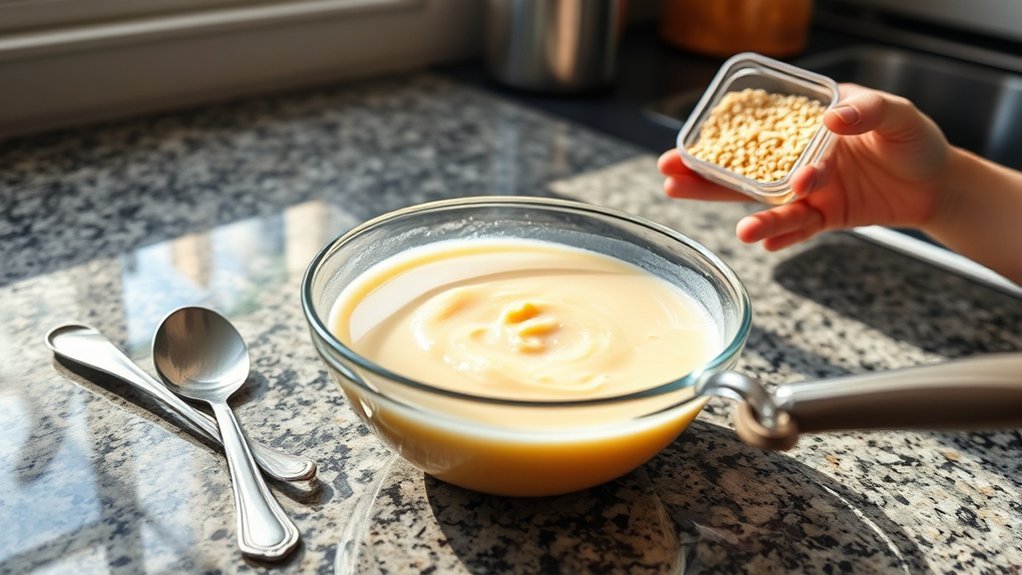
A puree that becomes sticky, pasty, or difficult to move around the mouth may need a little liquid. Add water, breast milk, or correctly prepared infant formula one teaspoon at a time. Stir thoroughly before adding more.
For easier storage, freeze plain puree and add breast milk or prepared formula after thawing. If you use breast milk, follow the CDC’s breast-milk storage and thawing guidance. Do not microwave breast milk, and never refreeze milk after it has thawed.
Do not dilute infant formula itself by changing the water-to-powder ratio. Prepare formula exactly as directed on its container, then use a small amount of the correctly prepared formula to adjust spoon-fed puree.
Why Texture Matters in Baby Food Acceptance
Texture should change as your baby’s oral skills develop. The goal is not to make every meal as smooth or as thick as possible. The goal is to provide food that your baby can manage safely while continuing to practice new feeding skills.
Babies can begin with smooth mashed or pureed food and move toward thicker, lumpy, finely chopped, or ground foods as their ability to eat develops.
Signs Your Baby Is Ready for Puree
Most babies begin complementary foods at about 6 months, although readiness varies. Common readiness signs include:
- Sitting upright alone or with support
- Controlling the head and neck
- Opening the mouth when food is offered
- Swallowing food instead of consistently pushing it out
- Bringing objects toward the mouth
Introducing solid food before 4 months is not recommended. Ask your pediatrician for individualized guidance if your baby was born prematurely or has a medical, developmental, feeding, or growth concern.
Progressing From Smooth to Lumpy Puree
Begin with a texture your baby can handle, then increase thickness gradually. As chewing and swallowing skills improve, you can offer mashed, soft-lumpy, finely chopped, or ground textures.
Some gagging, coughing, or spitting food out may occur while a baby learns. However, repeated coughing during meals, a wet or gurgly voice, breathing changes, frequent choking, long feeding times, or poor weight gain should be discussed with a pediatrician or qualified feeding specialist.
Signs the Puree Consistency Is Right
- The puree remains on the spoon but slides off with gentle movement.
- There are no hard, round, stringy, or rubbery pieces.
- Your baby can move the food backward and swallow it without repeated distress.
- The texture matches foods your baby has already managed safely.
- Your baby remains upright, alert, and closely supervised while eating.
Best Practices for Storing and Freezing Baby Puree
Safe storage is especially important for young children because their immune systems are still developing. Wash your hands, utensils, blender, work surface, and storage containers before preparing puree.
Choosing Freezer Containers
Use clean, food-grade, freezer-safe containers with tight-fitting lids. Silicone food trays, breast-milk storage bags rated for food storage, and manufacturer-approved freezer containers can all work.
Do not use an ordinary glass jar unless its manufacturer specifically says it is freezer-safe. Leave headspace because food expands as it freezes.
Labeling and Storage Times
Label every container with the food and preparation date. Freeze puree in small, single-meal portions so you only thaw what you need.
| Homemade Baby Food | Refrigerator | Freezer |
|---|---|---|
| General homemade puree | 1–2 days | 1–2 months |
These limits follow current FoodSafety.gov guidance for homemade baby food. Use a refrigerator kept at 40°F (4°C) or below and a freezer kept at 0°F (-18°C) or below.
Safe Thawing Techniques
- Refrigerator: Move one portion to the refrigerator and allow it to thaw overnight.
- Warm-water bath: Keep the container sealed and place it in warm water.
- Stovetop: Warm the portion gently in a small pan while stirring.
- Microwave: Transfer the food to a microwave-safe dish, heat carefully, stir thoroughly, let it stand, and check for hot spots.
Serve puree lukewarm, not hot. Never microwave breast milk or formula because uneven heating can create hot spots.
Leftovers and Reheating
Place only the amount you expect your baby to eat in the feeding dish. Use a clean spoon to remove more from the storage container if needed.
Do not return food from the feeding dish to the refrigerator. Saliva transferred by the spoon can contaminate the remaining food. Discard the uneaten portion from the feeding dish rather than repeatedly cooling and reheating it.
Customizing Flavor and Texture for Your Baby
You can adjust flavor without making puree runny. Introduce new foods one at a time when your baby is beginning complementary foods, and watch for signs of an allergic reaction.
| Adjustment | What It Does | Example |
|---|---|---|
| Add cooked grain | Thickens and adds a heartier texture | Cooked oatmeal blended into pear puree |
| Add a thick fruit or vegetable | Changes flavor and reduces wateriness | Sweet potato stirred into carrot puree |
| Add prepared milk gradually | Thins puree immediately before serving | One teaspoon of breast milk or correctly prepared formula |
| Use mild seasoning | Adds aroma without extra liquid | A small pinch of cinnamon, cumin, ginger, or a mild herb |
Do not use honey before 12 months. Avoid added sugar, high-sodium seasonings, unpasteurized milk products, and pieces of whole nuts or seeds.
Frequently Asked Questions
Can I use leftover puree to thicken a new batch?
Yes, provided the leftover puree was stored safely, has not been in contact with your baby’s used spoon, and is still within its refrigerator or freezer limit. Reheat or thaw it safely, combine it with the new batch, and use the storage deadline of the older portion.
How can I tell whether baby puree is too watery?
The puree is probably too watery if it pours from the spoon, separates quickly, or spreads like a drink. It should be moist and easy to swallow but remain on a spoon when the spoon is tilted slightly.
Can I use infant cereal to thicken puree?
Yes. Stir a small amount of iron-fortified infant oatmeal, barley, or multigrain cereal into spoon-fed puree and let it absorb before adding more. Offer a variety of cereals rather than relying only on rice cereal. Do not place cereal in a bottle unless your baby’s clinician directs you to do so.
Can I add breast milk or formula to baby puree?
Yes. Use safely handled breast milk or correctly prepared formula and add it one teaspoon at a time. For simple storage, freeze puree without milk or formula and mix in the liquid after thawing. Never change the formula’s required water-to-powder ratio.
Is it safe to reheat baby puree several times?
It is safer to warm only one serving at a time. Stir heated food thoroughly, let it stand, and test that it is lukewarm. Discard food left in the feeding dish because saliva from the used spoon may have contaminated it.
What signs suggest my baby is ready for thicker puree?
Your baby may be ready when they manage smooth puree comfortably, move food backward and swallow it, and show growing chewing or tongue-control skills. Increase thickness gradually rather than making a sudden change.
Can I use spices without changing the consistency?
Yes. A small pinch of a mild spice or herb can add flavor without adding liquid. Try cinnamon, cumin, ginger, basil, or another mild seasoning. Avoid honey before 12 months, added sugar, and high-sodium seasoning blends.
When should I ask a pediatrician about feeding difficulty?
Contact your baby’s pediatrician if meals repeatedly cause coughing, choking, breathing changes, unusual congestion, a wet or gurgly voice, vomiting, distress, very long feeding times, or concerns about hydration and growth. A pediatrician may recommend evaluation by a feeding or swallowing specialist.
Conclusion
Watery baby puree is usually easy to fix. Add more of the original cooked food first, then consider infant oatmeal, mashed banana, avocado, sweet potato, or another suitable thickener. Make one small adjustment at a time so the puree does not become too thick.
Match the texture to your baby’s feeding skills, keep your baby upright and supervised, and follow current food-storage guidance. When coughing, choking, swallowing difficulty, or growth concerns continue, pause the texture experiments and ask your baby’s pediatrician for individualized advice.
Sources
- CDC: When, What, and How to Introduce Solid Foods — readiness signs, cereal variety, food preparation, and texture progression
- CDC: Choking Hazards — developmentally appropriate food preparation and meal supervision
- CDC: Foods and Drinks to Avoid or Limit — honey, added sugar, salt, and unpasteurized foods
- FoodSafety.gov: Children Under Five — baby-food storage, heating, refrigeration, and freezer guidance
- CDC: Breast Milk Storage and Preparation — safe thawing, warming, storage, and refreezing limits
- FDA: Inorganic Arsenic in Infant Rice Cereals — federal action level and exposure context