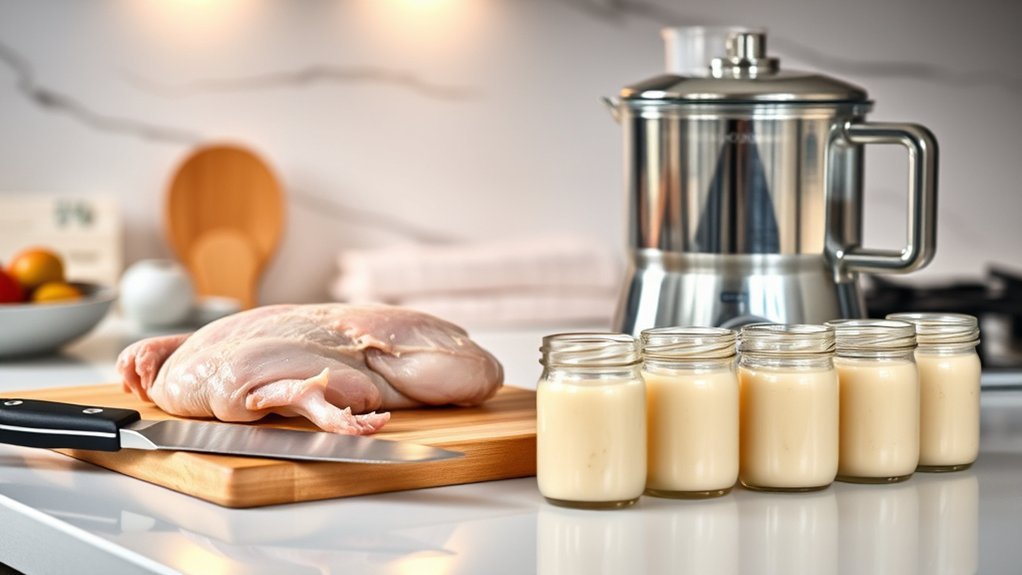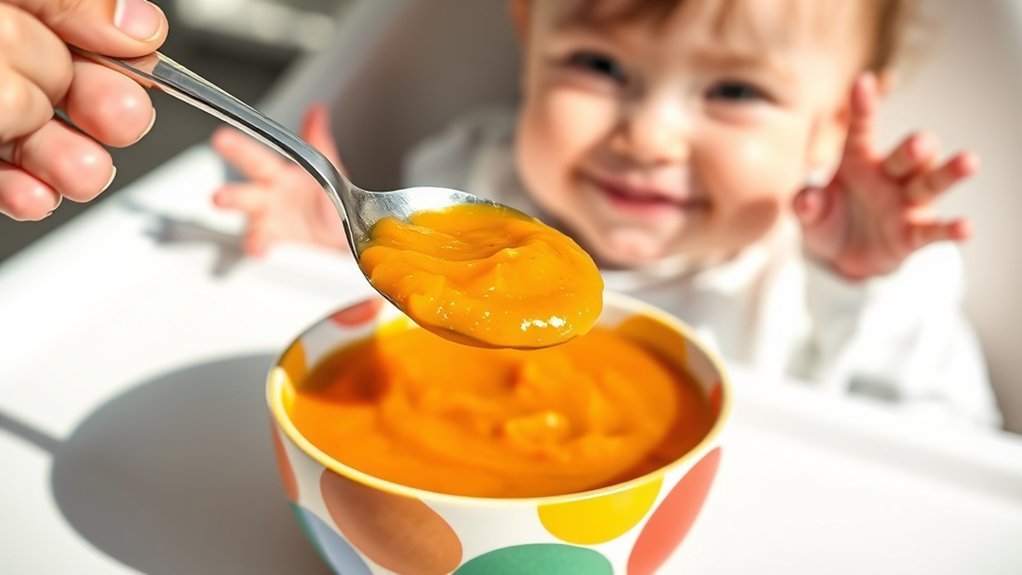

Meat can be a nutritious early food because it provides protein, iron, and zinc in a small serving. The safest approach is to choose fresh, unprocessed meat, cook it to the correct internal temperature, blend it to a texture your baby can manage, and chill or freeze leftovers promptly. Most babies begin complementary foods at about 6 months when they show developmental readiness, but timing and texture should follow your pediatrician’s guidance.
Quick Answer
Cook poultry to 165°F, ground beef, pork, lamb, or veal to 160°F, and whole cuts of those meats to 145°F followed by a three-minute rest. Chop the cooked meat, then blend it with water or unsalted cooking liquid until smooth. Refrigerate meat puree promptly and use it within one to two days.
Key Takeaways
- Offer meat only after your baby is ready for complementary foods and can sit with good head control and swallow soft food safely.
- Use a food thermometer; color and texture alone cannot confirm that meat is safe.
- Choose fresh, lean, unprocessed meat and avoid salty processed meats such as hot dogs, deli meat, sausage, and ham.
- Use moist cooking methods and add liquid gradually while blending to prevent a dry, stringy puree.
- Refrigerate pure meat puree for no more than one day and meat-and-vegetable puree for one to two days, or freeze promptly.
At a Glance
| Time Required | About 25–45 minutes, depending on the cut and cooking method |
| Difficulty | Easy |
| Tools Needed | Knife, cutting board, pot or pan, food thermometer, blender or food processor, and airtight containers |
| Cost | Varies by meat; a small batch usually uses 4–8 ounces |
Note: This guide provides general food-safety and feeding information. Ask your child’s pediatrician about readiness for solids, texture progression, allergies, growth concerns, or feeding difficulties.
Before You Start: Make Sure Your Baby Is Ready
Many babies are ready to begin complementary foods at about 6 months. Readiness matters more than the calendar alone. Your baby should be able to sit with support, hold their head steady, bring food toward the mouth, and swallow soft food instead of pushing it back out.
At first, breast milk, infant formula, or both remain the main source of nutrition. Meat puree is a complementary food, not a replacement for milk feeds. The American Academy of Pediatrics’ HealthyChildren guidance recommends soft or pureed foods and includes meat among foods that can provide iron and zinc.
When offering a new food, start with a small amount while your baby is alert and seated upright. Do not force feeding. Watch closely during every meal, and match the texture to your baby’s current eating skills.

Power your essentials anywhere with a 999Wh pure sine wave power station delivering up to 1000W continuous with 2000W surge. It supports fast charging via USB-C PD 60W and USB-A QC 18W, plus simultaneous output for multiple devices through AC, USB, wireless, and car/DC ports. Recharge using AC, car, or solar with a built-in MPPT controller and dual cooling fans, while the upgraded battery management system protects against surges, short circuits, and overheating.
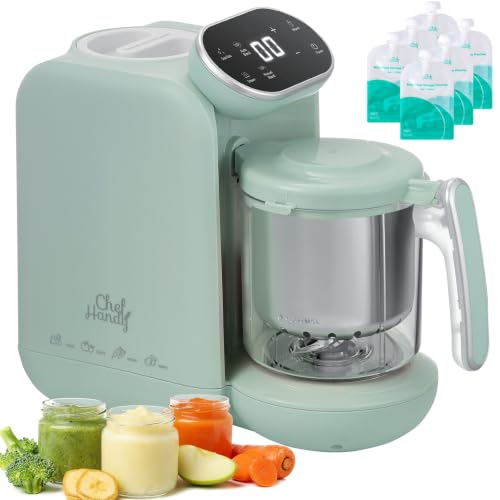
𝗗𝘂𝗿𝗮𝗯𝗹𝗲 𝗦𝘁𝗮𝗶𝗻𝗹𝗲𝘀𝘀 𝗦𝘁𝗲𝗲𝗹 𝗦𝘁𝗲𝗮𝗺 𝗕𝗮𝘀𝗸𝗲𝘁: Unlike plastic steam baskets that may discolor, stain, or retain odors over time, the Chefhandy baby food maker features a durable stainless steel steam basket for gentle, even cooking. Ingredients are steamed above the water rather than directly boiled, helping preserve their natural moisture, flavor, and texture for fresh homemade baby meals.
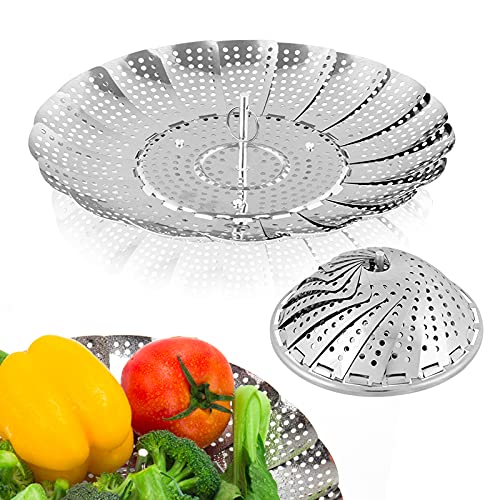
【UPGRADE DESIGN & QUALITY 】- The steamer basket with premium food grade stainless steel petals design, Steaming is a healthy cooking choice because it helps retain more than 90% of the nutrients lost when boiling.
Choosing the Right Meat for Baby Food Purees

Choose fresh meat with no added salt, seasoning blends, marinades, or curing ingredients. Lean cuts are easy to portion, but a little natural fat can help the puree stay moist. Trim visible gristle, skin, large pockets of fat, and every bone before blending.
| Meat | Good Options | Preparation Notes |
|---|---|---|
| Chicken or turkey | Boneless breast, thigh, or ground poultry | Thigh meat often stays moister; remove skin and bones. |
| Beef, pork, lamb, or veal | Lean ground meat, tender cuts, or slow-cooked stew meat | Tough cuts such as chuck must be cooked until fork-tender before blending. |
| Fish | Lower-mercury choices such as salmon, pollock, cod, tilapia, or shrimp | Remove all skin, shell, cartilage, and bones; check the puree again by hand. |
Red meat does not need to be avoided simply because it is beef, pork, or lamb. Properly cooked, tender meat can be part of a varied diet and can supply iron and zinc. The CDC notes that babies need an iron source outside breast milk at about 6 months.
Avoid hot dogs, deli meats, bacon, sausage, ham, jerky, heavily salted canned meat, and other processed meats. They may be high in sodium, and some shapes or textures can also create a choking risk. CDC guidance recommends limiting foods high in salt, including processed meats.
Preparing and Cooking Meat Safely for Baby Purees
Wash your hands with soap and water before and after handling raw meat. Keep raw meat away from cooked food, produce, bottles, utensils, and feeding equipment. Use a clean cutting board and wash the knife, board, counters, and blender parts thoroughly after contact with raw meat.
Thaw frozen meat in the refrigerator. You may also use cold water or a microwave if you cook the meat immediately afterward. Never thaw meat on the counter.
Warning: Never rely on color, cooking time, or texture alone. Use a food thermometer in the thickest part of the meat, away from bone, fat, and gristle.
| Food | Safe Minimum Internal Temperature | Important Detail |
|---|---|---|
| Chicken, turkey, duck, or other poultry, whole or ground | 165°F | Check the thickest part; ground poultry also requires 165°F. |
| Ground beef, pork, lamb, or veal | 160°F | Break up clumps so the meat cooks evenly. |
| Whole cuts of beef, pork, lamb, or veal | 145°F | Rest for at least 3 minutes after cooking. |
| Fish | 145°F | Remove every bone and tough piece before serving. |
| Shrimp, lobster, crab, and scallops | Cook until pearly or white and opaque | Remove every shell, cartilage fragment, and tough piece before blending. |
These temperatures follow the USDA safe minimum internal temperature chart. You may cook meat beyond the minimum temperature when needed to make it tender enough to puree, especially with chuck, stew meat, or other firm cuts.
Key Cooking Methods for Baby Purees
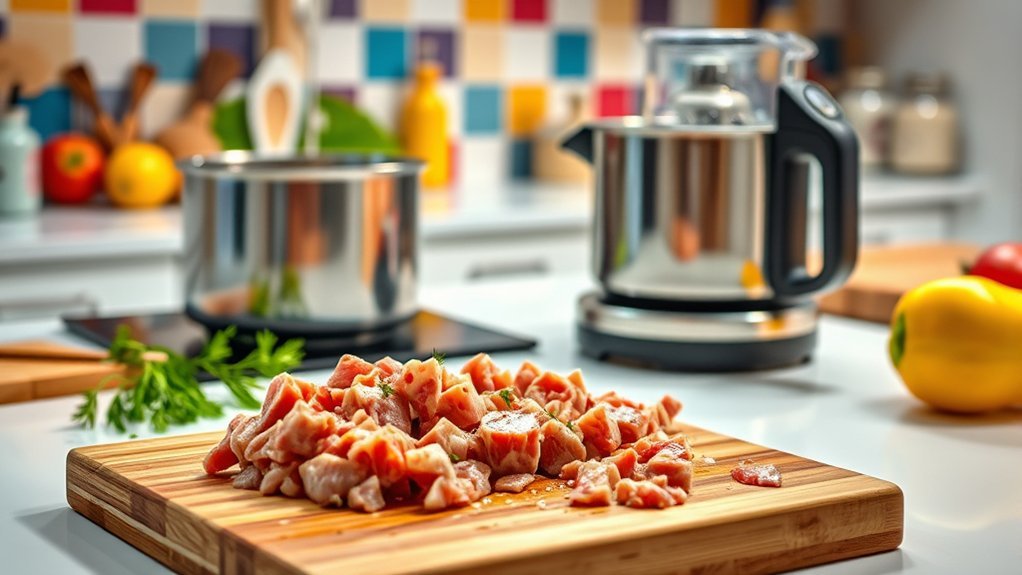
Moist cooking methods usually make meat easier to blend. The best method depends on the cut you choose.
- Poaching or simmering: Place small pieces in water or unsalted cooking liquid and simmer gently until fully cooked and tender. Save some cooking liquid for blending.
- Stewing or braising: Use this for beef chuck, pork shoulder, lamb, or other firm cuts. Cook slowly with water and vegetables until the meat separates easily with a fork.
- Baking or roasting: Works well for chicken, turkey, pork tenderloin, fish, or a small roast. Covering the dish or adding a little water can reduce drying.
- Pan-cooking ground meat: Cook over medium heat, breaking the meat into small pieces. Drain excess fat if needed, then add water and simmer briefly to soften it before blending.
- Steaming: Small, thin pieces can be steamed, although very lean meat may dry out. Check the internal temperature and add enough liquid during blending.
Broth is optional. If you use it, choose a product labeled unsalted or no-salt-added and check the ingredient list. Regular broth and stock can contain more sodium than a baby needs.
How to Cook and Puree Meat Step by Step
- Prepare the workspace. Wash your hands, clean the counter, and set out separate tools for raw and cooked meat.
- Trim and cut the meat. Remove skin, bones, gristle, and large areas of fat. Cut the meat into evenly sized pieces so it cooks at the same rate.
- Cook until safe and tender. Use one of the methods above and verify the internal temperature with a thermometer.
- Rest whole cuts when required. Beef, pork, lamb, and veal steaks, chops, and roasts need a three-minute rest after reaching 145°F.
- Chop the cooked meat. Cut it into pieces about 1 inch or smaller. This protects the blender and helps create an even texture.
- Blend in a small batch. Add the meat to a blender or food processor with 2 to 4 tablespoons of water or unsalted cooking liquid per cup of cooked meat.
- Adjust gradually. Pulse, scrape down the sides, and add liquid 1 tablespoon at a time until the texture suits your baby.
- Serve or store promptly. Spoon the serving into a clean bowl. Cool the remaining puree quickly in shallow containers and refrigerate or freeze it within two hours of cooking.
Pro Tip: Meat blends more smoothly when it is still slightly warm and moist. Pulse first, then add liquid slowly. Too much liquid at once can turn the puree thin before the meat fibers have fully broken down.
For immediate serving, you may use a small amount of breast milk or properly prepared infant formula as the blending liquid. For batch freezing, water or unsalted cooking liquid is simpler because breast milk and formula have their own handling and storage rules.
How to Achieve the Right Puree Consistency
The right texture depends on your baby’s feeding skills. A younger beginner may need a smooth, loose puree that falls easily from a spoon. As skills improve, you can reduce the liquid and move toward thicker puree, mashed meat mixtures, and finely minced soft meat.
| Texture | How to Make It | What to Check |
|---|---|---|
| Smooth puree | Blend thoroughly with enough liquid to remove dry or stringy pieces. | No hard lumps, bones, gristle, skin, or shell fragments. |
| Thick puree or mash | Use less liquid and pulse instead of blending continuously. | Soft enough to press flat between your fingers. |
| Finely minced meat | Finely chop very tender meat and mix it into a moist vegetable mash. | Pieces are tiny, soft, moist, and appropriate for your baby’s skills. |
If the puree stays stringy, the meat may be too dry or not tender enough. Return it to a pan with a little water and simmer until softer, then blend again. A fine-mesh sieve can remove an occasional stubborn fiber, but it should not be used to hide bones, gristle, or poorly cooked meat.
Flavoring Tips for Meat Baby Purees
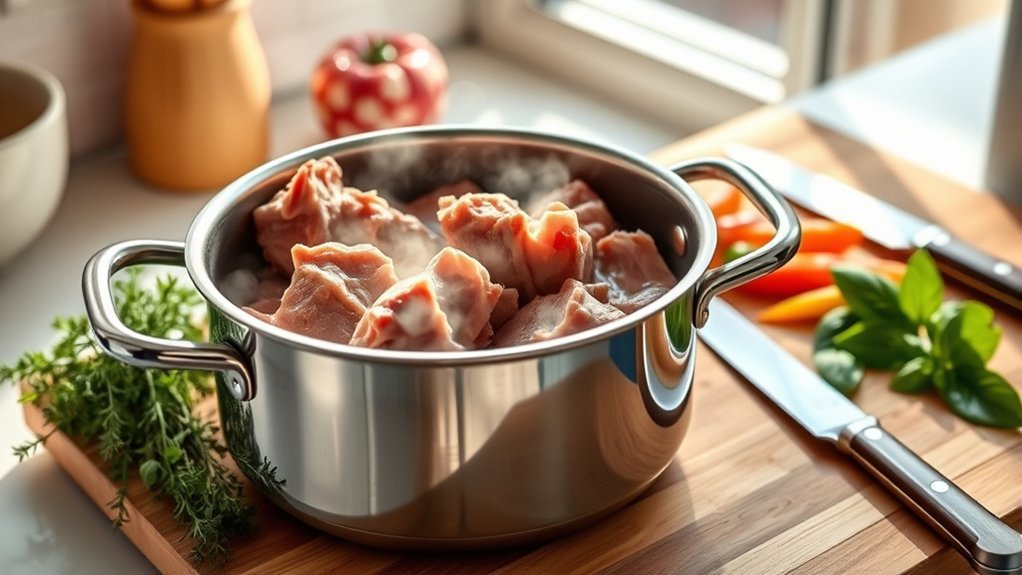
Meat puree does not need salt, sugar, sauces, or strong seasoning blends. Mild herbs and naturally sweet vegetables can add moisture and help your baby experience a wider range of flavors.
Fresh Herb Combinations
Use a small amount of finely chopped fresh herb or a pinch of a single dried herb. Add it during cooking so it softens and spreads evenly through the puree.
| Herb Combination | Pairs Well With | Flavor Profile |
|---|---|---|
| Parsley and basil | Chicken or turkey | Fresh and mild |
| Rosemary and thyme | Beef or lamb | Earthy and savory; use sparingly |
| Oregano and parsley | Turkey, pork, or tomato-based mixtures | Savory and aromatic |
Adding Natural Sweetness
Mix the cooked meat with soft vegetables such as sweet potato, carrot, butternut squash, peas, or parsnip. Apples or pears can also soften the flavor. Avocado adds creaminess but should be mixed in close to serving because it can darken during storage.
Start with a simple combination, such as chicken and sweet potato or beef and carrot. This makes it easier to identify which ingredient your baby likes and to notice a possible reaction to a new food.
Warning: Do not add honey to food for a child younger than 12 months because of the risk of infant botulism. Also avoid added sugar and high-sodium sauces, bouillon, seasoning packets, and regular broth.
Fish and Allergen Safety
Fish can be offered as a soft complementary food, but choose lower-mercury varieties and remove every bone. The FDA fish-advice chart identifies lower-mercury “Best Choices” and fish that young children should avoid.
Fish and shellfish can cause allergic reactions. Introduce a small amount when you can watch your baby closely, especially if your child has severe eczema, an existing food allergy, or a family history that concerns you. Ask your pediatrician for an individual plan when allergy risk is high.
Stop feeding the food and seek medical advice if you notice a possible reaction. Trouble breathing or swallowing, lip or tongue swelling, sudden widespread hives, or unusual sleepiness can signal a severe reaction and requires emergency care.
Storing, Freezing, and Reheating Meat Purees
Babies are more vulnerable to foodborne illness, so use the shorter storage limits recommended for meat baby food. Transfer the puree to clean, shallow, airtight containers and refrigerate or freeze it within two hours of cooking. If the room temperature is above 90°F, chill it within one hour.
| Puree Type | Refrigerator at 40°F or Below | Freezer at 0°F or Below |
|---|---|---|
| Strained or pureed meat | 1 day | 1–2 months |
| Meat-and-vegetable combination | 1–2 days | 1–2 months |
These limits follow the FDA safe-storage chart for baby food. Label each container with the recipe and date. Freeze in small portions so you can thaw only what you need.
- To thaw: Move a portion to the refrigerator overnight. You may also use the microwave if you will heat and serve it immediately. Do not thaw meat puree on the counter.
- To reheat: Heat only the portion you need to 165°F. Stir well, especially after microwaving, then let it cool and test the temperature before feeding.
- To serve safely: Use a clean spoon to move food from the storage container to a separate bowl. Do not save food that has touched your baby’s mouth or used spoon.
- To discard: Throw away puree with an off odor, mold, unusual bubbling, a damaged container, or uncertain storage history. Do not taste food to decide whether it is safe.
The two-hour rule is a maximum time for getting perishable food into the refrigerator or freezer—not a recommended cooling period on the counter.
Troubleshooting Common Challenges in Pureeing Meat
Texture Issues While Pureeing
If the puree is thick, dry, or lumpy, add warm water or unsalted cooking liquid 1 tablespoon at a time. If it is stringy, cook the meat longer with moisture before blending again. If it is greasy, trim more visible fat next time or chill the cooking liquid and remove hardened excess fat before using it.
A small blender cup or food processor often works better than a full-size blender for a small portion. Stop and scrape the sides frequently so every piece reaches the blades.
Ensuring Proper Cooking Temperature
Insert the thermometer into the thickest part of the meat. For thin pieces or ground meat, test more than one area. Wash the thermometer probe with hot, soapy water before and after use.
Do not let cooked meat sit at room temperature for two hours to cool. Let it stop steaming briefly, divide it into shallow containers, and refrigerate or freeze it promptly. The goal is to cool food quickly, not slowly.
Managing Flavor Preferences
A baby may reject a new flavor or texture without disliking it permanently. Offer a small amount without pressure and try again another day. Mix meat with a familiar vegetable, but keep the meat flavor present instead of hiding it completely.
You can also vary the meat-and-vegetable combinations:
- Chicken with sweet potato and parsley
- Turkey with carrot and basil
- Beef with peas and thyme
- Pork with apple and a small pinch of sage
- Salmon with potato and dill
Introduce combinations only after the individual ingredients have been tolerated. If your baby repeatedly coughs, gags intensely, vomits, struggles to swallow, or has poor weight gain, discuss feeding with a pediatrician rather than simply thinning the food.
Frequently Asked Questions
Can I use frozen meat for baby food purees?
Yes. Thaw frozen meat in the refrigerator, in cold water, or in the microwave. Cook it immediately after cold-water or microwave thawing, and never thaw it on the counter.
How do I know whether the meat is fully cooked?
Use a food thermometer. Poultry must reach 165°F, ground beef, pork, lamb, and veal must reach 160°F, and whole cuts of those meats must reach 145°F followed by a three-minute rest. Fish should reach 145°F.
What meats should I avoid for baby purees?
Avoid raw or undercooked meat, meat with bones or gristle, high-mercury fish, and salty processed meats such as hot dogs, bacon, sausage, deli meat, ham, and jerky. Beef and pork do not need to be avoided when they are fresh, tender, properly cooked, and served in a safe texture.
How long can meat puree stay in the refrigerator?
FDA guidance lists one day for strained meat and one to two days for meat-and-vegetable combinations when held at 40°F or below. When in doubt, discard the puree rather than extending the storage time.
Can I mix different meats in one puree?
You can, but a single meat is easier when your baby is first trying a food. After each ingredient has been tolerated, you can combine meats or mix meat with vegetables while keeping the texture soft and moist.
Can I use broth to thin meat puree?
Yes, but choose unsalted or no-salt-added broth and read the label. Water or the unsalted liquid used to cook the meat is often the simplest choice.
Can I freeze and reheat meat puree?
Yes. Freeze small portions promptly and use meat or meat-and-vegetable purees within one to two months. Thaw in the refrigerator, heat the serving to 165°F, stir well, and cool it to a safe eating temperature before feeding.
When can a baby start eating meat?
Many babies can try soft or pureed meat when they begin complementary foods at about 6 months and show readiness signs. Ask your pediatrician about your baby’s timing, especially after premature birth or when there are feeding, growth, or developmental concerns.
Conclusion
Cooking meat for baby food puree is straightforward when you focus on four things: readiness, temperature, texture, and storage. Choose fresh unprocessed meat, cook it with enough moisture to become tender, confirm safety with a thermometer, and blend only to the texture your baby can manage. Refrigerate or freeze leftovers promptly, use short meat-specific storage limits, and never save food that has been contaminated by a used spoon.
Sources
- USDA Food Safety and Inspection Service: Safe Minimum Internal Temperature Chart — cooking temperatures for poultry, ground meat, whole cuts, and fish.
- U.S. Food and Drug Administration: Once Baby Arrives — refrigerator and freezer limits for baby food and the two-hour rule.
- Centers for Disease Control and Prevention: Iron and Infants — iron needs around 6 months.
- Centers for Disease Control and Prevention: Foods and Drinks to Avoid or Limit — honey, sodium, processed meats, and high-mercury fish.
- American Academy of Pediatrics: Starting Solid Foods — readiness, texture, choking prevention, and iron-rich foods.
- U.S. Food and Drug Administration: Advice About Eating Fish — lower-mercury choices for children.