
Homemade baby food freezes well, but the right storage time depends on what is in it. For a simple, conservative rule, use general homemade baby food within 1 to 2 months when it stays continuously frozen at 0°F (-18°C) or below. Some strained fruits and vegetables have longer published storage times, while meat, egg, and mixed foods should be used sooner.
Quick Answer
For a simple, conservative rule, use homemade baby food within 1–2 months when kept continuously frozen at 0°F (-18°C) or below. Current FoodSafety.gov guidance lists longer times for strained fruits and vegetables, but shorter times for meats and mixed foods. Label each batch, thaw safely, and discard food contaminated during feeding.
Key Takeaways
- The current FoodSafety.gov baby-food table lists general homemade baby food for 1–2 months in the freezer.
- Strained fruits and vegetables are listed for 6–8 months, while strained meats, eggs, and meat-and-vegetable combinations are listed for 1–2 months.
- Keep the freezer at 0°F (-18°C) or colder and the refrigerator at 40°F (4°C) or colder.
- Thaw in the refrigerator, in cold water using a leak-proof package, or in the microwave. Do not thaw baby food on the counter or in hot water.
- Freezer burn mainly affects quality. Food that has contacted a used spoon or been served to the baby should not be returned to storage.
At a Glance
| Time Required | About 10–20 minutes to portion and label, plus freezing time |
| Difficulty | Easy |
| Tools Needed | Freezer-safe containers, freezer bags or food-safe trays, labels or tape, and a marker |
| Cost | Minimal; usually no extra cost if you already have freezer-safe containers |
Note: Published U.S. guidance is not perfectly consistent. FoodSafety.gov, last reviewed in May 2025, lists general homemade baby food for 1–2 months. An older FDA page and American Academy of Pediatrics guidance discuss storage around three months. This article uses the newer, more conservative FoodSafety.gov table as its default. Caregivers of premature, immunocompromised, or medically complex infants should follow their pediatrician or hospital’s advice.
How Long Can Homemade Baby Food Stay Frozen?
The safest practical answer depends on the ingredients. The current federal FoodSafety.gov guidance for children under five gives different refrigerator and freezer periods for different types of puréed and solid baby foods.
| Baby Food Type | Refrigerator | Freezer |
|---|---|---|
| Strained fruits and vegetables | 2–3 days | 6–8 months |
| Strained meats and eggs | 1 day | 1–2 months |
| Meat and vegetable combinations | 1–2 days | 1–2 months |
| General homemade baby foods | 1–2 days | 1–2 months |
Because homemade recipes often combine several ingredients, the simplest approach is to follow the shorter storage period when you are unsure. A purée containing meat and vegetables, for example, should follow the shorter 1–2 month freezer window rather than the longer period listed for plain strained vegetables.
General FDA freezer guidance explains that food kept continuously at 0°F (-18°C) does not support bacterial growth, and many freezer-storage limits primarily protect quality. Baby-specific guidance is intentionally more conservative, however, because young children are more vulnerable to foodborne illness. Follow the baby-food storage periods rather than treating frozen baby food as indefinite storage.
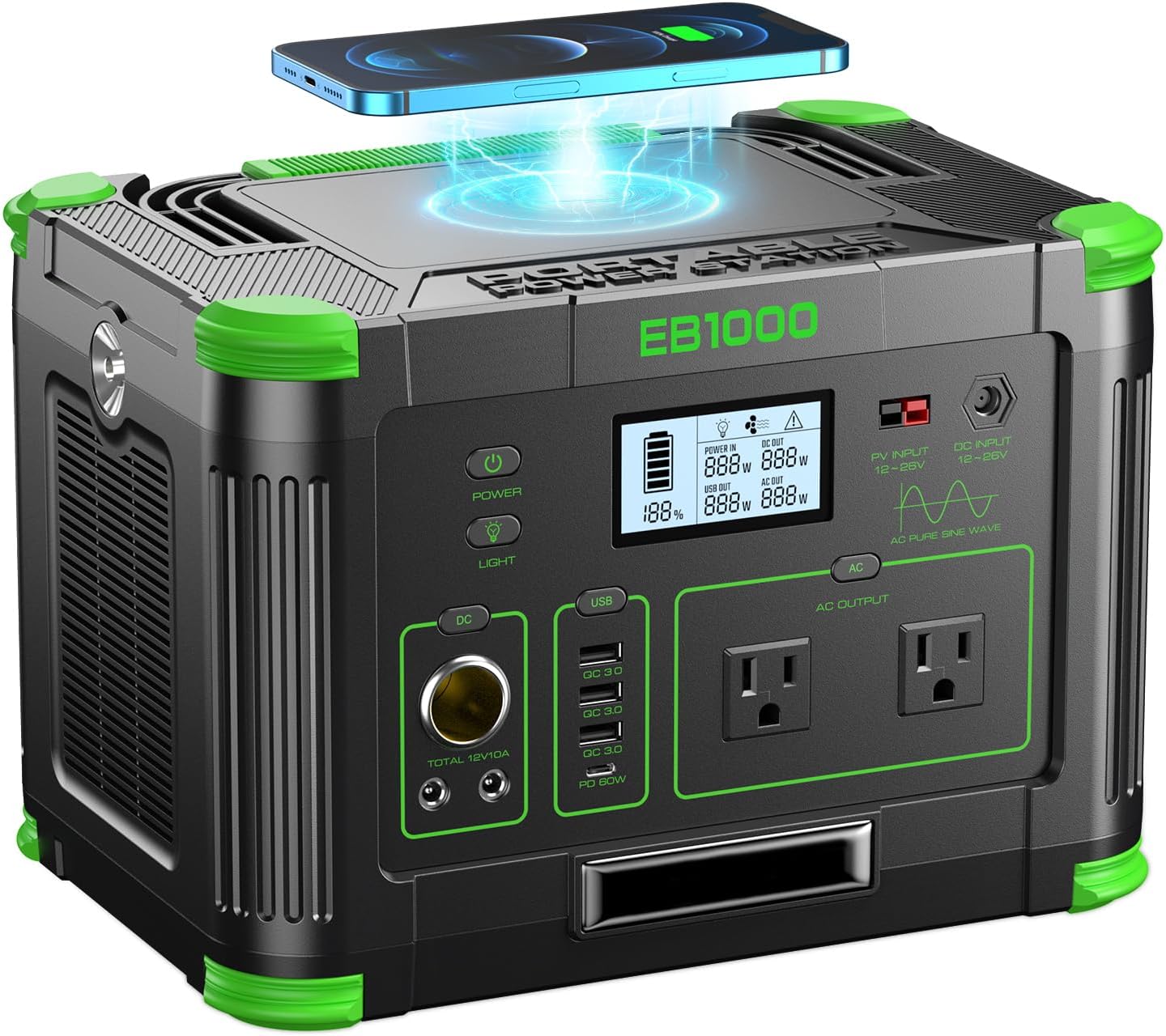
Power your essentials anywhere with a 999Wh pure sine wave power station delivering up to 1000W continuous with 2000W surge. It supports fast charging via USB-C PD 60W and USB-A QC 18W, plus simultaneous output for multiple devices through AC, USB, wireless, and car/DC ports. Recharge using AC, car, or solar with a built-in MPPT controller and dual cooling fans, while the upgraded battery management system protects against surges, short circuits, and overheating.

Effortless Meal Preparation: Streamline your baby's nutrition with our 3 Pack Silicone Freezer Tray. Batch prepare baby food, purees, breastmilk, and more for efficient and convenient meal planning.

2oz x 10 Baby Food Storage Cubes - Prepare, apportion and freeze exact food portions for your baby in advance. To use, simply pop the frozen food cube out from the KeaBabies Prep Silicone Baby Food Freezer Tray in seconds.
The Best Ways to Store Homemade Baby Food

When you make homemade baby food, good storage starts before the food enters the freezer. Wash your hands, utensils, blender or food processor, and preparation surfaces carefully. Keep raw meat, poultry, seafood, and eggs separate from foods that are ready to serve.
After cooking, do not leave perishable baby food on the counter for hours to cool. The FDA recommends refrigerating or freezing perishable foods within two hours, or within one hour when the surrounding temperature is above 90°F (32°C). Divide larger batches into smaller, shallow portions so they chill faster.
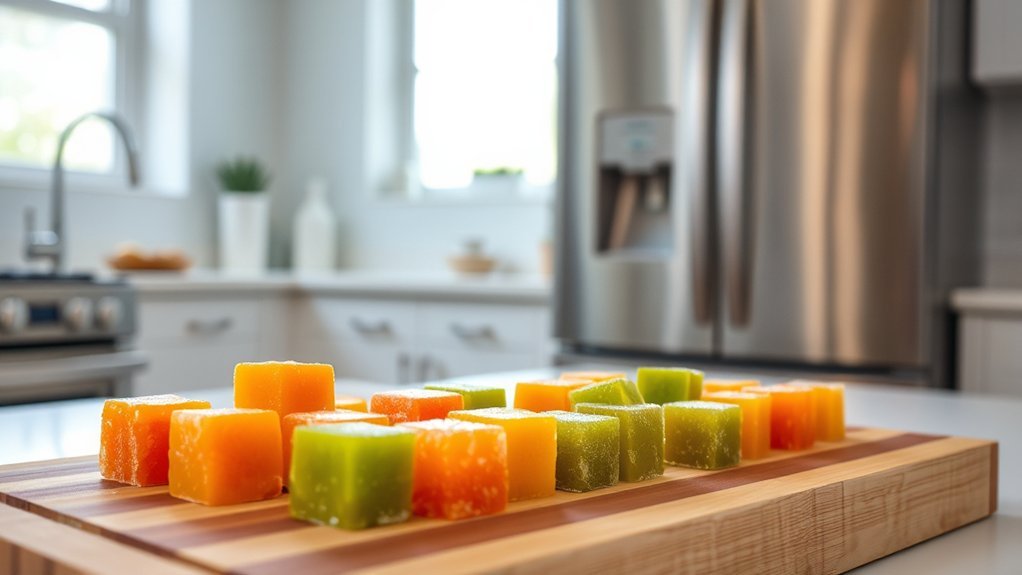
Store the food in airtight freezer-safe containers or freezer bags. Remove excess air from bags before sealing. For convenient portions, you can freeze baby food in food-safe ice cube trays or silicone molds and transfer the frozen portions to a labeled freezer bag or container.
Effective freezing starts with clean preparation, prompt chilling, airtight packaging, and portions small enough to thaw only what your baby needs.
Label every package with the food name and freezing date. Homemade food does not have a manufacturer expiration date, so your own date label is what lets you track its storage time accurately.
Pro Tip: Freeze small portions instead of one large container. You can thaw only the amount needed for one or two meals and avoid repeatedly warming, cooling, or refreezing the same batch.
Signs of Spoilage in Frozen Baby Food
Freezer burn, discoloration, separation, and ice crystals can make frozen baby food less appealing, but they do not all mean the food is unsafe.
Freezer burn may appear as dry, pale, grayish, or brown areas. According to the FDA, freezer burn is primarily a quality problem caused by moisture loss and air exposure. It can affect taste and texture without automatically making the food unsafe.
Some fruit and vegetable purées also darken naturally during storage. Separation after thawing can occur because water and solids freeze differently. Stirring may restore an acceptable texture.
Discard the food if you know it was stored at unsafe temperatures, left out too long, contaminated during feeding, developed mold, or has a clearly abnormal odor or appearance. Do not use smell, color, or taste as proof that improperly handled food is safe; disease-causing bacteria may be present without obvious spoilage signs.
Warning: Never taste questionable baby food to decide whether it is safe. When the storage history is uncertain—especially if the food may have been above 40°F (4°C) for too long—discard it.
Best Practices for Freezing Homemade Baby Food

For consistent results, use the same routine each time you prepare a batch:
- Prepare food hygienically. Wash hands and equipment and keep raw animal foods separate from ready-to-eat ingredients.
- Cook ingredients safely. Follow appropriate minimum cooking temperatures for meat, poultry, seafood, and eggs.
- Chill promptly. Refrigerate or freeze perishable food within two hours of preparation.
- Portion the food. Divide it into amounts your baby typically eats.
- Seal it well. Use freezer-safe airtight containers, bags, jars, or food-safe freezing trays.
- Label and date it. Include both the food type and freezing date.
- Freeze at 0°F (-18°C) or colder. Use the applicable baby-food storage period rather than a single six-month rule for every recipe.
Proper Container Selection
Choose containers specifically intended for food storage and freezing. Freezer-safe plastic containers, freezer bags, food-grade silicone trays, and freezer-safe glass containers can all work.
Glass does not need to be avoided completely. The FDA specifically notes that small jars can be used for freezing homemade baby food. Leave about 1/2 inch of space at the top because food expands as it freezes.
Do not freeze baby food in ordinary glass containers that are not designed to tolerate freezing temperatures and expansion. They may crack or break.
Ice cube trays and silicone molds are useful for portioning, but cavity sizes differ. Treat each cavity as a convenient portion rather than assuming every cube equals the same serving size.
Labeling for Easy Tracking
Use a waterproof marker, freezer tape, or freezer-safe label to record the food and freezing date. Place newer packages behind older packages so the oldest appropriate food is used first.
A separate tracking sheet is optional rather than necessary. Clear package labels are usually enough when the freezer is organized and checked regularly.
When the storage period has passed, discard the food rather than relying on smell or appearance alone to extend its use for a baby.
Thawing Frozen Baby Food Safely
The safest approach is to thaw only the portion you expect to use. Keep the refrigerator at 40°F (4°C) or below and the freezer at 0°F (-18°C) or below.
Recommended Thawing Methods
The USDA recognizes three safe general thawing methods: refrigerator thawing, cold-water thawing, and microwave thawing.
- Refrigerator: Move the portion from the freezer to the refrigerator and allow it to thaw while remaining at 40°F (4°C) or below. For small baby-food portions, overnight thawing is usually convenient.
- Cold water: Keep the food in a leak-proof bag or sealed container and place it in cold tap water. Change the water about every 30 minutes if thawing takes that long. Use or reheat the food promptly once thawed.
- Microwave: Transfer the food to a microwave-safe dish. Defrost or heat it, then stir thoroughly and continue directly to serving once it has been heated appropriately and cooled to a safe eating temperature.
Do not thaw baby food on the counter or submerge it in hot or warm water for extended periods. The outer portion can enter temperatures where bacteria multiply rapidly while the center is still frozen.
Safe Temperature Guidelines
The refrigerator should remain at or below 40°F (4°C), and the freezer should remain at or below 0°F (-18°C). An inexpensive appliance thermometer is the most reliable way to confirm those temperatures.
After microwave heating, stir the food carefully because microwaves can create hot spots. Let it stand briefly, then test a small amount with a clean spoon before feeding. The food should be comfortably lukewarm when it reaches your baby’s mouth.
Baby food does not always need to be served hot. Properly thawed food can be served cool if the texture and ingredients are suitable and it has remained safely refrigerated.
Storage After Thawing
Once thawed in the refrigerator, keep the food refrigerated and follow the same short refrigerator periods used for freshly made baby food. General homemade baby food should be used within 1–2 days; strained meat or egg baby food has a shorter one-day refrigerator period under current FoodSafety.gov guidance.
Refreezing needs more nuance than a blanket “never refreeze” rule. USDA guidance says food that thawed safely in the refrigerator and remained properly refrigerated can generally be refrozen, although quality may suffer. Food thawed by cold water or microwave requires more immediate handling.
For baby food, the simplest approach is still to avoid refreezing whenever possible. Freeze small portions from the start so you can thaw only what you need.
Warning: Never return food from your baby’s serving dish to the refrigerator or freezer. A used spoon can transfer saliva and bacteria into the food. Portion food into a separate dish before feeding and discard whatever remains in that dish afterward.
Reheating Frozen Homemade Baby Food
When you’re ready to serve homemade baby food, reheating it properly helps prevent hot spots and keeps handling simple.
Reheating homemade baby food safely means heating it evenly, stirring thoroughly, allowing a short standing time, and checking the temperature before every bite reaches your baby.
For microwave heating, the FDA advises transferring baby food out of the storage jar or container and into a microwave-safe dish. Its published example is about 15 seconds on high for four ounces of solid baby food, followed by thorough stirring, a 30-second standing period, and a temperature check. Microwave power varies, so treat that timing as a starting point rather than a universal rule.
The FDA advises using the stovetop rather than the microwave for baby-food meats, meat sticks, and eggs because their fat content can contribute to splattering and uneven overheating.
A small saucepan over low heat also works for many purées. Stir frequently until the food is evenly warmed, then allow it to cool until lukewarm before serving.
Use a clean spoon for the temperature test. Once the baby’s spoon has entered the serving dish, treat any remaining food in that dish as a feeding leftover and discard it rather than saving it for later.
Tips for Keeping Homemade Baby Food Fresh

Good ingredients help with flavor, but safe handling and temperature control matter most for keeping homemade baby food fresh.
- Start with clean hands, equipment, containers, and preparation surfaces.
- Use fresh ingredients and cook meat, poultry, seafood, and eggs to appropriate safe temperatures.
- Refrigerate or freeze perishable baby food within two hours of preparation.
- Keep the freezer at 0°F (-18°C) or colder.
- Use airtight freezer-safe containers to limit moisture loss and freezer burn.
- Label each portion with the food name and freezing date.
- Freeze small portions so you can thaw only what you need.
- Use the shortest storage period that applies to a mixed recipe.
- Thaw in the refrigerator, cold water, or microwave—not on the counter or in hot water.
- Keep feeding portions separate from the main storage container.
Effects of Freezing Baby Food Too Long
Food quality usually declines the longer it remains frozen. Moisture loss can produce freezer burn, while some purées become grainy, watery, separated, darker, or less flavorful after thawing.
These changes do not all mean the food suddenly became unsafe on a particular calendar day. FDA general freezer guidance explains that continuously frozen food at 0°F (-18°C) does not support bacterial growth. Baby-food recommendations are nevertheless shorter and more conservative, so they should be followed when feeding infants.
| What You Notice | What It Usually Means | What to Do |
|---|---|---|
| Freezer burn or dry patches | Quality loss from air exposure | Discard if quality is poor; do not treat freezer burn alone as proof of danger |
| Separation or watery texture | Normal freezing/thawing change in some purées | Stir and assess texture if storage history was safe |
| Food stored beyond the baby-food recommendation | Reduced quality and storage outside recommended guidance | Use newer food instead |
| Unknown temperature history or prolonged warming | Possible food-safety risk | Discard rather than taste-testing |
If a power outage partially thaws food, temperature matters more than appearance. FDA guidance says frozen food that still contains ice crystals or remains at 40°F (4°C) or below can generally be refrozen or cooked. When you cannot confirm that an infant’s food stayed safely cold, discard it.
Nutritional Value of Frozen Baby Food
Freezing is a useful way to preserve prepared foods. The FDA notes that freezing itself causes little nutrient loss.
The final nutritional value of homemade baby food still depends on the ingredients, preparation method, cooking time, storage, and reheating. Some vitamins are more sensitive to heat than others, so there is no need to repeatedly heat a large batch.
- Freeze prepared food promptly instead of leaving it at room temperature.
- Use small portions so only the required amount is thawed and heated.
- Expect some fruits and vegetables to change color or texture without assuming that nutrients have disappeared.
- Follow baby-food storage periods even when the frozen food still looks acceptable.
- Avoid prolonged or repeated reheating.
Common Mistakes When Freezing Homemade Baby Food
Most freezer problems come from a few preventable handling mistakes:
- Using one six-month rule for every recipe: meat, egg, mixed, and general homemade foods have shorter recommended freezer periods.
- Leaving food out to cool for too long: chill or freeze perishable food within two hours.
- Using containers that are not freezer-safe: expansion can crack unsuitable glass and poorly sealed containers increase freezer burn.
- Overfilling jars: leave room for expansion; FDA guidance suggests about 1/2 inch for small jars.
- Forgetting labels: record the food and freezing date before placing it in the freezer.
- Thawing on the counter or in hot water: use refrigerator, cold-water, or microwave methods instead.
- Saving feeding leftovers: food contacted by a used spoon or saliva should be discarded.
- Relying on smell alone: harmful bacteria do not always cause an obvious odor, color, or texture change.
- Refreezing repeatedly: even when refreezing may be technically safe under certain refrigerated conditions, repeated thawing and freezing hurts quality and creates more opportunities for handling mistakes.
Frequently Asked Questions
Can I Refreeze Baby Food Once It’s Thawed?
An untouched portion that thawed in the refrigerator and stayed at 40°F (4°C) or below can generally be refrozen under USDA guidance, although its quality may decline. For baby food, freezing small portions and avoiding refreezing is simpler. Never refreeze food from the baby’s serving dish or food contacted by a used spoon.
How Can I Tell if Baby Food Is Freezer Burnt?
Freezer burn may look like pale, grayish, brown, dry, or leathery patches and may be accompanied by excess surface ice. FDA guidance says freezer burn is primarily a quality issue rather than proof that food is unsafe. Discard badly freezer-burned baby food when its taste or texture is no longer suitable.
Is It Safe to Freeze Mixed Vegetable Purees?
Yes. Properly prepared mixed vegetable purées can be frozen in clean, airtight freezer-safe containers. Because storage guidance varies with ingredients, use the shortest applicable period when a recipe contains ingredients with different recommended storage times.
What Containers Are Best for Freezing Baby Food?
Use food-safe containers specifically rated for freezing. Freezer bags, freezer-safe plastic containers, food-grade silicone trays, and freezer-safe glass jars are all options. When using small jars, FDA guidance recommends leaving about 1/2 inch of headspace so the food can expand as it freezes.
How Do Different Foods Affect Freezing Duration?
FoodSafety.gov lists strained fruits and vegetables for 6–8 months in the freezer, strained meats and eggs for 1–2 months, meat-and-vegetable combinations for 1–2 months, and general homemade baby foods for 1–2 months. For mixed recipes, follow the shorter period when in doubt.
How Long Does Thawed Homemade Baby Food Last in the Refrigerator?
Use thawed baby food within the refrigerator period that applies to its ingredients. FoodSafety.gov lists general homemade baby food for 1–2 days, meat-and-vegetable combinations for 1–2 days, and strained meats or eggs for one day. Keep the refrigerator at 40°F (4°C) or below.
Can I Save Baby Food Left Over After a Feeding?
Do not save food left in the baby’s serving dish after feeding. A used spoon can carry saliva and bacteria back into the food. Place only the amount you expect to serve in a separate dish and keep untouched food refrigerated or frozen within its normal storage period.
What if Frozen Baby Food Partially Thaws During a Power Outage?
FDA guidance says frozen food that still contains ice crystals or is 40°F (4°C) or below can generally be refrozen or cooked. For infant food, discard it when you cannot verify that it remained safely cold or when it has spent too long above refrigeration temperature.
Conclusion
Freezing homemade baby food is a practical way to prepare meals ahead, but a blanket six-month rule is too broad. For general homemade baby food, the current FoodSafety.gov table gives a conservative freezer period of 1–2 months, with different periods for certain single-food purées.
Use clean equipment, freeze food promptly in small airtight portions, keep the freezer at 0°F (-18°C) or colder, and label every batch. Thaw food in the refrigerator, cold water, or microwave, and keep feeding leftovers separate from stored food. Those habits do more for food safety than relying on appearance or smell alone.
Sources
- FoodSafety.gov — People at Risk: Children Under Five — current baby-food refrigerator/freezer storage periods, microwave precautions, and child food-safety guidance.
- U.S. Food and Drug Administration — Once Baby Arrives — homemade baby-food freezing, jars, feeding contamination, and reheating guidance.
- U.S. Food and Drug Administration — Are You Storing Food Safely? — freezer and refrigerator temperatures, freezer burn, nutrient retention, and power-outage guidance.
- U.S. Food and Drug Administration — Safe Food Handling — refrigeration, thawing, temperature control, and the two-hour rule.
- USDA Food Safety and Inspection Service — The Big Thaw — safe refrigerator, cold-water, and microwave thawing methods.
- American Academy of Pediatrics — Is It OK to Make My Own Baby Food? — pediatric guidance on preparing and freezing homemade baby food.