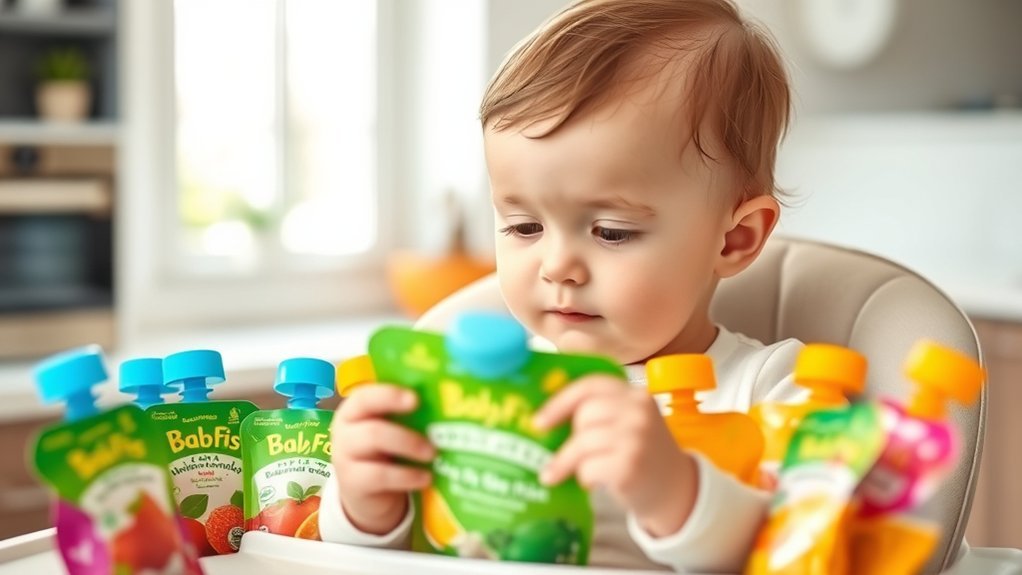
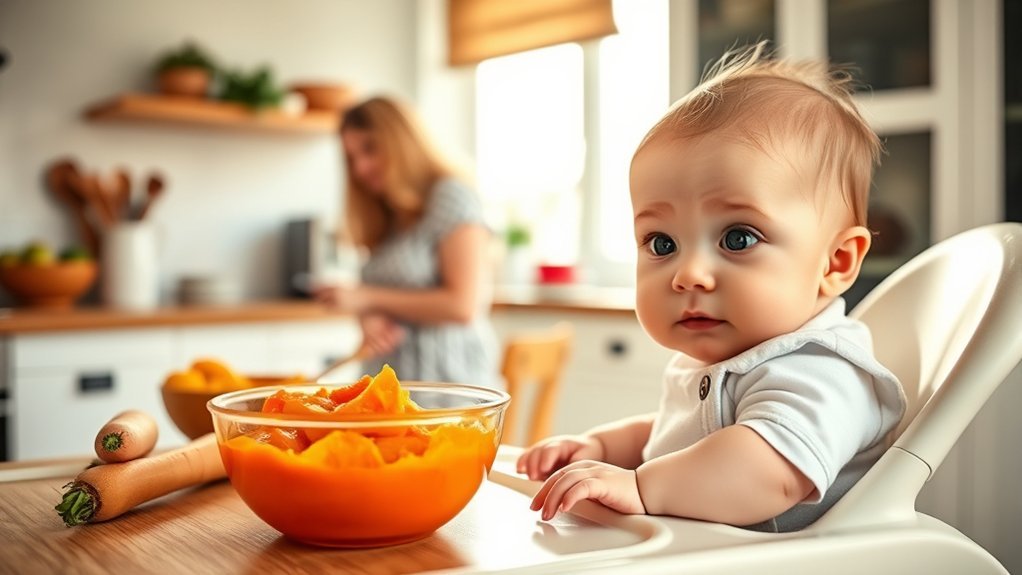
Most babies are ready to try purees at about 6 months, but age is only part of the decision. Your baby should also be able to sit with support, hold their head steady, bring food toward their mouth, and swallow food instead of pushing it back out. Start slowly, keep breast milk or formula as the main source of nutrition, and ask your pediatrician about any feeding or allergy concerns.
Quick Answer
Most babies can start smooth purees at about 6 months once they show developmental readiness. Do not start solid foods before 4 months. Begin with small amounts of soft food, introduce one new ingredient at a time, and get individualized guidance for premature babies or babies with eczema, swallowing problems, or known food allergies.
Key Takeaways
- Start purees at about 6 months when your baby shows readiness signs; never begin solids before 4 months.
- Offer 1 to 2 tablespoons at first and follow your baby’s hunger and fullness cues.
- Choose iron- and zinc-rich foods, such as pureed meat, beans, eggs, and fortified infant cereal.
- Introduce common allergens in safe forms when your baby starts other foods instead of delaying them without medical advice.
- Always seat your baby upright, supervise every bite, and avoid honey, whole nuts, popcorn, hard chunks, and other choking hazards.
At a Glance
| Time Required | About 10 to 20 minutes for an early feeding session |
| Difficulty | Beginner, with close adult supervision |
| Tools Needed | Upright high chair, small spoon, bowl, bib, and optional blender or masher |
| Cost | Low; homemade purees can use small portions of ordinary family foods |
Note: This guide provides general education, not individual medical advice. Talk with your pediatrician before starting solids if your baby was born prematurely, has poor growth, severe eczema, a known food allergy, frequent coughing or choking during feeds, or a medical condition that affects swallowing.
When Can Babies Start Purees and Other Solid Foods?
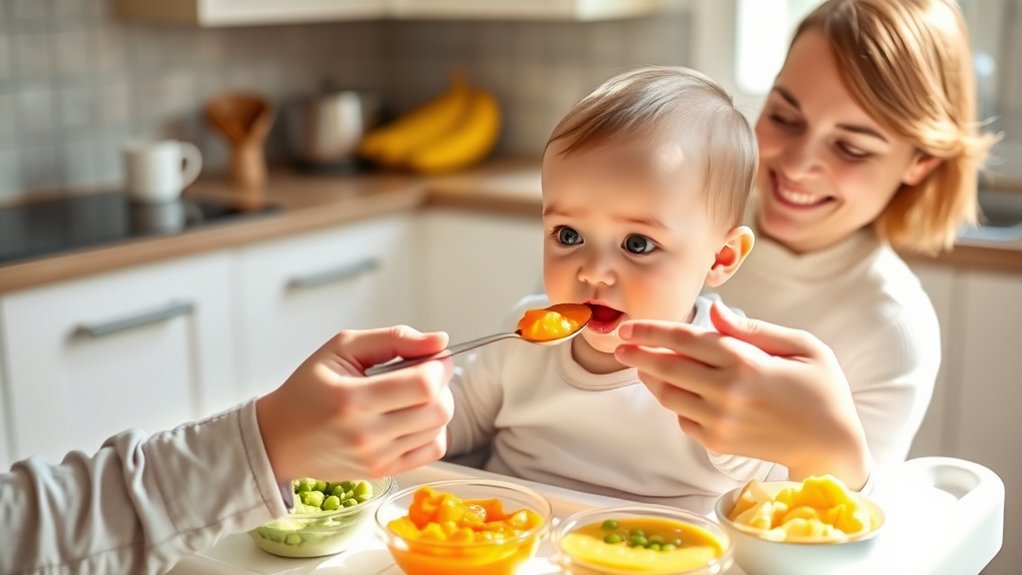
The Centers for Disease Control and Prevention says most children can begin solid foods at about 6 months. Introducing food before 4 months is not recommended. A calendar date alone is not enough, though; your baby also needs the physical skills to eat safely.
Breast milk or iron-fortified infant formula should remain the main source of nutrition from 6 to 12 months. Purees and other complementary foods gradually add iron, zinc, new flavors, and eating practice rather than replacing milk feeds all at once.
Start at about 6 months when your baby is developmentally ready—not simply because they reached a certain weight or seem interested in your plate.
Signs Your Baby Is Ready for Purees
Look for several readiness signs together. Your baby should:
- Sit upright with little support and stay stable in a high chair.
- Hold their head and neck steady throughout the feeding.
- Open their mouth when food is offered and bring objects toward their mouth.
- Swallow food instead of automatically pushing it out with the tongue.
- Show interest in food while still being able to turn away when full.
Doubling birth weight or reaching 13 pounds should not be used as a stand-alone green light. Developmental skills are more important. If your baby is not showing readiness by 6 to 7 months, or repeatedly coughs, chokes, arches, or struggles to swallow, contact your pediatrician.
Best First Purees and Foods for a Baby
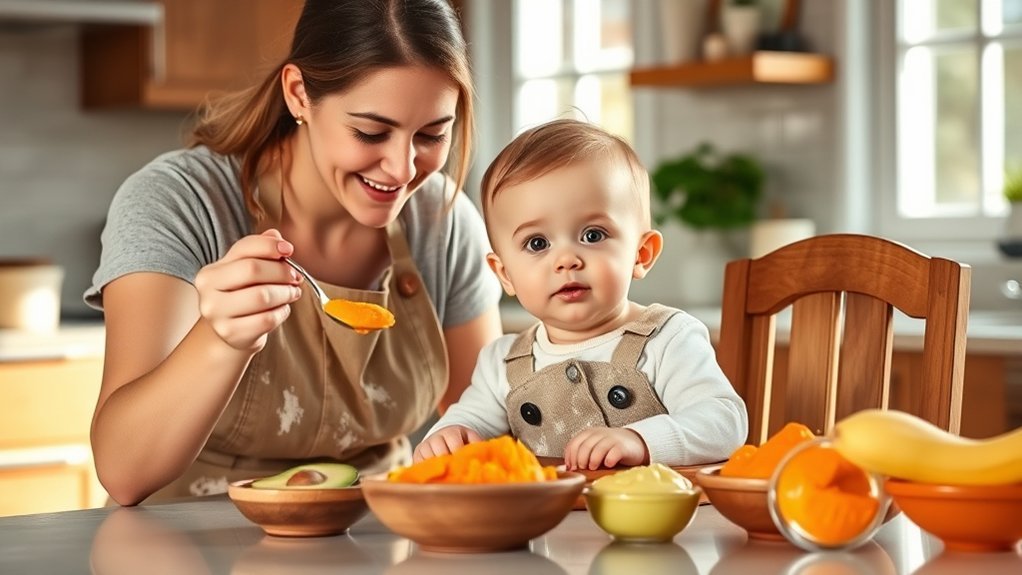
There is no required order for first foods. A useful approach is to begin with nutrient-dense foods that are soft enough for your baby’s current eating skills.
| Food group | Baby-safe examples | Why offer it |
|---|---|---|
| Iron- and zinc-rich foods | Pureed beef, chicken, beans, lentils, tofu, fully cooked egg, or iron-fortified infant cereal | Helps meet rising mineral needs after about 6 months |
| Vegetables | Sweet potato, peas, squash, broccoli, or carrot cooked until very soft and mashed | Adds varied flavors, colors, and nutrients |
| Fruits | Banana, avocado, pear, peach, mango, or cooked apple | Offers soft textures and natural variety |
| Dairy and grains | Plain pasteurized yogurt, soft cheese, oatmeal, barley, or multigrain infant cereal | Adds protein, fat, calcium, and grain variety |
If you use infant cereal, rotate oat, barley, multigrain, and other fortified options instead of relying only on rice cereal. This adds variety and can reduce repeated exposure to arsenic found more often in rice.
Pro Tip: You do not need to make every meal from scratch. Plain, soft portions of the family meal can work when they are cooked safely, set aside before heavy seasoning, and mashed or blended to the right texture.
How Much Puree Should You Offer at First?
Begin with about 1 to 2 tablespoons once a day. Your baby may eat only a taste at first, and that is normal. Increase the amount and number of meals gradually as interest and eating skills grow.
Use responsive feeding rather than trying to make your baby finish a set portion. Signs of hunger include leaning toward the spoon, reaching, and opening the mouth. Signs of fullness include turning away, closing the mouth, slowing down, pushing the spoon away, or becoming distracted. Stop when your baby shows they are done.
Continue normal breast milk or formula feeds. The CDC’s feeding guidance notes that breast milk or formula remains the main source of nutrition from 6 to 12 months while solid foods gradually take a larger role.
How to Prepare Purees for Your Baby
Homemade puree can be simple. Keep the food clean, cook it thoroughly, and adjust the texture to match your baby’s skills.
Basic Puree Steps
- Wash: Wash your hands, preparation surfaces, produce, blender, spoon, and containers.
- Prepare: Remove peels, pits, seeds, bones, skin, and tough pieces. Trim excess fat from meat.
- Cook: Steam, bake, or simmer food until it is soft enough to mash easily with a fork. Cook meat, fish, and eggs thoroughly.
- Blend or mash: Use a blender, food processor, or fork. Add a little water, breast milk, or prepared formula to thin the food.
- Check the texture: Start smooth, then make purees thicker and lumpier as your baby gains skill.
- Serve safely: Spoon a small portion into a clean bowl. Do not dip a used spoon into the storage container and save the remainder.
Do not add honey, sugar, or salt. Avoid using unpasteurized milk or juice, raw eggs, undercooked meat or fish, or homemade infant formula.
Storing Homemade Purees Safely
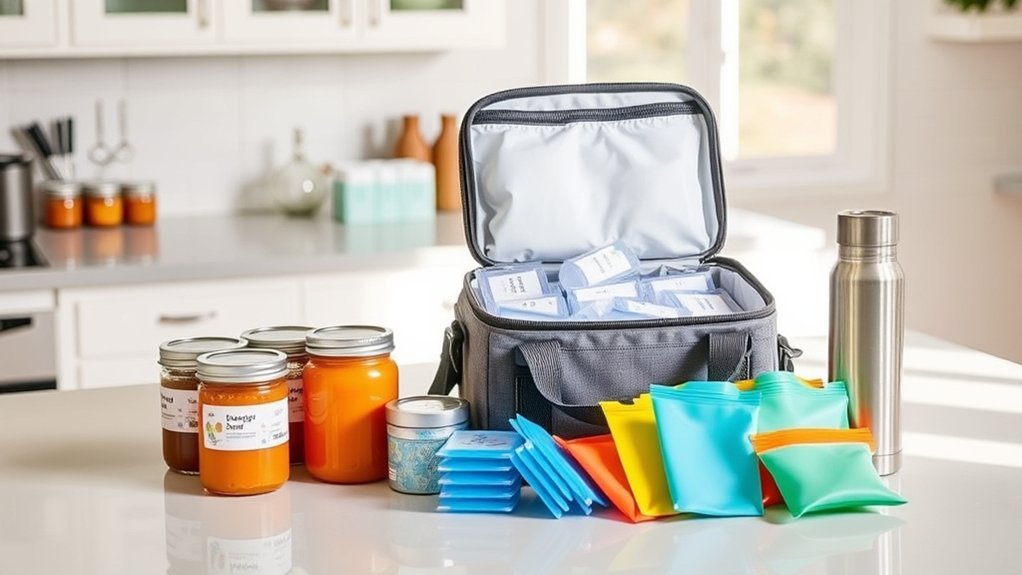
The U.S. Food and Drug Administration advises refrigerating homemade baby food for 1 to 2 days. Freeze small portions in clean, covered containers and use them within about 3 months for best safety and quality. Label each portion with the food and date.
- Discard food left at room temperature for more than 2 hours.
- Throw away food left in the serving bowl after your baby has eaten from it.
- Thaw frozen portions in the refrigerator rather than on the counter.
- If you warm puree, stir it well, let it stand, and test the temperature before feeding because microwaves can create hot spots.
Tips for Safely Introducing Solid Foods
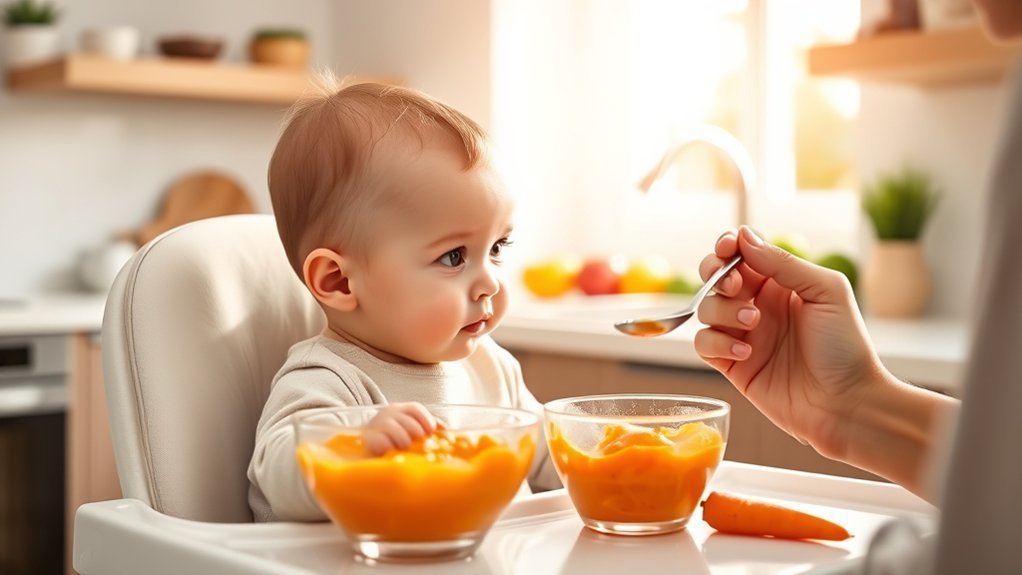
- Seat your baby upright in a stable high chair with good head support.
- Stay within arm’s reach and watch every bite.
- Offer small spoonfuls and allow time to swallow before offering more.
- Match the texture and shape of food to your baby’s development.
- Keep meals calm and free from toys, screens, and other distractions.
- Never put cereal or puree in a bottle unless a medical professional has prescribed a specific feeding plan.
Warning: Gagging is usually noisy and may include coughing or retching. Choking may be silent; a baby may be unable to breathe, cry, or make sound, may turn blue, or may become limp. Treat suspected choking as an emergency and follow infant choking first-aid steps. Consider taking an infant CPR and choking course before solids begin.
Common Choking Hazards
Avoid or modify foods that can block a baby’s airway. The American Academy of Pediatrics’ choking guidance lists round, firm, sticky, and hard foods as common risks.
- Whole nuts, seeds, popcorn, hard candy, marshmallows, and chewing gum
- Whole grapes, cherry tomatoes, berries, and round slices of hot dog or sausage
- Raw apple chunks, raw carrot pieces, and other hard fruit or vegetables
- Thick spoonfuls or globs of peanut butter or other nut butter
- Large chunks of meat, cheese, or other firm food
Nut butter can be offered only in a safe form, such as a small amount thinned with warm water and mixed into puree or spread very thinly on an age-appropriate food.
Foods and Drinks to Avoid Before Age 1
Some foods should be delayed, while others need a safer texture or preparation method.
| Food or drink | Why or how to modify it |
|---|---|
| Honey, including cooked honey | Avoid until after 12 months because of infant botulism risk. |
| Whole cow’s milk as a drink | Wait until 12 months. Plain pasteurized yogurt and cheese may be offered earlier in age-appropriate forms. |
| Fruit or vegetable juice | Do not offer before 12 months. Whole fruit is the better choice. |
| Raw or unpasteurized foods | Avoid raw milk, unpasteurized juice, raw egg, and undercooked meat or fish because they can carry harmful germs. |
| Whole nuts, popcorn, hard chunks, and thick nut butter | These are choking hazards. Use finely ground, thinned, mashed, or appropriately cut forms. |
| Foods with added sugar or lots of sodium | Babies do not need added sugar, and highly salted processed foods can crowd out more nutritious choices. |
From 6 to 12 months, you may offer small sips of water with meals while continuing breast milk or formula. The CDC explains why honey, juice, and cow’s milk as a drink should be avoided before 12 months.
How to Safely Introduce Allergenic Foods
Do not routinely delay common allergens until after 6 months. Once your baby is ready for solids, introduce allergenic foods one at a time in a texture they can safely swallow. Suitable examples include fully cooked egg mashed smooth, plain yogurt, thinned smooth peanut butter, wheat cereal, finely pureed fish, and smooth sesame paste diluted into another food.
- Choose a day when your baby is healthy and you can watch them closely afterward.
- Offer a very small amount first, then gradually offer more if there is no reaction.
- Introduce only one new allergen at a time so a reaction is easier to identify.
- After a food is tolerated, keep offering it as part of a varied diet.
If your baby has severe eczema, an egg allergy, or a previous food reaction, talk with a pediatrician or allergist before introducing peanut or other allergens. Your clinician may recommend a supervised plan.
Warning: Stop feeding the food and seek medical advice for hives, facial swelling, repeated vomiting, or a sudden rash. Call 911 immediately for trouble breathing or swallowing, swelling of the lips or tongue, blue or pale color, sudden limpness, or symptoms affecting more than one body system. Anaphylaxis is a life-threatening emergency.
Moving From Purees to Textured Foods
Purees are a starting texture, not a stage that must last for months. As your baby handles smooth food well, gradually move to thicker puree, mashed or lumpy food, and then finely chopped or ground food. The right pace depends on your baby’s skills rather than one exact age.
The CDC recommends offering a variety of tastes and textures to support chewing, hand skills, and acceptance of different foods. Soft finger foods can be added when your baby can sit steadily, reach and grasp, bring food to the mouth, and manage the texture safely.
Examples include mashed avocado, soft scrambled egg, shredded tender meat, very soft cooked vegetables, ripe fruit, and soft beans. Continue supervising closely and modify round, firm, or sticky foods.
Monitoring Your Baby’s Response to New Foods
Watch both feeding skills and possible reactions. A simple food log can help you record the date, food, amount, texture, and any symptoms.
- Normal learning behaviors: touching food, making faces, spitting out a taste, mild gagging, or eating only a small amount.
- Signs to slow down: repeated coughing, frequent gagging, pocketing food in the cheeks, or tiring during meals.
- Possible food reaction: hives, swelling, vomiting, diarrhea, coughing, wheezing, or sudden behavior change.
- Signs of acceptance: leaning forward, opening the mouth, swallowing comfortably, and reaching for more.
- Signs of fullness: turning away, closing the mouth, slowing down, or pushing food away.
It may take many calm exposures before a baby accepts a new flavor or texture. Do not pressure, distract, or force-feed. Contact your pediatrician if feeding is consistently stressful, your baby is not gaining weight as expected, meals regularly cause coughing or choking, or your baby refuses all textured food.
Frequently Asked Questions
Can I mix different purees together for my baby?
Yes. Introduce each ingredient separately first so you know your baby tolerates it. After that, combinations such as sweet potato and lentil, pear and oatmeal, or chicken and vegetables can add variety.
What equipment do I need to make baby purees?
A pot or steamer, fork or masher, clean cutting board, small bowl, and spoon are enough for many foods. A blender or food processor is helpful for smoother textures. Use clean, food-safe containers for storage.
How long can homemade purees stay in the refrigerator?
Use homemade baby food within 1 to 2 days when it is stored promptly in a clean, covered container at 40°F (4°C) or below. Discard food that has touched your baby’s used spoon or sat at room temperature for more than 2 hours.
Can I freeze purees for later use?
Yes. Freeze puree in small covered portions, label it with the food and date, and use it within about 3 months. Thaw only the amount you need and do not save leftovers from your baby’s bowl.
Should I warm purees before feeding my baby?
No. Purees can be served cool, at room temperature, or lukewarm if your baby accepts them. If you warm food, stir it thoroughly and test the temperature before feeding to prevent burns from hot spots.
Does my baby have to start with purees?
No. Some families use mashed foods or appropriately prepared soft finger foods. The safest method is the one that matches your baby’s developmental skills, keeps them upright and supervised, and avoids choking hazards.
How much water can a 6- to 12-month-old drink?
The CDC says babies 6 to 12 months can be offered about 4 to 8 ounces of water per day, usually as small sips with meals. Water should not replace breast milk or infant formula.
When should I call the pediatrician about solid feeding?
Call for repeated coughing or choking, poor weight gain, pain with feeding, frequent vomiting, suspected allergy, or no readiness signs by about 6 to 7 months. Call 911 for trouble breathing, severe swelling, blue color, limpness, or another life-threatening reaction.
Conclusion
Most babies can begin purees at about 6 months when they show clear developmental readiness. Start with small amounts, prioritize iron-rich foods, introduce allergens in safe forms, and move toward thicker textures as skills improve. Keep breast milk or formula as the main source of nutrition during the first year, follow your baby’s cues, and make upright positioning and close supervision part of every meal.
Sources
- CDC: When, What, and How to Introduce Solid Foods — starting age, readiness, first foods, allergens, and safe preparation
- CDC: How Much and How Often to Feed — portion size, feeding frequency, and the continued role of breast milk or formula
- CDC: Foods and Drinks to Avoid or Limit — honey, juice, cow’s milk, and added sugar guidance
- CDC: Tastes and Textures — progression from smooth purees to thicker and chopped foods
- FDA: Once Baby Arrives—Food Safety — preparation, storage, reheating, and contamination prevention
- American Academy of Pediatrics: Choking Prevention — choking signs, risky foods, and prevention