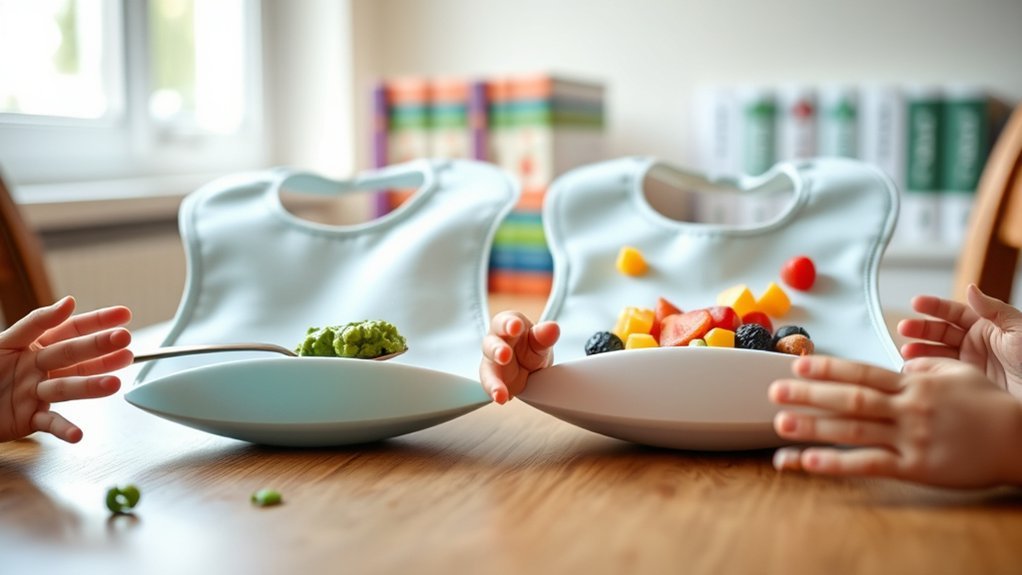
Your baby’s feeding pattern changes quickly during the first year, but a feeding schedule should be treated as a flexible guide rather than a strict timetable. Newborns eat frequently because their stomachs are small, while older babies gradually take more at each feeding and begin solid foods at about 6 months. Following your baby’s hunger and fullness cues is just as important as watching the clock.
Quick Answer
Newborns feed frequently: breastfed babies commonly nurse 8–12 times in 24 hours, while formula-fed newborns often start with 1–2 ounces every 2–3 hours. Feeds gradually spread out as babies grow. Around 6 months, introduce solids when developmentally ready while breast milk or formula remains the main source of nutrition through the first year.
Key Takeaways
- Feed newborns responsively. Breastfed babies commonly nurse 8–12 times per day during the first weeks and months, while formula-fed babies usually develop longer intervals between feeds.
- Do not force a baby to finish a bottle or meal. Turning away, closing the mouth, relaxing the hands, or losing interest can signal fullness.
- Introduce solid foods at about 6 months when your baby shows developmental readiness. Starting solids before 4 months is not recommended.
- Breast milk or iron-fortified infant formula remains the main source of nutrition from 6 to 12 months even as solid meals become more frequent.
- Around 6 months, include iron-rich foods and begin offering small amounts of water. Avoid honey and cow’s milk as a main drink until 12 months.
Note: This guide describes typical feeding patterns for healthy, full-term infants. Babies born prematurely or with growth, swallowing, metabolic, allergy, or other medical concerns may need an individualized feeding plan from their pediatrician or other qualified healthcare professional.
Understanding Baby Feeding Needs by Age

Your baby’s feeding needs evolve throughout the first year. In the early weeks, frequent milk feeds support growth and, when breastfeeding, help establish milk supply. As your baby gets older, they can usually take more milk at one time and go longer between some feedings.
Current CDC breastfeeding guidance recommends following your baby’s cues rather than trying to force every infant into the same clock-based schedule. Formula-fed babies also regulate their intake from feeding to feeding.

Power your essentials anywhere with a 999Wh pure sine wave power station delivering up to 1000W continuous with 2000W surge. It supports fast charging via USB-C PD 60W and...
Baby Feeding Schedule by Age: Quick Reference
| Age | Breastfeeding | Formula Feeding | Solid Foods |
|---|---|---|---|
| Newborn | Often every 1–3 hours at first; commonly 8–12 feeds in 24 hours during the first weeks. | Often 1–2 oz per feed in the first days, usually about every 2–3 hours initially. | None. |
| 1–3 months | Continue feeding on cue. Many babies still nurse frequently, especially during growth spurts. | Many feed about every 3–4 hours. Amount per bottle gradually increases with age and appetite. | None for most babies. |
| 4–6 months | Continue on demand. | By about 6 months, many formula-fed babies take roughly 6–8 oz at four or five feeds per day. | Usually begin at about 6 months when developmentally ready; never before 4 months. |
| 6–9 months | Continue on cue; breastfeeding remains an important source of nutrition. | Continue formula while gradually adding more solids. Milk needs decrease gradually rather than suddenly. | Start small and progress toward multiple meals as appetite and skills develop. |
| 9–12 months | Continue breastfeeding according to your baby’s cues. | Formula remains important through 12 months. An AAP 8–12 month sample menu provides roughly 24 oz per day, but individual intake varies. | Work toward three varied meals, with snacks or milk feeds as needed. |
| 12+ months | Breastfeeding can continue for 2 years or longer if desired. | Healthy children can generally transition from infant formula to pasteurized whole cow’s milk or an appropriate fortified alternative at 12 months. | Aim for regular meals and snacks using a varied family diet prepared safely for your child’s eating skills. |
The numbers above are reference points, not quotas. Appetite changes from day to day and during growth spurts, illness, teething, and developmental changes.
Newborn Feeding Schedule: What to Expect
Newborns have small stomachs and need frequent feeds. In the first days, a breastfed baby may want to nurse as often as every 1 to 3 hours. During the first weeks and months, the CDC says breastfeeding commonly occurs about 8 to 12 times in a 24-hour period.
Formula-fed newborns often begin with about 1 to 2 ounces per feeding during the first week. As they grow, the amount per bottle gradually increases and feeds commonly become spaced about 3 to 4 hours apart. The American Academy of Pediatrics notes that many babies reach about 3 to 4 ounces per feeding by the end of the first month.
A feeding chart shows typical patterns, but your baby’s hunger, fullness, growth, and diaper output matter more than hitting an exact number of ounces or feeds.
A very young newborn may need to be awakened for feeds until feeding and weight gain are well established. Your baby’s pediatrician can tell you when it is safe to allow longer sleep stretches based on birth history, weight gain, and overall health.
Do Babies Need Vitamin D?
Yes. Children younger than 12 months need 400 IU of vitamin D each day. According to the CDC’s vitamin D guidance, babies receiving only breast milk or a combination of breast milk and formula generally need a 400-IU daily supplement beginning shortly after birth.
Babies who drink about 32 ounces or more of vitamin-D-fortified infant formula each day generally do not need an additional vitamin D supplement. Ask your baby’s clinician about supplementation if intake varies or you are unsure.
Recognizing Hunger Cues in Your Baby

Responsive feeding means offering food when your baby shows hunger and stopping when they show fullness. This approach is more useful than trying to make every feeding happen at an exact clock time.
Common Hunger Signals
For babies from birth to about 5 months, early hunger cues can include:
- Bringing hands to the mouth.
- Turning the head toward the breast or bottle.
- Puckering, smacking, or licking the lips.
- Becoming more alert or active.
Crying is often a late sign of hunger. Feeding before your baby becomes very upset can make latching or bottle feeding easier.
Signs Your Baby Is Full
The CDC recommends watching for fullness cues such as:
- Closing the mouth.
- Turning away from the breast, bottle, spoon, or food.
- Relaxing the hands.
- Losing interest in sucking or eating.
Pro Tip: Do not pressure your baby to empty a bottle or finish a serving of food. Babies naturally vary how much they eat from one feeding to the next.
Timing and Responsiveness
A predictable routine can develop naturally, but hunger cues should still take priority. Growth spurts may temporarily increase feeding frequency, while illness or distraction can temporarily reduce intake.
For babies eating solids, fullness cues may include pushing food away, closing the mouth when a spoon approaches, or turning the head away. Respecting these signals supports responsive feeding and helps your child learn to regulate appetite.
How Often Should You Feed Your 1 to 3-Month-Old?
At 1 to 3 months, avoid treating one feed count as correct for every baby. Breastfeeding remains cue-based, and many babies continue nursing frequently during the early months.
Feeding Frequency Recommendations
Formula-fed babies often develop a somewhat more predictable rhythm, commonly eating every 3 to 4 hours. Bottle amounts increase gradually as the baby grows. Around 2 months, many formula-fed babies take roughly 4 to 5 ounces at a feeding, although individual needs differ.
Rather than increasing a bottle automatically because of age, offer more if your baby finishes the bottle and still shows clear hunger cues. Stop when fullness cues appear.
Signs of Adequate Intake
Feeding frequency is only one part of the picture. Your pediatrician will also look at your baby’s growth pattern, alertness, swallowing, and urine and stool output.
If your baby is consistently difficult to wake for feeds, too weak to suck, drinking very little, producing noticeably fewer wet diapers, or not gaining weight as expected, contact your baby’s healthcare professional promptly.
Growth Spurts Can Change Feeding
During a growth spurt, a baby may temporarily want to breastfeed more often or take more milk than usual. This does not necessarily mean your regular feeding routine is inadequate.
Follow hunger and fullness cues rather than trying to stretch the interval between feeds simply because the baby has reached a certain age.
When and How to Transition to Solid Foods
The CDC and American Academy of Pediatrics recommend introducing complementary foods at about 6 months. Starting before 4 months is not recommended.
Age is only part of the decision. Your baby should also show developmental readiness.
Signs Your Baby Is Ready for Solids
- Sits upright alone or with support.
- Controls the head and neck well.
- Opens the mouth when food is offered.
- Swallows food instead of automatically pushing it back out.
- Brings objects to the mouth.
- Shows an ability to move food toward the back of the mouth and swallow.
Begin with a small amount, such as 1 or 2 tablespoons, and increase gradually as your baby becomes interested and skilled at eating.
You do not need to introduce foods in a particular order. Soft vegetables, fruits, meats, beans, eggs, yogurt, and iron-fortified cereals can all fit into a varied diet when prepared in a developmentally safe texture.
Feeding Guidelines for Babies 4 to 6 Months Old

For most of the 4-to-6-month period, breast milk or infant formula is still the baby’s only food. As your baby approaches 6 months, watch for developmental readiness rather than starting solids solely because the calendar reaches 4 months.
Solid Food Introduction Timing
Once your baby is about 6 months old and ready, offer a small serving once a day and gradually increase the amount and frequency. Some babies progress quickly, while others need more time to become comfortable with spoons, tastes, and textures.
Continue breast milk or formula as the main source of nutrition while solids are being established.
Milk Feeding at 4 to 6 Months
Breastfed babies should continue feeding on cue. For formula-fed babies, bottle size and frequency gradually change with age. By about 6 months, the American Academy of Pediatrics notes that many formula-fed babies consume about 6 to 8 ounces at each of four or five feedings in 24 hours.
That range is not a requirement. A smaller or larger intake can be appropriate depending on the baby’s size, appetite, growth, and how much complementary food is being eaten.
Prioritize Iron-Rich Foods Around 6 Months
Most babies are born with iron stores that help cover their early needs. At about 6 months, babies need an outside source of iron. The CDC recommends iron-rich complementary foods such as meat, poultry, eggs, beans, lentils, tofu, and iron-fortified infant cereal.
Babies born prematurely and some breastfed or partially breastfed babies may have different iron-supplement needs, so discuss this with their clinician.
Common Feeding Challenges and Solutions
Latching Difficulties
If breastfeeding is painful, your baby repeatedly slips off the breast, you rarely hear swallowing, or weight gain is a concern, seek help from a pediatrician or qualified lactation professional. Early assessment can identify latch, milk-transfer, or oral-motor problems.
Food Refusal
Babies often need repeated, pressure-free exposure to a new taste or texture. Offer a small amount, allow your baby to explore it, and stop when they show fullness or distress.
Persistent coughing, choking, difficulty swallowing, pain with eating, or poor growth deserves medical evaluation rather than repeated attempts at home.
Spitting Up
Small amounts of spit-up are common in infancy. Avoid overfeeding, allow breaks during bottle feeds, and keep your baby comfortably upright after eating if that seems to help.
Contact the pediatrician if vomiting is forceful, green, bloody, associated with poor weight gain or dehydration, or your baby appears ill.
Formula Preparation and Bottle Safety
Warning: Never dilute formula to make it last longer and never add extra powder to make it more concentrated. Follow the exact water-to-formula ratio on the label. Incorrect proportions can cause dangerous fluid, electrolyte, or nutrition problems.
The FDA recommends preparing formula exactly as directed. Powdered formula is not sterile, so babies who are very young, premature, immunocompromised, or medically fragile may need additional precautions recommended by their healthcare team.
Prepared formula should be used promptly. Discard formula left in a bottle after a feeding rather than saving it for later because bacteria from the baby’s saliva can multiply in the remaining milk.
Do not put cereal or other solid food into a bottle unless your baby’s healthcare professional has specifically instructed you to do so.
6 to 9 Months Feeding Schedule and Nutritional Needs
From 6 to 9 months, solid foods gradually become a larger part of the day, but breast milk or infant formula remains the main source of nutrition.
The CDC notes that most 6-to-12-month-olds need infant formula or solid foods about five or six times over 24 hours. Breastfed babies can continue nursing on demand.
| Stage | Typical Progression |
|---|---|
| Around 6 months | Begin with small portions, often once daily, while continuing normal milk feeds. |
| 6–8 months | Gradually add more food groups and textures and work toward more than one solid-food opportunity per day. |
| 8–9 months | Many babies are ready for thicker, mashed, finely chopped, or soft finger foods as their eating skills improve. |
How Much Water Can a 6-to-12-Month-Old Have?
Once solids begin, small amounts of water can be offered in an open or training cup. The CDC suggests about 4 to 8 ounces of water per day for babies ages 6 to 12 months. Breast milk or formula should remain the main drink.
Progress From Purees to More Texture
Purees are not the only option. As your baby’s oral skills develop, progress from smooth foods to mashed or lumpy textures and then to appropriately prepared soft finger foods. Texture variety helps develop chewing and self-feeding skills.
Prevent Choking
Warning: Always have your baby seated upright and supervised while eating. Whole nuts, popcorn, chunks of hard raw vegetables, whole grapes, round hot-dog slices, hard candy, and other small, hard, round, or sticky foods can block a baby’s airway.
Follow the CDC’s choking-prevention guidance: cook foods until soft, cut foods into developmentally appropriate shapes and sizes, remove bones and pits, and avoid foods that are hard to chew or easily lodge in the airway.
How to Identify and Manage Baby Food Allergies
Potentially allergenic foods do not need to be routinely delayed once your baby is developmentally ready for solids. Foods such as egg, peanut in an infant-safe form, wheat, fish, and other common allergens can be introduced along with other complementary foods.
When first introducing foods, the CDC recommends offering one new single-ingredient food at a time and waiting about 3 to 5 days before another new food. This makes it easier to identify a reaction.
Whole peanuts and spoonfuls of thick peanut butter are choking hazards. Peanut should be offered only in an age-appropriate form.
Note: If your baby has severe eczema, an egg allergy, or both, ask their healthcare professional about peanut introduction. NIAID guidance recommends earlier peanut introduction for some high-risk infants after evaluation and once they can safely eat other solid foods.
Signs of a Food Allergic Reaction
Possible symptoms include hives, swelling, vomiting, coughing, wheezing, or breathing difficulty. Stop serving the food and contact your child’s healthcare professional if you suspect a reaction.
Warning: Trouble breathing, sudden difficulty swallowing, severe facial or tongue swelling, collapse, or other signs of anaphylaxis require immediate emergency care. Call 911 in the United States or your local emergency number.
Foods and Drinks to Avoid Before Age One
- Honey: Do not give honey before 12 months because it can cause infant botulism.
- Cow’s milk as the main drink: Wait until 12 months. Yogurt and pasteurized cheese can be introduced earlier when developmentally appropriate.
- Unpasteurized milk or dairy products: These can contain harmful germs.
- Fruit juice: Juice is not recommended for babies younger than 12 months; whole fruit is a better choice.
- Foods with added sugars: Babies and young toddlers do not need foods or drinks with added sugar.
- Choking hazards: Avoid whole nuts and other hard, round, sticky, or poorly cut foods that can obstruct the airway.
See the CDC list of foods and drinks to avoid or limit for additional guidance.
Feeding Schedule for Babies 9 to 12 Months and Beyond
By 9 to 12 months, meals can begin to look more like family eating. Many babies work toward three meals per day while continuing breast milk or formula between meals or at other usual feeding times.
Offer a varied diet that includes:
- Iron-rich meat, poultry, fish, eggs, beans, lentils, tofu, or fortified cereal.
- Vegetables and fruit in safe textures.
- Whole grains and other nutrient-rich starches.
- Pasteurized yogurt and cheese without unnecessary added sugar.
- Healthy fats such as avocado and appropriately prepared nut or seed products.
Do not automatically reduce breast milk or formula to 16 ounces per day. Milk intake declines at different rates as solids increase. For context, the American Academy of Pediatrics’ sample menu for babies 8 to 12 months old uses roughly 24 ounces of formula per day for a formula-fed baby.
Breastfed babies do not need their nursing sessions converted into an ounce target. Continue following hunger and fullness cues.
What Changes at 12 Months?
At 12 months, healthy children who use formula can generally transition from infant formula to pasteurized, unsweetened whole cow’s milk or an appropriate fortified unsweetened milk alternative discussed with their healthcare professional.
Breastfeeding can continue for 2 years or beyond if parent and child wish. Regular meals and snacks gradually become the main source of nutrition.
When to Call Your Baby’s Doctor About Feeding
Contact your baby’s healthcare professional if feeding changes suddenly or you are concerned that your baby is not getting enough nutrition.
Seek medical advice promptly for:
- Consistently poor weight gain.
- A noticeable decline in wet diapers.
- Refusing or taking very little milk for many hours.
- Repeated forceful vomiting.
- Persistent coughing, choking, or difficulty swallowing during feeds.
- Unusual sleepiness or difficulty waking for feeds.
- A weak suck or marked loss of feeding strength.
Seek emergency care immediately for serious breathing difficulty, blue or gray coloring, inability to wake your baby, collapse, or signs of a severe allergic reaction.
Frequently Asked Questions
Can I combine breast milk and formula in one feeding?
Yes, combination feeding can include both breast milk and formula. Offering breast milk first and formula separately can reduce wasted breast milk if your baby does not finish the bottle. If powdered or concentrated formula is used, prepare it with the exact amount of water required on the label before combining it with breast milk. Never substitute breast milk for the water required to prepare formula.
How do I know if my baby is overeating?
Do not judge intake from one large feeding. Instead, practice responsive feeding. Stop when your baby closes their mouth, turns away, relaxes their hands, slows sucking, or loses interest. Never pressure a baby to finish a bottle. Frequent discomfort or vomiting should be discussed with the pediatrician.
What should I do if my baby refuses solid foods?
Check that your baby is developmentally ready, then continue offering small amounts without pressure. Babies often need repeated exposure to new flavors and textures. Breast milk or formula remains the main nutrition source during the early months of solids. Ask your pediatrician for help if refusal is persistent or accompanied by coughing, choking, swallowing difficulty, pain, or poor growth.
Are there specific foods to avoid for infants under one year?
Yes. Avoid honey before 12 months because of botulism risk, cow’s milk as the main drink before 12 months, unpasteurized dairy products, and foods that pose a choking risk such as whole nuts. Fruit juice is also not recommended before the first birthday. Yogurt and pasteurized cheese can be introduced before 12 months in developmentally appropriate forms.
How can I safely store and reheat breast milk?
For healthy full-term babies, freshly expressed breast milk can generally stay at room temperature at 77°F (25°C) or colder for up to 4 hours, in the refrigerator for up to 4 days, and in a freezer for about 6 months for best quality or up to 12 months acceptably. Previously frozen milk should be used within 24 hours after it has completely thawed in the refrigerator and should not be refrozen. Use leftover milk from a feeding within 2 hours. Warm milk in a container of warm water or under warm running water; do not microwave it.
Does my baby need water before 6 months?
Healthy babies younger than about 6 months generally get the fluid they need from breast milk or correctly prepared infant formula. Once complementary foods begin around 6 months, you can offer small amounts of water. The CDC suggests roughly 4 to 8 ounces of water per day from 6 to 12 months.
Should I wake my newborn to feed?
Very young newborns may need to be awakened if long sleep stretches cause them to miss needed feeds, particularly before they have regained birth weight or if weight gain is being monitored. Ask your baby’s pediatrician when it is safe to let your newborn sleep longer between feeds because the answer depends on age, birth history, weight gain, and health.
Conclusion
A useful baby feeding schedule provides a framework, not a rigid set of rules. Newborns need frequent milk feeds, feeding intervals usually lengthen as babies grow, and solid foods begin at about 6 months when developmental readiness is present. Through the first year, continue breast milk or infant formula while gradually adding varied, iron-rich foods and more advanced textures.
Most importantly, watch your baby’s hunger and fullness cues, growth, diaper output, and feeding skills. When something changes significantly or feeding does not seem to be going well, contact your baby’s healthcare professional rather than trying to force a particular schedule or intake target.
Sources
- CDC — How Much and How Often to Breastfeed — breastfeeding frequency, responsive feeding, and feeding through 12 months.
- CDC — How Much and How Often to Feed Infant Formula — formula-feeding intervals and feeding from 6 to 12 months.
- CDC — When, What, and How to Introduce Solid Foods — solid-food timing, developmental readiness, allergens, and food preparation.
- CDC — Signs Your Child Is Hungry or Full — responsive feeding and hunger/fullness cues.
- CDC — Storage and Preparation of Breast Milk — room-temperature, refrigerator, freezer, thawing, and leftover-storage guidance.
- American Academy of Pediatrics / HealthyChildren — Sample Menu for a Baby 8 to 12 Months Old — example milk and solid-food intake during later infancy.