Arsenic, lead, cadmium, and mercury can occur in foods eaten by babies and young children because these elements are present in soil, water, air, and the wider food-production environment. The goal is not to eliminate nutritious foods out of fear, but to reduce repeated exposure where practical. A varied diet, sensible grain choices, reliable product information, and medical advice when a real exposure is suspected are more useful than chasing a “heavy-metal-free” label.
Quick Answer
Baby food can contain small amounts of arsenic, lead, cadmium, or mercury from the environment and food production. To lower exposure, serve a varied diet, rotate grains instead of relying mainly on rice, check recalls and available testing information, and talk with your pediatrician if you have a specific exposure concern.
Key Takeaways
- Arsenic, lead, cadmium, and mercury can enter foods naturally or through environmental pollution and food production.
- A detectable amount of a contaminant does not automatically mean a child has been poisoned; risk depends on the level, amount eaten, frequency of exposure, age, and exposure from other sources.
- Rice absorbs more inorganic arsenic than many other crops, so rice cereal does not need to be your baby’s first or only infant cereal.
- Organic and homemade baby foods are not guaranteed to contain less heavy metal because the ingredients themselves can take up contaminants from soil and water.
- Low-level lead exposure often causes no obvious symptoms. A blood lead test—not a symptom checklist—is the standard way to evaluate suspected lead exposure.
- Do not give children chelation drugs, “detox” supplements, or other treatments for suspected heavy-metal exposure unless a qualified medical professional specifically recommends them.
Warning: This article is general health information, not a diagnosis or treatment plan. Contact your child’s pediatrician if you know or suspect that your child has had significant exposure to lead, arsenic, mercury, cadmium, a recalled food, contaminated water, or another environmental source. Severe or rapidly worsening symptoms need urgent medical care.
What Are the Toxic Metals Found in Baby Food?
The four contaminants most often discussed in connection with baby food are inorganic arsenic, lead, cadmium, and mercury. The FDA’s Closer to Zero initiative focuses on reducing children’s dietary exposure to these elements.
They are not intentionally added to ordinary baby food. They can occur naturally in the Earth’s crust, come from past or current pollution, or enter crops and animals through soil, water, and air. Food manufacturing and packaging can sometimes contribute additional contamination.
It is also important to separate detection from toxicity. Modern laboratory equipment can measure extremely small amounts of contaminants. Whether an exposure is concerning depends on the concentration, how often the food is eaten, how much is eaten, the child’s age and body size, nutrition, and exposure from other sources.
Note: FDA action levels are regulatory tools used to help reduce contamination. They are not a declaration that every amount below an action level is completely risk-free or that every detection above a level automatically means a child has been poisoned.

Power your essentials anywhere with a 999Wh pure sine wave power station delivering up to 1000W continuous with 2000W surge. It supports fast charging via USB-C PD 60W and USB-A QC 18W, plus simultaneous output for multiple devices through AC, USB, wireless, and car/DC ports. Recharge using AC, car, or solar with a built-in MPPT controller and dual cooling fans, while the upgraded battery management system protects against surges, short circuits, and overheating.

Which Baby Foods Are Most Likely to Contribute More Exposure?
There is no reliable permanent list of the “worst baby food brands.” Metal concentrations can vary by ingredient source, crop, geography, product, and production lot. Older testing reports can show patterns, but they should not be treated as a ranking of products currently on store shelves.
A 2021 U.S. House staff report reviewed internal company information from several large manufacturers and raised serious concerns about toxic elements in some baby foods at that time. Those findings helped increase regulatory attention, but the report is historical and should not be used by itself to judge today’s individual products or lots.
Food type is often more useful than brand name when thinking about repeated exposure:
| Food or Ingredient | Main Concern | Practical Approach |
|---|---|---|
| Infant rice cereal and other rice-heavy foods | Rice tends to absorb more inorganic arsenic than many other crops. | Rotate with iron-fortified oat, barley, or multigrain infant cereals instead of relying only on rice. |
| Root vegetables such as carrots and sweet potatoes | They grow in direct contact with soil and are treated separately under FDA’s lead guidance. | Keep serving nutritious vegetables, but offer a variety rather than the same root vegetable every day. |
| Fruit juice | Juice can contribute arsenic or lead exposure and provides less fiber than whole fruit. | Do not give juice to infants under 1 year; favor age-appropriate whole or pureed fruit. |
| Certain fish | Larger, long-lived predatory fish can contain more methylmercury. | Choose lower-mercury fish appropriate for your child’s age rather than avoiding fish altogether. |
What FDA Action Levels Apply to Baby Food in 2026?
FDA has strengthened its approach since the early reports that drove much of the public concern about heavy metals in baby food.
In January 2025, FDA finalized lead action levels for specified processed foods intended for babies and children under age 2. FDA also has a separate final action level for inorganic arsenic in infant rice cereal.
| Contaminant / Food Category | FDA Action Level | Status |
|---|---|---|
| Lead: processed fruits, vegetables other than single-ingredient root vegetables, mixtures, yogurts, custards/puddings, and single-ingredient meats | 10 ppb | Final FDA guidance, January 2025 |
| Lead: single-ingredient root vegetables | 20 ppb | Final FDA guidance, January 2025 |
| Lead: dry infant cereals | 20 ppb | Final FDA guidance, January 2025 |
| Inorganic arsenic: infant rice cereal | 100 ppb | Final FDA guidance, August 2020 |
As of July 24, 2026, FDA continues work on broader action levels for cadmium and inorganic arsenic in foods intended for babies and young children. Those draft guidances remain part of FDA’s food-guidance work under development. Mercury also remains part of the agency’s Closer to Zero monitoring and research program.
What Health Risks Do Toxic Metals Pose to Infants?

Babies and young children receive special attention because their brains and bodies are developing rapidly and because they eat more food relative to their body weight than adults.
The health effect depends on the specific contaminant and the dose. Everyday trace exposure is different from acute poisoning, but reducing avoidable exposure remains worthwhile.
Neurological Development Concerns
Lead can harm the brain and nervous system and is associated with slower growth and development, learning and behavior problems, and reduced attention. CDC emphasizes that even children with elevated blood lead may have no obvious immediate symptoms.
Inorganic arsenic is also a concern during early development. FDA’s risk assessment for infant rice cereal links exposure during fetal development, infancy, and childhood with potential neurodevelopmental effects.
Methylmercury, most often associated with certain fish and seafood, can affect the developing nervous system when exposure is high enough. This is why FDA and EPA recommend choosing lower-mercury fish for young children instead of eliminating nutritious fish from the diet.
Long-Term Health Effects
Long-term effects differ by contaminant:
- Lead: Childhood exposure can affect learning, attention, behavior, hearing, speech, and development.
- Inorganic arsenic: Long-term exposure has been associated with neurodevelopmental concerns and increased lifetime risk of certain cancers.
- Cadmium: Chronic exposure can result in accumulation in the body; FDA identifies kidney and bone effects among the most sensitive long-term concerns.
- Mercury: Excess methylmercury exposure during brain development can affect memory, cognition, attention, and motor skills.
The practical goal is to lower unnecessary exposure while continuing to give children a varied, nutrient-dense diet.
Minimize Heavy Metal Exposure in Baby Food: Tips for Parents
You do not need to remove entire food groups or throw away all commercial baby food. Both FDA and the American Academy of Pediatrics emphasize dietary variety because different foods have different nutrient and contaminant profiles.
- Rotate grains. Offer iron-fortified oat, barley, multigrain, and other age-appropriate cereals instead of using rice cereal every day.
- Serve a genuine variety of fruits and vegetables. Check ingredient lists on mixed pouches because different flavors sometimes rely on the same main ingredient.
- Wash produce before preparing it. This helps remove soil and surface contamination, although it cannot remove contaminants already absorbed into the plant.
- Follow age-appropriate juice guidance. Infants under 1 year should not be given fruit juice.
- Check your water if there is a reason for concern. Private wells can contain arsenic, and older plumbing can contribute lead.
- Watch recalls and product notices. A specific recalled lot is more useful information than an old ranking of an entire brand.
- Consider total exposure. Lead paint, contaminated soil, water, smoke, some spices or imported products, and occupational take-home exposure can matter more than baby food alone.
Pro Tip: Variety matters more than simply buying several different package flavors. Read the first few ingredients so you are actually rotating grains, fruits, vegetables, and proteins.
Do Organic Options Reduce Heavy Metals?
Organic baby food can be useful for families who want to limit exposure to certain synthetic pesticides, but organic certification does not mean heavy-metal-free.
The American Academy of Pediatrics notes that organic foods often contain heavy-metal levels similar to conventionally produced foods because metals can already be present in soil and water.
This also applies to organic rice. FDA’s 100-ppb inorganic-arsenic action level for infant rice cereal applies to both conventionally and organically grown rice cereals.
Make Homemade Foods Safely
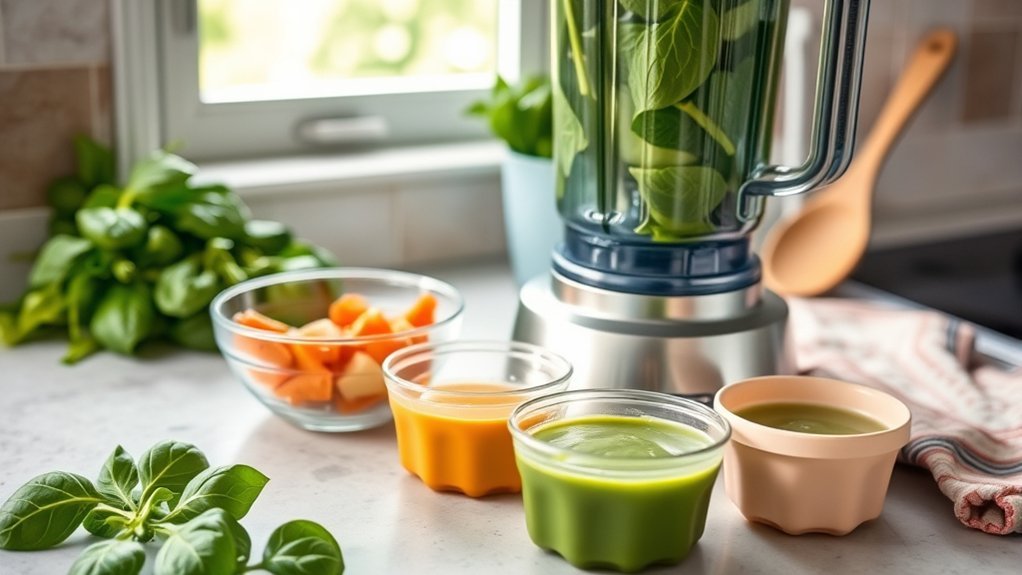
Homemade baby food gives you control over ingredients and may reduce contaminants introduced during some processing or packaging steps. It does not eliminate environmental metals already present in fruits, vegetables, grains, or water.
| Ingredient Type | Benefit | Best Practice |
|---|---|---|
| Fruits | Nutrients, flavor, and dietary variety | Wash thoroughly and rotate types. |
| Vegetables | Vitamins, minerals, textures, and flavors | Rotate root and non-root vegetables rather than relying heavily on one ingredient. |
| Grains | Energy, iron, and dietary variety | Use varied grains instead of making rice the default grain every day. |
| Proteins | Protein, iron, zinc, and other nutrients | Offer age-appropriate variety and follow safe preparation guidance. |
Homemade food should also be prepared with clean hands, clean equipment, safe water, and age-appropriate food-safety practices.
How Heavy Metals Contaminate Baby Food
Heavy metals can reach baby food at several points before the food reaches your child’s spoon:
- Natural geology: Arsenic, lead, cadmium, and mercury occur naturally in the environment at different concentrations.
- Pollution: Mining, manufacturing, fuel use, old lead contamination, and other activities can increase environmental levels.
- Crop uptake: Plants absorb elements from soil and water. Some crops take up particular contaminants more readily than others.
- Water: Irrigation water, private wells, or plumbing can contribute contaminants.
- Processing and manufacturing: Ingredients, equipment, processing aids, or other production steps can affect final concentrations.
- Packaging: Packaging can be an additional source in some circumstances, although the ingredient itself is often an important contributor.
This is why neither commercial production nor home preparation can guarantee zero exposure. Prevention depends on controlling contamination throughout agriculture, manufacturing, and the wider environment.
Why Infants Are More Vulnerable to Heavy Metal Exposure
Infants and toddlers have smaller bodies and rapidly developing brains. They may also eat the same small group of foods repeatedly. A child who eats the same rice-based cereal or root-vegetable puree every day may receive a more repetitive exposure pattern than a child whose meals rotate across several grains and food groups.
Nutrition also matters. FDA’s approach aims to lower contaminants without removing healthy foods that provide iron, protein, vitamins, minerals, and other nutrients needed for growth.
That balance is important: an aggressive elimination diet can create its own nutritional problems.
How to Recognize Symptoms of Heavy Metal Exposure in Infants
In most everyday baby-food situations, symptoms are not a dependable screening tool. Children with elevated lead exposure often have no obvious immediate symptoms, and complaints such as irritability, fatigue, poor appetite, vomiting, coughing, or skin changes can have many unrelated causes.
Do not assume that a rash, developmental difference, or behavior change proves heavy-metal toxicity. Instead, contact your pediatrician when there is a specific exposure concern—for example:
- Your child ate a food from a confirmed recall involving elevated lead or another contaminant.
- Your family has contaminated well water or another known environmental source.
- Your child regularly spends time in a home with deteriorating lead-based paint.
- A public-health agency or clinician recommends testing based on local risk.
- Your child has symptoms after a known or potentially significant toxic exposure.
How Do I Know If My Child Has Heavy Metal Toxicity?
Testing should be matched to the suspected contaminant and exposure history.
For lead, the CDC states that a blood lead test is the best way to determine whether a child has lead exposure. Screening may start with a finger- or heel-prick sample, with venous confirmation when indicated.
Testing for arsenic, mercury, or cadmium is different and may involve blood or urine testing depending on the suspected source and timing. A pediatrician, toxicologist, or environmental-health specialist should decide which test is appropriate.
Note: The American Academy of Pediatrics does not recommend routine heavy-metal testing simply because a child has eaten commercial baby food. Hair testing marketed as a way to diagnose toxic-metal exposure is also not recommended because it is not a reliable screening method.
What Treatment Options Are Available for Heavy Metal Exposure?
Treatment depends on the metal, the measured level, the child’s symptoms, and whether the exposure is continuing. There is no single home “detox” that safely treats all heavy-metal exposure.
- Identify and stop the source. This may involve a recalled food, contaminated water, lead paint, soil, an imported product, occupational contamination brought into the home, or another source.
- Use the correct clinical test. A clinician may order blood or urine testing based on the suspected contaminant.
- Correct nutrition problems. For children with lead exposure, clinicians often pay particular attention to iron and calcium intake and check for iron deficiency.
- Follow repeat-testing recommendations. Follow-up depends on the contaminant and measured level.
- Use chelation only when medically indicated. Under current CDC lead guidance, chelation is considered with specialist involvement when blood lead levels are very high, including confirmed levels at or above 45 micrograms per deciliter.
Phlebotomy is not standard treatment for childhood lead poisoning. Likewise, chlorella, spirulina, herbal “detox” products, or over-the-counter chelation products should not be given to a child to treat suspected heavy-metal exposure unless a qualified clinician specifically directs their use.
How Can Parents Check Baby Food Testing and Safety Information?
Instead of relying on old brand rankings, check information that applies to the product or lot you are actually buying.
- Check FDA recall and safety notices when a product is in the news.
- Look for manufacturers that publish finished-product contaminant testing rather than only broad marketing claims such as “clean” or “pure.”
- Compare the same product across different production lots when lot-level results are available.
- Remember that a number detected in a laboratory report needs to be compared with the correct contaminant, food category, test method, and regulatory guidance.
California now provides an additional transparency tool. Under AB 899, manufacturers of baby food sold in the state must test final baby-food products for arsenic, cadmium, lead, and mercury at least monthly and make specified results available on their websites. Beginning in 2025, certain products also require QR-code access when an applicable final FDA action level, tolerance, or regulatory limit exists.
AB 899 does not itself establish new maximum allowable concentrations. It is primarily a testing and disclosure law.
Frequently Asked Questions
What Are the Signs of a Safer Baby Food Brand?
Look for clear ingredient lists, transparent finished-product testing, lot or batch information, prompt recall communication, and compliance with current FDA requirements. Do not assume labels such as “organic,” “natural,” or “clean” guarantee lower heavy-metal concentrations.
How Can I Make Homemade Baby Food Safely?
Wash produce, use clean hands and equipment, prepare foods with safe water, cook ingredients appropriately, store them safely, and rotate fruits, vegetables, grains, and proteins. Homemade preparation gives you ingredient control but cannot remove metals already absorbed from soil or water.
Are Organic Baby Foods Always Free From Heavy Metals?
No. Organic farming can reduce exposure to some synthetic pesticides, but arsenic, lead, cadmium, and mercury can already be present in soil, water, and the wider environment. Organic foods therefore are not guaranteed to contain less heavy metal than conventional foods.
Should I Stop Giving My Baby Rice Cereal?
Not necessarily. Iron-fortified rice cereal can still be part of a balanced diet, but it does not need to be the first or only infant cereal. Rotating rice with oat, barley, and multigrain cereals reduces reliance on a food that tends to contain more inorganic arsenic.
How Often Should I Check Baby Food for Contaminants?
Parents are not expected to laboratory-test each container before use. Check current recalls and manufacturer testing disclosures when relevant. Where lot-level results are available, use the lot or batch number on your package to find the matching result.
Should My Baby Be Tested for Heavy Metals?
Routine broad testing is generally not recommended simply because a child eats baby food. Talk with your pediatrician if there is a known recall, environmental source, high-risk exposure, or another specific reason for concern. For lead, a blood lead test is the standard clinical test.
What Are the Long-Term Effects of Heavy Metal Exposure?
Effects depend on the contaminant and dose. Lead can affect learning, behavior, growth, hearing, and brain development. Inorganic arsenic has been linked with neurodevelopmental effects and increased lifetime cancer risk. Chronic cadmium exposure can affect the kidneys and bones, while excessive methylmercury exposure can harm neurological development.
Conclusion
Heavy metals in baby food deserve attention, but fear-driven food restrictions are not the answer. Arsenic, lead, cadmium, and mercury can enter food from the environment, and no farming or preparation method can guarantee zero exposure. The most useful steps are to serve a varied diet, rotate grains, avoid unnecessary juice in infancy, use safe water, follow current recalls, and check reliable testing information when it is available.
If you have a specific reason to suspect significant exposure, contact your child’s pediatrician rather than trying to diagnose toxicity from symptoms or using an at-home detox product. For lead in particular, clinical blood testing and exposure control—not phlebotomy or supplements—guide appropriate care.
Sources
- U.S. Food and Drug Administration — Closer to Zero — current federal approach to reducing arsenic, lead, cadmium, and mercury exposure in foods eaten by babies and young children.
- U.S. Food and Drug Administration — Action Levels for Lead in Processed Food Intended for Babies and Young Children — final 2025 lead action levels.
- U.S. Food and Drug Administration — Action Level for Inorganic Arsenic in Rice Cereals for Infants — 100-ppb action level and supporting guidance.
- Centers for Disease Control and Prevention — Testing for Lead Poisoning in Children — current guidance on blood lead testing and the lack of obvious symptoms in many exposed children.
- Centers for Disease Control and Prevention — Recommended Actions Based on Blood Lead Level — follow-up, environmental investigation, and specialist-guided treatment recommendations.
- American Academy of Pediatrics / HealthyChildren.org — Heavy Metals in Baby Food — practical advice on dietary variety, rice, organic foods, homemade foods, and testing.