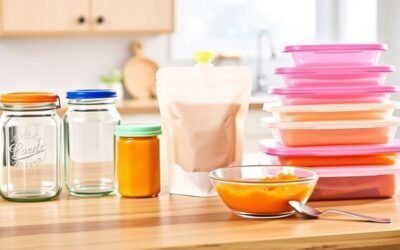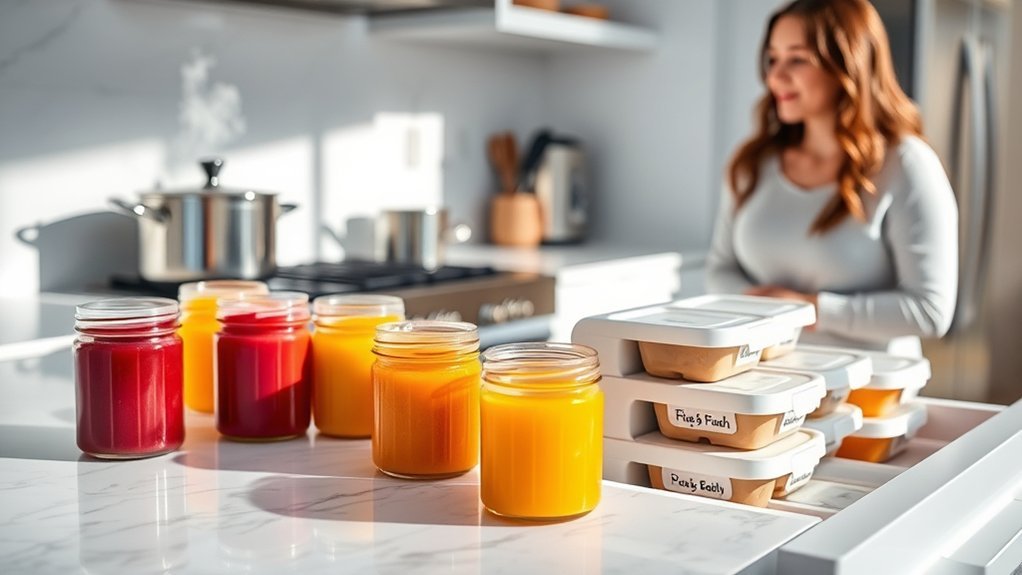
Homemade baby food can be refrigerated or frozen safely when you control time, temperature, cleanliness, and serving portions. Store it promptly in clean, airtight, food-safe containers, label every batch, and avoid returning a used feeding spoon to the main container. These steps reduce waste while protecting your baby from foodborne illness.
Quick Answer
Refrigerate homemade baby food within two hours of preparation—or within one hour when the temperature is above 90°F. Keep it at 40°F or below and use most batches within one to two days. Freeze extra portions at 0°F, use them within one to two months, and never refreeze thawed baby food.
Key Takeaways
- Keep the refrigerator at or below 40°F (4°C) and the freezer at 0°F (−18°C).
- Refrigerate or freeze prepared baby food within two hours, or within one hour in temperatures above 90°F (32°C).
- Use clean, shallow, airtight containers and label each portion with the ingredients and preparation date.
- Use refrigerated homemade baby food within one to two days; use meat, poultry, fish, and egg purees within 24 hours.
- Thaw only the amount you need and do not refreeze baby food after it has thawed.
- Discard food that has touched a used feeding spoon, even when it still looks and smells normal.
At a Glance
| Time Required | About 10–15 minutes to portion, label, and store, plus chilling or freezing time |
| Difficulty | Easy, with careful attention to cleanliness and temperature |
| Tools Needed | Clean shallow containers, labels, marker, freezer tray or lined sheet, appliance thermometer, and food thermometer |
| Cost | Low; usually no added cost if you already have food-safe containers and labels |
Warning: Babies and children under five are more vulnerable to foodborne illness. When storage time or temperature is uncertain, discard the food rather than tasting it. Ask your pediatrician for individualized advice if your baby was born prematurely, has a weakened immune system, has swallowing difficulties, or follows a medically prescribed diet.
Why Homemade Baby Food Storage Matters
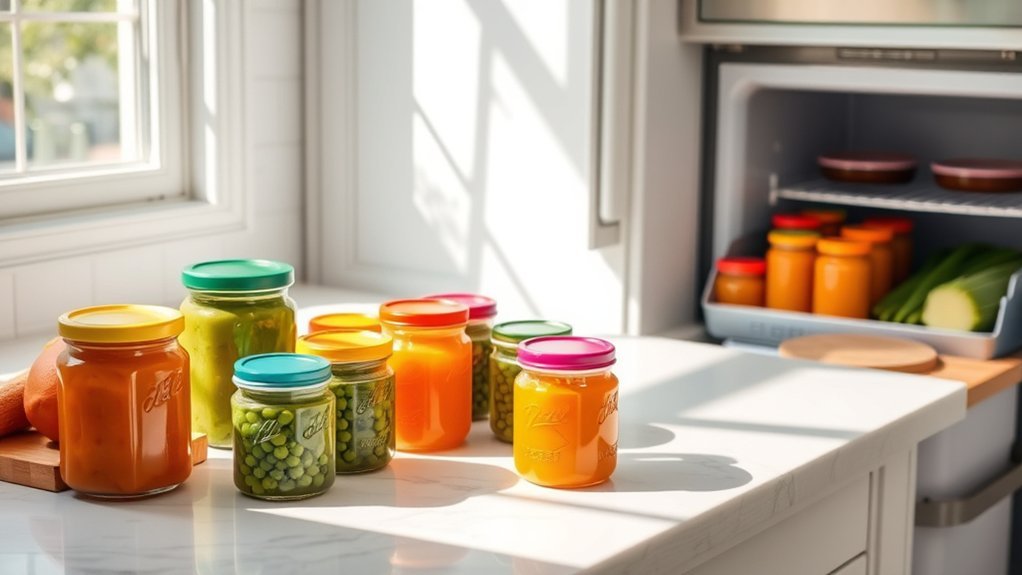
Homemade baby food can become contaminated by unwashed hands, dirty equipment, raw ingredients, unsafe cooling, or a feeding spoon that has touched your baby’s mouth. Because harmful bacteria do not always change a food’s smell, color, or taste, safe storage depends on following reliable time and temperature limits.
The federal FoodSafety.gov guidance for children under five recommends the same four basic controls used for other perishable foods: clean, separate, cook, and chill. Prepared food should be stored promptly in shallow, covered containers so it cools quickly.
Keep homemade baby food at 40°F or below in the refrigerator and at 0°F in the freezer. Time and temperature are more dependable safety checks than appearance or smell.
Power your essentials anywhere with a 999Wh pure sine wave power station delivering up to 1000W continuous with 2000W surge. It supports fast charging via USB-C PD 60W and USB-A QC 18W, plus simultaneous output for multiple devices through AC, USB, wireless, and car/DC ports. Recharge using AC, car, or solar with a built-in MPPT controller and dual cooling fans, while the upgraded battery management system protects against surges, short circuits, and overheating.
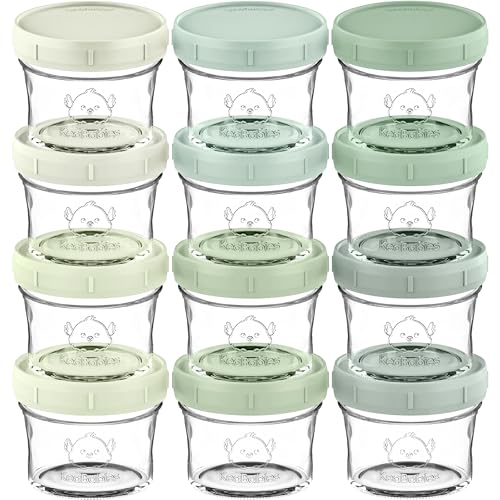
12-Pack, Durable 4oz Glass Jars with Lids – KeaBabies Baby Food Jars Glass check all the right boxes for a reliable baby snack containers. Ideal for busy parents as baby food containers for prepping and storing homemade meals smoothly.
![VITEVER [16 Pack] 4 oz Small Containers with Lids, Reusable Plastic Jars for Snack and Puree, Salad Dressing Container to Go, Deli Containers, Freezer Baby Food Containers, Dishwasher Safe, BPA Free](https://m.media-amazon.com/images/I/41fnLIEevxL._SL500_.jpg)
BPA-FREE; DISHWASHER SAFE; MICROWAVE SAFE; SEALABLE; STACKABLE; REUSABLE.
Safe Preparation Before Storage
- Wash your hands and equipment. Wash your hands with soap and running water for at least 20 seconds. Clean the blender, food mill, knives, cutting boards, trays, containers, lids, and work surface.
- Rinse produce under running water. Wash fruits and vegetables before peeling, cutting, cooking, or pureeing. Do not use soap or household cleaners on produce.
- Prevent cross-contamination. Keep raw meat, poultry, seafood, and eggs away from cooked food, produce, feeding utensils, and ready-to-eat ingredients.
- Cook ingredients thoroughly. Follow the USDA safe minimum internal temperature chart when preparing meat, poultry, fish, or eggs.
- Use clean water and food-safe ingredients. Do not prepare baby food when you are ill with vomiting, diarrhea, or fever.
Essential Refrigeration Tips for Homemade Baby Food
Place prepared baby food in the refrigerator or freezer within two hours. When the room or outdoor temperature is above 90°F (32°C), shorten that limit to one hour. Do not leave a large batch on the counter until it reaches room temperature.
Use shallow, airtight containers so the food chills quickly. Keep your refrigerator at or below 40°F (4°C), preferably verified with an appliance thermometer. Store the containers toward the back of the refrigerator rather than in the warmer door.
Label every container with:
- The food or ingredient combination
- The preparation date
- Any common allergen ingredients
- The number or approximate size of portions
Homemade Baby Food Storage Chart
The following conservative limits combine current FoodSafety.gov guidance with baby-food instructions from the University of Illinois Extension.
| Food Type | Refrigerator | Freezer |
|---|---|---|
| Homemade baby food, general or mixed | 1–2 days | 1–2 months |
| Cooked fruits, vegetables, grains, or beans | Up to 2 days | About 1 month for best quality |
| Cooked meat, poultry, fish, or eggs | Up to 1 day | About 1 month for best quality |
| Thawed, previously frozen baby food | Use within 1 day | Do not refreeze |
Pro Tip: Store the food in single-meal portions. At feeding time, move one portion to a clean dish and leave the untouched portions refrigerated. This protects the main batch from saliva contamination and reduces waste.
How to Freeze Baby Food Effectively
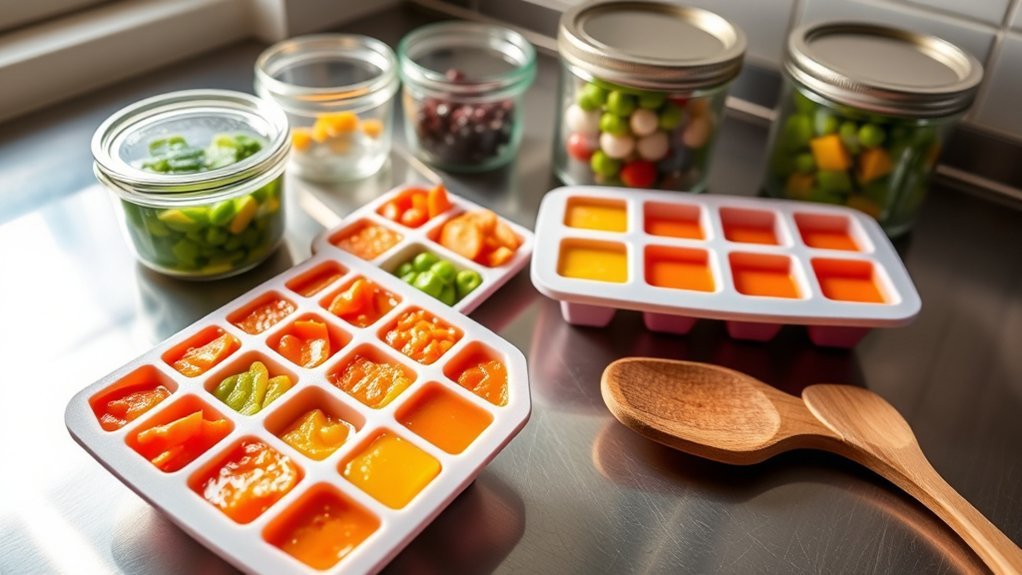
Freezing small portions makes it easier to thaw only what your baby is likely to eat. Use food-grade, freezer-safe trays, bags, or containers. Plastic or silicone products should be designed for food storage. Glass containers must be specifically marked freezer-safe.
- Prepare and chill the puree promptly. Do not leave it at room temperature beyond the two-hour limit.
- Divide the food into single-use portions. Tray cavities vary, so measure how much your tray holds instead of assuming every cube equals one ounce.
- Cover the food. Use a tight tray lid, freezer-safe cover, or clean wrap to reduce contamination and moisture loss.
- Freeze until solid. Place the tray on a level freezer shelf.
- Transfer and label. Move solid portions to an airtight freezer bag or container. Remove excess air and add the food name and date.
- Use the oldest portions first. A first-in, first-out system helps prevent forgotten batches.
Note: When freezing food in glass, leave room for expansion and follow the container manufacturer’s directions. Ordinary jars, narrow-neck jars, and containers with chips or cracks can break in the freezer.
Ice Cube vs. Cookie Sheet: Best Freezing Method?
Both methods can produce convenient single-use portions. The best option depends on the thickness of the food, your available freezer space, and the portion size your baby typically eats.
Ice Cube Tray Benefits
- Easy portioning: Separate cavities create consistent servings once you measure the tray’s capacity.
- Compact storage: Covered trays can be stacked while the food freezes.
- Simple transfer: Frozen portions can be moved to a labeled bag or container.
- Good for thinner purees: The cavities help contain foods that would spread on a flat sheet.
Cookie Sheet Advantages
The cookie-sheet method works well for thicker mashed food and larger batches. Place measured spoonfuls on a clean lined sheet, leaving space between portions. Cover the sheet before freezing. Once the portions are solid, move them to a labeled airtight freezer container.
| Comparison | Ice Cube Tray | Cookie Sheet |
|---|---|---|
| Best for | Thin or pourable purees | Thick purees and mashed foods |
| Portion control | Consistent after tray capacity is measured | Flexible tablespoon-sized portions |
| Batch size | Limited by the number of cavities | Useful for larger batches |
| Space needed | Small footprint; trays may stack | Needs a level shelf wide enough for the sheet |
Best Uses for Each
- Choose a tray for smooth fruit, vegetable, grain, or bean purees that pour easily.
- Choose a cookie sheet for thicker mashed foods that hold their shape when spooned.
- Choose small containers when you want complete ready-to-thaw meals with several ingredients.
- Label every method with the food name, ingredients, and date after transferring the frozen portions.
How Long Is Homemade Baby Food Good For?
As a general rule, homemade baby food should be used within one to two days in the refrigerator or one to two months in the freezer. Shorter limits apply to foods containing meat, poultry, fish, or eggs.
Some official charts publish longer quality periods for individually strained fruits and vegetables. However, recipes, ingredients, freezer temperatures, and handling methods vary. A conservative one-to-two-month limit is easier to apply to mixed or generally labeled homemade baby food.
Refrigerator Storage Duration
Use cooked fruit, vegetable, grain, and bean purees within about two days. Use meat, poultry, fish, and egg purees within 24 hours. When several ingredients are mixed, follow the shortest storage limit that applies to any ingredient.
Do not extend the storage period because the food still looks or smells normal. Harmful bacteria may not produce an obvious warning.
Freezer Storage Duration
Keep the freezer at 0°F (−18°C). For a simple and cautious household rule, use frozen homemade baby food within one to two months and use meat- or egg-based portions within about one month for best quality.
Freezing pauses bacterial growth but does not reliably destroy every harmful microorganism. Safe preparation and handling before freezing still matter.
How to Identify Spoilage in Frozen Homemade Baby Food
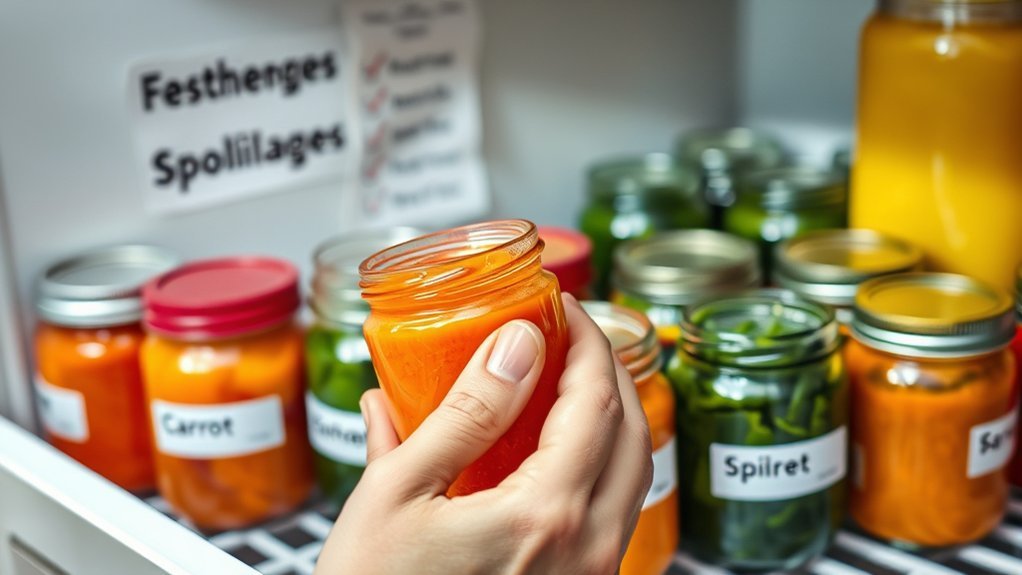
Discard homemade baby food when any of the following applies:
- It exceeded the recommended refrigerator or freezer period.
- It remained above 40°F for an unsafe length of time.
- It was left at room temperature for more than two hours, or more than one hour above 90°F.
- It thawed and was not used within one day.
- It has been thawed and refrozen.
- A used feeding spoon contacted the stored food.
- The container leaked, cracked, opened, or lost its seal.
- The food has mold, an unusual odor, unexpected bubbling, or another clear sign of spoilage.
Freezer burn appears as dry, discolored, or leathery areas. It may reduce flavor and texture, but the FDA explains that freezer burn is a quality issue rather than proof that food is unsafe. Ice crystals are also common in frozen food and do not, by themselves, prove that the food thawed and refroze.
Warning: Never taste questionable baby food to decide whether it is safe. If you do not know how long it was warm, whether it was contaminated, or whether it thawed during a power outage, discard it.
How to Safely Thaw and Reheat Baby Food
Safe Thawing Methods
- Refrigerator: Move one portion from the freezer to the refrigerator and allow it to thaw while staying at 40°F or below. Use it within one day.
- Cold running water: Keep the food in a sealed, leakproof container under cold running water. Reheat and use it promptly.
- Microwave defrosting: Transfer the food to a microwave-safe dish. Defrost it in short intervals, stir thoroughly, and reheat it immediately.
- During cooking or reheating: Small frozen portions may sometimes be heated directly in a saucepan while being stirred frequently.
Never thaw homemade baby food on the counter or in standing warm water. The outside can enter the bacterial danger zone while the center remains frozen.
Safe Reheating Methods
Baby food does not have to be served warm if your baby accepts it cold and it has remained safely refrigerated. When reheating stored homemade baby food, the University of Illinois Extension recommends heating it to 165°F (74°C). Then stir it, allow it to cool, and test it with a clean spoon before feeding.
- Stovetop: Place the portion in a small saucepan and warm it over low heat. Stir often and check the center with a clean food thermometer.
- Microwave: Transfer the food to a microwave-safe dish. Heat it in short intervals, stir from the center outward, and let it stand for at least 30 seconds before testing.
Do not microwave food inside a storage jar. The FDA warns that baby food can heat unevenly in a microwave, creating hot spots that may burn a baby’s mouth. The FDA also recommends heating baby-food meats and eggs on the stovetop rather than in the microwave.
Do not use a slow cooker to reheat a small portion of baby food. It may remain at an unsafe temperature for too long before becoming fully heated.
Best Practices for Reheating Baby Food Safely
- Remove only one meal-sized portion from storage.
- Use a clean saucepan or microwave-safe dish rather than the storage container.
- Heat the food evenly to 165°F, stirring several times.
- Allow the food to stand so the temperature can equalize.
- Stir again and check several areas with a clean spoon.
- Serve the food lukewarm, never hot.
- Discard food left in the feeding dish after the meal.
Pro Tip: If the reheated food is too hot, place the feeding dish in a larger bowl of cold water and stir. This cools the food more evenly than adding an unmeasured amount of liquid.
Serving Hygiene and Leftovers
Saliva from a feeding spoon can introduce bacteria into the food. To protect the stored batch:
- Place one portion in a clean feeding dish.
- Keep the remaining food covered in the refrigerator.
- Use a fresh spoon when adding more food to the feeding dish.
- Do not return food from the feeding dish to the storage container.
- Discard any food remaining in the feeding dish after the meal.
- Discard a storage container if a used feeding spoon was dipped into it.
If a reheated portion was never served or touched by a used spoon, do not leave it at room temperature for more than two hours. For the safest and simplest routine, heat only what your baby is likely to eat.
Can You Home-Can Homemade Baby Food?
Freezing is safer and simpler than home-canning most pureed baby foods. The National Center for Home Food Preservation advises against home-canning pureed vegetables, red meat, or poultry because safe processing times for those purees have not been established.
Only certain fruit-based baby foods may be canned using a tested recipe and the exact processing method provided by a reliable preservation authority. Do not improvise canning times, ingredient proportions, jar sizes, or processing methods.
Frequently Asked Questions
Can I mix different baby food flavors before storing?
Yes. Prepare each ingredient safely, combine them with clean equipment, and label every ingredient in the mixture. When introducing a food your baby has not eaten before, storing it separately can make it easier to identify the cause of a possible reaction.
Is it safe to store homemade baby food in glass jars?
It is safe when the container is food-grade and specifically marked for freezer use. Leave the recommended expansion space, inspect the glass for chips or cracks, and follow the manufacturer’s instructions. Ordinary jars may break when frozen.
How can I tell if baby food is too cold to serve?
Baby food does not have to be warm. Safely refrigerated food may be served cool if your baby accepts it. When you reheat food, stir it thoroughly and allow it to cool until it feels lukewarm rather than hot.
Should I add preservatives to homemade baby food for storage?
No preservative is needed when you prepare the food hygienically, refrigerate or freeze it promptly, and follow the recommended storage limits. Do not add salt, sugar, acids, or other ingredients merely to extend storage time.
Can I refreeze baby food once it has thawed?
No. Baby-specific food-safety guidance recommends that thawed homemade baby food not be refrozen. Thaw only the number of portions you expect to use and discard thawed food that exceeds the refrigerator limit.
How long can thawed homemade baby food stay in the refrigerator?
Use thawed homemade baby food within one day while keeping it at 40°F or below. Do not refreeze the unused portion.
Can I save baby food left in the feeding bowl?
No. Once the feeding spoon has touched your baby’s mouth and returned to the bowl, saliva can contaminate the food. Discard the remaining food after the meal instead of refrigerating or freezing it again.
Conclusion
Safe homemade baby food storage depends on four habits: prepare it cleanly, chill it promptly, store it at the correct temperature, and protect unused portions from feeding-spoon contamination. Keep refrigerated food at 40°F or below, freeze extra portions at 0°F, follow the shortest storage limit for the ingredients used, and never refreeze thawed baby food. When the storage history is uncertain, discard the food.
Sources
- FoodSafety.gov: Children Under Five — baby-food refrigerator and freezer storage limits and safe preparation principles
- FoodSafety.gov: Four Steps to Food Safety — refrigerator and freezer temperatures, prompt chilling, and the two-hour rule
- U.S. Food and Drug Administration: Once Baby Arrives — microwave hot-spot precautions and safe serving temperature
- U.S. Food and Drug Administration: Are You Storing Food Safely? — appliance temperatures, freezer burn, and the limits of smell and appearance checks
- University of Illinois Extension: Practicing Food Safety — thawing, reheating, serving hygiene, and no-refreezing guidance
- National Center for Home Food Preservation: Canning Fruit-Based Baby Foods — limits on safely canning homemade baby food