Baby constipation is usually less about how many days pass between dirty diapers and more about whether the stool is hard, dry, painful, or different from your baby’s normal pattern. The safest response depends on your baby’s age, whether they have started solid foods, and whether warning signs such as vomiting, abdominal swelling, poor feeding, or blood are present.
Quick Answer
For a baby who already eats solids, offer soft prunes, pears, peaches, peas, beans, and oatmeal, along with normal milk feeds and small amounts of water after 6 months. Do not dilute formula or start juice, laxatives, or suppositories without pediatric guidance. Seek prompt care for vomiting, a swollen belly, blood, poor feeding, or severe pain.
Key Takeaways
- Hard, dry, pellet-like, or painful stool is more meaningful than stool frequency alone.
- Babies younger than 6 months should not receive solid foods or extra water unless their pediatrician recommends it.
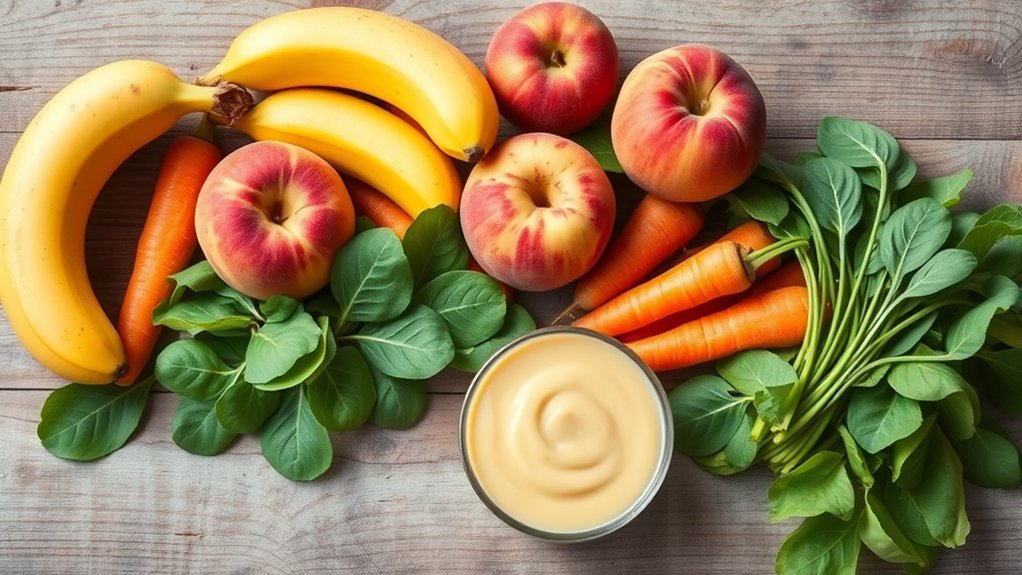
- For babies eating solids, prunes, pears, peaches, peas, beans, broccoli, and oatmeal are practical fiber-rich choices.
- Continue normal breast milk or formula feeds, and prepare formula exactly as directed.
- Call a healthcare professional for persistent symptoms, blood, vomiting, a swollen abdomen, poor feeding, dehydration, severe pain, or poor growth.
Medical note: This article provides general educational information and cannot diagnose or treat your baby. Constipation in a newborn or young infant deserves a lower threshold for pediatric advice. Contact your baby’s healthcare professional when you are unsure what fluids, foods, formula changes, or medicines are safe.
At a Glance
| Best Clue | Hard, dry, lumpy, or painful stool rather than the number of days between stools alone |
| Under 6 Months | Continue breast milk or correctly prepared formula and ask the pediatrician before offering water, juice, solids, or medicine |
| 6–12 Months | Keep milk feeds as the main drink; offer soft fiber-rich foods and about 4–8 ounces of water per day |
| Get Help Promptly | Vomiting, a firm swollen belly, severe or constant pain, blood in the stool, poor feeding, unusual sleepiness, dehydration, or poor weight gain |
Recognizing Signs of Constipation in Babies
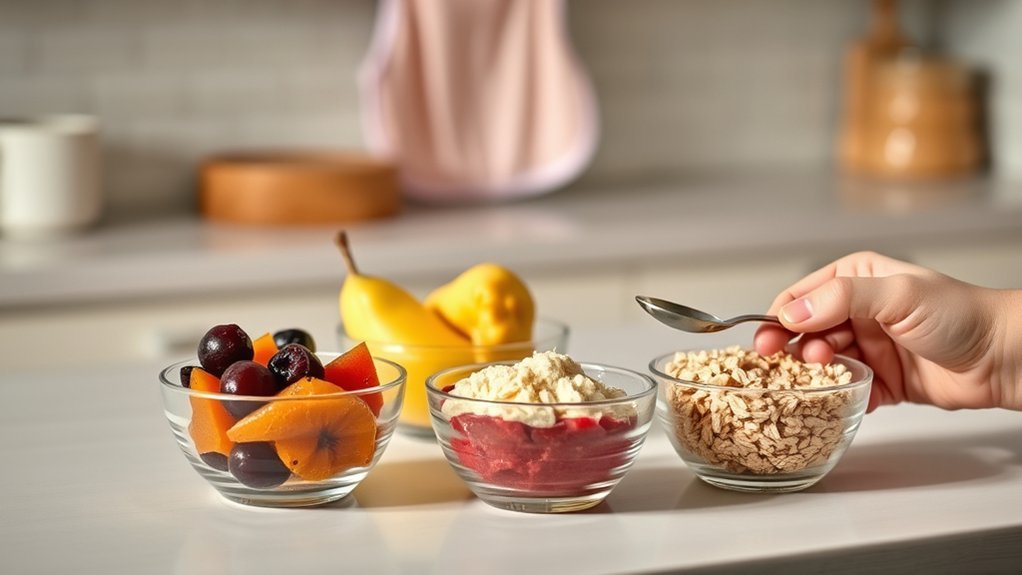
Babies have a wide range of normal bowel patterns. According to the American Academy of Pediatrics, a breastfed baby may sometimes go several days between bowel movements and still be healthy if the stool remains soft and the baby feeds and grows normally.
Signs that more strongly suggest constipation include:
- Hard, dry, firm, or pellet-like stool
- Pain, persistent crying, or obvious distress while passing hard stool
- A change from your baby’s usual stool pattern
- A firm or bloated abdomen
- Reduced appetite or feeding difficulty
- A small streak of bright red blood caused by a possible anal fissure
Grunting, turning red, drawing up the legs, and straining are not always constipation. Young babies may strain while learning to coordinate the muscles needed to pass stool. When this happens but the stool is soft, it may be normal infant dyschezia rather than constipation.
In babies, constipation is mainly about hard or painful stool and a change from the usual pattern—not simply the number of days between diapers.
What to Do for Baby Constipation by Age
Newborns and Babies Younger Than 6 Months
For most babies younger than 6 months, breast milk or infant formula should remain the only regular source of food and fluid. Do not introduce solid foods, plain water, sugar water, or herbal remedies to treat constipation unless your baby’s healthcare professional specifically recommends them.
If a formula-fed baby passes firm or dry stool, first confirm that the formula is being mixed exactly according to the container instructions. Add the measured water and formula in the correct proportions. Never add extra powder or extra water.
Call your pediatrician promptly if a newborn has hard stool, feeds poorly, has fewer wet diapers than usual, has a swollen abdomen, vomits, or is not gaining weight as expected. During the first month, an unusually low stool frequency may also require an assessment of milk intake.
Babies 6 to 12 Months Who Eat Solid Foods
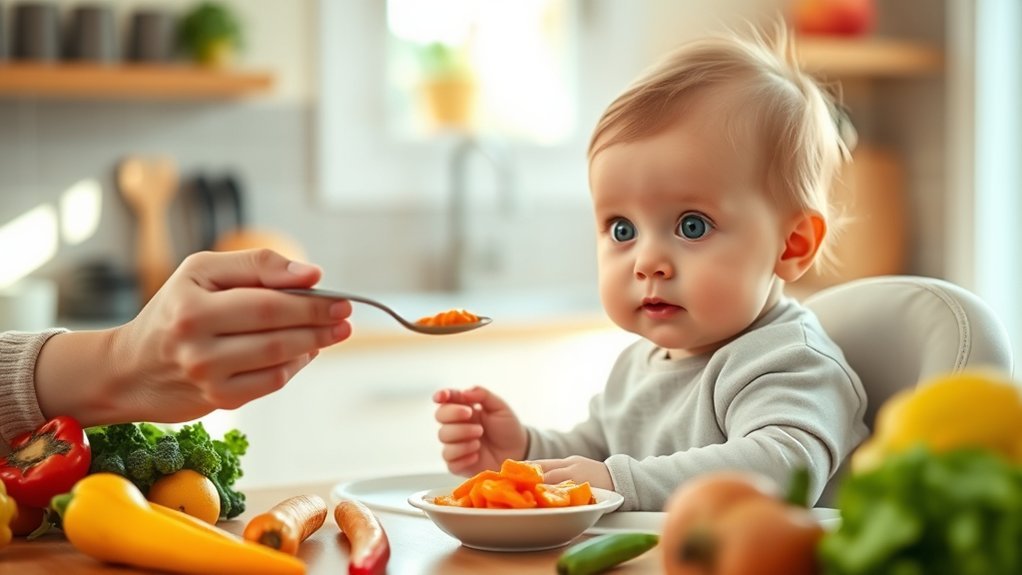
Once your baby is developmentally ready for solids, usually around 6 months, you can offer soft, age-appropriate sources of fiber while continuing normal breast milk or formula feeds. The Centers for Disease Control and Prevention advises that babies ages 6 to 12 months may also be offered about 4 to 8 ounces of plain water per day.
Begin with a small serving, such as 1 or 2 tablespoons, and adjust based on your baby’s hunger, fullness, texture skills, and pediatric guidance. Increase fiber gradually because a sudden large increase may cause gas or bloating.
Foods That May Make Baby Constipation Worse—and What to Serve Instead
Some meals are more likely to be low in fiber, especially when they rely heavily on refined grains. White rice, refined rice cereal, white bread, and regular pasta are not forbidden, but they may be less helpful during constipation than oatmeal, beans, fruit, and vegetables.
- Instead of relying only on rice cereal: Rotate in oatmeal, barley, or another age-appropriate whole-grain infant cereal.
- Instead of serving mostly refined grains: Pair them with pear, prune, peach, pea, bean, or vegetable puree.
- Instead of eliminating bananas automatically: Watch your baby’s individual response. Bananas do not cause constipation in every baby.
- Instead of serving large amounts of cheese: Keep portions age-appropriate and include fruit, vegetables, grains, and normal milk feeds.
Yogurt and cheese can be part of complementary feeding after solids begin. Constipation by itself does not prove that your baby has a cow’s milk protein allergy. Allergy is more likely to involve additional symptoms such as hives, repeated vomiting, swelling, wheezing, eczema flares, diarrhea, or blood and mucus in the stool.
What About Infant Formula?
No single formula is proven to be the best choice for every constipated baby. Iron-fortified formula remains recommended, and the iron in standard infant formula does not generally cause constipation. If symptoms began after a formula change or continue despite correct preparation, discuss the pattern with your pediatrician before switching products.
Warning: Never dilute infant formula with extra water to treat constipation. Incorrectly diluted formula can cause dangerous electrolyte problems and may prevent your baby from receiving enough calories and nutrients. Follow the preparation instructions exactly.
Fiber-Rich Foods for Baby Constipation Relief
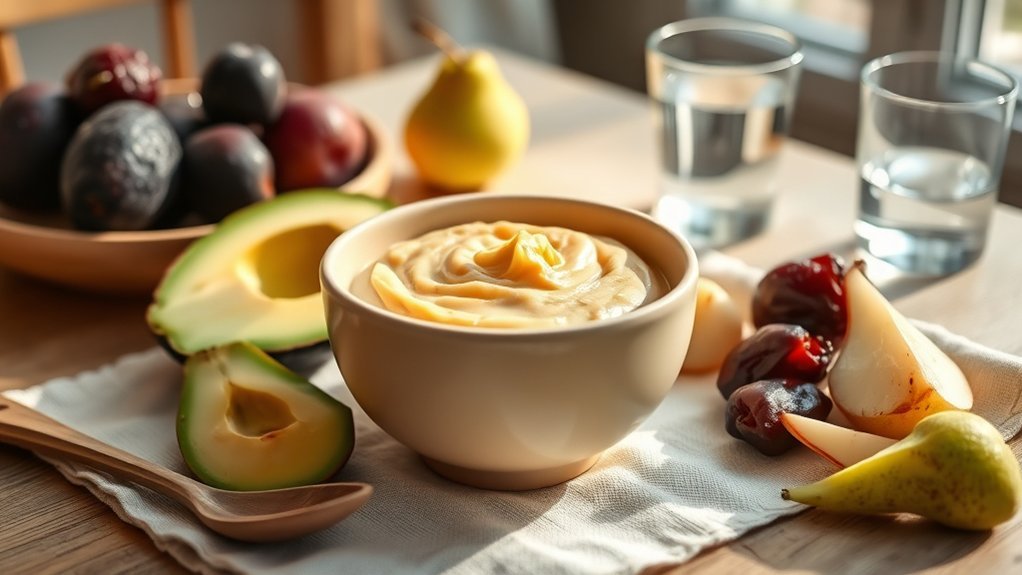
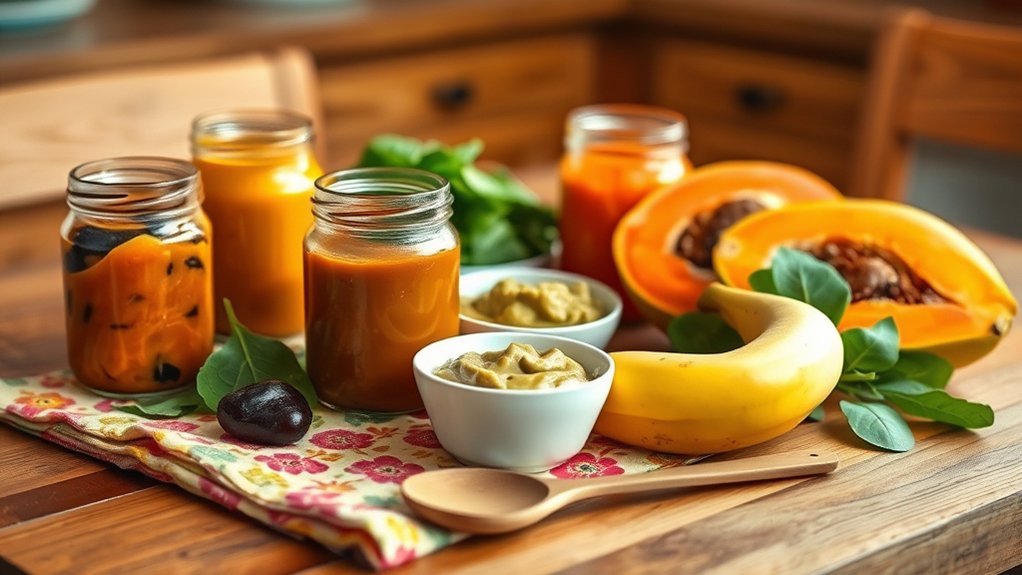
For babies who already eat solids, soft fruits, vegetables, legumes, and whole grains can help add fiber and moisture to meals. Prepare every food in a texture your baby can safely manage.
Fruits
- Prunes or plums
- Pears
- Peaches
- Apricots
Use unsweetened purees, finely mashed soft fruit, or appropriately sized soft pieces based on your baby’s feeding skills. Whole fruit or puree also provides fiber that clear juice does not.
Vegetables and Legumes
- Green peas
- Beans or lentils, mashed until smooth
- Broccoli
- Brussels sprouts
- Sweet potato
Broccoli and Brussels sprouts may cause gas in some babies, so begin with a small amount and increase gradually.
Whole Grains
- Oatmeal or oat-based infant cereal
- Barley cereal
- Soft whole-grain pasta prepared in an age-appropriate texture
- Brown rice as one part of a varied grain rotation
Whole grains do not need to be delayed until 8 months. They may be introduced around 6 months when your baby is developmentally ready for solids.
Pro Tip: Mix a spoonful of prune, pear, or peach puree into familiar oatmeal. This adds fiber and moisture without requiring a large new meal. Start small and watch your baby’s comfort and stool pattern.
Offer a varied combination of soft fruits, vegetables, legumes, and whole grains rather than relying on one “magic” constipation food.
Hydration Tips for Constipated Babies
Breast milk or correctly prepared infant formula should remain the main drink throughout the first year. Continue offering normal feeds rather than replacing them with water or juice.
After 6 months, you may offer small amounts of plain water in an open or straw cup. Current CDC guidance suggests approximately 4 to 8 ounces of water per day for babies ages 6 to 12 months, although individual needs vary with health, climate, diet, and medical advice.
Watch for signs that your baby may not be getting enough fluid, including fewer wet diapers than usual, a dry mouth, unusual sleepiness, no tears when crying, or a sunken soft spot. Contact a healthcare professional if you suspect dehydration.
For an older baby who already eats family foods, a small serving of low-sodium soup can add fluid, but soup or broth should not replace breast milk or formula feeds.
Note: Juice is not recommended as a routine drink before 12 months. AAP constipation guidance allows limited apple or pear juice after 1 month and prune juice after 3 months as a symptom-specific measure. Ask your pediatrician for the correct type and amount before using juice, especially for a baby younger than 6 months.
Gentle Ways to Help Beyond Food
Food changes are not the only gentle measures that may help. When your baby is comfortable and alert, you can:
- Lay your baby on their back and gently move the legs in a bicycle motion.
- Massage the abdomen gently in a clockwise direction without pressing hard.
- Allow relaxed floor movement and supervised activity appropriate for your baby’s age.
- Offer meals and milk feeds without pressure, following your baby’s hunger and fullness signals.
Do not repeatedly insert a thermometer, cotton swab, or other object into the rectum to stimulate a bowel movement. Do not give mineral oil, herbal remedies, laxatives, suppositories, or enemas unless your baby’s healthcare professional has recommended a specific product and dose.
When to Call the Doctor About Your Baby’s Constipation
Contact your baby’s healthcare professional whenever constipation occurs in a newborn, the symptoms are recurrent, or you are unsure whether a food, fluid, formula change, or medicine is safe.
Seek Urgent Medical Care
Get prompt medical help if constipation occurs with:
- Repeated vomiting, especially green vomit
- A firm, swollen, or very tender abdomen
- Severe or constant abdominal pain
- Marked sleepiness, weakness, or difficulty waking
- Refusal to feed or signs of dehydration
- A significant amount of blood in the stool
- Fever in a young infant
Call the Pediatrician Soon
Arrange medical advice if:
- Hard or painful stools continue despite age-appropriate food and fluid changes.
- Your baby has repeated small streaks of blood, which may come from a fissure but still needs assessment.
- Constipation began during the first weeks of life.
- Your baby is not feeding or gaining weight normally.
- The abdomen frequently appears bloated.
- You suspect a formula intolerance or food allergy.
- You think your baby may need a laxative, suppository, or formula change.
Warning: Do not wait for a specific number of missed bowel movements when your baby has vomiting, abdominal swelling, significant pain, poor feeding, dehydration, blood, or unusual sleepiness. These symptoms matter more than stool frequency alone.
Frequently Asked Questions
Can I mix pureed fruit with baby cereal for constipation relief?
Yes. For a baby who is already developmentally ready for solids, you can mix a small amount of unsweetened prune, pear, peach, apricot, or plum puree into oatmeal or another age-appropriate cereal. Begin with 1 or 2 tablespoons and adjust to your baby’s appetite and texture skills.
How does introducing solids affect my baby’s bowel movements?
Stools often become firmer, darker, smellier, and less frequent after solid foods begin. This change is usually normal. Constipation is more likely when the stool becomes hard, dry, pellet-like, difficult to pass, or painful. Continue breast milk or formula and offer a varied mix of fruits, vegetables, legumes, and grains.
Are there baby formulas designed to help with constipation?
Some formulas are marketed for digestive comfort, but no single product is best for every baby. Confirm that the current formula is mixed exactly as directed and discuss ongoing symptoms with your pediatrician before switching. Standard iron-fortified formula should not be changed to a low-iron product because of constipation concerns.
Can overfeeding contribute to baby constipation?
Overfeeding is not considered a typical direct cause of constipation. However, pressuring a baby to finish bottles or meals can interfere with responsive feeding and may cause discomfort. Follow hunger and fullness cues, prepare formula correctly, and ask the pediatrician about feeding amounts if your baby frequently seems uncomfortable.
What are the signs my baby may be allergic to a new food?
Possible allergy symptoms include hives, facial or lip swelling, wheezing, trouble breathing, repeated vomiting, diarrhea, or blood and mucus in the stool. Trouble breathing, widespread hives, significant swelling, or unusual weakness requires emergency care. Constipation alone does not confirm a food allergy.
Do bananas cause constipation in babies?
Not necessarily. Babies respond differently, and bananas can remain part of a varied diet. If you notice that stools consistently become harder after banana-heavy meals, reduce the portion temporarily and pair banana with pear, prune, peach, peas, oatmeal, or another higher-fiber food.
Can I give my baby pear or prune juice for constipation?
Juice should not be used as a routine drink before 12 months. AAP constipation guidance allows limited apple or pear juice after 1 month and prune juice after 3 months for symptom relief. Because the amount depends on age and the baby’s health, ask your pediatrician before giving juice, especially before 6 months.
Can I use a laxative or suppository for my baby?
Only when your baby’s healthcare professional recommends a specific treatment and dose. Do not independently give laxatives, mineral oil, enemas, suppositories, herbal products, or repeated rectal stimulation. A clinician should first consider the baby’s age, symptoms, feeding pattern, hydration, and possible underlying causes.
Sources
- American Academy of Pediatrics: How Can I Tell If My Baby Is Constipated? — infant stool patterns, constipation signs, and symptom-specific juice guidance
- CDC: Foods and Drinks to Encourage — water and milk guidance for babies ages 6 to 12 months
- CDC: Foods and Drinks to Avoid or Limit — routine juice guidance for children younger than 12 months
- American Academy of Pediatrics: How to Safely Prepare Baby Formula With Water — correct formula preparation and dilution safety
- National Institute of Diabetes and Digestive and Kidney Diseases: Constipation Symptoms and Causes — warning signs and reasons to seek medical care
- National Institute of Diabetes and Digestive and Kidney Diseases: Constipation Treatment — diet, hydration, and medication cautions
Conclusion
For a baby who has started solids, soft prunes, pears, peaches, peas, beans, vegetables, and oatmeal can support easier stools when paired with normal milk feeds and age-appropriate water. Avoid judging constipation by stool frequency alone, and never dilute formula or give constipation medicine without pediatric guidance. Contact your baby’s healthcare professional when symptoms persist or occur with pain, vomiting, blood, abdominal swelling, poor feeding, dehydration, or poor growth.