
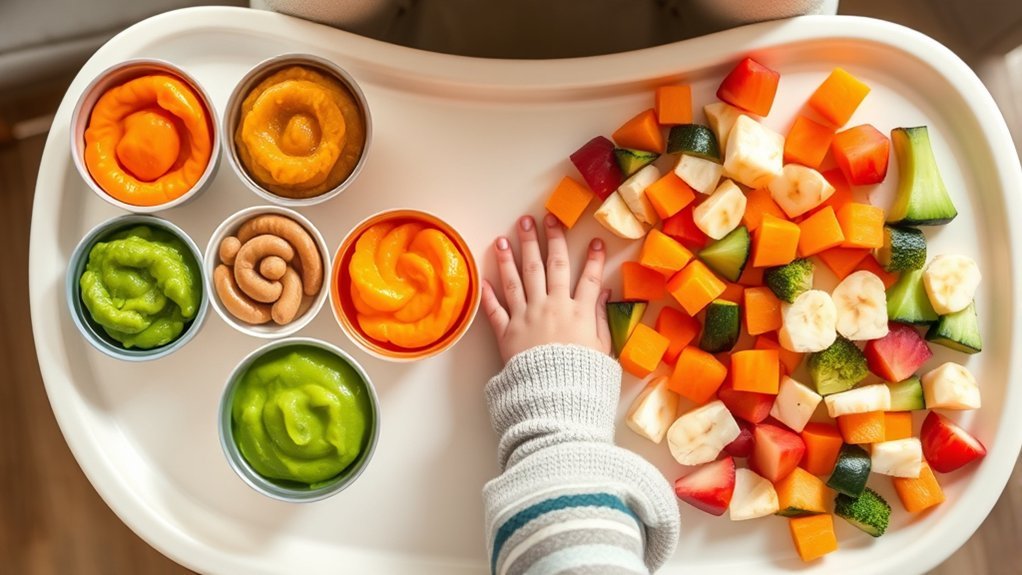
Baby-led weaning and traditional purees are two ways to introduce solid foods, but you do not have to choose one method for every meal. Baby-led weaning emphasizes self-feeding with soft finger foods, while traditional feeding often begins with caregiver-offered mashed or pureed foods. The safest and most useful approach depends on your baby’s readiness, feeding skills, nutritional needs, and your family’s routine.
Quick Answer
Neither baby-led weaning nor purees is automatically best or safest for every baby. BLW offers more self-feeding practice, while purees make it easy to offer soft, measured foods. Current research has not found a clear difference in choking risk when foods are prepared safely and babies are seated upright and closely supervised.
Key Takeaways
- Most babies are ready for complementary foods at about six months, once they can control their head, sit upright with support, grasp objects, and swallow food.
- Baby-led weaning uses soft finger foods and self-feeding, while traditional feeding usually starts with spoon-fed mashed or pureed foods.
- Purees are not inherently safer than properly prepared finger foods. Choking prevention depends on food texture, shape, seating, supervision, and caregiver knowledge.
- Breast milk and/or infant formula remains the main source of nutrition from 6 to 12 months as solid-food intake gradually increases.
- A mixed approach can include finger foods, mashed family foods, purees, and preloaded spoons at the same meal.
- Whichever method you use, regularly offer iron-rich foods, varied textures, common allergens in baby-safe forms, and responsive feeding without pressure.
Medical note: This article provides general feeding information and does not replace advice from your child’s pediatrician. Ask for individualized guidance if your baby was born prematurely or has poor growth, low muscle tone, developmental differences, severe eczema, food allergies, frequent coughing during meals, or difficulty chewing or swallowing.
Understanding Baby-Led Weaning and Purees
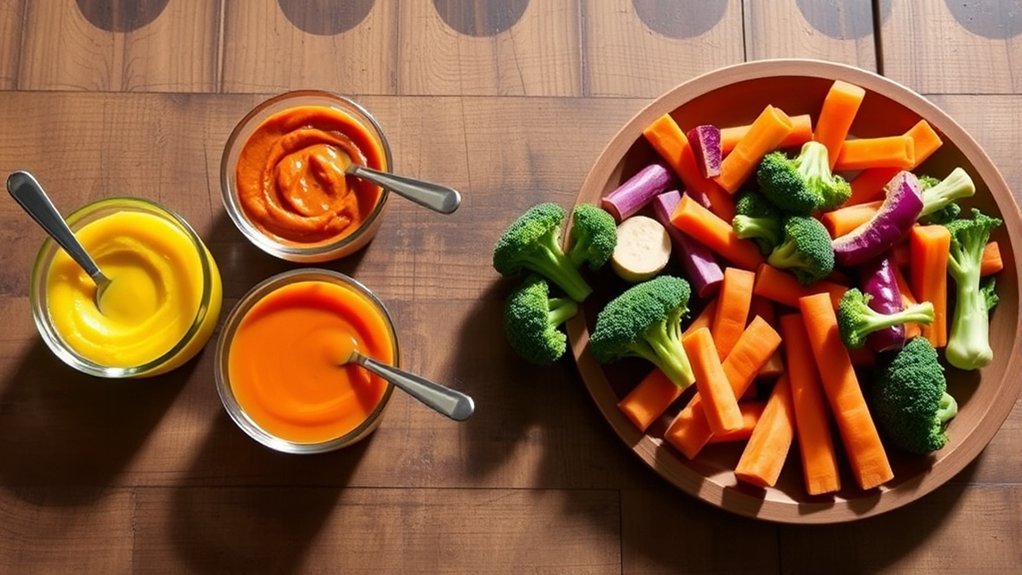
Baby-led weaning, commonly shortened to BLW, is an approach in which a developmentally ready baby picks up and eats soft finger foods instead of being fed every bite by a caregiver. Traditional puree feeding begins with smooth or mashed foods offered on a spoon, followed by thicker, lumpier textures and finger foods as the baby’s skills improve.
Despite its name, baby-led “weaning” does not mean stopping breast milk or formula. Health professionals usually call this stage complementary feeding because food is added alongside milk feeds. According to the Centers for Disease Control and Prevention, breast milk and/or infant formula remains the main source of nutrition from 6 through 12 months.
Most babies can begin complementary foods at about six months. The CDC’s readiness guidance says to look for several skills rather than relying only on age. A ready baby can usually:
- Sit upright alone or with support and maintain good head and neck control.
- Bring objects to their mouth and try to grasp food or toys.
- Open their mouth when food is offered.
- Move food toward the back of the mouth and swallow instead of pushing it straight out.
- Show interest in food without being too tired or distressed to eat.
Introducing solid foods before four months is not recommended. Some babies, including those born prematurely, may need to be assessed according to their corrected age and individual development.
The best feeding method is the one that matches your baby’s skills, provides safe textures and adequate nutrition, and allows the caregiver to respond to hunger and fullness cues.
Power your essentials anywhere with a 999Wh pure sine wave power station delivering up to 1000W continuous with 2000W surge. It supports fast charging via USB-C PD 60W and USB-A QC 18W, plus simultaneous output for multiple devices through AC, USB, wireless, and car/DC ports. Recharge using AC, car, or solar with a built-in MPPT controller and dual cooling fans, while the upgraded battery management system protects against surges, short circuits, and overheating.

THOUGHTFULLY DESIGNED: The ezpz food cutters make baby-led weaning food prep ezpz! The cutters assist with preparing foods in two essential shapes: finger-length strips and bite-sized cubes.

THOUGHTFULLY DESIGNED: The ezpz food cutters make baby-led weaning food prep ezpz! The cutters assist with preparing foods in two essential shapes: finger-length strips and bite-sized cubes.
Baby-Led Weaning vs. Purees at a Glance
| Factor | Baby-Led Weaning | Traditional Purees |
| How food is offered | Baby picks up soft finger foods and feeds themselves. | Caregiver usually offers mashed or pureed food on a spoon. |
| Texture | Soft pieces, strips, shreds, patties, or foods held by a safe handle. | Smooth puree, mash, thicker puree, and then increasingly lumpy foods. |
| Motor practice | Provides frequent practice with grasping, bringing food to the mouth, and self-feeding. | Can include motor practice through finger foods and preloaded spoons alongside caregiver feeding. |
| Tracking intake | Exact intake may be difficult to judge because food is handled, dropped, or tasted. | Portions are easier to measure, although the amount swallowed still may not be exact. |
| Choking risk | Not shown to be higher when families receive safe food-preparation advice and supervise closely. | Not risk-free; unsafe lumps, hard foods, spoon pressure, or poor positioning can still cause problems. |
| Mess and preparation | Often messier, but family foods may be adapted instead of prepared separately. | May be tidier during feeding, but homemade purees can require blending and storage. |
| Best fit | Babies ready to grasp and self-feed, with caregivers comfortable preparing finger foods. | Families who prefer spoon-feeding or babies who need a slower, supported texture progression. |
Key Differences Between Baby-Led Weaning and Purees
The main difference is who brings the food to the baby’s mouth. In BLW, the baby leads that action. With traditional spoon-feeding, the caregiver usually loads and moves the spoon, although the baby can still hold a preloaded spoon or touch the food.
BLW usually introduces recognizable textures from the beginning. Traditional feeding may start smooth and become thicker and lumpier over time. Neither path should remain stuck at one texture. Babies need chances to practice managing a growing range of safe textures as their abilities improve.
Another difference is how easily caregivers can estimate intake. A spoon-fed portion is easier to measure, but that does not mean every spoonful is swallowed. With BLW, food may be sucked, crushed, dropped, or explored before much is eaten. In both cases, growth, wet diapers, energy, development, and clinical assessment are more useful than trying to count every mouthful.
Both approaches can be responsive. Responsive feeding means the caregiver decides what, when, and where food is offered, while the baby decides whether and how much to eat. Turning away, closing the mouth, pushing food away, slowing down, or becoming distracted can signal fullness.
What Are the Benefits of Baby-Led Weaning?

Baby-led weaning gives babies regular opportunities to pick up food, bring it to their mouth, and control the pace of eating. This hands-on practice can support grasping, hand-eye coordination, and growing independence at mealtimes.
BLW can also make family meals more inclusive. A baby may eat softened or unsalted versions of foods served to the rest of the household, such as shredded chicken, soft beans, ripe avocado, steamed vegetables, omelet strips, or tender pasta.
Because foods are offered in recognizable forms, babies experience different smells, shapes, flavors, and textures. That exposure may help them become comfortable with varied foods. However, BLW has not been proven to prevent picky eating, obesity, or feeding problems.
The nutritional quality of BLW depends on what caregivers serve. A plate made mostly of fruit and vegetables may look healthy but provide too little iron, fat, or energy. Each meal should include a nutrient-dense choice rather than relying only on low-calorie produce.
Self-feeding can support motor practice, but it does not automatically make a meal safer or more nutritious. Food choice, preparation, supervision, and responsive feeding still matter.
What to Keep in Mind About Baby-Led Weaning
Benefits of Self-Feeding
Self-feeding lets your baby explore food at their own pace. They can touch, smell, lick, squash, and taste a food before deciding whether to eat it. This exploration is a normal part of learning and is not wasted time, even when little food is swallowed at first.
According to the CDC’s self-feeding guidance, picking up food helps babies practice fine-motor skills. Spoon-fed babies can receive the same type of practice by being offered finger foods or a preloaded spoon when they are ready.
Never force food into a baby’s mouth or scrape food from a spoon against the upper lip. Pause when the baby turns away, closes their mouth, arches back, becomes upset, or stops reaching for food.
Safety Considerations and Guidelines
Safe feeding matters with finger foods, mashed foods, and purees. Always place your baby upright in a stable high chair or another secure eating seat. Do not feed a baby while they are lying down, crawling, walking, riding in a moving car, or distracted by play.
Prepare food for your baby’s current skills. Soft food should usually flatten easily when pressed between your thumb and forefinger. Useful beginning formats may include:
- Very soft strips of ripe pear, banana, avocado, or steamed vegetables.
- Shredded or finely minced tender meat moistened with broth, puree, or sauce.
- Soft omelet strips or well-cooked egg.
- Mashed beans spread thinly on soft toast strips.
- Thick yogurt, oatmeal, or puree offered on a preloaded spoon.
- Soft patties made from fish, lentils, beans, meat, or vegetables.
There is no single safe size for every food. The correct shape changes with the baby’s grasping skills and the food’s texture. Follow the CDC choking-prevention guidance and avoid hard, sticky, round, rubbery, or difficult-to-chew foods.
Warning: Never give a baby whole nuts, popcorn, hard raw apple or carrot pieces, whole grapes or cherry tomatoes, chunks of meat or cheese, spoonfuls of nut butter, hard candy, marshmallows, or coin-shaped pieces of sausage. A choking baby may be unable to breathe, cough, cry, or make sound. Call 911 immediately and use age-appropriate choking first aid if you are trained. Caregivers should take an infant CPR and first-aid course.
Encouraging Food Exploration Skills
Offer a range of flavors and textures without pressuring your baby to taste or finish them. A baby may need many calm exposures before accepting an unfamiliar food. Touching, smelling, licking, or taking a tiny bite can all be part of progress.
Keep meals short and relaxed. Begin when your baby is alert and not extremely hungry. Milk feeds remain important, so there is no need to make a new eater consume a full solid-food meal.
Mess is expected. A wipe-clean mat, long-sleeved bib, and small portions can make cleanup easier. Start with one or two pieces at a time and offer more when your baby is ready.
What Are the Advantages of Traditional Purees?
Traditional purees can provide a gentle and familiar way to begin complementary feeding. They are especially useful for foods that are naturally eaten with a spoon, such as yogurt, oatmeal, soup, mashed beans, and soft cereal.
Easier Food Monitoring
Spoon-fed portions are easier to measure than scattered pieces of finger food. This can be helpful when a pediatrician or dietitian has asked a family to watch intake closely.
However, measured serving size is not the same as the amount swallowed. Babies may spit out, drool, or refuse part of a portion. Caregivers should still watch hunger and fullness signals rather than encouraging a baby to finish the bowl.
Cleaner Feeding Process
Caregiver spoon-feeding may create less mess during early meals because the adult controls the bowl and spoon. Purees can also be prepared in batches or purchased in convenient single servings.
The cost and time comparison varies. Homemade purees require cooking, blending, portioning, and storage, while adapted family foods may be quicker. Packaged purees save preparation time but may cost more per serving.
Gradual Texture Introduction
Purees allow caregivers to adjust texture gradually. A smooth puree can become a thicker mash, then a lumpy mash, and finally a combination of mashed foods and soft finger foods.
This progression can be useful for babies who need more time to manage texture. It should not become a reason to delay all lumps and finger foods for months after the baby is ready. Continued exposure to developmentally appropriate textures helps babies practice moving food, chewing with their gums, and swallowing.
Drawbacks of Using Purees for Baby Feeding
Purees are not harmful by themselves, but relying only on smooth food for too long can limit opportunities to practice handling different textures. A puree-fed baby should also receive chances to touch food, hold a preloaded spoon, and try safe finger foods as their skills develop.
Caregiver-led feeding can become unresponsive when adults focus on finishing a container or persuading the baby to take “one more bite.” Pressure can make meals stressful and may interfere with the baby’s ability to communicate hunger and fullness.
Some commercial pouches also encourage sucking food directly from a spout. Occasional pouch use can be convenient, but serving the food in a bowl lets the baby see, smell, touch, and practice eating it with a spoon.
The concern is therefore not that purees automatically cause picky eating or delayed motor development. The concern is prolonged dependence on one smooth texture without appropriate opportunities to progress.
Nutrition Priorities for Both Feeding Methods
Neither BLW nor puree feeding guarantees a balanced diet. From about six months, babies need complementary foods that supply iron, zinc, protein, healthy fats, and energy in addition to vitamins and minerals.
Iron deserves special attention because a baby’s stored iron begins to decrease during the second half of the first year. A randomized trial of the modified Baby-Led Introduction to SolidS approach found no higher risk of iron deficiency when parents were taught to offer a high-iron food at each meal.
Baby-friendly iron-rich foods include:
- Soft shredded, minced, or pureed meat and poultry.
- Low-mercury fish with all bones carefully removed.
- Well-cooked eggs.
- Mashed beans, lentils, peas, or tofu.
- Iron-fortified infant cereal.
- Smooth nut or seed butter thinned into oatmeal, yogurt, or puree.
Pair plant-based iron foods with vitamin C sources such as berries, tomato, broccoli, mango, or soft-cooked peppers. Include energy-rich foods such as avocado, full-fat unsweetened yogurt, olive oil mixed into food, egg, fish, or thinly spread nut butter.
Pro Tip: Build a simple meal around one iron-rich food, one energy-rich food, and one fruit or vegetable. For example, offer a lentil patty, avocado, and soft pear, or serve iron-fortified oatmeal mixed with peanut butter and mashed berries.
Avoid foods with added sugars and limit high-sodium packaged foods. The goal is to leave room for nutrient-dense choices, not to make parents fearful of a tiny taste of family food. Do not give honey before 12 months because of the risk of infant botulism. Cow’s milk should not replace breast milk or formula as a drink before 12 months, although pasteurized yogurt and cheese can be offered earlier.
Gagging vs. Choking
Gagging and choking are not the same. Gagging is a protective response that helps move food away from the airway. A gagging baby may cough, make noise, open their mouth, push their tongue forward, or become red in the face. Stay calm and allow the baby to work the food forward while watching closely.
Choking occurs when the airway is blocked. A choking baby may be silent, unable to breathe or cry, or show ineffective coughing and a change in skin color. Choking requires immediate action.
Do not place your fingers into a baby’s mouth unless you can clearly see and safely remove the object. A blind finger sweep can push food deeper into the airway. Learn infant choking first aid and CPR before starting solids whenever possible.
A 2024 systematic review found no statistically significant difference in choking risk between BLW, the modified BLISS approach, and traditional spoon-feeding. The researchers emphasized safe food modification and caregiver education for every method.
Introducing Common Food Allergens
Common allergenic foods can be introduced once your baby is developmentally ready for solids. There is no evidence that routinely delaying egg, peanut, dairy, wheat, soy, sesame, fish, or other common allergens prevents food allergy.
Introduce allergens in baby-safe forms. Examples include:
- Smooth peanut butter thinned with warm water, breast milk, formula, yogurt, or puree.
- Well-cooked mashed or shredded egg.
- Plain pasteurized yogurt.
- Soft tofu or mashed soybeans.
- Tahini thinned into yogurt or hummus.
- Soft wheat cereal or bread.
- Well-cooked, deboned, low-mercury fish.
Offer a small amount when your baby is healthy and you can observe them. Once tolerated, continue including the food regularly as part of the family diet. Never offer whole peanuts, chunks of nuts, or a spoonful of thick nut butter because they are choking hazards.
The American Academy of Pediatrics advises families of babies with severe eczema or egg allergy to discuss peanut introduction with their pediatrician. The NIAID peanut-allergy prevention guidelines may recommend supervised or earlier introduction for some high-risk infants.
Stop feeding and seek medical advice if your baby develops hives, repeated vomiting, facial swelling, coughing, wheezing, or other symptoms after eating. Trouble breathing, severe swelling, unusual sleepiness, or collapse requires emergency care.
Effective Strategies for Combining Baby-Led Weaning and Purees
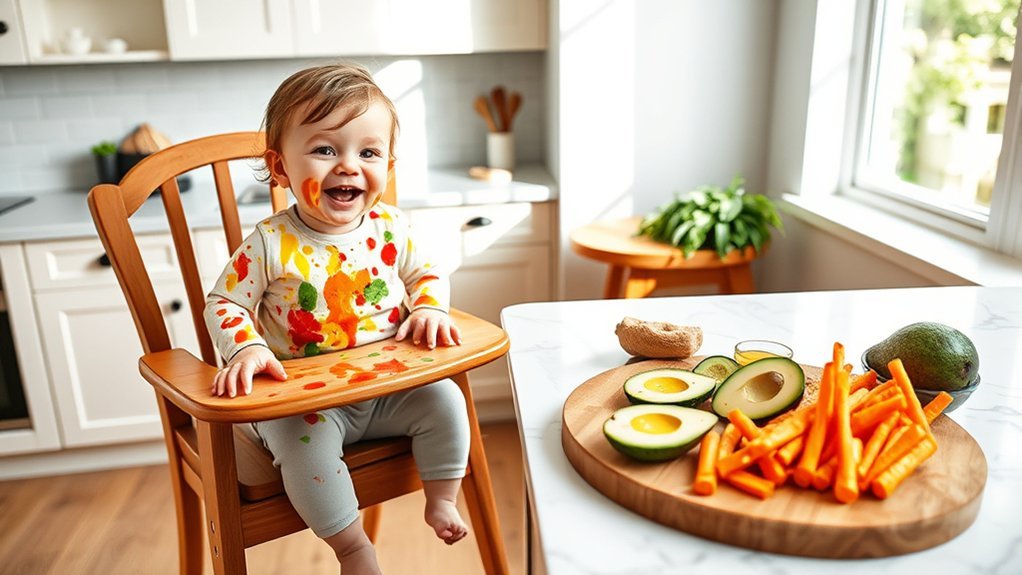
A mixed approach can provide self-feeding practice without giving up useful spoon foods. The consistency of the food matters more than whether someone calls the method BLW or traditional feeding.
- Offer both formats: Place a soft finger food on the tray and offer a mashed or pureed food on a preloaded spoon.
- Let the baby participate: Hold the bowl steady, but allow the baby to grasp the spoon and bring it toward their mouth when possible.
- Adapt family food: Remove the baby’s portion before adding excess salt, sugar, or very spicy sauce.
- Include iron: Offer meat, egg, beans, lentils, tofu, fish, or iron-fortified cereal at meals.
- Advance textures: Move from smooth food to thicker, mashed, and lumpy textures as the baby’s skills improve.
- Follow appetite cues: Do not pressure the baby to finish either the finger food or the puree.
A mixed meal might include a preloaded spoon of thick oatmeal, a soft strip of omelet, and mashed berries. Another option is shredded chicken, mashed sweet potato on a spoon, and a soft broccoli floret.
A Practical Way to Start
Begin with one relaxed solid-food opportunity each day when your baby is alert. Sit the baby upright, remove distractions, and offer a small amount of one or two foods. Continue normal breast milk or formula feeds.
During the first weeks:
- Start with soft, simple foods that match your baby’s skills.
- Offer an iron-rich food regularly.
- Introduce varied tastes and textures rather than only sweet fruit.
- Let the baby touch food and stop when they show fullness.
- Gradually increase meal frequency as interest and intake grow.
- Keep milk feeds as the main source of nutrition through the first year.
It is normal for early meals to involve more exploration than eating. Contact your pediatrician if your baby frequently coughs or chokes, develops a wet or gurgly voice during meals, has repeated vomiting, seems unable to move food in the mouth, refuses all textured foods, or is not growing as expected.
Frequently Asked Questions
Can I transition from purees to baby-led weaning later?
Yes. Gradually make purees thicker and lumpier while adding soft finger foods and preloaded spoons. There is no need to stop spoon-feeding suddenly. Continue moving forward based on your baby’s skills and comfort rather than following a fixed timetable.
How do I know if my baby is ready for BLW?
Most babies are ready at about six months when they can sit upright with support, control their head and neck, bring objects to their mouth, grasp food, and swallow rather than automatically pushing food out. Interest in food alone is not enough.
Does baby-led weaning increase choking risk?
Current studies have not found a significant difference in choking risk between properly practiced BLW and traditional spoon-feeding. Both methods require upright seating, constant supervision, safe textures, and avoidance of hard, round, sticky, or rubbery foods.
Which foods should I avoid with baby-led weaning?
Avoid whole nuts, popcorn, hard raw vegetables, hard fruit pieces, whole grapes or cherry tomatoes, spoonfuls of nut butter, hard candy, marshmallows, chunks of meat or cheese, and coin-shaped sausages. Also avoid honey before 12 months, unpasteurized foods, and high-mercury fish.
What are common safety concerns with baby-led weaning?
The main concerns are choking hazards, poor seating, inadequate supervision, unsafe food shapes, and meals that do not provide enough iron or energy. Food allergy reactions are another concern, so introduce allergens in safe forms and seek personalized guidance for high-risk babies.
How can I help my baby develop chewing skills?
Offer safe foods with gradually changing textures, including thick mash, soft lumps, tender finger foods, and preloaded spoons. Babies can practice chewing with their gums before they have many teeth. Ask a feeding professional for help if your baby repeatedly coughs, pockets food, or cannot progress beyond smooth textures.
Can I combine finger foods and purees at the same meal?
Yes. You might offer a soft finger food, an iron-rich mashed food, and a preloaded spoon together. Combining methods can provide texture variety, self-feeding practice, and an easier way to serve foods such as yogurt, oatmeal, soup, or mashed beans.
Is baby-led weaning suitable for premature babies?
It may be suitable for some premature babies, but readiness should be based on corrected age, development, growth, and feeding skills. Ask your pediatrician or feeding specialist before beginning BLW if your baby was premature or has a history of breathing, swallowing, neurological, or growth problems.
Conclusion
Baby-led weaning and traditional purees are not opposing rules that require an all-or-nothing choice. BLW can provide valuable self-feeding and texture practice, while purees and mashed foods offer convenient ways to serve nutrient-dense foods. Many families find that combining the two is the most practical approach.
Focus less on the method’s label and more on the basics: wait for developmental readiness, keep breast milk or formula as the main nutrition through the first year, offer iron-rich foods, prepare every texture safely, introduce allergens appropriately, supervise every meal, and respect your baby’s hunger and fullness cues.
Sources
- CDC: When, What, and How to Introduce Solid Foods — readiness signs, starting age, allergens, and texture progression.
- CDC: Choking Hazards — safer preparation, seating, supervision, and high-risk foods.
- CDC: How Much and How Often to Feed — the continuing role of breast milk and formula and responsive portion guidance.
- Complementary Feeding Approaches and Risk of Choking: A Systematic Review — comparison of choking risk among BLW, BLISS, and traditional spoon-feeding.
- BLISS Randomized Trial of Iron Intake and Iron Status — evidence on iron outcomes when high-iron foods are emphasized.
- American Academy of Pediatrics: Introducing Common Food Allergens — current allergen timing and higher-risk infant guidance.