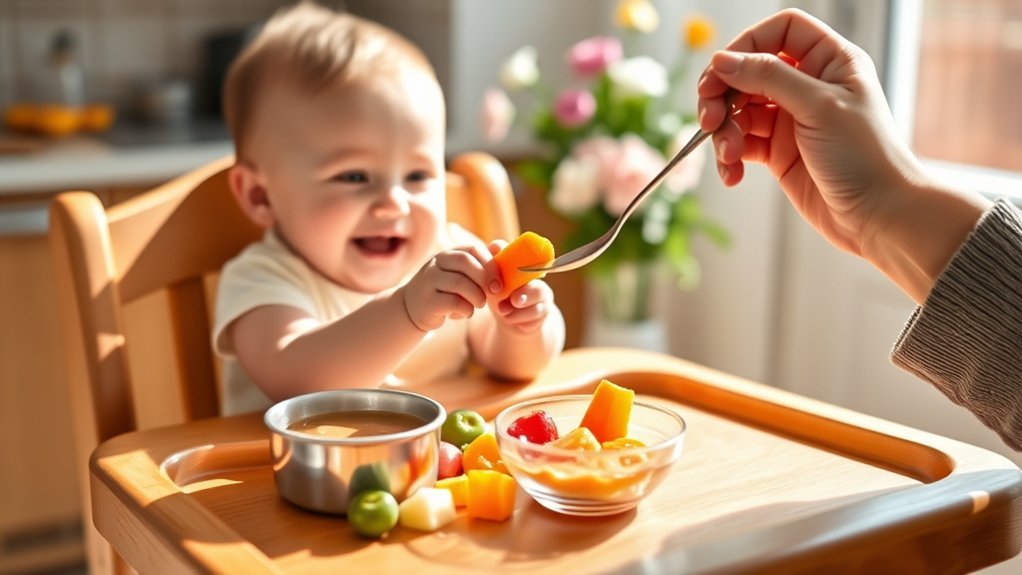
Baby food is any age-appropriate food prepared so an infant can eat it safely. It may include smooth purées, mashed family foods, soft finger foods, infant cereal, yogurt, eggs, beans, meat, fish, fruits, vegetables, grains, and healthy fats. The right ingredients and texture depend on the baby’s development, not simply the product’s stage number or packaging.
Quick Answer
Baby food is usually made from fruits, vegetables, grains, dairy foods, beans, eggs, meat, fish, or other proteins prepared in an infant-safe texture. Commercial products may also contain water, oils, spices, acidity regulators, thickeners, or added nutrients. A varied diet with iron-rich foods is more important than relying on one ingredient or brand.
Key Takeaways
- Baby food is not limited to jarred purées. It can include properly prepared versions of many nutritious family foods.
- Most babies can begin complementary foods at about six months when they show developmental readiness.
- Iron-rich foods, varied grains, vegetables, fruits, proteins, and healthy fats are more important than following a fixed order of first foods.
- Organic certification does not guarantee that food is free of pesticides or environmental metals.
- Both commercial and homemade baby food can be suitable when ingredients, texture, hygiene, storage, and recalls are handled carefully.
Note: This article provides general feeding and food-safety information, not individual medical advice. Ask your child’s pediatrician about premature birth, poor growth, swallowing problems, severe eczema, known food allergies, iron supplementation, or other special feeding needs.
What Is Baby Food Made Of?
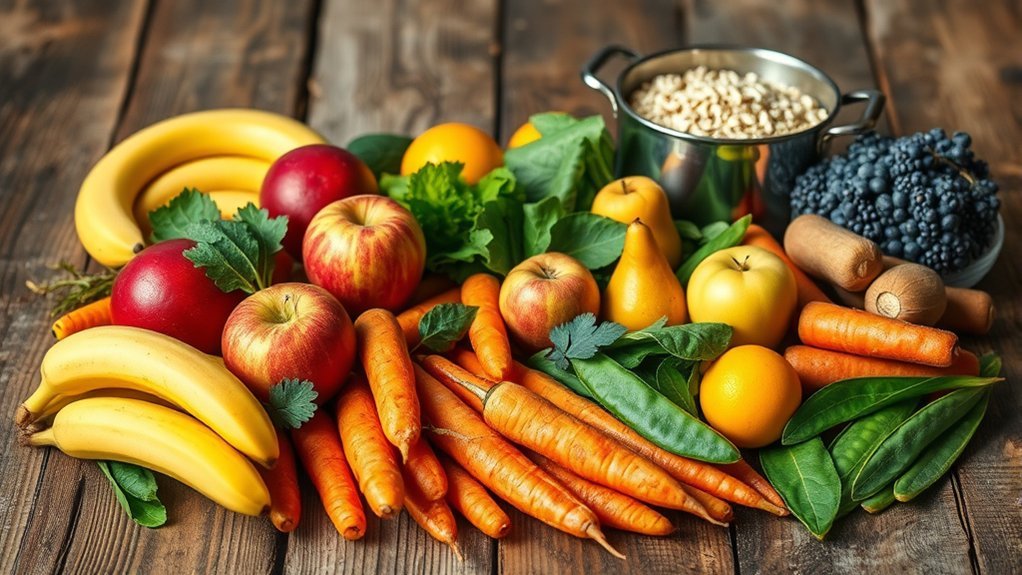
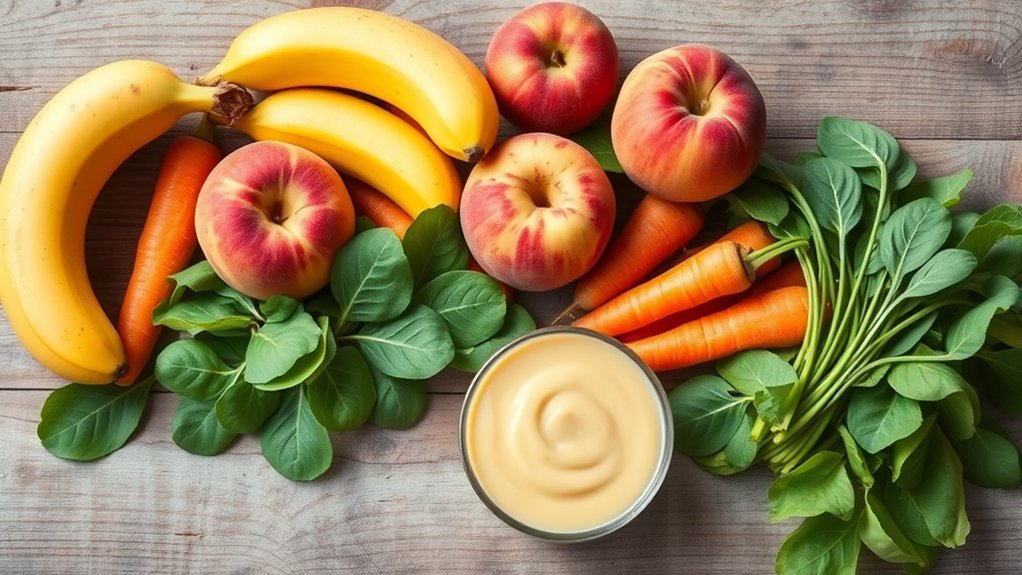
Baby food can be made from nearly any nutritious food that is prepared in a safe texture. There is no required first food and no single ingredient that every baby must eat. By seven or eight months, many babies can eat foods from several food groups, including vegetables, fruits, proteins, unsweetened dairy foods, and grains.
| Ingredient group | Examples | What it contributes |
|---|---|---|
| Vegetables | Sweet potato, peas, broccoli, squash, carrots | Vitamins, minerals, fiber, flavor variety |
| Fruits | Banana, pear, apple, berries, avocado | Vitamin C, fiber, energy, varied tastes |
| Grains | Oat, barley, wheat, multigrain or rice cereal | Energy, B vitamins, fiber and, when fortified, iron |
| Protein foods | Meat, poultry, fish, eggs, beans, lentils, tofu | Protein, iron, zinc and other nutrients |
| Dairy foods | Pasteurized plain yogurt and cheese | Protein, calcium, fat and allergen exposure |
| Healthy fats | Avocado, smooth nut butter, olive or canola oil | Energy and essential fatty acids |
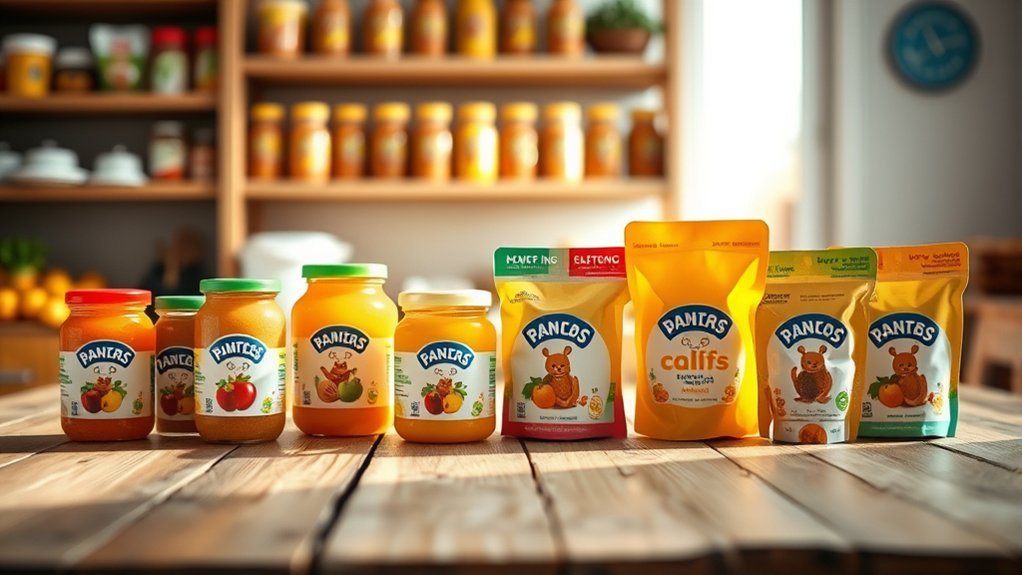
Commercial baby foods may contain one ingredient or a blend. Depending on the product, the label may also list water, oil, yogurt, grain flour, herbs, spices, lemon juice concentrate, citric acid, ascorbic acid, starch, or added vitamins and minerals. Vitamin D and iron are nutrients used for fortification; vitamin D is not a preservative.
Read the full ingredient list rather than relying only on the flavor shown on the front. A pouch labeled with a vegetable, for example, may contain more fruit than vegetables because ingredients are listed by weight.
When Is a Baby Ready for Solid Food?
The Centers for Disease Control and Prevention recommends introducing foods other than breast milk or infant formula at about six months. Starting before four months is not recommended.
Look for several readiness signs together. A baby who is ready generally:
- Sits alone or with support.
- Controls the head and neck.
- Opens the mouth when food is offered.
- Swallows food instead of automatically pushing it out.
- Brings objects to the mouth.
- Reaches for or grasps food and other small objects.
Continue breast milk or iron-fortified infant formula while adding complementary foods. Solid food starts in small amounts and gradually becomes a larger part of the child’s diet.
Which Nutrients Matter Most in Baby Food?
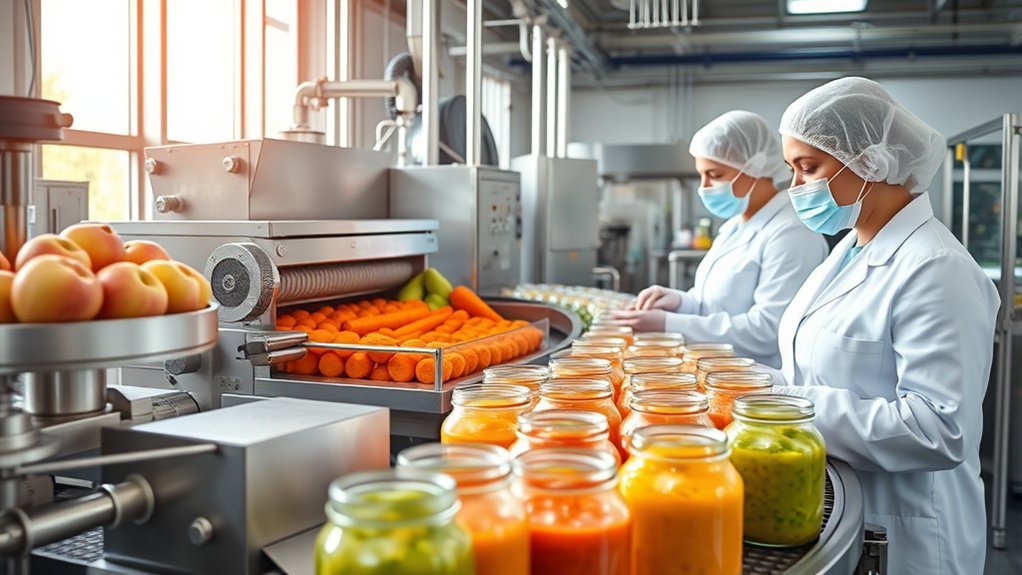
Infants need nutrient-dense foods because their stomachs are small. Fruit and vegetable purées can be useful, but they should not crowd out iron-rich foods, proteins, grains, and healthy fats.
Iron- and Zinc-Rich Foods
Iron supports blood production and brain development. Zinc supports growth and immune function. Useful options include:
- Purée, mash, or finely minced beef, lamb, pork, chicken, or turkey.
- Eggs cooked until the white and yolk are firm.
- Mashed beans, lentils, chickpeas, or tofu.
- Iron-fortified oat, barley, wheat, multigrain, or rice cereal.
- Low-mercury fish prepared without bones.
Pair plant-based iron sources with vitamin C-rich foods such as berries, broccoli, tomato, orange, or sweet potato to support iron absorption.
Healthy Fats and Dietary Variety
Babies need adequate dietary fat for energy and development. Avocado, plain full-fat yogurt, egg, fish, and small amounts of suitable plant oils can help. Smooth nut or seed butter may be mixed into purée, cereal, yogurt, breast milk, formula, or water until it is thin enough to swallow safely.
A varied diet supports nutrition and reduces the chance that a baby repeatedly receives the same environmental contaminant from the same food.
How Should Baby Food Texture Change?
Purées are one option, not a requirement for the entire first year. Start with a texture the baby can manage and make foods thicker and more varied as feeding skills improve.
| Developing skill | Suitable examples |
|---|---|
| Beginning solids | Smooth purées, mashed foods, soft cereal mixed to an easy-to-swallow consistency |
| Improving tongue and chewing movement | Thicker mash, soft lumps, finely minced meat, mashed beans |
| Developing grasp and self-feeding | Soft spears, shredded foods and small soft pieces prepared for the child’s ability |
Cook firm fruits and vegetables until they mash easily with a fork. Remove bones, pits, seeds, tough skins, and hard pieces. Cut round or cylindrical foods so they cannot seal the airway.
Warning: Always seat the baby upright and supervise every bite. Gagging may be noisy and is a protective reflex. Choking may be silent. If a child cannot breathe, cry, or cough, begin age-appropriate choking first aid and call 911 immediately.
How to Introduce Common Food Allergens
Potential allergens can be introduced when a baby begins other complementary foods. Common allergens include peanut, egg, dairy, wheat, sesame, soy, fish, shellfish, and tree nuts.
Offer each allergen in an infant-safe form and start with a small amount at home when the baby is healthy and can be observed. Examples include well-cooked egg, plain yogurt, smooth thinned peanut butter, finely ground nuts mixed into food, or fully cooked flaked fish with all bones removed.
At first, offering one new single-ingredient food at a time and waiting three to five days before another new food can make a reaction easier to identify. Once a food has been tolerated, continue including it as part of the baby’s normal varied diet.
Ask a pediatrician how to introduce peanut or other allergens if the baby has severe eczema, an existing food allergy, or a previous immediate reaction.
Warning: Stop feeding the food and seek urgent medical help for trouble breathing, repeated vomiting, widespread hives, facial or tongue swelling, unusual sleepiness, or collapse. Call 911 for severe symptoms.
Why Are Heavy Metals Monitored in Baby Food?
Arsenic, lead, cadmium, and mercury can occur in food because they are present in soil, water, air, or areas affected by pollution. Crops and animals can take up small amounts from their environment. This means trace levels may occur in homemade, conventional, and organic foods.
Babies are a priority for exposure reduction because of their small body size and developing nervous systems. The goal is not to eliminate nutritious foods. It is to reduce avoidable exposure while maintaining a varied, nutrient-rich diet.
| Contaminant | Why it is monitored | Practical consideration |
|---|---|---|
| Lead | Repeated exposure can harm a child’s developing nervous system. | FDA has category-specific action levels for processed foods intended for children under two. |
| Inorganic arsenic | Long-term exposure is associated with developmental and other health concerns. | Rice can contain more inorganic arsenic than some other grains, so rotate grain choices. |
| Cadmium | Long-term exposure may affect organs including the kidneys. | Levels vary by food and growing environment; dietary variety remains useful. |
| Mercury | Too much exposure can affect the brain and nervous system. | Choose lower-mercury fish and avoid high-mercury species. |
| Pesticide residues | Residues are monitored under separate pesticide-safety rules. | Pesticides are not heavy metals, and organic does not mean pesticide-free. |
Current FDA Lead Action Levels
In January 2025, the FDA finalized lead action-level guidance for processed foods marketed for babies and children younger than two:
- 10 parts per billion: Fruits, most vegetables, mixtures, yogurts, custards, puddings, and single-ingredient meats.
- 20 parts per billion: Single-ingredient root vegetables.
- 20 parts per billion: Dry infant cereals.
These levels help guide FDA enforcement decisions and industry controls. They are not a promise that products below the levels contain no lead, and the measurements are not normally printed on consumer labels.
How to Reduce Contaminant Exposure
The FDA recommends dietary variety rather than avoiding entire groups of nutritious food.
- Rotate vegetables, fruits, proteins, and grains instead of serving the same food every day.
- Offer oat, barley, wheat, and multigrain cereals as well as rice cereal.
- Do not use rice cereal as the only grain or assume it must be the first food.
- Include iron- and zinc-rich foods.
- Choose lower-mercury fish such as salmon, shrimp, pollock, or catfish.
- Follow FDA recalls and public health alerts.
- Avoid homemade remedies, imported spices, or powders that lack reliable labeling or quality controls.
Pro Tip: Keep a simple food log for a few weeks. It can help you rotate grains and produce, track tolerated allergens, and identify the likely cause of a reaction.
Does Organic Baby Food Have Fewer Heavy Metals?
Not necessarily. The USDA Organic label describes how agricultural products are produced and handled. It does not certify that a food is free of pesticide residue, arsenic, lead, cadmium, or mercury.
Organic food may fit a family’s preferences, but it should not replace basic safety checks or dietary variety. Compare products using the ingredient list, Nutrition Facts, sodium and added-sugar information, package condition, recall history, and any credible testing information the manufacturer publishes.
Note: “Organic arsenic” is a chemistry term describing arsenic compounds that contain carbon. It is unrelated to organic farming or the USDA Organic label.
How Commercial Baby Food Is Made
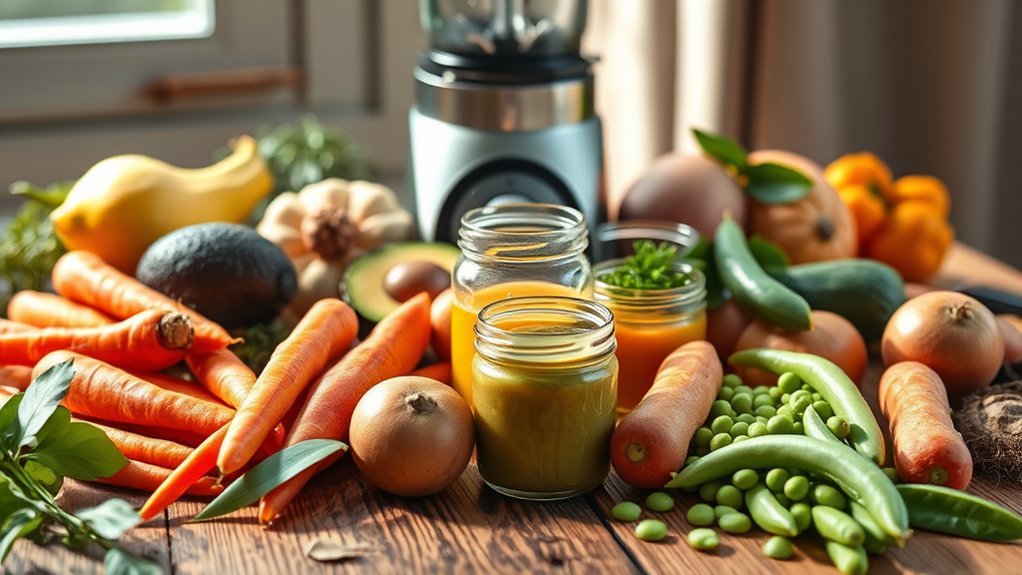
The exact process differs for purées, cereals, snacks, refrigerated foods, and shelf-stable pouches or jars. A typical process may include the following stages:
- Ingredient receiving and approval: Suppliers and raw materials are reviewed against the manufacturer’s specifications.
- Sorting and cleaning: Ingredients are inspected, washed, peeled, trimmed, deboned, or otherwise prepared.
- Cooking: Ingredients that require cooking are heated to soften them and control harmful microorganisms.
- Blending or milling: Food is puréed, mashed, ground, or mixed to produce the intended consistency.
- Filling and sealing: The product is placed into jars, tubs, cans, boxes, or pouches under controlled conditions.
- Heat treatment or another validated control: Shelf-stable products receive processing designed for the product and package.
- Verification: Manufacturers may use process checks, finished-product testing, environmental monitoring, supplier verification, and traceability records as appropriate.
Food facilities covered by federal requirements must follow applicable FDA current good manufacturing practice and preventive-control rules. Organic certification is a separate program and does not replace food-safety controls.
How to Choose Commercial Baby Food
- Check the ingredient list: Look for foods that match the flavor and nutritional role you intend to offer.
- Prioritize nutrient density: Include products with iron-rich foods, protein, vegetables, healthy fats, or fortified grains rather than relying mainly on fruit purées.
- Avoid added sugars: Infants and young children do not need foods sweetened with added sugar.
- Compare sodium: Choose lower-sodium products, especially when buying mixed meals or toddler snacks.
- Check allergens: Review the ingredient list and allergen statement every time, because formulations can change.
- Inspect the package: Do not use leaking, swollen, punctured, cracked, unsealed, or badly dented packages.
- Check dates and recalls: Follow storage directions and review FDA recall notices when a product is affected.
- Serve from a clean dish: Do not save food from a bowl or container after a used spoon has repeatedly contacted it.
Foods and Drinks to Avoid or Limit
The CDC identifies several foods and drinks that are unsafe or unsuitable for infants.
- Honey before 12 months: Honey can cause infant botulism, even when mixed into another food or baked into a homemade baby recipe.
- Unpasteurized food or drink: Avoid raw milk, unpasteurized juice, and foods made from unpasteurized milk.
- Added sugars: Choose foods without added sugar.
- High-sodium foods: Limit processed meats, salty snacks, and heavily salted prepared foods.
- High-mercury fish: Avoid shark, swordfish, king mackerel, marlin, orange roughy, Gulf of Mexico tilefish, and bigeye tuna.
- Cow’s milk as a drink before 12 months: Breast milk or infant formula should remain the main milk drink during the first year. Pasteurized yogurt and cheese may be introduced earlier in suitable forms.
- Juice before 12 months: Whole fruit is the better choice.
- Whole nuts and thick spoonfuls of nut butter: These are choking hazards.
- Hard, round, sticky, or tough foods: Examples include popcorn, hard candy, whole grapes, raw carrot coins, sausage rounds, and large chunks of meat or cheese.
Is Homemade Baby Food Better?
Homemade baby food can be economical and gives parents control over ingredients, seasoning, flavor, and texture. It also makes it easy to adapt nutritious family foods for a baby.
However, homemade food is not automatically safer, more nutritious, or lower in heavy metals. Its safety depends on ingredient selection, handwashing, clean equipment, adequate cooking, rapid cooling, safe storage, and age-appropriate preparation.
| Factor | Commercial baby food | Homemade baby food |
|---|---|---|
| Convenience | Ready to serve or requires little preparation | Requires planning, preparation and cleanup |
| Ingredient control | Ingredients and allergens are listed on the package | Parent controls ingredients, seasoning and texture |
| Food-safety controls | Produced under applicable commercial controls | Depends on home hygiene, cooking, cooling and storage |
| Contaminants | May contain unavoidable environmental contaminants | May contain the same contaminants through raw ingredients |
| Cost | Often costs more per serving | Can cost less when adapted from family meals |
Safe Homemade Baby Food Preparation
- Wash your hands with soap and water before handling food.
- Clean countertops, cutting boards, knives, blenders, storage containers, and feeding utensils.
- Wash produce under running water. Do not wash raw meat or poultry because splashing can spread germs.
- Cook meat, poultry, fish, and eggs to safe temperatures.
- Remove bones, pits, seeds, tough skins, and other choking hazards.
- Purée, mash, mince, shred, or cut the food to match the baby’s feeding skills.
- Cool prepared food promptly and place it in small, clean containers.
- Label containers with the food and preparation date.
- Thaw frozen food in the refrigerator, under cold running water, or in the microwave immediately before reheating.
- Stir heated food thoroughly and test the temperature before serving.
Do not add honey for a child younger than 12 months. Avoid adding sugar, salt, bouillon, salty sauces, or unpasteurized ingredients.
How Long Does Homemade Baby Food Last?
According to FoodSafety.gov storage guidance, homemade baby food should generally be kept for:
- Refrigerator at 40°F or below: One to two days.
- Freezer at 0°F or below: One to two months for best quality.
Discard perishable baby food that has remained at room temperature for more than two hours, or more than one hour when the temperature is above 90°F. Do not refreeze food that was thawed on the counter.
Store-bought food may have different instructions before and after opening. Follow the package directions and use the shorter storage period when the label is more restrictive.
Frequently Asked Questions
Can babies eat regular food instead of packaged baby food?
Yes. Many family foods can be suitable when they contain no unsafe ingredients and are cooked and prepared in a texture the baby can manage. Remove bones, pits, tough skins, excess salt, and choking hazards. Breast milk or infant formula should continue while complementary foods are introduced.
Does baby food have to be puréed?
No. Smooth purées are one starting option. Depending on the baby’s development, parents may also offer mashed foods, soft lumps, shredded foods, minced foods, or soft finger foods. Texture should progress as the baby’s eating skills improve.
How long can homemade baby food be stored?
Store homemade baby food in a refrigerator at 40°F or below for one to two days. For longer storage, freeze it at 0°F or below and use it within one to two months for best quality. Discard food left at room temperature for more than two hours.
Are common baby-food ingredients allergens?
Some are. Egg, milk, peanut, tree nuts, wheat, soy, sesame, fish, and shellfish are common allergens. Introduce them in infant-safe forms and watch for symptoms. Ask a pediatrician for individualized guidance if the baby has severe eczema, a known allergy, or a previous immediate reaction.
What age should I introduce baby food?
Most babies can begin complementary foods at about six months when they can control their head and neck, sit alone or with support, bring objects to their mouth, and swallow food. Introducing solids before four months is not recommended.
How do I know whether packaged baby food is safe?
Check the ingredient and allergen labels, package condition, date, storage directions, and current recall notices. Do not use a jar with a raised lid, a pouch that is swollen or leaking, or any container with a broken seal. Heavy-metal test results are not normally listed on standard food labels.
Is organic baby food safer?
Organic certification verifies specified agricultural and handling practices. It does not guarantee that food is free of pesticide residue or environmental metals. Organic and conventional foods can both fit a baby’s diet; ingredient quality, dietary variety, safe preparation, and proper storage still matter.
Conclusion
Baby food can be made from fruits, vegetables, grains, proteins, dairy foods, and healthy fats prepared for an infant’s feeding skills. The best approach is not to depend on one purée, grain, product stage, or organic claim. Offer varied, iron-rich foods; progress textures safely; introduce allergens in suitable forms; avoid unsafe foods; and follow careful preparation and storage practices. Commercial and homemade foods can both be practical parts of a balanced infant diet.
Sources
- CDC: When, What, and How to Introduce Solid Foods — readiness signs, food groups, allergens, textures, and choking prevention.
- CDC: Foods and Drinks to Avoid or Limit — honey, added sugar, sodium, unpasteurized foods, mercury, milk, and juice guidance.
- FDA: Healthy Food Choices and Environmental Contaminants — dietary variety, grains, iron, zinc, and contaminant-exposure reduction.
- FDA: Lead Action Levels for Processed Baby Foods — January 2025 action levels and regulatory context.
- FDA: Current Good Manufacturing Practices for Food — food-facility manufacturing and preventive-control requirements.
- FoodSafety.gov: Food Safety for Children Under Five — preparation, heating, refrigeration, and freezer-storage guidance.