Teething can leave your baby eager to chew, but the safest snack depends on more than whether it feels cool on sore gums. Your baby must first be developmentally ready for solid food, and every snack must be soft, properly shaped, and served while your baby sits upright under close supervision. This article provides general feeding information and does not replace advice from your pediatrician, pediatric dentist, or feeding specialist.
Quick Answer
Good teething snacks include cool, soft foods such as ripe banana, avocado, plain yogurt, and cooked apple or pear that has been chilled. Only offer food after your baby is ready for solids, usually around 6 months. Avoid raw apple pieces, hard frozen foods, thick nut butter, hard biscuits, added sugar, and unsupervised eating.
Key Takeaways
- Teething alone does not mean a baby is ready for solid food. Look for developmental readiness, usually around 6 months.
- Choose foods that are cool and soft enough to mash easily between your fingers. Do not serve raw apple pieces or rock-hard frozen foods.
- Seat your baby upright and watch continuously during every meal or snack.
- Thin smooth peanut butter before offering it, and ask your pediatrician first if your baby has severe eczema, egg allergy, or a previous food reaction.
- Brush erupted teeth twice daily with a rice-grain-sized smear of fluoride toothpaste and schedule a dental visit by the first birthday.
At a Glance
| Time Required | About 5–15 minutes to prepare a safe snack |
| Difficulty | Easy, but texture and shape must match your baby’s feeding skills |
| Tools Needed | Clean knife, fork or masher, spoon, cutting board, and an upright high chair |
| Cost | Usually low; many suitable foods are ordinary fruits, vegetables, yogurt, and oats |
Before Offering Teething Snacks: Check Readiness
Some babies begin drooling and chewing months before they can safely manage solid food. Do not start snacks simply because teething has begun. According to the Centers for Disease Control and Prevention, babies are generally ready for complementary foods around 6 months, although development matters more than a single date.
Your baby should be able to:
- Sit upright alone or with support.
- Control their head and neck.
- Open their mouth when food is offered.
- Swallow food instead of pushing it back out with the tongue.
- Bring objects to the mouth and reach for food.
Note: Breast milk or infant formula remains the main source of nutrition during early complementary feeding. Teething snacks should not replace normal milk feeds.
Immediate Snack Solutions for Teething Discomfort
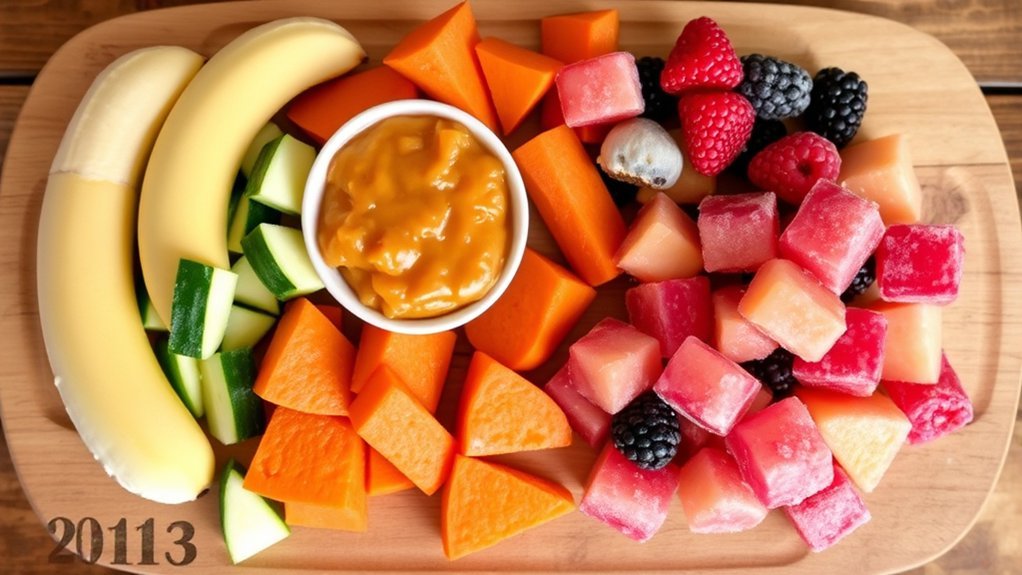
Cool food may feel pleasant on tender gums, but cool does not mean frozen solid. Food should remain soft enough to mash easily between your thumb and forefinger. Avoid loose ice, rock-hard food, and any piece that could break into a firm chunk.
| Food | Safer Preparation | Why It May Help |
|---|---|---|
| Ripe banana | Mash with a fork or offer a large, very soft piece your baby can grasp | Soft texture requires little chewing and can be served cool |
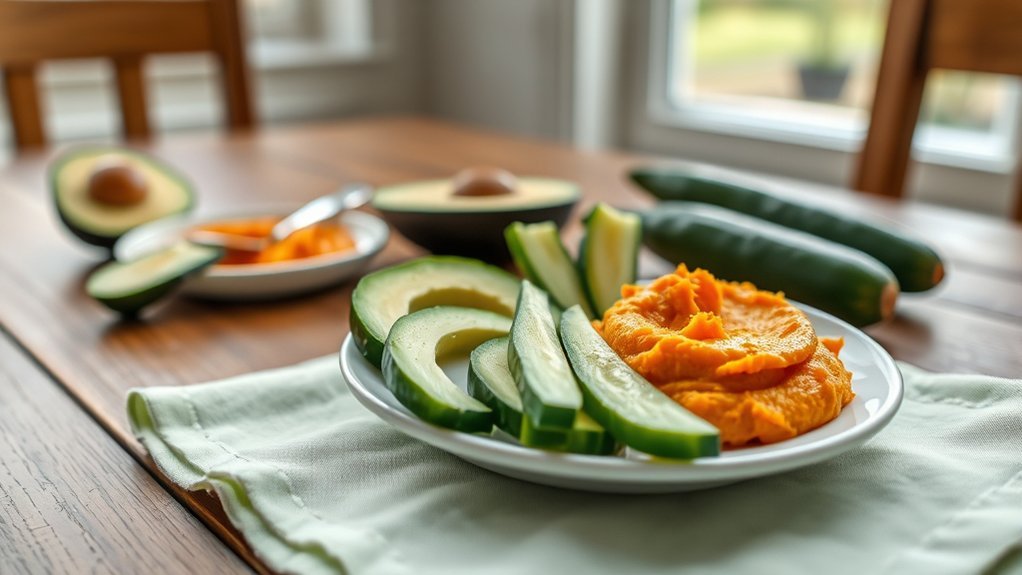
| Avocado | Mash or serve a ripe, soft slice sized for your baby’s feeding stage | Creamy texture is gentle on sensitive gums |
| Apple or pear | Cook until easily pierced and mashed, then cool or chill before serving | Provides fruit flavor without the choking risk of hard raw pieces |
| Plain whole-milk yogurt | Serve cold by spoon without added sugar | Cool, smooth, and easy to swallow for babies already tolerating dairy |
| Soft cooked vegetables | Steam zucchini, sweet potato, broccoli, or carrot until mashably soft; cool before serving | Introduces savory flavors and varied textures |
| Unsweetened fruit purée | Chill and offer by spoon | Smooth texture is suitable for babies beginning solids |
Warning: Raw apple pieces, hard raw carrots, cucumber rounds, spoonfuls of nut butter, popcorn, nuts, hard candy, and many hard crackers can block a young child’s airway. Always prepare food for your baby’s current chewing and swallowing ability.
Essential Qualities of Tooth-Friendly Teething Foods
A suitable teething snack should be safe to swallow, low in added sugar, and appropriate for your baby’s developmental stage. The temperature is less important than the food’s shape and softness.
Look for these qualities:
- Soft enough to mash: You should be able to squash the food easily between your fingers or with a fork.
- Prepared in a safe shape: Avoid round coins, small hard chunks, and pieces that can plug the airway.
- Low in added sugar: Plain yogurt, vegetables, whole fruit, and unsweetened purées are better choices than cookies, sweetened cereal, or fruit snacks.
- Not sticky or glue-like: Thick nut butter and gummy foods can be difficult to clear from the mouth.
- Easy to hold without breaking into hard pieces: Self-feeding can support skill development, but independence never replaces supervision.
- Pasteurized and safely prepared: Wash produce and avoid unpasteurized milk, yogurt, cheese, or juice.
The safest teething snack is not simply cold—it is soft, correctly shaped, developmentally appropriate, and served while an adult watches.
Top Teething Snacks for Soothing Discomfort

Soft, Ripe Fruits
Ripe banana, avocado, peach, mango, and pear can be served mashed or in a soft shape suited to your baby’s feeding method. Refrigerating the fruit before serving can provide a cool sensation without making it dangerously hard.
Cooked and Cooled Apple or Vegetables
Raw apple is too hard for many babies and appears on the CDC’s list of potential choking hazards. Instead, steam or bake apple, pear, carrot, zucchini, or sweet potato until the food can be mashed easily. Let it cool before serving.
Plain Yogurt
Unsweetened, pasteurized whole-milk yogurt offers a smooth texture and can be served directly from the refrigerator. Yogurt is a complementary food; it does not replace breast milk or infant formula as the main drink before 12 months.
Soft Oatmeal
Cook oats until smooth and soft, then cool them to a comfortable temperature. Oatmeal can be mixed with mashed banana, cooked apple purée, or a safely thinned allergen that your baby already tolerates.
Commercial Teething Wafers
Some wafers soften quickly in the mouth, but they are not choke-proof. Check the age guidance, ingredient list, and texture. Avoid products containing hard seeds, nut pieces, whole kernels, honey for babies younger than 12 months, or large amounts of added sugar. Discard any piece that becomes hard, sharp, or difficult to manage.
Breast Milk or Formula
Breast milk or properly prepared infant formula remains appropriate during teething. Offer it at its usual safe temperature. Do not give a baby a loose, rock-hard frozen cube or pop. If you use an age-rated feeding device, follow its instructions, inspect it before every use, and supervise continuously.
Pro Tip: Prepare a small portion before chilling it. Test the texture again after refrigeration because some foods become firmer when cold.
Simple Recipes for Homemade Teething Snacks
Homemade snacks let you control the texture and avoid unnecessary sugar. Skip hard, crunchy homemade biscuits for young babies. A biscuit that feels easy for an adult to bite can still break into a piece a baby cannot manage.
Soft Banana-Oat Fingers
- 1 very ripe banana
- 1/2 cup quick oats
- 1 to 2 tablespoons water, breast milk, or prepared infant formula
- Heat the oven to 350°F.
- Mash the banana until smooth.
- Stir in the oats and enough liquid to make a thick, moist mixture.
- Spread the mixture about 1/2 inch thick on a parchment-lined baking sheet.
- Bake for 12–15 minutes, until set but still soft rather than crisp.
- Cool completely and cut into a size and shape suited to your baby’s feeding skills.
- Test each piece between your fingers before serving. It should squash easily.
Chilled Apple-Yogurt Mash
- 2 tablespoons cooked, unsweetened apple purée
- 2 tablespoons plain, pasteurized whole-milk yogurt
- A small pinch of cinnamon, optional
- Mix the apple purée and yogurt until smooth.
- Add cinnamon only if your baby has already tolerated it.
- Chill briefly and serve by spoon.
- Discard leftovers that have contacted your baby’s mouth.
Safely Thinned Peanut-Banana Purée
- 1 teaspoon smooth peanut butter
- 2 teaspoons warm water, breast milk, or prepared infant formula
- 2 tablespoons mashed banana
- Mix the peanut butter and liquid until smooth and runny, with no sticky clumps.
- Stir the mixture into the mashed banana.
- Offer a small amount by spoon while your baby is healthy and you can observe them.
Warning: Ask your pediatrician before introducing peanut if your baby has severe eczema, egg allergy, or a previous immediate food reaction. Never give a spoonful or thick glob of peanut butter, and do not give honey or foods made with honey before 12 months.
How to Introduce Allergens Safely During Teething
Teething and allergen introduction may happen during the same stage, but they are separate issues. Once your baby is ready for solids, potentially allergenic foods such as peanut, cooked egg, dairy, wheat, sesame, soy, fish, and shellfish can be introduced in age-appropriate textures. Delaying these foods without a medical reason does not prevent food allergy.
The American Academy of Pediatrics’ HealthyChildren.org guidance recommends thinning peanut butter into cereal, purée, yogurt, breast milk, or formula rather than offering it in a sticky spoonful.
For a first introduction:
- Choose a time when your baby is healthy.
- Offer one new allergen in a familiar, safe texture.
- Begin with a small taste.
- Watch for a reaction before increasing the amount.
- Continue serving tolerated allergens regularly in developmentally appropriate forms.
Possible allergy symptoms include widespread hives, facial or lip swelling, repeated vomiting, coughing, wheezing, difficulty swallowing, unusual sleepiness, or trouble breathing.
Emergency Warning: Call 911 for trouble breathing, wheezing, sudden throat or tongue swelling, blue or pale coloring, faintness, or a rapidly worsening reaction involving more than one body system. Follow your child’s prescribed allergy action plan and use epinephrine immediately when directed.
Top Snack Mistakes to Avoid for Teething Babies
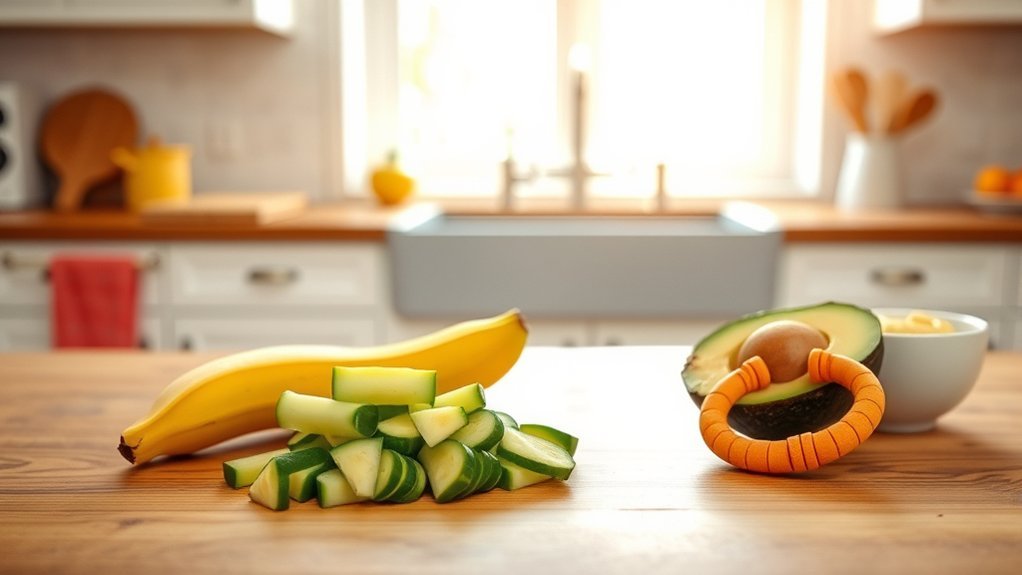
A snack can be nutritious and still be unsafe if its shape or texture does not match your baby’s skills. Avoid these common mistakes:
- Offering raw apple, raw carrot, or hard cucumber pieces: Cook hard produce until soft. Avoid round cucumber coins and rings that may fit over or block the airway.
- Freezing food until rock-hard: Cool food can feel soothing, but a frozen-solid piece may hurt gums or break into a hard chunk.
- Assuming biscuits and wafers cannot cause choking: Watch how each product softens and remove pieces your baby cannot manage.
- Serving spoonfuls of peanut or seed butter: Thin smooth nut or seed butter before offering it.
- Using hard crackers, chips, pretzels, or breadsticks for gum massage: These may break into hard pieces or form a sticky mass.
- Giving sticky or sugary snacks: Gummy candy, chewy fruit snacks, sweetened cereal, cookies, and frequent sugary snacks increase exposure to sugars and may stick to teeth.
- Offering juice or sweetened drinks: Babies younger than 12 months should not drink juice, and sweetened drinks are unnecessary.
- Using honey in a biscuit or purée: Honey can cause infant botulism and must not be given before 12 months.
- Allowing eating while reclining or moving: Do not let a baby eat while lying down, crawling, walking, riding in a stroller, or sitting in a moving car.
- Leaving the baby alone with food: Self-feeding always requires an alert adult within reach.
For more detailed food-shape and preparation guidance, see the CDC’s infant and toddler choking-hazard guidance.
Non-Food Teething Relief and Products to Avoid
Food is not the only way to comfort sore gums. You can gently massage your baby’s gums with a clean finger or offer a firm, age-appropriate rubber teether that has been chilled according to its instructions.
The U.S. Food and Drug Administration warns against several teething products because they can cause serious harm:
- Benzocaine numbing gels or liquids
- Viscous lidocaine products
- Homeopathic teething tablets or gels
- Amber, silicone, marble, or wooden teething necklaces
- Liquid-filled teethers that can leak or break
- Frozen-hard teethers that may injure gums
Do not rub alcohol, aspirin, or other unapproved medicines on a baby’s gums. Ask your pediatrician before giving any pain medicine so the product and dose are appropriate for your baby’s age and weight.
How to Keep Your Baby’s Teeth Healthy During Teething
Before teeth appear, wipe your baby’s gums gently with a clean, damp cloth. Once the first tooth erupts, brush twice daily with a soft, age-appropriate toothbrush.
Use a smear of fluoride toothpaste about the size of a grain of rice. The American Dental Association recommends this amount from the first tooth until age 3. A pea-sized amount is used from ages 3–6, with adult supervision.
Other habits that support healthy baby teeth include:
- Limiting foods and drinks with added sugar.
- Offering water with meals once water is appropriate for your baby’s age and feeding plan.
- Avoiding bottles in bed and prolonged exposure of teeth to milk or other carbohydrate-containing drinks.
- Cleaning teeth before bedtime.
- Scheduling the first dental visit within six months of the first tooth or no later than the first birthday.
The American Academy of Pediatric Dentistry also advises caregivers to brush newly erupted teeth twice daily with a tiny smear of fluoride toothpaste.
When to Consult a Healthcare Provider About Teething Issues
Drooling, a desire to chew, tender gums, and mild fussiness can occur with teething. Fever, diarrhea, repeated vomiting, a spreading rash, marked lethargy, or severe crying should not automatically be blamed on a new tooth.
Contact your pediatrician or another healthcare provider if:
- Your baby has a fever, diarrhea, vomiting, or other signs of illness.
- Pain or fussiness is severe, persistent, or very different from your baby’s normal behavior.
- Your baby refuses several feeds or shows signs of dehydration.
- Swelling, bleeding, pus, a mouth injury, or an unusual gum lesion is present.
- You are unsure whether a food texture is safe for your baby.
- Your baby coughs, gags repeatedly, pockets food, or struggles to move food safely in the mouth.
Teething does not cause fever or diarrhea, according to the American Academy of Pediatrics. Seeking care instead of assuming these symptoms are caused by teething can prevent a delay in diagnosing an infection or another illness.
Frequently Asked Questions
How can I tell if my baby is teething?
Common signs include drooling, chewing on hands or safe objects, tender or swollen gums, and mild fussiness. Fever, diarrhea, repeated vomiting, and significant illness are not normal teething symptoms and should be discussed with your pediatrician.
What age do babies typically start teething?
Many babies get their first tooth between about 4 and 7 months, but earlier or later eruption can be normal. Teething signs may appear before a tooth is visible. A baby still needs to show developmental readiness before being offered solid food.
Can I give my baby cold foods for teething relief?
Yes, if your baby is ready for solids and the food is prepared safely. Try chilled yogurt, ripe fruit, cooked apple, or cooked vegetables. The food should remain soft enough to mash easily. Do not offer loose ice or rock-hard frozen pieces.
Are raw cucumber or apple safe for a teething baby?
Hard raw apple pieces are a choking hazard. Raw cucumber may also be too firm and can form unsafe rounds or rings. Cook hard fruits and vegetables until soft, or choose ripe produce that can be mashed easily. Preparation should match your baby’s feeding skills.
Are teething biscuits and wafers choke-proof?
No. Even products that dissolve can break into pieces, become sticky, or soften unevenly. Check the package’s age guidance and ingredients, seat your baby upright, supervise continuously, and remove any piece your baby cannot manage.
How should I introduce peanut butter?
Use smooth peanut butter and thin it with water, breast milk, prepared formula, yogurt, cereal, or fruit purée until it is no longer sticky. Never offer a spoonful or thick glob. Ask your pediatrician first if your baby has severe eczema, egg allergy, or a previous food reaction.
What are signs of a food allergy in a baby?
Symptoms may include widespread hives, swelling of the lips or face, repeated vomiting, coughing, wheezing, trouble swallowing, or difficulty breathing. Call 911 for breathing difficulty, sudden throat or tongue swelling, faintness, blue coloring, or a rapidly worsening reaction.
How often should I clean my baby’s gums and teeth?
Wipe toothless gums gently with a clean damp cloth each day. Once the first tooth appears, brush twice daily with a soft toothbrush and a rice-grain-sized smear of fluoride toothpaste. Arrange the first dental visit within six months of that first tooth or by age 1.
Conclusion
Teething snacks can offer a cool texture and a chance to practice feeding skills, but safety comes first. Wait until your baby is ready for solids, cook hard produce until soft, avoid frozen-solid and sticky foods, and supervise every bite while your baby sits upright. Pair these habits with twice-daily brushing and professional guidance when symptoms seem more serious than ordinary teething discomfort.
Sources
- Centers for Disease Control and Prevention: Choking Hazards — choking prevention, safe positioning, and foods that require special preparation
- Centers for Disease Control and Prevention: Introducing Solid Foods — developmental readiness and preparation of hard produce
- American Academy of Pediatrics: Teething Pain Relief — normal teething signs, illness symptoms, and safer comfort measures
- U.S. Food and Drug Administration: Safely Soothing Teething Pain — warnings about benzocaine, lidocaine, frozen teethers, and teething jewelry
- American Dental Association: Toothpastes — fluoride toothpaste amounts for children
- American Academy of Pediatric Dentistry: Parent FAQ — infant brushing and first-dental-visit recommendations