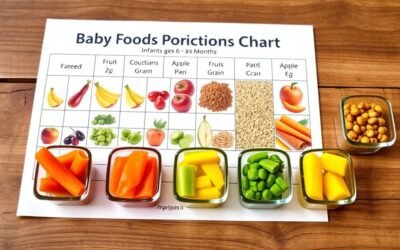
Infant rice cereal can be part of a baby’s diet, but it should not be the first, only, or most frequently repeated grain. Rice tends to absorb more arsenic from soil and water than other cereal crops, so serving a variety of iron-fortified cereals and other nutrient-rich foods is a practical way to reduce repeated exposure while supporting healthy growth.
Quick Answer
Infant rice cereal is not automatically unsafe, but it should not be your baby’s only grain. Choose a variety of iron-fortified oat, barley, wheat, and multigrain cereals, follow the package directions, and introduce solids when your baby is developmentally ready at about 6 months.
Key Takeaways
- Rice and rice-based foods generally contain more inorganic arsenic than many other grains because rice takes it up readily from soil and water.
- The FDA finalized a 100-parts-per-billion action level for inorganic arsenic in infant rice cereal in August 2020.
- Rice cereal does not have to be avoided completely, but it should not be the first, only, or dominant cereal in your baby’s diet.
- Iron-fortified oat, barley, wheat, and multigrain infant cereals are useful alternatives. Meat, beans, eggs, and other age-appropriate foods can also provide iron and zinc.
- There is no official universal rule that rice cereal is safe only once or twice a week. The main recommendation is to provide variety.
- The excess-water cooking method can reduce arsenic in whole rice, but it does not apply to packaged infant cereal and may remove added nutrients from enriched rice.
Understanding Arsenic Levels in Infant Rice Cereal
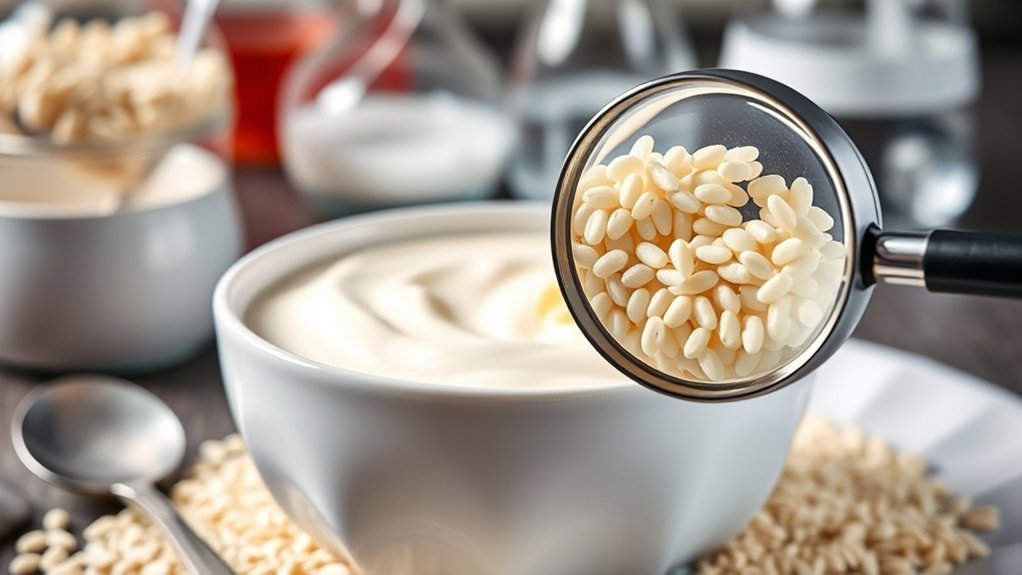
Arsenic is an element found naturally in rock, soil, and water. Human activities can also add arsenic to the environment. Crops may take it up as they grow, which means completely eliminating arsenic from food is not always possible.
Arsenic occurs in several chemical forms. Inorganic arsenic is generally considered more toxic than most organic arsenic compounds and is the form addressed by the FDA’s infant-rice-cereal guidance.
Rice tends to contain more inorganic arsenic than many other cereal grains. The plant takes up arsenic efficiently, and rice is commonly grown in flooded fields, where arsenic in the soil can become more available to the plant. Levels still vary by growing area, rice variety, processing method, product, and production lot.
Infants deserve extra protection because they consume more food relative to their body weight than adults, their diets may contain the same few foods repeatedly, and their brains and bodies are still developing. This does not mean that one serving of rice cereal will harm a baby. It means reducing avoidable, repeated exposure is sensible.
The FDA’s 100-ppb action level applies to inorganic arsenic in infant rice cereal. It is an enforcement guideline, not a promise that products below that level contain no arsenic or carry zero risk.

Power your essentials anywhere with a 999Wh pure sine wave power station delivering up to 1000W continuous with 2000W surge. It supports fast charging via USB-C PD 60W and USB-A QC 18W, plus simultaneous output for multiple devices through AC, USB, wireless, and car/DC ports. Recharge using AC, car, or solar with a built-in MPPT controller and dual cooling fans, while the upgraded battery management system protects against surges, short circuits, and overheating.
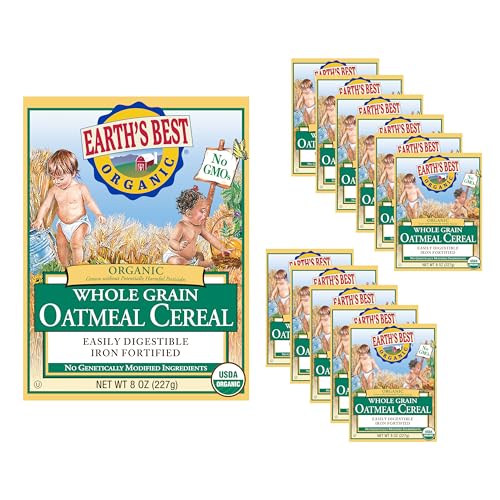
4+ MONTHS FIRST FOODS: Easily digestible infant cereal for babies transitioning from formula or breast milk to solid foods

INFANT NUTRITION: This organic whole grain cereal is fortified with iron to offer nutritional support as your baby transitions to eating solid foods
Where the “Six Times Higher” Statistic Came From
The often-repeated claim that infant rice cereal contains six times more arsenic than other infant cereals came from a 2017 market test by Healthy Babies Bright Futures. The same report found that the non-rice and multigrain cereals it tested contained 84% less arsenic on average than the rice cereals in that particular sample.
Those results help explain why grain variety is recommended, but they should not be treated as permanent values for every brand or product sold today. Formulas, rice sources, manufacturing practices, and individual lots can change. Current advice from the FDA, CDC, and American Academy of Pediatrics focuses on offering varied grains rather than relying on one historical percentage.
Does Organic Rice Cereal Contain Less Arsenic?
Organic certification does not guarantee lower arsenic. Arsenic may be present naturally in soil and water, so organic growing practices cannot remove it completely. Organic and conventionally grown rice cereals are both covered by the FDA’s infant-rice-cereal guidance.
Is Brown Rice Cereal Safer Than White Rice Cereal?
Not necessarily. Brown rice retains its bran layer, which provides fiber and nutrients but can also hold more arsenic. FDA testing has found higher average inorganic arsenic concentrations in brown-rice infant cereal than in white-rice infant cereal.
Some white basmati and sushi rice varieties have tested lower on average than brown rice, but a variety name or country of origin is not a guarantee. The most useful strategy is to rotate grains rather than trying to identify one supposedly arsenic-free type of rice.
Health Risks Associated With Arsenic Exposure in Infants
Inorganic arsenic is a health concern because long-term exposure has been associated with neurological, cardiovascular, metabolic, skin, and cancer risks. FDA risk assessments also identify early development as a period of concern.
However, risk is not the same as a diagnosis. Research about population exposure cannot tell parents that a particular serving of cereal will cause developmental delay, lower intelligence, or chronic illness in an individual child. The goal is to lower preventable exposure while preserving a nutritious and varied diet.
| Issue | What the Evidence Means | Practical Response |
|---|---|---|
| Neurodevelopment | Early-life inorganic arsenic exposure may contribute to neurodevelopmental risk. This is not proof that normal use of one cereal will cause impairment. | Avoid making rice cereal the only grain and provide a varied diet. |
| Exposure per body weight | Infants consume more food relative to their size and may repeatedly eat a narrow range of foods. | Rotate cereals and other first foods instead of serving the same rice product every day. |
| Long-term health | Lifetime exposure to inorganic arsenic is associated with several chronic health concerns. | Reduce avoidable exposure without eliminating nutritious food groups unnecessarily. |
| Prenatal evidence | Some arsenic research concerns exposure during pregnancy. It does not mean feeding rice cereal causes complications in a parent’s future pregnancies. | Keep prenatal and infant-feeding evidence in their proper contexts. |
| Acute poisoning | Acute arsenic poisoning is different from low-dose dietary exposure and is not expected from an ordinary serving of compliant infant cereal. | Seek urgent medical help for a suspected poisoning, known contaminated product, or severe symptoms. |
Warning: This article provides general feeding information, not individual medical advice. Contact your pediatrician before changing the feeding plan for a premature infant or a child with swallowing problems, poor growth, severe reflux, food allergies, anemia, kidney disease, or another medical condition. Call emergency services for severe illness or suspected poisoning.
Best Alternatives to Rice Cereal for Infants
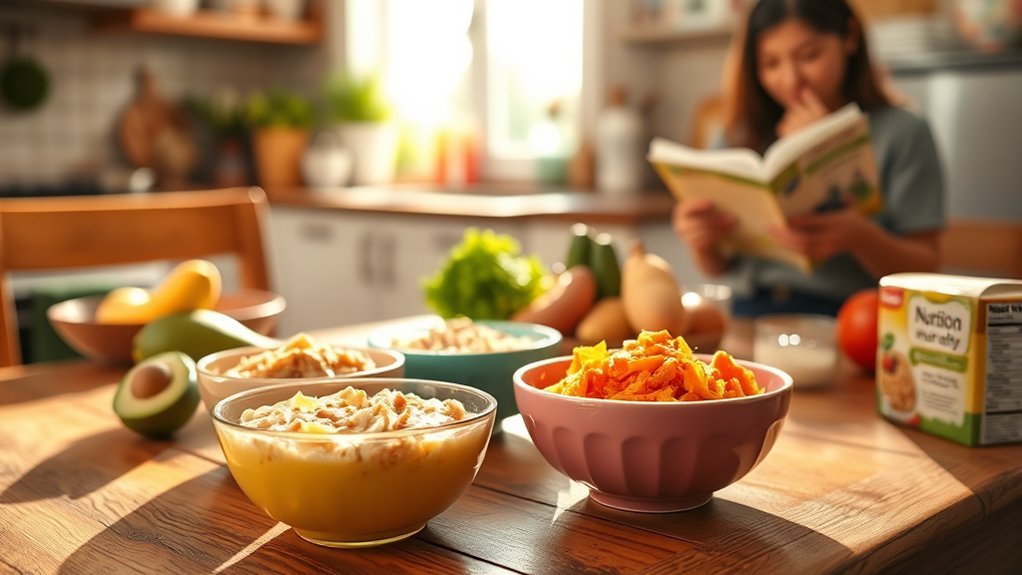
Parents do not need to replace rice cereal with one single “perfect” grain. The best approach is to offer several age-appropriate foods and choose iron-rich options regularly.
Iron-Fortified Oat Infant Cereal
Oat cereal is a common alternative because it generally has less arsenic than rice cereal and is available in an iron-fortified infant form. Check the label rather than assuming ordinary household oatmeal provides the same iron content or texture.
Barley, Wheat, and Multigrain Infant Cereals
Iron-fortified barley, wheat, and multigrain infant cereals can broaden your baby’s grain intake. Barley and wheat contain gluten. Most babies can be introduced to gluten-containing foods with other complementary foods, but families should follow their pediatrician’s advice when a baby has a known allergy, severe eczema, a feeding disorder, or a close family history that raises specific concerns.
Quinoa, Farro, Bulgur, and Other Grains
Well-cooked and smoothly mashed quinoa and other grains can add variety as a baby’s eating skills develop. They are not automatically equivalent to fortified infant cereal, so they should be part of a broader diet that supplies enough iron, zinc, protein, and calories.
Meat, Beans, Eggs, and Other Iron-Rich Foods
Infant cereal is not the only first food. Smoothly pureed or mashed meat, poultry, beans, lentils, egg, and other developmentally appropriate foods can provide iron, zinc, protein, and additional flavors. The FDA recommends building variety across grains, vegetables, fruits, protein foods, and dairy foods appropriate for the baby’s age.
Pro Tip: Look for the words “iron fortified” on an infant-cereal label. A plain grain may be nutritious, but it may not provide the same amount of iron as a cereal specifically fortified for infants.
When and How to Introduce Infant Cereal
The CDC and American Academy of Pediatrics recommend introducing foods other than breast milk or infant formula at about 6 months. Introducing solid food before 4 months is not recommended.
A baby may be ready when they can sit with support, control their head and neck, open their mouth for food, move food toward the back of the mouth, and swallow instead of pushing food out with the tongue.
- Choose one age-appropriate food. An iron-fortified oat, barley, multigrain, or rice infant cereal can be one option.
- Follow the product directions. Mix packaged infant cereal with breast milk, infant formula, or water to reach a smooth texture your baby can safely swallow.
- Offer it from a spoon. Seat your baby upright and supervise the entire feeding.
- Begin with a smooth texture. Gradually move to thicker or lumpier textures as your baby’s oral skills develop.
- Rotate foods. After your baby has tried a food, introduce and alternate other grains, proteins, vegetables, and fruits.
- Watch for reactions. Follow your clinician’s advice about introducing allergens, especially if your baby has severe eczema or a known food allergy.
Warning: Do not put cereal in a baby’s bottle to encourage sleep or make a feeding more filling. It can increase choking risk and should be used as a medical thickener only when a qualified clinician gives specific instructions.
Cooking Methods to Reduce Arsenic Levels
Preparation advice depends on whether you are serving commercial infant cereal or whole rice cooked at home. These are not prepared in the same way.
For Packaged Infant Rice Cereal
Follow the package directions. Do not rinse the dry cereal or cook it like whole rice unless the manufacturer specifically instructs you to do so. Use clean water, breast milk, or correctly prepared infant formula and make the texture suitable for your baby’s feeding ability.
For Whole Rice
The FDA says cooking rice in excess water, similar to cooking pasta, can reduce inorganic arsenic by about 40%–60%, depending on the rice. Use approximately 6–10 parts water for 1 part rice, cook until tender, and drain the remaining water.
Excess-water cooking can lower arsenic in whole rice, but it may also remove substantial amounts of iron, folate, niacin, and thiamine from enriched white or parboiled rice.
Rinsing rice before cooking may remove dust and some surface material, but rinsing alone is not a dependable arsenic-removal method. Use water known to be low in arsenic; cooking rice in contaminated water can add arsenic rather than reduce it.
If you serve home-cooked rice to a baby, cook it until very soft and mash or puree it to an age-appropriate texture. Do not depend on plain rice as the baby’s main iron source.
Choosing a Rice Type
Brown rice tends to contain more arsenic than white rice because arsenic can concentrate in the bran. Some testing has found lower average levels in white basmati and sushi rice, but levels vary and no rice type is guaranteed to be low in arsenic.
Note: The cooking method is a secondary safeguard. The simplest way to reduce repeated exposure is still to rotate rice with oats, barley, wheat, multigrain cereal, and other foods.
What’s Being Done About Arsenic in Baby Food?

Federal monitoring and manufacturer controls have reduced inorganic arsenic in many infant rice cereals, although arsenic cannot always be eliminated completely from food grown in soil and water.
The FDA’s 100-ppb Action Level
In August 2020, the FDA finalized guidance identifying an action level of 100 micrograms per kilogram, or 100 parts per billion, for inorganic arsenic in infant rice cereal. The guidance applies to white-rice, brown-rice, organic, and conventionally grown infant rice cereals.
An action level is not the same as a statutory tolerance or a declaration that every amount below it is harmless. It is one factor the FDA considers when deciding whether food may be adulterated and whether enforcement action is appropriate. Manufacturers remain responsible for controlling chemical hazards and producing safe food.
The percentages sometimes quoted in older articles require context. FDA data showed that 47% of samples collected in 2014 were at or below 100 ppb. In the 2018 sample set, 76% met that level, and the average concentration had fallen to 85 ppb. These are historical surveillance results, not guarantees about a specific product currently in a family’s pantry.
Closer to Zero and Broader Baby-Food Work
The FDA’s Closer to Zero initiative addresses arsenic, lead, cadmium, and mercury in foods commonly eaten by babies and young children.
As of April 29, 2026, the FDA stated that arsenic, cadmium, and mercury testing data continue to inform the development of additional action levels. The existing 100-ppb arsenic action level is specifically for infant rice cereal; it should not be applied as though it were the current universal limit for every type of baby food.
Industry Actions Taken
Manufacturers can reduce arsenic in finished cereal by sourcing rice and rice flour with lower inorganic arsenic levels, testing incoming ingredients, monitoring finished products, and adjusting suppliers when results are too high.
FDA sampling showed a downward shift in infant-rice-cereal arsenic concentrations between its 2011–2013, 2014, and 2018 datasets. This indicates that selective sourcing and testing can make a measurable difference. It does not mean parents should assume every brand or production lot has identical results.
Practical Tips to Reduce Arsenic Exposure
- Rotate grains. Alternate rice cereal with iron-fortified oat, barley, wheat, and multigrain cereals.
- Do not make rice cereal the automatic first food. Babies can begin with other iron-rich, age-appropriate foods.
- Read ingredient lists. Rice flour, brown rice syrup, and other rice ingredients may appear in cereals, puffs, snack bars, and toddler foods.
- Limit repeated rice-based snacks. A diet containing rice cereal, rice puffs, rice cakes, and rice pasta every day can add exposure from the same source.
- Do not use rice milk as infant nutrition. Rice beverages are not a substitute for breast milk or iron-fortified infant formula.
- Choose iron-rich foods. Offer fortified cereal, meat, poultry, beans, lentils, eggs, and other appropriate sources as your baby’s diet expands.
- Use safe water. If your household uses a private well, ask your health department or a certified laboratory about arsenic testing.
- Cook whole rice in extra water when practical. Drain the excess, while remembering that this can reduce added nutrients in enriched rice.
- Check recalls. Review the FDA recalls, market withdrawals, and safety alerts if you hear about a baby-food contamination concern.
- Ask for individual guidance when needed. A pediatrician or registered dietitian can help when a child has restricted foods, anemia, feeding difficulty, poor growth, or a medically prescribed thickened diet.
Can You Identify a Safer Brand?
No permanent list can guarantee that one brand is always lowest in arsenic. Contaminant levels can vary by grain source, recipe, factory controls, and production lot. A favorable result from one test does not prove that every later package from that brand will be the same.
When comparing products:
- Choose iron-fortified infant cereal appropriate for your baby’s age.
- Compare the grain ingredients rather than relying only on front-label claims.
- Look for companies that publicly describe ingredient and finished-product contaminant testing.
- Check current FDA recall notices rather than relying on an old online brand ranking.
- Remember that “organic,” “natural,” and “whole grain” do not mean arsenic-free.
Water Quality and Arsenic
Public water systems are required to monitor regulated contaminants, but private wells are the owner’s responsibility. Arsenic has no taste, smell, or color, so appearance cannot tell you whether well water contains it.
If you use a private well to mix infant formula, prepare infant cereal, or cook rice, contact your local health department or a certified water-testing laboratory. A standard household pitcher filter may not remove arsenic unless the device is specifically certified for that purpose.
Resources for Parents on Food Safety and Arsenic Concerns
Reliable guidance is available from the FDA, CDC, and American Academy of Pediatrics. These organizations consistently recommend dietary variety rather than eliminating every food that may contain a trace environmental contaminant.
- The FDA’s arsenic consumer guidance explains rice choices, cooking methods, water testing, and infant-cereal alternatives.
- The CDC’s solid-food guidance covers readiness signs, food variety, preparation, and choking prevention.
- The American Academy of Pediatrics’ HealthyChildren guidance on metals in baby food offers practical advice about grains, rice, water, and balanced feeding.
Frequently Asked Questions
Can I use brown rice instead of white rice for my baby?
You can serve properly cooked brown rice in an age-appropriate texture, but it is not necessarily a lower-arsenic choice. Brown rice often contains more arsenic because the bran remains attached. Rotate it with other grains instead of treating brown rice as a safer replacement for white rice.
How often can I feed my baby rice cereal safely?
There is no official universal limit such as once or twice a week. The FDA, CDC, and AAP advise parents to offer varied grains and avoid making rice cereal the first, only, or repeatedly dominant cereal. Ask your pediatrician for individualized advice if your baby has a restricted diet.
Are specific brands of rice cereal safer?
No brand can be guaranteed to have the lowest level in every production lot. Look for iron fortification, transparent contaminant-testing practices, current recall information, and a varied grain routine rather than relying on an old brand ranking.
What are the symptoms of arsenic poisoning in infants?
Ordinary dietary exposure is usually discussed as a long-term risk and does not have a specific set of immediate symptoms parents can identify at home. Acute poisoning is different and can cause severe gastrointestinal, neurological, or cardiovascular illness. Seek urgent medical care for suspected poisoning, a known contaminated product, persistent vomiting or diarrhea, marked weakness, altered consciousness, breathing difficulty, or another severe symptom.
How do I know whether a cereal is iron fortified?
Check the product name, ingredient list, and Nutrition Facts panel. The package may say “iron fortified,” and iron should appear as a listed nutrient with an amount or percent Daily Value. Plain household cereal is not automatically fortified to the same level as infant cereal.
Can babies still eat infant rice cereal?
Yes. The FDA states that rice and infant rice cereal can be included in a balanced diet. The practical concern is repeated exposure, so rice cereal should be alternated with other iron-fortified cereals and age-appropriate foods.
Should I rinse or boil packaged infant rice cereal?
No. Prepare packaged infant cereal according to its label. The rinse-and-drain or excess-water method applies to whole rice cooked at home, not dry commercial infant cereal.
Can I put infant cereal in a bottle?
Do not add cereal to a bottle to help a baby sleep or stay full. It can increase choking risk and disrupt normal feeding. Use cereal as a medical thickener only when a pediatrician or feeding specialist gives specific directions.
Conclusion
Infant rice cereal does not need to be banned, but it should not dominate your baby’s diet. The most practical safeguards are to begin solids when your baby is developmentally ready, choose iron-rich foods, rotate several grains, follow preparation directions, use safe water, and avoid relying on rice-based cereal and snacks at every meal.
Current FDA guidance sets a 100-ppb action level for inorganic arsenic in infant rice cereal, while broader work to reduce contaminants in children’s foods continues. A varied diet supports nutrition and reduces the chance that one food becomes a repeated source of the same contaminant.
Sources
- U.S. Food and Drug Administration: Action Level for Inorganic Arsenic in Rice Cereals for Infants — the final 100-ppb action level and its regulatory status.
- FDA Supporting Document for the Infant Rice Cereal Action Level — arsenic forms, health concerns, sampling data, and manufacturer achievability.
- FDA: What You Can Do to Limit Exposure to Arsenic — grain variety, rice cooking, nutrient loss, and well-water guidance.
- FDA Closer to Zero — the current federal approach to reducing arsenic, lead, cadmium, and mercury in foods for young children.
- Centers for Disease Control and Prevention: When, What, and How to Introduce Solid Foods — developmental readiness, cereal variety, texture, and choking prevention.
- American Academy of Pediatrics: Heavy Metals in Baby Food — practical advice about rice, other grains, labels, and water.