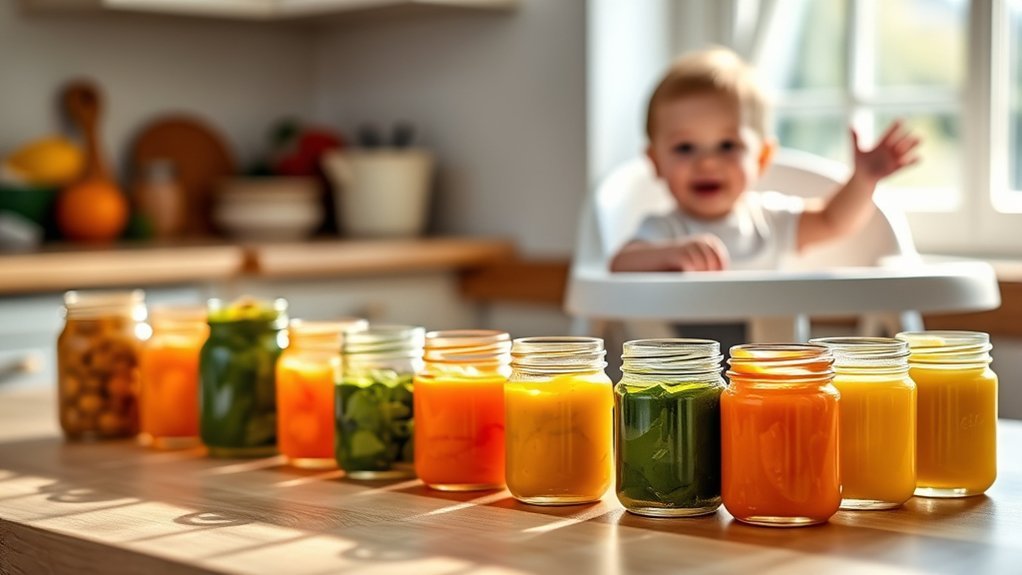
Baby food fortification is the controlled addition of vitamins or minerals to foods made for infants and young children. Parents most often see it in infant cereal and other packaged foods, while some public-health programs use point-of-use micronutrient powders. The useful question is not whether “fortified” is automatically better, but whether the added nutrient fits your baby’s actual needs.
Quick Answer
Fortified baby foods can help fill specific nutrient gaps, especially iron after complementary foods begin around six months. Not every baby needs a specially fortified product. Age, breast milk or formula intake, the foods your baby eats, and any prescribed supplements should guide the choice. Do not add concentrated vitamins or minerals without professional instructions.
Last checked: October 5, 2026. Dates and figures were verified against official sources.
Key Takeaways
- Iron-fortified infant cereal is convenient, but meat, poultry, fish, eggs, beans, lentils, and tofu can also provide iron.
- Infant formula, fortified complementary foods, vitamin drops, dietary supplements, and micronutrient powders serve different purposes and are not interchangeable.
- Breastfed and partially breastfed infants generally need 400 IU of vitamin D daily beginning shortly after birth; formula intake changes whether extra vitamin D is needed.
- Compare the serving size and actual nutrient amount, not just front-label claims such as “with iron” or “made with DHA.”
- Rotate infant cereals such as oat, barley, and multigrain instead of relying only on rice cereal.
- Do not crush tablets, open capsules, or combine concentrated nutrient products with baby food unless a healthcare professional gives exact instructions.
Do Babies Need Fortified Foods?
No, not every baby needs a specially fortified baby-food product. Fortified foods are one practical way to provide nutrients such as iron when breast milk, formula, and complementary foods do not supply enough. The right approach depends on your baby’s age, milk feeding, foods eaten, and any supplement plan.
| Feeding Situation | Practical Takeaway |
|---|---|
| Mostly or exclusively breastfed | Offer iron-rich foods from about six months and ask the child’s clinician whether iron drops are needed before or after that point. CDC guidance recommends 400 IU of vitamin D daily for breastfed and partially breastfed infants beginning shortly after birth. |
| Formula-fed | Standard iron-fortified infant formula can meet iron needs during the first 12 months; CDC notes that standard U.S. iron-fortified formulas contain 12 mg/L. Introduce iron-rich complementary foods around six months. Formula-only infants drinking about 32 ounces or more per day generally do not need an additional vitamin D supplement. |
| Using infant cereal | Iron-fortified infant cereal can help, but it is not the only iron source. CDC recommends offering a variety of fortified infant cereals such as oat, barley, and multigrain rather than relying only on rice cereal. |
| Considering micronutrient powder | Use it only under a recognized public-health program or individualized clinical instructions. WHO’s recommendation applies to children 6–23 months in populations where anemia prevalence is at least 20%; it is not a routine self-dosing recommendation for every family. |
What Is Baby Food Fortification?
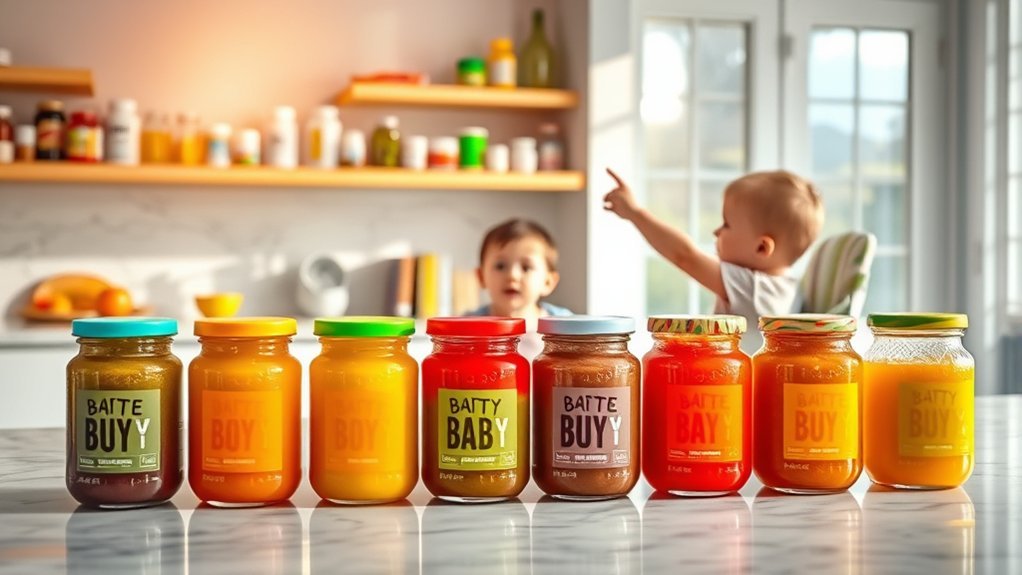
Baby food fortification is the controlled addition of one or more nutrients to food. Common examples include adding iron or zinc to infant cereal and adding vitamins or minerals to foods marketed for infants and young children. The nutrients and amounts vary by product and country, so the ingredient list and Nutrition Facts panel matter more than front-label claims.
Fortification is not the same as choosing a naturally nutrient-rich food. Pureed or finely minced meat, beans, lentils, egg, fish, vegetables, and fruit can supply important nutrients without having vitamins or minerals added during manufacturing.
Fortified baby food is also different from infant formula. Formula is designed to serve as a milk feeding and follows formula-specific nutrient requirements, while infant cereal, purees, snacks, vitamin drops, and micronutrient powders are separate product categories with different uses.
Note: Complementary foods generally begin at about six months, when a baby shows developmental readiness. Breast milk or iron-fortified infant formula remains an important source of nutrition during the transition to family foods.
Why Baby Food Fortification Can Matter During Infancy
Baby food fortification can matter because infants need a high amount of nutrition for their size, while each serving of solid food may be small. From about six months, babies need reliable iron sources beyond breast milk. The Centers for Disease Control and Prevention lists iron-rich foods, iron-fortified infant cereal, and appropriately prescribed iron drops as possible sources. The NIH lists an iron RDA of 11 mg per day for infants 7–12 months.
Iron is needed to make hemoglobin, which carries oxygen in the blood. It also supports normal growth and neurological development. Zinc supports growth, immune function, wound healing, and the senses of taste and smell. The CDC notes that children 7–24 months need zinc-containing foods, particularly when they are breastfed.
Fortification can be useful because a small serving of infant food can provide a predictable amount of a nutrient. However, the value of a fortified product depends on the child’s total diet, the nutrient amount per serving, how often the food is eaten, and whether the child is also receiving formula or supplements.
Which Babies May Need Extra Nutrition Guidance?
Some babies need more individualized nutrition guidance because prematurity, growth concerns, medical conditions, restricted diets, or overlapping supplements can change their needs. Breastfed and partially breastfed infants generally need 400 IU of vitamin D daily beginning shortly after birth, while iron supplementation depends on feeding method and the child’s situation. Ask a pediatrician or pediatric registered dietitian for advice when a baby:
- Was born prematurely or at a low birth weight.
- Has diagnosed anemia or another nutrient deficiency.
- Is growing slowly or has persistent feeding difficulties.
- Has a digestive condition that affects nutrient absorption.
- Follows a highly restricted vegetarian, vegan, or medically required diet.
- Receives several fortified foods plus vitamin or mineral supplements.
- Has severe eczema, a known food allergy, or a previous reaction to food.
A healthcare professional may consider the child’s age, growth, milk intake, food intake, laboratory results, and medical history before recommending a supplement or concentrated fortificant.
Key Nutrients Added to Baby Foods
Fortified baby foods may contain iron, zinc, vitamin D, vitamin A, folate, vitamin B12, or other nutrients, depending on the product and country. The Nutrition Facts panel shows declared nutrient amounts, while the ingredient list helps you identify which nutrients or nutrient forms were added.
| Nutrient | Why It Matters | Food Examples |
|---|---|---|
| Iron | Helps make hemoglobin and supports normal growth and brain development. The U.S. RDA is 11 mg/day for ages 7–12 months. | Iron-fortified infant cereal, meat, poultry, fish, eggs, beans, lentils, and tofu. |
| Zinc | Supports growth, immune function, healing, taste, and smell. CDC lists 3 mg/day for children 7–24 months. | Zinc-fortified cereal, meat, dairy foods, beans, fish, and shellfish prepared safely for the child’s age. |
| Vitamin D | Helps the body absorb calcium and supports healthy bones. | Infant formula, some cereals and yogurts, eggs, and suitable fish. Breastfed and partially breastfed infants generally need 400 IU/day from a vitamin D supplement; formula-only infants drinking about 32 ounces or more daily generally do not need an additional supplement. |
| Vitamin A | Supports vision, immune function, growth, and cell development. | Egg, dairy foods, liver in carefully limited amounts, carrots, sweet potatoes, and dark-green vegetables. |
| Vitamin C | Supports tissue health and helps the body absorb non-heme iron from plant foods and fortified cereal. | Berries, tomatoes, broccoli, citrus fruit, papaya, and sweet potatoes. |
| Folate and vitamin B12 | Help the body form cells and support normal neurological and blood-cell function. | Fortified grains, beans, leafy vegetables, meat, fish, eggs, and dairy foods. |
| DHA | DHA is a fatty acid found in brain and retinal tissue. Evidence on added DHA and developmental outcomes varies by outcome and study, so a front-label DHA claim should not be treated as proof of better cognition or vision. | Human milk, many formulas, fish, and some foods with added DHA. |
The nutrient amount is as important as the nutrient name. A product that lists iron near the bottom of the ingredient list may still provide a useful amount, while a front-label nutrient claim may represent only a modest share of the child’s daily need. Always compare the amount per serving with the amount your baby actually eats.
How Baby Foods Are Fortified
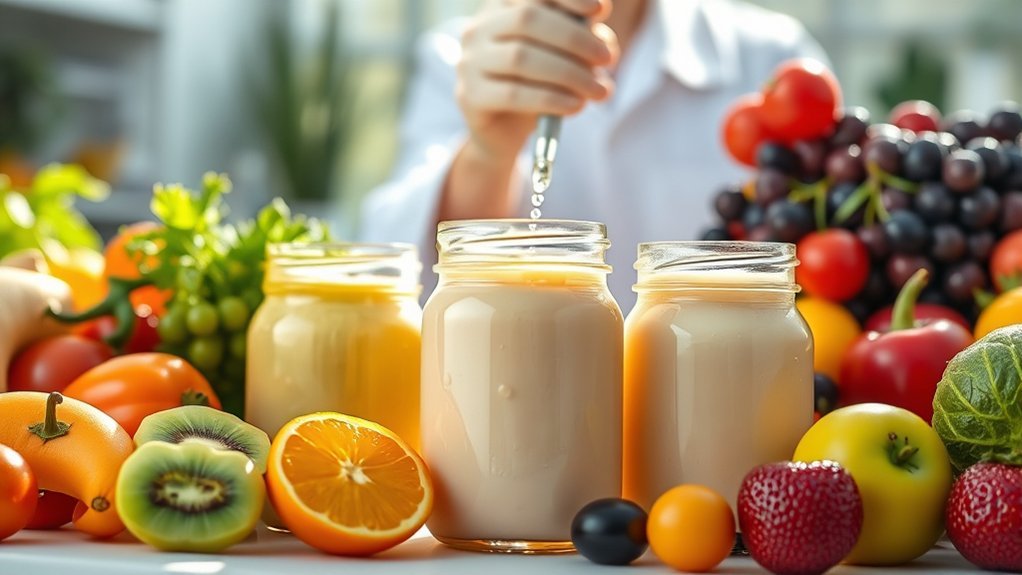
Commercial baby food fortification is a controlled manufacturing process, not the same as sprinkling a household supplement into food. Manufacturers select a permitted nutrient form, calculate the target amount, mix it evenly, test stability, and label the finished product. A typical process may include:
- Selecting the nutrient and its form: Manufacturers choose a permitted or otherwise lawful source of iron, zinc, vitamin, or other nutrient that is suitable for the product.
- Calculating the target amount: The amount must account for the serving size, expected intake, applicable regulations, and nutrient losses that may occur during processing or storage.
- Blending the nutrient evenly: A premix may be added to cereal or another food so that each serving contains a consistent amount.
- Checking taste and stability: Some nutrients can affect flavor, color, texture, or shelf life. Manufacturers test whether the nutrient remains available through the product’s stated shelf life.
- Testing and labeling: Manufacturers are responsible for making sure the food is safe and that its label accurately declares required nutrition information.
The amount the body absorbs can vary. For example, iron from meat is generally absorbed more easily than non-heme iron from plants and fortified cereal. Serving non-heme iron with a vitamin C-rich food can improve absorption.
Point-of-Use Micronutrient Powders
Point-of-use micronutrient powders are single-dose packets of vitamins and minerals that are mixed with ready-to-eat semisolid food. They are mainly used through healthcare or public-health programs in populations where children have a high risk of anemia or multiple nutrient deficiencies.
The World Health Organization recommends iron-containing micronutrient powders for children 6–23 months in populations where anemia affects at least 20% of young children. This is a population-level recommendation, not a direction for every family to purchase and use a powder independently.
Warning: Do not crush adult vitamins, open supplement capsules, combine several nutrient powders, or add extra iron or vitamin drops to baby food unless your child’s healthcare professional gives exact instructions. Concentrated products can deliver far more than an infant needs, and dosing errors can be dangerous.
Benefits and Limitations of Fortified Baby Foods
Fortified baby foods can make a specific nutrient easier to provide in a small amount of food, which is useful when a new eater manages only a few spoonfuls. Iron-fortified infant cereal is one example. The benefit depends on the nutrient amount, the serving actually eaten, and the rest of the child’s diet.
Possible benefits include:
- A predictable amount of a nutrient per labeled serving.
- A convenient iron or zinc source when a baby is learning to eat solids.
- Support for public-health programs in populations with documented deficiencies.
- More options for children whose diets exclude certain nutrient-rich foods.
Fortification also has limits. It cannot make a food nutritionally complete, correct every cause of anemia, compensate for a consistently limited diet, or guarantee better development. A sweet snack with added vitamins is still a sweet snack, and a nutrient claim does not erase high added-sugar or sodium content.
Babies benefit from exposure to different tastes and age-appropriate textures. Fortified cereal can be part of that pattern, but it should not crowd out meat, beans, vegetables, fruit, eggs, fish, dairy foods where appropriate, and other family foods prepared safely.
What Are the Health Risks of Baby Food Fortification?

Properly manufactured fortified baby food is generally intended to be safe when you serve it as directed. The main risks come from overlapping concentrated nutrient sources, incorrect supplement dosing, allergies to other ingredients, or medical conditions that change a child’s needs.
Nutrient Overconsumption and Stacking
“Nutrient stacking” means a child receives the same vitamin or mineral from several sources at once. For example, iron or vitamin D may come from formula, fortified cereal, vitamin drops, a multivitamin, and a micronutrient powder.
Normal servings of one fortified food are unlikely to cause toxicity in a healthy child. The greater concern is incorrect dosing of concentrated supplements or repeated use of products that were not meant to be combined.
Too much iron can cause stomach pain, vomiting, constipation, or more serious poisoning after a large accidental dose. Excessive vitamin D from supplements can raise blood calcium levels and harm the kidneys or other tissues. Keep all supplements and iron products locked away from children.
Potential Allergic Reactions
Iron, zinc, and most added vitamins are not common food allergens. Reactions are more likely to come from the food itself or another ingredient, including milk, egg, fish, shellfish, tree nuts, peanut, wheat, soy, or sesame.
Read the full ingredient list and allergen statement every time, because recipes can change. Stop serving the food if a reaction is suspected. Hives or repeated vomiting warrant prompt medical advice; trouble breathing, throat or tongue swelling, collapse, or loss of consciousness can signal anaphylaxis and requires emergency medical care immediately.
Routine allergy testing is not needed before every fortified food. For peanut introduction specifically, NIAID guidance advises caregivers of infants with severe eczema and/or egg allergy to talk with a healthcare professional first because testing or supervised introduction may be recommended. A test result must be interpreted together with the child’s clinical history.
Imbalance in Nutritional Intake
A fortified label does not make a food nutritionally complete. If you rely too heavily on one product, your baby may miss protein, fats, fiber, varied textures, and other nutrients or food components that come from a broader diet.
Repeatedly serving one cereal or puree can also limit flavor and texture exposure. Continue advancing textures according to the child’s skills and use fortified foods as one part of a broader eating pattern.
Environmental Contaminants and Grain Variety
Fortification does not remove arsenic, lead, cadmium, or other contaminants that may enter food from the environment. Under its Closer to Zero initiative, the FDA issued final guidance in January 2025 setting lead action levels of 10 parts per billion for several categories of processed baby food and 20 parts per billion for single-ingredient root vegetables and dry infant cereals. The agency’s 2026 priority deliverables also include work toward action levels for cadmium and inorganic arsenic in baby and toddler foods.
Rice cereal fortified with iron can be included in a varied diet, but it does not need to be the first or only infant cereal. The CDC recommends offering a variety of fortified infant cereals, such as oat, barley, and multigrain, instead of only rice cereal because relying only on infant rice cereal can increase arsenic exposure.
How to Choose the Right Fortified Baby Food
Choose fortified baby food by matching the product to your baby’s feeding skills and the nutrient you are trying to provide. Front-of-package phrases such as “with iron,” “supports growth,” or “made with DHA” are less useful than the serving size, Nutrition Facts panel, ingredient list, and allergen statement.
- Check the intended age or feeding stage. Choose a texture and serving format that match your baby’s developmental skills, not age alone.
- Read the serving size. Nutrient claims apply to the listed serving, which may be larger than the amount a new eater finishes.
- Compare the amount of the target nutrient. For example, compare iron per serving between infant cereals rather than relying on front-label wording.
- Review the ingredient list. Look for the base grain or food, added nutrient forms, sweeteners, and possible allergens.
- Limit added sugars. Current U.S. dietary guidance emphasizes nutrient-dense foods and limiting highly processed foods and added sugars. Check both the Added Sugars line and ingredient list.
- Consider the entire day. Account for formula, other fortified foods, vitamin drops, and prescribed supplements.
- Choose variety. Rotate grains and offer both fortified and naturally nutrient-rich foods.
- Ask for help when needed. A pediatrician or dietitian can assess intake when a child has medical, growth, or feeding concerns.
Pro Tip: Compare products using the amount your baby actually eats. If the label lists nutrients for four tablespoons of dry cereal but your baby eats one tablespoon, the consumed amount will be about one-quarter of the labeled serving.
An organic label describes how qualifying agricultural ingredients were produced. It does not automatically mean the food contains more iron, has less sugar, or is nutritionally superior. Compare the nutrition and ingredient labels rather than relying on the organic claim alone.
Can Homemade Baby Food Be Fortified Safely?
Yes, homemade baby food can be made more nutrient-dense by choosing foods that naturally provide the nutrients your baby needs. That is different from adding concentrated vitamins, minerals, or powders, which can create dosing errors unless a clinician or recognized program gives exact instructions.
Safe, practical combinations include:
- Pureed or finely minced meat with a soft vegetable.
- Beans or lentils served with tomato, broccoli, berries, or another vitamin C-rich food.
- Iron-fortified infant cereal mixed with breast milk, prepared formula, or water according to package directions.
- Egg, yogurt, tofu, fish, or nut products prepared in a developmentally safe form after allergen-introduction considerations are addressed.
- Mashed vegetables with a suitable source of dietary fat to increase energy density.
Do not add powdered adult vitamins, crushed tablets, protein powder, herbal products, or unmeasured mineral drops. A clinician may prescribe iron, vitamin D, vitamin B12, or another nutrient when indicated, but the product and dose should be chosen for that child.
How Fortified Baby Foods Are Regulated
Rules for baby food fortification depend on the product category and the country. In the United States, infant formula has formula-specific requirements, while ordinary complementary foods fall under broader food-safety, ingredient, labeling, and fortification rules. Global programs may use different standards based on local nutrition needs.
United States Regulation
In the United States, infant formula and ordinary complementary foods are regulated differently. Infant formula is subject to formula-specific FDA requirements covering nutrient specifications, quality-control procedures, labeling, and recalls. A jar of puree or box of infant cereal does not become infant formula simply because it is marketed for babies.
The FDA’s fortification policy in 21 CFR §104.20 sets principles for the rational addition of nutrients to foods. Other rules govern permitted ingredients, food safety, labeling, and nutrient-content claims.
Manufacturers must accurately label covered nutrients and allergens and must produce food that is not adulterated or misbranded. However, the presence of a nutrient claim does not mean the FDA has individually approved the product as the best choice for a particular baby.
Global Fortification Practices
Global fortification policies vary because nutrient gaps, local diets, available foods, healthcare access, and national regulations differ. Some countries fortify commercially produced cereals or staple foods, while public-health programs in other settings distribute micronutrient powders for caregivers to mix with food at the point of use.
The WHO’s 2023 complementary-feeding guideline covers children 6–23 months in low-, middle-, and high-income countries. It treats fortified foods, home fortificants, and supplements as possible tools for children at risk of inadequate micronutrient intake—not substitutes for dietary diversity.
Effective programs require quality control, correct dosing, caregiver education, reliable distribution, and monitoring. A product or program designed for one population should not automatically be copied in another setting with different needs.
Frequently Asked Questions
Do all babies need fortified baby food?
No. Fortified foods are one way to supply nutrients such as iron, but many babies can obtain these nutrients from iron-fortified formula and a varied complementary diet. Breastfed and partially breastfed infants generally still need vitamin D supplementation, and some babies need individualized iron guidance.
Can a baby get too much iron from fortified foods?
Normal servings of one iron-fortified food are unlikely to cause iron toxicity in a healthy baby. The bigger concern is concentrated iron from supplements or combining several iron-containing products without guidance. Keep iron supplements out of children’s reach and ask a healthcare professional before adding iron drops.
Can homemade baby food be fortified effectively?
Yes, but the safest approach is usually to make homemade food more nutrient-dense with foods such as meat, beans, lentils, eggs, fish, tofu, vegetables, and iron-fortified infant cereal. Do not add concentrated supplements, crushed tablets, or micronutrient powders unless a healthcare professional or recognized program gives exact instructions.
Are there side effects from fortified baby foods?
Most properly manufactured fortified foods are well tolerated when served as directed. Problems can come from an allergy to another ingredient, incorrect use, or overlapping fortified foods and supplements. Trouble breathing, throat or tongue swelling, collapse, or loss of consciousness requires emergency medical care.
How can I identify fortified baby foods?
Check the ingredient list for added nutrient forms and the Nutrition Facts panel for declared nutrients such as iron or vitamin D. Claims such as “iron-fortified” can help you spot a product, but compare the actual amount per serving and the serving your baby is likely to eat.
Is there an age limit for consuming fortified foods?
There is no single age limit for every fortified food. Choose products intended for your child’s developmental stage and follow their serving directions. Products designed for adults, athletes, or older children may contain nutrient amounts or ingredients that are not appropriate for an infant.
Does fortified infant cereal replace other iron-rich foods?
No. Iron-fortified infant cereal is a convenient option, but babies should also be introduced to suitable iron-rich foods such as meat, poultry, fish, eggs, beans, lentils, and tofu. Pairing plant-based iron sources with vitamin C-rich fruit or vegetables can improve iron absorption.
Can I combine fortified baby food with vitamin drops?
Sometimes, but it depends on the nutrient, dose, formula intake, food intake, and your baby’s medical needs. Use vitamin drops as directed by your child’s healthcare professional and tell them about every fortified food, powder, or supplement your baby receives so the same nutrient is not unintentionally stacked.
Conclusion
Baby food fortification can be useful when it fills a real nutrient gap, especially during the transition to complementary foods. A fortified label does not make a product complete or automatically better; the product still needs to fit your baby’s feeding method, age, and overall diet.
Compare nutrient amounts per serving, read ingredient and allergen labels, vary grains and other foods, and count formula and supplements when considering total intake. Seek individualized guidance before using micronutrient powders or concentrated iron or vitamin products, especially for a premature baby, a child with poor growth, a diagnosed deficiency, a restrictive diet, or a medical condition that affects nutrition.
Sources
- CDC: Iron and Infant Nutrition — current iron guidance by feeding method, iron-rich foods, and iron-fortified infant formula.
- CDC: Zinc and Infant Nutrition — zinc needs, functions, and food sources.
- CDC: Vitamin D and Infant Nutrition — 400 IU/day for infants under 12 months and supplementation guidance by feeding method.
- CDC: When, What, and How to Introduce Solid Foods — complementary-feeding timing and grain-variety guidance.
- NIH Office of Dietary Supplements: Iron — infant iron reference intakes, food sources, absorption, and toxicity information.
- WHO: Anaemia — global prevalence and causes of anemia.
- WHO Guideline for Complementary Feeding of Infants and Young Children 6–23 Months — global complementary-feeding recommendations.
- WHO: Multiple Micronutrient Powders for Children 6–23 Months — conditions for population-level point-of-use fortification.
- NIAID: Peanut Allergy Prevention Guidelines—Parent Summary — guidance for peanut introduction in infants with severe eczema and/or egg allergy.
- Dietary Guidelines for Americans, 2025–2030 — current U.S. nutrition guidance.
- FDA: Food Allergies—What You Need to Know — major allergens, labeling, and symptoms that can signal anaphylaxis.
- FDA: Infant Formula Guidance and Regulatory Information — formula-specific nutrient, manufacturing, labeling, and recall rules.
- Electronic Code of Federal Regulations: 21 CFR §104.20 — U.S. principles for rational addition of nutrients to foods.
- FDA: Closer to Zero — actions to reduce lead, arsenic, cadmium, and mercury exposure from foods eaten by babies and young children.
- FDA Human Foods Program: 2026 Priority Deliverables — current contaminant-reduction priorities for baby and toddler foods.
- Cochrane: Long-Chain Polyunsaturated Fatty Acid Supplementation in Term Infants — evidence review on added DHA/ARA and developmental outcomes.