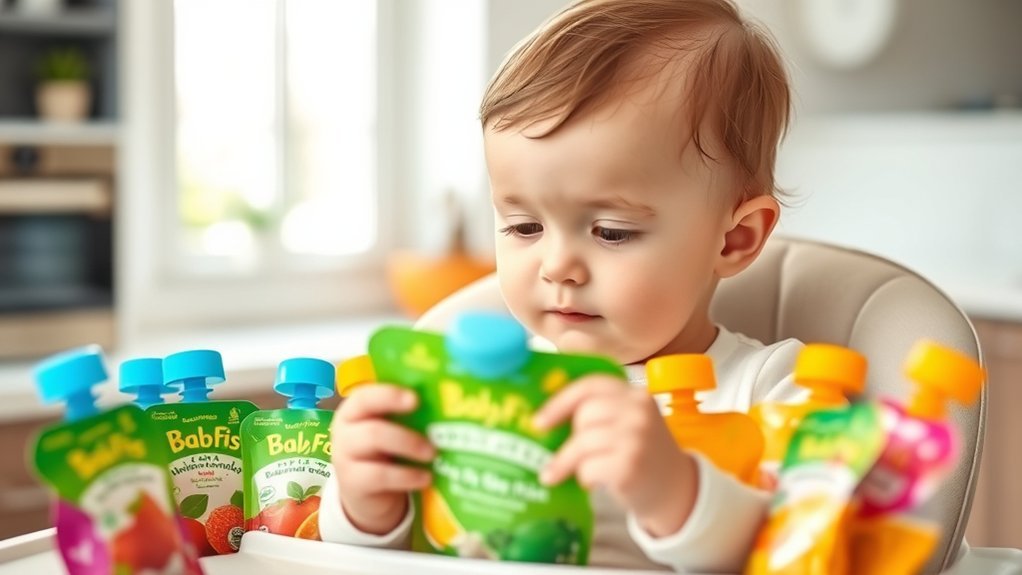

When your baby refuses spoon feeding, the problem may be the spoon, timing, texture, feeding pace, or a growing desire for control—not necessarily the food itself. Many babies respond better when you slow down, respect their signals, and combine responsive spoon feeding with safe opportunities to touch and self-feed food.
Quick Answer
If your baby refuses spoon feeding, stop and follow their cues rather than forcing a bite. Check that they are developmentally ready, offer a soft shallow spoon, let them touch or hold food, and try safe finger foods alongside spoon-fed foods. Seek medical advice for swallowing trouble, poor growth, or ongoing distress.
Key Takeaways
- Turning away, closing the mouth, or pushing the spoon away usually means “pause” or “I’m finished,” not “make me take another bite.”
- Most babies begin solid foods at about 6 months, but developmental readiness matters more than the exact date.
- You can combine responsive spoon feeding with safe finger foods; there is no need to choose only one method.
- Breast milk, infant formula, or both remain the main source of nutrition from 6 through 12 months while solid foods are introduced.
- Prepare finger foods carefully, keep your baby upright, and supervise every bite because food size alone does not prevent choking.
- Contact a healthcare professional for persistent refusal, poor growth, repeated vomiting, breathing changes, coughing or choking during meals, or severe distress.
At a Glance
| Time Required | About 10–20 minutes per meal, with repeated practice over several days or weeks |
| Difficulty | Easy to moderate |
| Tools Needed | Supportive high chair, soft shallow spoon, bib, small bowl, and age-appropriate food |
| Cost | Usually $0–$15 if you already have a secure high chair and feeding supplies |
Note: This article provides general feeding information and does not replace advice from your baby’s pediatrician. Babies who were born prematurely or who have developmental, neurological, gastrointestinal, growth, allergy, or swallowing concerns may need an individualized feeding plan.
Is Your Baby Refusing the Spoon or All Solid Food?
Before changing the entire feeding routine, watch what your baby is actually refusing. A baby who closes their mouth for a spoon but happily picks up soft food may dislike being fed rather than dislike eating. A baby who accepts yogurt but refuses lumpier food may be reacting to texture. A baby who rejects every food and drink may need closer evaluation.
| What You Observe | What It May Mean | What to Try |
|---|---|---|
| Refuses the spoon but grabs food | Wants more control | Offer a preloaded spoon and safe finger foods |
| Accepts smooth food but refuses lumps | Needs gradual texture practice or has difficulty managing texture | Increase texture slowly; seek advice if gagging, coughing, distress, or refusal continues |
| Eats briefly and then turns away | May be full, tired, distracted, or uncomfortable | End the meal calmly and try again later |
| Refuses nearly all food and becomes distressed | Possible pain, illness, sensory difficulty, feeding aversion, or swallowing problem | Contact your pediatrician instead of repeatedly pushing food |

Power your essentials anywhere with a 999Wh pure sine wave power station delivering up to 1000W continuous with 2000W surge. It supports fast charging via USB-C PD 60W and USB-A QC 18W, plus simultaneous output for multiple devices through AC, USB, wireless, and car/DC ports. Recharge using AC, car, or solar with a built-in MPPT controller and dual cooling fans, while the upgraded battery management system protects against surges, short circuits, and overheating.
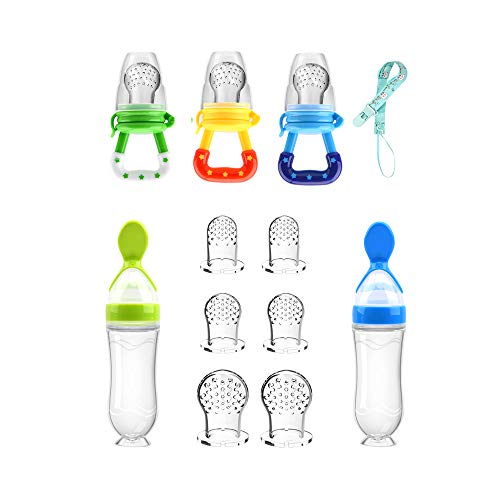
FEED SAFE&CONVENIENT--The baby food feeder and squeeze spoon feeder are made of food grade silicone, safe and non-toxic. These Silicone nipples more convenient for parents to feed babies, who can chew their food such as fresh and frozen fruits, yoghurt, ice, and breast milk, and absorb nutrients.

【100% Silicone SAFE NON-TOXIC 】 Our baby spoons & forks are BPA-free, BPS-free, PVC-free, phthalate-free, cadmium-free and lead-free
Signs Your Baby Is Ready for Spoon Feeding

Most babies begin trying foods other than breast milk or infant formula at about 6 months. According to the CDC’s solid-food guidance, readiness depends on development as well as age.
Look for several of these signs together:
- Your baby can sit upright with support and keep their head and neck steady.
- They bring objects to their mouth and show interest when other people eat.
- They open their mouth or lean forward when food is offered.
- They can close their lips around a spoon.
- They swallow at least some food instead of pushing all of it forward with the tongue.
- They can communicate hunger and fullness by leaning forward, reaching, turning away, or closing their mouth.
Messy eating is normal and does not mean your baby is unready. However, repeatedly pushing food out, slumping in the chair, struggling to control the head, or showing distress may mean they need more time or professional advice.
Pro Tip: Use a high chair that keeps your baby upright with stable support for the trunk and, when possible, the feet. A steady position lets your baby focus more energy on managing food.
Understanding Baby’s Refusal of Spoon Feeding
Occasional spoon refusal is common. Your baby may turn away, close their lips, grab the spoon, push your hand, or become distracted. These actions are communication signals, not bad behavior.
Turning away, closing the mouth, or pushing the spoon away is a cue to pause—not an invitation to distract, pressure, or sneak in another bite.
Common reasons for spoon refusal include:
- Desire for control: Your baby may want to hold the spoon or pick up food independently.
- Fullness: Appetite varies from meal to meal and day to day.
- Timing: A baby who is extremely hungry, tired, or upset may have trouble learning a new feeding skill.
- Texture or temperature: The food may feel unfamiliar, too thick, too thin, too cold, or too warm.
- Spoon discomfort: A deep, hard, oversized, or overfilled spoon may be uncomfortable.
- Teething or mouth pain: Sore gums, oral thrush, mouth sores, or an ear infection can temporarily affect eating.
- Illness or digestive discomfort: Congestion, constipation, reflux symptoms, nausea, or other discomfort can reduce interest.
- Feeding pressure: Repeatedly pushing the spoon past closed lips can increase resistance and stress.
The World Health Organization recommends responsive feeding: feed slowly and patiently, encourage without forcing, and pay attention to hunger and fullness cues.
How to Encourage Spoon Feeding at Around Six Months
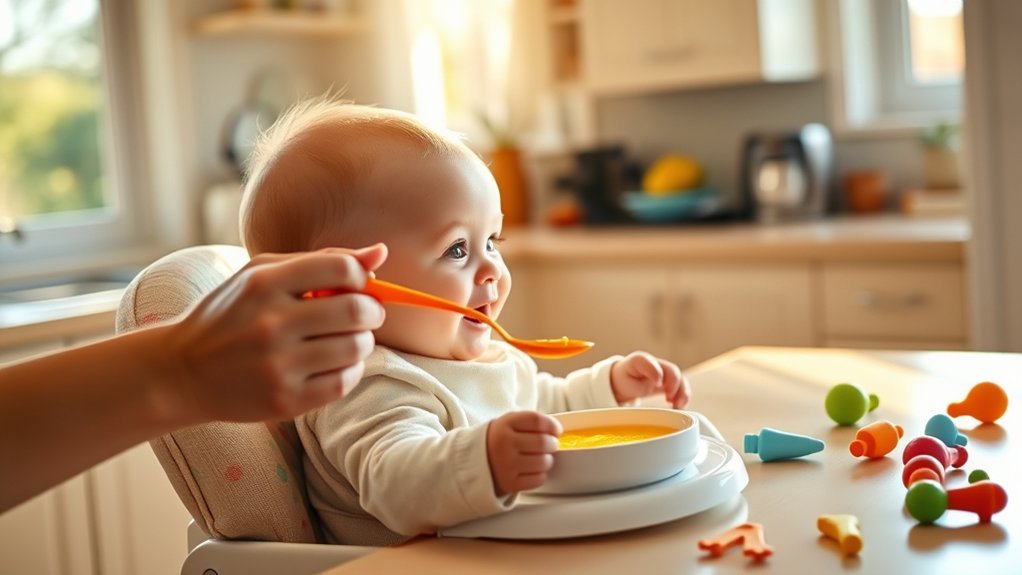
When your baby shows readiness, use a responsive approach that lets them participate. The goal is not to make them finish a serving. The goal is to help them explore food safely and comfortably.
- Choose a calm time. Offer food when your baby is alert and mildly hungry—not exhausted, crying, or desperate for a milk feed.
- Seat them upright. Make sure the head, neck, and trunk are stable before offering food.
- Use a shallow spoon. Place a small amount of food on a soft, flat spoon rather than filling a deep spoon.
- Show the spoon and wait. Hold it where your baby can see it. Wait for them to open their mouth, lean forward, or reach.
- Let your baby participate. Allow them to hold another spoon, guide your hand, touch the food, or bring a preloaded spoon to their mouth.
- Use a slow pace. Wait until the previous bite has been managed before offering another.
- Stop at refusal cues. End or pause the meal when your baby closes their mouth, turns away, pushes food aside, arches, cries, or loses interest.
The NHS also advises caregivers to wait for the baby to open their mouth and not force food when the baby is uninterested. You can review its first-solid-food guidance for additional responsive-feeding tips.
Note: A meal may involve only touching, smelling, licking, or tasting food. These are still useful learning experiences. Avoid judging progress by how many spoonfuls your baby eats at one sitting.
Handling Grumpiness During Feeding
Grumpiness does not always mean your baby dislikes the food. It may signal fatigue, fullness, overstimulation, discomfort, or a need for a break. Continuing after clear distress can make the next meal harder.
Minimize Mealtime Distractions
Turn off televisions and put phones and toys away so your baby can focus on eating and communicating. Gentle conversation and family interaction are helpful, but screens, loud sounds, or constant entertainment can hide fullness cues and make it harder for your baby to pay attention to the food.
Keep early meals short. Ten to 20 minutes is often enough for exploration. If your baby becomes upset, calmly end the meal and offer breast milk or formula according to their normal routine.
Recognize Signs of Refusal
Signs that your baby wants a pause or is finished include:
- Turning the head away
- Closing or tightening the lips
- Pushing the spoon or caregiver’s hand away
- Dropping or throwing food after previously engaging
- Leaning back, arching, crying, or becoming tense
- Slowing down and losing interest
Do not sneak food into an open mouth while your baby is distracted or laughing. Respecting refusal helps maintain trust and makes it easier for your baby to communicate during future meals.
Why Your Baby Prefers Self-Feeding

Many babies begin bringing food to their mouths between about 6 and 9 months and become increasingly interested in feeding themselves. Self-feeding gives them control over when food enters the mouth and allows them to explore its smell, texture, temperature, and shape.
You do not have to choose between traditional spoon feeding and baby-led weaning. A mixed approach can include mashed food on a spoon, preloaded spoons your baby holds, and safely prepared finger foods at the same meal.
Independence Through Self-Feeding
Self-feeding can give your baby useful practice with reaching, grasping, bringing food to the mouth, and stopping when satisfied. These are developmental opportunities, not guarantees that a child will avoid picky eating later.
| Self-Feeding Experience | Skill It Can Help Practise |
|---|---|
| Picking up soft food | Grasp and hand-to-mouth coordination |
| Holding a preloaded spoon | Utensil awareness and wrist control |
| Touching different foods | Sensory familiarity with textures and temperatures |
| Choosing whether to take another bite | Communication of hunger and fullness |
Exploration and Sensory Play
Touching, squashing, smearing, smelling, and licking food may look like play, but these actions help your baby learn what food feels like before swallowing it. Allow some mess while keeping the meal safe and supervised.
Offer a range of smooth, mashed, lumpy, finely chopped, and safely prepared finger-food textures as your baby’s abilities develop. The CDC’s texture guidance notes that it can take time for babies to adjust to new food textures.
Preference for Control
You can share control without giving up your role as the caregiver. You decide what safe foods are offered, when the meal happens, and where your baby sits. Your baby decides whether to eat and how much.
| Caregiver’s Role | Baby’s Role |
|---|---|
| Offer safe, nutritious food | Choose whether to taste it |
| Provide an upright, supervised setting | Explore at a comfortable pace |
| Offer food regularly without pressure | Communicate hunger and fullness |
| Prepare food in a developmentally safe form | Practise managing the food |
The American Academy of Pediatrics’ parent site explains that families can use baby-led feeding flexibly and still offer purées or spoon-fed foods. See its baby-led-weaning safety overview.
Safe Finger Foods and Choking Prevention
Finger foods must be soft enough for your baby to manage and shaped to reduce choking risk. A commonly used practical check is whether the food can be mashed easily between your thumb and finger. The exact shape should match your baby’s developmental skills.
Possible options include:
- Soft-cooked vegetable pieces
- Ripe banana, avocado, pear, or peach
- Soft strips or flakes of well-cooked meat or fish with bones removed
- Soft egg pieces
- Toast fingers spread thinly with a suitable topping
- Soft pasta shapes
- Thick mashed food offered on a preloaded spoon
Warning: Always keep your baby upright and directly supervised while eating. Avoid whole nuts, popcorn, whole grapes, hard raw fruit or vegetables, chunks of hard meat or cheese, hot-dog rounds, spoonfuls of thick nut butter, hard candy, and other firm, round, sticky, or difficult-to-chew foods. Follow the CDC’s choking-hazard guidance.
Gagging Versus Choking
Gagging is a protective reflex that may happen while babies learn to manage new textures. A gagging baby may cough, make noise, push the tongue forward, or become red in the face. Stay calm and allow the baby to work the food forward while watching closely.
Choking happens when the airway is blocked. A choking baby may be unable to cry, cough effectively, breathe, or make sound. The skin or lips may turn blue or gray.
If your baby cannot breathe, cry, or cough effectively, call 911 or your local emergency number and begin age-appropriate choking first aid. Parents and caregivers should consider an infant CPR and first-aid course before beginning solid foods.
Repeated coughing, choking, breathing changes, wet-sounding breathing, or congestion during or after meals is not something to practise through. Stop feeding and contact a healthcare professional.
Nutrition When Your Baby Refuses the Spoon
From 6 through 12 months, breast milk, infant formula, or both remain your baby’s main source of nutrition. Continue normal milk feeds while complementary foods gradually become a larger part of the diet. Do not abruptly replace milk feeds because your baby tasted a few spoonfuls of food.
Offer a variety of foods, with regular opportunities for iron-rich choices such as:
- Iron-fortified infant cereal
- Soft meat, poultry, or fish prepared safely
- Well-cooked beans, lentils, or tofu
- Egg
- Foods containing iron served with fruit or vegetables containing vitamin C
You can introduce smooth, mashed, lumpy, finely chopped, and finger-food options as your baby’s skills develop. Spoon refusal does not prevent you from offering yogurt, mashed beans, oatmeal, or other soft foods on a preloaded spoon that your baby brings to their own mouth.
Introducing Allergens Safely
Introduce new foods in age-appropriate forms and watch for reactions. The CDC recommends starting with one single-ingredient food at a time so it is easier to identify a possible problem.
Ask your baby’s healthcare professional how to introduce peanut if your baby has severe eczema, an egg allergy, or another condition that increases allergy risk. Never offer whole peanuts or a thick spoonful of peanut butter because both can be choking hazards.
Do not give honey before 12 months because of the risk of infant botulism. Avoid unpasteurized foods and drinks, and limit foods with added salt or sugar.
Troubleshooting Common Spoon-Feeding Problems
| Problem | Adjustment to Try |
|---|---|
| Baby clamps their mouth shut | Pause. Offer the spoon where they can see it and wait for them to lean forward or open their mouth. |
| Baby grabs or bats the spoon | Give them a second spoon or place a preloaded spoon on the tray. |
| Food is pushed back out | Use a very small amount and allow more time. If all food is repeatedly pushed out, reassess readiness. |
| Baby accepts only one texture | Make small changes, such as moving from smooth to slightly mashed food. Seek help if texture refusal causes distress or does not improve. |
| Baby cries as soon as the high chair appears | Take a short break from pressure, allow neutral play in the chair, and discuss persistent distress with the pediatrician. |
| Baby is too hungry to engage | Offer a small amount of breast milk or formula first, then try food when calm. |
| Teething appears to cause discomfort | Try cool, soft foods and a soft spoon. Contact the pediatrician if pain, fever, mouth sores, or poor intake is significant. |
Creating a Positive Mealtime Environment
A positive mealtime environment is calm, predictable, and responsive. It does not require a perfectly clean tray or a baby who finishes every serving.
- Eat with your baby when possible so they can watch you chew and use utensils.
- Use a regular meal location and a secure upright seat.
- Offer one familiar food beside a newer food when appropriate.
- Keep portions small so the tray does not feel overwhelming.
- Use simple words or signs such as “more” and “all done.”
- Avoid praise or criticism based on how much your baby eats.
- Do not bargain, chase the baby with a spoon, or use screens to secure extra bites.
- Expect appetite to vary and look at eating patterns over time rather than one meal.
Repeated exposure can help unfamiliar foods become less surprising, but there is no required number of tastes that every baby must accept. Continue offering suitable foods without pressure.
When Should You Talk to a Doctor About Feeding?
Contact your baby’s pediatrician when feeding refusal is persistent, worsening, or affecting nutrition, hydration, growth, development, or family well-being. Do not wait for a specific birthday if you see concerning symptoms.
Seek Urgent Help
Call emergency services for choking when your baby cannot breathe, cry, or cough effectively, becomes blue or gray, or becomes limp or unresponsive.
Seek prompt medical advice for signs of dehydration, repeated forceful vomiting, blood in vomit or stool, severe lethargy, breathing difficulty, swelling of the lips or tongue, widespread hives, or another possible severe allergic reaction.
Arrange a Feeding Evaluation
Ask for medical or feeding support if your baby:
- Repeatedly coughs, chokes, gags severely, or has breathing changes during meals
- Has a wet or congested sound during or after eating
- Regularly vomits, arches, cries, or appears to be in pain while eating
- Takes an unusually long time to finish small amounts
- Holds food in the mouth or has difficulty moving or chewing it
- Accepts very few foods or only one texture
- Consistently refuses complementary foods despite showing developmental readiness
- Loses weight, gains weight poorly, or has fewer wet diapers than expected
- Loses a feeding skill they previously used
- Causes you to feel that every meal has become a struggle
The American Speech-Language-Hearing Association lists coughing, gagging, breathing problems, prolonged meals, texture restriction, and food refusal among possible signs of a feeding or swallowing disorder.
Your pediatrician may recommend a registered dietitian, occupational therapist, gastroenterology or allergy specialist, or a speech-language pathologist who specializes in pediatric feeding and swallowing.
Frequently Asked Questions
Can I skip spoon feeding and go straight to self-feeding?
Some developmentally ready babies can begin with safely prepared finger foods, while others do better with a combination of finger foods, mashed food, and preloaded spoons. Spoon feeding is not mandatory, but your baby still needs appropriate textures, nutrients, upright positioning, and direct supervision.
What foods are best for introducing spoon feeding?
Try small amounts of smooth or mashed iron-rich foods, such as iron-fortified infant cereal, mashed beans, egg, meat purée, or soft tofu. Plain yogurt, mashed avocado, soft vegetables, and fruit can add variety. Adjust the texture as your baby’s skills grow.
How long should I try spoon feeding before stopping?
There is no fixed two-week rule. Offer brief, low-pressure opportunities when your baby is calm and ready. Pause when they refuse and try again at another meal. Contact the pediatrician if refusal is persistent, causes distress, limits nutrition, or occurs with swallowing or growth concerns.
Is it normal for babies to refuse spoon feeding occasionally?
Yes. Appetite, alertness, teething, illness, texture, and the desire for control can all affect a meal. Occasional refusal is usually less concerning when your baby remains comfortable, hydrated, growing, and willing to eat or drink at other times.
Can teething affect my baby’s willingness to eat from a spoon?
Sore gums can temporarily make a hard spoon or warm food uncomfortable. A soft spoon and cool, smooth food may be easier. Significant pain, fever, mouth sores, dehydration, or prolonged refusal should not automatically be blamed on teething.
What if my baby accepts finger foods but refuses every spoon?
You can continue offering safe finger foods and preloaded spoons while ensuring the diet includes iron-rich and energy-dense choices. Mention the pattern at routine pediatric visits, especially if the accepted food range is narrow or growth is a concern.
Should I use a screen or toy to make my baby take more bites?
No. Distracting a baby into eating can hide fullness and refusal cues. Keep the setting calm, allow normal family interaction, and stop when your baby shows they are finished.
How can I tell gagging from choking?
A gagging baby can usually make noise, cough, and move air. A choking baby may be silent and unable to breathe, cry, or cough effectively. Blue or gray coloring, weakness, or unresponsiveness is an emergency. Call emergency services and begin infant choking first aid.
Conclusion
When your baby refuses spoon feeding, respond to the message behind the refusal. Check readiness, improve their position, use a shallow spoon, slow the pace, and let them participate with preloaded spoons or safe finger foods. Stop when they turn away or close their mouth instead of pushing for one more bite.
Most occasional refusal can be managed with calm, repeated opportunities. Contact your baby’s healthcare professional when refusal is persistent or accompanied by pain, poor growth, dehydration, repeated vomiting, breathing changes, coughing, choking, severe gagging, or significant mealtime distress.
Sources
- Centers for Disease Control and Prevention: When, What, and How to Introduce Solid Foods — developmental readiness, first foods, and allergen introduction
- Centers for Disease Control and Prevention: Choking Hazards — safe preparation and high-risk foods
- World Health Organization: Infant and Young Child Feeding — responsive feeding and complementary-feeding principles
- NHS: Your Baby’s First Solid Foods — hunger and fullness cues and pressure-free spoon feeding
- HealthyChildren.org: Baby-Led Weaning—Is It Safe? — flexible use of self-feeding and spoon-fed foods
- American Speech-Language-Hearing Association: Early Identification of Feeding and Swallowing Disorders — warning signs that may require assessment