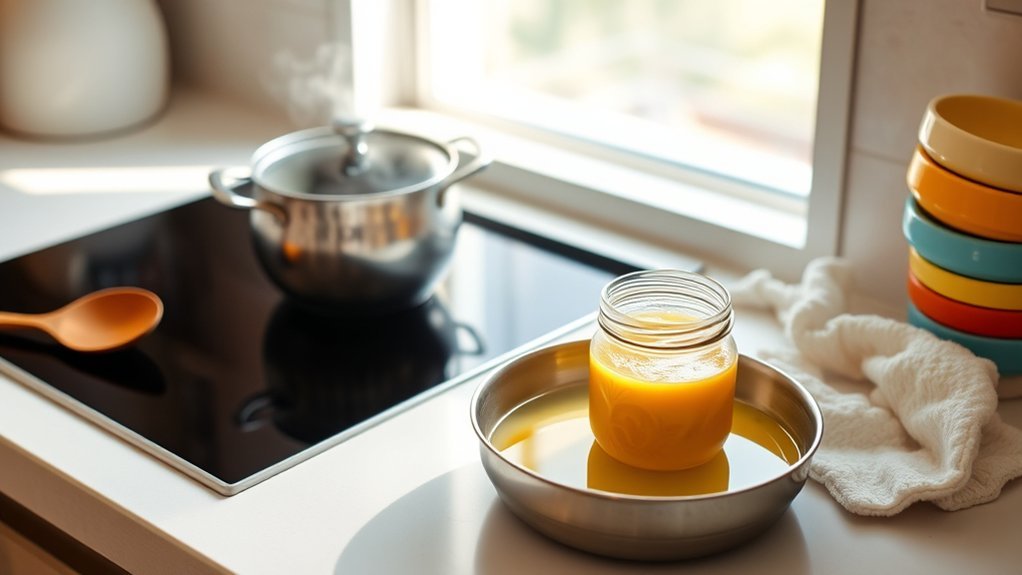
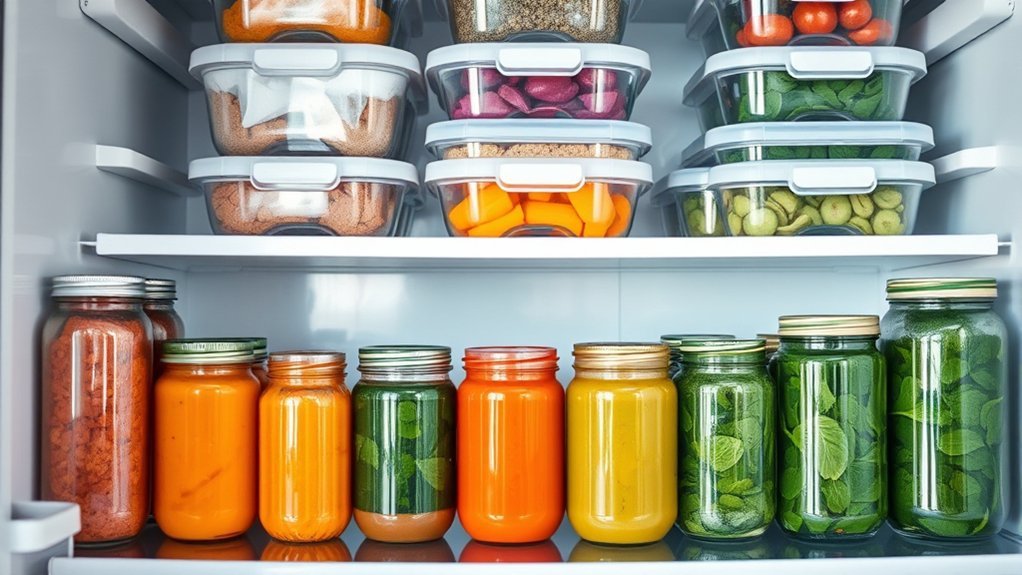
Homemade and opened baby food needs careful handling because infants and young children are more vulnerable to foodborne illness than healthy adults. Safe storage depends on the ingredients, the temperature of your refrigerator or freezer, and whether the food has touched your baby’s spoon. A simple routine of cooling, portioning, labeling, and discarding served leftovers can prevent most storage mistakes.
Quick Answer
Store homemade baby food in a refrigerator at 40°F or below and use it within one to two days. For a conservative rule, freeze homemade portions for no longer than one to two months. Use clean, airtight, freezer-safe containers, thaw safely, and discard any food that has touched your baby’s spoon.
Key Takeaways
- Keep the refrigerator at 40°F or below and the freezer at 0°F or below.
- Refrigerate or freeze prepared baby food within two hours, or within one hour when the surrounding temperature is above 90°F.
- Use homemade baby food within one to two days refrigerated and, as a conservative rule, within one to two months frozen.
- Transfer one serving to a clean bowl instead of feeding directly from the storage container.
- Label every portion with the food, preparation date, and any major allergens it contains.
At a Glance
| Time Required | About 10–15 minutes to portion, label, and store a batch |
| Difficulty | Easy |
| Tools Needed | Clean shallow containers or covered freezer trays, labels, clean utensils, and an appliance thermometer |
| Cost | Usually no added cost if suitable containers are already available; reusable trays or jars commonly add a modest one-time expense |
Baby Food Storage Times at a Glance
The current FoodSafety.gov storage chart for children under five gives different limits for homemade food, strained produce, meats, eggs, and combination foods. Some categories overlap, so the safest practical approach is to follow the shortest limit that applies to your food.
| Food Type | Refrigerator | Freezer | Important Notes |
|---|---|---|---|
| Homemade baby food | 1–2 days | 1–2 months | This is the simplest conservative limit for homemade batches. |
| Strained fruits and vegetables | 2–3 days | Federal category: 6–8 months | When the puree is homemade, using it within 1–2 months avoids the overlap between federal categories and gives better quality. |
| Strained meats or eggs | 1 day | 1–2 months | Use the shorter refrigerated limit even when the food looks and smells normal. |
| Meat and vegetable combinations | 1–2 days | 1–2 months | Use the shortest limit for any ingredient in a mixed recipe. |
| Food placed in the baby’s serving bowl | Do not save after feeding | Do not freeze | Discard food that has been exposed to a used spoon or your baby’s saliva. |
Note: An older FDA page lists three to four months for homemade baby food, while the newer FoodSafety.gov chart lists one to two months. Following the newer, shorter limit is a conservative choice and generally preserves better flavor and texture.
Power your essentials anywhere with a 999Wh pure sine wave power station delivering up to 1000W continuous with 2000W surge. It supports fast charging via USB-C PD 60W and USB-A QC 18W, plus simultaneous output for multiple devices through AC, USB, wireless, and car/DC ports. Recharge using AC, car, or solar with a built-in MPPT controller and dual cooling fans, while the upgraded battery management system protects against surges, short circuits, and overheating.

Premium Baby Food Storage Containers: The set has 8 food storage containers, 4 oz each. 8 colors, 1 of each color. There are many colors for easy differentiation of use and a large number to meet the daily needs of baby use. A pen can be used to write the name, date or other information on the lid to remind you what is inside the jar. Perfect for storing homemade baby food, solid baby food, fruit and vegetable purees, jams, etc

12-Pack, Durable 4oz Glass Jars with Lids – KeaBabies Baby Food Jars Glass check all the right boxes for a reliable baby snack containers. Ideal for busy parents as baby food containers for prepping and storing homemade meals smoothly.
Why Proper Baby Food Storage Matters
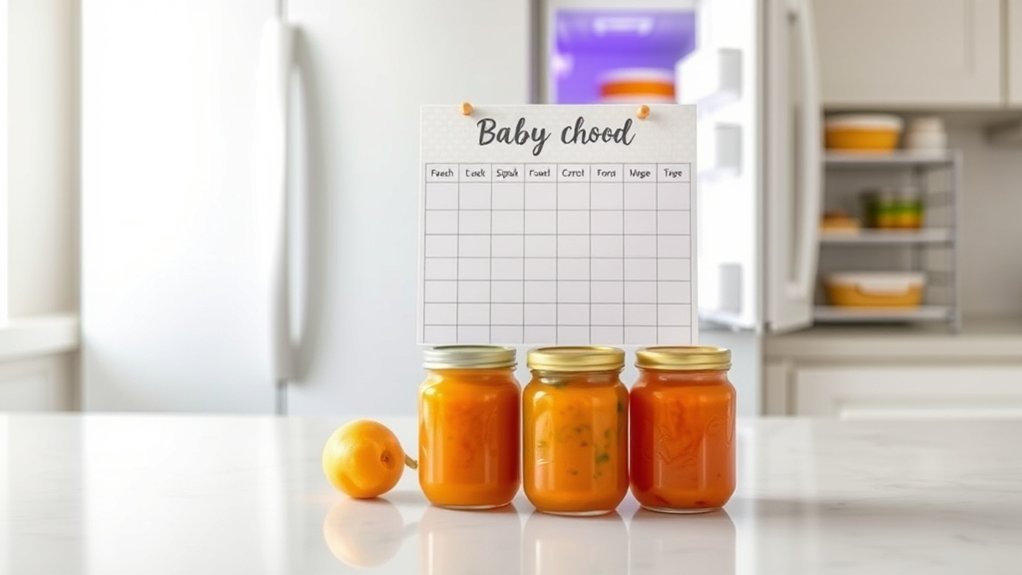
Children younger than five have developing immune systems and can become seriously ill or dehydrated from foodborne infections. Careful handwashing, cooking, cooling, and cold storage therefore matter even when a puree contains only familiar ingredients.
Keep your refrigerator at 40°F or below and your freezer at 0°F or below. An inexpensive appliance thermometer is more dependable than the refrigerator’s dial because the dial may show a setting rather than the actual temperature.
Safe storage is based on time and temperature—not only on whether the food still looks or smells normal.
How to Cool and Refrigerate Homemade Baby Food
- Wash first. Wash your hands with soap and water. Clean the blender, food processor, cutting board, knives, storage containers, and utensils with hot soapy water.
- Prepare food safely. Cook meat, poultry, fish, eggs, and firm produce thoroughly before pureeing or mashing them to the texture your baby can manage.
- Divide the batch. Spoon the food into clean, shallow containers or small portions. Smaller portions cool faster and reduce waste.
- Store promptly. Refrigerate or freeze the portions within two hours of preparation. If the room, car, or outdoor temperature is above 90°F, store the food within one hour.
- Label each portion. Write the food name, preparation date, and any major allergens on the container.
- Use older portions first. Arrange containers so the oldest dated food is easiest to reach.
Warning: Do not leave a pot or large bowl of baby food on the counter until it is completely cold. Divide it into shallow portions and move it to the refrigerator or freezer within the safe time limit.
How Long Can Baby Food Stay in the Refrigerator?
- General homemade baby food: one to two days.
- Strained fruit or vegetable puree: two to three days under the federal category, although a shorter limit may apply when it is part of a mixed homemade recipe.
- Strained meat or egg puree: one day.
- Meat and vegetable combinations: one to two days.
Count the preparation day as part of the storage period. When you are uncertain about when a container was made, discard it instead of tasting it to check.
Best Practices for Freezing Baby Food
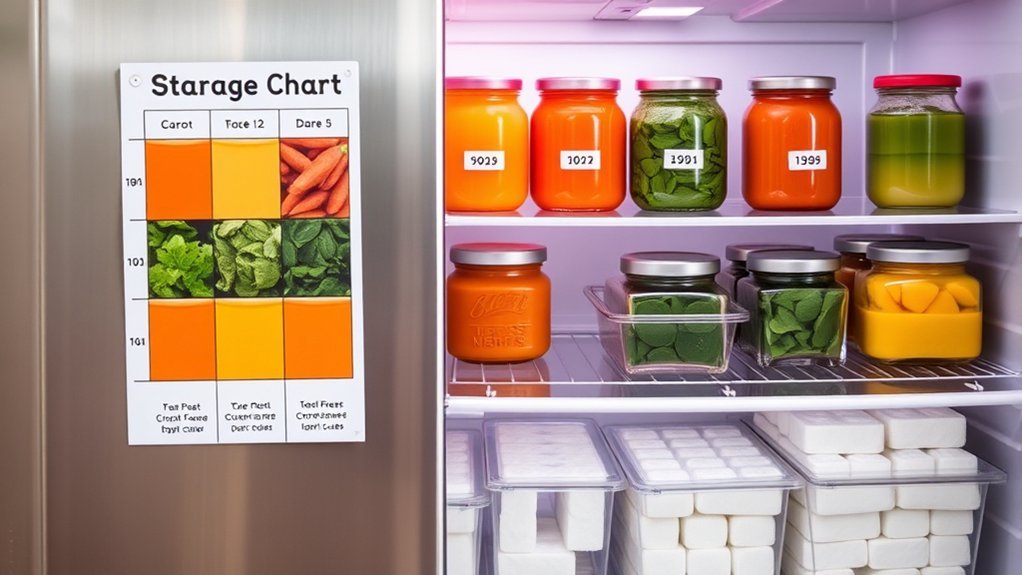
Freezing small portions lets you thaw only what you expect your baby to eat. It also reduces the number of times a larger batch is opened, warmed, and exposed to utensils.
Choose Freezer-Safe Containers
Use clean containers made for food storage and specifically marked freezer-safe. Suitable choices include covered silicone baby-food trays, rigid food-grade plastic containers, freezer bags, and freezer-safe glass jars.
- Choose an airtight or tightly closing lid to reduce moisture loss and freezer burn.
- Leave a small amount of headspace because food expands as it freezes.
- Do not use chipped or cracked glass.
- Do not assume a single-use commercial baby-food jar is freezer-safe.
- After tray portions are solid, move them into a labeled freezer bag or covered container.
Portion and Label the Food
Freeze food in amounts close to one serving. The exact portion will change as your baby grows, so small flexible portions are more useful than filling every container to the top.
Each label should include:
- The food or recipe name
- The preparation or freezing date
- Main ingredients
- Major allergens, such as egg, milk, wheat, peanut, tree nut, fish, shellfish, soy, or sesame
Pro Tip: Freeze portions in a single layer until solid, then group them in a larger labeled freezer container. This saves space while keeping portions separate.
How to Freeze a Fresh Batch
- Prepare the food with clean equipment.
- Divide it into small, shallow portions.
- Cover the portions tightly.
- Label them before the containers become wet or frosty.
- Place them in the freezer within two hours of preparation.
- Store them toward the back of the freezer, where the temperature changes less when the door opens.
- Use homemade portions within one to two months for a simple conservative rule.
Best Storage Containers for Baby Food
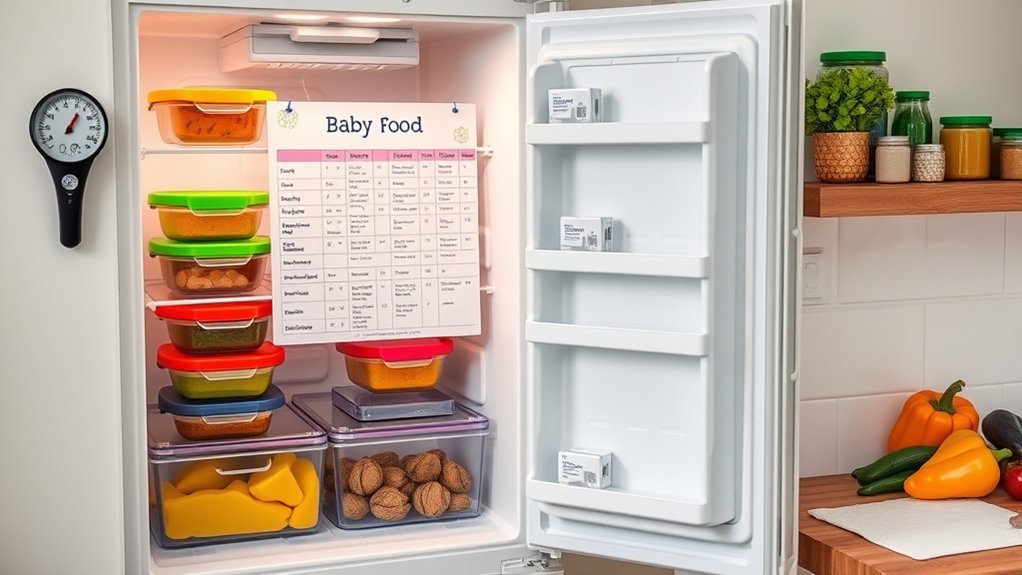
The best container is clean, food-grade, easy to seal, and appropriate for the temperature where it will be stored. No single material is best for every family.
- Covered silicone trays: Useful for creating small frozen portions. A lid is better than an uncovered tray because it protects the food from spills and odors.
- Freezer-safe glass jars: Reusable and easy to clean. Leave expansion space and avoid jars that are cracked, chipped, or not labeled for freezing.
- Rigid food-storage containers: Lightweight and stackable. Use products intended for refrigerator or freezer storage.
- Freezer bags: Space-saving after food has been frozen in individual portions. Remove excess air without crushing the food.
Airtight packaging helps reduce freezer burn, but it does not make food shelf-stable. Refrigerated and frozen baby food must remain at safe cold temperatures.
How to Safely Thaw Baby Food
The safest thawing method is the refrigerator because the food remains at a controlled temperature. Cold water and microwave thawing are faster options, but they need closer attention.
- Refrigerator: Move the required portion from the freezer to the refrigerator, preferably in a covered container. Allow it to thaw gradually.
- Cold water: Keep the food in a leakproof container or bag and place it in cold water. Change the water about every 30 minutes so it stays cold. Use the food promptly after thawing.
- Microwave: Transfer the food to a microwave-safe dish. Heat or thaw in short intervals, stir thoroughly, let it stand, and check the temperature before serving.
Warning: Never thaw baby food on the counter or in hot water. The outside can enter the 40°F–140°F temperature range where bacteria multiply while the center is still frozen.
Microwave Baby Food Carefully
The FDA recommends transferring baby food from its jar to a dish before microwaving. Microwaves can create hot spots, especially in thick purees.
- Stir the food from the center to the edges.
- Let it stand for at least 30 seconds after heating.
- Test several areas before feeding.
- Serve the food lukewarm, not hot.
- Use the stovetop rather than the microwave for baby-food meats, meat sticks, or eggs because their higher fat content can cause splattering and overheating.
Can Thawed Baby Food Be Refrozen?
Avoid routine refreezing because repeated thawing and freezing damages texture and makes storage tracking harder. However, USDA guidance allows food thawed in the refrigerator to be refrozen if it remained at 40°F or below and was handled safely.
Never refreeze baby food that:
- Was thawed on the counter
- Was left out longer than two hours, or one hour above 90°F
- Was served to the baby
- Was touched by a used spoon
- Has an uncertain temperature or storage history
What to Do With Leftovers After Feeding
Do not feed your baby directly from a jar, pouch opening, storage container, or full batch that you plan to save. Saliva transferred by the spoon can contaminate the remaining food.
- Place one expected serving in a clean bowl.
- Return the untouched storage container to the refrigerator promptly.
- Add more food to the bowl with a fresh clean spoon when needed.
- Discard food left in the serving bowl after the meal.
Warning: Refrigeration does not reverse contamination from saliva. Do not save, freeze, or reheat a portion after the baby has eaten from it.
How to Store Jars, Tubs, and Pouches
Keep unopened commercial baby food according to the manufacturer’s label. Shelf-stable products may remain in a cool, dry pantry until opened, but products sold refrigerated must stay refrigerated.
After opening:
- Follow the package’s storage and use instructions when they are stricter than general guidance.
- Write the opening date on the package or storage container.
- Refrigerate the untouched remainder immediately.
- Do not save a pouch after your baby has sucked directly from the spout.
- Do not freeze food in its original jar or package unless the manufacturer states that the package is freezer-safe.
- Discard packages that are leaking, swollen, cracked, unsealed, or otherwise damaged.
Can You Mix Different Purees Before Freezing?
Yes, you can mix purees after your baby has safely tried the individual ingredients. The CDC recommends starting with one single-ingredient food at a time so it is easier to identify possible reactions.
When combining tolerated foods:
- Use the shortest refrigerator or freezer limit for any ingredient in the recipe.
- Label every ingredient and major allergen.
- Do not combine a newly introduced allergen with several other new foods.
- Freeze the mixture promptly in small portions.
How to Recognize Spoilage and Freezer Burn
Discard baby food that has visible mold, unexpected bubbling, a broken seal, leaking packaging, an unusual odor, or major changes in appearance. However, foodborne bacteria do not always change a food’s smell, color, or taste. Always follow the storage-time and temperature rules even when the food appears normal.
Freezer burn usually appears as dry, discolored, or icy areas. It is caused by moisture loss and air exposure. According to the FDA, freezer burn is a quality issue rather than proof that food is unsafe. For baby food, discard a freezer-burned portion if its texture has become unpleasant or if you cannot confirm that it remained continuously frozen.
Can You Home-Can Baby Food?
Do not invent home-canning methods for pureed vegetables, meats, eggs, or mixed baby food. Purees heat differently from whole or chopped foods, and an untested process may not destroy dangerous microorganisms throughout the jar.
The National Center for Home Food Preservation publishes specific tested guidance for certain fruit-based baby foods. Unless you are following a current tested recipe exactly, use refrigeration or freezing instead of home canning.
Note: Ask your pediatrician for individualized food-preparation advice if your baby was born prematurely, has a weakened immune system, has swallowing difficulties, or has a diagnosed food allergy.
Frequently Asked Questions
Can you refreeze baby food after thawing?
It is best to avoid routine refreezing because quality declines. An untouched portion thawed in the refrigerator may be refrozen if it remained at 40°F or below. Never refreeze food that was served, exposed to a used spoon, thawed on the counter, or kept outside safe temperature limits.
How can I tell if baby food is spoiled?
Discard food with mold, leaking or damaged packaging, unexpected bubbling, an unusual odor, or a major change in appearance. Do not rely on smell or appearance alone, because harmful bacteria may be present without obvious warning signs. Follow the labeled date and storage limits.
Is it safe to store baby food in glass containers?
Yes, provided the glass container is clean, undamaged, food-grade, and marked freezer-safe when used in the freezer. Leave room for expansion, close the lid securely, and keep the food refrigerated or frozen rather than storing an opened or homemade puree in the pantry.
What are the signs of freezer burn on baby food?
Freezer burn may cause dry patches, discoloration, excess ice crystals, or a rough texture. It lowers quality but does not by itself prove that the food is unsafe. Discard the portion if its texture is unsuitable for your baby or its storage history is uncertain.
Can I mix different purees before freezing?
Yes, once your baby has tolerated the individual ingredients. Label every ingredient and allergen, freeze the mixture promptly, and use the shortest storage limit that applies to any ingredient in the recipe.
Can I refrigerate a jar after feeding my baby from it?
No. A spoon returned from your baby’s mouth can transfer saliva and bacteria to the jar. Put one serving in a separate clean bowl before feeding and refrigerate only the untouched food that remained in the original container.
Conclusion
Safe baby food storage comes down to five habits: keep appliances cold enough, store prepared food promptly, use clean portion-sized containers, label every batch, and discard food exposed to your baby’s saliva. Use homemade food within one to two days refrigerated and, for a conservative rule, within one to two months frozen. When categories or dates are uncertain, choose the shorter limit rather than taking a risk.
Sources
- FoodSafety.gov — Children Under Five — federal refrigerator and freezer storage times for pureed and solid baby food.
- U.S. Food and Drug Administration — Once Baby Arrives — feeding-container contamination, freezing, storage, and microwave precautions.
- FoodSafety.gov — Four Steps to Food Safety — refrigerator temperature, two-hour rule, shallow-container cooling, and counter-thawing warning.
- USDA Food Safety and Inspection Service — Safe Defrosting Methods — refrigerator, cold-water, and microwave thawing guidance.
- Centers for Disease Control and Prevention — Introducing Solid Foods — single-ingredient introduction, food preparation, and allergen tracking.
- National Center for Home Food Preservation — Canning Fruit-Based Baby Foods — tested home-preservation guidance and limitations.