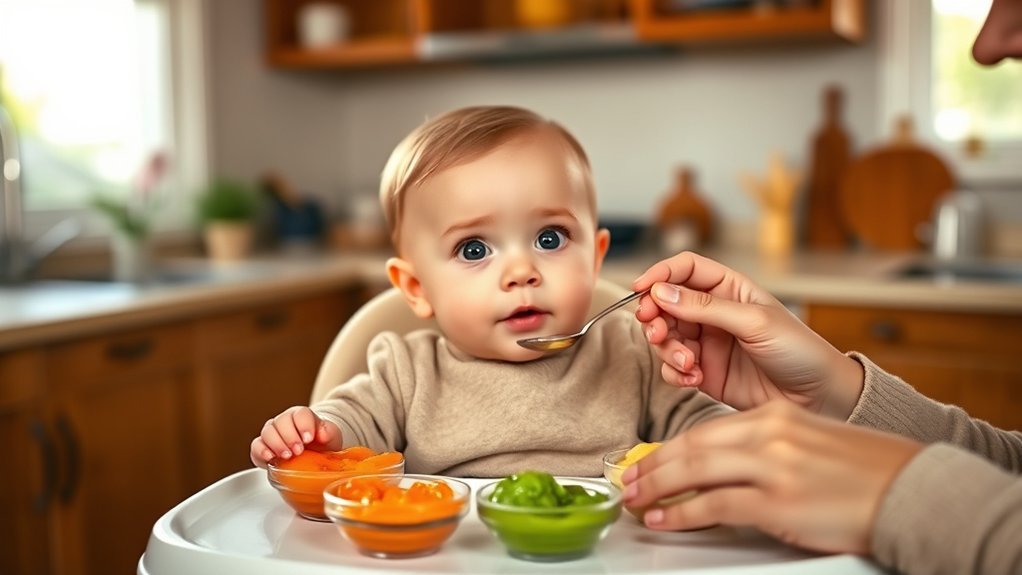
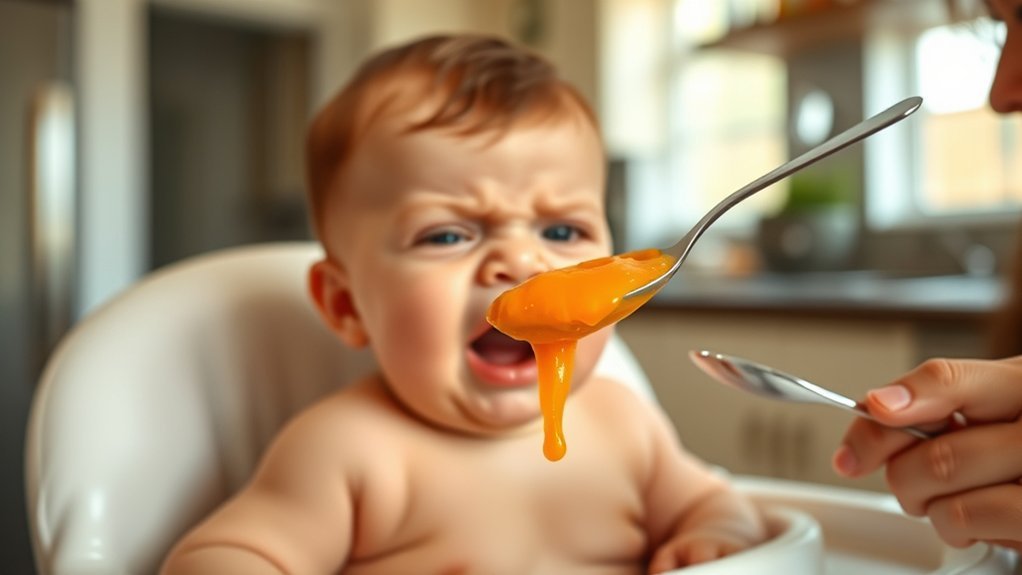
Seeing your baby push food back out can be messy and worrying, but it is often part of learning to eat solid foods. A new texture, a spoonful that is too large, fullness, teething discomfort, or still-developing mouth skills can all play a role. The key is to watch what happens before, during, and after the food comes out.
Quick Answer
Spitting out food is often normal when a baby is learning to manage solids, exploring an unfamiliar texture, or signaling fullness. Stay calm, offer small amounts of soft food, and avoid pressure. Contact your pediatrician if it is persistent or occurs with coughing, breathing trouble, pain, repeated vomiting, dehydration, or poor growth.
Key Takeaways
- Occasionally pushing food out is common while a baby learns how to move, chew, and swallow new textures.
- Pause and check whether your baby is simply refusing the bite, gagging, vomiting, or showing signs of choking.
- Use small portions, an upright seat, a calm pace, and food prepared for your baby’s current developmental skills.
- Do not force another bite when your baby closes their mouth, turns away, or pushes food away.
- Seek medical advice for persistent coughing, choking, pain, frequent vomiting, wet or raspy breathing, feeding exhaustion, or poor growth.
At a Glance
| Time Required | A few calm minutes during each meal; improvement may take repeated practice over days or weeks |
| Difficulty | Usually easy, provided the baby is developmentally ready and has no feeding disorder |
| Tools Needed | Upright high chair, age-appropriate spoon, bib, and food prepared in a safe texture |
| Cost | Usually no additional cost |
Note: This article provides general education for babies who are beginning solid foods. It cannot diagnose an allergy, reflux condition, oral-motor delay, or swallowing disorder. Contact your child’s healthcare professional when you are unsure whether a feeding behavior is normal.
Why Is My Baby Spitting Out Food?
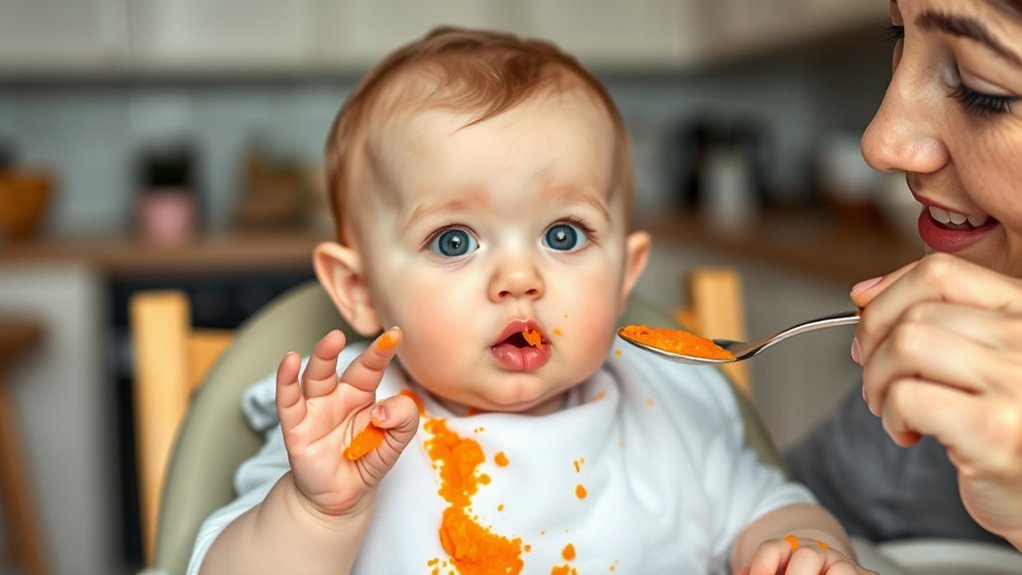
Your baby may push food out because eating from a spoon or handling finger foods requires a new set of skills. The tongue must move food from the front of the mouth toward the back, the jaw must begin managing texture, and swallowing must happen at the right time.
The CDC recommends starting solid foods at about 6 months, when a baby shows readiness signs such as steady head control, sitting alone or with support, opening for food, and swallowing rather than consistently pushing food back onto the chin.
Even a ready baby may spit out an unfamiliar taste or texture. Other common explanations include:
- Your baby is full and no longer wants another bite.
- The spoonful is too large or arrives too quickly.
- The texture is thicker, lumpier, drier, or more slippery than expected.
- Your baby is tired, distracted, sick, or uncomfortable from teething.
- The food is difficult to manage in its current shape or firmness.
- Your baby is experimenting by moving food in and out of the mouth.
One rejected bite does not prove that your baby dislikes the food. Acceptance may take many low-pressure exposures, but there is no required number of attempts that works for every child.
Understanding the Reasons Behind Baby Spitting
Before deciding what to do, identify what “spitting out food” looks like. Several different feeding events can appear similar at first.
| What You See | What It May Mean | How to Respond |
|---|---|---|
| Food rolls or is pushed out while the baby remains calm | Texture learning, limited readiness, fullness, or refusal | Pause, offer a smaller amount, and stop if the baby continues to refuse |
| Noisy gagging, retching, watery eyes, or the tongue moving forward | A protective gag reflex bringing food toward the front of the mouth | Stay calm and watch closely; review the texture and bite size before continuing |
| Milk or stomach contents flow back up after eating | Spit-up or reflux rather than food rejection | Discuss frequent, painful, forceful, bloody, green, or growth-affecting episodes with a clinician |
| Forceful emptying of the stomach, often with distress | Vomiting caused by illness, allergy, reflux, or another condition | Stop the meal and seek medical guidance based on severity and accompanying symptoms |
| The baby cannot cry, cough effectively, or breathe | Possible choking and airway blockage | Begin trained infant choking first aid and call 911 |
Gagging is usually noisy because air is still moving. Choking may be quiet because the airway is blocked.
Warning: If your baby cannot breathe, cry, or cough effectively, treat it as choking—not normal food refusal. Remove the baby from the high chair, call 911, and use infant choking first aid if you are trained. Review the difference between gagging and choking, and consider taking an infant CPR and first-aid course before starting finger foods.
The Importance of Oral Motor Skills in Eating
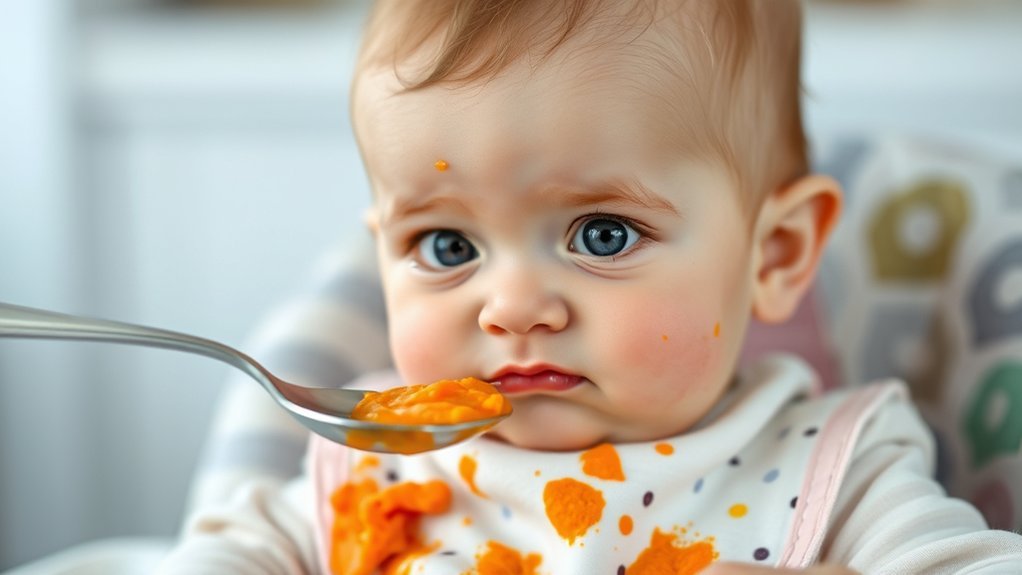
Oral-motor skills allow your baby to close their lips around a spoon, move food with the tongue, bite or mash soft food, and coordinate swallowing. These abilities develop through safe practice rather than appearing all at once.
The CDC explains that exposure to different tastes and textures can support chewing and food-acceptance skills. Begin with a texture your baby can handle, then gradually offer mashed, lumpy, finely chopped, or soft finger foods as their abilities improve.
Some coughing or gagging may occur during this learning period. However, coughing at nearly every meal, frequent choking, a wet or raspy sound after swallowing, food coming from the nose, repeated chest infections, or poor weight gain should not be dismissed as ordinary practice.
Children with persistent feeding or swallowing symptoms may need assessment by a pediatrician and, when appropriate, a speech-language pathologist, occupational therapist, dietitian, gastroenterologist, allergist, or multidisciplinary feeding team.
What Should You Do If Your Baby Spits Out Food?
When food comes back out, avoid immediately placing it back into your baby’s mouth. Use the moment to check safety, comfort, and feeding cues.
- Pause and observe. Confirm that your baby is breathing comfortably and is not choking.
- Stay calm. A startled or anxious reaction can make the meal more stressful.
- Check the bite. Reduce the amount on the spoon or prepare the food in a softer, easier-to-manage texture.
- Slow the pace. Wait for your baby to open their mouth rather than bringing repeated spoonfuls quickly.
- Watch for fullness. Closing the mouth, turning away, pushing food away, or losing interest can mean the meal is over.
- Offer another opportunity later. Reintroduce the food without pressure on another day.
- Record persistent patterns. Note the food, texture, amount, symptoms, and time of day if you plan to speak with a clinician.
The CDC advises caregivers to let children decide how much they eat and to respond to hunger and fullness cues. Your baby does not need to finish every spoonful or empty the bowl.
Pro Tip: Begin with one or two small spoonfuls. A small serving reduces waste and makes it easier to stop when your baby shows fullness or discomfort.
How to Encourage Positive Eating Habits

Positive eating habits grow from predictable, pressure-free meals. Your role is to offer suitable food in a safe setting. Your baby’s role is to decide whether and how much to eat.
Lead by Example
Sit with your baby when possible and let them watch you eat. Simple demonstrations can help:
- Take a bite and chew slowly where your baby can see you.
- Name the food without demanding that your baby taste it.
- Describe simple features such as “soft banana” or “warm oatmeal.”
- Show a neutral reaction if your baby rejects or spits out a bite.
Avoid exaggerated praise for eating or disappointment when food is refused. Keeping your response steady helps prevent mealtime from becoming a contest.
Create a Positive Atmosphere
Seat your baby upright in a stable high chair and limit screens, toys, rushing, and other distractions. According to the CDC’s choking-prevention guidance, children should sit upright, eat in a calm setting, and be watched at all times.
Allow safe touching and handling of food. Smearing, squeezing, smelling, and bringing food toward the mouth are all ways a baby learns about texture.
Stop when your baby repeatedly turns away, closes their mouth, pushes food away, cries, arches, or becomes too tired to participate. Extending a stressful meal rarely improves intake.
How to Introduce New Foods to Your Baby
Introduce food according to developmental readiness rather than the date alone. Most babies begin around 6 months, but individual skills and medical history matter.
Check Readiness for Solid Foods
Your baby should generally be able to:
- Sit upright alone or with support
- Hold their head and neck steady
- Open their mouth when food is offered
- Bring objects toward their mouth
- Move food backward and swallow rather than pushing nearly every bite onto the chin
If your baby is younger than about 6 months, lacks these skills, or pushes out nearly all food, pause and discuss readiness with your pediatrician rather than repeatedly forcing practice.
Gradual Exposure to Textures
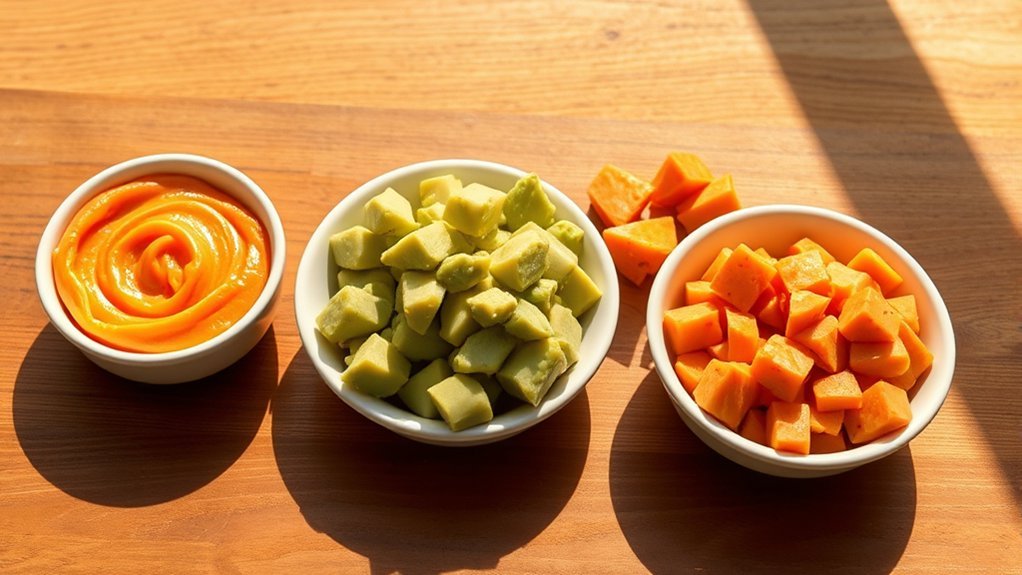
Start with food that is soft enough for your baby’s current skills. Depending on readiness, that may include smooth puree, mashed food, a thicker lumpy texture, or an appropriately prepared soft finger food.
A practical progression may include:
- Smooth mashed or pureed foods
- Thicker mashed foods
- Soft foods with small lumps
- Finely chopped or ground foods
- Soft finger foods prepared in a safe size and shape
Do not move backward after every gag. Instead, review whether the texture was appropriate, whether the serving was too large, and whether your baby remained in control. Progress gradually as skills improve.
Observe Your Baby’s Reactions
A surprised face, tongue movement, or one rejected bite does not necessarily mean dislike. Continue observing:
- Did your baby remain calm?
- Was breathing normal?
- Did gagging stop on its own?
- Did the baby continue opening for food?
- Were there signs of pain, coughing, vomiting, rash, swelling, or unusual sleepiness?
The CDC recommends offering one new single-ingredient food at a time initially and waiting three to five days before another new food when you are trying to identify a possible reaction. Potential allergens can be introduced when other foods are introduced rather than being unnecessarily delayed.
Common allergens include peanut, egg, cow’s-milk products, wheat, soy, sesame, fish, shellfish, and tree nuts. Prepare them in a non-choking form. For example, do not offer whole nuts or a thick spoonful of nut butter.
If your baby has severe eczema, an existing food allergy, or a previous reaction, ask the pediatrician how and when to introduce allergenic foods.
Offer Variety Regularly
There is no required order for first foods. Suitable choices may include:
- Iron-fortified oat, barley, or multigrain infant cereal
- Mashed beans, lentils, meat, poultry, fish, or well-cooked egg
- Plain full-fat yogurt without added sugar
- Soft vegetables and fruits
- Avocado or other foods containing healthy fats
- Soft whole-grain foods prepared for the baby’s skills
Avoid relying only on rice cereal. The CDC recommends varying fortified grains because feeding only infant rice cereal may increase arsenic exposure.
Breast milk or iron-fortified infant formula remains an important source of nutrition while solid foods are gradually introduced. Solids complement milk feeding rather than replacing it all at once.
Signs That Indicate You Should Be Concerned About Spitting
Occasional food rejection is usually manageable at home. Contact your child’s healthcare professional when the behavior is persistent, worsening, painful, or associated with other feeding or health problems.
| Sign | Why It Matters | Recommended Action |
|---|---|---|
| Food is pushed out at nearly every meal or with every texture | May indicate limited readiness, oral sensitivity, or a feeding-skill problem | Arrange a pediatric assessment |
| Frequent coughing, choking, gagging, or wet and raspy sounds during meals | May suggest difficulty coordinating swallowing | Stop the meal and contact the child’s clinician |
| Meals regularly take a very long time or leave the baby exhausted | The baby may be working too hard to eat | Discuss feeding efficiency and growth with the pediatrician |
| Pain, back arching, persistent crying, or frequent vomiting with meals | May be associated with reflux, inflammation, illness, or allergy | Request medical evaluation |
| Poor weight gain, weight loss, dehydration, or fewer wet diapers | The baby may not be receiving or retaining enough fluid and nutrition | Seek prompt medical advice |
| Hives, facial swelling, coughing, wheezing, repeated vomiting, or unusual drowsiness after a food | May be an allergic reaction | Follow the child’s allergy plan; use emergency care for severe symptoms |
Persistent coughing, choking, frequent vomiting, wet vocal sounds, nasal regurgitation, and poor growth are among the symptoms described in pediatric swallowing-disorder guidance. A clinician may recommend a feeding or swallowing evaluation when these signs are present.
Warning: Call 911 for trouble breathing, inability to swallow, blue or pale coloring, collapse, severe weakness, or possible anaphylaxis. If your child has prescribed epinephrine and symptoms match the emergency plan, give it immediately and then call 911. Review the American Academy of Pediatrics’ anaphylaxis guidance.
How Teething Affects Your Baby’s Eating Habits
Sore gums can temporarily make a baby less willing to bite, chew, or accept a spoon. A texture that was comfortable last week may feel irritating during a difficult teething day.
Teething may explain a temporary change in eating, but persistent fever, repeated vomiting, breathing problems, or prolonged refusal should not automatically be blamed on teeth.
Helpful adjustments include:
- Use a chilled solid teething ring or clean, cool washcloth before the meal.
- Offer a familiar puree, mash, or yogurt cool if your baby already eats it safely.
- Choose softer versions of familiar food while the gums are sore.
- Offer smaller servings and accept that the baby may eat less at one meal.
- Continue breast milk or formula feeds according to your baby’s normal routine.
Avoid assuming that any refrigerated food is safe. Raw cucumber, hard fruit, ice, whole frozen berries, and other firm foods may be choking hazards unless prepared appropriately for the baby’s developmental skills. The American Academy of Pediatrics recommends cool teething items that are safe to chew.
Tips for Creating a Positive Mealtime Environment
A consistent routine can make it easier to understand why your baby is spitting out food and reduce preventable feeding problems.
- Choose a suitable time. Offer solids when your baby is alert and not extremely hungry or exhausted.
- Use upright positioning. Support the hips, trunk, and feet so the baby can focus on eating.
- Limit the meal length. End the meal when your baby loses interest or becomes distressed.
- Keep portions small. Add more only when your baby remains interested.
- Avoid forcing the spoon. Wait for the mouth to open before offering a bite.
- Let the baby participate. Allow safe touching, self-feeding, and spoon practice.
- Remove pressure. Do not bribe, distract, or repeatedly scrape food from the lips back into the mouth.
- Repeat without demanding. Offer a rejected food again on another day beside a familiar food.
Consistency does not mean making your baby eat the same amount every day. Appetite naturally varies with growth, sleep, illness, teething, and milk intake.
Frequently Asked Questions
How can I tell if my baby is allergic to a food?
Food-allergy symptoms may include hives, swelling, coughing, wheezing, vomiting, diarrhea, pale coloring, unusual drowsiness, or breathing and swallowing trouble. Stop serving the suspected food and contact your pediatrician. Trouble breathing, lip or tongue swelling, collapse, or symptoms affecting several body systems may indicate anaphylaxis and require emergency treatment.
What are the best first foods for my baby?
There is no required first-food order. Offer developmentally appropriate foods from several groups, including iron-rich meat, beans, lentils, egg, or fortified cereal; vegetables and fruits; plain yogurt; healthy fats; and varied grains. Prepare each food so it is soft and easy for your baby to manage.
How is gagging different from choking?
Gagging is usually noisy. A baby may cough, retch, water at the eyes, turn red, or move the tongue forward while air continues to pass. Choking may be quiet and can prevent the baby from crying, coughing effectively, or breathing. Suspected choking requires immediate first aid and emergency help.
How long should I wait before introducing another new food?
When first introducing single-ingredient foods, waiting three to five days can make it easier to identify a reaction. Common allergenic foods can be introduced with other complementary foods around 6 months when the baby is ready. Ask the pediatrician first if your baby has severe eczema, an existing allergy, or a previous reaction.
Can my baby’s spitting be related to illness or discomfort?
Yes. Teething, mouth sores, congestion, reflux, constipation, infection, allergy, or another source of pain can reduce willingness to eat. Contact the pediatrician when refusal is sudden, persistent, painful, accompanied by fever or vomiting, or affecting fluid intake and wet diapers.
What if my baby spits out every bite?
Check whether your baby is developmentally ready, seated upright, alert, and receiving a small amount in an easy texture. If nearly every bite comes out over several attempts, pause and speak with the pediatrician. The baby may need more time or an evaluation of oral-motor and swallowing skills.
Should I put food back into my baby’s mouth after it comes out?
Do not repeatedly scrape food from the lips and push it back in. Pause, offer a smaller fresh spoonful if your baby remains interested, and stop when the baby closes their mouth, turns away, cries, or pushes food away.
When might my baby need a feeding or swallowing evaluation?
Ask about an evaluation if your baby frequently coughs or chokes during meals, develops wet or raspy breathing after swallowing, vomits often, takes unusually long to eat, becomes exhausted while feeding, has repeated respiratory infections, or is not gaining weight as expected.
Conclusion
It is common for babies to push out some food while they learn new tastes, textures, and mouth movements. Respond by staying calm, checking for gagging or choking, using small portions, matching the texture to your baby’s skills, and respecting signs of fullness.
At the same time, do not assume that every feeding problem is a normal phase. Persistent coughing, choking, pain, repeated vomiting, breathing changes, allergic symptoms, dehydration, or poor growth deserve medical attention. Early guidance can make meals safer and help your baby build eating skills with less stress.
Sources
- CDC: When, What, and How to Introduce Solid Foods — readiness signs, first foods, allergens, textures, and food preparation
- CDC: Tastes and Textures — texture progression, chewing development, coughing, gagging, and adjustment
- CDC: Choking Hazards — safe preparation, positioning, supervision, and mealtime environment
- CDC: Signs Your Child Is Hungry or Full — responsive feeding and infant fullness cues
- American Academy of Pediatrics: Food Allergies in Children — allergy symptoms, early allergen introduction, and emergency treatment
- Nationwide Children’s Hospital: Dysphagia in Children — swallowing red flags and indications for professional evaluation