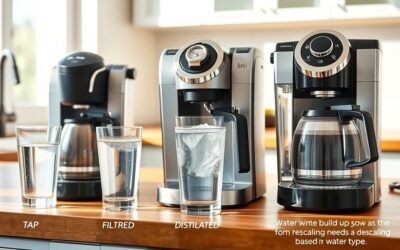
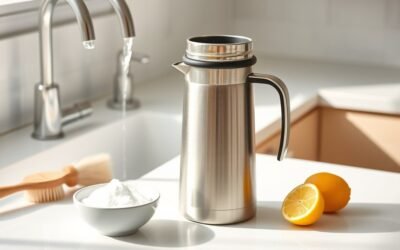
Using distilled water in a coffee maker isn’t ideal since it lacks essential minerals like calcium and magnesium, which enhance flavor extraction. When brewing, distilled water can lead to flat or overly bitter coffee, impacting your overall experience. If you want a balanced cup, consider mineral additives or alternatives like bottled spring or filtered water, which retain beneficial minerals. Discover more about the effects of water quality on your brew and better alternatives to enhance flavor.
Key Takeaways
- Distilled water can be used in a coffee maker, but it lacks essential minerals needed for optimal flavor extraction.
- Using distilled water may result in flat-tasting coffee and sharp or bitter notes due to the absence of calcium and magnesium.
- Adding mineral supplements or mixing distilled water with mineral water can enhance flavor and achieve a balanced taste.
- Ideal brewing water should have a TDS of around 150 ppm; distilled water is often below this level.
- Alternatives like bottled spring water or filtered water systems are recommended for better brewing results.
Why Water Quality Matters for Coffee Brewing

Water quality plays a vital role in coffee brewing, as it directly influences the flavor and aroma of your cup. Since water constitutes 98% of your coffee, its composition considerably affects flavor extraction.
The ideal total dissolved solids (TDS) level is around 150 ppm; anything too low or too high can distort your coffee’s flavor profile. Minerals like calcium and magnesium enhance extraction, while balanced alkalinity guarantees brightness without overpowering acidity.
In addition, impurities like chlorine can taint your brew, making proper water filtration indispensable. By choosing filtered or bottled water, you can achieve a clean, consistent taste, guaranteeing that the rich flavors of your coffee shine through.
Prioritizing water quality is essential for an exceptional coffee experience.
What’s the Deal With Distilled Water and Coffee Flavor?
While many coffee enthusiasts seek the purest brewing methods, using distilled water can lead to unexpected challenges in flavor. Here’s what you need to take into account:
- Distilled water lacks essential minerals like calcium and magnesium.
- These minerals are vital for ideal coffee extraction and flavor development.
- Brewing with distilled water often results in flat-tasting or over-extracted coffee.
- You might encounter sharp or bitter tastes instead of a balanced cup.
- To counteract this, think about adding mineral supplements like potassium bicarbonate.
Ultimately, while distilled water may seem appealing due to its purity, its lack of minerals can compromise your coffee’s flavor profile.
While distilled water offers purity, its absence of minerals can detract from your coffee’s flavor richness.
For the best results, aim for a balanced TDS level to enhance your brewing experience.
Understanding Total Dissolved Solids (TDS) and Their Role in Coffee Flavor
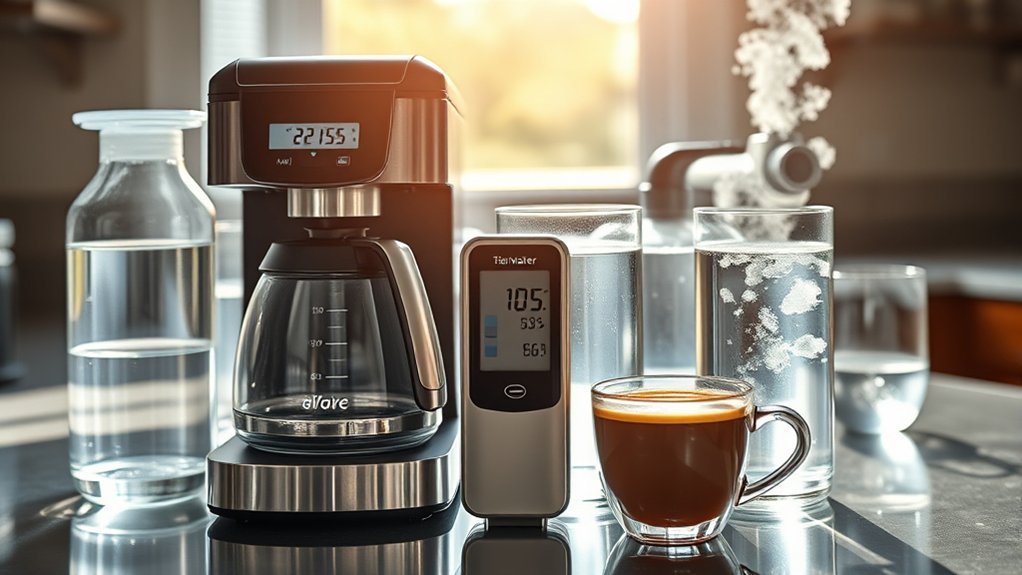
Total Dissolved Solids (TDS) play an essential role in defining the quality of your coffee. TDS measurement indicates the concentration of dissolved substances in your brewing water, ideally around 150 ppm.
When TDS levels drop below 75 ppm, you risk under-extraction, resulting in watery coffee. Conversely, levels above 250 ppm can lead to over-extraction, muddling flavors.
The mineral balance in your water, particularly calcium and magnesium, directly influences extraction efficiency. Moderate hardness enhances flavor, while excessively hard or soft water can create undesirable taste profiles.
Maintaining proper TDS levels guarantees peak solubility of coffee compounds during brewing, greatly impacting the flavor, aroma, and overall quality of your cup. Regular testing can help you achieve that perfect balance.
Is Distilled Water the Best Choice for Brewing Coffee?
When it comes to brewing coffee, the type of water you use greatly impacts the final flavor and aroma.
While distilled water offers some benefits, it’s not the best choice for achieving peak taste.
Distilled water may have its advantages, but it falls short for optimal coffee flavor.
Consider these points:
- Distilled water lacks essential minerals like calcium and magnesium.
- The absence of minerals can lead to flat-tasting coffee.
- Ideal Total Dissolved Solids (TDS) for coffee is around 150 ppm, while distilled water is at 0.
- Adding minerals back into distilled water, like potassium bicarbonate, can enhance flavor.
- Relying solely on distilled water may cause over-extraction and bitterness.
How Water Hardness Affects Your Coffee’s Flavor
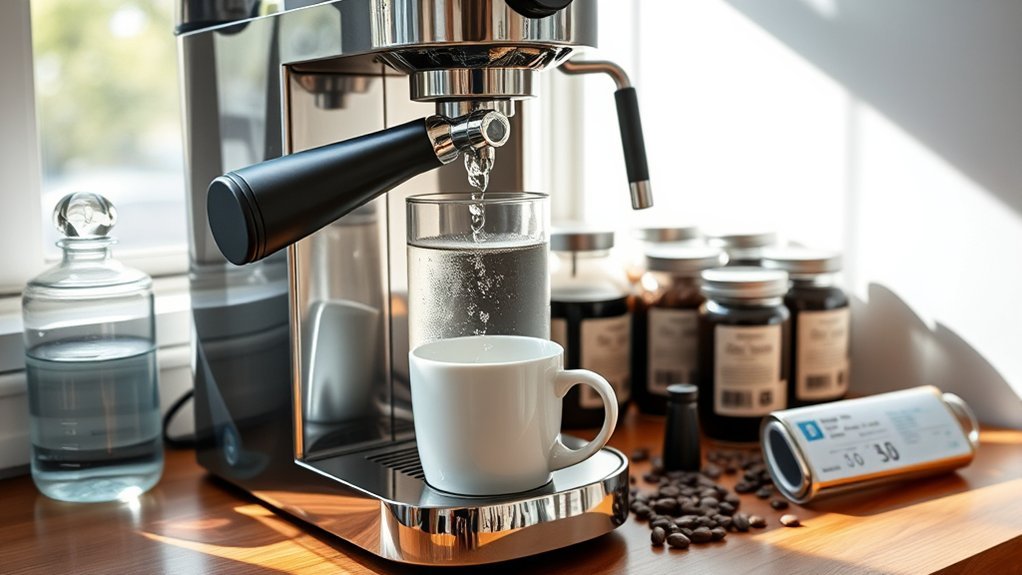
Water hardness greatly influences your coffee’s flavor by affecting the extraction of essential compounds during brewing.
You’ll find that a moderate range of mineral content is ideal, as both excessively hard and very soft water can lead to undesirable taste outcomes.
Monitoring your water hardness guarantees you achieve a balanced flavor profile in your cup.
Impact of Mineral Content
While you mightn’t think about it, the mineral content in your water greatly influences the flavor of your coffee. Achieving the right mineral balance is essential for peak extraction efficiency.
- Moderately hard water enhances flavor extraction.
- Excessively hard water can lead to bitter notes.
- Very soft water results in flat flavors.
- Total dissolved solids (TDS) around 150 ppm are ideal.
- Regular descaling prevents mineral buildup in your machine.
Using water with the right hardness guarantees that you’re extracting the full range of flavors from your beans.
Too much or too little mineral content can muddle your coffee’s taste, making it imperative to pay attention to your water quality for the best brew.
Ideal Hardness Range
Achieving the ideal hardness range for your brewing water is vital for maximizing coffee flavor extraction.
Water chemistry plays a significant role here; optimal hardness, typically between 50 to 175 ppm, guarantees balanced extraction. This range helps you avoid the pitfalls of hard water, which can introduce bitter flavors and cause scaling in your coffee maker.
Conversely, very soft water may leave your brew lacking depth and character. By maintaining balanced mineral content, you enhance your coffee’s flavor profile, resulting in a smoother, more satisfying cup.
Regularly monitoring and adjusting your water hardness is essential to guarantee consistent quality and protect your brewing techniques from potential damage.
Take these steps for a superior coffee experience.
Flavor Extraction Process
Understanding how water hardness affects flavor extraction is essential for brewing an exceptional cup of coffee.
The right mineral content can greatly influence your coffee’s flavor profile and extraction balance. Here are some key points to reflect on:
- Moderate hardness enhances the extraction of desirable flavor compounds.
- Ideal water hardness falls within a middle range for balanced extraction.
- Total dissolved solids (TDS) around 150 ppm optimize solubility.
- Water below 75 ppm often leads to under-extraction.
- Using distilled water can result in flat-tasting coffee due to a lack of essential minerals.
Should You Add Minerals to Distilled Water for Coffee?
Have you ever wondered if adding minerals to distilled water can enhance your coffee experience?
Distilled water lacks essential minerals like calcium and magnesium, which are vital for achieving a proper mineral balance during extraction. Without these minerals, your coffee could taste flat or overly bitter.
Distilled water misses essential minerals like calcium and magnesium, leading to coffee that can taste flat or overly bitter.
By adding minerals such as potassium bicarbonate, you can enhance the coffee’s acidity and overall flavor profile. This addition can help reach the ideal total dissolved solids (TDS) level of around 150 ppm, critical for peak brewing.
Experimenting with different concentrations allows you to tailor the flavor enhancement to your personal preferences, ultimately elevating your coffee experience when using distilled water.
Top Tips for Brewing Coffee With Distilled Water
When brewing coffee with distilled water, it’s essential to adjust the mineral content for ideal flavor extraction.
Monitor your brewing temperature closely, as this can greatly impact the taste of your coffee.
Adjust Mineral Content
To brew a flavorful cup of coffee with distilled water, adjusting the mineral content is essential. Proper mineral balance can greatly enhance the taste profile of your brew.
Here are some tips to keep in mind:
- Add a small amount of mineral-rich salts, like potassium bicarbonate, for flavor improvement.
- Mix distilled water with mineral water to achieve a total dissolved solids (TDS) level of around 150 ppm.
- Regularly test the pH of your water, aiming for a range between 7.5 to 8.
- Use additives like baking soda in moderation to adjust pH levels.
- Focus on enhancing smoothness to prevent bitterness and elevate your overall coffee experience.
Monitor Brewing Temperature
Monitoring the brewing temperature is essential for achieving the best flavor extraction when using distilled water in your coffee maker. The ideal range is between 83° to 92° Celsius. Staying within this range helps avoid temperature fluctuations that can lead to over-extraction or flat flavors.
Distilled water lacks essential minerals, so the right temperature becomes even more critical for maintaining brewing consistency. Avoid boiling the water, as excessively high temperatures can scorch the coffee, resulting in bitter notes.
While experimenting with slightly higher temperatures may enhance complex flavors, make certain not to exceed the recommended range. Regularly checking the brewing temperature guarantees your coffee retains its desired flavor profile, especially when using mineral-free water.
What Are the Best Alternatives to Distilled Water for Coffee Brewing?
While distilled water is often recommended for coffee brewing due to its purity, there are several alternatives that can enhance flavor and maintain quality.
Consider these options:
- Bottled spring water: Brands like Zephyrhills or Crystal Geyser offer essential minerals for flavor enhancement.
- Filtered water: Using systems like Brita can effectively remove impurities while keeping beneficial minerals intact.
- Low TDS mineral water: Ideal for balanced mineral content and ideal extraction.
- Potassium bicarbonate: Adding a small amount to distilled water can improve flavor profiles.
- Tap water: If it has acceptable hardness and low chlorine levels, it may yield a richer taste.
How to Maintain Your Coffee Maker When Using Distilled Water
Using distilled water can simplify the maintenance of your coffee maker by reducing scaling, but it doesn’t eliminate the need for regular upkeep. You should still perform routine descaling to prevent any buildup from minerals in coffee grounds. Monitor the taste of your brew, as distilled water may lack essential minerals for peak flavor extraction. Consider adding a mineral supplement like potassium bicarbonate to enhance the flavor profile.
| Maintenance Task | Frequency |
|---|---|
| Descaling | Every 2-3 months |
| Cleaning exterior | Weekly |
| Replacing coffee filter | Monthly |
Following the manufacturer’s recommendations for coffee maker maintenance guarantees your machine operates efficiently, allowing you to fully enjoy the distilled water benefits.
User Experiences: What Coffee Lovers Say About Distilled Water
Many coffee lovers have strong feelings about using distilled water, particularly regarding taste and maintenance.
While some appreciate the reduced scaling in their machines, they often report that the flavor of their coffee suffers due to the lack of essential minerals.
You’ll find that most users prefer bottled or filtered water for a better brewing experience and overall quality.
Taste Preferences Among Users
Though some coffee enthusiasts experiment with distilled water, their experiences often reveal a consensus on its impact on taste.
Many report that using distilled water leads to flat-tasting coffee, lacking essential minerals for ideal flavor extraction.
User experiences suggest:
- Coffee brewed with distilled water may have sharp or bitter notes.
- Many prefer bottled or filtered water for a more balanced taste.
- Some recommend enhancing distilled water with mineral additives.
- Personal preferences vary widely; some users enjoy distilled water with enhancements.
- Others strongly advise against it for the best flavor.
Ultimately, your taste preferences will guide your choice, but many find that distilled water often detracts from the overall coffee experience.
Maintenance Insights Shared
Coffee enthusiasts often find themselves weighing the benefits of distilled water against its impact on flavor. Users report that using distilled water can greatly reduce scaling in coffee makers, enhancing machine longevity and decreasing maintenance frequency.
However, many caution that distilled water lacks essential minerals, which might lead to flat-tasting coffee and insufficient flavor extraction. Personal experiences shared in coffee forums suggest that while distilled water minimizes buildup, it often falls short in producing a satisfying flavor profile.
Some users recommend blending distilled water with potassium bicarbonate to strike a balance between purity and flavor enhancement. Feedback from the coffee community indicates that while distilled water aids in maintenance, its effects on taste should be carefully considered to avoid compromising your brewing experience.
Brewing Quality Observations
While distilled water offers clear benefits for machine maintenance, its impact on brewing quality has sparked varying opinions among coffee lovers.
Many enthusiasts believe that using distilled water can lead to:
- Flat or dull-tasting coffee due to the absence of essential minerals
- Reduced scaling in coffee machines, enhancing longevity
- A preference for filtered water with balanced minerals for richer flavors
- Recommendations to add mineral supplements like potassium bicarbonate to improve taste
- A consensus that distilled water isn’t ideal for best flavor extraction without added minerals
Ultimately, your choice of water sources is vital.
If you’re focused on perfecting your brewing techniques, consider experimenting with alternatives to distilled water for a more flavorful cup.
Frequently Asked Questions
Can Distilled Water Damage My Coffee Maker Over Time?
Yes, using distilled water can lead to long-term effects like mineral buildup and potential damage. To maintain your coffee maker, consider regular cleaning and using filtered water, ensuring peak performance and longevity.
How Does Distilled Water Affect Coffee’s Caffeine Content?
Distilled water can affect caffeine extraction, potentially leading to lower caffeine levels in your brew. Its purity may alter the flavor profile, resulting in a less robust taste compared to using mineral-rich water.
Is There a Specific Ratio for Mixing Distilled Water and Minerals?
There isn’t a specific ratio, but achieving the perfect mineral balance is essential for ideal water quality. Experiment with adding a pinch of minerals to distilled water, and you’ll elevate your coffee experience remarkably.
Can I Use Distilled Water for Cold Brew Coffee?
Yes, you can use distilled water for cold brew coffee. It enhances cold brew benefits by providing a clean base, allowing the coffee’s natural flavor profile to shine without interference from minerals or impurities.
Does Distilled Water Affect the Brewing Temperature of Coffee?
Using distilled water doesn’t greatly affect your coffee’s brewing temperature. However, it may impact brewing efficiency and temperature stability due to the lack of minerals, which can influence heat retention and overall flavor extraction in your brew.
Conclusion
To sum up, while you can use distilled water in your coffee maker, it may not be the best choice for ideal flavor. Without minerals, your brew might taste flat, like a song missing its melody. Instead, consider using water with balanced mineral content to enhance your coffee experience. Ultimately, experimenting with different water types can lead you to discover the perfect cup that resonates with your palate. Happy brewing!