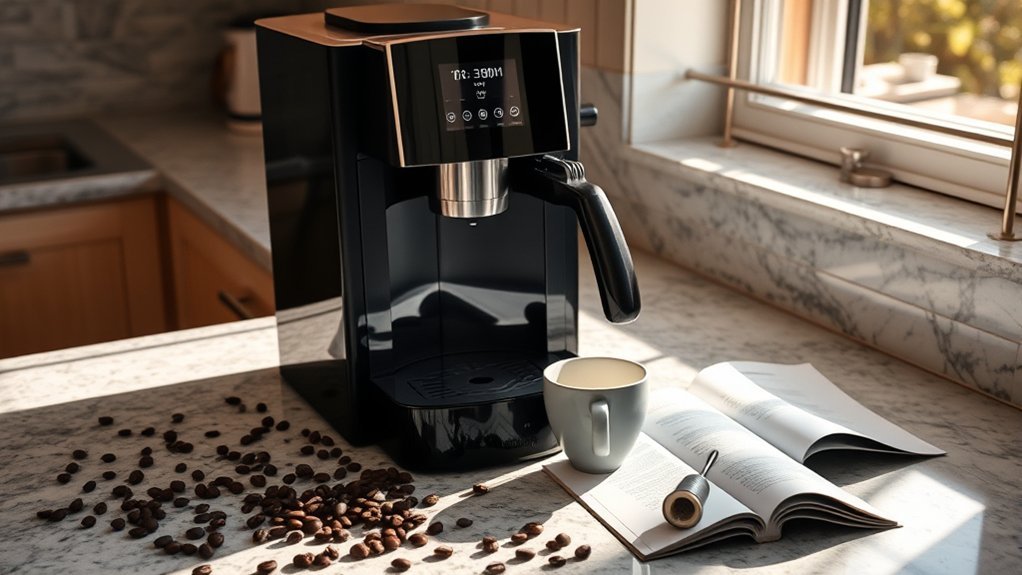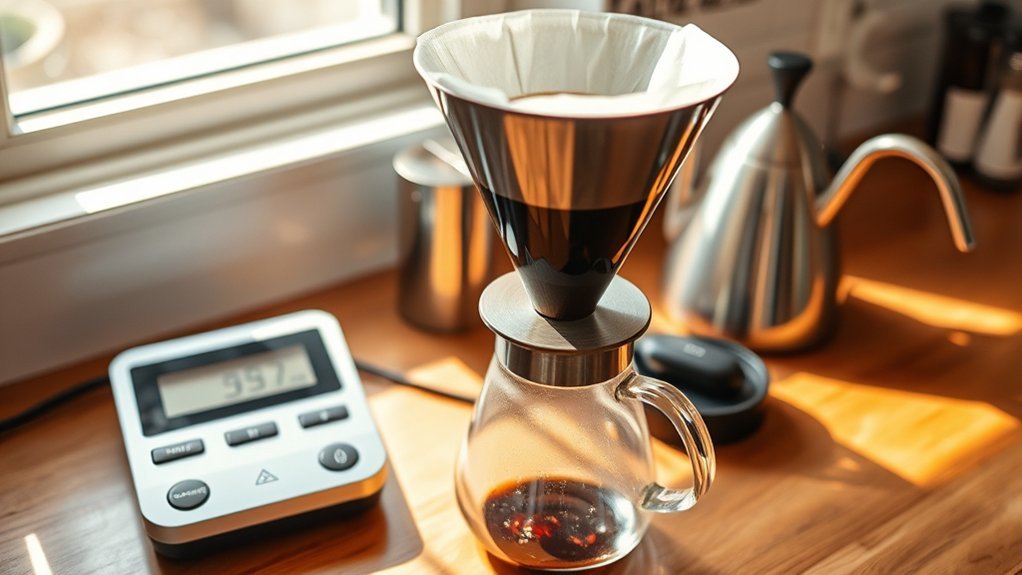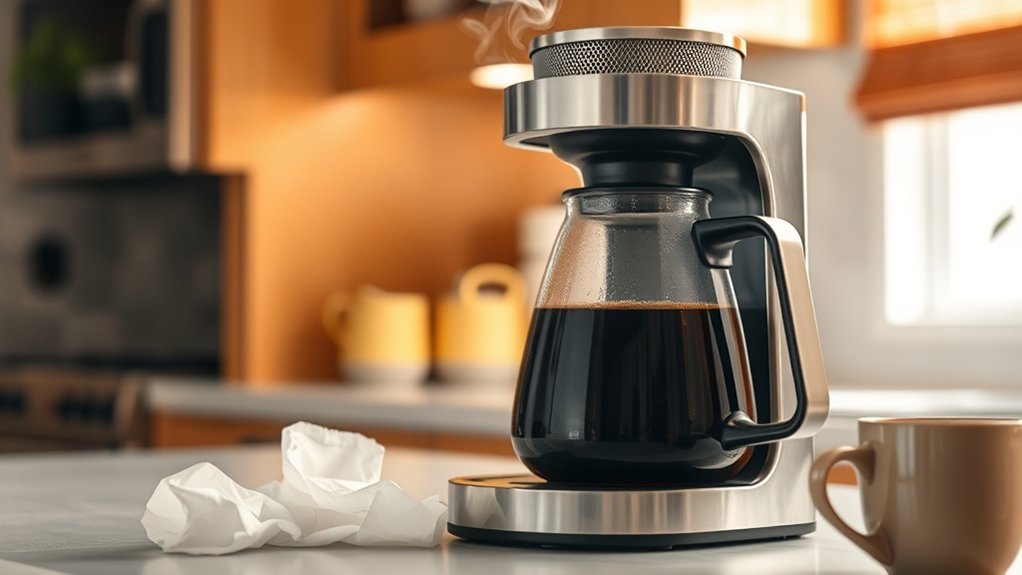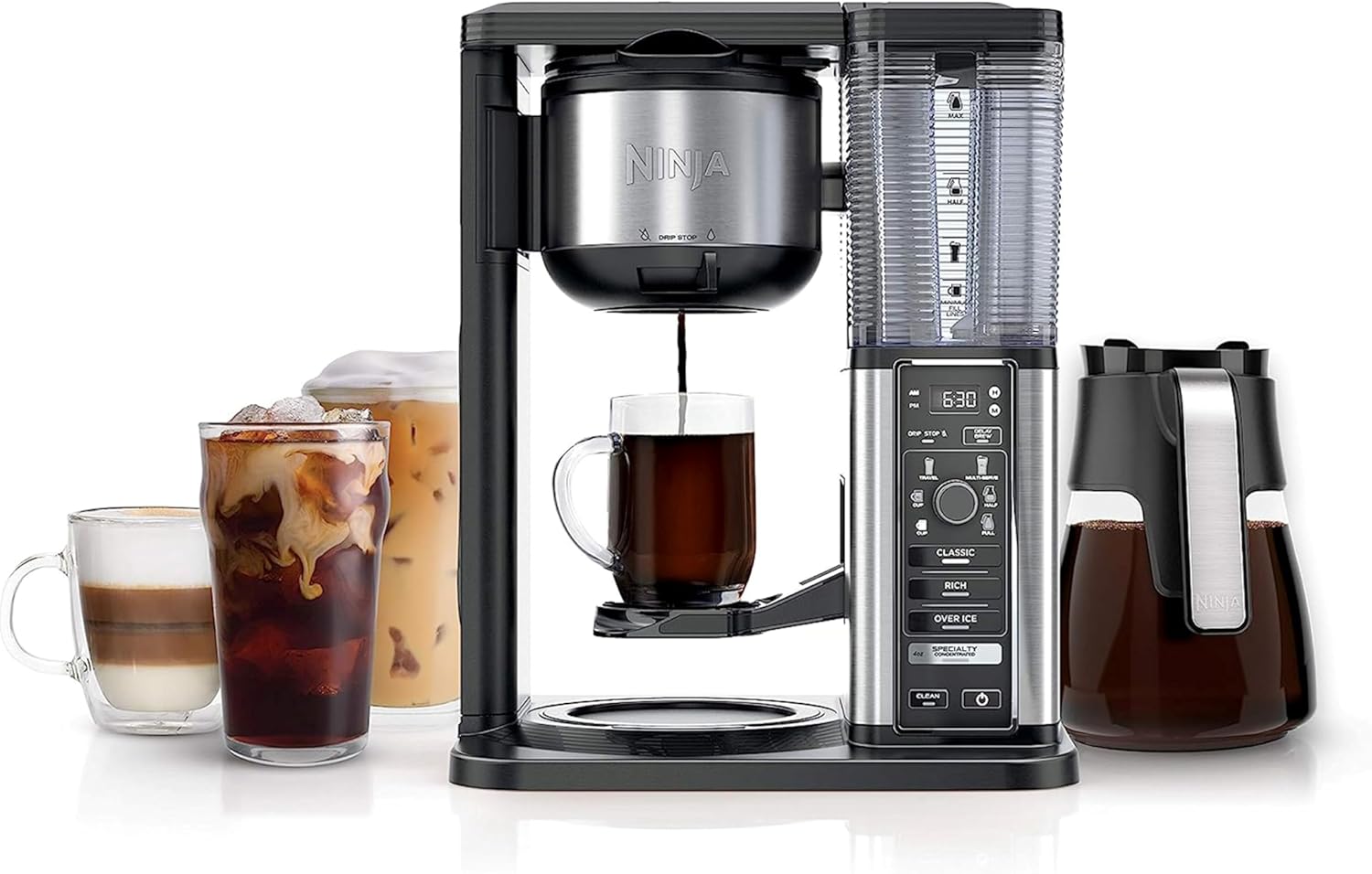
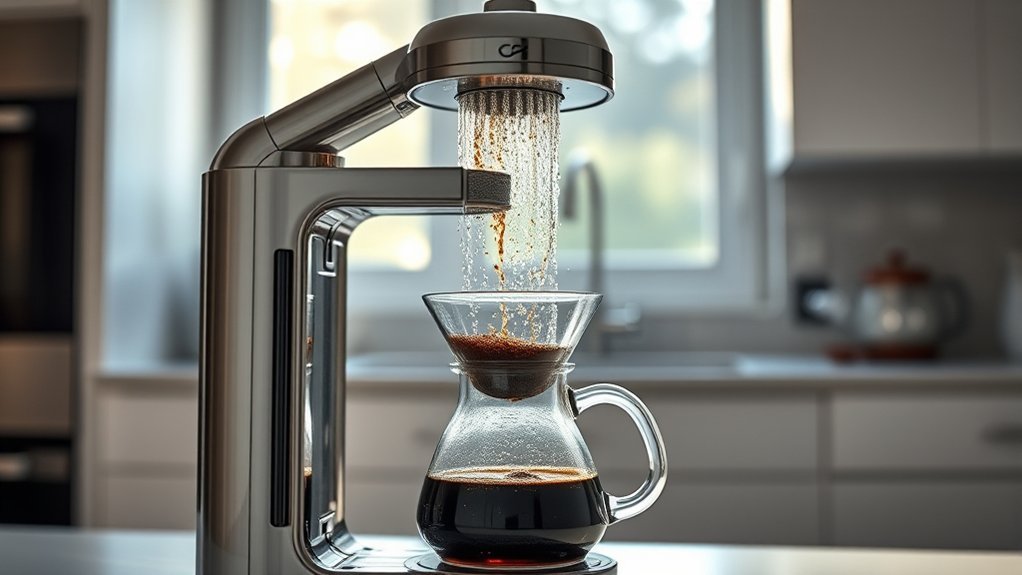
A coffee maker showerhead is the outlet that spreads hot brewing water across the coffee bed instead of sending it to one small spot. Drip brewers use a showerhead above the filter basket, while espresso machines use a related but different part called a shower screen beneath the group head. If either part becomes dirty, blocked, or damaged, water distribution can become less consistent.
Quick Answer
A coffee maker showerhead spreads brewing water over the grounds. Clean it when residue or scale interferes with normal flow, and replace it only if it is damaged or remains blocked after proper cleaning. On espresso machines, the installed shower screen is different from an optional puck screen placed on top of the coffee.
Key Takeaways
- A drip coffee maker showerhead and an espresso shower screen both distribute water, but they are not interchangeable parts.
- Even water distribution supports more consistent extraction, but grind, dose, basket design, tamping, pressure, and flow still matter.
- A puck screen is optional and sits on top of the tamped espresso puck; it also takes up some headspace.
- Shower-screen compatibility depends on the exact machine, group-head geometry, mounting method, and dimensions, not one nominal portafilter size.
- Cleaning the showerhead or shower screen removes residue at the outlet; descaling is a separate process for mineral buildup inside the water path.
What Is a Coffee Maker Showerhead and What Does It Do?

A coffee maker showerhead spreads hot water over the coffee grounds during brewing. On an automatic drip brewer, it sits above the filter basket and typically uses several openings to wet a wider area of the coffee bed.
This matters because water concentrated in one spot can extract that area differently from grounds receiving less water. The OXO Rainmaker showerhead, for example, is designed to distribute water evenly over the grounds. The Specialty Coffee Association also highlights even coffee-bed saturation as a feature of a certified Bonavita drip brewer.
The goal is not simply to have more holes. The goal is to deliver brewing water across the coffee bed in a controlled, repeatable way.
On a traditional espresso machine, the comparable installed component is the shower screen. It sits beneath the group head and disperses brewing water above the compressed bed of finely ground coffee.
A clean, properly seated showerhead or shower screen supports repeatable flow. If it becomes clogged, warped, cracked, or otherwise damaged, water may leave the outlet in restricted or irregular streams.
Shower Screen vs. Puck Screen: What Is the Difference?
An espresso shower screen is part of the machine, while a puck screen is a removable accessory placed directly on top of the tamped coffee. They can both influence how water first reaches the coffee, but they do different jobs.
| Part | Where It Sits | Main Job |
|---|---|---|
| Drip showerhead | Above the filter basket | Spreads brewing water over loose coffee grounds |
| Espresso shower screen | Installed beneath the group head | Disperses brew water above the compacted puck |
| Puck screen | On top of the tamped coffee inside the basket | Adds another diffusion layer and can reduce grounds reaching the group head |
- Machine shower screen: This fixed or removable group-head part spreads incoming brewing water before it reaches the coffee.
- Puck screen: This optional removable disc sits directly on the tamped puck and creates another dispersion layer between the machine’s shower screen and the coffee.
- Cleaner group head: A puck screen can reduce how much loose coffee reaches the machine’s shower screen during brewing and pressure release.
- Water distribution: Both can affect initial wetting, but grind quality, distribution, dose, tamping, basket design, pressure, and flow remain important.
Manufacturers such as IMS Filtri describe puck screens as an additional diffusion layer. IMS also says the screen should match the basket’s internal diameter and leave enough headspace above the coffee.
Note: A puck screen is optional. If your espresso already tastes balanced and the stock shower screen distributes water well, the most noticeable benefit may simply be easier group-head cleanup.
Why Headspace and Puck Condition Matter

Headspace is the empty gap between the top of the prepared coffee puck and the espresso machine’s shower screen before brewing. Basket depth, dose, grind, puck height, group-head design, and any added puck screen can all change that gap.
You need enough clearance to lock the portafilter in normally without forcing an overfilled puck or thick accessory hard against the shower screen. However, there is no single ideal headspace for every machine. Different group-head designs use different clearances, and changing that space can change how water enters and saturates the puck.
Decent Espresso defines headspace as the empty space between the coffee puck and shower screen and documents how group-head design can change it. IMS says its standard puck diffuser is usually about 1.7 mm thick, so some setups may need a slightly lower coffee dose when one is added.
If your machine provides a dosing or clearance tool, use that method first. Some home baristas also use a gentle coin-impression check to spot obvious overfilling, but the goal is not to compress the dry coffee hard against the shower screen.
Pro Tip: When you add a puck screen, check its thickness before keeping the same dose. The screen occupies part of the available headspace, so a setup that was already full may need less coffee.
Does a Dry Espresso Puck Mean the Shot Was Good?
No. A firm, dry puck is convenient to knock out, but puck dryness by itself does not prove that the grind, dose, tamp, or extraction was correct.
Espresso machines handle residual water differently after a shot, and headspace also affects how wet the spent puck looks. Treat puck appearance as one troubleshooting clue, not the final score for the espresso.
A better evaluation combines:
- how the espresso tastes;
- the coffee dose and beverage yield;
- shot-to-shot repeatability;
- whether the flow shows obvious channeling or spurting; and
- whether changes to grind size or puck preparation improve the cup.
Can Upgrading an Espresso Shower Screen Improve Flavor?
It can, but it is not a guaranteed upgrade. An aftermarket espresso shower screen makes the most sense when the stock screen is damaged, difficult to clean, poorly matched to your goals, or when you deliberately want to test a different water-distribution design.
Precision-screen manufacturers use different perforation layouts, integrated membranes, and surface treatments. IMS Competition shower screens, for example, use a photo-etched 200 µm membrane in certain designs, and some versions use a non-stick Nanoquartz coating intended to reduce coffee-oil adhesion.
Before replacing a stock screen:
- Clean it thoroughly. Coffee oils and fine particles can alter water flow.
- Check the machine’s normal flow pattern. Water with no coffee puck present does not always behave exactly as it does under brewing conditions.
- Inspect the screen and gasket. A bent screen, damaged mesh, deteriorated seal, or heavy blockage may be the real problem.
- Change one variable at a time. If you replace the screen while also changing the basket, dose, grind, and puck preparation, you will not know which change affected the cup.
A compatible aftermarket screen may improve cleanliness or consistency in a particular setup, but treat it as a tuning option rather than a guaranteed flavor fix.
How Do You Choose the Right Shower Screen or Puck Screen?

Start with compatibility, not marketing claims. A shower screen that differs by only a few millimeters in the wrong place may not seat correctly, even if its advertised size sounds close to your portafilter size.
Choosing an Espresso Shower Screen
Check the exact espresso-machine or group-head model first. Then compare every measurement and mounting detail provided by the screen manufacturer.
- external or body diameter;
- border or internal diameter where applicable;
- wall height or profile;
- center-hole size or screw thread;
- mounting style; and
- manufacturer compatibility listing.
There is no universal “54 mm” shower screen for every machine that uses a 54 mm-class portafilter. IMS sells shower screens in different geometries for E61, E70, and machine-specific groups. Use the exact part specification or manufacturer compatibility listing rather than choosing by nominal portafilter diameter alone.
Choosing a Puck Screen
A puck screen is matched mainly to the inside diameter of the filter basket, not the diameter of the group-head shower screen. It should sit flat on the prepared puck without binding against the basket wall.
Consider:
- Diameter: Match it to the basket’s usable internal width.
- Thickness: A thicker screen uses more headspace.
- Construction: Stainless-steel mesh and precision-perforated discs are common designs.
- Ease of cleaning: Fine mesh can retain coffee particles and oils if it is not rinsed regularly.
- Thermal behavior: A cold metal screen can absorb some heat when brewing water first reaches it.
The visible hole count alone does not tell you how a screen will perform. Hole size, pattern, thickness, flow resistance, basket fit, and the rest of the brewing system all influence the result.
How to Clean a Coffee Maker Showerhead or Espresso Shower Screen
At a Glance
| Time Required | About 5–15 minutes for routine cleaning; deeper cleaning varies by machine |
| Difficulty | Easy for routine rinsing and wiping; machine-specific disassembly may require more care |
| Tools Needed | Soft cloth or brush, warm water, and any cleaner specifically approved by the machine manufacturer |
| Cost | Usually little or no cost for routine rinsing; cleaning products vary by machine |
Routine cleaning removes coffee residue from the visible water-distribution parts. Deeper cleaning, backflushing, and descaling depend on the machine, so follow the manual for your exact model rather than applying one method to every brewer.
Warning: Espresso group heads and shower screens can stay hot after brewing. Before removing a shower screen, switch off the machine, unplug it when the manufacturer instructs you to do so, release pressure if applicable, and let the group head cool.
Cleaning a Drip Coffee Maker Showerhead
If the showerhead is removable, follow the brewer manual for removal and washing. Rinse away loose coffee residue and clean any accessible deposits using only methods approved for that model.
Do not treat showerhead cleaning and descaling as the same job. Cleaning targets residue on removable or accessible parts; descaling targets mineral buildup inside the machine’s water path and should use the procedure and solution specified for your brewer.
Cleaning an Espresso Shower Screen
After brewing, a brief group-head purge can help remove loose grounds. Once the group is safe to touch, wipe accessible residue from the shower screen with a damp cloth or a suitable group-head brush.
For deeper cleaning, follow the machine manual. Some espresso machines support detergent backflushing, while others use different cleaning cycles. Breville, for example, recommends regular shower-screen cleaning and provides model-specific cleaning and backflush guidance.
Do not automatically pour vinegar through an espresso machine. Cleaning and descaling chemistry differs among manufacturers, so use only the method approved for your model.
Cleaning a Puck Screen
Rinse the puck screen after each use so coffee fines and oils do not dry in the mesh or perforations. IMS recommends rinsing after every shot; for heavy use, its guidance also calls for periodic deeper cleaning with hot water and suitable espresso-machine detergent.
If the screen has a specialty coating, check its care directions before using strong detergents or abrasive brushes. IMS warns that harsh chemicals and abrasive cleaning can shorten the life of its Nanoquartz coating on coated shower screens.
How to Troubleshoot Uneven Water Flow
If a drip brewer suddenly wets the coffee unevenly or an espresso group starts producing restricted or irregular flow, begin with the easiest causes. Cleanliness and scale are more common starting points than an immediate parts replacement.
1. Check for Coffee Residue
Fine grounds and coffee oils can partially block openings. Clean the showerhead or shower screen according to the machine manual, then test the flow again.
2. Check for Scale
Mineral buildup can restrict the water path upstream of the showerhead or screen. If the manufacturer calls for descaling, complete the approved descaling cycle rather than trying to clear only the visible outlet.
3. Inspect the Screen or Showerhead
Look for a bent metal screen, torn mesh, cracked plastic, corrosion, damaged mounting points, or openings that remain blocked after proper cleaning.
4. Inspect Nearby Seals
On an espresso machine, a worn group gasket can cause leaks around the portafilter even when the shower screen is fine. A leak at the group head does not automatically mean the screen needs replacement.
5. Recheck Coffee Preparation
If the hardware is clean and undamaged but espresso still channels, investigate grind size, distribution, basket dose, tamp level, and puck preparation. A new shower screen cannot compensate for every preparation problem.
When Should You Replace the Showerhead or Shower Screen?
Replace the part when it is physically damaged, warped, cracked, corroded, permanently blocked, or no longer seats correctly. Replacement can also be appropriate when the manufacturer identifies the component as a service item.
Do not replace an espresso shower screen only because the spent puck is wet or because the free-flow water pattern looks visually imperfect with no portafilter installed. Clean the machine, check the gasket and related group-head parts, and judge actual brewing performance first.
When ordering a replacement, use the machine’s exact model number and the component manufacturer’s compatibility information. Screens with similar advertised diameters can still differ in height, curvature, mounting hole, or screw specification.
Frequently Asked Questions
How Often Should I Clean My Coffee Maker Showerhead?
Follow your machine’s manual rather than relying on one universal monthly schedule. Remove visible coffee residue promptly, rinse or wipe accessible parts regularly, and perform deeper cleaning at the interval specified by the manufacturer. High-use espresso machines may need group-head attention weekly or even routine purging after each brewing session.
Can a Shower Screen Fit Any Coffee Machine?
No. Espresso shower-screen compatibility depends on the machine or group-head design, external diameter, wall height, center hole or screw, and other geometry. Check the exact machine model and the screen manufacturer’s compatibility information before ordering.
What Materials Are Shower Screens Typically Made From?
Espresso shower screens are commonly made from stainless steel, including woven or precision-perforated designs. Some have specialty surface coatings. Drip-coffee showerheads vary more by machine and may use metal or heat-resistant molded components. Silicone is commonly used for nearby seals or gaskets rather than as the filtering surface of a traditional espresso shower screen.
Do Shower Screens Affect Brew Time?
They can influence flow and initial water distribution, but a shower-screen change does not produce one predictable change in shot time. Espresso flow also depends strongly on grind size, dose, basket resistance, coffee preparation, pressure, and the machine’s flow profile. Dial the espresso in again after changing a screen if shot behavior changes.
How Do I Know if My Shower Screen Is Worn Out?
Clean it first. Replacement becomes more likely if the screen is bent, torn, corroded, damaged around its mounting point, permanently clogged, or unable to seat correctly. Persistent flow problems after proper cleaning may also justify inspection of the screen, gasket, diffuser, and other group-head parts.
What Is the Difference Between a Coffee Maker Showerhead and an Espresso Shower Screen?
A drip coffee maker showerhead sits above the filter basket and spreads water over loose coffee grounds. An espresso shower screen sits beneath the group head and distributes pressurized brewing water above a compacted coffee puck. They serve related purposes but are not interchangeable parts.
Do I Need a Puck Screen for Espresso?
No. A puck screen is an optional accessory. It can help keep the group-head shower screen cleaner and may change initial water distribution, but good espresso can be made without one. If you add a puck screen, make sure it fits the basket and leaves adequate headspace.
Conclusion
A coffee maker showerhead helps spread brewing water instead of concentrating it in one area. In drip brewers, it sits above the filter basket; in espresso machines, the related installed part is the group-head shower screen.
Clean the existing part before assuming it needs an upgrade, and choose replacements by exact machine compatibility rather than nominal diameter alone. If you use a puck screen, treat it as an optional tool for water distribution and cleanup, and make sure it leaves enough headspace.
Sources
- Specialty Coffee Association — Bonavita Certified Home Brewer — supports even showerhead saturation and uniform drip-coffee extraction.
- OXO — Rainmaker Showerhead — supports the function of a removable drip-coffee showerhead and even water distribution.
- Breville — How to Clean the Shower Screen — supports espresso shower-screen function and maintenance.
- IMS Filtri — Competition Shower Screens — supports machine-specific screen designs, precision filtration, coatings, and compatibility requirements.
- IMS Filtri — Puck Diffuser Screens — supports puck-screen sizing, headspace, and cleaning guidance.
- Decent Espresso — Group-Head Design and Headspace — supports the definition and brewing relevance of espresso puck headspace.