Yes, you can brew coffee without a paper filter, but the best method depends on your equipment. A compatible reusable metal filter, a dedicated cloth coffee filter, a French press, or a fine-mesh sieve is more reliable than an improvised household material. A plain paper towel may work as a one-time backup, but it is not a manufacturer-approved coffee filter and can tear or slow drainage.
Quick Answer
You can make coffee without a paper filter by using a compatible permanent filter, dedicated cloth coffee sock, French press, or fine-mesh sieve. If you have no strainer, steep the grounds and let them settle before pouring slowly. Treat a paper towel only as a supervised, one-time backup.
Key Takeaways
- Use the permanent filter, grounds basket, or other filter system approved for your coffee maker whenever possible.
- For manual brewing, a dedicated cloth coffee filter, French press, or fine-mesh sieve is more dependable than an improvised paper product.
- If you have no filter or strainer at all, steep the grounds, let them settle, and slowly decant the coffee.
- A paper towel is an emergency, single-use option—not a routine replacement for a coffee filter.
- Avoid facial tissues, wax paper, parchment paper, printed napkins, scented materials, and previously worn socks.
- Metal and coarse cloth filters usually allow more oils and sediment into the cup than paper, although the exact result depends on the filter and brewing method.
At a Glance
| Time Required | 5–10 minutes |
| Difficulty | Easy |
| Tools Needed | Coffee maker or heat-safe container, kettle, spoon, and a compatible filter alternative or settling method |
| Cost | Usually $0 with suitable kitchen tools; reusable filters cost extra |
Can You Brew Coffee Without a Paper Filter?
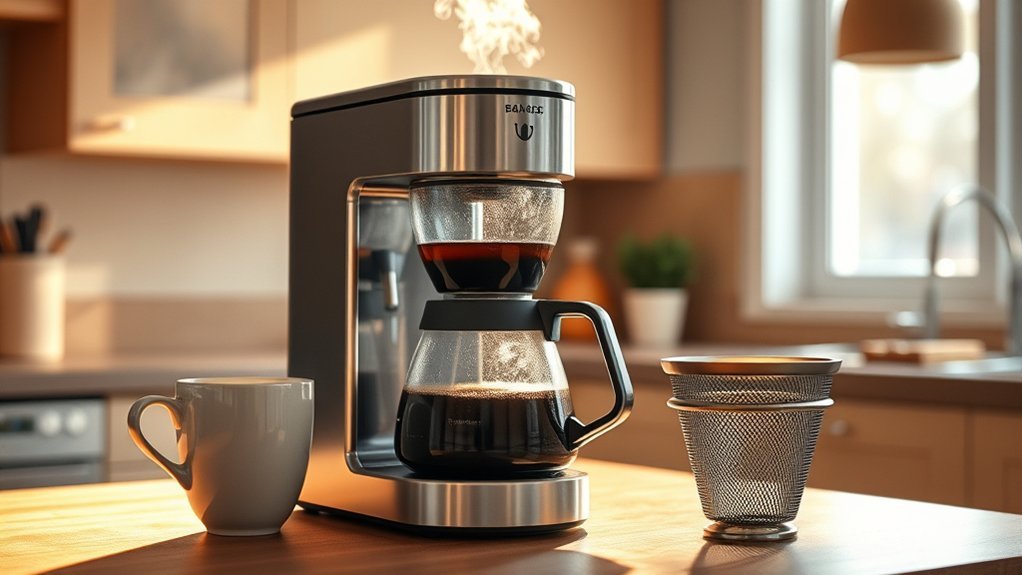
Yes. Many coffee makers can brew with a reusable metal filter or built-in grounds basket, while manual methods can separate the grounds with a dedicated cloth filter, French press, or fine-mesh sieve. The important question is not simply whether you can skip paper; it is whether the alternative fits the brewer and lets water move through at the intended rate.
Check the manufacturer’s directions before running an automatic machine. Some models are designed to use a permanent filter without paper, while others require a specific paper filter or basket assembly. For example, Hamilton Beach notes that a paper filter is optional in one FlexBrew removable grounds basket, but the required basket and funnel still must be installed correctly. Follow the instructions for your exact coffee maker.
Warning: Do not place loose grounds directly into an automatic drip or pod machine unless its manual specifically permits that brewing setup. Grounds can clog passages, enter the cup or carafe, or contribute to a hot overflow. Never open, reposition, or remove a brew basket while hot coffee is flowing.
Filter material also changes what reaches your cup. Paper filtration generally removes more fine sediment and reduces the amount of coffee oils and diterpenes such as cafestol that reach the beverage. Metal, cloth, and other brewing systems vary considerably, however, so their diterpene levels cannot be predicted from the filter material alone. The grind, filter construction, brew method, and extraction all matter. Research comparing several coffee preparations shows how widely cafestol levels can differ among brewing methods.
If a clinician has advised you to limit unfiltered coffee because of cholesterol concerns, a conventional paper-filtered method is the more predictable choice than French press, boiled coffee, or an unfamiliar reusable-filter setup.
Power your essentials anywhere with a 999Wh pure sine wave power station delivering up to 1000W continuous with 2000W surge. It supports fast charging via USB-C PD 60W and USB-A QC 18W, plus simultaneous output for multiple devices through AC, USB, wireless, and car/DC ports. Recharge using AC, car, or solar with a built-in MPPT controller and dual cooling fans, while the upgraded battery management system protects against surges, short circuits, and overheating.
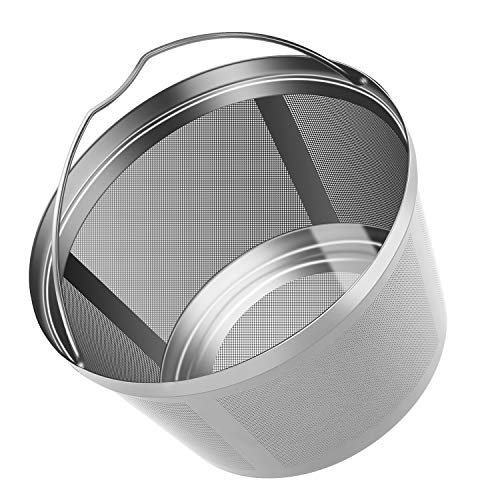
DOUBLE DELICIOUS: Thanks to the fine mesh of the big coffee filter basket, the coffee powder doesn’t flow out. Keeping the original flavor of the coffee and doesn’t remove the aroma of coffee like paper filtration.Made of Food-grade, 18/8 stainless steel and rejects irritating smell that ensure safe.(❌❌❌Don't fit for Hamilton Beach Coffee Maker46310 )
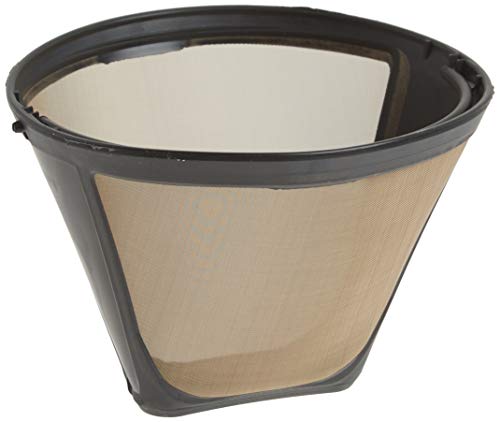
Genuine Cuisinart Item
Which Coffee Makers Can Brew Without Paper Filters?
Whether you need paper depends on how the brewer is designed. Do not assume that a substitute that works in one machine will work in another.
| Brewer | Can It Skip Paper? | Best Approach |
|---|---|---|
| Automatic drip maker | Sometimes | Use an approved permanent filter or built-in basket only if the manual permits it. |
| Manual pour-over | Often | Use a compatible metal or cloth filter made for the brewer. |
| French press | Yes | Its built-in plunger screen separates most grounds, so disposable paper is normally unnecessary. |
| Single-serve or pod brewer | Only with an approved system | Use the pod, reusable pod, basket, or accessory specified by the manufacturer. Do not improvise inside the puncture or brew mechanism. |
Safest Coffee Filter Alternatives, Ranked
- Compatible permanent metal filter: The best choice for an automatic brewer when the manufacturer approves it. It is reusable and designed to fit correctly, although it typically allows more oils and fine sediment through than paper.
- Dedicated cloth coffee filter or coffee sock: A purpose-made cotton or fabric filter is preferable to an ordinary household sock because it is intended for beverage preparation and can be kept exclusively for coffee.
- French press: If you have one, it provides a complete paper-free brewing system with its own built-in screen.
- Fine-mesh sieve, with or without clean cheesecloth: Best for manual steep-and-strain coffee. Use a stable, heat-safe container and pour slowly.
- Settling and decanting: If you have no filter or sieve, steep coarse grounds, allow them to settle, and slowly pour the clearer coffee from the top.
- Plain paper towel: A last-resort, temporary substitute only when the product is plain, unscented, unprinted, strong when wet, and its labeling or manufacturer permits appropriate food contact.
- Clean cloth napkin or dish towel: Usable for manual straining only if it is lint-free, free of detergent fragrance or fabric softener, clean, and reserved for food or beverage preparation.
Note: The color of a paper towel does not prove that it is suitable for brewing. FDA food-contact rules concern materials and their intended uses, not whether a paper product happens to be white or brown. Check the product information rather than assuming any household paper is suitable for repeated contact with very hot water. Read the FDA’s overview of food-contact materials.
Step-By-Step Guide to Brewing Coffee Without a Paper Filter
A reliable manual method is to steep the coffee in a heat-safe container and then strain it through a fine-mesh sieve or dedicated cloth coffee filter. This keeps an improvised liner out of an automatic machine and gives you direct control over the pour.
- Heat the water: Bring fresh water to a boil, remove it from the heat, and let it rest briefly. The National Coffee Association lists a manual-brewing temperature of about 93 ± 3°C, or roughly 194–205°F. See the NCA pour-over guidance.
- Measure the coffee: Start with about 1 gram of coffee for every 15–16 grams of water. For about 8 fluid ounces of water, roughly 15–16 grams of coffee is a practical starting point. Adjust the strength to taste.
- Choose the grind: Use a medium grind for a short pour-through method or a coarse grind for immersion and settling. Fine particles pass through sieves more easily and can clog dense cloth.
- Steep: Put the grounds in a heat-safe container, add the hot water, stir gently, and steep for about four minutes.
- Let the grounds settle: Wait another 30–60 seconds so more particles sink.
- Strain slowly: Pour through a fine-mesh sieve, dedicated cloth coffee filter, or a sieve lined with clean cheesecloth into a second heat-safe container.
- Serve carefully: Slow the pour near the end and leave the sediment-heavy final portion behind.
If You Have No Strainer at All
You can still make an immersion-style cup using only a pot, pitcher, or other heat-safe container. Use a coarse grind because larger particles settle more readily.
- Add coarse coffee grounds and hot water to a tall heat-safe container.
- Stir gently and let the coffee steep for about four minutes.
- Wait another one to two minutes without disturbing the container so the grounds sink.
- Pour very slowly into your mug without tipping the container far enough to disturb the sediment bed.
- Stop before the cloudy final portion reaches the mug.
This method will not produce a paper-filter-clear cup. A little fine sediment is normal.
Pro Tip: When using the settling method, brew in a tall container and leave roughly the final half-inch of sediment-heavy liquid behind. Pouring slowly is more effective than repeatedly stirring or moving the container.
Best Paper Towel Techniques for Coffee Brewing

A paper towel can sometimes function as a makeshift coffee filter, but it is less predictable than a purpose-made filter and is not automatically approved for that use by the coffee-maker manufacturer. It may tear when saturated, sag into the basket, shed fibers, or drain too slowly. Use this approach only as a one-time backup and remain beside the brewer so you can stop the cycle if the basket starts filling too high.
Effective Folding Techniques
If you decide to improvise, choose a plain, unscented, unprinted paper towel with good wet strength and check its product information for appropriate food contact. Do not assume white, brown, bleached, or unbleached paper is automatically better. Construction, additives, intended use, and wet strength matter more than color.
- Use one sturdy sheet and fold it into a cone or basket shape that matches the brewer.
- Press the center into the basket while keeping the edges below the showerhead and away from hinges or moving parts.
- Make sure the towel covers the drainage area without bunching into a thick plug.
- Lightly dampen it only if needed to keep it in position. If it weakens, splits, or starts shedding, replace it before adding coffee.
Do not automatically double the towel. Extra layers can restrict drainage, especially when combined with fine grounds or a large batch.
Brewing Process Steps
- Add a modest amount of medium-ground coffee. Do not pack or overfill the improvised filter.
- Seat the brew basket correctly and place the carafe or mug under the outlet.
- Start the brew cycle and watch the basket closely during the first minute.
- If liquid rises faster than it drains, stop the machine according to its operating instructions and allow the hot basket to cool before handling it.
- Discard the towel and grounds after one use, then rinse and clean the normal brewing components.
Automatic drip-machine manuals commonly list overly fine grounds, excessive coffee, incorrect filter placement, or improper basket setup among causes of slow brewing and overflow. Hamilton Beach’s FlexBrew manual provides a representative troubleshooting example.
When Not to Use a Paper Towel
Skip the paper-towel method when you cannot confirm the product is appropriate for food contact, the towel is scented or printed, it becomes weak immediately when wet, or the brewer has little room for a slower-draining liner. Do not push paper towel into a pod puncture mechanism, capsule chamber, water reservoir, internal passage, or any area where the machine manufacturer does not specify a filter.
If your machine requires a particular paper filter and you do not have one, manual immersion and straining is safer than forcing an improvised liner into a poorly fitting brew basket.
Tips for Flavor Enhancement
Rinse a sturdy paper substitute briefly only when doing so will not weaken it. Use fresh, medium-ground coffee and clean, fresh water. For a manual pour-through method, add just enough water to wet the grounds, wait about 30–45 seconds, and then continue pouring. This bloom allows trapped carbon dioxide to escape and can help the grounds saturate more evenly.
If the cup tastes harsh and drains very slowly, try a slightly coarser grind. If it tastes thin and the water rushes through, try a little more coffee or a modestly finer grind. Avoid packing coffee tightly into an improvised filter because restricted flow raises the risk of overflow.
Best Reusable Cloths for Coffee Filtering
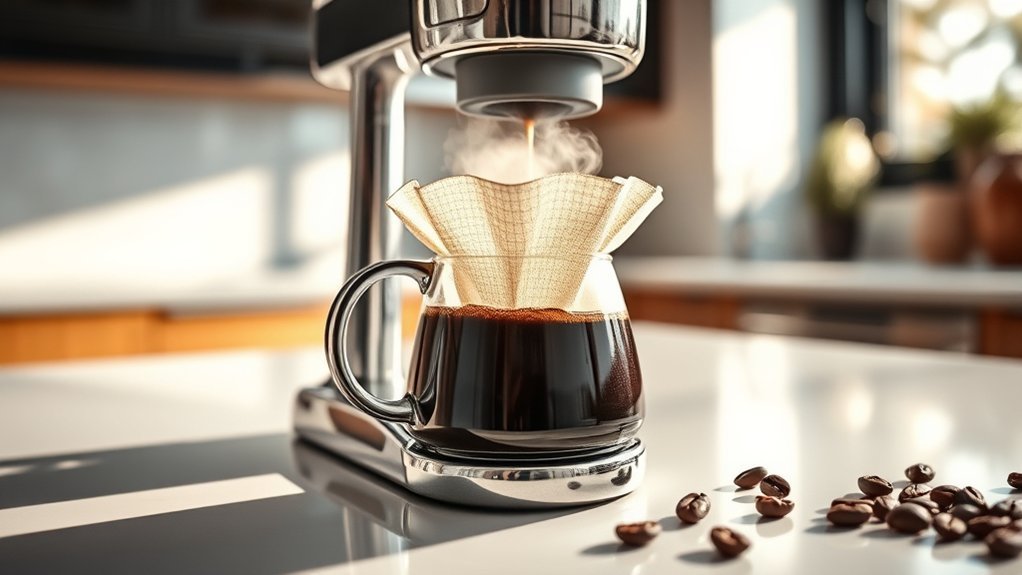
Reusable cloth filters reduce the need for disposable paper and can produce a rich cup while catching more sediment than many metal screens. Choose a dedicated coffee sock made from material intended for beverage preparation when possible. There is no universal lifespan such as “120 brews”; durability depends on the product, fabric, cleaning routine, staining, odors, seams, and flow rate.
A reusable filter is a good alternative only when it is clean, intact, correctly sized, and suitable for the brewing method.
- Purpose-made cotton coffee sock: Designed for brewing and easy to reserve solely for coffee.
- Muslin filter bag: Works for manual steeping if the weave is tight enough for the grind you use.
- Lint-free cloth napkin: A temporary manual-straining option when clean, unscented, and securely supported over a heat-safe container.
- Cheesecloth: Best folded inside a fine-mesh sieve; loosely woven cheesecloth by itself can let substantial sediment through.
Do not use a previously worn household sock, even if it appears clean. If you like the coffee-sock method, use a purpose-made coffee filter or a new food-contact filter bag reserved only for beverages.
What Kitchen Tools Can Replace Coffee Filters?
A fine-mesh sieve is one of the most useful common kitchen tools because it tolerates hot liquid, does not collapse, and lets you control the pour. A tea infuser can work for a small cup if the coffee is coarse and the infuser has enough space for water to move around the grounds. A clean French press is an even better direct alternative because it is designed to brew and separate coffee grounds without disposable paper.
Avoid facial tissues and toilet tissue because they break down easily. Do not use wax paper or parchment paper as a filter; their moisture-resistant surfaces are not designed to provide normal coffee-filter flow. Cupcake liners also vary in coatings, structure, and drainage and are not dependable coffee-filter substitutes.
Sieve and Cheesecloth Combo
Place a fine-mesh sieve securely over a heat-safe mug or carafe. Line it with two or more loose folds of clean cheesecloth, leaving enough room for the liquid to spread instead of pooling in one small area. Pour slowly and pause if coffee approaches the rim.
- Cleaner cup: The sieve supports the cloth while the cloth catches additional fine particles.
- Useful for larger batches: Brew by immersion in a pot or heat-safe pitcher and strain it in manageable portions.
- Easy to monitor: You can see the liquid level and slow the pour before it overflows.
Rinse the sieve promptly after brewing. Wash reusable cheesecloth according to its manufacturer’s directions, or discard it if the product is intended for one-time use.
Reusable Cloth Options
Cloth materials vary greatly. Choose smooth, tightly woven, lint-free material that has not been exposed to fragrance, fabric softener, stain repellent, household cleaners, or raw-food contamination. A purpose-made coffee filter is more predictable than a general kitchen towel.
| Option | Best Use | Main Limitation |
|---|---|---|
| Dedicated coffee sock | Manual pour-through or immersion brewing | Needs thorough rinsing, cleaning, and drying |
| Muslin filter bag | Small or medium batches | May pass fine sediment |
| Lint-free cloth napkin | Emergency manual straining | Can retain detergent, softener, or food odors |
Pros and Cons of Coffee Filter Alternatives
| Alternative | Advantages | Drawbacks |
|---|---|---|
| Metal filter | Reusable, durable, fuller-bodied cup | More oils and sediment; must fit the brewer |
| Cloth coffee filter | Reusable and often catches more fines than metal | Requires careful rinsing, cleaning, and drying |
| Sieve and cheesecloth | Uses common tools and works for larger batches | Slower and may leave fine grit |
| Settling and decanting | Needs no filter or strainer | Leaves more sediment and wastes the final portion |
| Paper towel | May be convenient in an emergency | May tear, shed fibers, add flavor, or restrict flow |
Tips for Brewing Coffee Without a Paper Filter
- Read the manual: Confirm whether your machine can use a permanent filter or grounds basket without disposable paper.
- Use medium grounds for drip brewing: Very fine coffee can restrict flow and increase sediment.
- Use coarse grounds for steep-and-strain brewing: Larger particles settle and strain more easily.
- Start with a moderate ratio: About 1:15 or 1:16 coffee to water is a practical starting point for this manual method.
- Stay with an improvised setup: A substitute can shift or drain more slowly than a purpose-made filter.
- Use heat-safe equipment: Hot water, saturated grounds, carafes, and brew baskets can cause burns.
- Keep the outlet clear: Do not pack cloth, paper, or fine grounds tightly against drainage openings.
- Clean promptly: Coffee oils and fine particles become harder to remove and may affect later brews.
Flavor Tips for Alternative Filters
Expect the filter material to change body and clarity. Paper generally produces a cleaner-looking cup because it holds back more fine particles and oils. Metal usually allows more through, while cloth falls somewhere in between depending on its weave. A sieve or settling method normally produces more sediment.
- Use fresh coffee and grind it shortly before brewing when practical.
- Use filtered tap water if your water has strong odors or flavors; do not assume distilled water will give the best extraction.
- Preheat the mug or carafe with hot water so the finished coffee loses heat more slowly.
- Pour gently through a sieve or cloth to avoid stirring settled particles back into the drink.
- For immersion brewing, let the grounds settle before decanting.
- Adjust one variable at a time—grind, dose, water quantity, temperature, or contact time—so you can identify what changed the flavor.
Troubleshooting Coffee Without a Paper Filter
Why Is the Brew Basket Overflowing?
Stop the brew according to the machine’s instructions if it is safe to do so. Common causes include a substitute that drains too slowly, an overly fine grind, excessive coffee, a folded edge blocking the outlet, or a basket that is not seated correctly. Allow the machine and wet grounds to cool before handling the basket.
Why Is the Coffee Gritty?
Use a coarser grind, let immersion-brewed coffee settle longer, add clean cheesecloth to the sieve, or pour through a finer purpose-made filter. A small amount of sediment is normal with metal filters, French presses, sieves, and some cloth filters.
Why Does the Coffee Taste Like Paper or Detergent?
Stop using that substitute. A papery taste may come from the paper itself, while detergent or perfume flavors usually indicate residue on cloth. Use a dedicated coffee filter or another clean beverage-safe tool that does not transfer odors.
Why Is the Coffee Weak or Bitter?
Weak coffee may result from too little coffee, a grind that is too coarse, water passing through too quickly, or insufficient contact time. Excessively bitter or harsh coffee may result from too fine a grind, excessive contact time, or an overly strong dose. Keep the coffee-to-water ratio steady while changing one factor at a time.
How to Clean Your Makeshift Coffee Filter
Discard a single-use paper towel after brewing. Do not rinse and reuse it. Put coffee grounds in the trash or compost them where local rules allow rather than washing large quantities down the sink.
For a reusable metal filter, remove trapped grounds, rinse promptly, and wash it according to the coffee maker or filter manufacturer’s instructions. Pay attention to seams and fine mesh, where coffee oils can collect.
For a dedicated cloth coffee filter, rinse it promptly until the water runs clear, clean it according to the product’s directions, and let it dry completely in a clean, ventilated location. Avoid fabric softener and strongly scented laundry products unless the filter manufacturer specifically instructs otherwise.
USDA food-safety guidance says reusable kitchen towels used during food preparation should be washed frequently on a hot washing-machine cycle. That advice applies to general kitchen-towel hygiene; for a purpose-made coffee filter, follow its own cleaning instructions and keep it separate from cloths used for raw-food or household-cleaner cleanup. See USDA kitchen-cleaning guidance.
Replace a reusable filter when it develops holes, stretched seams, persistent odors, embedded residue, warping, or a lasting change in flow that proper cleaning does not fix. There is no universal three-to-six-month replacement rule; inspect the filter and follow the product manufacturer’s instructions.
Frequently Asked Questions
Can using alternatives affect the taste of my coffee?
Yes. Paper generally holds back more oils and fine particles, while metal and some cloth filters produce a fuller body and more sediment. Household materials can also transfer paper, detergent, fragrance, or fabric flavors if they are unsuitable or not thoroughly clean.
How do I properly dispose of makeshift filters?
Put a used paper towel in the trash unless its manufacturer and your local compost program confirm that it is acceptable for composting. Coffee grounds are often suitable for home compost, but local rules vary. Never flush a filter or a large quantity of grounds down a drain.
Can I use a metal strainer instead of a filter?
Yes, especially for manual steep-and-strain coffee. A fine-mesh strainer catches larger grounds but may allow fine sediment through. Let the grounds settle first or line the sieve with clean cheesecloth for a clearer cup.
What if I have no coffee filter or strainer at all?
Use coarse grounds and brew by immersion in a tall heat-safe container. After about four minutes of steeping, let the grounds settle for another minute or two. Pour the clearer coffee slowly from the top and stop before the sediment at the bottom reaches your mug.
Are there health risks with using kitchen cloths?
A dirty, damp, or contaminated cloth can carry microbes or chemical residues. Use a clean, lint-free cloth reserved for food or beverages, rinse it thoroughly, and dry it completely. Never use a cloth that handled raw meat, household cleaners, or other contamination.
How often should I replace my reusable coffee filter?
Follow the manufacturer’s instructions rather than a fixed calendar. Replace the filter when it is torn, warped, permanently clogged, persistently odorous, damaged at the seams, or no longer drains normally after proper cleaning.
Can I run a drip coffee maker with no filter at all?
Only when the machine has a built-in or removable grounds basket or permanent filter that its manual says can hold coffee without disposable paper. Do not pour loose grounds into a machine that requires a paper or permanent filtering component.
Is a paper towel safe to use as a coffee filter?
A paper towel may function as a one-time emergency substitute, but it is not automatically approved as a coffee filter. Use only a plain, unscented, unprinted product with adequate wet strength and appropriate food-contact guidance. Stay with the brewer because the towel can tear or restrict drainage.
Can I put a paper towel in a single-serve or pod coffee maker?
Do not put an improvised paper towel into a pod chamber, puncture mechanism, reservoir, or internal brewing path unless the manufacturer specifically allows that setup. Use the machine’s approved pod, reusable pod, grounds basket, or filter accessory instead.
Conclusion
You can brew good coffee without a disposable paper filter, but a purpose-made alternative is the most dependable choice. Use a compatible permanent filter, dedicated cloth coffee sock, French press, or fine-mesh sieve whenever possible. If you have no strainer, coarse grounds can be steeped, settled, and carefully decanted. Treat a paper towel only as a supervised one-time backup, and avoid scented, printed, fragile, coated, or otherwise unsuitable materials. Match the grind to the brewing method, follow your machine’s instructions, handle hot liquid carefully, and clean reusable equipment after every brew.
Sources
- National Coffee Association: Pour-Over Coffee — brewing temperature, coffee-to-water ratios, grind size, filter differences, bloom technique, and manual brewing safety.
- National Coffee Association: French Press Coffee — immersion brewing, coarse grind, approximate four-minute contact time, ratios, and cleaning.
- Hamilton Beach: FlexBrew Coffee Maker Guidance — model-specific grounds-basket assembly and optional paper-filter use.
- U.S. Food and Drug Administration: Food-Contact Substances — regulation and safety review of materials intended to contact food.
- USDA Food Safety and Inspection Service: Kitchen Cleaning Guidance — cleaning food-contact surfaces and washing reusable kitchen towels frequently.
- PubMed: Cholesterol-Raising Diterpenes in Common Coffee Types — evidence that cafestol concentrations vary substantially with brewing and filtration methods.