Brew temperature control helps a coffee maker deliver repeatable extraction by keeping brewing water within a useful range for the method being used. The exact target is not universal: automatic drip brewers, espresso machines, and cold-brew systems operate differently. Thermostats, PID controllers, sensors, heaters, insulation, warm-up time, and even scale buildup can all affect how steadily a machine delivers heat.
Quick Answer
Coffee makers control brew temperature by switching or modulating their heating system in response to temperature sensors. Traditional thermostats work within a temperature band, while PID-equipped machines can make finer adjustments. For hot drip coffee, roughly 92–96°C (198–205°F) is a common reference range, while espresso and cold brew follow method-specific targets.
Key Takeaways
- For certified-style hot drip brewing, about 92–96°C (198–205°F) at the coffee bed is a useful benchmark, but it is not a universal target for every brewing method.
- A thermostat switches heat on and off around set thresholds, while a PID controller makes finer corrections to keep temperature more stable.
- The heater temperature, boiler temperature, water temperature at the grounds, and finished coffee temperature can all be different.
- Weak or bitter coffee does not automatically mean the temperature is wrong; grind size, dose, contact time, flow, and water quality also affect extraction.
- Descaling, proper warm-up, and following the manufacturer’s settings are safe first steps when temperature performance changes.
- Internal thermostats, thermal fuses, wiring, and heating elements should not be treated as routine DIY adjustments unless the manufacturer specifically provides a user-service procedure.
The Impact of Temperature on Coffee Flavor
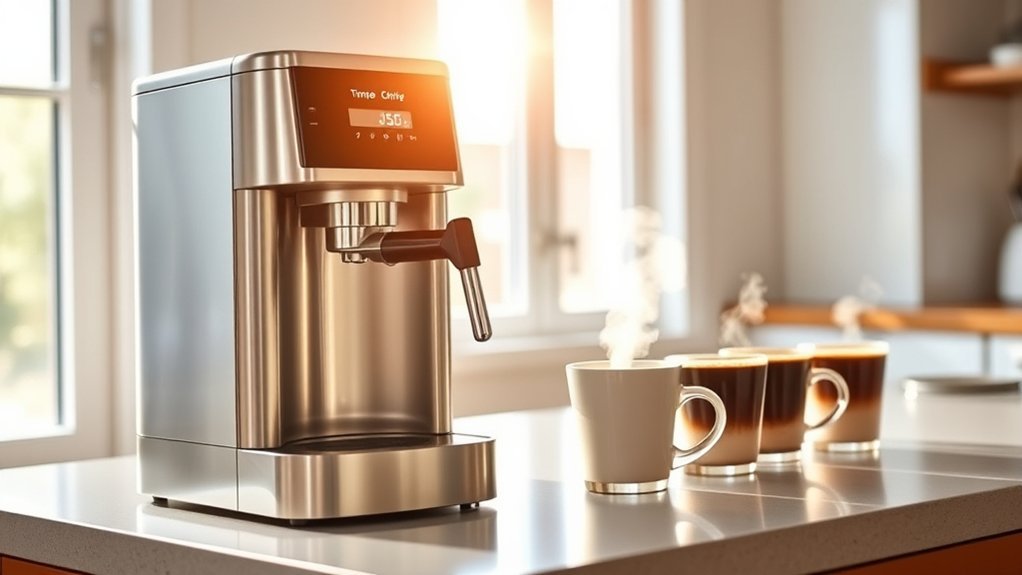
Water temperature affects how quickly soluble compounds move from ground coffee into the brew. Hotter water generally speeds extraction, while cooler water slows it. That makes temperature important, but it works together with grind size, coffee-to-water ratio, flow rate, and contact time.
For automatic drip coffee, the traditional Specialty Coffee Association reference is approximately 92–96°C (198–205°F) at the coffee bed. The SCA’s current standards program includes its Home Coffee Brewers specification, while published coffee research has documented the long-standing 92–96°C certification range. Scientific Reports research on drip-brew temperature also shows why this number should not be treated as a magic flavor boundary.
Temperature changes extraction speed, but grind, flow, brew time, strength, and extraction yield determine what ultimately reaches the cup.
In a controlled drip-coffee study, researchers compared brewing at 87°C, 90°C, and 93°C while adjusting other variables so brew strength and extraction stayed comparable. Temperature alone produced little sensory difference under those controlled conditions. In everyday brewing, however, a cooler machine may still produce weak or sharp coffee because most home brewers do not automatically compensate with longer contact time or a different grind.
Very high brewing temperatures can increase extraction speed, but bitterness or astringency should not automatically be blamed on temperature. A grind that is too fine, excessive contact time, too little coffee, uneven flow, or the coffee itself can produce similar results.
Note: The temperature shown on a machine’s display is not necessarily the temperature of the finished drink. Heat is lost through tubing, the brew group, coffee grounds, the filter, the carafe, the cup, and surrounding air.
Understanding Brew Temperature Control Mechanisms
Coffee makers use several different systems to control heat. The design depends heavily on whether the appliance is a basic drip brewer, capsule machine, thermoblock espresso maker, single-boiler espresso machine, or multi-boiler commercial-style machine.
Mechanical Thermostats
A conventional thermostat turns the heating element on when temperature falls below one threshold and off when it reaches another. The gap between those switching points is known as hysteresis. Because the heater and surrounding metal continue transferring heat after power is removed, some temperature overshoot and undershoot can occur.
This approach is inexpensive and dependable, but it usually provides less precise temperature regulation than a well-tuned electronic system.
Pressurestats in Espresso Machines
Some espresso machines use a pressurestat to regulate boiler pressure. Because the boiling temperature of water and steam pressure are related inside a sealed boiler, controlling pressure also influences boiler temperature.
A pressurestat should not be confused with a direct measurement of brewing-water temperature at the coffee puck. In many heat-exchanger machines, group temperature also depends on boiler design, circulation, idle time, flushing, and the thermal mass of the group.
PID Temperature Control
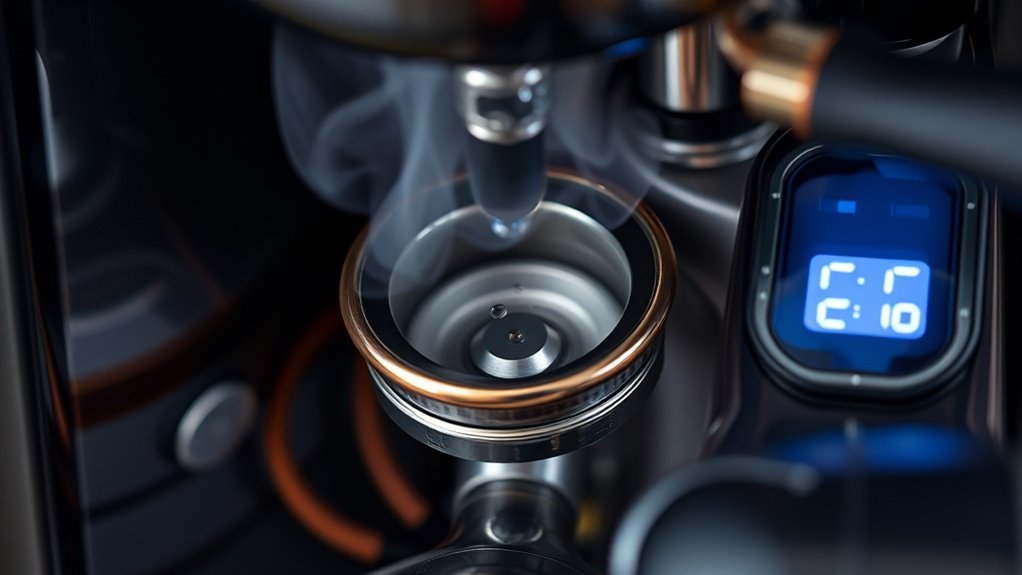
PID stands for Proportional-Integral-Derivative. Rather than waiting for temperature to cross relatively wide on/off thresholds, a PID controller repeatedly evaluates the difference between measured temperature and the target, then adjusts heater operation to reduce that error.
That can improve repeatability, especially in espresso machines where a small brew volume passes through the coffee quickly. An official KitchenAid explanation of PID temperature control describes the same basic advantage: smaller corrections and less temperature fluctuation than simple thermostat control.
PID does not mean the water remains mathematically motionless at one temperature, nor is there a universal number of times per minute that the heater must switch. Control behavior depends on the machine, sensor position, heater, software, boiler size, and PID tuning.
Thermoblocks, Thermocoils, and In-Line Heaters
Instead of keeping a large boiler full of hot water, many modern machines heat water as it passes through a thermoblock, thermocoil, or other flow-through heating system. These designs can warm up quickly and can pair with electronic sensors to regulate outlet temperature.
The tradeoff is that temperature stability depends strongly on heater capacity, flow rate, incoming water temperature, and control software. Premium designs may compensate for these changing conditions more effectively than basic systems.
Troubleshooting Common Temperature Control Problems
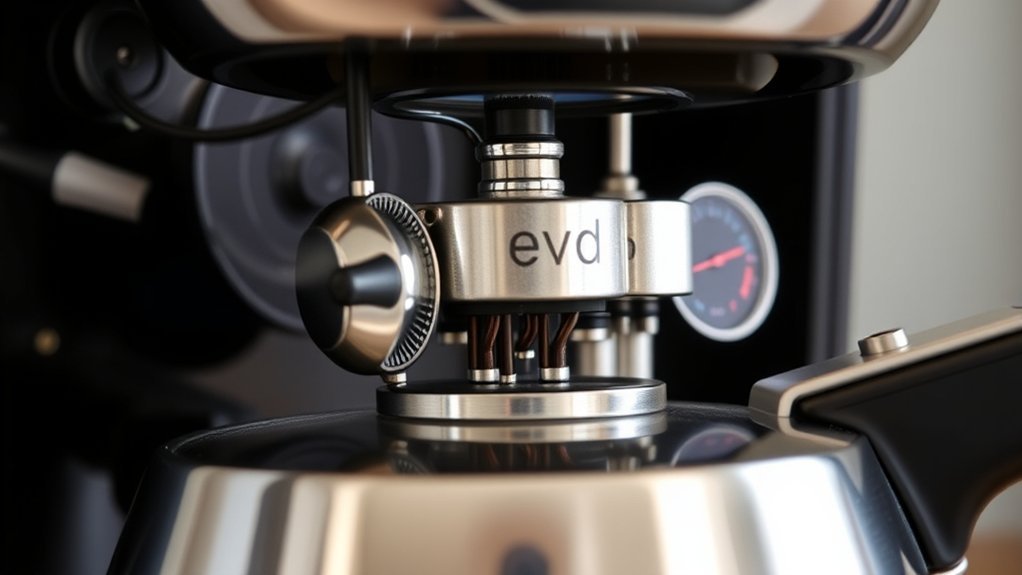
If your coffee suddenly seems much cooler, weaker, hotter, or less consistent than usual, begin with settings and maintenance rather than opening the machine. Taste alone cannot confirm a failed thermostat because grind, beans, dose, water, and flow can create similar symptoms.
Warning: Coffee makers contain mains-voltage wiring, heating elements, pressurized hot water, and surfaces hot enough to cause burns. Unplug the appliance and let it cool before manufacturer-approved cleaning. Do not bypass a thermal fuse, safety thermostat, or cutoff. Internal electrical diagnosis should be left to qualified service unless your manufacturer provides an explicit user-service procedure.
| Problem | Safe First Check |
|---|---|
| Coffee is cooler than usual | Allow a full warm-up, preheat the cup or carafe, verify the selected temperature setting, and descale if due. |
| Coffee tastes weak or sharply sour | Check grind size, coffee dose, contact time, water flow, and bean freshness before assuming a temperature fault. |
| Coffee tastes unusually bitter or harsh | Try a slightly coarser grind or shorter extraction; lower the temperature only if your machine provides an approved adjustment. |
| Brewing has slowed | Check for scale and follow the manufacturer’s descaling procedure. |
| Machine has power but produces no heat | Power-cycle only as instructed in the manual. If normal operation does not return, stop using the machine and arrange service. |
| Machine overheats, smells hot, leaks, or trips power | Unplug it and discontinue use until it has been inspected. |
Why Scale Can Look Like a Temperature Problem
Mineral scale can restrict passages and coat heated surfaces. Depending on the design, that may slow water flow, lengthen recovery, alter sensor response, or reduce the amount of heat transferred to moving water.
Descale only with the method and product recommended for your model. Espresso machines with boilers, aluminum components, water filters, or automatic descaling programs can require different procedures.
Do Not Judge Brew Temperature From the Cup Alone
A finished cup or carafe will normally be cooler than the water that contacted the grounds. The coffee absorbs heat, and additional energy is lost to the filter, basket, carafe, cup, and air.
That means a thermometer placed in the finished beverage cannot by itself prove that a drip brewer or espresso machine failed to reach its intended brewing temperature. Precise espresso brew-temperature testing requires measurement close to the coffee puck under brewing conditions rather than simply measuring water falling from an uncovered group.
New Technologies That Improve Brew Temperature Control
Modern coffee makers increasingly combine fast heaters, electronic temperature sensors, software-controlled flow, and digital temperature settings. These systems can respond more quickly than a simple mechanical thermostat, but features vary widely between machines.
Some espresso machines use PID control together with a thermocoil or boiler. Others use separate brew and steam boilers so that making steam does not pull the brew system away from its target temperature.
Advanced capsule and bean-to-cup machines may also use combinations of temperature, flow, pressure, and water-level sensing. These should be treated as model-specific features rather than capabilities shared by every capsule brewer.
Some manufacturers also use control logic that compensates for cold incoming water, repeated drinks, changing flow, or heat loss through the brew path. Terms such as “dynamic temperature compensation” or “intelligent thermal management” are often manufacturer-specific rather than universal technical standards.
Insulation also matters. Keeping a boiler, thermoblock, or brew group thermally stable reduces how much energy the heater must continually replace and can improve repeatability between brews.
Best Practices for Consistent Brewing Quality
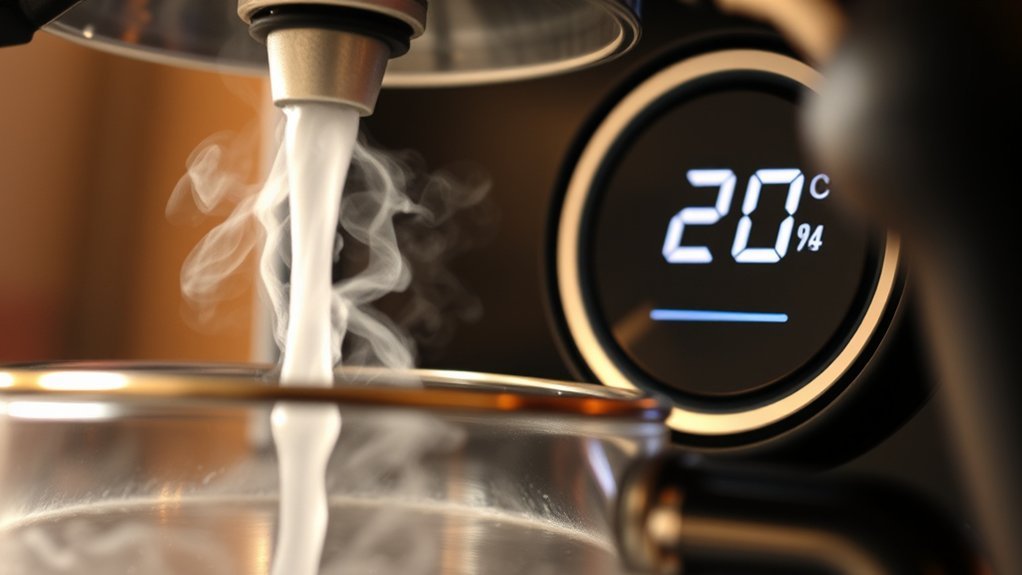
Consistent coffee comes from controlling several variables at once rather than concentrating on temperature alone.
- Allow adequate warm-up time. Espresso groups, portafilters, brew chambers, carafes, and cups can absorb significant heat when cold.
- Use a repeatable dose and grind. A temperature change cannot compensate reliably for large changes in grind size or coffee quantity.
- Keep the brewer clean. Coffee oils and mineral scale can interfere with flow and heat transfer.
- Use suitable water. Mineral content affects both flavor and scale formation.
- Preheat when appropriate. Warming an espresso portafilter, mug, or thermal carafe reduces heat loss without changing the machine’s internal temperature setting.
- Change one variable at a time. When dialing in coffee, adjust temperature only after the basic dose, grind, ratio, and brew time are reasonably consistent.
Pro Tip: If the same coffee suddenly tastes different even though you have not changed the beans, dose, or grind, cleaning and descaling are better first steps than immediately changing the temperature setting.
Recommended Temperature by Brewing Method
There is no single temperature that applies equally to every coffee preparation.
| Method | Useful Temperature Guidance | What to Know |
|---|---|---|
| Automatic drip | About 92–96°C (198–205°F) is the traditional SCA-style reference at the coffee bed. | Temperature is only one part of extraction; flow and contact time matter too. |
| Espresso | The 2026 World Barista Championship permits 90.5–96°C (195–205°F). | Individual coffees may taste better at different settings within or near that range. |
| Pour-over / manual filter | A similar hot-brew range is a useful starting point. | Roast level, kettle technique, grind, and brew time can justify adjustments. |
| Cold brew | Refrigerator or room-temperature brewing can both work. | Lower temperature generally requires more contact time; there is no universal 60°F target. |
For espresso specifically, the 2026 World Barista Championship rules specify a machine brewing-temperature range of 90.5–96°C (195–205°F). That is a useful industry reference, not a requirement that every coffee taste best at exactly the same setting.
How to Adjust Brew Temperature
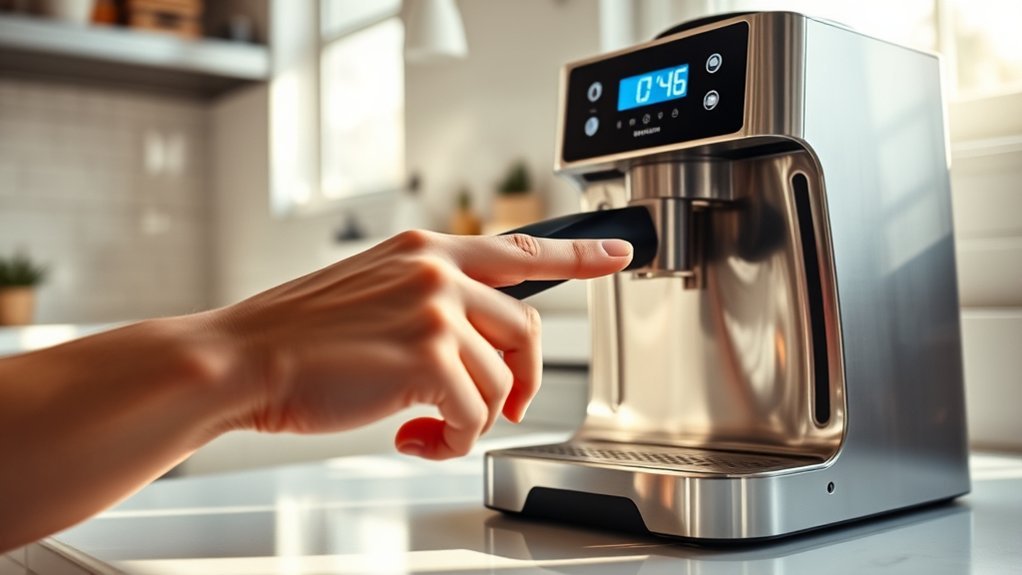
Some coffee makers offer no user temperature control at all. Others provide two or three preset levels, and higher-end machines may allow degree-by-degree adjustment.
For example, some De’Longhi machines provide selectable espresso temperature levels. Always use your model’s documented controls rather than altering thermostats or internal components. De’Longhi’s temperature-setting guidance is one example of a manufacturer-supported adjustment.
When adjustment is available, make small changes and taste the result before changing anything else. A slightly lower setting can sometimes suit darker roasts, while a somewhat higher setting can help increase extraction from lighter roasts, but grind and brew time often produce larger changes.
How Altitude Changes Brew Temperature
Water boils at a lower temperature as elevation increases because atmospheric pressure falls. The U.S. Geological Survey notes that water boils at about 100°C (212°F) at sea level but about 94.9°C (202.9°F) at 5,000 feet.
That matters most at elevations where the local boiling point approaches the temperature you want for brewing. A machine cannot keep liquid water substantially above its local boiling point in an open, unpressurized brew path. Espresso boilers operate differently because parts of the system are pressurized.
Choosing a Coffee Maker With Good Temperature Control
If temperature consistency matters to you, look beyond a manufacturer’s maximum-temperature claim. More useful features include:
- Independent testing or recognized brewing certification for drip machines.
- PID or other electronic temperature control on espresso machines.
- Adequate heater power for the machine’s normal flow rate.
- Good thermal mass or insulation around the brew path.
- Enough warm-up time for the group or brewing chamber.
- User-adjustable temperature when you regularly switch between different roast styles.
- Accessible cleaning and descaling programs.
A brewer that reaches a high peak temperature but cannot maintain stable conditions throughout the brew may be less consistent than a machine designed around controlled water delivery and thermal stability.
Frequently Asked Questions
What Is the Ideal Brew Temperature for Different Coffee Types?
For automatic drip brewing, about 92–96°C (198–205°F) is a useful traditional reference. The 2026 World Barista Championship permits 90.5–96°C (195–205°F) for espresso. Cold brew is different: refrigerator and room-temperature extraction are both used, with lower temperatures generally requiring longer brew times.
How Does Altitude Affect Brewing Temperature and Flavor?
Higher elevation lowers atmospheric pressure and therefore lowers water’s boiling point. At about 5,000 feet, pure water boils near 202.9°F (94.9°C) rather than 212°F (100°C). This can limit the maximum practical water temperature for open brewing methods and may require changes to grind or brew time.
Can I Adjust My Coffee Maker’s Brew Temperature?
It depends on the model. Basic drip brewers usually regulate temperature automatically with no user control. Some espresso and specialty brewers provide preset temperature levels or digital adjustment. Use only the controls described in your owner’s manual rather than modifying internal thermostats or safety devices.
What Materials Influence Heat Retention in Coffee Makers?
Heat retention depends on more than one material. Copper and brass transfer heat efficiently, while stainless steel conducts heat less readily. Component mass, insulation, wall thickness, heater design, and whether the brew group or carafe is preheated can matter as much as the metal itself.
Are There Coffee Makers With Built-In Temperature Calibration Features?
Yes. Some espresso and specialty coffee makers offer selectable temperature profiles or user-adjustable brew settings. Others use electronic temperature control internally without exposing calibration to the user. Check the specific model’s manual because the available range and adjustment method vary.
Why Is My Coffee Cooler Than the Machine’s Brew Temperature?
The displayed or specified brewing temperature usually describes water inside the heating system or near the coffee bed, not the beverage after it reaches the cup. Grounds, filters, tubing, the brew group, carafe, cup, and surrounding air all absorb heat, so the finished drink should normally measure cooler.
Does Bitter Coffee Mean My Coffee Maker Is Too Hot?
Not necessarily. Excessive extraction can also come from a grind that is too fine, excessive brew time, too little water, uneven flow, or the coffee’s roast profile. Keep your dose and ratio consistent and adjust one variable at a time before concluding that the temperature control has failed.
Conclusion
Brew temperature control matters because it helps a coffee maker deliver repeatable extraction, but temperature should never be judged in isolation. For hot drip coffee, roughly 92–96°C is a useful industry reference, while current espresso competition equipment operates within a similar but method-specific 90.5–96°C range. Cold brew follows an entirely different time-temperature relationship.
Thermostats, pressurestats, PID controllers, fast in-line heaters, sensors, insulation, and thermal mass all approach temperature management differently. For home troubleshooting, start with proper warm-up, cleaning, descaling, documented settings, grind, and brew time. If a machine stops heating, overheats, leaks, trips power, or appears to have an internal electrical fault, unplug it and use qualified service rather than bypassing its safety components.
Sources
- Scientific Reports — Brew Temperature, Strength, Extraction, and Sensory Profile — supports the drip-temperature discussion and the importance of strength and extraction alongside temperature.
- 2026 World Barista Championship Official Rules and Regulations — supports the 90.5–96°C (195–205°F) espresso equipment range.
- Scientific Reports — Hot, Room-Temperature, and Cold Brew Sensory Study — supports the explanation that cold brew does not have one universal 60°F target.
- U.S. Geological Survey — Facts About Water — supports the relationship between altitude, atmospheric pressure, and boiling temperature.
- KitchenAid — PID Temperature Control — supports the explanation of PID regulation versus conventional thermostat control.
- De’Longhi — Espresso Temperature Adjustment — supports the statement that some coffee makers provide manufacturer-approved temperature settings.