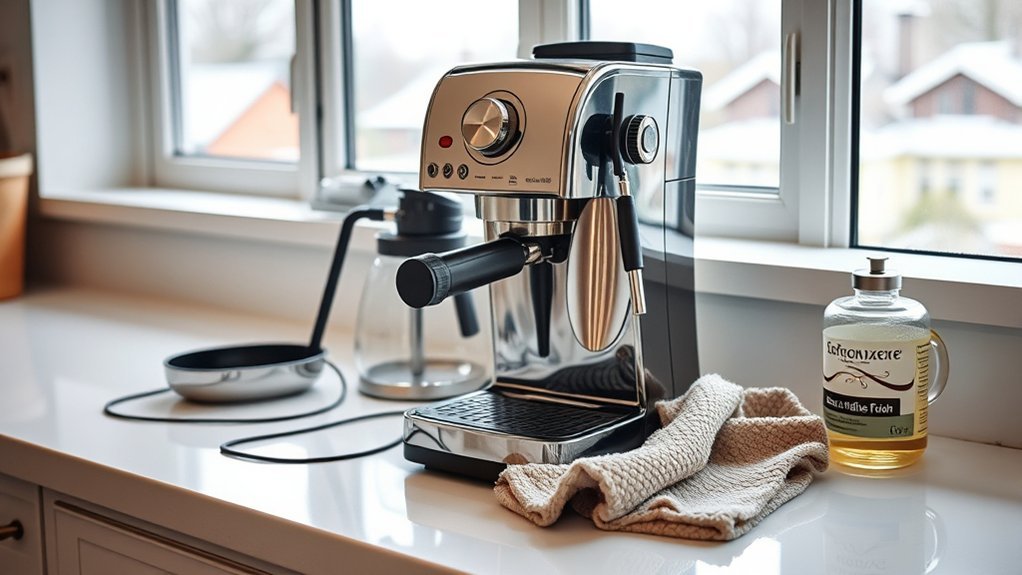
If you need to winterize a coffee maker for a move, seasonal cabin, RV, or other cold storage, the main risk is water left where you cannot see it. Drip brewers, pod machines, capsule systems, and espresso machines trap water in different places, so the safest shutdown is model-specific rather than a one-size-fits-all drain routine.
Quick Answer
To winterize a coffee maker, remove coffee, pods, milk, filters, and accessible water; clean and dry removable parts; then use the exact drain, purge, or system-emptying procedure specified for your model. Never add antifreeze or force compressed air through the water system. Store the machine upright in a dry, frost-free location.
At a Glance
| Time Required | Varies by model. The drain or emptying sequence may take only a few minutes, while cleaning and complete air-drying of removable parts can take longer. |
| Difficulty | Easy for many basic drip brewers; moderate for pod and espresso machines with model-specific emptying procedures |
| Tools Needed | Owner’s manual, sink or heat-safe container, mild dish soap, soft brush or sponge, lint-free cloth, and drying rack or clean towel |
| Cost | Usually no extra cost for basic cleaning and draining; manufacturer-approved descaler or a replacement water filter may add a model-dependent cost |
Why Do You Need to Winterize a Coffee Maker?
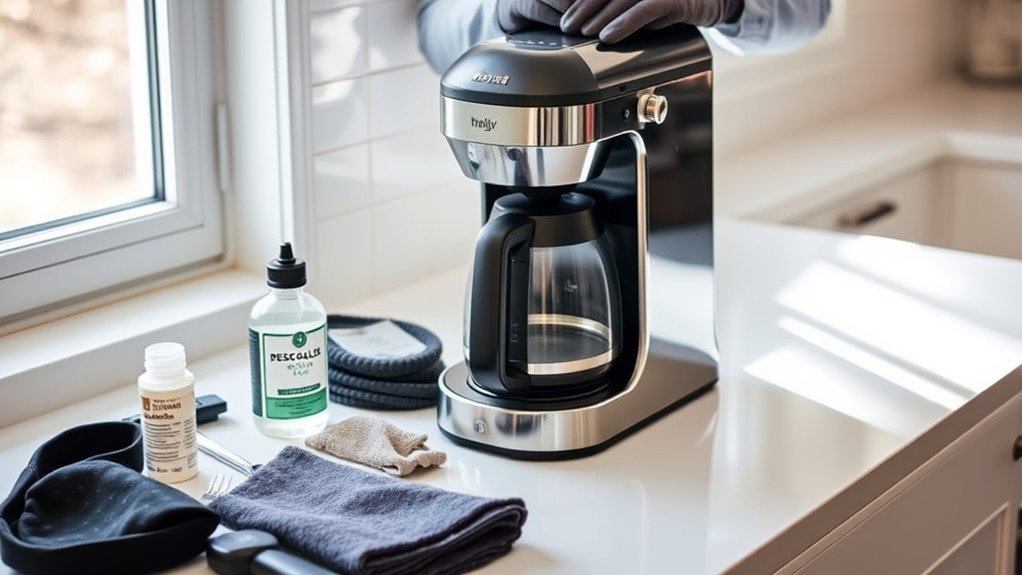
Water can remain inside a coffee maker even after the visible reservoir has been emptied. Depending on the design, small amounts may remain in a hot-water tank, pump, thermoblock, boiler, tubing, valve, drip tray, steam circuit, or milk system. That hidden water matters most when the appliance may be exposed to freezing temperatures.
If retained water freezes, expansion can damage water-carrying components and lead to cracks or leaks. Keurig’s K10 manual, for example, warns that residual condensation can freeze inside the brewer and cause damage. It directs owners to empty the internal hot-water tank and store the brewer upright in a safe, frost-free environment. The procedure is available in the official Keurig K10 owner’s manual.
Cleaning is a separate concern. Coffee oils, milk residue, grounds, and standing water can create odors or leave dried soil during storage. The goal is not to dismantle the machine or guess where every drop of water may be hiding. Remove what you can safely access, clean food-contact parts, and let the manufacturer’s approved emptying procedure handle inaccessible plumbing.
A dry-looking reservoir does not necessarily mean the coffee maker’s internal water system is empty.
When Do You Actually Need to Winterize a Coffee Maker?
Not every unused coffee maker needs a full winterization. If it will stay in a heated, dry home for a short break, routine cleaning and accessible-water removal may be enough. If it may freeze, travel in winter, go to repair, or sit unused long enough to trigger a storage procedure, follow the model-specific shutdown instructions.
- Short indoor non-use: If the machine will remain inside a heated, dry home for a short period, routine cleaning and emptying accessible water may be enough unless the manual says otherwise.
- Long-term non-use: Some manufacturers recommend an internal system-emptying procedure even when freezing is not expected. Follow the storage or long-period-of-non-use section for your model.
- Winter transport: If the appliance will spend time in a cold vehicle, moving truck, cargo area, or other freezing environment, use the approved frost-protection or transport procedure before it gets cold.
- Unheated storage: A shed, seasonal cabin, detached garage, or similar location is unsuitable unless you know it will remain frost-free.
- Repair or shipping: Manufacturers may require the water system to be emptied before the machine is shipped or serviced.
- Plumbed or commercial equipment: Shutoff, line drainage, boiler drainage, or winterization may require a trained service technician rather than a home procedure.
Note: “Long-term storage” has no universal number of days that applies to every brewer. Use the period-of-non-use, storage, transport, or frost-protection instructions written for your exact model.
Check Your Model Before You Begin
Find the model number on the bottom, back, or rating label of the appliance. Then locate the matching owner’s manual or manufacturer support page. Search it for terms such as storage, long period of non-use, emptying the system, transport, frost protection, purge, or draining.
The correct process depends on the type of coffee maker:
Fast decision rule: If the machine will stay in a heated, dry room, clean it and empty accessible standing water as the manual directs. If it may freeze, be shipped, or sit unused long enough to trigger a storage procedure, use the exact manufacturer-approved emptying mode. If the manufacturer gives no user-accessible drain method, do not improvise—keep the machine frost-free or ask the manufacturer for guidance.
- Standard drip coffee maker: Usually has a removable or accessible reservoir, carafe, filter basket, and warming plate. Many basic models retain less water than pressurized machines, but you should still check their storage instructions.
- Single-serve pod brewer: May contain internal water even after the removable reservoir is empty. Keurig’s current Classic Series guidance says most primed Classic brewers cannot be internally drained; the K15 and MINI Plus are exceptions with an emptying procedure. For other Classic models, empty the removable reservoir and store the brewer upright in a frost-free place; see Keurig’s Classic Series storage guidance.
- Capsule machine: May have a built-in system-emptying mode. Nespresso publishes model-specific procedures for long non-use, repair, and frost protection through its machine-assistance pages.
- Manual or automatic espresso machine: May retain water in a thermoblock, steam circuit, hot-water outlet, pump, or boiler. Use the model’s approved purge, transport, or empty-system procedure.
- Plumbed-in or commercial machine: May require the supply to be isolated and water lines or boilers to be drained by a qualified technician.
For De’Longhi equipment, use the model number to find the correct instructions in the company’s official product-manual library.
Note: If the manufacturer provides no user-accessible draining procedure, do not improvise by opening the housing or disconnecting internal tubes. Keep the appliance in a frost-free location or ask the manufacturer whether professional service is needed before freeze exposure.
Step-by-Step Guide to Winterizing a Coffee Maker
Use this order to keep cleaning separate from any powered drain sequence: remove residue and accessible water, run the model-specific emptying procedure if one exists, wash removable parts, dry them fully, and store the machine upright. Your owner’s manual takes priority if its sequence differs.
1. Turn Off and Unplug the Coffee Maker for Cleaning
Switch the coffee maker off and unplug it before removing parts or wiping the appliance. Allow warming plates, boilers, steam wands, hot-water outlets, and other hot surfaces to cool.
Some manufacturer-approved internal-emptying procedures require electrical power. If yours does, reconnect the machine only when the manual tells you to do so. Run that procedure exactly as directed, then switch the appliance off and unplug it again before final drying and storage.
2. Remove Coffee, Pods, Filters, and Milk
Discard used coffee grounds and pods. Remove any paper filter, reusable filter, capsule, or loose bean residue. Empty and clean the carafe, filter basket, used-pod bin, drip tray, cup support, milk carafe, and milk tube as applicable.
If the machine uses a removable water filter, check its manual. Some filters must be removed before descaling or extended storage, while others have model-specific handling and replacement intervals. Do not leave a wet, used filter loose inside an empty reservoir.
3. Descale Only if It Is Due
Descaling removes mineral buildup. It is not the same task as emptying a machine for storage. Descale before storage only when the maintenance schedule, warning light, or manufacturer instructions indicate that it is due.
Use the cleaner and dilution specified for your exact machine. There is no universal vinegar ratio. Older Keurig K10 instructions, for example, call for undiluted white vinegar in that model’s descaling procedure, while Breville currently publishes a 1:1 vinegar-and-water option in its general espresso-cleaning guidance. Consult the Keurig descaling instructions or the relevant Breville cleaning guidance only when the instructions apply to your machine.
Complete every required fresh-water rinse before the final emptying step. Do not deliberately leave vinegar, descaling solution, or another cleaning chemical sitting in the water circuit during storage.
4. Empty Accessible Water
Remove the water reservoir when possible and pour out all visible water. Empty the carafe, drip tray, used-capsule container, milk container, and any other removable water or waste vessel.
Tip removable parts over the sink to release water trapped around valves, lips, handles, and corners. Do not tip or shake the main appliance unless its manual specifically allows it; water can move into areas containing electrical components.
Warning: Never add automotive, RV, marine, or other antifreeze to a coffee maker. Do not open the appliance housing, loosen boiler fittings, or direct compressed shop air into water ports unless the manufacturer expressly instructs you to do so. Some approved emptying procedures discharge hot water or steam, so keep your hands clear of the outlet.
5. Use the Official Emptying or Drain Procedure
Do not assume that repeatedly running a normal brew cycle will empty an internal tank. Use the procedure written for your machine:
- Basic drip maker: If its instructions allow it, complete any final water-only rinse, allow dripping to stop, then empty the reservoir, carafe, filter basket, and drip area before unplugging it. Some drip brewers still retain water internally: Moccamaster says about 2–4 oz can remain in its boiling element after brewing and gives a specific upside-down draining method for extended storage or freeze risk. Use that method only on models whose manufacturer explicitly permits it; see Moccamaster’s storage guidance.
- Keurig with an internal tank: Follow that model’s storage procedure rather than assuming the tank can be drained. The older K10 MINI Plus, for example, must be powered off but remain plugged in while the Brew button is held to dispense water from its internal hot-water tank.
- Nespresso or another capsule machine: Use the model-specific “Emptying the system” or equivalent procedure. The required buttons, lever position, lock state, and sequence vary between models.
- Espresso machine: Use the approved emptying, purge, transport, frost-protection, or long-storage function. Do not loosen boiler fittings or remove internal tubing. For example, KitchenAid publishes a winter-storage purge for certain semi-automatic espresso machines that uses the steam wand and a model-specific sequence; see KitchenAid’s winter-storage guidance.
- Plumbed-in machine: Isolate the water supply only as instructed. Complete draining of lines or boilers may require professional service.
Place a heat-safe container under the appropriate outlet because some procedures discharge very hot water or steam. Never keep a pump running beyond what the manufacturer’s sequence calls for.
6. Wash Removable Components
Wash removable, washable parts with warm water and mild dish soap. Use a soft sponge or brush to remove coffee oils, dried milk, and residue. Rinse thoroughly so no soap remains on food-contact surfaces.
Do not assume that a component is dishwasher-safe. Reservoirs, water-level guides, lids, drip trays, pod holders, milk parts, and filters vary by model. Follow the care symbols and cleaning instructions for each component.
7. Dry Removable and Accessible Parts Completely
Shake excess water from removable pieces and place them on a clean drying rack or towel. Allow them to air-dry completely, including corners, valves, tube ends, seals, handles, and the underside of lids.
Wipe accessible damp areas of the appliance with a lint-free cloth. Clean the exterior with a slightly damp cloth if needed, then dry it. Never immerse the main appliance, cord, or plug.
You do not need to open the appliance or manually dry sealed internal plumbing. The manufacturer’s drain or emptying process is the safe method for reducing water inside inaccessible parts.
Pro Tip: Leave the reservoir lid, drip tray, and removable pieces open or loosely positioned while they air-dry. Pack or reinstall them only after there is no visible moisture or damp odor.
8. Reassemble Loosely and Store Upright
Once every removable component is dry, reinstall parts loosely or pack them beside the machine in a labeled bag or small box. Coil the power cord gently instead of bending it sharply.
Store the appliance upright unless its manual specifically says otherwise. Choose a stable shelf where it cannot be crushed, tipped over, exposed to pests, or subjected to freezing temperatures.
How to Purge Water From Internal Lines
Use only the purge, drain, transport, or empty-system procedure written for your exact model. These sequences are designed to remove water that ordinary reservoir draining may not reach without opening the housing or forcing air through the plumbing. Do not substitute another brand’s button sequence or drain method.
Why Internal Water Matters Even When the Reservoir Is Empty
Internal water removal matters most when the machine may freeze, will be transported during winter, is being sent for repair, or will remain unused for a period that triggers the manufacturer’s storage procedure. A visible reservoir can be empty while a pump, heater, tube, valve, or internal tank still holds water.
The correct purge protects the appliance without requiring you to open its housing. Different machines use different sequences, which is why one brand’s drain instructions should never be copied onto another machine.
| Stage | Correct Action | Purpose |
|---|---|---|
| Preparation | Remove coffee, pods, milk, filters, and visible water | Prevents residue and accessible water from remaining during storage |
| Cleaning | Unplug and clean removable components | Reduces coffee oil, milk residue, odors, and dried soil |
| Internal emptying | Run the manufacturer’s drain, purge, transport, or emptying mode | Removes water that ordinary reservoir draining may not reach |
| Final drying | Unplug, empty trays, wipe accessible moisture, and air-dry removable parts | Prevents removable or accessible components from being packed while damp |
Purging Techniques Overview
An approved purge may involve holding one or more buttons, selecting a menu command, changing a lever position, using a steam or hot-water function, removing the reservoir during a powered sequence, or allowing the machine to shut itself off automatically. Those procedures are not interchangeable.
If no water comes out when the procedure says it should, do not keep running the pump indefinitely. Recheck the required controls, reservoir position, attachments, lock position, and power state. If the approved procedure still fails, contact the manufacturer rather than forcing air, wire, or tools into an opening.
Equipment Needed for Purging
Most owner-approved emptying procedures require only:
- The exact owner’s manual or official support page
- A heat-safe mug or container large enough to catch discharged water
- A sink
- A clean, lint-free cloth
- A towel or drying rack for removable parts
An espresso machine may also use its normal steam wand, hot-water outlet, or manufacturer-supplied attachment. Use only components supplied or approved for that machine.
How Should You Clean a Coffee Maker Before Winter Storage?
Clean coffee and milk residue before it has weeks or months to dry onto food-contact surfaces. Focus on areas the manufacturer allows you to remove or safely reach. For routine care outside winter storage, use the site’s coffee maker cleaning checklist.
- Empty and wash the carafe, filter basket, reusable filter, drip tray, capsule container, and reservoir.
- Clean milk carafes, frothing tubes, and steam-wand exteriors according to the manual.
- Brush loose grounds from a grinder chute or bean area without introducing water into parts that must remain dry.
- Wipe coffee outlets and other accessible surfaces with a clean cloth.
- Remove, discard, or store a water filter only as its manufacturer directs.
- Complete descaling only when it is due, then perform every required fresh-water rinse before draining the machine for storage.
Avoid scented cleaners, bleach, abrasive pads, and household chemicals unless the appliance manufacturer specifically approves them for the part you are cleaning. Thoroughly rinse washable food-contact components.
Where Should You Store a Coffee Maker for Winter?
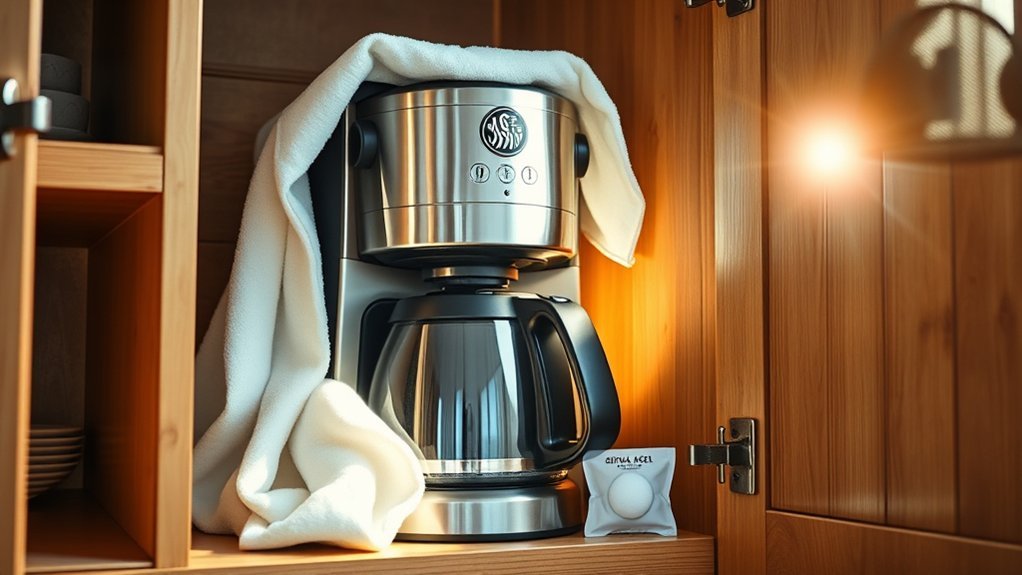
Choose a dry location that remains safely above freezing. A climate-controlled closet, pantry, cabinet, or heated utility room is generally safer than an unheated shed, seasonal cabin, vehicle, detached garage, or other space exposed to outdoor temperatures. For broader between-use care, see the site’s coffee maker maintenance guide.
A garage is suitable only when it remains dry and frost-free for the entire storage period. A garage that warms during the day can still expose the coffee maker to freezing conditions overnight.
Keep the appliance away from floor moisture, plumbing leaks, exterior doors, direct sunlight, heaters, and areas with heavy condensation. A dehumidifier can reduce moisture in a damp room, but it cannot protect the internal water circuit from freezing temperatures.
Note: Original packaging can protect the appliance from dust and impact, but use it only after the machine, removable parts, and packaging are dry. Do not seal a damp appliance inside plastic or a closed box.
Top Mistakes to Avoid While Winterizing Your Coffee Maker
The biggest mistakes come from treating every coffee maker the same, leaving cleaner or water behind, or using shortcuts that the manufacturer never approved. Avoid generic drain tricks and follow the storage procedure for your exact model. If the manual provides no user-accessible drain method, keep the machine frost-free rather than forcing one.
- Assuming every machine drains the same way. Hidden tanks, boilers, pumps, valves, and emptying modes vary widely.
- Assuming an empty reservoir means an empty machine. Internal plumbing can retain water after the visible tank is drained.
- Unplugging the machine and then trying to perform a powered drain sequence. Keep cleaning and powered manufacturer-approved emptying steps separate.
- Adding more water after the final emptying procedure. Complete any rinsing first, then perform the final drain or purge.
- Using a generic vinegar ratio. Use only the descaling product and dilution approved for your model.
- Using compressed shop air as a generic shortcut. Do not force air through water ports unless the manufacturer specifically requires that method.
- Adding RV, marine, or automotive antifreeze. Coffee makers are food-contact appliances; use the manufacturer’s draining procedure rather than introducing an unapproved storage fluid.
- Opening the appliance housing or boiler. Internal electrical parts, hot components, pressure, and sharp edges can cause injury or appliance damage.
- Sealing removable parts while damp. Let washable and accessible components dry completely before packing them.
- Storing the machine on its side. Unless the manual states otherwise, keep it upright so residual moisture is less likely to migrate into unintended areas.
Warning: Ethylene glycol, a chemical commonly used in automotive antifreeze, can cause severe poisoning if enough is swallowed. The CDC/ATSDR medical guidance describes serious effects involving the nervous system, heart, lungs, acid-base balance, and kidneys. If antifreeze or another unknown chemical has entered a coffee maker’s water system, do not use the machine for beverages; contact the manufacturer or a qualified service provider for guidance.
How to Protect Your Coffee Maker From Dust and Damage
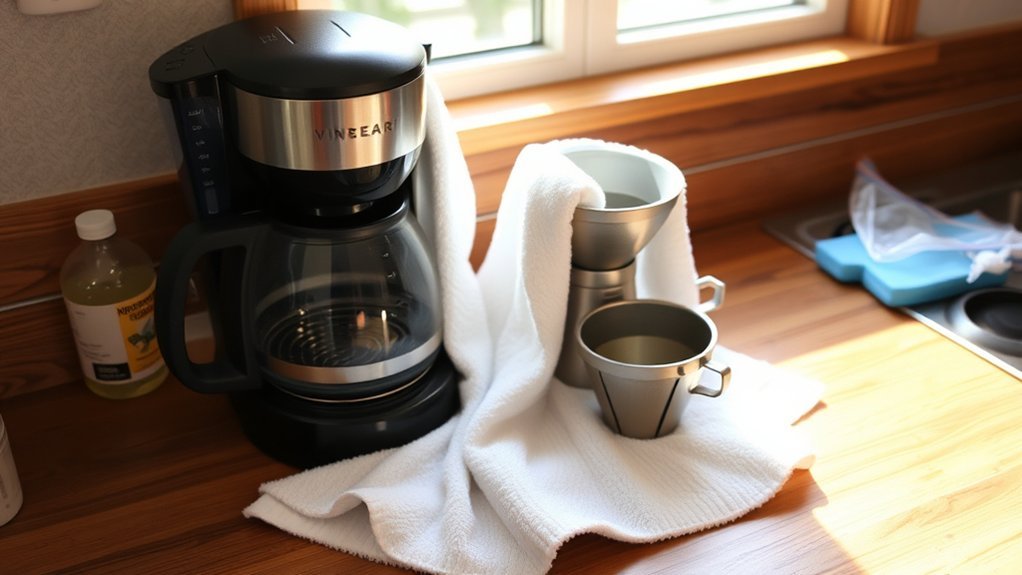
After the appliance and its removable components are dry, place the coffee maker on a stable shelf in its normal upright position. Use a clean dust cover or dry original packaging to protect it from dust, scratches, and minor impact.
Keep removable components together so nothing is lost. A labeled bag or small box works well for filter baskets, drip trays, lids, milk tubes, and accessories, but do not seal damp pieces inside it.
Coil the power cord loosely and use the built-in cord-storage compartment if the model has one. Do not wrap the cord tightly around the appliance or pinch it underneath the machine.
Avoid stacking heavy objects on top of the coffee maker. During long storage, occasionally check the surrounding area for roof leaks, plumbing leaks, pests, condensation, or temperature changes that could expose the appliance to moisture or freezing.
How to Inspect Your Coffee Maker After Winter Storage
Move the machine into a dry, room-temperature location before connecting it to power. Acclimation requirements vary by model. The Keurig K10 manual, for example, instructs owners to let the brewer rest at room temperature for at least two hours after cold storage.
Before plugging it in:
- Inspect the cord and plug for cuts, crushed areas, corrosion, loose parts, or exposed wire.
- Check the reservoir, carafe, hoses, milk parts, drip tray, and housing for cracks or warping.
- Look underneath the appliance for dried water marks or signs of a previous leak.
- Check accessible areas for pests, residue, unusual odors, or visible growth.
- Wash and rinse removable food-contact components again.
- Install a fresh water filter if the old filter was removed, expired, or should be replaced under the manufacturer’s schedule.
Do not open the housing to inspect the pump, boiler, heating element, or wiring. If the appliance was actually frozen, visible inspection cannot guarantee that every internal fitting survived. Watch especially closely for leakage during the first approved rinse or priming cycle.
If the exterior is cracked, the cord is damaged, chemical contamination is suspected, or you see evidence of water leaking from the housing, do not power the machine. Contact the manufacturer or an authorized service provider.
How to Get Your Coffee Maker Ready for Spring Use
Once the machine has reached room temperature and passes the visual inspection, restart it in the order the manufacturer specifies. Reinstall clean parts, prime or rinse the water system, and watch for leaks or abnormal operation before you brew coffee.
Use this sequence as a general checklist:
- Reinstall the clean, dry reservoir, drip tray, filter basket, pod holder, milk components, and other removable parts.
- Fill the reservoir with fresh potable water.
- Prime or restart the machine according to its owner’s manual.
- Run the specified cleaning, rinsing, or water-only cycles without coffee or capsules.
- Check around the reservoir, base, outlet, steam wand, connections, and drip tray for leaks.
- Confirm that water flow, heating, indicator lights, and pump sound are normal.
- Discard the rinse water before brewing a drink.
Some manufacturers specify several cleansing brews after storage. Use the number stated for your model rather than assuming that one rinse is sufficient.
Stop using the machine if it trips a breaker, smells burnt, leaks from the housing, makes a harsh or abnormal pump noise, produces no flow after the approved priming procedure, or shows signs of cracked water-carrying parts. Contact the manufacturer or an authorized repair provider.
Key Takeaways
- Check the exact owner’s manual before trying to empty internal tanks, tubes, boilers, pumps, or thermoblocks; even similar brewer families can use different storage procedures.
- Treat cleaning, descaling, rinsing, internal draining, and air-drying as separate tasks, and finish any rinse before the final emptying step.
- A visibly empty reservoir does not prove that the machine’s internal water circuit is empty.
- Use a built-in emptying or transport mode when your model provides one. If the manufacturer says the internal tank is not user-drainable, keep the machine upright and frost-free instead of improvising.
- Do not add automotive, RV, marine, or other antifreeze, force compressed shop air through water ports, or open the appliance housing unless the manufacturer expressly instructs you to do so.
- After cold storage, let the machine reach room temperature as directed, inspect it for leaks or damage, and complete the manufacturer’s restart or cleansing procedure.
Frequently Asked Questions
Can I store my coffee maker in the garage?
You can store it in a garage only if the space remains dry and frost-free throughout the storage period. An unheated garage that can drop below freezing is unsuitable because water may remain inside pumps, heaters, tubing, or internal tanks even when the visible reservoir is empty. Keep the appliance off a damp floor and away from leaks and exterior doors.
How often should I winterize my coffee maker?
Winterize it before freeze-risk storage or winter transport and whenever the manufacturer requires a system-emptying procedure for long non-use or repair. A coffee maker that stays in regular use inside a heated home does not need an annual winterizing ritual simply because winter has arrived.
Do I need to winterize a coffee maker for a short vacation?
Usually not if the machine will remain in a heated, dry home and the manual does not call for a special shutdown procedure. Remove coffee or milk residue, empty accessible standing water as appropriate, and clean the removable parts. Use a full empty-system procedure when the manufacturer requires it or when freezing, transport, repair, or longer non-use makes it necessary.
Can water remain inside when the reservoir looks empty?
Yes. Depending on the design, water may remain in an internal tank, heater, boiler, thermoblock, pump, valve, tube, or steam circuit. That is why some machines have a separate purge or “emptying the system” procedure instead of relying only on reservoir draining.
Is it safe to use a coffee maker after winter storage?
Usually, yes, if it was stored correctly and shows no damage. Let it reach room temperature, inspect the cord and accessible parts, wash removable components, and run the manufacturer’s startup or cleansing cycles. Stop if the appliance leaks, smells burnt, trips a breaker, makes an abnormal pump noise, or may contain an unknown chemical.
What should I do if the coffee maker may have frozen?
Do not power it while it is frozen or still cold from storage. Move it to a dry indoor location and allow it to reach room temperature for the period required by the manual. Inspect it for cracks and leakage. Because freeze damage can occur inside hidden plumbing, stop and seek manufacturer or service guidance if water leaks from the housing during the approved restart or rinse procedure.
Should I descale the coffee maker before storage?
Descale it when the maintenance schedule, warning light, or manual says descaling is due. Use the approved cleaner and dilution, then complete every required fresh-water rinse before performing the final drain or system-emptying procedure. Descaling and winterizing are separate tasks, so do not leave descaling solution in the water circuit during storage.
Can I use compressed air or antifreeze to empty the machine?
Do not add automotive, RV, marine, or other antifreeze to a coffee maker. Do not force compressed shop air through water ports unless the appliance manufacturer specifically requires that procedure. Use the model’s approved drain, purge, transport, or empty-system mode instead, and keep the machine frost-free if no user-accessible drain method is provided.
Conclusion
To winterize a coffee maker safely, remove visible water and residue, clean and fully dry the removable parts, and use the official emptying, purge, frost-protection, or transport procedure for the exact model when one is provided. Do not assume repeated brew cycles will drain every machine, and never add antifreeze or force compressed air through the water system as a generic shortcut.
Store the appliance upright in a dry, frost-free location. When you are ready to use it again, allow a cold-stored machine to reach room temperature, inspect it for damage or leaks, reinstall clean parts, and complete the manufacturer’s startup or cleansing cycles before brewing coffee.
Sources
- Keurig K10 Owner’s Manual — internal hot-water tank emptying, upright frost-free storage, residual-condensation warning, cleansing brews, and room-temperature acclimation
- Keurig Classic Series Support — current guidance on which Classic brewers can be internally drained and how other models should be stored
- Nespresso Vertuo Machine Assistance — model-specific support for system emptying, maintenance, and long periods of non-use
- De’Longhi Product Manuals — official model-specific operating, cleaning, maintenance, and storage instructions
- Keurig Descaling Instructions — K10 descaling guidance referenced in the storage-preparation section
- Breville Espresso Machine Cleaning Guide — model-dependent cleaning and descaling guidance, including its published vinegar option
- Moccamaster: Why Is Water Left in My Brewer After the Brew Cycle? — retained water in the boiling element and model-specific draining guidance for extended or freezing storage
- KitchenAid Espresso Machine Winter Storage — model-specific purge guidance before freezing-weather storage or transport
- CDC/ATSDR Medical Management Guidelines for Ethylene Glycol — health hazards associated with significant ethylene-glycol exposure and ingestion