
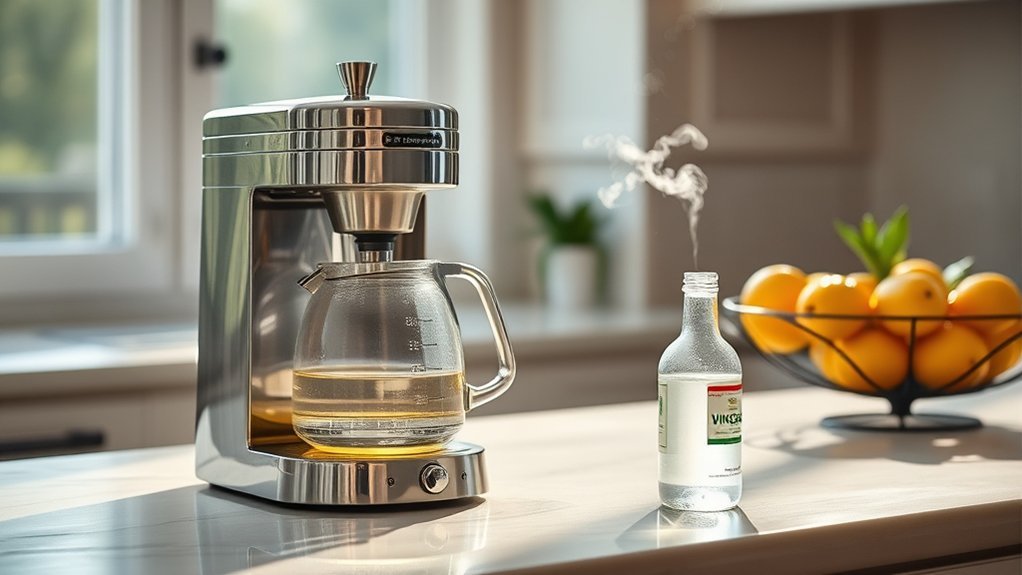
Using vinegar too often—or using it in a coffee maker whose manufacturer does not approve it—can leave a sour odor, require repeated rinsing, and potentially expose incompatible internal parts to the wrong cleaner. Some drip coffee makers allow diluted white vinegar, while other machines require a manufacturer-approved descaling product. Your owner’s manual should always control the method, ratio, and schedule.
Quick Answer
Yes—vinegar can be used too often, especially when your coffee maker’s manual does not approve it. Some drip machines allow diluted white vinegar, while Nespresso and Moccamaster advise against it. Follow the model-specific ratio and schedule, rinse until no odor remains, and use an approved descaler when required.
Key Takeaways
- Vinegar is not safe or recommended for every coffee maker; check the model’s manual before putting it in the reservoir.
- There is no universal vinegar ratio or cleaning schedule. Instructions vary by manufacturer, water hardness, and machine design.
- A lingering sour taste usually means the machine needs more fresh-water rinsing, not another vinegar cycle.
- Slow flow and white residue usually point to remaining mineral scale or coffee debris rather than vinegar “hardening” inside the machine.
- Use mild dish soap for washable parts and a manufacturer-approved descaler when vinegar is prohibited.
At a Glance
| Time Required | About 30–90 minutes, depending on the cleaning cycle and number of rinses |
| Difficulty | Easy, provided you follow the model-specific manual |
| Tools Needed | Owner’s manual, fresh water, mild dish soap, soft cloth, carafe, and either approved descaler or white distilled vinegar if permitted |
| Cost | About $0–$15, depending on whether you use vinegar or a branded descaler |
Warning: Never mix vinegar with bleach or a chlorine-based cleaner. The combination can release dangerous chlorine gas. Do not run bleach, dish soap, lemon juice, baking soda, or any other household cleaner through internal tubing unless your coffee maker’s manual expressly permits it.
Why Vinegar Is Popular for Cleaning Coffee Makers
White vinegar is popular because it is inexpensive, widely available, and acidic enough to loosen some mineral scale. In coffee makers that permit it, a diluted solution can help remove deposits left by calcium and other minerals in water.
However, descaling is not the same as cleaning or disinfecting. Descaling targets mineral deposits inside the water path. Cleaning removes coffee oils, grounds, spills, and residue from parts such as the carafe, lid, filter basket, and showerhead.
Wash removable, manufacturer-approved parts with warm water and mild dish soap. Do not rely on vinegar alone to remove greasy coffee oils or to sanitize the machine. The CDC notes that vinegar does not kill every germ and should not be treated as a universal disinfectant.
Note: Use plain white distilled vinegar only when the manual permits vinegar. Apple-cider vinegar, flavored vinegar, cleaning vinegar, and concentrated acetic-acid products may leave residue or be stronger than the machine’s instructions allow.
Power your essentials anywhere with a 999Wh pure sine wave power station delivering up to 1000W continuous with 2000W surge. It supports fast charging via USB-C PD 60W and USB-A QC 18W, plus simultaneous output for multiple devices through AC, USB, wireless, and car/DC ports. Recharge using AC, car, or solar with a built-in MPPT controller and dual cooling fans, while the upgraded battery management system protects against surges, short circuits, and overheating.

1-Year Supply, Better Value - Includes 24 coffee maker descaling tablets—enough for monthly cleaning for up to a year. A cost-effective alternative to powders, liquids, pods, sachets, or packets.

Descales your coffee maker, fighting hard water deposits and mineral buildup for a better tasting brew
Potential Risks of Overusing Vinegar for Coffee Maker Cleaning
The main risk is not a universal number of vinegar cycles. It is using the wrong cleaner, concentration, contact time, or schedule for your particular machine.
Some drip-coffee-maker manufacturers publish vinegar procedures. Other manufacturers warn that vinegar or unapproved descalers may damage internal components. Repeatedly ignoring the manual can also make a warranty claim more difficult if the cleaner contributes to a failure.
Potential Damage to Components
It is not accurate to say that diluted vinegar automatically damages every rubber seal, plastic part, or metal surface. Compatibility depends on the machine’s materials and the manufacturer’s design.
Nespresso’s VertuoPlus guidance, for example, says that vinegar and other unapproved descalers may damage the machine. Moccamaster also advises against vinegar and recommends compatible cleaning products for its copper boiling element.
By contrast, Cuisinart and KitchenAid publish vinegar instructions for at least some drip machines. This difference is why a generic rule cannot replace the manual.
Residual Taste and Odor
A lingering vinegar smell or sour coffee flavor is one of the most common signs that the machine was not rinsed enough. It may occur after an overly concentrated mixture, a long soak, an incomplete rinse, or repeated vinegar cycles.
- Sour flavor: Coffee tastes sharper or more acidic than normal.
- Vinegar odor: The empty machine or hot rinse water still smells like vinegar.
- Repeated rinsing: More water-only cycles are required than the manual normally specifies.
Do not add more vinegar to correct a vinegar odor. Run fresh-water cycles and wash the removable parts instead.
Signs You Might Be Overusing Vinegar in Your Coffee Maker
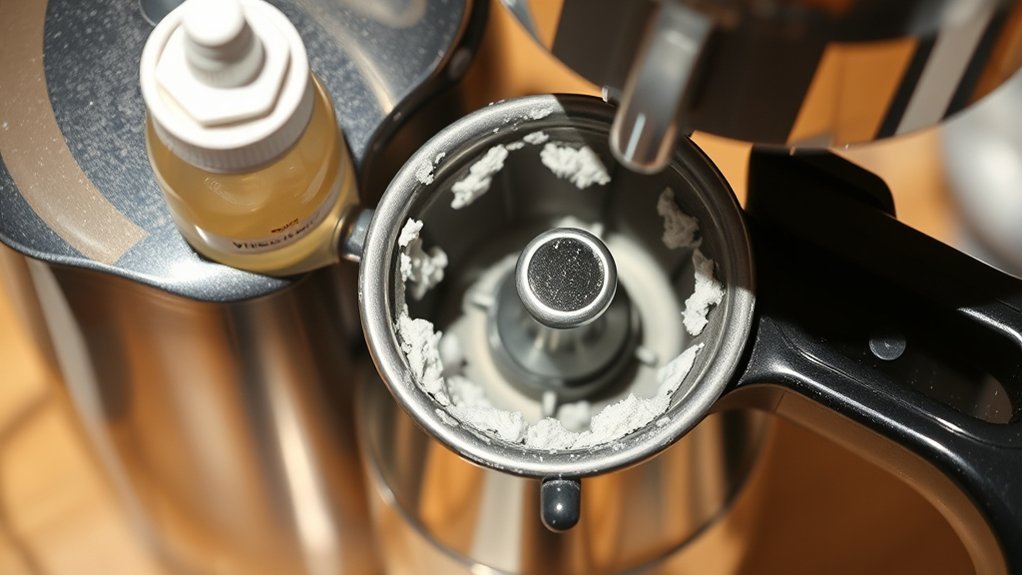
The clearest signs of excessive or incorrect vinegar use are persistent odor, sour flavor, and the need for unusually extensive rinsing. Leaks or new error messages after cleaning also deserve attention.
Clogging and visible residue require more careful interpretation because they are not reliable proof that vinegar caused the problem.
Unpleasant Vinegar Aftertaste
If your coffee tastes or smells like vinegar, stop brewing coffee and run a complete water-only cycle. Smell and taste the cooled rinse water. Repeat the process until it is neutral.
Also wash the carafe, lid, reusable filter, and brew basket with mild dish soap. Vinegar trapped on a removable part can keep transferring odor even after the internal water path has been rinsed.
Frequent Clogging or Slow-Water-Flow Issues
Slow flow, gurgling, incomplete brewing, or unusual noises do not automatically mean vinegar has clogged the machine. More common explanations include mineral scale that was not fully removed, coffee grounds in an outlet or needle, a blocked filter, or a maintenance cycle that was not completed correctly.
Ordinary diluted vinegar does not normally “harden” into a blockage. If flow becomes worse after cleaning, stop repeating the vinegar cycle. Check the troubleshooting section of the manual, clean accessible parts, and use only the approved descaling process.
Visible Residue Buildup
Different residues point to different problems:
- White or chalky film: Usually mineral scale that remains after incomplete descaling or continued use of hard water.
- Brown or sticky residue: Usually coffee oils that should be removed with warm, soapy water on washable parts.
- Loose particles: May be dislodged scale, grounds, filter material, or residue from an unapproved cleaner.
- Persistent vinegar odor: Usually indicates insufficient rinsing rather than a solid deposit.
If particles continue to appear after several rinses, stop using the machine and contact the manufacturer before running another chemical cycle.
How to Properly Clean Your Coffee Maker With Vinegar
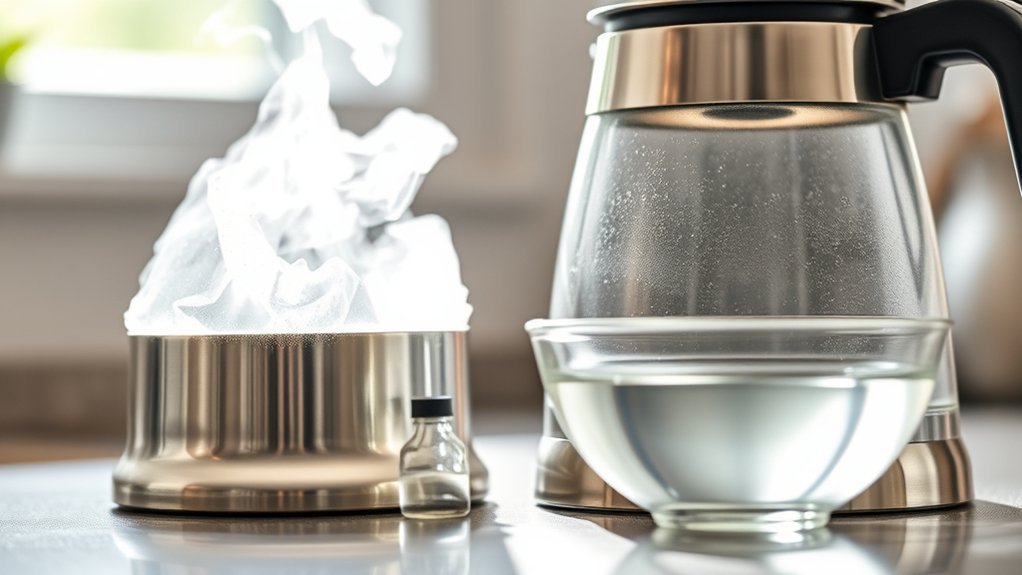
Use this procedure only when your coffee maker’s manual permits white distilled vinegar. The manual’s ratio, cycle, and soaking time override every general instruction below.
- Read the model-specific instructions. Confirm that vinegar is allowed and note the required water-to-vinegar ratio. Do not assume that 1:1 is correct for every machine.
- Turn off and cool the machine. Unplug it before removing parts or wiping the housing.
- Empty the coffee maker. Remove grounds, capsules, paper filters, and any water filter that the manual says to remove before descaling.
- Wash removable parts. Clean the carafe, lid, filter basket, and reusable filter with warm water and mild dish soap if those parts are washable.
- Prepare the approved mixture. Use plain white distilled vinegar and fresh water in the exact proportion specified by the manufacturer. Cuisinart permits diluted vinegar for many models, while KitchenAid describes a half-water, half-vinegar solution for some drip machines.
- Run the specified cycle. Use the machine’s clean or descale mode when available. Do not pause the cycle or leave vinegar sitting in the machine unless the manual instructs you to do so.
- Discard the solution. Empty and rinse the carafe before starting the fresh-water cycles.
Pro Tip: Write the descaling date in your phone or on a removable label. Record the product used and the number of rinse cycles so you do not repeat the treatment unnecessarily.
How to Rinse Your Coffee Maker After Vinegar Cleaning
Thorough rinsing is essential because even a small amount of vinegar can change the aroma and flavor of the next pot.
The rinse is complete only when the water looks clear and has no vinegar smell or sour taste after cooling.
- Empty and rinse the carafe. Remove all of the used vinegar solution.
- Fill the reservoir with fresh, cool water. Do not add coffee, a capsule, or a paper filter unless the manual requires one for the cycle.
- Run a complete brew cycle. Allow the machine to finish rather than stopping it midway.
- Repeat as directed. Some manufacturers call for one rinse, while others specify two or more. Continue until the odor is gone.
- Wash removable parts. Use warm, soapy water on the carafe, basket, lid, and reusable filter.
- Let the machine dry. Leave the reservoir lid and filter area open when the design permits.
- Perform a final water test. Brew plain water, let it cool, and confirm that it smells and tastes neutral.
Alternative Cleaning Solutions for Your Coffee Maker
Vinegar is not the only option, and it is not the best choice for every machine. Match the cleaner to the job:
- Manufacturer-approved descaling liquid or tablets: Usually the safest choice for internal water lines because the product is selected for the machine’s materials and cleaning cycle.
- Citric-acid descaler: Use only when the manual or manufacturer approves a citric-acid product and follow the package dilution exactly.
- Mild dish soap: Best for approved removable parts such as the carafe, lid, brew basket, and reusable filter. Do not run sudsy water through internal tubing.
- Baking-soda paste: May help with stains on a removable carafe when its care instructions allow it. Rinse thoroughly and do not put undissolved baking soda in the reservoir.
- Soft cloth and fresh water: Suitable for routine exterior wiping and accessible surfaces after the machine is unplugged and cool.
Avoid lemon juice, apple-cider vinegar, scented vinegar, abrasive powders, and concentrated cleaning vinegar inside the machine unless the manufacturer specifically authorizes them.
Expert Views on Using Vinegar in Coffee Machines
Official instructions show why generalized “expert” advice is unreliable. Major manufacturers do not agree on one cleaner, ratio, or schedule.
| Manufacturer | Published Guidance | Practical Takeaway |
|---|---|---|
| Cuisinart | Allows diluted vinegar for many drip models and tells owners to check the specific manual. | Vinegar may be acceptable, but the model’s ratio and clean-cycle instructions control. |
| KitchenAid | Describes vinegar or commercial descaler for compatible drip machines and requires fresh-water rinses. | Follow the machine’s cleaning cycle and rinse instructions rather than copying a generic recipe. |
| Keurig | Recommends descaling every three to six months or when the applicable indicator appears, using model-specific directions. | Use the current instructions for the exact brewer rather than assuming an older vinegar method applies. |
| Nespresso | Directs owners to use the Nespresso Descaling Kit and warns that vinegar or store-bought alternatives may damage the machine. | Do not use vinegar in a Nespresso machine. |
| Moccamaster | Recommends compatible products every 100 cycles or at least every three months and advises against vinegar. | Use an approved descaler to protect the brewer and avoid a lingering odor. |
Note: Manufacturer advice can change and may differ between models from the same brand. Use the manual for the model number printed on your machine, not instructions for a similar-looking brewer.
Cleaning Frequency: How Often Should You Clean Your Coffee Maker?
There is no single vinegar schedule that is correct for every coffee maker. Separate routine cleaning from periodic descaling.
- After each use or daily: Empty grounds and rinse or wash the carafe, lid, brew basket, and reusable filter as allowed by the manual.
- Weekly: Wipe accessible surfaces, inspect the showerhead or outlet, and let damp compartments dry.
- Periodically: Descale when the cleaning indicator appears or at the interval in the manual.
- More often when needed: Hard water, heavy daily use, slower brewing, or visible scale may shorten the interval.
Examples show how widely schedules vary. Keurig recommends every three to six months for many brewers. Moccamaster recommends every 100 brew cycles or at least every three months. Nespresso’s VertuoPlus guide recommends every three months or 300 capsules, whichever comes first.
These are brand examples, not replacements for your own manual. A coffee maker that prohibits vinegar should never receive a vinegar cycle simply because three or six months have passed.
What to Do If You Have Been Overusing Vinegar
If you have run vinegar through the machine too frequently, used an overly strong mixture, or discovered that the manufacturer prohibits it, take the following steps:
- Stop using vinegar. Do not run another acidic cycle to remove the smell from the previous one.
- Run fresh-water cycles. Use the rinse procedure in the manual. Two or three complete cycles may be needed when an odor remains.
- Wash removable parts. Clean the carafe, basket, lid, reusable filter, and removable reservoir with mild dish soap when permitted.
- Let everything dry. Leave accessible compartments open until fully dry.
- Check for leaks or errors. Stop using the machine if water appears beneath it, an error persists, or electrical parts become wet.
- Use an approved product next time. Select the manufacturer’s descaler or another product specifically listed as compatible.
- Contact support when performance changes. Persistent slow flow, unusual noises, leaks, debris, or odor may require model-specific service instructions.
Do not keep cycling different acids, powders, or household cleaners through the machine. Combining products can make troubleshooting harder and may damage parts that would otherwise be serviceable.
Frequently Asked Questions
Can vinegar damage plastic parts in coffee makers?
There is no universal answer for every plastic or coffee maker. Some manufacturers permit a diluted vinegar cycle, while others prohibit it because of the machine’s internal materials. Use only the concentration and contact time stated in the model’s manual, and do not soak parts longer than directed.
How does vinegar affect coffee taste over time?
Vinegar should not remain in brewed coffee. When the machine is rinsed correctly, it should not change the flavor. A sour taste or sharp odor means vinegar residue is still present and additional water-only cycles are needed.
Is vinegar safe for all coffee maker brands?
No. Cuisinart and KitchenAid allow vinegar for at least some drip models, while Nespresso and Moccamaster advise against it. Check the instructions for your exact model before pouring vinegar into the reservoir.
Can vinegar help with coffee stains outside the maker?
Diluted vinegar may help on some nonporous, acid-safe surfaces, but it can damage stone, specialty finishes, or sensitive coatings. For a glass or stainless-steel carafe, start with warm water and mild dish soap. Use a baking-soda paste only when the carafe’s care instructions allow it.
What cleaning alternative is safest for a coffee maker with aluminum parts?
Use the descaler named or approved by the coffee maker’s manufacturer. Do not assume that lemon juice, vinegar, citric acid, or baking soda is safe for an internal aluminum component. Mild dish soap is appropriate only for removable parts whose instructions allow washing.
How many water cycles should I run after vinegar?
Follow the manual first. Depending on the machine, one to three complete fresh-water cycles may be required. Continue rinsing until cooled rinse water has no vinegar odor or sour taste.
Is vinegar the same as a commercial descaling solution?
No. Commercial products may use different acids, concentrations, corrosion-control ingredients, and rinse instructions. An approved descaler is selected for the machine’s water path and materials, while household vinegar has not been approved for every model.
Can I use apple-cider vinegar instead of white vinegar?
It is best not to. Apple-cider vinegar contains color and flavor compounds that can leave more odor or residue. When a manual permits vinegar, it normally means plain white distilled vinegar in a stated dilution.
Conclusion
Vinegar can be useful in a coffee maker that is designed to accept it, but more is not better. Avoid universal ratios and blanket schedules. Check the exact model’s instructions, use the approved cleaner, complete the full rinse process, and wash removable parts separately with mild dish soap.
If your machine still smells sour, produces debris, leaks, or brews slowly after rinsing, stop repeating vinegar cycles and follow the manufacturer’s troubleshooting guidance. A model-specific maintenance routine protects the machine and keeps unwanted cleaning flavors out of your coffee.
Sources
- Cuisinart: How to Clean a Coffee Maker — vinegar use, washable parts, rinsing, and water-hardness guidance for compatible models
- KitchenAid: How to Clean and Descale a Coffee Maker — cleaning versus descaling, vinegar procedure, rinsing, and maintenance signs
- Keurig: Brewer Descaling Guidance — mineral-scale effects and typical three-to-six-month descaling guidance
- Nespresso VertuoPlus Descaling Guide — approved descaling product, frequency, rinsing, and warning against vinegar
- Moccamaster: Cleaning and Descaling Frequency — 100-cycle guidance, compatible products, and reasons vinegar is discouraged
- Centers for Disease Control and Prevention: Cleaning and Disinfecting Guidance — limitations of vinegar as a disinfectant and the role of soap or detergent