A 12-cup coffee maker does not always use one universal filter size. The correct choice depends on the shape of the removable brew basket. Most flat-bottom machines use an 8–12 cup basket-style filter, while V-shaped or cone-style machines commonly use a #4 cone filter. Checking the basket shape or owner’s manual prevents poor fit, overflow, and grounds in the carafe.
Quick Answer
For a flat-bottom 12-cup drip coffee maker, use an 8–12 cup basket-style filter. For a V-shaped or cone-style brew basket, use a #4 cone filter. The cup count alone is not enough, so check the basket shape, model manual, or filter markings before buying.
Key Takeaways
- Flat-bottom 12-cup brewers generally use filters labeled 8–12 cup basket.
- Cone-shaped 12-cup brewers commonly use #4 cone filters.
- The words “12 cup” describe brewing capacity, not the filter’s shape.
- Check the owner’s manual or model number whenever the basket shape is unclear.
- A correctly fitted filter should sit fully open without folding, floating, or extending into the showerhead.
At a Glance
| Time Required | About 1–2 minutes |
| Difficulty | Easy |
| Tools Needed | Coffee maker model number or owner’s manual |
| Cost | No cost to check; filter prices vary by material, brand, and package size |
What Size Coffee Filter Does a 12-Cup Coffee Maker Use?
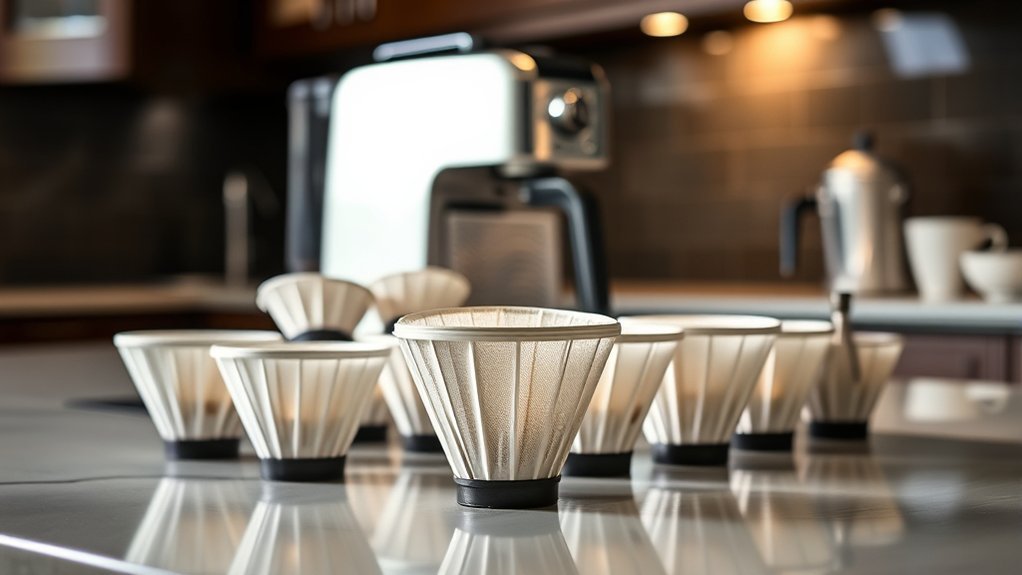
The correct filter is based on the shape of the brew basket:
- Flat, round bottom: Use an 8–12 cup basket-style paper filter or a compatible permanent basket filter.
- V-shaped or tapered bottom: Use a #4 cone paper filter or a compatible permanent cone filter.
Melitta identifies its 8–12 cup basket filters as fitting basket-style electric coffee makers. Its #4 cone filters are intended for 8–12 cup cone-style coffee makers.
Manufacturer examples also show why capacity alone is not enough. The Hamilton Beach model 49465RG has a cone-shaped brew basket and includes sample #4 cone filters, while other Hamilton Beach 12-cup models specify 8–12 cup basket-style filters.
A 12-cup label tells you how much the brewer makes. The shape of the brew basket tells you which filter fits.
Power your essentials anywhere with a 999Wh pure sine wave power station delivering up to 1000W continuous with 2000W surge. It supports fast charging via USB-C PD 60W and USB-A QC 18W, plus simultaneous output for multiple devices through AC, USB, wireless, and car/DC ports. Recharge using AC, car, or solar with a built-in MPPT controller and dual cooling fans, while the upgraded battery management system protects against surges, short circuits, and overheating.
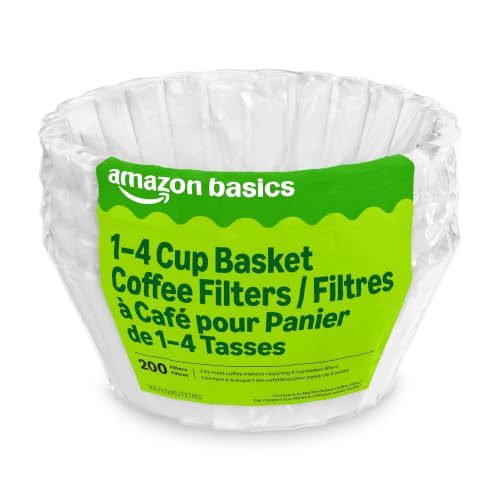
WIDE COMPATIBILITY: Contains 200 white 1-4 cup basket style coffee filters designed to fit most coffee makers requiring 4 cup basket filters

SHIPMENT CONTAINS: 200 white basket coffee filters that fit most 8-12 cup basket coffeemakers
How to Identify the Right Filter Shape
- Open the coffee maker’s lid and remove the filter holder or brew basket.
- Look at the bottom. A broad, flat, circular base requires a basket-style filter. A tapered V-shaped base requires a cone filter.
- Check for markings. Some baskets, reusable filters, packaging, or instruction manuals print the required size.
- Find the model number. It is commonly printed on a label on the bottom or back of the coffee maker.
- Search the manufacturer’s support page or owner’s manual using that exact model number.
Pro Tip: Manufacturers may call the removable holder a “filter basket” even when it is cone-shaped. Do not choose a flat-bottom paper filter based only on the word “basket.” Look at the actual shape.
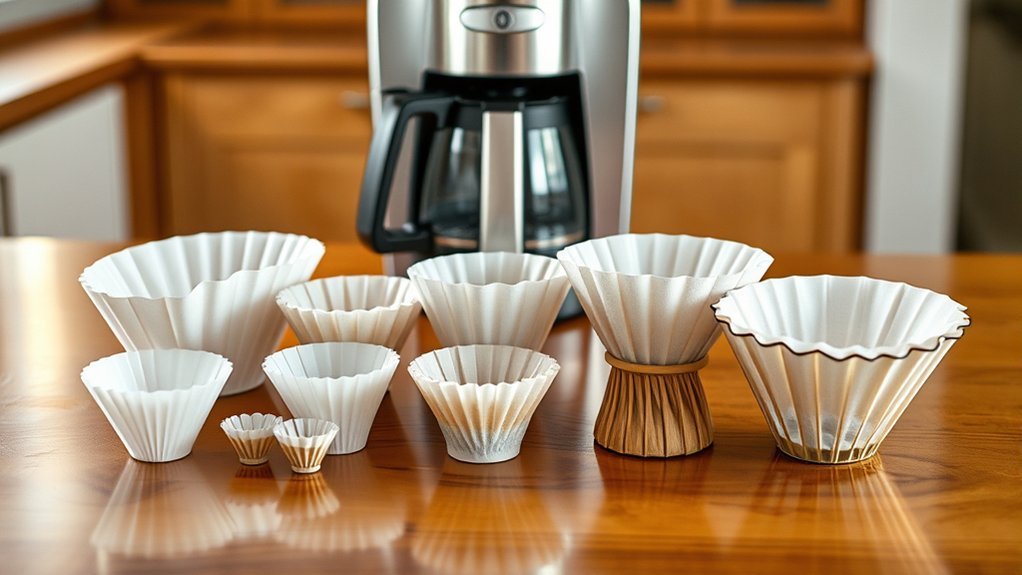
Coffee Filter Size Comparison
| Filter Type | Typical Use | How to Recognize It |
| 8–12 cup basket filter | Full-size flat-bottom drip coffee makers | Round with fluted sides and a broad, flat base |
| #4 cone filter | Many 8–12 cup cone-style drip coffee makers | Tapered sides with a narrow bottom seam |
| Permanent filter | Models designed to accept a reusable mesh filter | Must match the basket’s shape and physical dimensions |
| 4–6 cup basket filter | Compact flat-bottom coffee makers | Smaller than a standard full-size basket filter |
Types of Coffee Filters: Paper, Metal, and Cloth
After confirming the right shape and size, choose a material that matches your preferred taste and cleanup routine.
- Paper filters: Disposable, convenient, and effective at catching fine particles and much of the coffee oil. They usually produce a clearer cup with less sediment.
- Metal filters: Reusable and durable. Their mesh allows more oils and very fine particles into the carafe, which can create a fuller body and some sediment.
- Cloth filters: Reusable and capable of producing a clean but full-bodied cup. They require thorough rinsing, careful drying, and replacement when stained, damaged, or difficult to clean.
No material is best for every coffee drinker. Paper is usually easiest to clean up, while reusable filters reduce the number of filters discarded after individual brews.
Benefits of Choosing Paper Filters
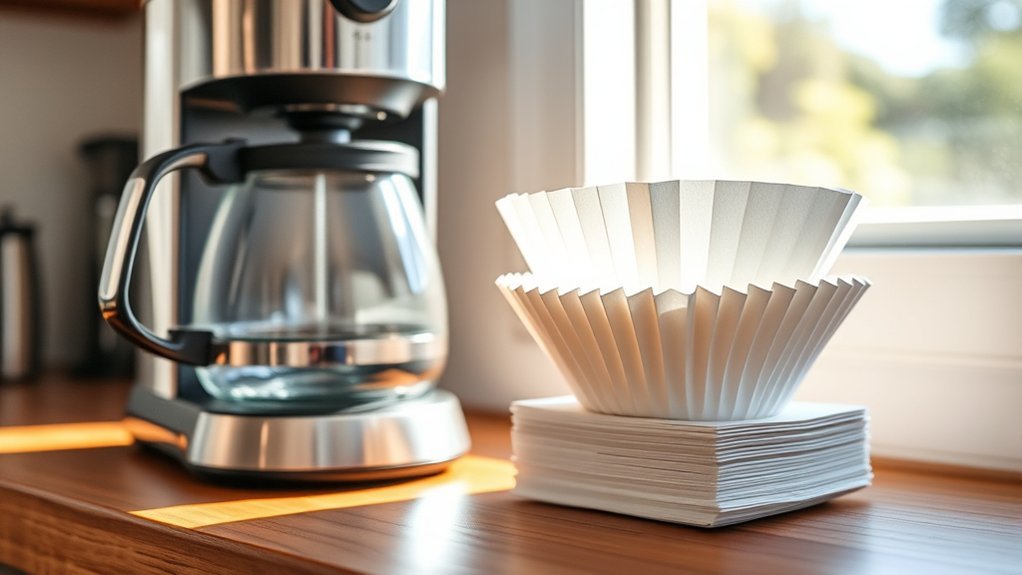
Cleaner Cup and Less Sediment
Paper filters catch fine coffee particles that may pass through a reusable mesh filter. They also retain part of the oily fraction of brewed coffee. This normally produces a clearer appearance, lighter body, and less sediment at the bottom of the carafe.
Research indexed by the National Library of Medicine has examined how paper filtration retains coffee compounds such as cafestol. This supports the practical observation that paper-filtered coffee differs from coffee brewed through a metal filter, although the preferred flavor is a matter of personal taste.
Easy Cleanup and Composting Options
After brewing, the paper filter can be lifted out with the grounds inside, reducing the amount of loose coffee that must be rinsed from the brew basket.
The U.S. Environmental Protection Agency lists coffee grounds and paper filters as materials that can be added to a backyard compost pile. Confirm that the filter is plain paper and check local collection rules before placing it in a municipal organics bin.
Note: A package marked “compostable” may refer to backyard composting, commercial composting, or both. Facilities and acceptance rules vary by location.
How Filter Shape Affects Coffee Brewing
Filter shape controls how the paper sits in the holder and how water moves through the coffee bed. A matching filter stays open, keeps the grounds contained, and provides enough wall height for the water and coffee to drain without spilling over.
- Cone filters: The coffee bed becomes deeper toward the narrow bottom. These filters must sit fully inside a tapered holder without folding over.
- Basket filters: The broad flat base spreads the grounds across a wider area. Grounds should be distributed evenly before brewing.
- Permanent filters: The reusable filter must match the holder’s shape, rim, and depth. A filter described only as “12 cup” may still be incompatible with a particular model.
Putting a cone filter in a flat-bottom holder leaves unsupported folds and too little usable space. Placing a basket filter in a cone holder creates wrinkles that can interfere with drainage or let grounds escape around the sides.
Top Features to Look for in Coffee Filters
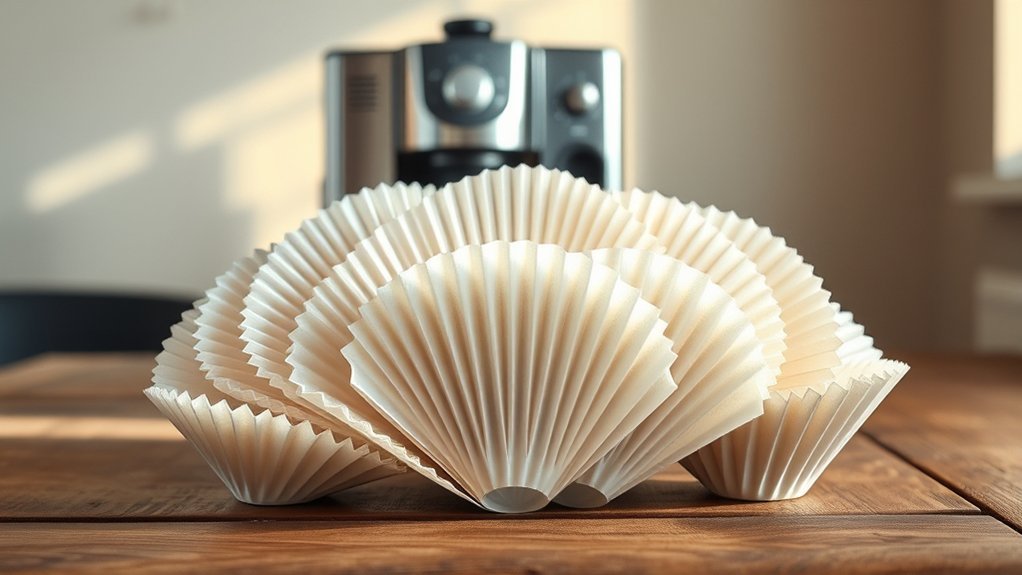
When comparing filters for a 12-cup coffee maker, focus on fit before marketing claims.
- Correct shape and capacity: Choose 8–12 cup basket or #4 cone only after identifying the holder.
- Adequate wall height: The paper should rise above the normal level of the dry grounds without touching the water outlet or preventing the lid from closing.
- Strong seams: The filter should open fully without splitting along its bottom or side seam.
- Food-contact suitability: Buy filters sold specifically for coffee preparation.
- Compatible reusable design: A permanent filter should be listed for the machine or match its original accessory specifications.
- Disposal preference: Choose paper for easy cleanup or a reusable filter when you are willing to rinse it thoroughly after each brew.
Tips for Preventing Overflow and Clogging
Overflow can result from the wrong filter, too many grounds, an overly fine grind, a filter that has folded inward, or a basket that is not seated correctly.
Use the Correct Filter Size
- Confirm whether the holder is flat-bottom or cone-shaped.
- Open the paper filter fully before adding coffee.
- Center it against the bottom and walls of the holder.
- Make sure the upper edge does not interfere with the lid, showerhead, or drip-stop mechanism.
- Use the filter size named in the owner’s manual whenever it differs from a general capacity label.
Warning: Do not start a brew cycle if the paper filter is folded over, collapsed, visibly undersized, or blocking the basket outlet. Hot water can back up and carry grounds over the filter wall.
Avoid Overfilling With Coffee Grounds
Follow the ground-coffee quantity and maximum capacity listed in your machine’s manual. Coffee-maker cup markings may represent smaller servings than a standard household measuring cup, so a universal tablespoon rule does not fit every brewer.
Use a medium grind unless the manufacturer recommends otherwise. Very fine coffee can slow drainage, while excessive grounds reduce the open space needed for water to flow through the basket.
Spread the dry grounds into an even layer rather than piling them against one side. Also clean the basket outlet, drip-stop valve, showerhead, and other removable parts according to the manufacturer’s instructions.
What to Check if the Filter Keeps Collapsing
- Confirm that you are using the correct shape.
- Separate nested paper filters so only one remains.
- Open and press the filter lightly against the holder before adding grounds.
- Fold the crimped seams on a cone filter only when the filter or coffee-maker instructions recommend it.
- Check that the sprayhead is not striking the filter wall directly.
- Replace filters that are damp, crushed, torn, or badly misshapen.
How Coffee Filters Affect the Environment
Each filter material has a different environmental tradeoff.
- Paper filters create single-use waste, but plain paper filters and coffee grounds can often be composted.
- Metal filters require materials and energy to manufacture but can be reused for years when properly maintained.
- Cloth filters are reusable but require washing, drying, and periodic replacement.
The lowest-impact choice depends on how often the filter is reused, how it is cleaned, whether paper filters are composted, and what local waste services accept. It is more accurate to consider those factors than to describe one material as universally eco-friendly.
Using and Storing Coffee Filters Effectively
Keep unused paper filters in their original wrapper or a clean container in a cool, dry cabinet. Protect them from moisture, grease, dust, cleaning products, and strong odors.
Paper coffee filters do not need to be discarded after an arbitrary number of months. Replace an unused filter only if it has become damp, moldy, contaminated, torn, or too distorted to sit correctly.
Some coffee drinkers rinse a paper filter briefly with clean water before adding grounds. Rinsing can help the filter conform to the holder and may reduce a noticeable paper aroma. Discard the rinse water before brewing.
Reusable metal or cloth filters should be emptied promptly, washed according to the manufacturer’s directions, and allowed to dry completely before storage. Replace a reusable filter when the mesh, fabric, frame, or seam becomes damaged or when thorough cleaning no longer removes residue and odor.
Common Questions About Coffee Filter Sizes
- Which filter material produces the clearest coffee? Paper usually catches more fine sediment and oil than a metal mesh filter.
- Do different brewing methods require different filters? Yes. Automatic drip, pour-over, percolator, and single-serve systems may use different shapes, sizes, and materials.
- Can a smaller filter be substituted? It is not recommended. A filter that is too short or narrow can collapse, overflow, or allow grounds into the carafe.
Frequently Asked Questions
Can I use a different filter size in my 12-cup coffee maker?
Use only a filter that matches the brew basket’s shape and dimensions. A loosely fitting substitute can fold, block drainage, or let grounds escape. When the specified filter is unavailable, confirm an alternative through the manufacturer or compare it directly with the original filter.
How do I know whether my coffee maker needs a #4 filter?
A #4 filter is normally used in a tapered, V-shaped brew basket designed for 8–12 cup cone filters. Check the owner’s manual, the removable holder, or the manufacturer’s support page for your exact model.
Are reusable filters compatible with all 12-cup coffee makers?
No. Reusable filters vary in shape, height, rim size, and outlet clearance. Use one listed for your model or one that matches the original filter specifications. A reusable filter labeled only “12 cup” is not guaranteed to fit every machine.
What happens if I use the wrong coffee filter size?
The filter may fold, collapse, drain too slowly, or leave gaps around the holder. These problems can cause overflow, uneven brewing, sediment, or grounds in the finished coffee.
How often should I replace my coffee filter?
Discard a paper filter after each brew. Clean a reusable filter after each use and replace it when the mesh, fabric, frame, or seams become damaged or when residue and odors remain after proper cleaning.
Can I use a #4 cone filter in a flat-bottom basket?
No. A #4 cone filter does not sit securely across a broad flat-bottom holder. Its unsupported folds can collapse or interfere with drainage. Use an 8–12 cup basket-style filter instead.
Should I put a paper filter inside a reusable filter?
Only do so when the coffee-maker or reusable-filter manufacturer allows it. Layering filters can slow drainage and cause overflow. In most machines, paper and permanent filters are alternative options rather than filters meant to be used together.
Conclusion
For a 12-cup coffee maker, choose the filter by looking at the brew basket rather than relying on capacity alone. A flat-bottom holder normally takes an 8–12 cup basket filter, while a tapered holder commonly takes a #4 cone filter. Verify the model, seat the filter fully, avoid excessive grounds, and follow the manufacturer’s instructions for the most reliable fit and brew.
Sources
- Melitta 8–12 Cup Basket Filter Paper — confirms compatibility with 8–12 cup basket-style electric coffee makers.
- Melitta #4 Cone Filter Paper — confirms that #4 filters are for 8–12 cup cone coffee makers.
- Hamilton Beach 12-Cup Coffee Maker for Cone Filters — provides a manufacturer example of a 12-cup brewer that uses #4 cone filters.
- Hamilton Beach 12-Cup Basket-Style Coffee Maker — provides a manufacturer example of a 12-cup brewer that uses 8–12 cup basket filters.
- U.S. Environmental Protection Agency: Composting at Home — supports composting plain paper coffee filters and grounds.
- National Library of Medicine: Cafestol Retention During Paper-Filtered Coffee Preparation — supports the discussion of paper filtration and coffee oils.