Single-serve vs. drip coffee makers mainly differ in how much coffee they make at once, how much control they give you, and what each drink costs over time. Choose a single-serve brewer if you normally want one fast cup with minimal measuring. Choose a drip coffee maker if you routinely make several cups of the same coffee, want more control over dose and grind, or want to keep ingredient cost lower. If your household regularly does both, a hybrid pod-and-carafe brewer can make more sense than forcing one format to handle every situation.
Last updated: September 19, 2026 — current SCA standards reference, environmental evidence, cost framework, recycling guidance, FAQs, and related ReviewZN resources reviewed.
Quick Answer
Choose a single-serve coffee maker if you usually want one fast cup with little measuring or cleanup. Choose a drip coffee maker if you regularly brew several cups together, want more control over coffee strength, and prefer lower ingredient costs. Consider a hybrid if you genuinely use both routines. Neither brewer type automatically tastes better or has the smaller environmental footprint; the result depends on the machine, coffee dose, energy use, and how much brewed coffee you actually drink.
Key Takeaways
- Single-serve brewers are best for one cup at a time, quick changes between flavors, and low day-to-day cleanup.
- Drip coffee makers are usually better for households, guests, and anyone who wants to adjust the coffee-to-water ratio, grind, and batch size.
- Ground coffee often costs less per serving than sealed pods, but wasted carafe coffee changes the real cost. Compare what you actually drink, not only the nominal cost per brewed serving.
- Pods create more packaging per drink, yet life-cycle comparisons do not produce one universal environmental winner because coffee dose, wasted beverage, machine energy, keep-warm time, and disposal also matter.
- Cleaning and descaling schedules are model-specific. Follow the brewer manual rather than using the same vinegar mixture or monthly schedule for every machine.
How this comparison was evaluated: This guide compares the two brewer categories using current industry standards, manufacturer maintenance and recycling guidance, peer-reviewed brewing research, and practical ownership factors. It does not claim hands-on testing of every machine in either category.
Understanding Single-Serve and Drip Coffee Makers
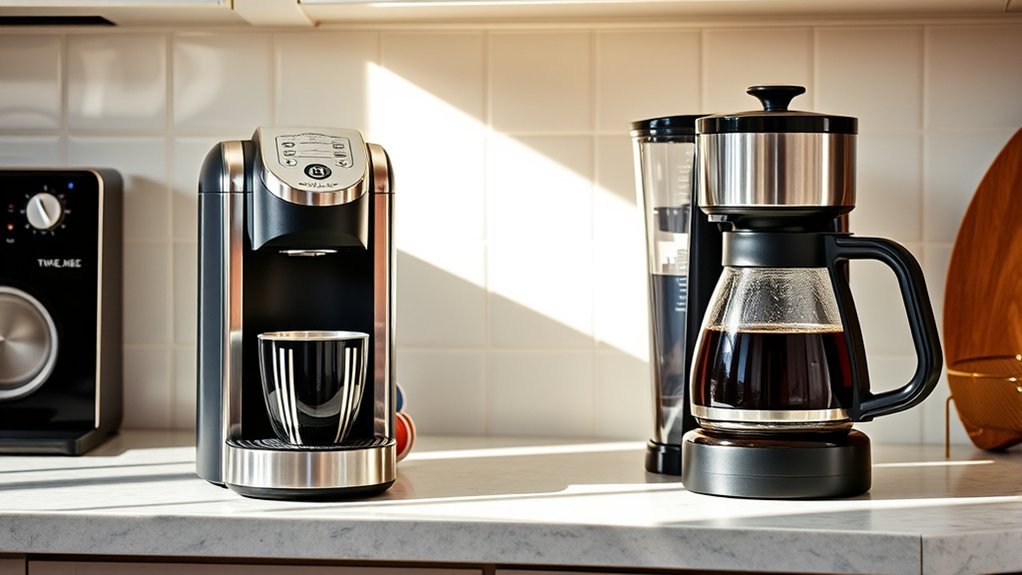
A single-serve coffee maker prepares one drink at a time. Many models use sealed plastic or aluminum capsules, but the category also includes brewers that accept soft pods, reusable filters, or loose ground coffee. Pod systems simplify measuring and can make it easy to switch between regular coffee, decaf, tea, or other compatible drinks.
A drip coffee maker sends heated water through ground coffee held in a filter and collects the brewed coffee in a glass or thermal carafe. Most are designed for several servings, although some compact drip machines brew directly into one mug.
The categories overlap. Hybrid machines may accept both pods and grounds, and some full-size brewers include a single-cup side. If you are comparing more than these two formats, see the ReviewZN guide to different types of coffee makers. For this comparison, check the accepted pod format, minimum and maximum brew sizes, batch capacity, and reusable-filter compatibility before buying.
Single-Serve vs. Drip Coffee Maker: Quick Comparison
| Factor | Single-Serve | Drip |
| Best use | One cup, changing flavors, rushed mornings | Several cups, families, guests, planned batches |
| Brewing effort | Insert a pod or filled reusable filter and select a size | Measure water and coffee, place the filter, and start the cycle |
| Flavor control | Limited with sealed pods; better with compatible reusable filters and adjustable settings | Usually greater control over dose, grind, water, and batch size |
| Cost per drink | Often higher with sealed pods | Often lower with bagged ground coffee when the brewed batch is consumed |
| Cleanup | Quick after each cup, but the drip tray, pod holder, needles, and reservoir still need cleaning | Filter and grounds disposal plus carafe and basket washing |
| Waste pattern | More packaging per drink unless a reusable system is used | Grounds and filters, plus possible brewed-coffee waste if too much is made |
Decision shortcut: If you normally make one drink at a time, start with single-serve. If two or more people usually want the same coffee at the same time, start with drip. If your weekday and weekend routines are genuinely different, compare hybrid pod-and-carafe machines instead of choosing by category alone.
How Do Single-Serve and Drip Coffee Makers Brew Differently?
Both methods pass hot water through ground coffee, but they manage the dose, water volume, and flow differently.
- Portioning: A sealed pod contains a fixed coffee dose. A drip brewer lets you choose the amount of coffee and water for the batch.
- Brewing speed: A ready, preheated single-serve brewer can often deliver one cup quickly. A drip cycle takes longer because it heats and moves enough water for a larger batch. Exact times vary by model, serving size, starting water temperature, and any pre-infusion setting.
- Consistency: Pods reduce measuring differences from cup to cup. Drip brewing can also be consistent, but it depends more on your ratio, grind, water distribution, and filter placement.
- Strength adjustment: A smaller water setting may make a pod drink taste stronger, but it does not add more coffee. Drip brewing lets you change the actual coffee dose as well as the water volume.
- Cleanup: Discarding one pod is simple, but single-serve machines are not maintenance-free. Both types need removable parts washed and internal mineral scale removed as directed by the manufacturer.
Note: A “cup” on a coffee maker may be smaller than a standard 8-fluid-ounce measuring cup. Compare capacities in fluid ounces or milliliters, not only the number printed on the carafe or brew-size button. See what “12-cup” means on a coffee maker for a deeper capacity explanation.
Which Tastes Better: Single-Serve or Drip Coffee?

Brewer type influences flavor, but it does not decide flavor by itself. Coffee freshness, roast, dose, water quality, grind distribution, temperature, contact time, and extraction uniformity all matter. A well-designed single-serve brewer can outperform a poor drip machine, while a capable drip brewer gives you more ways to fine-tune the result.
Does Brewing Temperature Decide Which Tastes Better?
The Specialty Coffee Association’s current standards index lists SCA-310 Home Coffee Brewers as its home-brewer certification standard. The SCA Certified Home Brewer program evaluates eligible home filter brewers for factors including water temperature, brew performance, extraction quality, and consistency. Those requirements apply to qualifying filter brewers; they do not establish that every drip machine runs hotter or tastes better than every pod machine.
Temperature affects extraction dynamics, but “hotter always tastes richer” is too simple. A controlled Scientific Reports study tested drip brews at 87°C, 90°C, and 93°C while adjusting grind and brew time to hold brew strength and extraction yield constant. Under those controlled conditions, temperature had little appreciable sensory effect compared with brew strength and extraction yield. In normal home use, temperature can still change flavor because the other brewing variables are not held constant.
Machine category is only a shortcut. Brew temperature, coffee dose, grind, water, and extraction consistency are better predictors of cup quality than the words “single-serve” or “drip.”
How Does Grind Size Change Flavor?
Most automatic drip brewers work well with a medium grind as a starting point, but the ideal setting depends on the basket shape, filter, batch size, and flow rate. Coffee that is too fine may slow drainage and taste harsh or bitter; coffee that is too coarse may drain quickly and taste thin or sour.
Sealed pods do not let you change the grind or dose. A compatible reusable pod gives you more control, but it also makes technique more important. Follow the brewer’s fill line and grind guidance because overfilling or using very fine coffee can restrict flow or leave grounds in the cup.
How Much Coffee Should You Use?
For drip coffee, about 55 grams of coffee per liter of water is a practical starting point, roughly a 1:18 coffee-to-water ratio. That is close to 10 grams of coffee for 6 fluid ounces of water. Adjust from there for your coffee, grinder, batch size, and taste. Weighing the coffee and water produces more repeatable results than relying on an uncalibrated scoop.
Freshly grinding whole beans gives you control over grind size and reduces the time that ground coffee is exposed to air. Sealed pods protect pre-ground coffee from oxygen and moisture until opened, so pod coffee is not automatically stale. The original claim that fresh grounds provide “22% more aromatic compounds” is not supported by a reliable source and should not be used.
Pro Tip: If a drip brew tastes weak, increase the coffee dose before making the grind much finer. If a pod drink tastes watery, choose a smaller cup setting or a pod intended for the serving size rather than running extra water through the same coffee.
Which Is Cheaper: Single-Serve or Drip Coffee?
Purchase prices and coffee prices change often, so a fixed claim such as “single-serve costs $0.70 per cup” will not remain accurate for every brand, size, or sale. Compare the machines you are considering, then calculate the ingredient cost from the packages you actually buy.
What Upfront Costs Should You Compare?
Both categories range from basic models to premium machines with temperature control, timers, milk systems, or app features. Include these costs in your comparison:
- Brewer price: Compare machines with the capacity and features you will use.
- Required accessories: Reusable filters, water filters, grinders, carafes, and pod adapters may be separate purchases.
- Compatible coffee: Proprietary capsule systems can limit where you buy coffee and which prices are available.
- Maintenance supplies: Water filters and descaling products add to ownership cost for either type.
How Do You Calculate the Real Cost per Cup?
Use these formulas for a fair comparison:
- Pod cost per cup = package price ÷ number of pods.
- Drip coffee cost per brewed cup = bag price ÷ number of servings you brew from the bag.
- Effective drip cost per consumed cup = total coffee and filter cost for the batch ÷ number of cups actually drunk.
- Annual ingredient cost = effective cost per consumed cup × cups per day × 365.
For example, a $15 box of 24 pods costs about $0.63 per drink. A $12, 12-ounce bag contains about 340 grams of coffee; at 10 grams per serving, it makes about 34 servings at roughly $0.35 each. At two cups per day, that example differs by about $200 per year before filters, electricity, shipping, discounts, or wasted coffee. These numbers are an illustration, not a market average.
Drip coffee usually wins on ingredient cost when you finish the batch. Single-serve can narrow the gap when a household often pours away part of a pot, because portioning reduces brewed-coffee waste. That is why the effective cost per cup you actually drink is more useful than package price alone.
Which Is Easier to Clean: Single-Serve or Drip?

Single-serve brewers usually create less loose-ground cleanup after one drink, while drip machines give you a basket, filter, and carafe to clean after a batch. Neither category is maintenance-free. Coffee oils affect flavor, damp grounds can support microbial growth, and minerals from water can build up inside the heating and flow system.
- After brewing: Remove the used pod, filter, or grounds. Rinse the pod holder or filter basket when it is cool.
- Wash removable parts: Clean the carafe, basket, lid, drip tray, and other washable pieces with warm soapy water as directed in the manual. Confirm whether parts are dishwasher-safe.
- Clean the reservoir: Empty and dry a removable reservoir regularly. Do not reach into fixed electrical areas or submerge the brewer base.
- Clear pod-brewer needles: If your model uses puncture needles, follow its approved cleaning procedure. Never work around a sharp needle while the brewer is plugged in.
- Descale on the correct schedule: Frequency depends on the model, water hardness, and use. Keurig, for example, recommends descaling many brewers every three to six months. Other manufacturers may use a clean light, a cycle count, or a different interval.
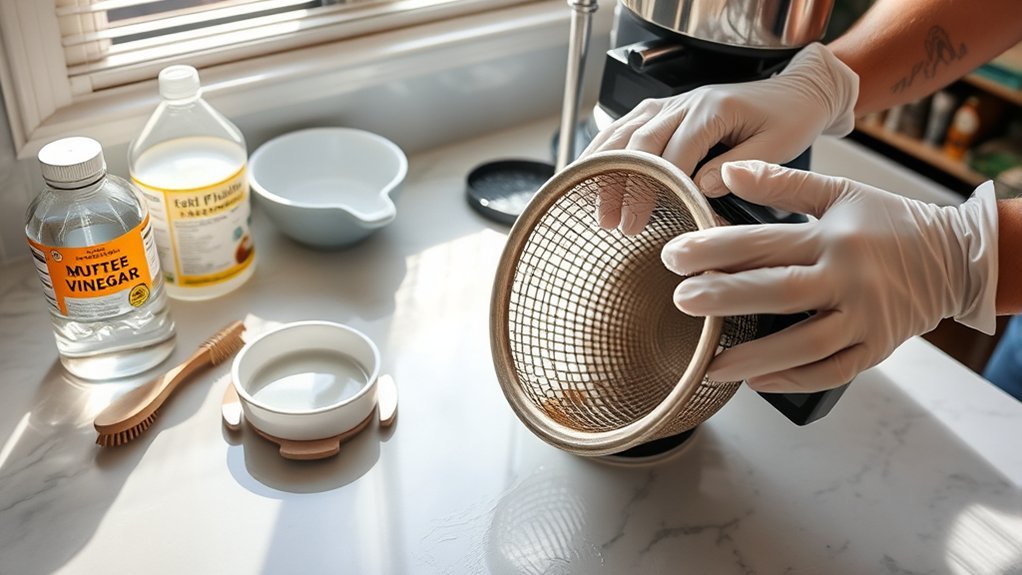
- Use an approved descaler: Vinegar is acceptable for some machines, but not every manual recommends it. Use the solution, dilution, rinse cycles, and filter-removal steps specified for your exact model.
Warning: Unplug the coffee maker and let hot parts cool before hand cleaning. Never immerse the electrical base, and do not use a damaged power cord, cracked carafe, or incompatible pod or filter.
Which Coffee Maker Should You Choose?
Your daily brewing pattern matters more than a simple “better” label. Start with how many people normally want coffee at the same time, then compare recurring cost, flavor control, counter space, and cleanup.
Choose a Single-Serve Coffee Maker If
- You usually brew one cup at a time.
- Household members want different roasts, flavors, or decaf options.
- You value simple measuring and fast cleanup.
- You have limited counter space and can find a compact model that fits your mug.
- You are likely to waste part of a full carafe.
Choose a Drip Coffee Maker If
- You regularly make several cups at once.
- You want to adjust dose, grind, water, and batch size.
- You buy coffee by the bag and want a lower ingredient cost per serving.
- You serve a family, office, or group of guests.
- You prefer a thermal carafe that holds coffee without a hot plate.
Consider a Hybrid Coffee Maker If
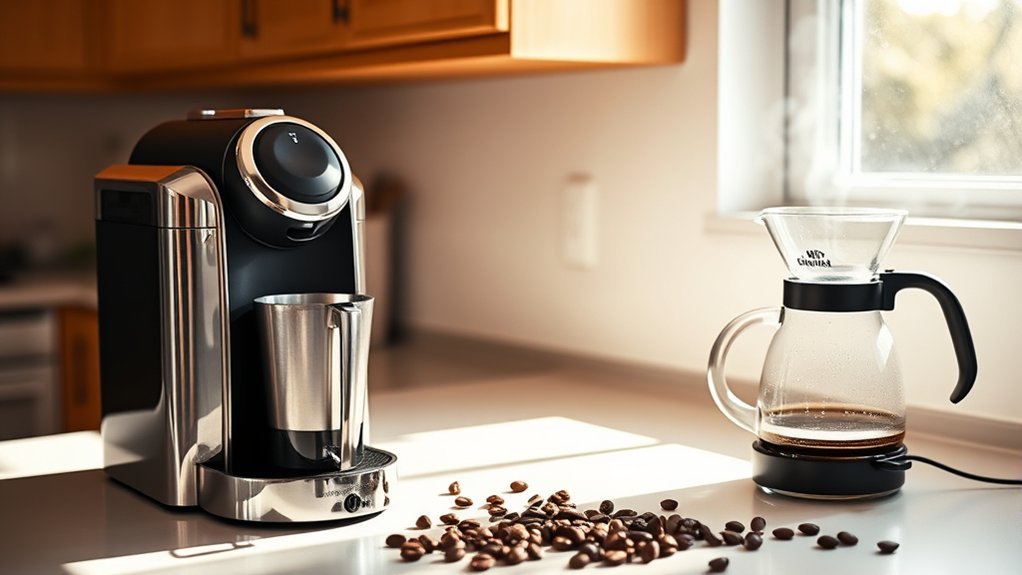
A pod-and-carafe machine can suit a household that needs one quick weekday cup but brews a pot on weekends. Check whether both sides share a water reservoir, whether they can operate independently, whether the single-cup side accepts grounds as well as pods, and whether the extra components create more cleaning than you want.
Coffee Maker Buying Checklist
- Capacity: Compare fluid ounces, minimum batch size, and cup-clearance dimensions.
- Coffee compatibility: Confirm pod format, reusable-filter support, and whether proprietary capsules are required.
- Brewing performance: For eligible drip brewers, an SCA Certified Home Brewer has passed the program’s performance testing.
- Carafe type: A thermal carafe avoids continued hot-plate heating; a glass carafe lets you see the remaining coffee.
- Cleaning access: Look for removable reservoirs, accessible baskets or pod holders, and readily available replacement parts.
- Safety and energy controls: Auto-off, standby behavior, and clear indicator lights are more useful than broad category claims about efficiency.
- Total ownership cost: Price the coffee, filters, water filters, descaler, proprietary accessories, and coffee you realistically throw away.
Which Has a Lower Environmental Impact: Single-Serve or Drip?
Single-serve pods create visible packaging waste, while drip machines create spent grounds and often a paper filter. That does not make the full environmental comparison automatic. Coffee growing, the amount of coffee used, machine energy, keeping a carafe hot, brewing more than you drink, packaging, and end-of-life treatment can all affect the result.
A peer-reviewed life-cycle assessment case study examined conventional plastic and compostable single-serve pod packaging. Its results and discussion illustrate why disposal route, packaging material, coffee dose, equipment energy, and keep-warm behavior can shift environmental comparisons. That is why a blanket statement that drip always has the lower impact is not defensible from brewer category alone.
Energy use also depends on behavior. Heating only enough water for one drink can favor some single-serve routines, while brewing a shared batch can avoid repeated heating cycles. A drip machine’s warming plate or a brewer left in standby can add energy use after brewing. For the calculation side, see how much electricity a coffee maker uses.
Keurig states that its K-Cup pods have been made from recyclable polypropylene since 2020, but it also says the pods are not recycled in many communities. Other capsule systems use different materials and collection programs. Check local rules; a package marked recyclable may still go to landfill if your facility does not accept that item or if it is not prepared correctly.
- Brew only the amount you expect to drink.
- Turn off the brewer or use auto-off instead of leaving it in standby or keeping a hot plate on for hours.
- Choose a thermal carafe when you need to hold a batch.
- Use a compatible reusable pod or filter when it produces a drink you enjoy and you will use it consistently.
- Recycle capsules only through an accepted local or manufacturer program.
- Compost coffee grounds and suitable paper filters where local guidance allows; the U.S. EPA lists coffee grounds and paper filters among materials suitable for home composting.
Note: “Recyclable,” “compostable,” and “biodegradable” are not interchangeable. Some compostable capsules require an industrial composting facility, and acceptance varies by program.
Frequently Asked Questions
Can single-serve coffee makers use ground coffee instead of pods?
Many can, but only with a compatible reusable filter or a brewer designed for loose grounds. Check the model’s instructions, fill line, and grind recommendation. Do not force an incompatible capsule or reusable basket into the pod holder.
Is a single-serve coffee maker worth it for one person?
It can be if you normally make one drink at a time and value speed, consistent portioning, and easy flavor changes more than the lowest ingredient cost. Compare the pod or coffee cost you will actually pay, and factor in whether you currently waste coffee from partially finished pots.
What if two people in the same house want different coffee?
Single-serve is convenient when two people want different roasts, decaf, or different drinks because each cup can change without brewing a new pot. A hybrid machine can be a better compromise if the household also regularly makes a shared batch.
How long do single-serve and drip coffee makers last?
There is no reliable universal lifespan such as three to five years for every pod brewer or five to ten years for every drip brewer. Build quality, water hardness, daily use, cleaning, replaceable parts, and repair support matter more. Compare warranty length and parts availability when you buy.
Are there health concerns with single-serve coffee pods?
The original article’s broad warning about chemical leaching was unsupported. Use intact, food-contact pods made for your brewer, follow the manufacturer’s temperature and cleaning instructions, and discard damaged, swollen, punctured, or expired products. People with a material allergy should check the pod and brewer documentation.
Which type of coffee maker is more energy-efficient?
Neither category always wins. A single-serve machine can be efficient for one drink if it heats only the needed water and shuts off. A drip machine can be efficient for several people when the full batch is consumed, especially with a thermal carafe. Standby time, hot-plate use, batch size, and wasted coffee can change the result.
Can I brew tea with a drip coffee maker?
You can run hot water through some drip machines and place tea in the clean basket or carafe, but coffee oils may affect the flavor and the fixed water temperature may not suit every tea. Follow the brewer instructions and clean it well before and after switching beverages.
Which makes stronger coffee: single-serve or drip?
Strength depends on the coffee dose compared with the water volume, not only the brewer type. Drip gives you more direct control over that ratio. With a pod, choose an appropriate pod dose and a smaller water setting if a larger setting tastes diluted.
Is drip coffee always cheaper than pod coffee?
Bagged coffee is often cheaper per brewed serving, but not always cheaper per serving you actually drink. Premium beans can cost more than value-priced pods, and wasted drip coffee raises the effective cost. Divide each package price by the number of drinks you consume and include filters, shipping, maintenance supplies, and discarded coffee.
Can coffee pods be recycled or composted?
It depends on the pod material and the program available where you live. Follow the package directions for separating lids, grounds, filters, and shells. Do not place a capsule in curbside recycling or compost solely because a general label suggests it may be recyclable or compostable.
Conclusion
For most buyers, the simplest rule is volume: choose single-serve when you usually make one drink at a time, and choose drip when several cups of the same coffee are brewed together. Single-serve adds portion control and easy flavor changes; drip gives you greater recipe control and usually a lower ingredient cost when the batch is consumed. If your routine regularly switches between those two patterns, compare hybrid brewers. Whichever format you choose, use an appropriate coffee-to-water ratio, clean the machine according to its manual, brew only what you expect to drink, and use auto-off or shut the brewer down when you are finished.
Sources
- Specialty Coffee Association: Coffee Standards — current standards index listing SCA-310 Home Coffee Brewers.
- Specialty Coffee Association: Certified Home Brewer Program — current home-brewer certification program and brewer information.
- Scientific Reports: Brew Temperature and Drip Coffee Sensory Profile — controlled testing of brew temperature, brew strength, extraction, and sensory results.
- Scientific Reports: Life Cycle Assessment of Compostable Coffee Pods — packaging, end-of-life treatment, and broader environmental tradeoffs relevant to single-serve coffee.
- Keurig: K-Cup Pod Recycling Information — pod material, preparation, and the need to confirm local recycling acceptance.
- U.S. Environmental Protection Agency: Composting at Home — home-composting guidance including coffee grounds and paper filters.
- Keurig: Brewer Maintenance and Descaling — manufacturer guidance on removing mineral scale and common descaling intervals for applicable brewers.