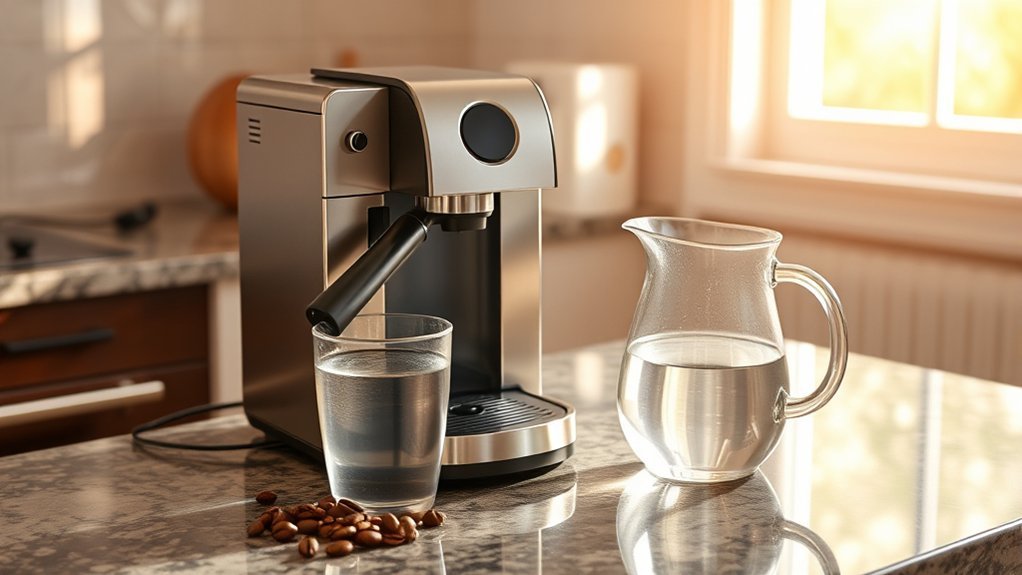

A workplace coffee maker can be a practical employee perk, but its value goes beyond caffeine. The right setup can reduce off-site café trips, offer lower-cost drinks, create a natural gathering point, and give employees a convenient place to take short breaks. The strongest results come from choosing the right machine, keeping it clean, and offering options for people who do not drink coffee.
Quick Answer
An office coffee maker can save employees from repeated café trips, offer a convenient low-cost perk, and create a natural place for short social breaks. It may also support alertness for people who use caffeine. The benefits depend on machine capacity, upkeep, safe placement, and inclusive drink choices.
Key Takeaways
- In-house coffee can reduce the time and expense tied to off-site café visits, but savings depend on local prices and equipment costs.
- Caffeine may improve alertness and attention for some adults, but it does not guarantee a set productivity increase.
- A shared beverage area can encourage informal conversation, short breaks, and stronger team connections.
- The best machine matches your headcount, peak demand, drink preferences, cleaning capacity, water access, and budget.
- Decaf, tea, hot water, dairy-free choices, reusable mugs, and clear cleaning duties make the program more inclusive and easier to maintain.
How Coffee Machines Can Support Workplace Productivity

A coffee machine does not automatically make a team more productive. Its practical benefit is that employees can get a drink without leaving the building, waiting in a café line, or losing momentum during a busy task.
Caffeine can also help some people feel more alert. A 2024 review of coffee and cognitive function found that moderate intake may support attention, processing speed, decision-making, and some executive functions. Results vary by dose, sleep, caffeine tolerance, and individual sensitivity, so a universal percentage increase is not credible.
The break itself may be useful, too. The National Institute for Occupational Safety and Health recommends regular rest breaks as one way to reduce fatigue in demanding work. Coffee can be part of that routine, but employees should still be free to take a break without buying or consuming caffeine.
A coffee maker is a convenience and culture tool—not proof that every employee will work faster or produce more.
Saving Time: In-House Coffee vs. Cafés
One of the clearest workplace benefits is convenience. Employees can still take a proper break while avoiding an unnecessary trip off-site.
Quick Access to Coffee
An in-house coffee maker can prepare drinks in minutes or seconds, depending on the machine. Batch brewers work well when many people want regular coffee at the same time, while single-serve and bean-to-cup machines offer more choice without brewing a full pot.
The actual time saved depends on your office location, elevator or parking access, café distance, queue length, and the number of employees who leave for coffee. Avoid claiming that every office saves a fixed number of minutes.
Reducing Distractions and Delays
To estimate potential time savings, use a simple calculation:
Employees making an off-site trip × average trip length × workdays per month
For example, if five employees make one 15-minute café trip on 20 workdays, that equals 1,500 employee-minutes, or 25 hours, spent away from the workplace each month. That does not mean all 25 hours become productive work; it simply shows the amount of off-site time the business can reduce.
Note: Do not treat in-house coffee as a reason to discourage lawful or needed rest breaks. The goal is convenience, not eliminating recovery time.
Why Coffee Can Support Employee Morale

Offering good coffee, tea, and hot water can signal that you have considered employees’ day-to-day comfort. It is a relatively visible perk because people may use it throughout the workweek rather than only during special events.
The effect depends on quality and execution. A machine that is often empty, broken, dirty, or difficult to use can create frustration instead of goodwill. Employees are more likely to value the benefit when drinks taste consistent, supplies are restocked, the area stays clean, and non-coffee drinkers have useful choices.
Morale also comes from the shared routine. A welcoming break area gives coworkers a low-pressure place to talk, welcome new employees, or reset between meetings.
Coffee Breaks: Fostering Team Relationships
Short coffee breaks can support workplace relationships when they happen naturally and remain optional. They may help by:
- Creating informal contact: Employees from different teams may speak when they would not otherwise share a meeting.
- Making collaboration easier: A quick conversation can uncover a useful contact, answer a small question, or prevent duplicated work.
- Supporting a mental reset: Stepping away briefly can help employees return with renewed attention.
- Building a welcoming culture: A clean, inclusive beverage area can make the workplace feel more thoughtful and hospitable.
These benefits are not automatic. Managers should avoid turning breaks into mandatory social events or informal meetings that employees cannot decline.
How Coffee Breaks Can Spark Creativity

Stepping away from a difficult task can create space for a fresh perspective. A coffee break may also bring together coworkers who approach a problem differently. Caffeine may support alertness for some people, but the change of setting and informal conversation can be just as important as the drink.
| Benefit of a Coffee Break | Possible Creative Value | Example |
|---|---|---|
| Mental reset | A different way to frame the problem | Returning to a difficult report with a clearer outline |
| Informal discussion | Ideas from another role or department | Finding a simpler way to handle a customer issue |
| Improved alertness | Better attention during idea review | Spotting a missing step in a project plan |
Cost Savings: The Financial Benefits of In-House Coffee
Office coffee can cost less than repeated café purchases, but there is no universal 90% savings figure. Your result depends on drink prices, employee use, machine purchase or rental, service contracts, filters, beans or pods, milk, sweeteners, cups, water treatment, electricity, and staff time spent cleaning and restocking.
Use this formula for a realistic comparison:
Monthly café cost − monthly in-house consumables − monthly equipment and service cost = estimated monthly difference
For a simple example, 10 employees buying one $4 drink on 20 workdays would spend $800 per month. If an in-house drink costs $1 in ingredients and supplies, the same 200 drinks would cost $200, leaving a $600 difference before machine, maintenance, and labor costs.
Pro Tip: Compare the total cost per finished drink, not just the price of beans or pods. Include equipment, service, filters, milk, cups, waste, and cleaning supplies.
Choosing the Best Coffee Maker for Your Workplace
The best office coffee maker is the one that handles your busiest period without creating long lines or excessive cleaning. Start with employee count, peak demand, preferred drinks, available space, and who will maintain the machine.
| Machine Type | Best For | Main Trade-Off |
|---|---|---|
| Batch drip brewer | Teams that want several cups of regular coffee at once | Less drink variety; brewed coffee can become stale |
| Single-serve brewer | Small offices that value speed and individual choice | Higher packaging waste and often a higher cost per cup |
| Bean-to-cup machine | Offices wanting fresh-ground coffee and multiple drink styles | Higher purchase price and more cleaning |
| Commercial espresso system | Large workplaces with high demand and trained support | Cost, service needs, cleaning, and possible training |
Match Capacity to Peak Demand
Do not size the machine only by total headcount. Consider how many drinks employees may want during the first hour of the day, after lunch, or between scheduled meetings. A machine that serves one drink at a time may suit 10 people but create a queue in a larger office.
Plan for Water, Power, Placement, and Access
Check counter space, ventilation, plumbing needs, outlet capacity, water quality, nearby waste bins, and storage for supplies. Place controls, cups, and condiments where employees with limited reach or mobility can use them. Keep cords, hot surfaces, and spill areas away from walkways.
Cleaning, Maintenance, and Shared Responsibility
A fixed once-a-month cleaning rule is not suitable for every machine. High-use brewers, milk systems, and shared carafes usually need more frequent attention. Follow the manufacturer’s manual and any service contract, then assign responsibility so tasks do not get ignored.
- Each workday: Empty drip trays and grounds bins, discard stale coffee, rinse removable parts, wipe spills, and clean milk-contact parts as directed.
- Each week: Wash accessible reservoirs, carafes, lids, pod holders, and surrounding surfaces according to the manual.
- As prompted or scheduled: Replace water filters and descale based on the machine alert, manufacturer guidance, water hardness, and use level.
- Ongoing: Inspect cords, plugs, leaks, unusual noises, heating problems, and damaged parts. Stop using a machine that appears unsafe.
Warning: Coffee makers combine electricity, hot water, and hot surfaces. Use equipment according to its listing, labeling, and manufacturer instructions. The Occupational Safety and Health Administration notes that workplace electrical equipment must meet applicable standards and be used as intended.
How Office Coffee Machines Support Sustainable Practices
A coffee program is not automatically sustainable. The machine type, energy use, packaging, disposable cups, milk waste, water use, and end-of-life disposal all matter.
Eco-Friendly Coffee Options
- Use durable mugs: Reusable cups can reduce the number of disposable cups your office buys and discards.
- Choose an efficient brewer: The U.S. Department of Energy recommends commercial brewers with energy-saving modes that use less power when the machine is idle.
- Reduce single-use packaging: Batch and bean-to-cup systems can reduce reliance on individually packaged pods, although cleaning and energy use still matter.
- Buy only what the team uses: Track waste before expanding the menu or ordering large amounts of milk, syrups, and specialty ingredients.
Waste Reduction Strategies
Set up clearly labeled bins for trash, recycling, and organics only where local collection programs accept those materials. Compostable cups and lids should not be placed in standard recycling unless your local program specifically allows it.
Used coffee grounds and paper filters may be suitable for a managed compost program. The U.S. Environmental Protection Agency lists coffee grounds and paper filters among materials that can be added to a properly managed compost or worm bin.
Building an Inclusive Office Coffee Program
Not every employee drinks coffee or can tolerate caffeine. Offer useful alternatives such as decaf coffee, regular and herbal tea, hot water, and unsweetened drinks. Where practical, include dairy-free choices and label shared creamers, syrups, and flavorings that contain common allergens.
The U.S. Food and Drug Administration says that for most adults, 400 milligrams of caffeine per day is not generally associated with negative effects, but sensitivity and metabolism vary widely. Employees who are pregnant, take certain medicines, have health concerns, or are sensitive to caffeine may need different limits based on medical guidance.
Make the benefit optional and avoid presenting caffeine as a substitute for sleep, meals, hydration, or reasonable workloads.
Simple Workplace Coffee Setup Checklist
- Ask employees which drinks they will actually use, including decaf and non-coffee options.
- Estimate peak demand and choose a machine that can serve it without long queues.
- Compare total cost per cup, including equipment, service, supplies, cleaning, and waste.
- Confirm suitable power, water, counter space, ventilation, storage, and accessibility.
- Assign named responsibility for restocking, daily cleaning, descaling, and service calls.
- Use reusable mugs where practical and follow local recycling and composting rules.
- Review use, waste, complaints, and costs after the first one to three months.
Sources
- PubMed: Effects of Coffee on Cognitive Function — evidence on attention, processing speed, decision-making, and individual variation.
- CDC/NIOSH: Reducing Fatigue and Stress in the Retail Industry — workplace guidance supporting regular rest breaks.
- U.S. Food and Drug Administration: Spilling the Beans—How Much Caffeine Is Too Much? — caffeine limits and sensitivity guidance.
- Occupational Safety and Health Administration: Workplace Use of Electrical Equipment — safe use of listed and labeled small appliances.
- U.S. Department of Energy: Purchasing Energy-Efficient Commercial Coffee Brewers — energy-saving modes and efficient equipment selection.
- U.S. Environmental Protection Agency: Composting at Home — composting guidance for coffee grounds and paper filters.
Frequently Asked Questions
What types of coffee makers are best for workplace use?
Batch drip brewers suit teams that want several cups of regular coffee at once. Single-serve machines work well for smaller offices that want variety. Bean-to-cup systems offer fresh-ground drinks but cost more and require more cleaning. Choose according to peak demand, drink preferences, maintenance capacity, water access, and budget.
How often should workplace coffee makers be cleaned and maintained?
Wipe spills, empty waste, and rinse frequently used removable parts each workday. Wash reservoirs, carafes, lids, and accessible brew parts according to the manual. Descale and replace filters based on manufacturer guidance, machine alerts, water hardness, and use. Milk-contact parts may need cleaning after every use or at the end of each day.
What coffee varieties can be offered in the office?
A balanced menu may include regular and dark-roast coffee, decaf, espresso-based drinks, tea, and hot water. Choose a small set of options employees will use consistently rather than creating a large menu that increases waste and restocking work.
Are there caffeine-free options for employees?
Yes. Offer decaf coffee, caffeine-free herbal tea, hot water, and other unsweetened drinks. Keep in mind that decaf coffee usually contains a small amount of caffeine, so employees who must avoid caffeine completely should check the product information.
How can we make sure employees’ coffee preferences are met?
Run a short survey before choosing the machine and supplies. Ask about regular coffee, decaf, tea, milk preferences, allergens, and typical drink times. Review usage after one to three months and remove low-use items instead of continuing to buy products that become waste.
Can an office coffee maker improve productivity?
It can reduce time spent on off-site café trips and may support alertness for employees who use caffeine. Short breaks may also help with fatigue. However, no credible evidence supports a guaranteed productivity increase for every workplace, and coffee cannot replace sleep, reasonable workloads, or effective management.
Is office coffee cheaper than buying drinks at a café?
It often can be, especially when employees regularly buy café drinks. Calculate the café cost and compare it with ingredients, cups, machine purchase or rental, service, filters, electricity, cleaning supplies, and staff time. The result will vary by office, so avoid relying on a universal savings percentage.
Conclusion
A workplace coffee maker can save time, lower drink costs, and create a useful gathering point, but the machine alone does not guarantee better productivity or morale. Choose a system that fits peak demand, offer caffeine-free and non-coffee choices, assign clear cleaning duties, and track actual costs and waste. When the program is safe, reliable, and inclusive, it can become a simple perk that employees use and appreciate.