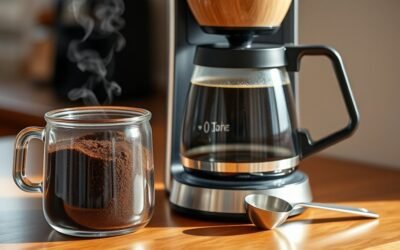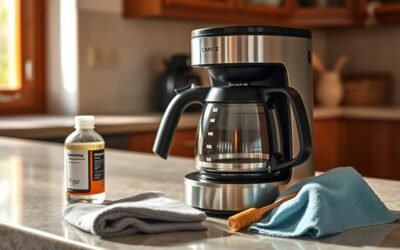


A coffee maker and an espresso machine can both turn the same roasted coffee beans into a satisfying drink, but they are built for different routines. A drip coffee maker is the easier choice for brewing several full cups with little hands-on work. An espresso machine produces small, concentrated servings and gives you the base for lattes, cappuccinos, and other café-style drinks.
Quick Answer
Choose a drip coffee maker if you want an affordable, simple way to brew several cups at once. Choose an espresso machine if you prefer concentrated coffee, milk-based drinks, and greater control over each serving. Espresso takes more skill, cleaning, equipment, and upfront investment.
Key Takeaways
- Espresso machines use finely ground coffee, a compact coffee bed, and pressure to produce a small, concentrated drink.
- Drip coffee makers pass hot water through a filter and are better suited to full mugs and larger batches.
- Espresso is usually more caffeinated per ounce, but a full mug of drip coffee often contains more caffeine overall.
- A capable grinder is a major part of an espresso setup and should be included in your budget.
- Drip machines are generally easier to use and clean, while espresso machines provide more drink options and control.
Coffee Maker vs. Espresso Machine at a Glance
| Comparison | Drip Coffee Maker | Espresso Machine |
| Brewing method | Gravity-fed filtration | Pressurized extraction |
| Typical serving | Full cup or multi-cup batch | Small single or double shot |
| Flavor and texture | Lighter body with more dilution | Concentrated flavor with fuller body and crema |
| Ease of use | Usually simple and mostly hands-off | Ranges from hands-on to fully automatic |
| Drink options | Drip coffee, iced coffee, and simple milk additions | Espresso, Americanos, lattes, cappuccinos, and more |
| Extra equipment | Filters and an optional grinder | Espresso grinder, tamper, scale, and milk pitcher may be needed |
| Maintenance | Lower daily workload | More frequent cleaning of the group, portafilter, and milk system |
| Best for | Convenience, full mugs, households, and guests | Concentrated coffee, café drinks, and hands-on control |
Understanding Espresso: Key Features and Preparation
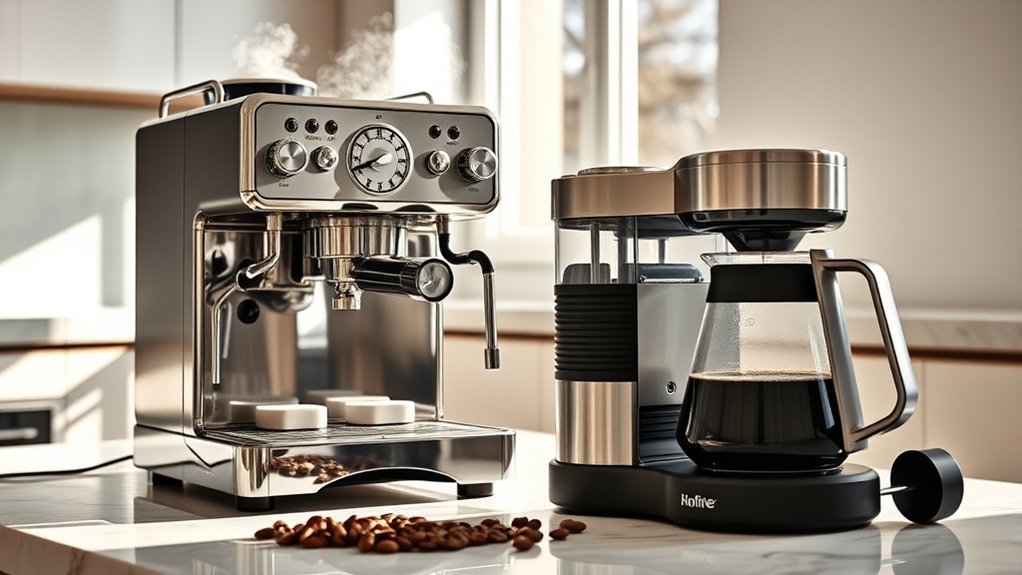
Espresso is a brewing method, not a special type of bean. An espresso machine pushes hot water through a compact bed of finely ground coffee to make a small, concentrated beverage. The National Coffee Association lists a brew ratio of about one gram of dry coffee to two grams of liquid espresso as a practical starting point.
A traditional shot may finish in roughly 20 to 30 seconds once the pump starts, although the right time depends on the dose, basket, grind, coffee, and desired taste. Many recipes use pressure near 9 bar at the coffee bed. A machine advertised with a 15-bar pump does not need to deliver 15 bar through the coffee during extraction. A Specialty Coffee Association survey found an average reported extraction pressure of 8.5 bar, with 9 bar the most common response.
Espresso is defined by its concentrated, pressurized brewing method—not by a specific bean, roast color, or label on the bag.
A well-prepared espresso has a dense liquid body topped by crema, the tan foam formed as gases and emulsified compounds leave the coffee. Crema affects aroma and texture, but its color or thickness alone does not prove that the shot tastes balanced.
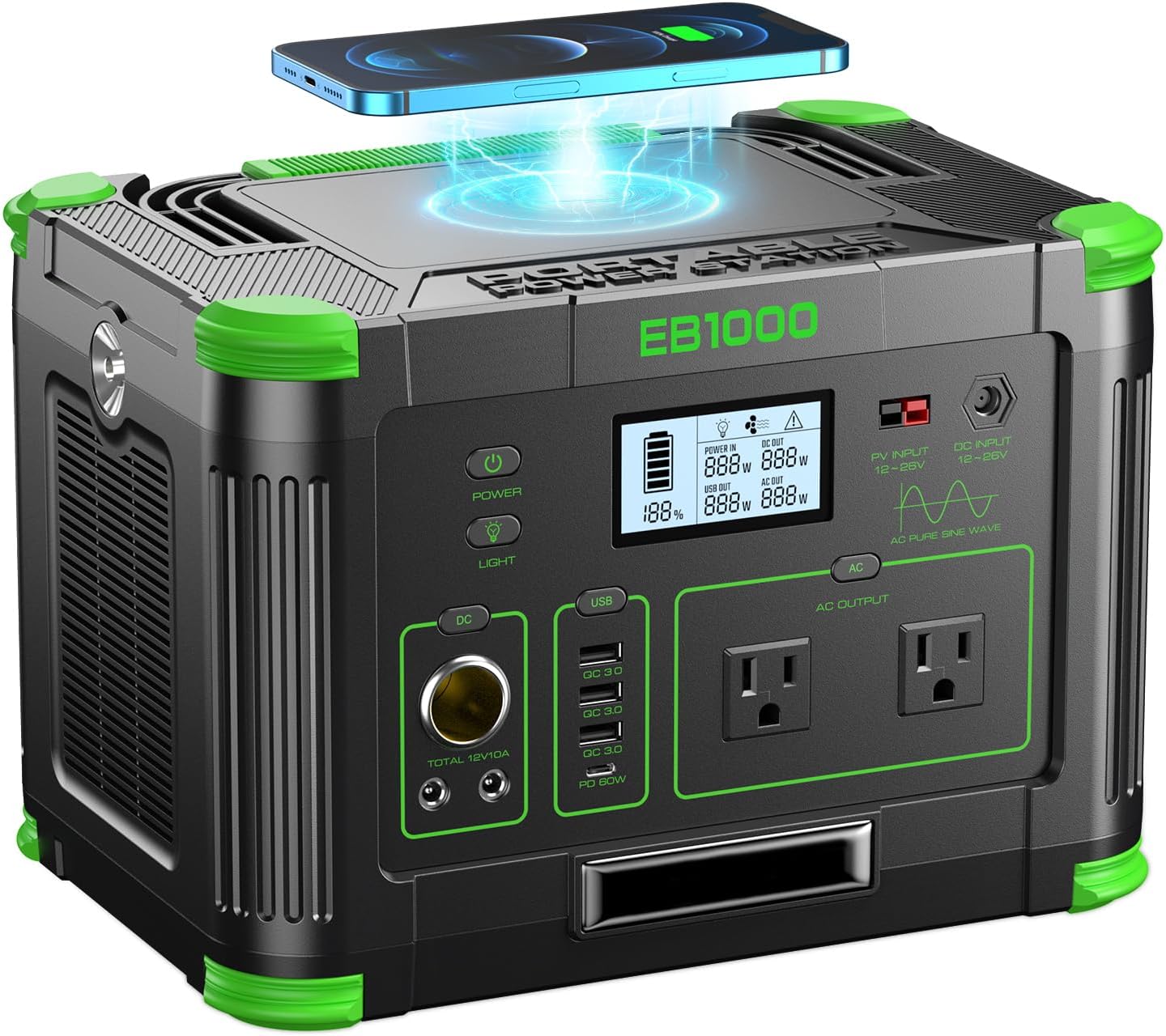
Power your essentials anywhere with a 999Wh pure sine wave power station delivering up to 1000W continuous with 2000W surge. It supports fast charging via USB-C PD 60W and USB-A QC 18W, plus simultaneous output for multiple devices through AC, USB, wireless, and car/DC ports. Recharge using AC, car, or solar with a built-in MPPT controller and dual cooling fans, while the upgraded battery management system protects against surges, short circuits, and overheating.

【Make Favorite Espresso Coffee by Yourself】The espresso machine with milk frother allows you to prepare all your favorite espresso-based coffees. You can enjoy a barista-brewed latte, cappuccino or macchiato at home. This compact espresso coffee maker is perfect for home or office use

Make Your Favorite Espresso Coffee At Home: The CASABREWS coffee machine with milk frother allows you to prepare all your favorite espresso-based coffees. You can enjoy a barista-brewed latte, cappuccino or macchiato at home. Stainless steel appearance, stylish and durable, ideal for any size kitchen. This compact espresso coffee maker is perfect for home or office use
Types of Espresso Machines
- Manual lever machines: You create the pressure yourself. They offer control but require practice and a separate way to heat water on some portable models.
- Semi-automatic machines: The machine supplies pressure, while you grind, dose, tamp, start, and stop the shot.
- Automatic machines: These stop the water at a programmed volume but still require puck preparation.
- Super-automatic machines: They grind and brew at the press of a button. Many also prepare milk drinks with an integrated milk system.
Pro Tip: For a semi-automatic espresso setup, give the grinder as much attention as the machine. Small grind adjustments can change shot flow dramatically, so a grinder designed for espresso is usually more useful than upgrading to a feature-heavy machine while using an inconsistent grinder.
Understanding Drip Coffee Maker Coffee
An automatic drip coffee maker heats water and distributes it over ground coffee held in a filter. Gravity carries the brewed liquid into a carafe or insulated container. The process is simpler than espresso preparation and is well suited to brewing several cups with one setup.
Brewing Method Comparison
Start with a medium grind for most automatic drip machines, then adjust according to taste and the brewer’s flow rate. The National Coffee Association’s drip guide recommends a medium starting point and approximately one to two tablespoons of coffee for every six ounces of water.
If the brew tastes thin, weak, or sour, you may need more coffee, a slightly finer grind, or a longer effective contact time. If it tastes harsh, dry, or overly bitter, try a slightly coarser grind or a lower coffee dose. Change one variable at a time so you can identify what improved the cup.
Flavor Profile Insights
Drip coffee contains more water relative to the amount of ground coffee used, so it normally tastes less concentrated than espresso. That does not make it bland. A good drip brewer can produce clear sweetness, acidity, aroma, and origin character that may be harder to separate in a small, intense espresso.
| Flavor Element | Drip Coffee | Espresso |
|---|---|---|
| Concentration | Lower | Higher |
| Body | Light to full, depending on the filter and recipe | Dense and syrup-like when well extracted |
| Flavor clarity | Often easier to separate individual notes | Intense, compressed, and sensitive to small recipe changes |
| Crema | None | Usually present |
| Typical drinking style | Sipped over a longer period | Consumed quickly or mixed into another drink |
Equipment Maintenance Needs
A drip coffee maker usually has fewer coffee-contact parts than a semi-automatic espresso setup. Routine care still matters because coffee oils can become stale and minerals can collect inside the water path.
- Empty or discard used grounds after brewing.
- Wash the carafe, reusable filter, and filter basket regularly.
- Wipe the shower area and warming plate after the machine cools.
- Replace the water filter at the interval listed in the manual.
- Run the manufacturer-approved descaling process when indicated or when mineral buildup affects performance.
Brewing Methods: How Espresso Machines and Coffee Makers Differ
The biggest difference is resistance. In espresso brewing, finely ground coffee is compacted into a basket, creating resistance to the machine’s water flow. Pressure, dose, grind, distribution, temperature, and yield must work together for an even extraction.
Drip coffee uses a looser bed of medium-ground coffee. Water moves through it mainly by gravity. The brewer controls much of the process, so you can load the basket, add water, press a button, and attend to something else.
Espresso may flow from the basket in less than a minute, but the complete routine can take longer. You may need to preheat the machine, weigh and grind the dose, distribute the grounds, tamp, brew, steam milk, knock out the puck, and wipe or purge the steam wand. A drip machine may take several minutes to finish a batch, yet it requires less attention during that time.
Note: A moka pot, pod brewer, AeroPress, or concentrated drip setting can make strong coffee, but it does not produce traditional espresso unless the brewing system creates the required pressure and concentrated extraction.
Flavor Profiles: What Makes Espresso and Drip Coffee Different?
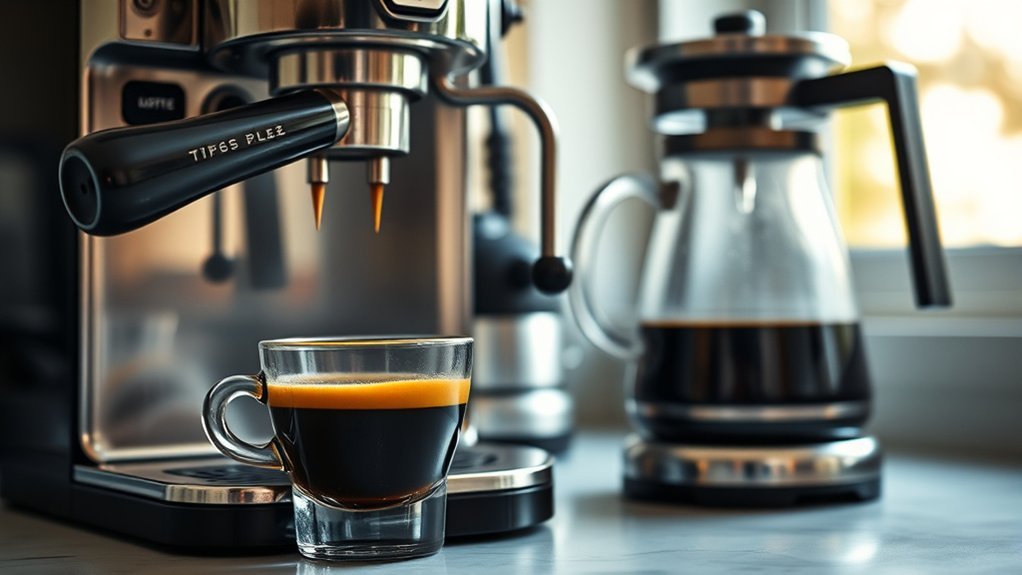
Espresso’s small beverage yield concentrates sweetness, bitterness, acidity, aroma, and texture. A small grind adjustment can noticeably change the balance. An under-extracted shot may taste sharp or thin, while an over-extracted shot may taste dry or harsh.
Drip coffee spreads the extracted compounds through more water. The result usually has a lighter texture and gives you more time to notice how the flavor changes as the cup cools. Paper filters also retain much of the suspended material and oil, while metal filters permit more of both into the cup.
Roast level does not determine which machine you can use. Medium-dark and dark roasts are common for espresso because they can produce familiar chocolate, caramel, and nut flavors, but lighter roasts can also be brewed as espresso. Likewise, a bag labeled “espresso roast” can be used in a drip coffee maker.
Cost and Maintenance of Coffee Machines
A basic drip setup usually has the lowest total cost. In addition to the brewer, you may need paper filters and an optional grinder. Buying whole beans and grinding them shortly before brewing can improve freshness, but many drip machines can still work with pre-ground coffee.
Espresso has a wider cost range and more potential add-ons. A semi-automatic setup may require:
- An espresso-capable burr grinder
- A scale that responds quickly to small weight changes
- A tamper that fits the basket
- A milk pitcher for steaming
- A knock box or container for used pucks
- Cleaning tablets, water filters, and descaling products approved for the machine
Super-automatic machines combine the grinder and brewer, reducing manual preparation but increasing mechanical complexity. Manual lever machines may cost less than a powered system, but some require a separate kettle and more technique.
Cleaning vs. Descaling
Cleaning removes coffee residue, oils, and milk deposits. Descaling removes mineral deposits left by water. They are not interchangeable, and one process does not replace the other.
Espresso-machine care may include rinsing the portafilter, wiping and purging the steam wand after every milk drink, cleaning the group head, backflushing compatible machines, replacing water filters, and descaling. Follow the exact instructions for your model. Manufacturer procedures vary, and some machines require a specific cleaning tablet or descaling solution. Breville’s maintenance guidance, for example, separates group-head, steam-wand, descaling, grinder, tank, and filter care.
Warning: Group heads, steam wands, hot-water outlets, carafes, and warming plates can remain hot after use. Turn the machine off, allow it to cool, and unplug it before disassembly or deep cleaning. Never immerse the appliance base, and do not use a cleaning chemical unless the manufacturer approves it.
Drink Versatility: Espresso and Coffee Maker Beverages

Espresso machines offer the broadest range of café-style drinks because espresso can be combined with water, steamed milk, foam, ice, or dessert ingredients. Common options include:
- Single and double espresso
- Americano
- Cappuccino
- Latte
- Flat white
- Macchiato
- Mocha
- Affogato
A drip machine focuses on brewed coffee, but it is not limited to one serving style. You can adjust the coffee-to-water ratio, use different origins and roast levels, brew over ice with an appropriate recipe, add warmed milk, or store coffee in a thermal carafe.
Milk texture is the main limitation. A standard drip coffee maker does not create pressurized steam. You need a separate handheld, electric, or manual frother if you want foam. It can produce enjoyable milk drinks, but the texture may differ from properly steamed microfoam.
Serving Sizes: Espresso Shots vs. Regular Coffee
A traditional espresso is served in a much smaller quantity than drip coffee. A single shot is often around one ounce, while a double is roughly two ounces. Drip coffee is commonly served in mugs holding eight ounces or more, although a coffee maker’s numbered “cup” may be smaller than a standard measuring cup.
Caffeine per Ounce vs. Caffeine per Serving
Espresso normally has more caffeine per ounce because it is concentrated. That does not mean a shot always contains more caffeine than a mug of drip coffee. According to MedlinePlus, a one-ounce espresso may contain about 40 milligrams, while a six-ounce cup of coffee may contain about 75 to 100 milligrams. Actual values can differ considerably.
Espresso usually delivers more caffeine per ounce, but a full mug of drip coffee often delivers more caffeine in the complete serving.
Bean species, coffee dose, beverage size, roast, recipe, and preparation all affect caffeine content. The U.S. Food and Drug Administration cites 400 milligrams per day as an amount not generally associated with negative effects for most adults, but sensitivity varies. Pregnancy, medications, sleep problems, heart conditions, and other circumstances may require personalized medical guidance.
When to Choose an Espresso Machine
An espresso machine is the stronger choice when you:
- Prefer espresso, lattes, cappuccinos, or Americanos.
- Want concentrated flavor and a heavier texture.
- Enjoy adjusting grind, dose, yield, and milk texture.
- Usually prepare one or two drinks at a time.
- Do not mind cleaning the portafilter and steam wand after use.
- Have room and budget for a suitable grinder and accessories.
A super-automatic machine may suit you if you want espresso-style drinks with less manual work. A semi-automatic machine is better when learning and control are part of the appeal.
When to Choose a Drip Coffee Maker
A drip coffee maker is likely the better fit when you:
- Want a full mug rather than a concentrated shot.
- Need several cups for a household, office, or guests.
- Prefer a mostly hands-off morning routine.
- Want lower equipment and accessory costs.
- Do not want to learn puck preparation or milk steaming.
- Value simple cleaning and readily available filters.
A thermal-carafe model is useful when you want to keep a batch warm without leaving it on a hot plate. A programmable model may suit early mornings, while a single-serve drip machine can reduce waste in a one-person household.
How to Choose the Right Coffee Machine for Your Needs
1. Start With the Drinks You Make Most Often
If most of your orders are lattes, cappuccinos, or espresso, an espresso machine matches your habits. If you usually drink a large cup of black coffee, a drip machine provides that serving more directly.
2. Estimate Your Daily Volume
A drip maker can prepare several cups at once. A home espresso machine usually makes drinks one at a time, and milk preparation can slow the process when serving a group.
3. Decide How Much Effort You Enjoy
Semi-automatic espresso rewards practice but can frustrate someone who wants one-button consistency. A super-automatic reduces preparation, while a drip brewer offers the simplest batch routine.
4. Budget for the Complete Setup
Do not compare machine prices alone. Include the grinder, filters, scale, tamper, milk pitcher, cleaning supplies, replacement water filters, and expected repairs. A less expensive espresso machine paired with a capable grinder can outperform a costlier machine paired with an unsuitable grinder.
5. Measure Space and Consider Noise
Espresso setups can occupy significant counter space once the grinder, knock box, and accessories are included. Grinding, pumping, steaming, and knocking out pucks can also be noisy. A compact drip brewer may be easier to share in a small kitchen.
6. Consider the Maintenance Commitment
Hard water can increase descaling needs in either machine. Milk systems need prompt cleaning, and super-automatic machines may have internal brew units or milk tubes that require scheduled care. Read the manual before buying so you know which parts are removable and whether replacement parts are available.
Making the Right Choice: Espresso Machine or Coffee Maker?
Choose based on the drink and routine you want, not on which machine appears more advanced. A coffee maker is usually the practical winner for full mugs, batches, guests, and simple mornings. An espresso machine is the better tool for concentrated coffee and café-style beverages.
For many households, the two machines are not direct substitutes. Some coffee drinkers keep a drip brewer for weekday batches and an espresso machine for milk drinks or slower weekend preparation. A combination machine can save space, but check whether each brewing side performs well and can be cleaned without unnecessary difficulty.
Decision Shortcut: Pick drip coffee for volume and convenience. Pick espresso for concentration and drink variety. Pick a super-automatic when you want espresso-style drinks with minimal technique, and consider owning both when your household regularly wants both full pots and milk-based drinks.
Sources
- National Coffee Association: Espresso — espresso definition, grind guidance, equipment types, and brew ratio.
- National Coffee Association: Drip Coffee — automatic drip method, grind guidance, and coffee-to-water starting point.
- Specialty Coffee Association: Defining the Ever-Changing Espresso — reported espresso pressure and preparation practices.
- U.S. Food and Drug Administration: Spilling the Beans — caffeine variability and general adult intake guidance.
- MedlinePlus: Caffeine in the Diet — approximate caffeine amounts for espresso and brewed coffee.
- Breville: Cleaning and Maintenance — espresso-machine cleaning, descaling, steam-wand, grinder, tank, and filter care.
Frequently Asked Questions
Can I use espresso beans in a coffee maker?
Yes. “Espresso” is a brewing method rather than a unique bean type. A bag labeled espresso roast can be brewed in a drip machine. Use a grind suited to the coffee maker instead of the fine grind used for espresso.
Can a regular coffee maker make real espresso?
A standard drip coffee maker cannot make traditional espresso because it does not force water through a compact coffee bed at espresso-level pressure. It can make a stronger drip concentrate, but the texture and extraction will differ.
Does espresso have more caffeine than drip coffee?
Espresso usually contains more caffeine per ounce. However, a full mug of drip coffee is much larger than one espresso shot and often contains more total caffeine. The exact amount varies with the beans, dose, recipe, and serving size.
Do I need a special grinder for an espresso machine?
A grinder designed for espresso is strongly recommended for a semi-automatic or manual machine. Espresso requires fine, consistent grounds and small adjustments. A basic blade grinder or a coarse-step burr grinder may make shot timing and flavor difficult to control.
Can I froth milk with a coffee maker?
A standard drip coffee maker does not have a steam wand, but you can warm and froth milk separately with a handheld wand, electric frother, French press, or other milk-foaming tool. Clean milk-contact parts immediately after use.
How long does a coffee maker or espresso machine last?
There is no dependable lifespan that applies to every machine. Usage, build quality, water hardness, cleaning, repairability, and replacement-part availability all matter. Regular cleaning and manufacturer-approved descaling can help preserve performance, but a warranty period should not be treated as the machine’s expected lifespan.
Are portable espresso machines available?
Yes. Portable lever and hand-pump espresso makers are available, including models that do not require electricity. Some need separately heated water, and their results still depend on a suitable grind, careful dosing, and enough pressure.
What are the power requirements for each machine?
Power requirements vary widely by model, heating system, capacity, and country. Check the rating label and manual before use. Plug the machine into a suitable grounded outlet, avoid an underrated extension cord, and follow the manufacturer’s electrical instructions.
Conclusion
A drip coffee maker is the better everyday choice for full mugs, batch brewing, low effort, and simpler upkeep. An espresso machine earns its extra cost and maintenance when you value concentrated coffee, milk-based drinks, and control over each serving.
Before buying, consider the complete routine: grinding, preparation, serving volume, cleanup, counter space, noise, and accessories. The best machine is not the one with the most features. It is the one that fits the drinks you actually make and the amount of work you are comfortable doing each day.