
Brewed coffee tastes best soon after it is made, but you can refrigerate leftovers and enjoy them later without reheating the whole batch. The key is to use a clean, tightly covered container, keep the refrigerator at 40°F (4°C) or below, and handle coffee with milk, cream, or other perishable additions more carefully than plain black coffee.
Quick Answer
Refrigerate brewed coffee promptly in a clean, airtight container at 40°F (4°C) or below. For a conservative home quality target, use hot-brewed black coffee within three to four days and homemade cold brew within about five to seven days. Coffee containing milk, cream, or another perishable ingredient needs stricter handling.
Key Takeaways
- Keep refrigerated coffee at 40°F (4°C) or below in a clean, tightly covered container.
- You do not need to leave hot coffee on the counter until it reaches room temperature; transfer it to an appropriate smaller container and refrigerate it promptly.
- For household quality, aim to use hot-brewed black coffee within three to four days and homemade cold brew within about five to seven days.
- These coffee-specific time ranges are practical quality guidelines, not federal expiration dates for brewed coffee.
- Coffee containing milk, cream, refrigerated creamer, or another perishable beverage should follow stricter time-and-temperature rules.
- Do not rely on smell or taste alone to prove that stored coffee is safe.
At a Glance
| Time Required | About 5 minutes |
| Difficulty | Easy |
| Tools Needed | Clean airtight container, label or marker, refrigerator |
| Cost | Usually no added cost |
Warning: Coffee containing milk, cream, refrigerated creamer, or another perishable beverage should be refrigerated within two hours, or within one hour when the surrounding temperature is above 90°F (32°C). Discard it if it has remained unrefrigerated longer.
Why Refrigerate Brewed Coffee for Freshness?
Refrigeration slows the chemical changes that make brewed coffee taste flat, stale, or unusually bitter. It also keeps milk, cream, and other perishable additions at a safer temperature.
Keep your refrigerator at 40°F (4°C) or below, as recommended by the U.S. Food and Drug Administration. Place the coffee in a clean, covered container so it does not absorb odors from onions, leftovers, or other strongly scented foods.
Refrigeration cannot restore flavors that have already disappeared, so freshly brewed coffee will almost always taste brighter and more aromatic. However, proper storage can keep leftovers useful for iced coffee, smoothies, desserts, marinades, or a gently reheated cup.
Refrigeration preserves leftover coffee; it does not return stale coffee to freshly brewed quality.
How Long Can Brewed Coffee Stay Fresh in the Fridge?
Storage time depends on how the coffee was prepared, what was added to it, how clean the equipment was, and whether it remained continuously refrigerated. The following periods are practical household guidelines, not coffee-specific federal expiration dates or guarantees of safety.
| Coffee Type | Practical Home Window | Important Notes |
|---|---|---|
| Hot-brewed black coffee | Aim for 3–4 days | A conservative quality target. Flavor is usually best earlier, and USDA does not publish a separate black-coffee storage limit. |
| Homemade cold brew | About 5–7 days for conservative home use | Clean equipment, extraction conditions, filtration, dilution, and refrigerator temperature can change quality and shelf life. |
| Coffee with milk or cream | Best within 1–2 days; apply the shorter ingredient or leftover limit | Treat the drink as perishable. General USDA refrigerated-leftover guidance is 3–4 days, but an ingredient or package instruction may require a shorter period. |
| Commercial bottled coffee | Follow the package label | Commercial processing, packaging, preservatives, and opening instructions can produce different storage limits. |
Safety vs. Quality: What the Storage Times Mean
Freshness and food safety are not the same thing. Plain coffee may develop a dull aroma, stale flavor, or extra bitterness before there is an obvious safety problem. Conversely, a drink containing a perishable ingredient can exceed a safe time or temperature limit while still looking and smelling normal.
The USDA recommends using refrigerated leftovers within three to four days, but it does not publish a separate federal storage table for plain brewed coffee. That is why the three-to-four-day black-coffee target in this guide should be treated as a conservative household practice rather than an official coffee expiration date.
For drinks containing milk, cream, refrigerated creamer, or another perishable ingredient, time and temperature matter more. Follow the ingredient’s storage instructions, refrigerate the drink promptly, and use the shortest applicable storage period.
Black Coffee Storage Duration
Plain black coffee is a relatively simple beverage, but its aroma begins fading soon after brewing. An airtight container and prompt refrigeration slow the decline without stopping it completely.
A practical home target is to use refrigerated black coffee within three to four days. This matches the general refrigerated-leftover window published by the USDA Food Safety and Inspection Service, although that guidance is for leftovers generally and is not a coffee-specific federal shelf-life rule.
Do not assume that a small amount of sediment means the coffee has spoiled. Fine particles are common in coffee made with a French press, reusable metal filter, moka pot, or similar brewing method.
Cold Brew Longevity Tips
Cold brew may maintain acceptable flavor longer than refrigerated hot-brewed coffee, but there is no single home-storage period that applies to every recipe. Clean equipment, water quality, extraction temperature, filtering, handling, dilution, and refrigerator temperature all affect the result.
A conservative home quality target is to use freshly filtered cold brew within about five to seven days. Keep it covered and refrigerated throughout storage. If you dilute concentrate with milk, cream, water, or another ingredient, use the shortest storage period that applies to the finished mixture.
Do not assume that cold brew’s acidity or extraction method automatically makes it shelf-stable. A peer-reviewed investigation of refrigerated hot- and cold-brewed coffee found that its bottled samples were limited mainly by sensory deterioration rather than microbial instability and that cold-brewed samples showed greater flavor stability than hot-brewed samples. However, the researchers used controlled preparation, bottling, and refrigeration conditions, so the study does not establish a universal shelf-life limit for coffee prepared in a home kitchen.
Dairy Coffee Shelf Life
Coffee containing milk, cream, refrigerated creamer, or another perishable beverage needs stricter handling. Refrigerate it promptly and keep it at 40°F (4°C) or below.
- Refrigerate within two hours: Use a one-hour limit when the surrounding temperature exceeds 90°F (32°C).
- Aim for one to two days for quality: Flavor and texture are generally better when the drink is used sooner.
- Apply the shortest applicable limit: General USDA leftover guidance is three to four refrigerated days, but package instructions, previous handling, or another ingredient may require a shorter period.
- Watch for clear spoilage signs: Discard coffee with visible mold, persistent abnormal curdling, unusual thickening, unexpected gas or pressure, or other obvious spoilage. Normal settling or separation alone is not a reliable safety test.
- Do not try to rescue questionable coffee by reheating: Heating does not undo unsafe storage.
How to Prepare Brewed Coffee for Refrigeration
You do not need to leave brewed coffee on the counter until it reaches room temperature. The FDA states that hot leftovers can be refrigerated. Smaller or shallower containers help hot contents cool more quickly.
- Choose a clean container. Use a food-safe container with a lid that closes securely.
- Transfer the coffee promptly. Pour it into one or more smaller heat-safe containers instead of leaving a large pot on a warming plate.
- Prevent thermal shock. Do not pour very hot coffee into ordinary cold glass unless the container is rated for rapid temperature changes. Use heat-safe glass, stainless steel, or suitable food-safe plastic and follow the container manufacturer’s temperature instructions.
- Cover and refrigerate. Once excessive steam has subsided enough for the container and lid to be used safely, cover the coffee and refrigerate it without waiting for full room-temperature cooling.
- Add a date label. Mark the brew date so you do not have to guess how long it has been stored.
Pro Tip: Store coffee in several single-serving containers. You can open and reheat one portion without repeatedly exposing the entire batch to fresh air, utensils, and temperature changes.
Ideal Containers for Storing Brewed Coffee
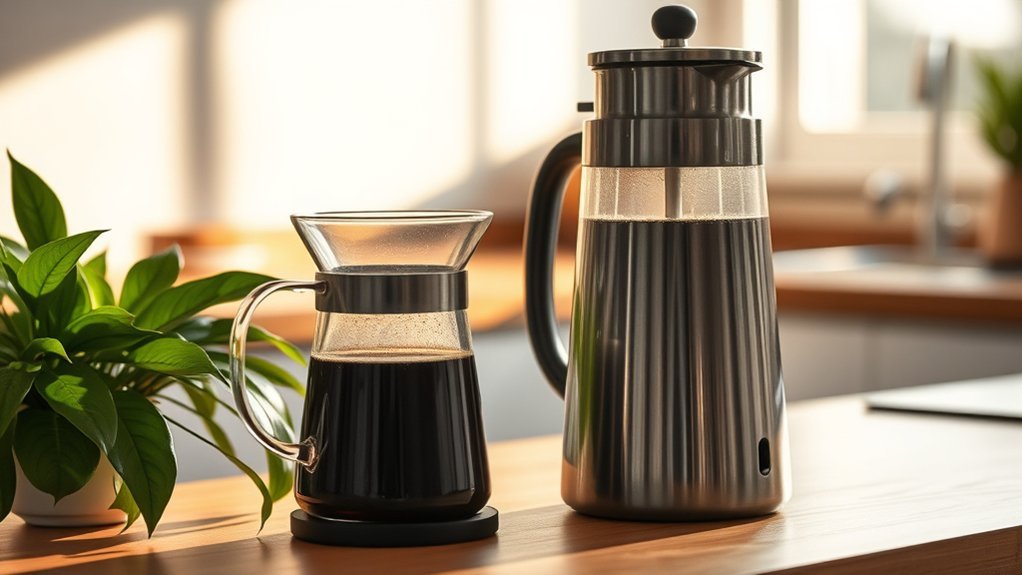
The best container is clean, food-safe, easy to seal, and appropriately sized for the amount of coffee you are storing. A tight lid limits contact with fresh refrigerator air and helps prevent odor absorption.
Best Airtight Options
- Heat-safe glass containers: Glass does not readily retain odors and makes it easy to inspect the coffee. Avoid sudden temperature changes unless the container is designed for them.
- Stainless steel containers: Durable stainless steel is useful when you need a light-blocking, break-resistant option.
- Food-safe plastic containers: These are lightweight and practical for short-term storage. Choose containers intended for beverages and compatible with the coffee’s temperature. Avoid badly scratched or odor-stained plastic.
- Covered ice-cube trays: Freeze leftover black coffee in small portions for iced drinks, smoothies, sauces, or desserts.
Materials That Preserve Flavor
Container material matters less than cleanliness, seal quality, temperature, and storage time. Glass and stainless steel are useful because they resist staining and lingering odors, while quality food-safe plastic offers convenience and lower breakage risk.
A household vacuum container is optional, not essential. It may reduce fresh-air exposure in the headspace, but it does not remove every trace of oxygen or prevent all flavor changes. A standard airtight container is sufficient for short-term refrigerator storage.
Minimizing Flavor Loss in Stored Coffee
Use the following steps to keep refrigerated coffee tasting as good as possible:
- Refrigerate it promptly. Do not leave the pot on a hot plate for hours.
- Keep the container covered. This limits odor absorption and repeated exposure to fresh air.
- Store plain coffee when possible. Add milk, cream, sweetener, or flavored syrup when serving so the stored batch remains simpler to handle.
- Use smaller containers. Less repeated opening means fewer temperature changes and less handling.
- Use clean utensils. Avoid drinking directly from a storage container or repeatedly introducing used spoons.
- Choose cold uses first. Stored coffee often tastes better over ice or in a recipe than after strong reheating.
- Use the oldest batch first. A simple date label prevents forgotten containers from collecting in the refrigerator.
How to Reheat Brewed Coffee Without Losing Flavor?
Reheating cannot replace lost aroma, but gentle heating can make refrigerated coffee more enjoyable. Reheat only the amount you plan to drink.
Microwave method: Place one serving in a microwave-safe mug. Heat it for 15 to 20 seconds at a time, stirring between intervals, until it reaches your preferred drinking temperature.
Stovetop method: Warm one serving in a small saucepan over low heat. Stir occasionally and remove it before prolonged simmering or boiling.
Repeated or excessive heating can make coffee taste flatter or more bitter because heat drives off and changes aromatic compounds. Do not repeatedly heat and cool the full storage container.
Note: Reheating does not reset the storage clock and does not make improperly stored coffee safe. Discard coffee containing perishable ingredients if it exceeded the recommended room-temperature limit.
Creative Ways to Use Leftover Brewed Coffee
Refrigerated or frozen coffee can add flavor to drinks, desserts, and savory recipes. Try these uses before the coffee passes the storage period you have chosen:
Coffee ice cubes keep an iced drink cold without watering down its coffee flavor.
- Coffee ice cubes: Freeze black coffee in a covered ice-cube tray and add the cubes to iced coffee or blended drinks.
- Smoothies: Blend chilled coffee with banana, yogurt, oats, cocoa, or nut butter.
- Desserts: Add coffee to brownies, chocolate cake, tiramisu, pudding, frosting, or mousse.
- Oatmeal and overnight oats: Replace part of the usual liquid with chilled coffee.
- Marinades and sauces: Use a small amount in barbecue sauce or a meat marinade to add roasted flavor.
- Frozen drinks: Blend coffee cubes with milk or a plant-based beverage immediately before serving.
How to Tell If Your Brewed Coffee Has Gone Bad?
Some changes indicate lost flavor, while others are reasons to discard the coffee. A stale aroma or mild bitterness may simply mean the drink is past its best quality. Visible mold, an unusual surface film, unexpected gas or pressure, or abnormal curdling in a dairy drink are stronger warning signs.
- Discard it immediately if you see mold or an unusual surface film.
- Discard coffee with perishable additions if it develops persistent abnormal curdling, unusual thickening, or other clear spoilage.
- Discard it if the container is swollen, leaking, or releases unexpected pressure.
- Discard it if a perishable coffee drink exceeded its safe room-temperature limit or you cannot determine how long it remained warm.
- Do not taste questionable coffee as a safety test.
A dull aroma, flat flavor, ordinary settling, or normal coffee sediment does not by itself prove that the drink is unsafe. Conversely, coffee that smells normal is not automatically safe if a perishable ingredient exceeded its time or temperature limit. The FDA advises that disease-causing organisms do not always change a food’s appearance, smell, or taste.
Frequently Asked Questions
Can I freeze brewed coffee for longer storage?
Yes. Freeze plain brewed coffee in a covered ice-cube tray or freezer-safe container, leaving expansion space in rigid containers. Coffee cubes are especially useful in iced drinks, smoothies, sauces, and desserts because freezing and thawing may reduce the aroma of a regular hot cup.
Does adding sugar make brewed coffee spoil faster?
Plain sugar mainly changes flavor and does not by itself create the same storage concern as adding a perishable ingredient. Milk, cream, refrigerated creamer, plant-based beverages, sanitation, and time-temperature exposure are more important. For simpler storage, sweeten the coffee when serving.
How can I tell if coffee is oxidized?
Oxidized coffee may smell dull, papery, woody, or stale and may taste flatter or more bitter than it did when fresh. Oxidation is mainly a quality problem. Use storage time, refrigerator temperature, ingredients, handling, and clear spoilage signs when deciding whether coffee should be discarded.
What is the best temperature for storing brewed coffee?
Store brewed coffee in a refrigerator at 40°F (4°C) or below. The 195°F to 205°F range sometimes seen in specialty-coffee guidance relates to hot-water brewing or extraction, not refrigerator storage. Keep stored coffee covered and return it to the refrigerator promptly after pouring a serving.
Can I add milk before refrigerating brewed coffee?
Yes, but the drink then needs stricter handling. Refrigerate it within two hours, or within one hour above 90°F (32°C). For best quality, use it soon and follow the shortest storage instruction that applies to the milk, creamer, or other perishable ingredient.
Can brewed coffee stay in the coffee maker overnight?
Do not leave coffee on a warming plate overnight. Heat accelerates flavor loss and can bake residue onto the carafe. Transfer leftovers to a clean container and refrigerate them promptly. Coffee containing milk or another perishable ingredient should be discarded if it remained unrefrigerated beyond the applicable time limit.
What should I do with refrigerated coffee after a power outage?
Keep the refrigerator door closed as much as possible. The FDA says an unopened refrigerator generally keeps food cold for about four hours. For coffee containing milk, cream, or another perishable ingredient, discard it if it has been above 40°F (4°C) for two hours or more, or if you cannot determine how long it was too warm. Plain black coffee may mainly suffer a quality loss, but discard it if there are obvious signs of contamination or spoilage.
Can I put hot brewed coffee straight in the refrigerator?
Yes. You do not have to wait until coffee reaches room temperature. Transfer it to a smaller heat-safe container so it can cool efficiently, avoid pouring very hot coffee into glass that is not designed for sudden temperature changes, cover it appropriately, and refrigerate it promptly.
Does reheating refrigerated coffee restart its storage time?
No. Reheating does not make stored coffee fresh again and does not erase earlier time-temperature exposure. Reheat only the amount you plan to drink and keep the original brew or storage date when deciding how old the remaining coffee is.
Conclusion
Keeping brewed coffee fresh is mostly a matter of limiting time, heat, air exposure, and contamination. Transfer leftovers to a clean, sealed container, refrigerate them promptly at 40°F (4°C) or below, and label the brew date. As conservative household quality targets, aim to use plain hot-brewed coffee within three to four days and homemade cold brew within about five to seven days.
Those coffee-specific periods are practical guidelines rather than federal expiration dates. Drinks containing milk, cream, or another perishable ingredient need stricter time-and-temperature handling. When flavor begins to fade, use the coffee cold, freeze it into cubes, or add it to a recipe. When perishable storage history is uncertain or the coffee shows clear spoilage signs, discard it rather than relying on a taste test.
Sources
- U.S. Food and Drug Administration — Refrigerator Thermometers: Cold Facts About Food Safety — Refrigerator temperature, prompt chilling, hot-food refrigeration, covered storage, and limits of sensory inspection.
- USDA Food Safety and Inspection Service — How Long Can You Keep Leftovers in the Refrigerator? — General three-to-four-day refrigerated-leftover guidance.
- Lopane et al. — An Investigation of the Shelf Life of Cold Brew Coffee — Peer-reviewed research on chemical, microbial, and sensory changes in refrigerated hot- and cold-brewed coffee.
- U.S. Food and Drug Administration — Power Outages: Key Tips for Consumers About Food Safety — Four-hour refrigerator guidance and handling of perishable food above 40°F.
- Specialty Coffee Association — Defining the Ever-Changing Espresso — Supports the distinction between hot coffee extraction temperatures and refrigerated storage temperatures.


[…] Note: The three-to-four-day period is a practical household quality target, not a federal coffee-specific safety deadline. Controlled coffee-storage studies can run much longer, but those conditions do not reproduce every home kitchen, carafe, ingredient, or handling history. For a deeper storage guide, see how to keep brewed coffee fresh longer without reheating. […]