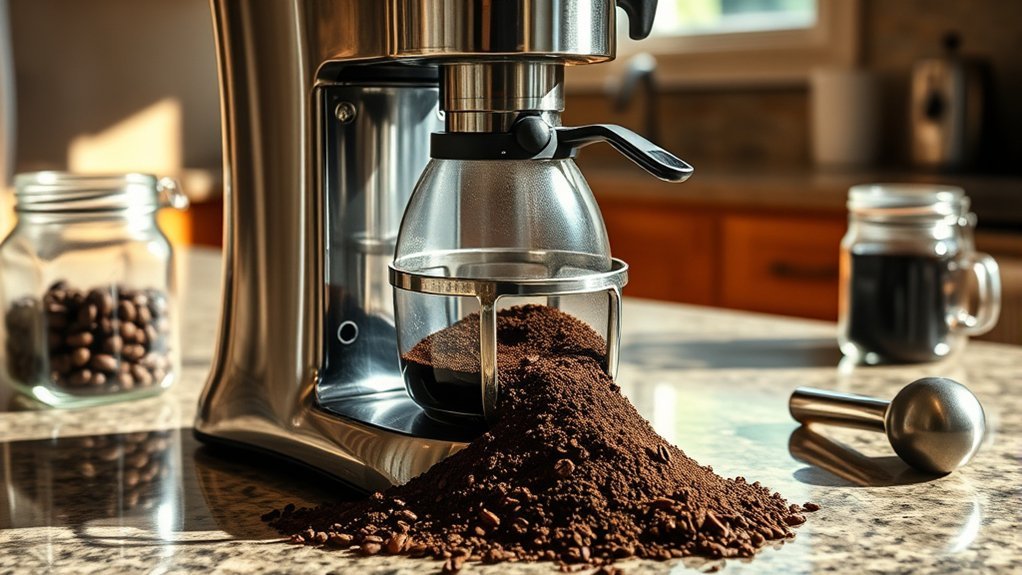

White vinegar can remove mineral scale from many drip coffee makers, but there is no universal vinegar-to-water ratio that is safe for every machine. Before adding vinegar to the reservoir, check your model’s owner’s manual, remove any water filter the instructions tell you to remove, and use only the concentration and cleaning cycle approved for that coffee maker.
Quick Answer
To clean a drip coffee maker with vinegar, first check the model’s manual. Empty and wash removable parts, remove the water filter if directed, use the exact vinegar concentration approved by the manufacturer, run the Clean, Descale, or permitted brew cycle, discard the solution, and flush with fresh water until no vinegar odor remains.
Key Takeaways
- There is no universal vinegar ratio for coffee makers; the correct concentration depends on the brand and model.
- Use white distilled vinegar only when the manufacturer permits it, and never fill above the reservoir’s normal maximum line.
- Wash the carafe, lid, brew basket, reusable filter, and other approved removable parts separately with warm, soapy water.
- After descaling, run the number of fresh-water cycles stated in the manual and continue rinsing if vinegar odor remains.
- Never mix vinegar with bleach, baking soda, branded descaling solution, or another household cleaner inside the machine.
At a Glance
| Time Required | About 45–75 minutes for many drip-machine methods; automated programs and rinse times vary by model |
| Difficulty | Easy |
| Tools Needed | Owner’s manual, white distilled vinegar, fresh water, dish soap, a nonabrasive sponge, and a clean cloth |
| Cost | Low; most methods use only vinegar, water, dish soap, and basic cleaning supplies |
Before Cleaning Your Coffee Maker With Vinegar
There is no single vinegar recipe that is correct for every coffee maker. Concentration, quantity, soak time, rinse procedure, water-filter removal, and cleaning-cycle controls can differ between manufacturers and even between models from the same brand.
Cuisinart’s current general cleaning guidance illustrates the problem with relying on a single internet ratio. Its Clean-button section describes three parts water to one part vinegar, while a later general vinegar-cleaning section describes two parts water to one part vinegar. Mr. Coffee’s general drip-machine method uses roughly twice as much water as vinegar. A Hamilton Beach FlexBrew TRIO manual instead specifies measured amounts of plain white vinegar without diluting the carafe-side cleaning dose with water.
Warning: Follow your model’s manual over any generic vinegar recipe. Do not immerse the electrical base, cord, or plug in water. Let the machine cool before removing or washing parts, and never mix vinegar with bleach or another cleaner. Bleach mixed with an acid such as vinegar can release dangerous chlorine gas.
Pod brewers, espresso machines, and coffee machines with grinders, pressure systems, or milk circuits can use very different maintenance procedures. Some require a dedicated descaling product, separate cleaning routines, or an automated program. Keurig, for example, directs owners to model-specific descaling guidance rather than one universal procedure.
The safest descaling recipe is not the strongest one. It is the concentration and cleaning cycle approved for your exact coffee maker.
Power your essentials anywhere with a 999Wh pure sine wave power station delivering up to 1000W continuous with 2000W surge. It supports fast charging via USB-C PD 60W and USB-A QC 18W, plus simultaneous output for multiple devices through AC, USB, wireless, and car/DC ports. Recharge using AC, car, or solar with a built-in MPPT controller and dual cooling fans, while the upgraded battery management system protects against surges, short circuits, and overheating.
Better tasting beverages: Reduces flavor carry over between brews

RESTORE COFFEE FLAVOR & AROMA: Our universal descaling solution removes bitter mineral buildup and calcium deposits from heating elements. This ensures your Keurig cleaner process restores the original "day one" taste of your favorite pods and espresso capsules
How Much Vinegar Should You Use?
Do not assume that a 1:1 mixture of vinegar and water is standard. Manufacturer instructions show substantial differences. Use the examples below to understand why checking the manual matters; they are not interchangeable recipes.
| Manufacturer Example | Published Guidance | What It Shows |
|---|---|---|
| Cuisinart general guide | The Clean-button section gives 3 parts water to 1 part vinegar; another general section gives 2 parts water to 1 part vinegar. | Check the instructions for your exact Cuisinart model rather than assuming one company-wide ratio. |
| Mr. Coffee general drip method | About twice as much water as vinegar, followed by two water-only brews. | A diluted solution is appropriate for the general drip method described by the manufacturer. |
| Hamilton Beach FlexBrew TRIO 49904 | The carafe side uses 2 cups of plain white vinegar, followed by a 30-minute pause and 2–3 cold-water cycles. | Some machines use undiluted vinegar for a specific cleaning procedure. |
Note: If your manual specifies a commercial descaler instead of vinegar, use the specified product. Do not substitute a stronger vinegar mixture in an attempt to speed up descaling.
Why You Should Clean Your Coffee Maker With Vinegar
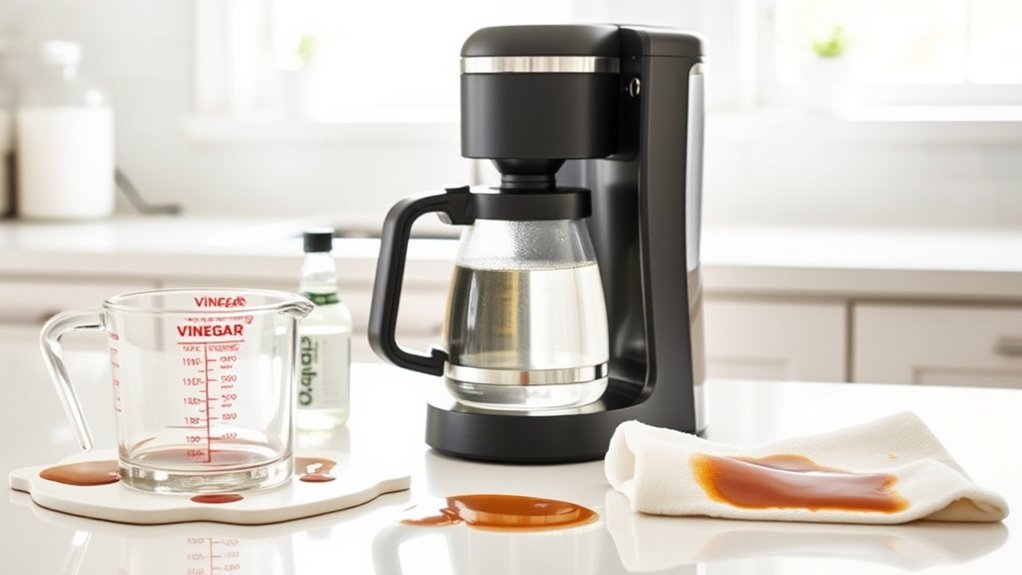
Water can leave calcium and other mineral deposits behind as it moves through a coffee maker. Over time, this scale can restrict water flow, slow brewing, reduce the amount of water delivered, and contribute to changes in brewing performance or coffee flavor.
White distilled vinegar is acidic, so it can help loosen mineral buildup in machines whose manufacturers approve its use. However, descaling the internal water path is only one part of coffee-maker maintenance.
The carafe, lid, reusable filter, and brew basket also collect coffee oils and grounds. Wash these removable pieces with warm water and mild dish soap after use or at the interval stated in the manual. Descaling with vinegar does not replace physically washing visible coffee residue from removable parts.
Note: Treat vinegar as a descaling agent, not as a guaranteed whole-machine disinfectant. Routine washing, thorough rinsing, and proper drying of removable parts are still important.
What You Need
- Your coffee maker’s manual: Use the printed manual or the manufacturer’s official online copy.
- White distilled vinegar: Use it only if your model’s instructions permit vinegar.
- Fresh, cool water: Have enough available for the number of rinse cycles required by the manufacturer.
- Mild dish soap: Use it on the carafe, lid, filter basket, and other approved washable pieces.
- A soft sponge or cloth: Avoid steel wool and abrasive scouring pads.
- A large mug or carafe: Use the normal collection vessel specified for your machine.
- A fresh paper filter: Use one only if the cleaning instructions direct you to place it in the basket.
Step-by-Step Guide to Cleaning With Vinegar
-
Read the cleaning section of the manual. Confirm that vinegar is approved. Note the required concentration or quantity, whether the machine has a Clean or Descale mode, whether a water filter must be removed, and how many rinse cycles are required.
-
Empty the coffee maker. Discard used grounds and any disposable paper filter. Empty leftover coffee and water from the carafe and reservoir. Do not leave coffee grounds, pods, or brewed coffee in the machine during descaling.
-
Unplug and cool the machine before washing removable parts. Remove the carafe, lid, permanent filter, brew basket, removable reservoir, and drip tray when applicable. Wash only the pieces identified as washable by the manufacturer. Rinse them thoroughly and dry them or set them aside to air-dry.
-
Prepare the approved vinegar concentration. Measure exactly what the manual requires. Some models use diluted vinegar while others specify plain vinegar. If your basic drip-machine manual specifically approves a 1:1 solution, combine equal amounts of white distilled vinegar and cool water. Do not exceed the reservoir’s normal maximum fill line.
-
Remove the water filter when instructed. Charcoal and water-softening filters are commonly removed before descaling on machines that use them. Set the filter aside and reinstall or replace it only after the cleaning and rinse cycles are complete.
-
Start the correct cleaning cycle. Reconnect the machine when you are ready to operate it. Use its Clean or Descale program when one is provided. For a basic drip maker whose manual allows a normal brew-cycle cleaning method, run the approved vinegar solution without coffee grounds.
-
Pause and soak only when the instructions call for it. Some manufacturers specify a pause after the vinegar begins moving through the machine. Hamilton Beach’s cited FlexBrew procedure, for example, pauses for 30 minutes. Do not extend the soak overnight or leave a powered appliance unattended unless the manufacturer expressly instructs you to do so.
-
Discard the used solution. Empty the carafe or collection mug into the sink after the cleaning cycle. Do not reuse the spent vinegar solution in another appliance.
-
Run fresh-water rinse cycles. Fill the reservoir with cool, fresh water and run a complete cycle without coffee. Empty the carafe and repeat for the number of cycles required by the manual. Two or three rinse cycles are common in manufacturer instructions, but your model may differ.
-
Check for residual vinegar odor. Let the final rinse water cool enough to check comfortably. If you can still smell vinegar, run another complete fresh-water cycle before making coffee.
Pro Tip: When your model calls for diluted vinegar, measure the vinegar and water in the carafe before transferring the mixture to the reservoir. This makes the ratio easier to control and reduces the chance of accidentally filling above the maximum line.
What Happens During the Brew Cycle With Vinegar?

As an approved vinegar solution travels through the machine’s normal water path, its acidity helps loosen mineral deposits in the areas reached by the liquid. Depending on the design, that can include the reservoir outlet, internal tubing, heating path, and spray area. A manufacturer-approved pause increases contact time with stubborn scale.
The cycle does not scrub every part of the coffee maker. Coffee oils on the brew basket, carafe, lid, warming plate, and exterior still require separate cleaning. With the machine unplugged and cool, wipe its exterior with a soft, damp cloth, taking care not to allow liquid into controls, vents, or the electrical base.
Do not assume that a stronger vinegar solution will work better. Using a concentration or soak time that the manufacturer has not approved can leave difficult-to-rinse residue or potentially damage components. Follow the specified amount and cycle rather than increasing either on your own.
When Is It Time to Clean Your Coffee Maker?
Use the schedule in the manual or clean the machine when its Clean or Descale indicator turns on. The correct interval depends on the model, frequency of use, and mineral content of your water.
Recommendations vary substantially. Mr. Coffee’s general drip-machine guidance recommends a monthly deep clean. The cited Hamilton Beach FlexBrew TRIO manual says coffee makers should be cleaned at least monthly and as often as weekly in hard-water areas. Cuisinart’s general guidance suggests descaling every one to three months depending on water hardness.
Keurig’s general descaling guidance recommends descaling every three to six months. However, Keurig’s model-specific support guidance for some newer brewers uses a three-month schedule or directs users to descale when the machine’s indicator appears. Follow the interval for your exact brewer rather than applying a generic schedule to every Keurig.
Common signs that descaling or other maintenance may be needed include:
- A Clean or Descale light is illuminated.
- The machine takes longer than usual to brew.
- Less water reaches the carafe or cup than expected.
- The pump or brewing sound changes.
- White or chalky mineral deposits are visible around water-contact areas.
- Coffee tastes unusually flat, bitter, or otherwise different despite fresh coffee and clean removable parts.
Grounds or sediment in the cup do not automatically mean the machine needs vinegar. First check the filter for damage or poor placement, avoid overfilling the basket, use a grind size appropriate for the brewer, and inspect any accessible needle or outlet using the manufacturer’s cleaning instructions.
Pro Tip: If scale returns quickly, check your water hardness and use the type of filtered or bottled water permitted by the manufacturer. A water filter can reduce mineral buildup in some machines, but it does not eliminate the need for periodic descaling.
Prepare Your Coffee Maker for Brewing After Cleaning
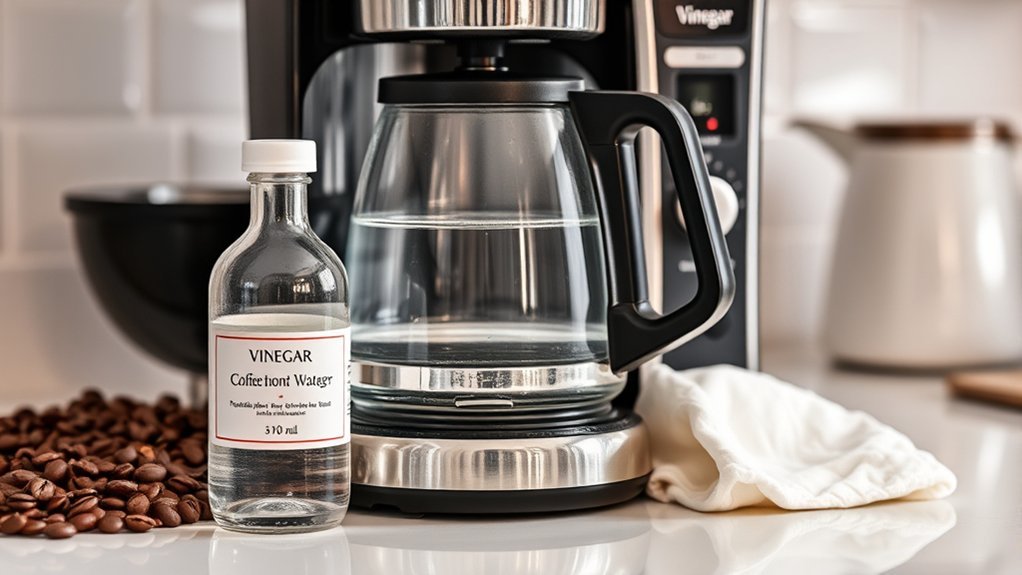
- Inspect the final rinse water. It should look clear and have no obvious vinegar odor after it cools.
- Rinse the carafe and basket again. Remove any residue or droplets left from the cleaning process.
- Dry removable parts. Use a clean towel or let the parts air-dry. They do not have to be completely dry before a final water cycle, but no soap should remain.
- Reinstall the water filter. Replace or return it only as directed in the manual. Do not reinstall a disposable filter that was accidentally soaked in vinegar.
- Reassemble the machine. Confirm that the basket, lid, reservoir, carafe, drip tray, and other removable pieces are seated correctly.
- Brew a small test batch. If the coffee has a noticeable vinegar smell or unusually sharp acidic taste, discard it and run another fresh-water cycle before brewing again.
Troubleshooting After Cleaning
The machine still smells like vinegar: Wash the carafe and basket with dish soap, rinse them thoroughly, and run additional reservoirs of fresh water. Let the final rinse water cool before checking its odor.
The Clean or Descale light remains on: Some coffee makers require the complete automated program or a particular button sequence before the indicator resets. Follow the reset procedure for your model instead of repeatedly pouring more vinegar into the reservoir.
The coffee maker still brews slowly: Confirm that you used the correct concentration and completed the entire cleaning cycle. Repeat the procedure only when the manual permits another cycle. Persistent slow flow may require further model-specific troubleshooting or manufacturer service.
No water flows: Stop the cycle and unplug the machine. Check that the reservoir is seated correctly and that removable pieces are properly installed. Do not force liquid through blocked internal tubing or insert tools into areas the manufacturer does not identify as user-serviceable.
The machine leaks or makes unusual sounds: Turn it off, unplug it, and inspect the reservoir, carafe, drip tray, and other removable components. Contact the manufacturer if the problem continues.
Grounds appear in the cup: Inspect the filter and basket, reduce the amount of coffee if the basket is overfilled, use the recommended grind size, and check any user-cleanable exit needle or outlet. Vinegar alone usually will not correct a filter, grind, or grounds-clogging problem.
What Not to Put in a Coffee Maker
Warning: Never add bleach to a coffee maker or combine bleach with vinegar. The CDC warns that mixing bleach with vinegar can generate chlorine gas capable of causing serious lung injury.
- Do not combine vinegar and baking soda in the reservoir. They react and foam while neutralizing much of each other’s acidity and alkalinity. If a manufacturer permits baking soda for a removable component, use it as a separate cleaning method rather than adding it to vinegar.
- Do not add dish soap to the internal water path. Soap can create difficult-to-rinse foam and residue. Use it only on removable pieces that the manufacturer identifies as washable.
- Do not use abrasive powder, steel wool, or harsh scouring pads. They can scratch the carafe, warming plate, reservoir, and finished surfaces.
- Do not substitute apple cider vinegar automatically. Some manufacturer guidance allows it, but its stronger residual flavor and aroma can require more rinsing. White distilled vinegar is usually the simpler choice when vinegar is permitted.
- Do not mix branded descaler with vinegar. Use one manufacturer-approved descaling method at the specified concentration.
- Do not immerse the electrical base. Unplug the machine and wipe the base and exterior with a damp cloth instead.
Frequently Asked Questions
Can I use apple cider vinegar instead of white vinegar?
Some manufacturer guidance permits apple cider vinegar, but white distilled vinegar is generally easier to rinse because it is colorless and has a milder residual aroma. Use apple cider vinegar only when your coffee maker’s instructions allow it, and expect that additional fresh-water rinses may be needed.
How often should I clean my coffee maker with vinegar?
Follow the manufacturer’s schedule or the machine’s Clean or Descale indicator. Recommendations range from weekly cleaning in hard-water conditions for some machines to monthly or every few months for others. Frequency depends on your model, usage, and water hardness.
Is it safe to clean a coffee maker with vinegar regularly?
It is appropriate for models whose manufacturers approve vinegar when you follow the stated amount, concentration, cycle, and frequency. Do not make the solution stronger or descale more often simply because buildup is visible. Use the specified commercial descaler when the manual requires one.
Will vinegar damage my coffee maker?
Vinegar is appropriate for coffee makers whose manufacturers specifically permit it when used according to their instructions. Problems are more likely when you use an unapproved concentration, extend the soak beyond the stated time, or substitute vinegar in a machine that calls for another descaling method.
Can I add baking soda for extra cleaning power?
Do not add baking soda to the vinegar in the reservoir. The two substances react, foam, and neutralize much of each other. Baking soda may be useful separately for stains on certain washable removable parts when the manufacturer permits it, but those parts must be rinsed thoroughly afterward.
How many water cycles should I run after using vinegar?
Run the number specified in your manual. Two or three fresh-water cycles are common in manufacturer instructions, but some machines require a different procedure. Continue rinsing if the cooled rinse water still smells like vinegar or if a small test brew has an acidic taste.
Does vinegar disinfect the entire coffee maker?
Do not rely on a vinegar cycle as a validated whole-machine disinfection procedure. Its main purpose here is to help remove mineral scale from the internal water path. Wash the carafe, lid, basket, reusable filter, removable reservoir, and other approved washable parts using the manufacturer’s soap-and-water instructions.
Can I use the same vinegar method in a Keurig or espresso machine?
Not automatically. Pod and espresso machines may require a branded descaler, a specific quantity of vinegar, filter removal, a special mode, or separate cleaning procedures for different water and milk systems. Follow the official instructions for your exact model rather than adapting a generic drip-coffee recipe.
Conclusion
Cleaning a coffee maker with vinegar can be an inexpensive and effective way to remove mineral scale when the manufacturer approves it. The most important rule is not to rely on a universal vinegar ratio: use the concentration and cleaning cycle specified for your model. Wash removable coffee-contact parts separately, complete every required fresh-water rinse, and never mix cleaning chemicals. Those steps help restore normal water flow and prepare the machine for better-tasting coffee without unnecessary or unsafe shortcuts.
Sources
- Cuisinart: How to Clean a Coffee Maker — vinegar concentrations, Clean-button operation, filter handling, removable-part cleaning, and maintenance guidance.
- Mr. Coffee: How to Clean a Coffee Maker the Easy Way — general drip-machine vinegar dilution, cleaning frequency, waiting time, and fresh-water rinse cycles.
- Hamilton Beach FlexBrew TRIO Use and Care Manual — measured plain-vinegar procedures, 30-minute pause, rinse cycles, electrical warnings, and hard-water cleaning guidance.
- Keurig Descaling Guidance — mineral-scale information and general three-to-six-month descaling guidance.
- CDC: Safe Household Cleaning and Disinfection Practices — hazards of mixing bleach with vinegar and other cleaning chemicals.